| Community Musicians, building a worldwide Community Music. | |
| All the music you want to play on one site. Sharing the world’s best Contemporary, jazz, Popular, film, and classical Sheet Music | |
| Scores for all instruments: >15,000 (active and growing), over 231,000 pages All genres, styles, instruments, and Categories: Jazz & Blues, Rock & Pop, classical & contemporary, film & musicals’ scores; books & biographies; methods, études, and exercises; play along background tracks (MP3), audios & PDFs for Jazz & Rock Access and benefits: Subscription fee: $15.99 one-time payment, valid for lifetime How to join the Sheet Music Library 🔍 Search in the Library Catalog — FAQs — Join us |
Table of Contents
Remembering Leon Russell, born on this day in 1942.
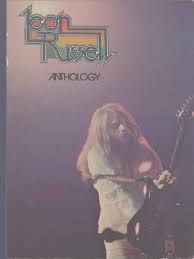
Best Sheet Music download from our Library.
Please, subscribe to our Sheet Music Library.
If you are already a subscriber, please, check our NEW SCORES’ page every month for new sheet music. THANK YOU!
Few figures in rock and roll history have embodied the role of the “musician’s musician” as completely as Leon Russell. Born Claude Russell Bridges in Lawton, Oklahoma, on April 2, 1942, he would go on to become one of the most influential pianists, songwriters, producers, and arrangers of the 20th century. With a career spanning nearly 60 years, Russell’s fingerprints can be found on some of the most iconic recordings of all time, from the pop perfection of the 1960s to the genre-bending epics of the 1970s. While many artists find a comfortable niche, Russell defied categorization, seamlessly blending rock, country, blues, gospel, and R&B into a sound that was uniquely his own. Today, as we celebrate what would have been his 84th birthday, we remember a man who was not only a prolific session musician and a brilliant bandleader but also a deeply soulful songwriter whose best work continues to resonate with new generations of listeners.
Biography
Early Life in Oklahoma
Leon Russell’s journey into music began in the most unassuming of circumstances. Born in Lawton, Oklahoma, on April 2, 1942, his family moved to nearby Tulsa when he was still a child. Music was a constant presence in the Bridges household; both of his parents played the upright piano. At the tender age of four, Russell’s mother heard him picking out the melody to a hymn he had heard at church, a moment that signaled his innate musical gifts. He was immediately enrolled in piano lessons at the Popejoy School of Music, a 38‑mile journey from the family home, where he began a decade‑long study of classical piano.
This early immersion in classical music would lay a deep harmonic foundation for all his future work, but it also came with a profound physical challenge. Russell was born with a mild form of cerebral palsy, resulting from an injury at birth that damaged his vertebrae and caused a slight paralysis on his right side. This affected three fingers on his right hand, making traditional, right‑hand‑dominant piano playing extremely difficult. Rather than seeing this as a limitation, Russell adapted. He developed a signature left‑hand‑dominant style, designing chord voicings and melodic lines that his right hand could manage. “My chops have always been sort of weak… I have damaged nerve endings on the right side,” he once explained, “so my piano style comes from designing stuff I can play with my right hand”. This physical adaptation inadvertently became the engine of his unique sound: a rolling, gospel‑inflected left‑hand bass and a sparse, melodic right‑hand that prioritized feel over flash.
As a teenager, Russell’s classical training gave way to the raw energy of rock and roll. While still in high school, he was already playing in Tulsa nightclubs, lying about his age to land gigs. He performed with a local group called The Starlighters, which included future guitar legend J.J. Cale, and backed touring acts like Ronnie Hawkins and The Hawks. “Oklahoma was a dry state back when we started… since there wasn’t supposed to be any liquor, there weren’t any liquor laws,” Russell recalled, explaining how a relaxed legal environment created a “hotbed of musical experience” with clubs open 24 hours a day. It was in these smoky, all‑night clubs that he honed his craft, alternating between sophisticated Erroll Garner‑style jazz during dinner hours and rowdy Jerry Lee Lewis‑style rock and roll after midnight.
The Session King of Los Angeles
At 17, Russell moved to Los Angeles, a decision that would launch his legendary career as a session musician. He studied guitar with the great James Burton and quickly became a first‑call pianist for a staggering array of artists. His early session work included recordings for Jan and Dean, Ricky Nelson, and Gary Lewis & the Playboys. But his most significant early association was with legendary producer Phil Spector. As a member of Spector’s elite studio team, the “Wrecking Crew,” Russell played on some of the most iconic pop singles of the 1960s, including The Ronettes’ “Be My Baby” and Ike & Tina Turner’s monumental “River Deep, Mountain High,” for which he also contributed arrangements. His instantly recognizable piano touch can also be heard on The Byrds’ “Mr. Tambourine Man,” Gary Lewis & the Playboys’ “This Diamond Ring,” and Herb Alpert’s “A Taste of Honey”.
During this period, Russell also began writing and producing. He co‑wrote two Top‑10 hits for Gary Lewis and the Playboys: “Everybody Loves a Clown” (1965) and “She’s Just My Style” (1965), demonstrating an early knack for crafting commercially successful pop hooks. He built his own recording studio, Skyhill Studios, in his Hollywood Hills home, where he recorded demos for up‑and‑coming artists and collaborated with his fellow Oklahoman, J.J. Cale, who became the studio’s manager. It was at Skyhill that he formed The Asylum Choir with guitarist Marc Benno, releasing the experimental Look Inside the Asylum Choir in 1968.
1970: The Mad Dogs & Englishmen Breakthrough
Russell’s career exploded in 1970 when he was hired to assemble a new touring band for the British singer Joe Cocker. Facing the threat of deportation, Cocker needed a 48‑date tour organized in just one week. Russell rose to the challenge, quickly assembling a 10‑piece band and a 10‑member “Space Choir” of backing vocalists, drawing many musicians from the Delaney & Bonnie Bramlett band. The resulting tour, dubbed “Mad Dogs & Englishmen,” was a chaotic, hedonistic, and musically transcendent experience that became the stuff of rock legend. As the musical director, arranger, and pianist, Russell was the undisputed master of the show, often sporting a top hat and a “Holy Trinity” basketball jersey. The tour’s live double album and subsequent documentary film made Russell a star in his own right, immortalizing him as the so‑called “Master of Space and Time”.
A Prolific Solo Career and Beyond
Riding the wave of this success, Russell released his self‑titled debut solo album, Leon Russell (1970), on his own Shelter Records label. The album featured a stunning roster of guests, including Eric Clapton, George Harrison, and Ringo Starr, and contained two of his most enduring compositions, “A Song for You” and “Delta Lady”. His 1972 album Carney marked his commercial peak, reaching number two on the Billboard 200 and yielding his first hit single, “Tight Rope,” which reached number 11 on the Hot 100.
Throughout the 1970s, Russell continued to explore new musical avenues. He recorded and performed under the country‑and‑western pseudonym “Hank Wilson”, and in 1974 he released Stop All That Jazz, an album backed by the funk group The Gap Band, whom he helped launch to fame. The mid‑1970s brought another hit with the tender ballad “Lady Blue” (1975) from the album Will O’ the Wisp, and in 1979 he scored a number‑one country hit with Willie Nelson on a duet cover of “Heartbreak Hotel”.
After a period of commercial decline in the 1980s and 1990s, Russell experienced a remarkable late‑career resurgence. In 2010, a lifelong fan, Elton John, reached out to his idol to record a duet album. The resulting The Union (2010), produced by T‑Bone Burnett, was a critical and commercial triumph, introducing Russell to a new generation of listeners. He continued recording, releasing Life Journey in 2014. Leon Russell passed away in his sleep at his home in Nashville on November 13, 2016, at the age of 74. His final album, On a Distant Shore, was completed just before his death and released in 2017.
Musical Style and Harmony
Leon Russell’s musical style defies easy labels. At its core, it is a distinctive and highly personal synthesis of American roots music, blending the earthy grit of country, the raw energy of rock and roll, the deep soul of R&B, and the ecstatic fervor of gospel music into a seamless whole. Critics have described his sound as a “rambunctious fusion of country grit, big‑band soul and Pentecostal‑church ecstasy” and a “rustic yet rich swamp pop fusion of country, blues, and gospel”. This eclecticism was the result of his diverse musical upbringing: classical lessons as a child, the rock and roll of Jerry Lee Lewis as a teenager, and a deep, self‑taught knowledge of the blues and gospel music he heard on a homemade crystal radio as a boy.
The most distinctive element of Russell’s musical style, however, is his piano playing, which is inextricably linked to his physical condition. His left‑hand‑dominant technique created a rolling, almost percussive foundation that was both powerful and subtly syncopated. While his right hand played sparse, often melodic, single‑note lines, his left hand drove the rhythm with a relentless, gospel‑inflected groove. This approach gave his music a unique, lurching, and deeply physical feel. Rolling Stone’s David Fricke perfectly captured the essence of his sound: “those driving, lurchy, churchy rock and roll songs”. His voice, a charmingly gravelly, nasal, and world‑weary instrument, was the perfect counterpart to his piano, conveying a sense of hard‑won wisdom and soulful vulnerability.
Harmonically, Russell was far more sophisticated than many of his rock peers, a direct result of his ten years of classical training. He had a penchant for unexpected chord changes and modal mixtures, often introducing minor chords or chromatic shifts into otherwise straightforward blues or rock progressions, lending his music an air of melancholy and introspection. His melodies, too, were often deceptively complex, with wide leaps and unusual intervals that gave his songs a timeless, standard‑like quality. This classical‑jazz sensibility is most evident in his ballads, but it underlies even his rowdiest rockers, a subtle sophistication that sets his work apart.
Best Songs and Compositions
Leon Russell’s songwriting legacy is monumental, marked by songs that have become enduring standards recorded by hundreds of artists. His ability to write both deeply personal ballads and greasy, groove‑driven rockers is a testament to his versatility.
- “A Song for You” (1970): This is the quintessential Leon Russell composition, a slow, pained, and profoundly beautiful ballad of regret and forgiveness. It begins with a cascade of descending piano notes that sound like a waterfall, eventually slowing to a trickle. Written in just ten minutes, Russell intended it as a standard that both Frank Sinatra and Ray Charles could sing. It has since been recorded by over 200 artists, including The Carpenters, Willie Nelson, Donny Hathaway, and Ray Charles, whose 1993 version won a Grammy Award for Best Male R&B Vocal Performance. The song was inducted into the Grammy Hall of Fame in 2018.
- “This Masquerade” (1972): Originally appearing as the B‑side to “Tight Rope” on the Carney album, this introspective ballad about a failing relationship became a massive hit when jazz guitarist George Benson recorded it for his 1976 album Breezin’. Benson’s version reached the Top 10 on the pop charts and won the Grammy Award for Record of the Year in 1977. The song has been covered by more than 75 artists.
- “Tight Rope” (1972): Russell’s first hit single as a solo artist is a high‑wire act of rock and roll energy. With its infectious piano riff, driving rhythm, and lyrics about the precariousness of life and fame, the song perfectly captures Russell’s blend of swagger and vulnerability. It reached number 11 on the Billboard Hot 100.
- “Delta Lady” (1969): A rollicking, horn‑driven tribute to a woman of the American South, this song was written for and first recorded by Joe Cocker, becoming a signature tune for the singer. Russell’s own version appears on his debut album.
- “Lady Blue” (1975): A gentle, heartfelt love song that showcases Russell’s tender side. The track became a hit, reaching number 14 on the Billboard Hot 100, and remains a staple of soft rock radio.
- “Hummingbird” (1970): A beautiful, gospel‑tinged ballad written about Chris O’Dell, a former assistant to the Beatles. The song’s delicate melody and soaring chorus have made it a favorite among both fans and fellow musicians.
- “Out in the Woods” (1972): A deep cut from the Carney album, this is a sprawling, epic track that showcases Russell’s adventurous side, with complex arrangements and philosophical lyrics.
Filmography
While primarily a musician, Leon Russell made several notable forays into the world of film, most often as himself. His most significant film appearance is in the classic rock documentary Mad Dogs & Englishmen (1971), which captured the chaos and glory of Joe Cocker’s legendary 1970 tour. Russell’s commanding presence as the musical director and bandleader made him a breakout star of the film.
He also appeared in The Concert for Bangladesh (1972), the documentary of George Harrison’s historic 1971 benefit concerts, where he performed a medley of “Jumpin’ Jack Flash” and “Young Blood” and provided backing for Bob Dylan. The documentary A Poem Is a Naked Person (1974), directed by Les Blank, was filmed over two years at Russell’s Shelter Records compound in Oklahoma. Russell initially disliked the film and blocked its release for decades, but it was eventually restored and released in 2015, providing a fascinating, free‑form glimpse into his creative world at the time. He also had a minor acting role as a radio preacher in the drama When You Comin’ Back, Red Ryder? (1979), and he appeared in episodes of television shows like Boston Legal and CMT Crossroads later in his career.
Cooperations with Jazz Musicians
Though not a jazz musician himself, Leon Russell’s musical world was deeply intertwined with jazz, both through his own recordings and through his songs’ adoption by jazz artists. His most significant collaboration came indirectly: George Benson’s legendary 1976 cover of “This Masquerade” not only brought Russell’s songwriting to a massive new audience but also won Benson a Grammy for Record of the Year. The song has since become a jazz‑pop standard, frequently performed by vocalists and instrumentalists alike.
Russell also directly collaborated with jazz musicians, particularly in his later years. His 2014 album Life Journey was produced by legendary jazz producer Tommy LiPuma, known for his work with George Benson, Diana Krall, and Miles Davis. The album featured Russell performing with the Clayton‑Hamilton Jazz Orchestra, a world‑class big band led by bassist John Clayton and drummer Jeff Hamilton, as well as renowned jazz guitarist Anthony Wilson. The album closes with “Down in Dixieland,” an ode to Louisiana Dixieland jazz, featuring a spirited brass band arrangement. Additionally, jazz pianist Bruce Hornsby, a self‑professed Russell disciple, collaborated with him on the track “Anything Can Happen,” which was posthumously released as a duet.
Influences and Legacy
Leon Russell’s influences were as eclectic as his music. He was deeply inspired by the classical repertoire he studied as a child, the blues and gospel music he heard on his crystal radio, the rock and roll of Jerry Lee Lewis, and the songcraft of writers like Bob Dylan. His early work with Phil Spector also left an indelible mark, teaching him the power of the “wall of sound” production technique and the importance of creating a unique sonic universe.
But his greatest influence is arguably the one he had on others. His legacy is that of a musician’s musician, an artist whose work has profoundly inspired countless other artists across multiple genres. Elton John, perhaps his most famous devotee, has repeatedly called Russell his “mentor” and “inspiration,” crediting him with teaching him how to play piano. Their 2010 duet album, The Union, was a full‑circle moment, a tribute from a fan to his hero that revitalized Russell’s career.
Beyond Elton John, Russell’s influence is staggering. The loose, rootsy, and genre‑bending “Tulsa Sound” he helped create with J.J. Cale and others laid the groundwork for the entire Americana genre. His arrangements and production work can be heard on classic records by the Rolling Stones, Bob Dylan, Eric Clapton, and B.B. King. His song “A Song for You” has been interpreted by everyone from Ray Charles to Amy Winehouse, cementing its status as a modern standard. As a session musician, he helped define the sound of the 1960s; as a bandleader, he created one of the most legendary tours in rock history; as a solo artist, he produced a body of work that remains deeply influential.
Leon Russell’s story is one of profound talent, fierce independence, and ultimate, hard‑won recognition. He was inducted into the Rock and Roll Hall of Fame and the Songwriters Hall of Fame in 2011, finally receiving the official accolades that had long been overdue. He earned six gold records and two Grammy Awards from seven nominations. More than a decade after his passing, his music continues to be discovered and adored. His genius lay not in any single innovation, but in the totality of his being: a one‑man synthesis of American music, a brilliant pianist, a soulful singer, and a songwriter of rare and enduring power.
Additional Information
Leon Russell’s life was filled with fascinating details that reveal the depth of his character and the breadth of his impact.
- The Name “Leon Russell”: The stage name was adopted from a fake ID he used to enter nightclubs as a teenager in Oklahoma, which was a dry state at the time.
- Cerebral Palsy: Russell was very open about his condition, stating, “I felt like the world had cheated me big time,” but also acknowledging, “If I hadn’t had the problem, I probably wouldn’t have gotten into music at all”.
- The Church Studio: In 1972, Russell purchased an abandoned church in Tulsa and converted it into a legendary recording studio. The Church Studio became a creative hub where artists like Willie Nelson, Eric Clapton, Tom Petty, and Peter Tosh recorded.
- The Linn Drum Machine: As a teenager, a young inventor named Roger Linn played guitar in Russell’s band. Russell’s encouragement and support helped Linn develop the first programmable drum machine, the Linn LM‑1, a device that would revolutionize pop music production in the 1980s.
- A Poem Is a Naked Person: The Les Blank documentary about Russell was famously held from release for over 40 years because Russell disliked it. He was finally persuaded to allow its release after watching the Disney film Saving Mr. Banks, which taught him that sometimes “we just say no to be just saying no”.
- A Late‑Career Bloom: After decades of relative obscurity, Russell’s duet album with Elton John, The Union, debuted at number three on the Billboard 200 chart in 2010, marking his highest chart position in nearly 40 years.
- Final Recording: Russell’s final album, On a Distant Shore, was recorded in 2016 and released posthumously in 2017. It features his daughter, Coco Bridges, on background vocals and cover art, a poignant final collaboration between father and daughter.
Leon Russell was more than a musician; he was a force of nature. A session man who became a star, a songwriter who wrote standards, and a bandleader who commanded the stage with quiet authority, he left an indelible mark on the soundtrack of the 20th century. His music, with its unique blend of gospel fervor, country twang, and bluesy soul, continues to inspire. From the iconic opening notes of “A Song for You” to the rollicking piano of “Tight Rope,” his work remains a testament to the power of artistic vision forged in the face of adversity. Today, on what would have been his 84th birthday, we honor the “Master of Space and Time,” a true original whose music will resonate for generations to come.
Leon Russell and The Shelter People -1971 (FULL ALBUM)
| A1 | Delta Lady | |
| A2 | A Song For You | |
| A3 | A Hard Rain’s Gonna Fall | |
| A4 | Tight Rope | |
| B1 | I’m On Fire | |
| B2 | You Were So Warm | |
| B3 | Poetry Man | |
| B4 | Goin’ Down |