
| Community Musicians, building a worldwide Community Music. | |
| All the music you want to play on one site. Sharing the world’s best Contemporary, jazz, Popular, film, and classical Sheet Music | |
| Scores for all instruments: >15,000 (active and growing), over 231,000 pages All genres, styles, instruments, and Categories: Jazz & Blues, Rock & Pop, classical & contemporary, film & musicals’ scores; books & biographies; methods, études, and exercises; play along background tracks (MP3), audios & PDFs for Jazz & Rock Access and benefits: Subscription fee: $15.99 one-time payment, valid for lifetime How to join the Sheet Music Library 🔍 Search in the Library Catalog — FAQs — Join us |
Table of Contents
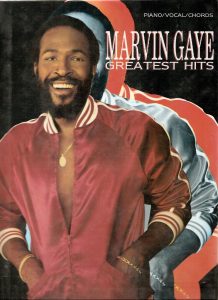
Best Sheet Music download from our Library.
Please, subscribe to our Sheet Music Library.
If you are already a subscriber, please, check our NEW SCORES’ page every month for new sheet music. THANK YOU!
Remembering Marvin Gaye, born on this day in 1939
On what would have been his 87th birthday, we celebrate the life and work of Marvin Gaye—a man whose voice defined an era and whose art transcended it. From the polished productions of Motown’s hit factory to the raw, introspective genius of his own groundbreaking concept albums, Gaye’s career was a journey of constant evolution. A man of immense talent and profound inner turmoil, he was both a product of the soul music tradition and an artist who completely reinvented it. His tragic death silenced a voice of rare sensitivity and power, but his music remains a testament to the struggles and joys of the human experience, ensuring his place as one of the most influential and beloved figures in popular music history.
Biography: From Washington D.C. to the Prince of Motown
Early Life and Musical Beginnings
Marvin Pentz Gay Jr. was born in Washington, D.C., on April 2, 1939, the second child of a strict, storefront preacher, Marvin Gay Sr., and a domestic worker, Alberta Gay. Raised in the tough neighborhood he called “Simple City,” Marvin found refuge in music, mastering the piano and drums at a young age. The full-gospel sounds of his father’s church were the basis of his art, but he soon developed a deep love for R&B and doo-wop, listing Rudy West, Clyde McPhatter, Little Willie John, and Ray Charles as his favorite solo singers. After a brief and unsuccessful stint in the Air Force—from which he was discharged for his inability to adjust to regimentation and authority—the 18-year-old was determined to become a pop singer. In 1958, he joined Harvey Fuqua’s group, the Moonglows, where he absorbed valuable lessons in close harmony. When Fuqua dissolved the group, he took the 20-year-old Marvin with him to Detroit, where Berry Gordy was building the Motown empire.

The Motown Years: Rise to Stardom
Upon arriving at Motown, the young singer added an “e” to his surname and set to work. He initially aimed to be a crooner in the style of Nat King Cole and Frank Sinatra, but his first efforts in that style failed. He found success as a versatile session musician, playing drums for Motown legends like Stevie Wonder, The Supremes, and Martha and the Vandellas. His breakthrough as a solo artist came in 1962 with “Stubborn Kind of Fellow,” the first in a long string of hits. Throughout the 1960s, Gaye churned out a remarkable number of dance hits and romantic duets, including a celebrated partnership with Tammi Terrell, with whom he recorded classics like “Ain’t No Mountain High Enough”. The tragic death of Terrell from a brain tumor in 1970 sent Gaye into a deep depression, causing him to swear off performing duets with another female vocalist and threatening to abandon the stage for good.

Artistic Breakthrough and Later Career
In the wake of Terrell’s death and inspired by the escalating violence and political unrest of the Vietnam War, Gaye wrote the landmark song “What’s Going On”. Despite clashes with Motown head Berry Gordy, who was “terrified” of a protest album, Gaye insisted on releasing it, and the resulting album became the most significant work of his career. It established him as one of music’s leading Black auteurs, a poet of soul music who challenged his audience and changed the sound of R&B forever. Gaye’s later records, including the sensual Let’s Get It On and the confessional Here, My Dear, continued to develop his production style and yielded several hits. After a period of tax exile in Europe, he made a triumphant comeback in 1982 with “Sexual Healing,” which won his first two Grammy Awards. Tragically, on April 1, 1984, one day before his 45th birthday, Gaye was shot and killed by his own father during a domestic dispute. He was inducted into the Rock and Roll Hall of Fame in 1987.

Musical Style and Harmony: A Master of His Craft
Marvin Gaye’s music was a sophisticated tapestry of sound, woven from gospel, R&B, doo-wop, and jazz. His vocal prowess was legendary, possessing an exceptionally wide range that encompassed three distinct styles: a piercing falsetto, a smooth mid-range tenor, and a deep gospel growl. This technical prowess allowed him to convey a rare musical individuality, moving seamlessly from tender vulnerability to raw, impassioned pleading.
Harmonically, Gaye’s work was rich and complex, creating soulful and emotive soundscapes. A prime example is the album What’s Going On, which uses a mix of major and minor chords to create a poignant and reflective mood. The arrangements feature a seamless integration of melodic strands, with strings, woodwinds, and experimental production techniques that blended psychedelic soul with a wall of sound. The bass guitar, often played by the legendary James Jamerson, plays an off-beat role, while Gaye frequently sings duets with himself, employing call-and-response techniques to reinforce his message. This sophisticated approach to production and harmony positioned Gaye at a coherent crossroads of jazz sensibilities and funk inclinations, creating a sound that was both artistically grand and deeply rooted in black musical traditions.
The Best Songs and Compositions: A Legacy of Hits
Marvin Gaye’s catalog is a treasure trove of timeless music. While his duets with Tammi Terrell and other Motown stars are beloved, it is his solo work that showcases the full depth of his genius. Here are some of his most essential and best-known compositions.
Beyond these essentials, Gaye’s catalog is filled with gems like “How Sweet It Is (To Be Loved By You),” “Ain’t That Peculiar,” and the socially conscious “Inner City Blues (Make Me Wanna Holler)”. His duets, particularly with Tammi Terrell (“Ain’t No Mountain High Enough,” “Ain’t Nothing Like the Real Thing”) and Kim Weston (“It Takes Two”), remain standards of the genre.
Filmography: Marvin Gaye on Screen
Though primarily a recording artist, Marvin Gaye made several notable appearances on screen, primarily in documentaries and television movies. His filmography includes:
- The T.A.M.I. Show (1965): A landmark concert documentary film featuring performances by numerous rock and roll and R&B stars, including Gaye.
- The Ballad of Andy Crocker (1969): A television movie where Gaye appeared as an actor.
- Chrome and Hot Leather (1971): Another television movie role for the singer.
- Save the Children (1973): A documentary film capturing a benefit concert at the Los Angeles Memorial Coliseum, featuring performances by Gaye and many other Motown artists.
In addition to his on-screen appearances, Gaye also composed the score for the blaxploitation film Trouble Man (1972), and his music has been featured in countless films and television shows over the decades.
Cooperations with Other Jazz Musicians
Although Marvin Gaye is primarily known as a soul singer, his music was deeply infused with jazz sensibilities. In fact, Gaye himself had long harbored aspirations to be a jazz singer, modeling much of his early work after Nat King Cole and Billy Eckstine. His debut album, The Soulful Moods of Marvin Gaye, was a collection of jazz-influenced ballads, and he recorded several other albums featuring jazz covers. His masterpiece, What’s Going On, is often described by critics as being to soul music what Miles Davis’s Kind of Blue is to jazz—a work of great sophistication and ambition that opened new pathways in its genre.
Gaye’s collaborations with jazz musicians, while not always formal, were crucial to his sound. The rhythm section on What’s Going On featured master bassist James Jamerson, a legendary figure in pop and soul whose walking, melodic bass lines were deeply rooted in jazz. The album also featured input from jazz organist Johnny Griffith and saxophonists like Wild Bill Moore and Eli Fountain. Later, Gaye performed at the prestigious Montreux Jazz Festival in 1980. Perhaps the most direct collaboration was with singer, songwriter, and arranger Bobby Scott in 1968, for whom Gaye recorded a set of ballads that remained unreleased for years.
Influences and Legacy: The Enduring Genius
Marvin Gaye’s influences were a rich tapestry of American music. He openly cited doo-wop groups and solo singers like Clyde McPhatter, Little Willie John, and above all, the genius of Ray Charles as his chief inspirations. The smooth, romantic crooning of Nat King Cole was also a major influence on his early aspirations, while the gospel music of his father’s church was the foundational bedrock of his passionate vocal delivery.
His own legacy, however, is immeasurable. Gaye’s groundbreaking decision to produce What’s Going On ushered in the era of artist-controlled popular music in the 1970s, paving the way for other Black artists to create cohesive, album-length artistic statements. He became a touchstone for soul and pop music that was both sensual and political, influencing generations of artists across genres. His song “Got to Give It Up” has influenced countless artists, from Michael Jackson to Aaliyah, and was at the center of a landmark copyright infringement case involving Robin Thicke and Pharrell. Artists such as Prince, D’Angelo, and countless others have cited Gaye as a major influence, and his music continues to resonate with new generations, finding its way into films and television shows to convey themes of love, loss, and social justice. In recognition of his monumental impact, Gaye was posthumously inducted into the Rock and Roll Hall of Fame in 1987 and was awarded a Grammy Lifetime Achievement Award.
Additional Information: Personal Life and Tragic End
Marvin Gaye’s personal life was as dramatic and conflicted as his music. He was married twice: first to Anna Gordy, the sister of Motown founder Berry Gordy, and later to Janis Hunter. His relationship with his father, a strict and reportedly abusive man, was a source of constant turmoil throughout his life and culminated in his tragic death. At the time of his death, Gaye was struggling with depression, financial debt, and cocaine addiction. On April 1, 1984, following an altercation between his parents, Gaye intervened and got into a physical fight with his father, who then took a revolver and shot him three times in the chest. The day before his 45th birthday, the “Prince of Soul” was gone, leaving the world to mourn a voice silenced far too soon.
Browse in the Library:
Or browse in the categories menus & download the Library Catalog PDF: