
Community Musicians, building a worldwide Community Music.
Scores
for all instruments: 15,000+
(active and growing),
over 231,000 pages.
All genres and levels: Jazz & Blues, Rock & Pop, Classical & Contemporary, Film & Musicals;
books & biographies; methods, études, play-along tracks (MP3) for Jazz & Rock.
Access & benefits: US$15.99 one-time payment, valid for lifetime, full Library access.
Table of Contents
Happy birthday, Al Green, born on this day in 1946
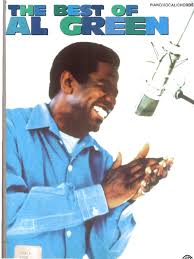
Best Sheet Music download from our Library.
Please, subscribe to our Sheet Music Library.
If you are already a subscriber, please, check our NEW SCORES' page every month for new sheet music. THANK YOU!
Al Green: The Voice That Carried Heaven and Earth
On April 13, 1946, in the small farming community of Forrest City, Arkansas, a future architect of modern soul music was born. Eighty years later, the voice of the Reverend Al Green remains one of the most recognizable and spiritually potent instruments in popular music—a testament to the enduring power of a sound that blends sacred yearning with earthly desire. More than just a singer, Al Green is a cultural force: a man who walked away from superstardom at its peak, only to later return, having reconciled the two halves of his soul. His story is one of tragedy, redemption, and, above all, an unwavering commitment to the music that flows through him.





Early Life: From the Cotton Fields to the Chitlin' Circuit
Albert Leornes Greene was born the sixth of ten children to Cora Lee and sharecropper Robert G. Greene Jr. . Raised in a deeply religious household, his first musical experiences were in the church, singing gospel with his siblings in a quartet known as the Greene Brothers, touring the gospel circuits of the American South . This early immersion in the fervor and emotional release of gospel music would become the bedrock of his later vocal style.
When Al was a teenager, the family relocated to Grand Rapids, Michigan, a move that would prove pivotal. It was there that a young Al’s musical horizons expanded beyond the sacred confines of gospel. His devout father caught him listening to the hip-shaking secular R&B of Jackie Wilson, a transgression that led to Al being kicked out of the family home . Undeterred, the teenage Green immersed himself in the music of the day, idolizing not only Wilson but also Elvis Presley, Wilson Pickett, and Sam Cooke . This rebellious period was formative, exposing him to the raw energy of rhythm and blues that would later define his career.
By high school, Green had formed his first vocal group, Al Greene & the Creations. After a few name changes, the group became Al Greene & the Soul Mates and, in 1966, recorded the song "Back Up Train." Released on their own label, the track became a modest R&B hit, peaking at No. 46 on the Cashbox Top 100 . However, the group failed to capitalize on its success, and the single “Back Up Train” remains the only real output of this early phase. Despite the group’s dissolution, the experience had given Green a taste of the music business and honed his performance skills on the notoriously demanding Chitlin' Circuit.
The Memphis Crucible: Meeting Willie Mitchell
The true turning point in Green’s career came in 1968 in Midland, Texas. There, he opened for a local bandleader and producer named Willie Mitchell, a former trumpeter who was also the vice president of Memphis's Hi Records . Mitchell was immediately struck by Green’s raw talent but saw a singer who was trying too hard to imitate his heroes. He offered Green a recording contract and became his vocal mentor, pushing him to strip away the mannerisms and find his own, authentic voice .
The partnership between Al Green and Willie Mitchell was one of the most fruitful in music history. Mitchell’s production philosophy was one of restraint and space—a “no-frills” style featuring subdued horns, a tight, funky rhythm section, and lush string arrangements . This was a direct contrast to the grittier, more aggressive sound of Memphis neighbor Stax Records. Under Mitchell’s guidance, Green removed the final "e" from his surname and began a run of classic albums that would define 1970s soul.
Green's first single for Hi, a cover of The Beatles' "I Want to Hold Your Hand," showcased his incredible vocal agility but failed to make a major impact . His first real success came with a cover of The Temptations' "I Can't Get Next to You," which went to number one on the soul charts in 1971 . It was the beginning of a hot streak that would see the pair release a string of hit singles and gold albums.
Musical Style and Harmony: The Sound of Seductive Spirituality
The "Hi Records sound" that Green and Mitchell pioneered is instantly recognizable for its unique balance of tension and release. Central to this sound was the Hi Rhythm Section, a crack team of session musicians including guitarist Teenie Hodges, bassist Leroy Hodges, drummer Al Jackson Jr., and organist Charles Hodges. Their interplay was telepathic, creating a bed of complex but understated grooves over which Green’s voice could float, seemingly untethered .
Harmonic Language: Musically, the Hi Records sound was distinct from the simpler chord progressions of many soul contemporaries. Willie Mitchell, a skilled jazz musician, often incorporated jazz voicings and subtle harmonic shifts into his arrangements . Songs like "Love and Happiness" are built on a deceptively simple two-chord vamp (E minor to A major), but the melody and the addition of a gospel organ create a modal, hypnotic quality. Green’s ballads, such as "I'm Still in Love with You," often feature descending bass lines and lush major seventh chords, giving them a sophisticated, almost melancholy sweetness that elevated them beyond standard pop fare.
Vocal Technique: Green’s voice is a multi-faceted instrument. Possessing a range that comfortably sits in a high tenor, he could shift from a smooth, almost whispered croon to a searing, gospel-infused falsetto with breathtaking ease . His technique is rooted in the sanctified church tradition: he uses melisma, swoops, shouts, and moans not as mere ornamentation, but as a primary tool for conveying emotion. This is the "spiritual yearning and earthy desire" that critics so often describe . He could make a song about physical love feel like a religious testimony, and a gospel song feel deeply, humanly sensual.
Perhaps his most famous stylistic contribution is his ability to sound both deeply committed and utterly off-the-cuff. Producer Willie Mitchell famously recalled an all-night session for "Let's Stay Together" where he kept asking Green to stop imitating Jackie Wilson. Frustrated, Green left the studio, drove around for twenty minutes, and returned to deliver the iconic vocal with a dry, relaxed delivery. "I'm just going to sing this and I'm not going to put any feeling in it," he recalled . This paradoxical "absence of feeling" is precisely what gives the performance its profound sense of authenticity. His phrasing is full of subtle syncopations and delays, making it sound spontaneous, as if he is discovering the melody for the first time .
Best Songs and Compositions: The Essential Al Green
Al Green’s catalog is so rich that any list of "bests" is inevitably subjective, yet a few songs stand as monuments not only to his career but to the entire genre of soul.
- "Tired of Being Alone" (1971): This was the song that truly announced Green’s extraordinary potential. With its iconic opening "doo-doo-doo-doo-doo" scat, it sold over a million copies and prepared the world for his signature sound .
- "Let's Stay Together" (1971): His signature song and arguably his greatest commercial triumph. The track reached number one on both the R&B and pop charts in 1972 . Written by Green, Mitchell, and Al Jackson Jr., its rolling, melodic bass line and Green's tender, confident vocal make it one of the most enduring love songs of all time. It remains a cultural touchstone, revived for new generations in films, commercials, and cover versions by artists from Tina Turner to Michelle Obama.
- "I'm Still in Love with You" (1972): A masterpiece of melancholic balladry. The song's lush arrangement, complete with strings and a soulful backing chorus, perfectly frames Green's vulnerable performance as he sings about the persistence of love.
- "Love and Happiness" (1973): A funky, modal jam that has become one of his most sampled and covered songs. Co-written with Teenie Hodges, its insistent, hypnotic groove and gospel-tinged call-and-response vocals create an atmosphere of pure, communal celebration .
- "Take Me to the River" (1974): A raw, swampy track that perfectly encapsulates Green's ability to blend the sacred and the profane. The song is a metaphor for baptism and a plea for physical love. It was later covered by the Talking Heads, who turned it into one of their biggest hits, proving the song's cross-genre appeal .
- "Here I Am (Come and Take Me)" (1973): Another classic built on the signature Hi Records groove, this track features one of Green’s most memorable, soaring choruses and showcases his playful, seductive side.
Discography: The Albums That Defined a Movement
Green's studio output is remarkably consistent, but a handful of albums are considered essential. After his debut "Back Up Train" (1967) with the Soul Mates, his career began in earnest with "Al Green Gets Next to You" (1971), which included "I Can't Get Next to You" and "Tired of Being Alone." This was followed by a legendary run of albums:
- Let's Stay Together (1972): His commercial breakthrough, featuring the title track, "Tomorrow's Dream," and "I've Never Found a Girl."
- I'm Still in Love with You (1972): Released the same year, this album is a masterpiece of southern soul balladry, including "I'm Still in Love with You," "Love and Happiness," and a stunning cover of "Look What You Done for Me."
- Call Me (1973): A creative and commercial peak, containing the hits "You Ought to Be with Me," "Call Me (Come Back Home)," and "Jesus Is Waiting."
- Al Green Explores Your Mind (1974): Featuring the classic "Take Me to the River," this album showed Green pushing into funkier, more experimental territory.
- The Belle Album (1977): Following his spiritual rebirth, this was his first self-produced album after a split with Willie Mitchell. It contains the autobiographical title track "Belle," a powerful meditation on the conflict between earthly love and divine devotion.
After a long period focused on gospel, Green returned to secular music with "I Can't Stop" (2003), a triumphant reunion with Willie Mitchell that proved his soul power remained undimmed. This was followed by the critically acclaimed "Lay It Down" (2008), co-produced by Ahmir “Questlove” Thompson and featuring duets with John Legend and Corinne Bailey Rae, which brought his sound to a new generation .
Filmography and Television Appearances
While primarily a musician, Al Green’s charisma has led to several memorable on-screen appearances. His most famous role was a cameo as himself in the 1988 Bill Murray Christmas classic Scrooged, where he performs the duet "Put a Little Love in Your Heart" with Annie Lennox during the film's end credits . He also made a brief appearance as himself in the superhero film Hellboy (2004) . On television, he has been a frequent musical guest on late-night shows and has made cameo appearances in popular series like Ally McBeal, The Goldbergs, and the political thriller Scandal . His music is a staple in film and television soundtracks, from Pulp Fiction (which famously used "Let's Stay Together") to Ozark and Atlanta, where his songs are often used for their powerful emotional resonance.
Key Collaborations and the Hi Rhythm Section
Green’s legacy is inextricably linked with the musicians who helped shape his sound. Beyond the crucial role of Willie Mitchell, the Hi Rhythm Section was the engine room of his classic recordings. Teenie Hodges (guitar) co-wrote many of Green's biggest hits, including "Love and Happiness" and "Take Me to the River." Al Jackson Jr. (drums), a member of Booker T. & the M.G.'s, provided the rock-solid, inventive drumming that anchored tracks like "Let's Stay Together." Charles Hodges (organ) and Leroy Hodges (bass) completed a unit whose interplay was as tight as any in music history.
Later in his career, Green has embraced new collaborations. His 2008 album "Lay It Down" was a brilliant pairing with the modern soul revivalists of the Dap-Kings Horns and producers Ahmir "Questlove" Thompson and James Poyser, proving his ability to work with younger artists who revered his sound . He has also duetted with artists as diverse as Annie Lennox, Lyle Lovett, John Legend, and Corinne Bailey Rae, each time bringing a timeless quality to the partnership .
Influences, Legacy, and Enduring Impact
Al Green’s musical DNA can be traced directly back to the two towering figures who came before him: Sam Cooke and Ray Charles. Like Cooke, Green mastered the art of crossing over from gospel to pop without losing the soulful intensity of his origins. And like Charles, he had a transformative ability to take a country standard or a pop song and make it entirely his own . But Green’s true innovation was in the singular fusion of his influences, creating a sound that was smoother and more sophisticated than Stax, yet earthier and more soulful than Motown.
His legacy is immense. He is rightly regarded as "one of the most gifted purveyors of soul music" and "The Last of the Great Soul Singers" . His influence can be heard in a vast array of artists across multiple generations: from his immediate contemporaries like Marvin Gaye (whom he influenced) to neo-soul icons like D'Angelo, Maxwell, and Erykah Badu; from the raw passion of Amy Winehouse to the pop-soul crooning of Alicia Keys and John Legend . The Talking Heads, The Grateful Dead, and Bruce Springsteen have all covered his songs, a testament to his music's structural strength and emotional breadth .
Awards and Recognition: A Career of Acclaim
Throughout his long career, Al Green has received nearly every honor the music industry can bestow. He has won 11 Grammy Awards, including a prestigious Grammy Lifetime Achievement Award . He was inducted into the Rock and Roll Hall of Fame in 1995 . He is a recipient of the Kennedy Center Honors, and he has received the BMI Icon award . Rolling Stone magazine ranked him No. 65 on its list of the 100 Greatest Artists of All Time and, more tellingly, No. 10 on its list of the 200 Greatest Singers of All Time .
Personal Life: The Fall, The Faith, and The Redemption
No portrait of Al Green is complete without the dramatic, tragic story of his spiritual conversion. At the height of his fame in 1973, while on the road, he was born again as a Christian . He began to sermonize during his concerts, and a rift grew between his public persona and his private beliefs. The turning point came on October 18, 1974. An ex-girlfriend, Mary Woodson, broke into his Memphis home and, as Green was taking a bath, poured a pot of scalding-hot grits onto his back, causing third-degree burns. She then retreated to a bedroom and shot herself dead with Green's own gun . The incident was a profound and traumatic shock that Green interpreted as a divine warning.
In the aftermath of the attack and his subsequent recovery, Green fully embraced his faith. He purchased the Full Gospel Tabernacle Church in Memphis, just down the street from Graceland, and in 1976 was ordained as its pastor . For years, he focused almost exclusively on gospel music, leading his congregation every Sunday and releasing a series of inspirational albums. A fall from a stage during a 1979 concert in Cincinnati, from which he miraculously walked away unharmed, solidified his conviction that God was steering him away from the secular world .
For many years, he remained a pastor who occasionally sang his old hits. But eventually, he found a balance, returning to secular recording and touring without abandoning his pulpit. Today, the Reverend Al Green still preaches most Sundays at his Memphis church while continuing to record and perform, a living embodiment of the fusion of the sacred and the profane that defines his greatest art .
Al Green: Eighty Years of Soul
As Al Green celebrates his 80th birthday, his voice remains a powerful, ageless instrument. In 2024 and 2025, he has continued to surprise audiences, releasing poignant covers of songs by Lou Reed and R.E.M., proving his artistry is as vibrant and relevant as ever . From a sharecropper's son in Arkansas to the top of the pop charts, from a tragic victim of violence to a respected man of God, his life has been a journey of extremes. Yet through it all, the music has been the constant. He is a true American original, a singer whose work is a testament to the human capacity for both profound joy and deep sorrow. Happy 80th birthday, Reverend Green. Your music remains a prayer that we all can sing.