Table of Contents
Community Musicians, building a worldwide Community Music.
Scores
for all instruments: 15,000+
(active and growing),
over 231,000 pages.
All genres and levels: Jazz & Blues, Rock & Pop, Classical & Contemporary, Film & Musicals;
books & biographies; methods, études, play-along tracks (MP3) for Jazz & Rock.
Access & benefits: US$15.99 one-time payment, valid for lifetime, full Library access.
Happy birthday, Jacques Dutronc, born on this day in 1943
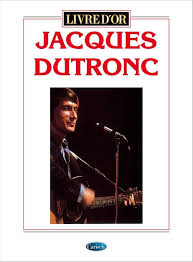
Jacques Dutronc, born in Paris on April 28, 1943, is far more than a singer; he is a cultural provocateur, a celebrated actor, and the man who gave French rock its swagger. His music—a perfect storm of garage rock riffs, jazz harmonies, and ironic lyricism—captured the spirit of 1960s France with a wink and a smirk. Dutronc was a leading figure in the yéyé movement, though he spent much of his time subverting it, and his 50-year career has yielded a string of hits so foundational that they remain embedded in the French national consciousness . His signature blend of British garage rock and French music-hall knowingness, articulated in sardonic anthems like "Et moi, et moi, et moi" and the poetic "Il est cinq heures, Paris s'éveille," cemented his legacy as a genre-defining artist . This exploration delves into his biography, musical style, best songs, film work, and the enduring legacy of the man often called the "French Ray Davies."
Téléchargement des meilleures partitions dans notre bibliothèque.
Early Life & The Road to Stardom
Jacques Dutronc was born into a bourgeois family in Paris's 9th arrondissement, a background that would later provide rich material for his satirical eye . His musical education began at home: he first studied classical piano under the guidance of his father, an engineer and amateur musician, before discovering jazz, which would become a lifelong passion . This foundation in both formal composition and improvisation would profoundly shape his approach to pop music.
As a teenager, he was drawn to the guitar and the burgeoning energy of rock 'n' roll. In 1960, he co-founded his first group, El Toro et les Cyclones, a straightforward rock band that played instrumental tunes inspired by The Shadows . The group recorded a pair of singles for Disques Vogue that yielded little commercial success, and Dutronc's early momentum was interrupted by compulsory military service.
After his discharge in 1963, Dutronc returned to the Parisian music scene, taking a job at Vogue Records as an assistant to artistic director Jacques Wolfsohn . He also played guitar as a sideman for established acts like Eddy Mitchell, honing his craft on the stage of the legendary Golf Drouot club . At Vogue, he was tasked with arranging songs for other artists, but his breakthrough came when Wolfsohn paired him with a novelist and editor at Lui magazine, Jacques Lanzmann .
The partnership of Dutronc (music) and Lanzmann (lyrics) would prove to be one of the most potent in French pop history. Initially a writer-for-hire, Dutronc’s fate changed when an artist named Benjamin failed to achieve success with their compositions. Wolfsohn, upon hearing Dutronc’s demos, decided that the lanky guitarist with the louche delivery should be the one behind the microphone . In 1966, Dutronc stepped into the spotlight with a song that would instantly define his persona: "Et moi, et moi, et moi."
Musical Style & Harmony: The Garage-Jazz Paradox
Dutronc's music was a masterclass in incongruity, merging raw musical aggression with a refined compositional intelligence. His sound was unique in the French landscape at the time, famously described as "un chansonnier désinvolte"—a casual, offhand singer-songwriter .
Garage Rock Energy & Freakbeat
Dutronc's early recordings are built on a solid, driving rhythm section and fuzzed-out guitars. This places him directly within the lineage of 1960s garage rock, drawing frequent and apt comparisons to British acts like The Kinks, The Yardbirds, and The Troggs . This analog warmth and push-pull energy, coupled with a uniquely French sense of phrasing, gave songs like "Les Cactus" the swagger of Anglo-American rock without ever feeling like a simple imitation .
Jazz Sensibilities & Harmonic Depth
Underneath the garage rock exterior, Dutronc often built his songs around sophisticated chord progressions far beyond standard rock. His early encounter with jazz influenced this harmonic approach, as he noted: "What matters in music are the harmonies" . This influence is fully realized in "Il est cinq heures, Paris s'éveille," where an exquisite classical flute melody by Roger Bourdin weaves through the arrangement, transforming a rock song into a piece of dreamlike orchestral pop that redefined what a French single could be . To this end, he identified as an alchemist, blending the raw energy of rock with an artful compositional backbone .
The Dutronc-Lanzmann Lyrical World
The songs were powered by the wit of Lanzmann, who—working under effective lock and key—produced lyrics Dutronc would compliment as economical and sharp . Their songs were cultural saboteurs, designed to parody and provoke rather than comfort or romanticize . While many yéyé idols of the era wrote earnest songs about teenage romance, Dutronc pioneered the "anti-singer" archetype . His target was often the generation that listened to him: "Et moi, et moi, et moi" (And Me, and Me, and Me) was a direct, three-minute parody of the narcissism of youth lament songs .
Vocal Persona
Dutronc was the perfect vehicle for this irony. His voice wasn't classically beautiful; it was a conversational instrument, dripping with a sarcastic, over-miked croon. He replaced the American rock exclamations of "Oh yeah!" favored by the yéyé crowd with the absurd French onomatopoeia "Crac Boum Huuuue!"—a deliberate, ridiculous local twist that made his records unmistakably his own .
The Essential Songbook: Best Songs & Compositions
Dutronc’s greatest hits are so woven into the fabric of French culture that they function as modern folklore.
- "Et moi, et moi, et moi" (1966): His debut single and an immediate hit, this song strips the protest song of its substance and replaces it with a self-absorbed protagonist who cares only about his own dinner. Built on a repetitive, hypnotic four-bar blues riff, it was both a chart-topper and an act of musical trolling .
- "Les Playboys" (1966): Over a boogie-woogie piano and jazzy guitar, Dutronc delivers a masterclass in ironic seduction, mocking the very archetype he appears to embody. It established his persona of the cynical yet irresistible Parisian playboy, a character he savored rather than disavowed .
- "Les Cactus" (1966): A stomping garage rock classic driven by a simple, unforgettable bassline. The song's surreal metaphor for a troublesome relationship and its fuzzed-out energy have made it an enduring international cult hit, finding a second life decades later in underground club scenes .
- "J'aime les filles" (1967): A straightforward, riff-driven rock 'n' roll ode to the female form, but delivered with an exaggerated growl that again straddles the line between sincere passion and self-parody .
- "Il est cinq heures, Paris s'éveille" (1968): Widely considered his masterpiece and voted the best French song of the last half-century, this track is a nocturnal poem painting a vivid picture of a waking Paris . The combination of its literary visual detail and the transcendent flute solo creates a uniquely French contribution to psychedelic pop.
- "L'opportuniste" (1968): A politically charged organ-driven track listing synonyms for "opportunist" over a relentless groove. Its cynical take on political weathervanes has proven timeless, with Dutronc himself noting its continued relevance .
- Other Cornerstones: His catalog is further enriched by the propulsive "Fais Pas Ci, Fais Pas Ca" , the swirling "Mini, mini, mini" , and surreal pieces like "J’ai un tigre dans ma guitare" and "Les Gens Sont Fous" .
A Second Act: Filmography & Critical Acclaim
In the 1970s, Dutronc gradually shifted his focus, channeling his charisma into a formidable film career that would see him collaborate with some of France's greatest directors.
Transition to the Screen
His acting debut came in 1973 with a role in Antoine et Sébastien, directed by Jean-Marie Périer . It was the beginning of a genuine second calling. The handsome, rebellious pop star easily translated into a magnetic screen presence, but he also proved to be a dramatic artist of depth. He frequently composed soundtracks for his early films, such as Pierre et Paul (1969) alongside his acting duties .
Collaborations with Auteurs
Throughout the late '70s and '80s, Dutronc built a serious filmography, attracted by directors looking for his natural, offhand intensity.
- Jean-Luc Godard: He starred as Paul Godard in the New Wave director's return to cinema, Sauve qui peut (la vie) (1980), a role that connected him to the legacy of French art cinema .
- Claude Lelouch: He demonstrated his mainstream leading-man appeal in films such as À nous deux (1979) .
- Maurice Pialat: In a small but harrowing supporting role, he starred in Pialat's Palme d'Or-winning Sous le soleil de Satan (1987) .
The César-Winning Performance
The pinnacle of his acting career came in 1991, when he worked with Maurice Pialat again to portray Vincent Van Gogh in the biopic Van Gogh. This was not a romanticized vision of the artist but a physically intense, unvarnished portrayal of his final months. For this, Dutronc won the César Award for Best Actor in 1992, a stunning validation that placed him at the summit of the French film world . In 2005, he was further honored with an Honorary César for his lifetime contribution to cinema .
Collaborations & Artistic Synergy
Dutronc's creative life has been defined by partnerships, primarily with his lyricist, life partner, and musical collaborators.
Jacques Lanzmann: The Lyrical Soul
The importance of Jacques Lanzmann to Dutronc's early success cannot be overstated. Their locked-room creative process produced the lyrics for virtually every seminal hit from the 1960s, a partnership Dutronc described as having perfect "economy of words" .
Serge Gainsbourg: Mutual Provocateurs
Dutronc’s relationship with Serge Gainsbourg was one of mutual respect between two of France’s greatest musical provocateurs, famously linked through Françoise Hardy . Their major collaboration arrived in 1980 with the album Guerre et pets (War and Farts). A coarse, bluesy, and defiantly uncommercial record co-written by Gainsbourg, it marked a triumphant return to music .
Family of Sound: Françoise Hardy & Thomas Dutronc
- Françoise Hardy: Before becoming a couple, Dutronc was Hardy’s songwriter, penning hits like "Va pas prendre un tambourin" during the mid-60s . They married in 1981 and, though separated by 1988, remained a defining power couple and mutually supportive creative forces .
- Thomas Dutronc: Their son is an acclaimed jazz guitarist in the style of Django Reinhardt, and he reinvigorated his father's career with the collaborative 2022 album Dutronc & Dutronc, a collection of reimagined classics featuring high-profile guests including jazz stars Diana Krall and Iggy Pop .
A Note on a Direct "Jazz" Collaboration
While Thomas's Gypsy-jazz connection may overshadow the direct label, Jacques's ties are deep in his harmonic DNA. His early formation in jazz and classical theory shaped his chordal language, and this approach earned its place in jazz databases by being seen as a musician whose songwriting was inherently informed by these sophisticated roots .
Influences & Legacy: The Aura of Dutronc
Roots and Inspirations
Dutronc's influences were a dynamic fusion of two worlds. Musically, he admired Dylan and boasted an aesthetic often compared to Ray Davies . Culturally, he was deeply rooted in a French tradition that blended the spirit of the flâneur with the humor of the satirist. His song "La fille du père Noël," built on the sped-up Bo Diddley riff from "I'm a Man," famously shares a near-identical riff with David Bowie's "Jean Genie"—a coincidence that speaks to their shared pool of blues-rock inspiration .
An Enduring Legacy
His influence is vast, though his distinct persona makes him impossible to clone. "Et moi, et moi, et moi" was adapted into a UK No. 3 hit by Mungo Jerry as "Alright Alright Alright," proving his melodies could transcend language . His songs have been rediscovered by retro club scenes internationally, a testament to the raw quality of his 60s recordings . Ultimately, Jacques Dutronc created the archetype of the French rock intellectual: impossibly cool, detached, and capable of profound artistic statements in both music and film. More than half a century after his debut, he remains the definitive standard for cool in French pop culture .
Additional Information & Highlights
- César Awards: He won Best Actor in 1992 for Van Gogh and received an Honorary César in 2005 for his lifetime contribution to cinema .
- Recent Work: In 2022, at age 79, he released the collaborative album Dutronc & Dutronc with his son Thomas, including a major tour, proving his enduring appeal to multiple generations .
- Instruments: Though known for guitar, Dutronc is a capable multi-instrumentalist who also plays piano, drums, bass, accordion, sitar, and recorder .
- The Corse Connection: For years he has preferred the quiet life at his home in Monticello, Corsica—an island love affair that began, he claims, one summer after falling in love with Françoise Hardy .
Discography
- Et moi, et moi, et moi (1966)
- Il est cinq heures (1968)
- L'Opportuniste (1969)
- L'Aventurier (1970)
- Guerre et pets (1980)
- C'est pas du bronze (1982)
- C.Q.F.D…utronc (1987)
- Brèves Rencontres (1995)
- Madame l'existence (2003)
- Dutronc & Dutronc (with Thomas Dutronc) (2022)
Selected Filmography
- Antoine et Sébastien (1973)
- Sauve qui peut (la vie) (1980)
- Van Gogh (1991)
- Place Vendôme (1998)
- Le Deuxième Souffle (2007)
- Voyez comme on danse (2018)
Search your favorite sheet music in the Sheet Music Catalog
Jacques Dutronc - L'opportuniste (Live au Casino de Paris 1992)
Jacques Dutronc - La fille du père Noël (Live au Casino de Paris 1992)
Browse in the Library:
Or browse in the categories menus & download the Library Catalog PDF: