
Scores for all instruments: 16,000+ (active and growing), over 236,000 pages.
All genres and levels: Jazz & Blues, Rock & Pop, Classical & Contemporary, Film & Musicals;
books & biographies; methods, études, play-along tracks (MP3) for Jazz & Rock.
Access & benefits: US$15.99 one-time payment, valid for lifetime, full Library access.
Table of Contents
Happy birthday, Abdullah Ibrahim, born on this day in 1934
Abdullah Ibrahim: The Eternal Spirit of South African Jazz
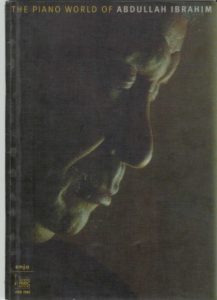
The best sheet music download from our Library.
Few musicians have embodied the soul of a nation quite like Abdullah Ibrahim. Born Adolph Johannes Brand on 9 October 1934 in Kensington, a working-class neighbourhood of Cape Town, he rose from the segregated streets of District Six to become South Africa’s most distinguished pianist and a globally revered composer. Nelson Mandela famously called him “our Mozart,” a testament to his profound cultural significance. Over a career spanning more than seven decades and dozens of recordings, Abdullah Ibrahim forged a singular musical language—one that blended the hymns of the African Methodist Episcopal Church, the marabi rhythms of the townships, the harmonic sophistication of Duke Ellington and Thelonious Monk, and the spiritual yearning of a man in exile. He died on 15 June 2026 in Prien am Chiemsee, Germany, at the age of 91, leaving behind a legacy that transcends jazz itself.

Please, subscribe to our Sheet Music Library. Sheet music should be accessible and affordable for all musicians, from professionals to absolute beginners.
From District Six to the World Stage
Ibrahim’s earliest musical memories were of traditional African Khoi-san songs and the Christian hymns, gospel tunes, and spirituals he heard from his grandmother, a pianist for the local African Methodist Episcopalian church, and his mother, who led the choir. The Cape Town of his childhood was a melting pot of cultural influences: American jazz records, township jive, Cape Malay music, and classical music all filtered into his young imagination. He began piano lessons at the age of seven and made his professional debut at fifteen, playing with local groups such as the Tuxedo Slickers. By the late 1950s, he was at the forefront of a new Cape Town bebop scene, forming the Dollar Brand Trio in 1958.
The following year proved pivotal. Abdullah Ibrahim co-founded the Jazz Epistles with trumpeter Hugh Masekela, saxophonist Kippie Moeketsi, trombonist Jonas Gwangwa, bassist Johnny Gertze, and drummer Makaya Ntshoko. In January 1960, the sextet recorded Jazz Epistle Verse One, the first full-length jazz LP by Black South African musicians. The album was a landmark, but its release coincided with the Sharpeville massacre and the subsequent intensification of apartheid repression. Jazz, already viewed as counter-cultural and encouraging racial mixing, became a target. The Jazz Epistles disbanded, and in 1962, with Nelson Mandela imprisoned and the ANC banned, Abdullah Ibrahim left South Africa for Europe.
Duke Ellington and the American Years
Abdullah Ibrahim settled in Zurich, where he took up a residency at the Club Africana. It was there, in 1963, that his wife-to-be, the vocalist Sathima Bea Benjamin, persuaded Duke Ellington to come and hear the trio play. Ellington was so impressed that he arranged a recording session in Paris, resulting in Duke Ellington Presents the Dollar Brand Trio. This endorsement opened doors across Europe and eventually led Ibrahim and Benjamin to New York in 1965. That year, Ibrahim appeared at the Newport Jazz Festival and Carnegie Hall. In 1966, he was called upon to substitute for Ellington as leader of the Duke Ellington Orchestra for five concerts, and he subsequently toured for six months with the Elvin Jones Quartet.
Search your favorite sheet music in the Sheet Music Library Catalog
Living in New York, Abdullah Ibrahim expanded his musical circle to include avant-garde innovators such as Don Cherry, Ornette Coleman, John Coltrane, Pharoah Sanders, Archie Shepp, and Cecil Taylor. Yet the pull of home remained strong. In 1968, searching for spiritual harmony amid an increasingly fractured life, he returned to Cape Town, converted to Islam, and adopted the name Abdullah Ibrahim. He made a pilgrimage to Mecca in 1970 and later founded a music school in Swaziland before returning to Cape Town in 1973.
Mannenberg and the Sound of Resistance
The year 1974 marked a turning point in Ibrahim’s career and in South African cultural history. He recorded “Mannenberg – ‘Is Where It’s Happening’” with a band that included Basil Coetzee on tenor saxophone and Robbie Jansen on alto. The piece, named after a township outside Cape Town, became an unofficial national anthem for Black South Africans, its buoyant yet melancholic melody capturing both the pain of dispossession and the hope of liberation. As the New York Times noted, Ibrahim’s compositions “tended to have a timeless air about them, and many became renowned in South Africa for their blend of spiritual ambition and political pride”.
After the Soweto student uprising in 1976, Abdullah Ibrahim returned to New York, where he and Benjamin launched the Ekapa record label. In 1983, he formed Ekaya, an ever-changing ensemble of New York-based musicians with whom he would work on and off for decades. The group’s name—the Zulu word for “homeland”—was a poignant statement for a musician in exile.
The Architecture of Ibrahim’s Musical Style
Abdullah Ibrahim’s music defies easy categorisation. At its core lies a profound synthesis of the traditional and the modern, the sacred and the secular, the African and the American. He combined the rhythmic influences of South Africa with the improvisation of jazz to create what the National Endowment for the Arts has called “spiritually enriching music”. This blend was reflected in his distinctive style, harmonies, and musical vocabulary.
Harmonically, Ibrahim drew heavily from the church hymns of his childhood. He used chord progressions that replicated the structure and harmony of hymns, particularly the I, IV, and V chords, to create an environment of collective memory. But he did not merely reproduce these harmonies; he transformed them. As scholar Christine Lucia has observed, Ibrahim’s use of religious chord progressions involved a deliberate “decentering” or “reframing” of the original significations, infusing well-worn hymnal permutations with new political and musical meaning. The protest in his work lay in the co-optation of missionary music to create new compositions that critiqued and deconstructed the colonial values embedded within them.
His harmonic language was also marked by a distinctive openness. In performance, he often left the harmony very open, using strong dominant chords and sustained voicings. As one reviewer noted, he would confidently end on a completely unresolved and dissonant phrase, “just sitting there as if there was nothing wrong,” creating a feeling of unease that lingered with the listener. This approach was not merely a stylistic quirk but a reflection of his spiritual and philosophical outlook: a search for harmony, self-understanding, and identity that resounded throughout his music, from traditional African songs to contemporary Western jazz.
Rhythmically, Ibrahim incorporated swinging rhythms and bluesy melodies mixed with highlife and church harmonies, underpinned by straight, slightly shuffled drum patterns. His playing was characterised less by rapid virtuosity and more by structural minimalism—precise, resonant chord voicings and calculated silence used to sustain maximum emotional and harmonic tension. Central to his music was the idea that his compositions could be learned by ear, that they built from simple beginnings to huge and exciting sounds.
The Essential Compositions
Discography on Wikipedia
Ibrahim’s catalogue is vast, but certain compositions stand as landmarks. “Mannenberg” remains his most famous work, a piece that transcended its origins to become a symbol of resistance and hope. “The Wedding” is another enduring melody, a tender, almost hymn-like piece that showcases his gift for simple, memorable themes. “Water from an Ancient Well,” the title track of his acclaimed 1986 album, is a meditative, spiritually charged work that features some of his finest writing for septet. “Mandela,” also from that album, is a soaring tribute to the imprisoned leader, its melody combining sorrow with dignity.
Other essential recordings include “Bra Joe from Kilimanjaro,” a tribute to the legendary South African pianist, and “Blues for a Hip King,” a deeply felt homage to his mentor Duke Ellington. “The Mountain” and “African Sun” further demonstrate his ability to evoke the landscapes and spirit of his homeland through music. His 2019 album The Balance, recorded with Ekaya, showed that his creative powers remained undiminished in his later years, offering “yet more surprising pleasures in his signature blend of South African music and American jazz”.
Music for the Screen
Ibrahim’s compositional gifts extended to film. He wrote and performed the soundtracks for two films by the French director Claire Denis: Chocolat (1988) and S’en fout la mort (No Fear, No Die, 1990). The music for Chocolat, released as the album Mindif, was performed by a notable ensemble including Ricky Ford and Craig Handy on tenor saxophones, Benny Powell on trombone, David Williams on bass, and Billy Higgins on drums. The selections are generally brief, and the set is episodic, but it represents a fascinating window into Ibrahim’s art in a cinematic context. He also composed the score for Tilaï (1990), a film by the Burkina Faso director Idrissa Ouédraogo. These soundtracks allowed Ibrahim to distill his musical language into shorter, more atmospheric forms while retaining his distinctive harmonic and rhythmic signature.
Collaborations and the Ekaya Ensemble
Ibrahim’s collaborative spirit was central to his music. His early partnership with Hugh Masekela in the Jazz Epistles was foundational, and his relationship with Duke Ellington was both a mentorship and a creative exchange. Ellington produced Ibrahim’s early recording and later brought him to the United States, and Ibrahim even led the Ellington Orchestra on five occasions in 1966. He also recorded and toured with the legendary South African singer Miriam Makeba, and collaborated with jazz giants such as Max Roach and Randy Weston. His duet album with bassist Johnny Dyani, Echoes from Africa, remains a poignant document of two South African exiles finding common ground.
The most enduring vehicle for his music was Ekaya, the ensemble he formed in 1983. Over the decades, Ekaya featured a rotating cast of exceptional musicians, including saxophonist Carlos Ward, bassist Essiet Okon Essiet, and drummer Billy Higgins. In his later years, Ibrahim worked closely with a core trio featuring Cleave Guyton on flute, piccolo, clarinet, and saxophone, and Noah Jackson on bass and cello. Their 2024 album 3 captured two sets—one for an empty room and one for a live audience—and was praised for its honesty and expansive spirit. Ibrahim also collaborated with classical orchestras, including the European Youth Orchestra and the Munich Radio Philharmonic Orchestra, further testament to the universal appeal of his music.
Influences and the Making of a Legacy
Ibrahim’s influences were as diverse as the city of his birth. Within jazz, he particularly reflected the influence of Thelonious Monk and Duke Ellington. From Monk he took a sense of angularity and rhythmic surprise; from Ellington, a sense of elegance, orchestral colour, and spiritual depth. But his music was also shaped by the traditional African songs, Cape Malay music, and hymns of the AME Church that surrounded him in childhood. He was influenced by the teachings of Mahatma Gandhi and Eastern philosophy, and he practised martial arts as a form of spiritual discipline. For Ibrahim, music was never an end in itself but a means to an end—a spiritual experience and a tool for healing. “I don’t see myself as a jazz musician,” he once said, “but as a man dedicated to medicine—the medicine of the spirit”.
His legacy is immense. He was named an NEA Jazz Master in 2019, received numerous honorary doctorates, and was the subject of two documentary films: A Brother with Perfect Timing (1987), directed by Chris Austin, and A Struggle for Love (2005), directed by Ciro Cappellari. He performed at Nelson Mandela’s 1994 presidential inauguration, a moment of profound symbolic significance for a musician who had spent decades in exile. His music has inspired generations of South African musicians, from the Cape jazz tradition to contemporary artists exploring the intersections of jazz, hip-hop, and African identity. His daughter, the rapper Jean Grae, carries his creative spirit into new realms.
A Final Reflection
Abdullah Ibrahim’s music was never merely entertainment. It was a form of prayer, a act of remembrance, and a declaration of dignity. He took the hymns of a colonising religion and turned them into instruments of liberation. He took the pain of exile and transformed it into a universal language of hope. He took the rhythms of Cape Town and placed them in conversation with the harmonies of Harlem and the spirituals of the Mississippi Delta. In doing so, he created something entirely his own—a music that, as the New York Times observed, “never sounded like a crude synthesis” but rather possessed an “unhurried grace” and a “deep spirituality”.
President Cyril Ramaphosa, in his tribute, captured the essence of the man: “His profound creations honoured the South Africa that shaped his political commitment and musical brilliance, while his music reflected also his spirituality and his contemplative practice of the arts”. Abdullah Ibrahim leaves behind a body of work that will continue to resonate wherever people seek beauty, freedom, and connection. He was, and remains, the eternal spirit of South African jazz—a musician who taught us that improvisation is not merely a musical technique but a way of being, “becoming one with nature,” as he put it, “becoming one with our real self”.
Browse in the Sheet Music Library:
Or browse in the categories menus & download the Library Catalog PDF: