
Scores for all instruments: 16,000+ (active and growing), over 236,000 pages.
All genres and levels: Jazz & Blues, Rock & Pop, Classical & Contemporary, Film & Musicals;
books & biographies; methods, études, play-along tracks (MP3) for Jazz & Rock.
Access & benefits: US$15.99 one-time payment, valid for lifetime, full Library access.
Table of Contents
The Complete Art Tatum On Films (1943, 1946 & 1954)
The best sheet music download from our Library.
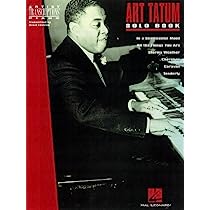
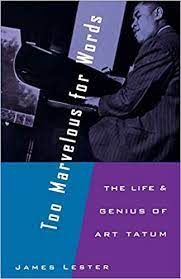
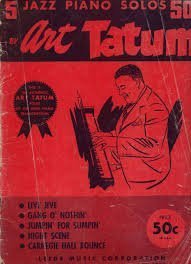
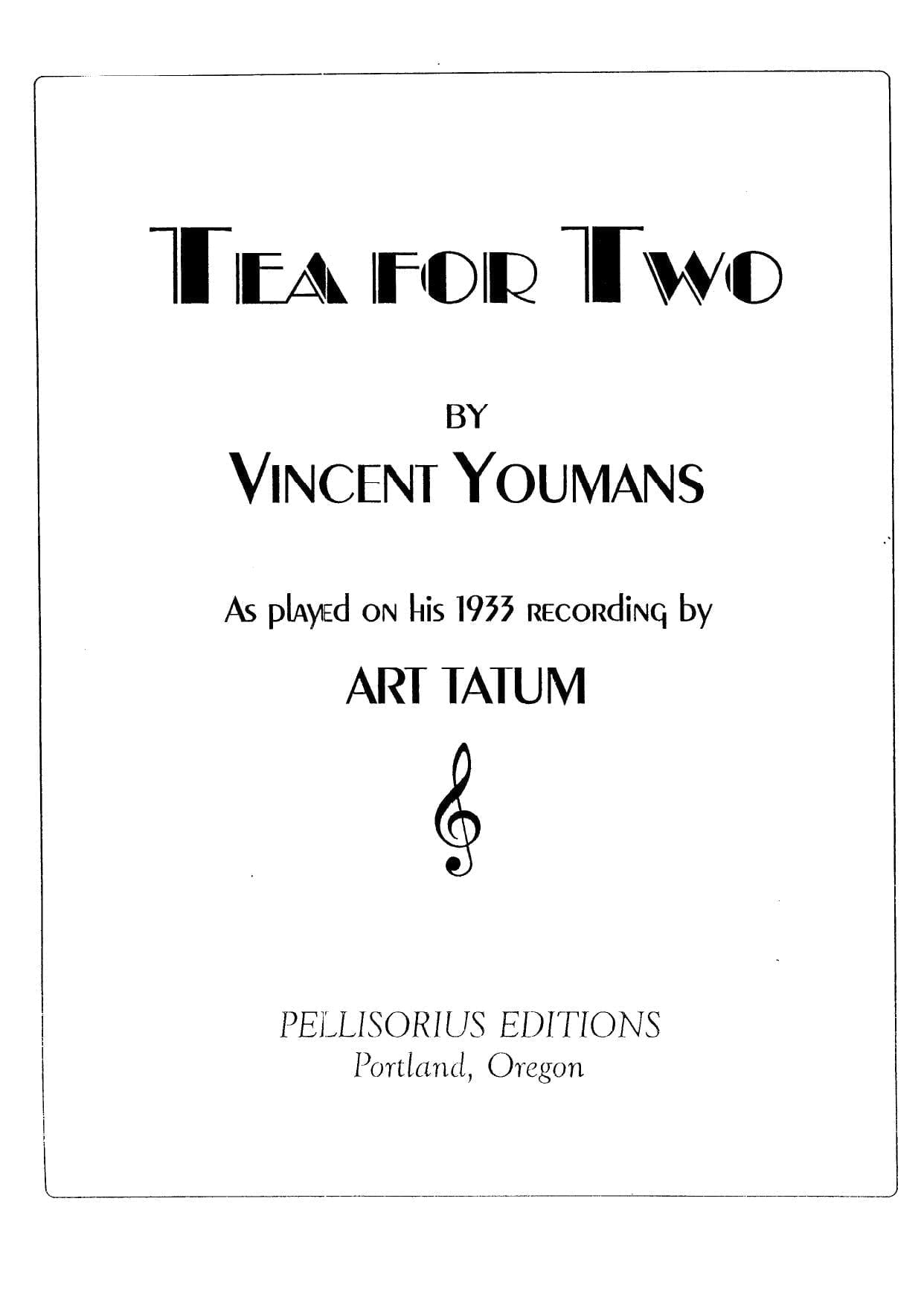

Please, subscribe to our Sheet Music Library. Sheet music should be accessible and affordable for all musicians, from professionals to absolute beginners.
Search your favorite sheet music in the Sheet Music Library Catalog
Tatum with his trio (with guitarist Tiny Grimes and bassist Slam Stewart) were filmed numerous times for a newsreel in 1943 live at the Three Deuces, playing the brief “Tiny’s Exercise.”
In 1946, Tatum appeared in his only Hollywood film, the Fabulous Dorseys, briefly playing solo on “Turquoise” (which is partly behind dialogue) and then in a jam session (“Art’s Blues”) with trombonist Tommy Dorsey, clarinetist Jimmy Dorsey, trumpeter Ziggy Elman, tenor-saxophonist Charlie Barnet, guitarist George Van Eps, an unidentified bassist, and drummer Ray Bauduc.
Finally, from the Spike Jones show in 1954, Tatum plays his solo arrangement of “Yesterdays,” the best hint of how incredible it must have been to see him performing live.
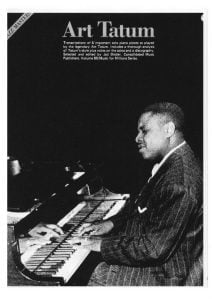
Art Tatum (Arthur Tatum Jr.) was an American jazz pianist widely considered one of the greatest technical virtuosos and most influential musicians in the history of jazz. Born legally blind in Toledo, Ohio, he possessed an incomparable depth of harmonic understanding, blazing execution speed, and limitless creativity that effectively reshaped jazz piano. His innovative reharmonizations and use of substitute chords were decades ahead of their time, laying the groundwork for the bebop movement in the 1940s.
Key Biographical Details
- Life Span: October 13, 1909 – November 5, 1956 (aged 47). He passed away prematurely in Los Angeles due to uremia caused by kidney failure.
- Early Life & Sight: Tatum was born with cataracts, leaving him entirely blind in one eye and with very limited vision in the other. Largely self-taught, he learned to play by ear by listening to his mother's piano rolls and radio broadcasts.
- Musical Style: Grounded in the "stride piano" tradition of Fats Waller and James P. Johnson, Tatum expanded the genre with complex, lightning-fast runs, bitonality, and sophisticated chord progressions.
- The "Three Pianists" Illusion: His technique was so advanced that when fellow musicians first heard his recordings (such as his famous 1933 rendition of "Tiger Rag"), they often believed they were listening to a trick recording of two or three pianists playing simultaneously.
Career & Legacy
Tatum initially made waves in Ohio with a local radio program before moving to New York City in 1932 to accompany singer Adelaide Hall. He quickly established himself as a legendary solo performer along 52nd Street's famous jazz clubs. In the 1940s, he transitioned to leading a highly successful commercial trio featuring bassist Slam Stewart and guitarist Tiny Grimes.
During the 1950s, producer Norman Granz captured the definitive twilight of his career, recording extensive solo marathons later released as The Solo Masterpieces, alongside group collaborations with jazz royalty like Ben Webster, Benny Carter, and Lionel Hampton.
Tatum’s genius transcended genres; legendary classical virtuosos like Vladimir Horowitz and Sergei Rachmaninoff reportedly visited New York bars just to watch him play in awe. He received multiple posthumous accolades, including the Grammy Lifetime Achievement Award in 1989. His landmark recordings can be explored today via streaming platforms like Art Tatum on Spotify.
Browse in the Sheet Music Library:
Or browse in the categories menus & download the Library Catalog PDF: