Scores for all instruments: 16,000+ (active and growing), over 236,000 pages.
All genres and levels: Jazz & Blues, Rock & Pop, Classical & Contemporary, Film & Musicals;
books & biographies; methods, études, play-along tracks (MP3) for Jazz & Rock.
Access & benefits: US$15.99 one-time payment, valid for lifetime, full Library access.
Bill Evans "Peace Piece"
Jazz sheet music and transcriptions download.
Browse in the Sheet Music Library:
Or browse in the categories menus & download the Library Catalog PDF:
Please, subscribe to our Sheet Music Library. Sheet music should be accessible and affordable for all musicians, from professionals to absolute beginners.
How Bill Evans created "Peace Piece"?
Bill Evans did not compose "Peace Piece" through traditional pre-planning; it was created as a spontaneous, written-out solo piano improvisation in December 1958 during the recording session for his album Everybody Digs Bill Evans.
How It Happened
- An accidental discovery: Bill Evans was sitting at the piano trying to craft an introduction for his solo recording of "Some Other Time" (a show tune by Leonard Bernstein from On the Town).
- Taking off on its own: As he played the vamp, the introduction developed its own distinct emotional weight and identity. Instead of stopping, he decided to keep going and let the music unfold.
- The two-chord ostinato: The entire piece is built on a gentle, repeating two-chord vamp moving between a Cmaj7 and a G9sus4.
Musical Structure & Influences
- Impressionist roots: The modal, static calm and coloristic harmonies owe a heavy debt to French impressionist and classical composers like Claude Debussy, Erik Satie (Trois Gymnopédies), Maurice Ravel, and Frédéric Chopin (Berceuse Op. 57).
- Free-form evolution: Over the unmoving left-hand ostinato, Evans lets the right-hand melody wander freely, introducing growing polytonalities, cross-rhythms, and calculated dissonances in the latter half before gently resolving.
- A one-time studio moment: Evans considered the piece a unique, unrepeatable moment of inspiration. Aside from one performance with the Bill Evans Dance Company in Seattle in 1978, he refused requests to play it live.

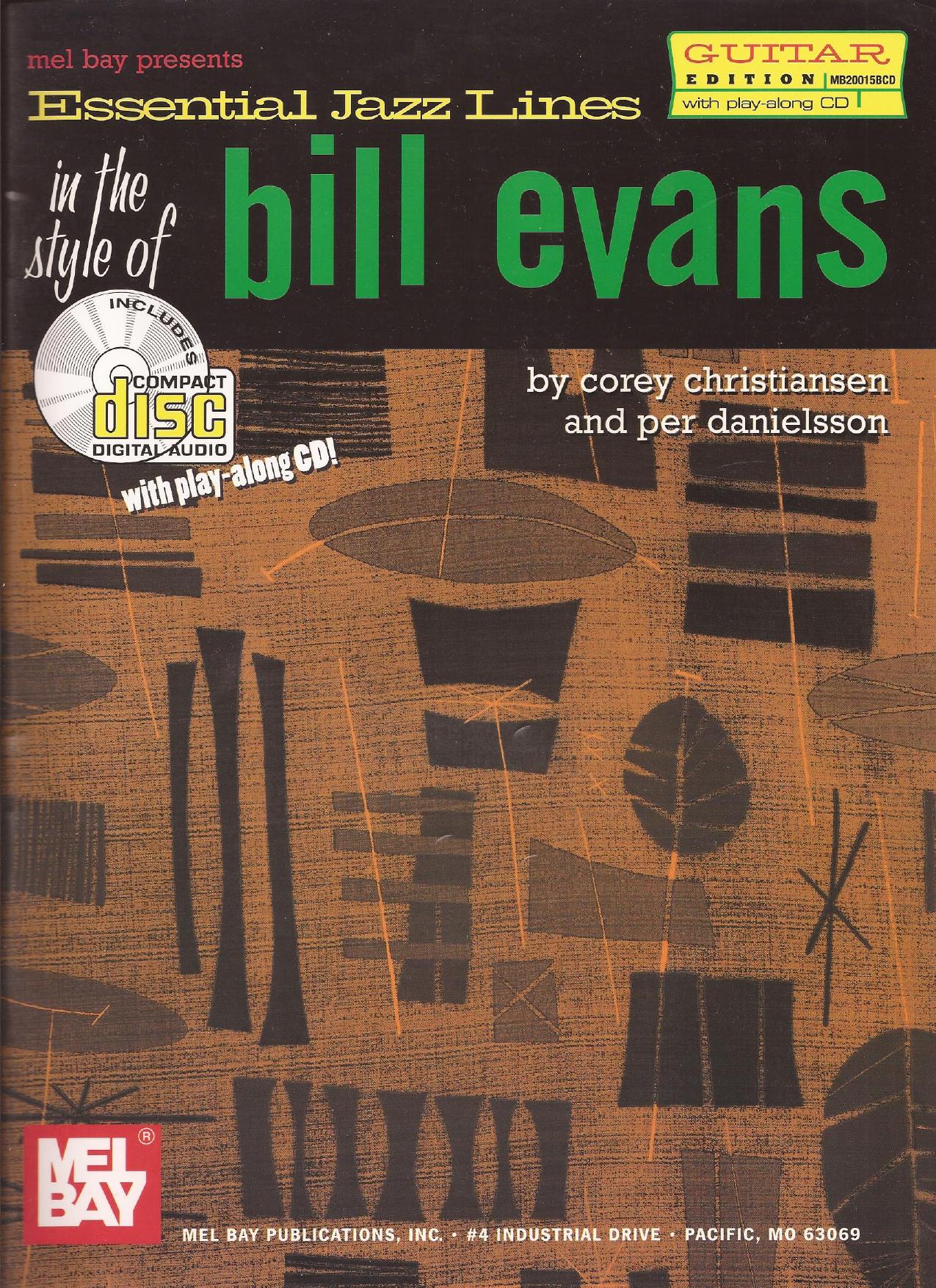
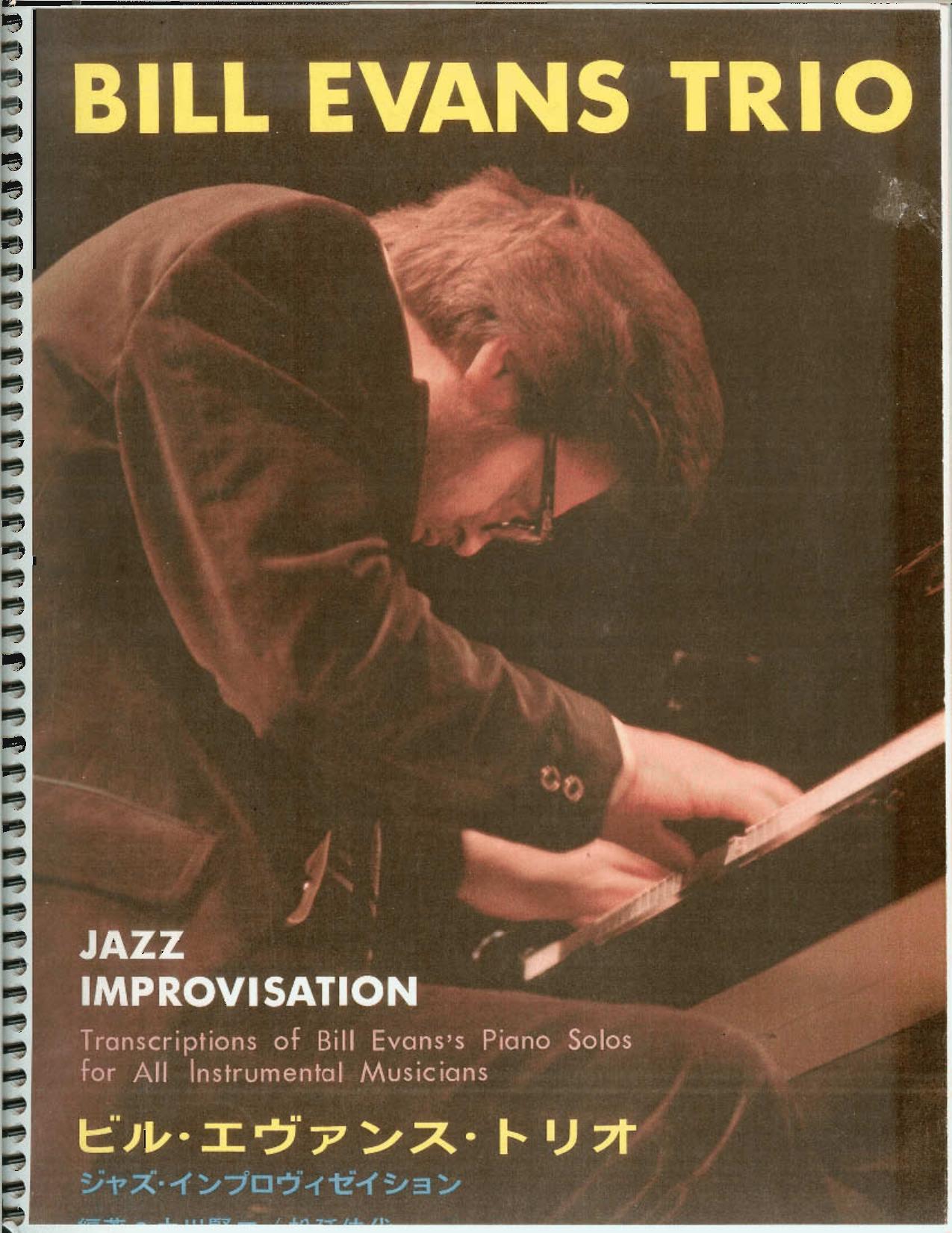
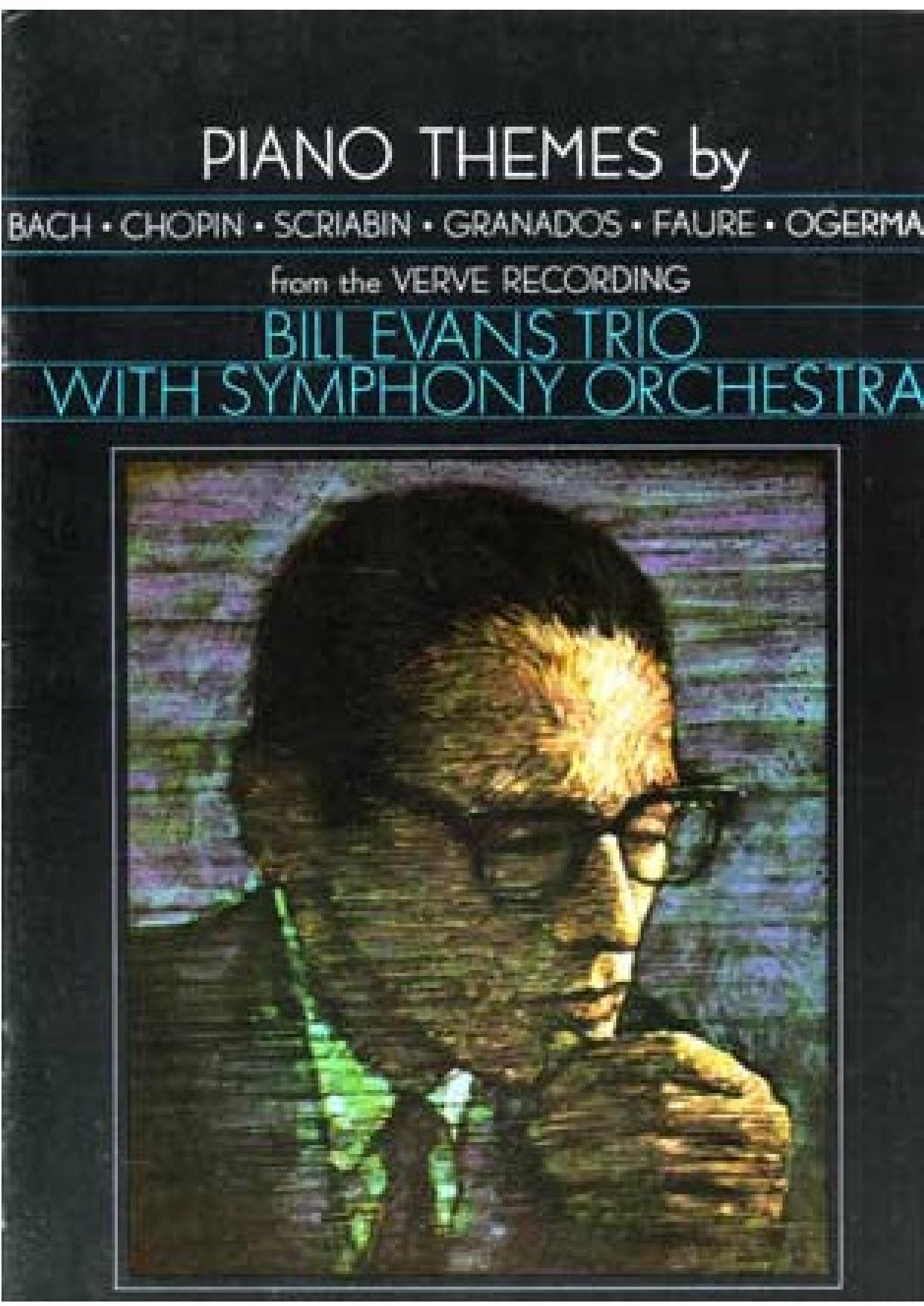
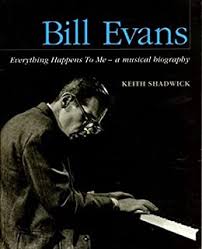
A peaceful ostinato figure, grounded and tranquil, opens the work. After a few bars, a serenely beautiful yet simple melody is heard in the treble which melts into a series of increasingly complex variations, the initial theme dissolving into trills and grace notes, gossamer fiorituras and filigree passages. The curve of complexity turns full circle when the theme returns in its original form at the end.
This could quite easily be a description of Chopin’s lullaby, the Berceuse, Op 57, composed in 1845, but in fact the work in question was recorded some 100 years later for the jazz album ‘Everybody Digs Bill Evans’.
Bill Evans’ ‘Peace Piece’ came out of Leonard Bernstein’s ‘Some Other Time’ (from On The Town). Evans borrowed the ostinato bass figure and improvised an increasingly decorative treble line over the top of two chords which remain the same throughout, just as in Chopin’s Berceuse.
“What happened was that I started to play the introduction, and it started to get some much of its own feeling and identity that I just figured, well, I’ll keep going”
– Bill Evans
While Chopin’s Berceuse, with its sense of freely evolving improvisation and fresh decorative ideas, is the most obvious model for ‘Peace Piece’, the work is also redolent of Satie’s Trois Gymnopédies (that repeating bass figure again) and the slow movement of Ravel’s G major Piano Concerto. The trills and bi-tonal figurations in ‘Peace Piece’ are also reminiscent of birdsong; Messiaen’s Catalogue d’Oiseaux was just appearing, but whether Evans actually knew this music is not known.
Evans, a jazz pianist by profession, was classically-trained at Southeastern University and Mannes School of Music, and his fondness for and mastery of classical repertoire (including Bach, Chopin, Scriabin, Rachmaninoff, Ravel and Debussy) gave him extraordinary expressive freedom and inspired some of his greatest jazz innovations.
“Everything I’ve learned, I’ve learned with feeling being the generating force.”
– Bill Evans
‘Peace Piece’ has a wonderful sense of static, meditative calm, and in both ‘Peace Piece’ and Chopin’s Berceuse, the ostinato serves as a unifying, grounding element from which ideas flower and evolve over an extended narrative arc, while the reprise of the opening melody creates a sense of departure and return. Evans’ music, like that of Chopin, and also Scriabin, Debussy and Ravel, combines economy of musical statement with highly original melodic and harmonic concepts (in ‘Peace Piece’, bars 47-49, for example, Evans uses a free tonal approach reminiscent of Prokofiev). He used oblique harmonies based on whole-tone scales, and abandoned functional or structural harmony, so that chords are specifically used for colour and timbre rather than strict harmonic progression. There is an introspective lyricism and intimacy in both his sensitive piano playing and his compositions which defies categorisation, proof that in great music creative influences transcend time and style.
Evans refused to play ‘Peace Piece’ live, insisting it was the result of a unique moment in the recording studio, a moment which could not be recreated in concert (though he did eventually perform it just once, two years before he died).
Many classical pianists admire Bill Evans and his influence is still felt nearly 40 years since his death: the French pianist Jean-Yves Thibaudet pays tribute to Evans’ genius in his ‘Conversations With Bill Evans’ album, and Russian pianist Igor Levit uses ‘Peace Piece’ as a fittingly consoling conclusion to his album ‘Life’. The British composer Gavin Bryars wrote ‘My First Homage’ (1978) as a homage to Bill Evans.
The score of ‘Peace Piece’ is published as a “written out improvisation”, offering the pianist the opportunity to either play it verbatim or to explore their own improvisations.
“To me Bill was the Chopin of jazz. He was a great artist.”
– Jimmy Rowles (1918-1996), American jazz pianist, vocalist, and composer
List of Bill Evans tribute albums
This is a chronological list of Bill Evans tribute albums.
- 1980: Seven Steps to Evans by Gordon Beck, Tony Oxley, Kenny Wheeler, Stan Sulzmann, and Ron Mathewson
- 1981: Elegy for Bill Evans by Richie Beirach
- 1981: Hommages by Gavin Bryars (The opening 15-minute "My First Homage" is to Evans.)
- 1982: Bill Evans—A Tribute by George Shearing, Richie Beirach, Teddy Wilson, Warren Bernhardt, John Lewis, Dave McKenna, Herbie Hancock, Joanne Brackeen, Jimmy Rowles, Dave Frishberg, and McCoy Tyner
- 1982: Oracle's Destiny by Michel Petrucciani
- 1986: Music of Bill Evans by the Kronos Quartet with Eddie Gómez and Jim Hall
- 1987: Dedicated to Bill Evans and Scott LaFaro by Larry Coryell and Miroslav Vitouš
- 1990: Bill Evans by Paul Motian
- 1990: Evanessence: Tribute to Bill Evans by Fred Hersch (reissued in 1998)
- 1992: Bill Evans ... Person We Knew by Larry Schneider and Andy LaVerne (SteepleChase)
- 1992: Then Along Came Bill: A Tribute to Bill Evans by Sylvia Syms
- 1993: Time Remembered: John McLaughlin Plays Bill Evans by John McLaughlin
- 1994: Now & Then: A Tribute to Bill Evans by Mitchel Forman
- 1994: Your Story: The Music of Bill Evans by Howard Alden with Frank Wess
- 1996: Plays the Music of Bill Evans by Bud Shank
- 1996: Turn Out The Stars—The Songs Of Bill Evans by Dominic Alldis
- 1997: Conversations with Bill Evans by Jean-Yves Thibaudet
- 1998: I Remember Bill: A Tribute to Bill Evans by Don Sebesky and Larry Coryell
- 2000: Conviction: Thoughts Of Bill Evans by Roseanna Vitro
- 2000: Letter to Evans by Renee Rosnes, Ray Drummond, and Billy Drummond
- 2001: Blue in Green by Tierney Sutton
- 2001: Evans Remembered by Enrico Pieranunzi
- 2002: Homage to Bill Evans and Jim Hall by Luigi Tessarollo with Stefano Bollani
- 2002: Play Bill Evans by the Danish Radio Jazz Orchestra and Jim McNeely
- 2002: Portrait of Bill Evans by Bob James, Herbie Hancock, Eliane Elias, Brad Mehldau, and Dave Grusin
- 2003: Bill Evans: Tribute to the Great Post-Bop Pianist by Paul Motian
- 2006: Paz—Niño Josele and the Music of Bill Evans by Niño Josele
- 2008: Something for You: Eliane Elias Sings & Plays Bill Evans by Eliane Elias
- 2009: Bill Evans Compositions Vol. 1 & Vol. 2 by Stefano Battaglia
- 2012: Further Explorations by Chick Corea with Eddie Gómez and Paul Motian
- 2013: To Bill Evans by Kerem Görsev
- 2015: A Tribute to Bill Evans by Monika Lang
- 2017: Kind of Bill by Dado Moroni, Eddie Gómez, and Joe LaBarbera
- 2020: The Real You: A Bill Evans Tribute by Enrico Pieranunzi and Thomas Fonnesbæk
- 2021: Tribute to Bill Evans by George Kontrafouris Trio (Greece)
- 2024: Evans on Evans by Jaden Evans (the pianist's grandson)
- 2024: A Letter to Evans by Michael Wolff