
Scores for all instruments: 16,000+ (active and growing), over 236,000 pages.
All genres and levels: Jazz & Blues, Rock & Pop, Classical & Contemporary, Film & Musicals;
books & biographies; methods, études, play-along tracks (MP3) for Jazz & Rock.
Access & benefits: US$15.99 one-time payment, valid for lifetime, full Library access.
Table of Contents
Happy birthday, Bob Seger, born on this in 1945
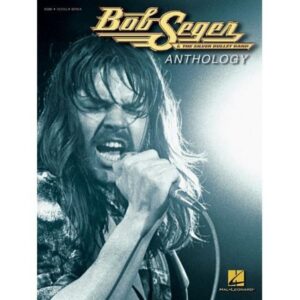
The best sheet music download from our Library.
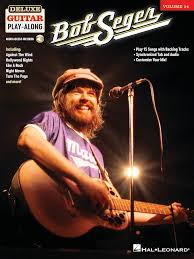
Please, subscribe to our Sheet Music Library.
Bob Seger: The Voice of America‘s Heartland
Introduction: More Than a Rock Star
In the pantheon of American rock music, few artists have captured the soul of the nation’s heartland quite like Bob Seger. Born Robert Clark Seger on May 6, 1945, in Detroit, Michigan, he would grow from a teenage garage-band frontman into one of the best-selling music artists of all time, with global record sales exceeding 75 million. Yet, unlike many of his contemporaries who chased fame and glamour, Seger’s music remained stubbornly, authentically rooted in the lives of ordinary people. His raspy, powerful voice became the soundtrack to the dreams, struggles, and quiet triumphs of the American working class. As a 1978 Rolling Stone profile once noted, Seger‘s “might be the strangest career in the history of rock and roll”—a career built not on image or hype, but on the slow, steady accumulation of trust between an artist and his audience. Inducted into both the Rock and Roll Hall of Fame (2004) and the Songwriters Hall of Fame (2012), and a Grammy Award winner for “Against the Wind,” Seger’s legacy is that of a quintessentially American storyteller whose work continues to resonate decades after its creation.

Early Life: From Detroit to Ann Arbor
Seger‘s early life was marked by both music and hardship. He was born at Henry Ford Hospital in Detroit to Charlotte and Stewart Seger. His father, a medical technician for the Ford Motor Company and a part-time musician, played several instruments—saxophone and clarinet—and exposed young Bob to music from a very young age. Stewart Seger had led a big band in the 1940s, and this duality—factory worker by day, musician by night—would later become a central theme in his son’s songwriting. When Bob was five, the family moved to the neighboring city of Ann Arbor, Michigan. However, the household was turbulent: years of arguments culminated in Seger’s father abandoning the family when Bob was just ten years old, leaving his mother to raise him and his older brother alone. This early experience of loss and resilience would profoundly shape Seger’s worldview and later permeate his music’s themes of yearning and perseverance.
Despite the domestic upheaval, music became Seger’s refuge. His father had taught him to play a bass ukulele at age nine, and he grew up absorbing the sounds of Elvis Presley, Buddy Holly, and Little Richard. By the time he was a teenager, Seger was already determined to become a musician—a decision that led him to forego college and devote himself entirely to his craft, holding practically no job other than that of a working musician. He attended Tappan Middle School and later Lincoln Park High School before graduating from Pioneer High School in 1963. It was during these formative high school years that Seger began his first serious musical ventures.

The Long Road to Stardom: Early Bands and Breakthroughs
In 1961, at the age of sixteen, Seger formed his first band, the Decibels, a Detroit-based trio. His future manager, Eddie “Punch” Andrews, was also a member, beginning a professional partnership that would endure for decades. The Decibels even recorded some of their original material, including what is believed to be Seger’s first penned song, “The Lonely One,” which received airplay on local radio stations. After the Decibels disbanded, Seger joined another local group, the Town Criers, where he served as frontman and began to build a modest local reputation. It was during this period that Seger and his bandmates became devoted fans of James Brown’s Live at the Apollo, an album they listened to religiously, and were also heavily influenced by the emerging British Invasion sound of the Beatles.
A series of other short-lived groups followed, including Doug Brown and the Omens, with whom Seger recorded singles like “TGIF”. Throughout the early and mid-1960s, Seger was a restless presence on the Detroit music scene—gaining local recognition but unable to break beyond it. In 1966, under the name Bob Seger and the Last Heard, he released a string of regional singles including “East Side Story,” “Persecution Smith,” and the raucous “Heavy Music, Parts 1 and 2,” all of which became substantial local hits. It was also during this politically charged era that Seger recorded “Ballad of the Yellow Beret,” an answer to Barry Sadler’s patriotic hit “Ballad of the Green Berets”—a decision he would later distance himself from as his political views evolved.
The national breakthrough, however, remained elusive. In 1968, Seger formed the Bob Seger System and released his debut studio album, Ramblin‘ Gamblin’ Man, in April 1969. The title track, propelled by its tight construction and funky energy, became his first major national hit, reaching No. 17 on the Billboard Hot 100. The album itself peaked at No. 62 on the Billboard 200. Yet, instead of capitalizing on this momentum, Seger’s subsequent releases with the System—Noah (1969) and Mongrel (1970)—failed to replicate its success. Displeased with Noah and battling Capitol Records executives who wanted to promote band member Tom Neme, Seger briefly disbanded the group and even contemplated quitting music entirely.
What followed was a period of stubborn persistence. Seger regrouped and, throughout the early 1970s, released a series of solo albums that struggled commercially: Brand New Morning (1971), Smokin‘ O.P.’s (1972), Back in ’72 (1973), and Seven (1974). While these albums contained gems—like the original studio version of “Turn the Page” on Back in ’72 and the blistering “Get Out of Denver” on Seven—none managed to pull Seger out of his regional orbit. The disparity was stark: he could play to 80,000 at the Pontiac Silverdome in Detroit one night, and to fewer than a thousand in Chicago the next. He was, as one critic later observed, “a star everywhere but on the charts.”
The Silver Bullet Band and National Superstardom
The turning point came in the mid-1970s. In 1973, Seger assembled a group of Detroit-area musicians into the Silver Bullet Band—a backing group that would become synonymous with his name and sound for decades to come. The band crystallized around a core lineup that included saxophonist Alto Reed, whose soulful playing would become a signature element of Seger’s music. In 1975, Seger released Beautiful Loser, an album recorded with many of the musicians who would form the Silver Bullet Band, though they were not yet officially christened as such. The title track, a gentle meditation on the gap between youthful dreams and adult realities, provided a template for the heartland rock sound that Seger was perfecting.
Then came Live Bullet (1976). Recorded at Cobo Hall in Detroit, the double live album captured the raw, electrifying energy of Seger and the Silver Bullet Band in front of a hometown crowd. It was the album that finally broke Seger nationally. Tracks like the live version of “Turn the Page,” with Alto Reed’s haunting saxophone introduction, and the extended medley of “Travelin‘ Man / Beautiful Loser” became rock radio staples. Live Bullet stayed on the Billboard charts for more than three years and commenced a remarkable run of seven consecutive Top Ten albums.
Later that same year, Seger released Night Moves, the studio album that would transform him into a household name. The title track, a sweeping, nostalgic ballad that reflected on adolescent love and lost innocence, was named Rolling Stone’s Song of the Year for 1977. The album also featured enduring tracks like “Mainstreet,” “Rock and Roll Never Forgets,” and “Sunspot Baby,” showcasing Seger’s range—from tender storytelling to Stones-style crunch. Night Moves was Seger’s first Top 10 album, and it set the stage for an extraordinary commercial peak.

What followed was a string of multi-platinum albums that defined the sound of heartland rock. Stranger in Town (1978) contained an astonishing concentration of hits: “Hollywood Nights,” “Still the Same,” “Feel Like a Number,” “We’ve Got Tonight,” and the irrepressible “Old Time Rock and Roll”. The latter would find a second life in 1983 when a young Tom Cruise famously slid across a polished floor in his socks and underwear to its beat in the film Risky Business, cementing the song in popular culture forever. Against the Wind (1980) became Seger’s first No. 1 album on the Billboard 200 and earned him a Grammy Award for Best Rock Performance by a Duo or Group with Vocal for the title track. The Distance (1982) and Like a Rock (1986) continued the winning streak, with the title track of the latter enduring in public consciousness for years as the soundtrack to Chevrolet truck commercials.
Throughout this period, Seger not only recorded with his Silver Bullet Band but also worked extensively with the renowned Muscle Shoals Rhythm Section, whose distinctive swing and swagger lent a soulful depth to many of his best-selling singles and albums.
Lyrical Themes: Stories of the Everyman
What set Seger apart from many arena-rock contemporaries was the substance of his songwriting. His music consistently dealt “honestly and sympathetically with the lives of working people”. The themes were universal yet grounded in specific, Midwestern experience: love and heartbreak, the passage of time, the loneliness of the road, the dignity of hard work, and the bittersweet memory of youth. As the Songwriters Hall of Fame would later note, “His vivid portraits of working class lives convey the hope and heartbreak implicit in the American dream”.
Songs like “Making Thunderbirds” paid direct tribute to 1950s auto workers, while “Feel Like a Number” captured the alienation of the factory floor. “Turn the Page,” written when Seger was still in his twenties, offered a weary, aching portrayal of life on tour—long before such confessional road songs became common in rock. “We‘ve Got Tonight” was a tender ballad of romantic urgency, later covered successfully by Kenny Rogers and Sheena Easton. And “Like a Rock” became a poignant anthem of strength and endurance, so resonant with American values that Chevrolet used it in a prominent, long-running advertising campaign.
Seger himself described his creative process as deeply personal. For “The Famous Final Scene,” he explained that he “wanted to write a song that would stop the show dead with its sensitivity” and that he had to “put myself in that mental hole for a month” to capture the pain of a relationship’s end. The result was a song of such emotional clarity that it remains one of his most powerful album closers.

Musical Style: Roots Rock and R&B Fusion
Seger’s musical style is a rich fusion of his Detroit roots. He absorbed the hard-driving soul and R&B that was created in his native city—artists like Mitch Ryder and James Brown were foundational influences. He also incorporated the garage-rock energy of his Michigan contemporaries like the Rationals and MC5, the raw power of Chuck Berry, and the polished craftsmanship of the Beatles. The result, as one critic described it, was a sound that combined “the tuneful Fab Four and fiery Godfather of Soul” with Seger’s unmistakable Midwestern sensibility.
His vocal delivery is equally distinctive: a classic raspy, powerful voice that could howl with ferocity on rockers like “Lucifer” and “Katmandu,” then soften into hushed intimacy on ballads like “Night Moves”. Seger was famously protective of his voice: before shows, he would reportedly go hours without speaking in order to preserve its gravelly power.
From a musical standpoint, Seger’s songs are known for their simple but effective construction. “Like a lot of Seger’s songs, the ingredients are simple but effective: a classic blues chord progression, a choogling organ riff and a pounding rhythm section, all topped off by a howling vocal”. This economy of means—no excessive virtuosity, no flashy production—allowed the emotional content of his lyrics and the authenticity of his delivery to take center stage.
As music journalist Dave Marsh observed in 1978, Seger’s work was often more admired in concept than in execution by critics, but his audience never wavered. “Rock ‘n’ roll (not rock) songs like these now singlehandedly sustain the jukebox industry,” noted a later appraisal.
The Best Songs and Compositions
Main article on Wikipedia: Bob Seger discography
Seger’s catalog is deep and varied. Beyond the ubiquitous hits, there exists a wealth of material that rewards deeper exploration:
- “Night Moves” (1976): Seger’s signature song, a cinematic reminiscence of adolescent romance set to a slow-building arrangement. Named Rolling Stone’s song of the year.
- “Turn the Page” (1973/1976): A haunting road song that captures the grinding loneliness of the touring musician, made iconic by its live version featuring Alto Reed’s saxophone.
- “Against the Wind” (1980): A reflective mid-tempo track about aging and perseverance, which won a Grammy and became the title track of Seger‘s first No. 1 album.
- “Old Time Rock and Roll” (1978): An exuberant, piano-driven homage to the music of the past that became a cultural phenomenon thanks to Risky Business.
- “Ramblin’ Gamblin’ Man” (1969): The song that started it all—a propulsive garage-rock gem with a hint of funk, reaching No. 17 in 1969.
- “Hollywood Nights” (1978): A high-energy rocker about the intoxicating rush of Los Angeles nightlife.
- “We‘ve Got Tonight” (1978): A tender, piano-laced ballad that has been covered by numerous artists across genres.
- “Shakedown” (1987): Seger’s only No. 1 hit on the Billboard Hot 100, written for Beverly Hills Cop II.
- “Still the Same” (1978): A mid-tempo shuffle with acoustic guitar-driven melody, reflecting on relationships and change.
- “Beautiful Loser” (1975): A gentle, philosophical examination of life’s compromises—the template for Seger‘s mature style.
Deep cuts like “Till It Shines,” “Sunspot Baby,” “The Fire Down Below,” and “Her Strut” demonstrate the consistent quality of Seger’s album tracks. His live recordings, particularly the Live Bullet album and Nine Tonight (1981), are considered some of the finest concert documents in rock history.
Filmography: Music for the Screen
Bob Seger’s music has enjoyed a robust life in film and television, often introducing his work to new generations. The most famous cinematic moment associated with his music remains the scene in Risky Business (1983) where Tom Cruise lip-syncs to “Old Time Rock and Roll,” an image so iconic it has become shorthand for 1980s pop culture.
His only No. 1 single, “Shakedown,” was written specifically for the 1987 film Beverly Hills Cop II, and its success on the charts demonstrated Seger’s ability to craft high-energy music for the screen. Other films that have featured his songs include Armageddon (1998), Grown Ups (2010), and No Hard Feelings (2023). Television series such as 9-1-1, Stranger Things, Sunny Nights, and Tracker have also utilized his music to evoke specific moods and eras.
Additionally, Bob Seger’s duet with Martina McBride, “Chances Are,” appeared on the soundtrack of the 1998 film Hope Floats. He has also appeared as himself in music documentaries, including Muscle Shoals (2013) and History of the Eagles (TV Series, 2012).
Collaborations with Fellow Musicians
While Bob Seger is not a jazz musician and the term “cooperations with other jazz musicians” may be a misnomer, his career is punctuated by notable collaborations with artists from a variety of genres, reflecting his wide musical respect.
Perhaps the most famous collaboration was with the Eagles. Seger co-wrote the band’s 1979 No. 1 hit “Heartache Tonight” alongside Glenn Frey, Don Henley, and JD Souther. The song’s origin is the stuff of rock lore: according to Souther, when Frey called Seger for a chorus idea, Bob Seger “just came right in with the chorus, just sang it and it was so good”. The connection with Frey went deeper; the two were close friends and Frey contributed guitar work to Seger recordings like “Fire Lake” and “Against the Wind”.
Bob Seger also lent his backing vocals to “Radioactive,” the lead single from KISS bassist Gene Simmons’ 1978 debut solo album, a track that also featured Aerosmith’s Joe Perry on guitar. His duet with country star Martina McBride on “Chances Are” demonstrated his ability to cross genre boundaries seamlessly. On his 2006 album Face the Promise, Seger recorded a duet with fellow Detroit rocker Kid Rock on the song “Real Mean Bottle,” and another with country singer Patty Loveless on “The Answer‘s in the Question”.
Beyond these featured collaborations, Bob Seger’s songs have been covered by an extraordinarily diverse range of artists, including Metallica, Thin Lizzy, Tina Turner, Rod Stewart, Cher, Bette Midler, Waylon Jennings, and many more, attesting to the universal appeal of his songwriting.
Influences and Legacy
Bob Seger’s musical DNA is a rich tapestry of American roots music. From his father’s big-band records to the Elvis Presley and Buddy Holly records of his childhood, from the raw soul of James Brown to the garage-rock fury of the Detroit scene, from the Beatles‘ melodic genius to Chuck Berry’s rock and roll energy—all these elements coalesced into Seger’s singular voice.
In turn, his influence on subsequent generations has been significant, if at times underappreciated. Artists like Kid Rock, who recorded a hit version of “Turn the Page” in the 1990s, and Bryan Adams have cited Seger as an inspiration. His music has permeated American culture so deeply that, as one critic wrote, “Go to any sporting event, wait seven minutes, and you’ll hear Seger’s boogie”.
The numbers speak volumes: more than 75 million records sold worldwide, seven multi-platinum albums, four platinum albums, and a catalog that has remained on the Billboard charts for years. His Greatest Hits compilation was the No. 1 Catalog Album of the Decade (2000-2010), selling over nine million copies in the U.S. alone and posting an unbroken 17-year streak on the Billboard charts.
But perhaps the most profound measure of Seger’s legacy is the enduring emotional connection his music fosters. As one retrospective noted, his songs “embody a decidedly American slant, drawing together weighty blue-collar struggles, ambitions, frustrations, hopes, heartbreak and dreams of the everyman”.
Later Career and Retirement
After the commercial peak of the 1980s, Seger gradually reduced his recording and touring schedule. He released only two studio albums in the 1990s: The Fire Inside (1991) and It‘s a Mystery (1995). In 2004, he was inducted into the Rock and Roll Hall of Fame, a recognition that was long overdue in the eyes of his fans.
He returned to the studio in 2006 with Face the Promise, which reached No. 4 on the Billboard album chart, proving his commercial viability remained intact. This was followed by Ride Out in 2014 and I Knew You When in 2017. The latter album, which featured songs dedicated to his friend Glenn Frey who passed away in 2016, was a reminder of the deep camaraderie that had always underpinned Seger’s music.
In September 2018, Seger announced his farewell tour, the “Travelin‘ Man” tour, which concluded with his final concert in Philadelphia in November 2019. The setlist often closed with “Rock and Roll Never Forgets”—an appropriate assertion for a man whose music had touched millions and whose legacy was secure.
Bob Seger: The Enduring Voice of the Heartland
Bob Seger’s career stands as a testament to the power of authenticity. In an industry that often rewards image and novelty, Seger built his empire on the bedrock of honest songs about real life. He never positioned himself as a rock god; instead, he remained the guy from Detroit who happened to write songs that spoke for millions. As the Songwriters Hall of Fame states, he is “universally acknowledged by fans and musicians as one of the defining voices of American music”.
From the gritty bars of Ann Arbor where he first learned his craft, to the sold-out stadiums where he sang “Against the Wind” to generations of fans, Seger’s journey represents something deeply American: the slow, hard-won success that comes from talent, perseverance, and an unshakeable belief in the dignity of ordinary life. His music will continue to echo through car stereos, jukeboxes, and late-night memories for as long as people seek songs that tell them who they are.
Search your favorite sheet music in the Sheet Music Library Catalog
Bob Seger & The Silver Bullet Band - Night Moves
Bob Seger & The Silver Bullet Band “Night Moves”.
Bob Seger & The Silver Bullet Band - Against The Wind (Lyric Video)
Bob Seger & The Silver Bullet Band – Against The Wind (Lyric Video).