Scores for all instruments: 16,000+ (active and growing), over 236,000 pages.
All genres and levels: Jazz & Blues, Rock & Pop, Classical & Contemporary, Film & Musicals;
books & biographies; methods, études, play-along tracks (MP3) for Jazz & Rock.
Access & benefits: US$15.99 one-time payment, valid for lifetime, full Library access.
Table of Contents
Happy birthday, Bruce Springsteen, born on this day in 1949.
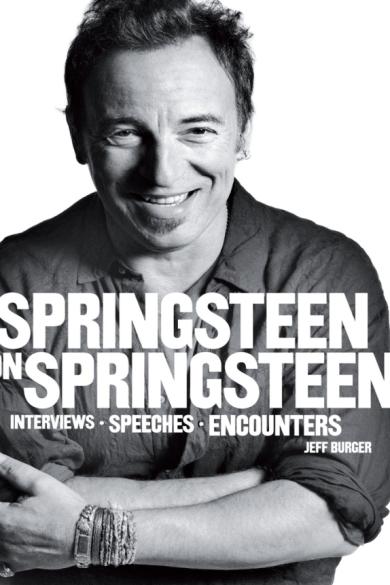
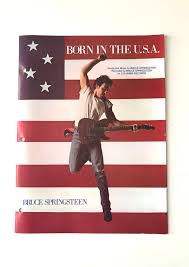
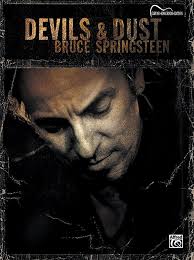
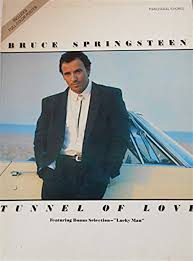
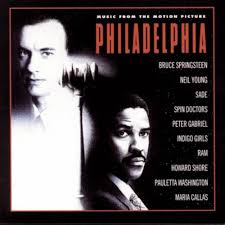


Search your favorite sheet music in the Sheet Music Library Catalog
Bruce Springsteen: The Boss, the Bard, and the Sound of the American Dream
More Than a Rock Star
Bruce Springsteen is not merely a musician; he is a cultural institution, a poet laureate of the working class, and a living embodiment of rock and roll's redemptive power. For over five decades, he has chronicled the lives of dreamers and drifters, factory workers and outlaws, lovers and losers, weaving their stories into anthems that resonate far beyond the boardwalks of New Jersey. With his weathered voice, tireless work ethic, and the righteous roar of the E Street Band, Springsteen transformed the personal into the universal, proving that the struggles of a kid from Freehold could speak to the hearts of millions across the globe.
This article explores the full arc of Springsteen's remarkable career: his hardscrabble origins and meteoric rise; the musical techniques and harmonic foundations that define his sound; the songs that became the soundtrack to countless American lives; his forays into film and fruitful collaborations; and the profound influence and enduring legacy of a man who, at his core, has always been a storyteller.
Search your favorite sheet music in the Sheet Music Library Catalog
From Freehold to the World: A Biography
Bruce Frederick Joseph Springsteen was born on September 23, 1949, in Long Branch, New Jersey, and raised in the blue-collar town of Freehold. His father, Douglas, struggled to hold down jobs, while his mother, Adele, was the family's anchor, working as a legal secretary. The tension and economic hardship of his childhood—what he later called a "normal middle-class family" life, though it was often anything but—would become the emotional bedrock of his songwriting.
The pivotal moment came when he was seven years old, watching Elvis Presley perform on The Ed Sullivan Show. "I couldn't imagine anyone not wanting to do that," he later recalled. His mother bought him his first guitar for $18, and by high school, he was already playing in bands, most notably The Castiles, where he became lead guitarist and eventually lead singer.
After graduating high school, Springsteen briefly attempted to break into the New York folk scene, but finding no traction, he returned to Asbury Park, New Jersey. There, amidst the boardwalks and dive bars, he assembled the musicians who would become the E Street Band. His 1973 debut, Greetings from Asbury Park, N.J., and its follow-up, The Wild, the Innocent & the E Street Shuffle, earned critical acclaim and comparisons to Bob Dylan, but failed to sell in significant numbers.
Facing the threat of being dropped by Columbia Records, Springsteen poured everything into his third album. Born to Run (1975) was a wall-of-sound masterpiece that captured the desperate romanticism of youth, and its title track became an instant anthem. The album catapulted him to stardom, landing him on the covers of Time and Newsweek in the same week and earning him the label "the future of rock and roll".
The subsequent decades saw Springsteen navigate a remarkable arc. The dark, introspective Darkness on the Edge of Town (1978) and the double-album The River (1980) showcased his growing maturity. Then came Nebraska (1982), a stark, acoustic album recorded on a four-track cassette in his New Jersey farmhouse, which Springsteen himself considers his most definitive work. The album's raw portrayal of desperate characters—serial killers, doomed lovers, and lost souls—revealed a new depth to his artistry.
1984's Born in the U.S.A. became a commercial juggernaut, selling over 20 million copies worldwide and spawning a record-tying seven Top 10 singles. But its misunderstood title track—a furious indictment of the Vietnam War's aftermath, famously co-opted as a patriotic anthem—demonstrated Springsteen's ability to embed complex social commentary within arena-rock bombast. The 1990s brought personal turmoil, including his divorce from actress Julianne Phillips and the dissolution of the E Street Band, but also creative renewal with Tunnel of Love (1987) and his Oscar-winning song "Streets of Philadelphia" (1993). In 1999, the E Street Band reunited for a triumphant world tour, and the new millennium brought a remarkable late-career resurgence with The Rising (2002), a powerful response to the September 11 attacks, followed by Magic (2007), Wrecking Ball (2012), and Letter to You (2020). In 2025, he released Tracks II: The Lost Albums, a collection of seven previously unheard full-length records, including the unreleased soundtrack Faithless.
Please, subscribe to our Sheet Music Library. Sheet music should be accessible and affordable for all musicians, from professionals to absolute beginners.
The Sound of Heartland Rock: Musical Style and Technique
Springsteen's musical style is a rich tapestry woven from the threads of rock and roll, folk, soul, R&B, and country. Often categorized as "heartland rock," his music is characterized by its cinematic scope, narrative-driven lyrics, and a sound that balances the raw energy of a bar band with the grandeur of a stadium anthem.
His songwriting technique is built on a foundation of classic rock structures—intros, verses, choruses, and bridges—but he wields them with a novelist's sensibility. His songs are populated by vivid characters and steeped in a sense of place, from the boardwalks of Asbury Park to the highways of the American West. As Rikky Rooksby's songwriting analysis notes, Springsteen's music serves as a masterclass in crafting songs that "escape cliché, achieve clarity, and ring true".
A key element of his technique is his use of the E Street Band as an instrument of collective expression. The band's sound is characterized by Clarence Clemons's saxophone, which provided a "call-to-arms" counterpoint to Springsteen's vocals; Roy Bittan's lyrical piano and Danny Federici's swirling organ; the driving rhythm section of Garry Tallent and Max Weinberg; and the guitar interplay between Springsteen, Steven Van Zandt, and Nils Lofgren. Their arrangements are meticulously crafted for maximum emotional impact, often building from quiet, intimate verses to explosive, cathartic choruses.
Springsteen's lyrics are the anchor of his music. He is a master of the narrative song, often writing from the perspective of characters whose lives are marked by economic hardship, broken dreams, and the stubborn hope of redemption. His approach to lyric writing is deeply literary, drawing on influences ranging from Flannery O'Connor and James M. Cain to Woody Guthrie and Bob Dylan. As one critic observed, his songs are "narrative and character-based songs" that have "captured and reflected the pains, hopes, dilemmas, and dreams of millions".
The Harmonic Architecture of the Boss
While Springsteen is not celebrated for harmonic complexity in the vein of jazz or classical composers, his harmonic choices are integral to his musical identity. His harmony is typically built on two to four chords, often emphasizing subdominant harmonies that create a sense of wistful yearning, particularly in his slower songs. This harmonic simplicity allows his melodies and lyrics to take center stage, while also creating a sense of emotional directness that resonates with his audience.
A prime example of his harmonic approach is "One Step Up" from Tunnel of Love (1987). The song is built on an ostinato-like chord pattern—IV–I⁶–ii⁷–I⁶—in F major, a repetitive sequence that mirrors the narrator's romantic aimlessness and the cyclical nature of his emotional life. The harmonic convention of the standard I–IV–V cadential progression is subtly subverted, reflecting the song's theme of being "one step up and two steps back".
Springsteen's use of harmony is also closely tied to his instrumentation. In the E Street Band's arrangements, layers of guitar, bass, keyboards, and saxophone often converge into a single, dense harmonic layer, with limited countermelodic embellishments. This textural stasis creates a powerful sense of momentum, driving the songs forward while allowing the vocals and lyrics to carry the emotional weight. As one music writer noted, Springsteen's music "sounds like a drive toward emotional release," a quality that his harmonic choices directly support.
The Essential Songs: A Composer's Greatest Hits
Springsteen's catalog is vast and varied, but certain songs stand as pillars of his artistry. Born to Run (1975) remains his definitive anthem, a sweeping, Spector-esque epic about escaping small-town life that captures the restless energy of youth with unprecedented urgency. The album's opener, "Thunder Road," is a masterful piece of scene-setting, opening with the immortal line "The screen door slams, Mary's dress sways" and building to a soaring climax that encapsulates the promise and heartbreak of young love. "Jungleland," the album's nine-and-a-half-minute closer, is a cinematic tour de force, featuring one of Clarence Clemons's most iconic saxophone solos and a narrative that spans love, violence, and redemption.
"Born in the U.S.A." (1984) is perhaps his most misunderstood song, its thunderous chorus often drowned out by its devastating critique of the Vietnam War's impact on America's working class. "The River" (1980) is a haunting folk-rock ballad about dreams deferred, inspired by the struggles of Springsteen's own sister and brother-in-law. "Atlantic City" (1982) is a spare, noir-like tale of desperation and criminality from the Nebraska sessions, while "The Promised Land" (1978) is a folk-rock anthem about resilience and the search for meaning in a flawed world.
Other essential tracks include "Rosalita (Come Out Tonight)" (1973), an exuberant rocker that became a live staple; "Badlands" (1978), a driving declaration of defiance; "Dancing in the Dark" (1984), his biggest Billboard hit; "Streets of Philadelphia" (1993), a stark, synth-driven meditation on illness and loss; and "The Rising" (2002), a powerful elegy for the victims of 9/11. In his later career, songs like "Wrecking Ball" (2012), "Western Stars" (2019), and "Letter to You" (2020) have demonstrated his continued relevance and artistic growth.
Discography
Main articles on Wikipedia: Bruce Springsteen discography and List of songs recorded by Bruce Springsteen Studio albums
- Greetings from Asbury Park, N.J. (1973)
- The Wild, the Innocent & the E Street Shuffle (1973)
- Born to Run (1975)
- Darkness on the Edge of Town (1978)
- The River (1980)
- Nebraska (1982)
- Born in the U.S.A. (1984)
- Tunnel of Love (1987)
- Human Touch (1992)
- Lucky Town (1992)
- The Ghost of Tom Joad (1995)
- The Rising (2002)
- Devils & Dust (2005)
- We Shall Overcome: The Seeger Sessions (2006)
- Magic (2007)
- Working on a Dream (2009)
- Wrecking Ball (2012)
- High Hopes (2014)
- Western Stars (2019)
- Letter to You (2020)
- Only the Strong Survive (2022)
The Boss on the Big Screen: Springsteen in Film
Springsteen's music has had a significant relationship with cinema, both as a source of songs for soundtracks and as a subject of films. His most celebrated film contribution is "Streets of Philadelphia," written for Jonathan Demme's 1993 drama Philadelphia. The song, a sparse and haunting ballad about a man dying of AIDS, won the Academy Award for Best Original Song, as well as multiple Grammy Awards and a Golden Globe. Springsteen later admitted he initially struggled with the assignment, but the film's rough cut—a simple scene of Tom Hanks walking through the streets—unlocked the song's emotional core.
Springsteen's music has also been featured in numerous other films, from Risky Business (1983) to The Wrestler (2008), and his song "The Wrestler" earned him a Golden Globe for Best Original Song. In 2019, he co-directed Western Stars, a feature film companion to his album of the same name, blending live performance with narrative vignettes. More recently, the biographical film Springsteen: Deliver Me from Nowhere (2025) chronicled the making of Nebraska, with Jeremy Allen White starring as Springsteen and performing newly recorded versions of the album's songs for the soundtrack. Additionally, 2025 saw the release of Faithless, a long-lost soundtrack to a "spiritual Western" that was never made, as part of the Tracks II collection.
Collaborations: The E Street Band and Beyond
The E Street Band is not simply Springsteen's backing group; they are his creative partners and, in many ways, his musical family. The original lineup, formed in the early 1970s, included Clarence Clemons on saxophone, Danny Federici on organ and accordion, Vini "Mad Dog" Lopez on drums, David Sancious on keyboards, and Garry Tallent on bass. Steven Van Zandt joined on guitar in 1975, and Max Weinberg and Roy Bittan replaced Lopez and Sancious shortly thereafter. The band's chemistry—Clemons's towering saxophone, Van Zandt's gritty guitar, Bittan's elegant piano—became the signature sound of Springsteen's music.
Beyond the E Street Band, Springsteen has collaborated with a wide range of artists. He contributed harmonica to Jon Bon Jovi's "Hollow Man" in 2025, a full-circle moment for Bon Jovi, who had idolized Springsteen as a teenager. He has duetted with The Killers on "Dustland" (2021) and Bleachers on "Chinatown," and performed with Zach Bryan on "Sandpaper" (2024). In 2025, he brought out Paul McCartney during a Liverpool concert for a rendition of "Can't Buy Me Love," marking the first time the E Street Band performed the Beatles classic live. He has also collaborated extensively with Tom Morello, both live and in the studio, including a searing version of "The Ghost of Tom Joad" that transformed the folk ballad into a modern-rock anthem.
Influences: The Searchers and the Storytellers
Springsteen's influences are as vast and American as his music. He has repeatedly cited Woody Guthrie and Bob Dylan as his primary artistic touchstones, describing them as "searchers" who were "out on the frontier of the American imagination". From Guthrie, he inherited a commitment to social justice and the belief that a song could be a tool for change. From Dylan, he learned the power of language and the possibility of elevating rock lyrics to the level of poetry.
Elvis Presley provided the primal spark—the realization that music could be a vehicle for transcendence and rebellion. Hank Williams and country music taught him about the storytelling power of simplicity. Soul and R&B artists like James Brown and the Motown roster infused his music with a deep spiritual connection and a physical groove. The punk movement of the late 1970s, particularly The Clash, influenced his more politically charged work, while the folk revival of the 1960s shaped his acoustic albums like Nebraska and The Ghost of Tom Joad. As a songwriter, he has been compared to literary figures like John Steinbeck and Walt Whitman, whose expansive vision of America—its beauty and its brutality—resonates throughout his catalog.
Legacy: The Boss's Enduring Impact
Bruce Springsteen's legacy is measured not only in record sales and awards—though these are considerable, including over 150 million records sold, 20 Grammy Awards, an Oscar, a Tony, a Kennedy Center Honor, and the Presidential Medal of Freedom—but in his profound cultural impact. He has been inducted into the Rock and Roll Hall of Fame, the Songwriters Hall of Fame, and the New Jersey Hall of Fame.
His influence extends across generations of musicians, from Bon Jovi and The Killers to Zach Bryan and Bleachers. His philanthropic work—supporting food banks, veterans' organizations, and anti-poverty initiatives—reflects the values of compassion and solidarity that are central to his music. As a cultural figure, he has been studied as a symbol of American identity, a voice for the working class, and a heir to the tradition of Whitman, Lincoln, and Steinbeck. His 1975 album Born to Run was honored by Congress on its 50th anniversary as "a timeless masterpiece about our daily struggles and chasing our dreams".
Springsteen's legacy is also one of relentless evolution. At 76, he continues to release new music, tour with the E Street Band, and explore new artistic avenues, from Broadway to film. His story is a testament to the power of perseverance, the dignity of hard work, and the belief that rock and roll can still change lives.
Bruce Springsteen: The Heart of Rock and Roll
Bruce Springsteen's career is a singular achievement in American music. From the boardwalks of Asbury Park to the world's biggest stadiums, he has remained true to his vision: to write songs that tell the truth about ordinary lives, to perform them with the passion and commitment of a man who knows no other way, and to remind us that even in our darkest moments, there is always the possibility of redemption. He is the Boss, the Bard of the Garden State, and the heartbeat of rock and roll. As long as there are dreamers and believers, there will be Springsteen, calling them to the promised land.
Browse in the Sheet Music Library:
Or browse in the categories menus & download the Library Catalog PDF: