Scores for all instruments: 16,000+ (active and growing), over 236,000 pages.
All genres and levels: Jazz & Blues, Rock & Pop, Classical & Contemporary, Film & Musicals;
books & biographies; methods, études, play-along tracks (MP3) for Jazz & Rock.
Access & benefits: US$15.99 one-time payment, valid for lifetime, full Library access.
Table of Contents
Remembering Buddy Rich, born on this day in 1917
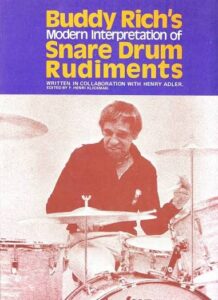
Buddy Rich: The Immortal Force Behind the Drums
Born on this day, September 30, 1917, in Brooklyn, New York, Bernard "Buddy" Rich remains the most electrifying and technically gifted drummer in the history of jazz. Billed as "the world's greatest drummer," a title he carried with a mixture of swagger and undeniable proof, Rich's career spanned seven decades, from vaudeville toddler to the leader of the most ferocious big band of the post-swing era. He was a force of nature whose speed, power, and musicality redefined what was possible behind a drum kit, leaving a legacy that continues to influence musicians across every genre.
Please, subscribe to our Sheet Music Library. Sheet music should be accessible and affordable for all musicians, from professionals to absolute beginners.
The best sheet music download from our Library.
From "Baby Traps" to Big Band Stardom
Rich's life was extraordinary from the very beginning. Born in the Sheepshead Bay neighborhood of Brooklyn to Jewish vaudevillian parents, Bess Skolnik and Robert Rich, he was literally born into show business. At just 18 months old, he was incorporated into his parents' act, dressed in a sailor suit and playing a drum arrangement of "The Stars and Stripes Forever" before emerging from behind the kit to tap-dance. By the age of four, he was headlining Broadway under the moniker "Baby Traps the Drum Wonder," and by his early teens, he was leading his own band on tours across the United States and Australia, becoming the second-highest-paid child entertainer of the 1930s, behind only Jackie Coogan.
Rich's transition to jazz came in 1937 when he joined clarinetist Joe Marsala. He quickly graduated to the big bands of Bunny Berigan and Artie Shaw, but it was his tenure with Tommy Dorsey from 1939 onward that cemented his reputation. During this period, he also met and performed with a young Frank Sinatra, beginning a lifelong, often tempestuous friendship. After a stint in the U.S. Marines during World War II, where he served as a judo instructor, Rich returned to Dorsey before forming his own orchestra in 1946 with financial backing from Sinatra.
The 1950s were a period of prolific collaboration. Rich became a star of Norman Granz's Jazz at the Philharmonic tours, engaging in legendary "drum battles" with Gene Krupa. Their 1952 Carnegie Hall duel was captured on the album The Drum Battle, and they later recorded the studio album Krupa and Rich in 1955. He also recorded with Charlie Parker on the historic Bird and Diz session in 1950 and faced off against Max Roach on the 1959 album Rich versus Roach. Despite these high-profile sideman gigs, Rich's true calling was leading a band, and in 1966, he found lasting success with the formation of the Buddy Rich Big Band, an ensemble that would tour relentlessly until his death.
Search your favorite sheet music in the Sheet Music Library Catalog
The Apex of Technical Mastery: Style, Technique, and Harmony
Buddy Rich's musical style was a unique fusion of visceral power and meticulous control. He was an advocate of the traditional grip, a technique he maintained even as matched grip became the standard for most modern drummers. However, he would switch to matched grip for cross-stickings and when playing floor toms, a visual flourish that became a signature part of his showmanship. His setup was designed for maximum projection: a 14x24 bass drum with a moleskin patch and wooden beater, a 9x13 rack tom, two 16x16 floor toms, and a 5x14 snare drum. This configuration, paired with heavy wood-tip sticks and Avedis Zildjian cymbals, produced a sound that could cut through an entire big band "like a razor blade".
What set Rich apart, beyond his legendary speed and endurance, was his impeccable time. The late drum educator Jim Chapin once stated that Buddy had the most accurate time, from beat to beat, of any drummer he had ever heard. His playing was always supportive of the ensemble, a fact often overshadowed by his explosive solos. As noted by Modern Drummer, if one listens past the technical command, they will hear "a supreme, articulate accompanist". His time feel sat "right down the middle of the beat," providing a rock-solid foundation for his band.
In terms of harmony, Rich's instrument was the band itself. He did not deal in chord progressions but in the orchestration of rhythm and dynamics. His big band arrangements, particularly those written by his favored arrangers like Bill Holman, Don Menza, and Bill Reddie, were built to showcase his drumming as a lead voice. Rich never learned to read sheet music, relying instead on his photographic memory and a drummer to play the parts for him during rehearsal. He would listen to a new chart once and instantly memorize its structure, knowing exactly what he needed to do to drive it. He viewed the drummer as the "quarterback" of the band, and his arrangements were designed to reflect that philosophy, with the drums often stating the melody or engaging in a call-and-response with the horn sections.
The Essential Recordings: Best Songs and Compositions
While Rich was primarily an interpreter and bandleader rather than a composer of standards, his signature pieces became defining works of the big band repertoire.
"West Side Story Suite": This is perhaps his most famous extended work. Arranged by Bill Reddie, it was released on the 1966 album Swingin' New Big Band and became a staple of his live performances for the rest of his life. The suite blends Leonard Bernstein's iconic melodies with Rich's explosive drumming, and his solo on the "Prologue/Jet Song" section is one of the most transcribed and studied drum solos in history. Rich found the music challenging, reportedly taking a month of constant rehearsal to perfect it.
"Channel One Suite": Another long-form masterpiece, composed and arranged by Bill Reddie. A live recording from Caesars Palace was featured on the acclaimed 1968 album Mercy, Mercy, which was praised as "the finest all-round recording by Buddy Rich's big band". The piece is a tour de force that emphasizes both the band's precision and Rich's virtuosity, becoming a signature closer for his concerts.
"Mercy, Mercy, Mercy": Rich's big band arrangement of the Joe Zawinul classic became a thunderously rousing showcase. The chart, a staple for the band, features the drums prominently alongside solo space for tenor saxophone and guitar or piano.
Other Essential Tracks: Rich's live performances often featured high-energy pieces like "Time Check" (arranged by Don Menza), "Groovin' Hard", and "Love For Sale". His albums The Roar of '74 and Big Swing Face are quintessential showcases of his band's raw power, featuring arrangements that highlighted his explosive playing.
Buddy Rich in Film and Television
Rich's visual presence was as powerful as his musical one, making him a natural for film and television. He appeared as himself in several Hollywood films during the big band era, including Symphony of Swing (1939), Ship Ahoy (1942) with Tommy Dorsey, and How's About It (1943). His music has also been featured in soundtracks, most notably in the Academy Award-winning film Whiplash, where the protagonist is seen holding a Buddy Rich album, and his recording of "Birdland" is used to underscore the film's intense drumming sequences.
Television was where Rich became a household name. He was a frequent guest on The Tonight Show Starring Johnny Carson, where his friendship with the host and his ferocious drum battles with fellow drummers like Ed Shaughnessy became legendary. One of his most widely seen performances was a 1981 episode of The Muppet Show, where he engaged in a hilarious and musically thrilling drum battle with Animal. His 1973 PBS special, recorded at the Top of the Plaza in Rochester, was a watershed moment for a generation of drummers, many of whom cite it as a primary influence.
Collaborations: From Bird to Sinatra
The list of musicians Buddy Rich collaborated with reads like a who's who of 20th-century music. He was a sideman for Artie Shaw, Tommy Dorsey, Count Basie, and Harry James. He recorded with Charlie Parker and Dizzy Gillespie on the historic Bird and Diz session. He backed Ella Fitzgerald and Louis Armstrong on notable recording sessions. He recorded with the Oscar Peterson Trio, featuring Ray Brown and Herb Ellis. He collaborated with Indian tabla master Ustad Alla Rakha on the 1968 album Rich à la Rakha. Perhaps his most famous partnership was with Gene Krupa, their drum battles becoming the stuff of jazz legend.
His relationship with Frank Sinatra was particularly complex. They were bandmates in the Dorsey band, where their rivalry sometimes erupted into brawls, but they remained lifelong friends. Sinatra delivered the eulogy at Rich's funeral in 1987. In 1982, Sinatra invited Rich and his orchestra to back him for the Concert for the Americas, a performance that included Rich's electrifying take on the "West Side Story" medley.
The Legacy of the World's Greatest Drummer
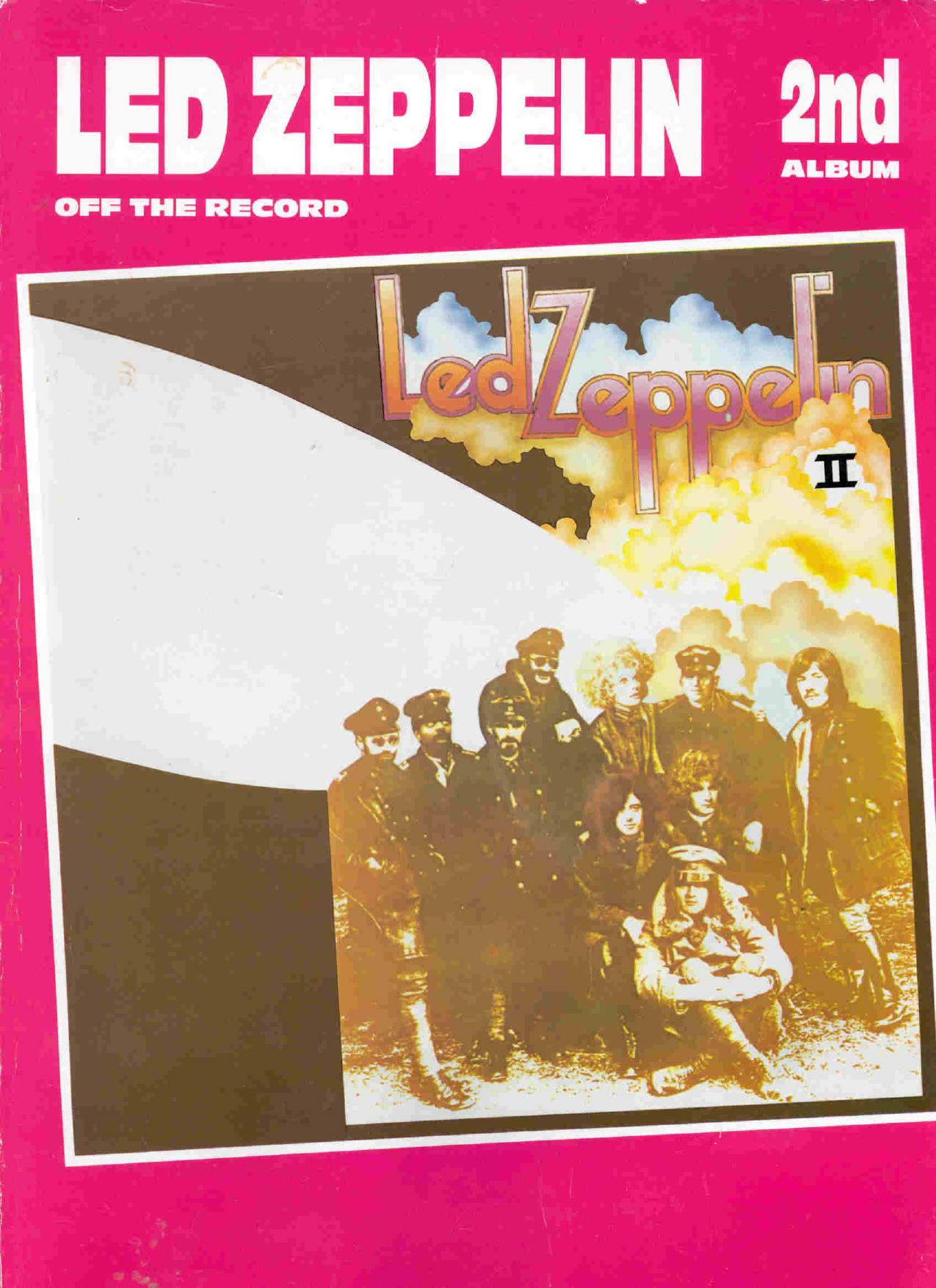
Buddy Rich's influence extends far beyond the jazz world. Many of rock's most famous drummers, including John Bonham of Led Zeppelin, Bill Ward of Black Sabbath, and Roger Taylor of Queen, have cited him as a primary influence. Taylor once said, "when you talk about pure technique, Buddy Rich was simply the best". His legacy is so pervasive that he is often the only jazz drummer included on lists of the greatest rock drummers.
His technical innovations and his approach to the drum set as a melodic and driving force in an ensemble remain foundational. The Burning for Buddy tribute albums, produced by Rush's Neil Peart in 1994, featured rock and jazz drummers like Max Roach, Steve Gadd, and Joe Morello performing Rich's signature arrangements with his own big band. In 2009, a poll by Rhythm magazine voted Buddy Rich the "most influential drummer ever," ahead of John Bonham and Ringo Starr.
Rich was a complex figure. He was a perfectionist with a notoriously short temper, famous for his blistering tirades against band members. Secret recordings made by a band member captured his volcanic outbursts, but those who knew him best, like Mel Tormé, noted that he was often charming and polite to the rock drummers who came to greet him after shows. He held a black belt in karate and was known for his sharp wit on talk shows. Despite his fierce exterior, he was deeply respected by his peers. He performed hundreds of concerts a year, participated in film productions, and appeared on countless TV shows, living up to the title he was given: "The World's Greatest Drummer".
Buddy Rich passed away on April 2, 1987, at the age of 69, following complications from a brain tumor. He left behind a discography that is a testament to his genius and a standard of excellence that continues to challenge and inspire drummers today. His daughter, Cathy Rich, has carried on his legacy by leading the Buddy Rich Big Band, ensuring that the music and the myth of the man who made the drums a lead instrument will never be forgotten.
Browse in the Sheet Music Library:
Or browse in the categories menus & download the Library Catalog PDF:
Discography
As leader/co-leader
- The Flip Phillips Buddy Rich Trio (Clef, 1953)
- The Swinging Buddy Rich (Norgran, 1954)
- Buddy and Sweets (Norgran, 1955)
- Sing and Swing with Buddy Rich (Norgran, 1955)
- The Lester Young Buddy Rich Trio with Lester Young (Norgran, 1955)
- Krupa and Rich (Clef, 1956)
- Buddy Rich Sings Johnny Mercer (Verve, 1956)
- The Lionel Hampton Art Tatum Buddy Rich Trio (Clef, 1956)
- The Wailing Buddy Rich (Norgran, 1956)
- This One's for Basie (Verve, 1957) [3]
- Buddy Rich Just Sings (Verve, 1957)
- Buddy Rich in Miami (Verve, 1958)
- Rich Versus Roach (Mercury, 1959)
- The Voice is Rich (Mercury, 1959)
- Richcraft (Mercury, 1959)
- Playtime (Argo, 1961)
- Burnin' Beat with Gene Krupa (Verve, 1962)
- Blues Caravan (Verve, 1962)
- The Sounds of '66 with Sammy Davis Jr. (Reprise, 1966)
- Swingin' New Big Band (Pacific Jazz, 1966)
- Big Swing Face (Pacific Jazz, 1967)
- The Driver (EmArcy, 1967)
- The New One! (Pacific Jazz, 1968)
- Rich à la Rakha (Liberty, 1968)
- Mercy, Mercy (Pacific Jazz, 1968)
- Buddy & Soul (Pacific Jazz, 1969)
- Keep the Customer Satisfied (Liberty, 1970)
- Are You Ready for This? (Roost, 1971)
- A Different Drummer (RCA Victor, 1971)
- Conversations (EMI-Parlophone, 1972)
- Rich in London (RCA Victor, 1972)
- Stick It (RCA Victor, 1972)
- The Roar of '74 (Groove Merchant, 1974)
- The Last Blues Album Volume 1 (Groove Merchant, 1974)
- Transition with Lionel Hampton (Groove Merchant, 1974)
- Very Live at Buddy's Place (Groove Merchant, 1974)
- One Night Stand with Buddy Rich 1946 (Joyce, 1974)
- One Night Stand with Buddy Rich 1946 Vol. 2 (Joyce, 1975)
- Big Band Machine (Groove Merchant, 1975)
- Film Tracks of Buddy Rich and Gene Krupa (Joyce, 1976)
- Speak No Evil (RCA, 1976)
- Buddy Rich Plays and Plays and Plays (RCA, 1977)
- Lionel Hampton Presents Buddy Rich (Who's Who in Jazz, 1977)
- Class of '78 (Century, 1978)
- Together Again: For the First Time with Mel Tormé (Gryphon/Century, 1978)
- The Bull (Chiaroscuro, 1980)
- Live at Ronnie Scott's (DRG, 1980)
- Buddy Rich Band (MCA, 1981)
- I'm Always Chasing Rainbows (BL Enterprise, 1981)
- Live at the 1982 Montreal Jazz Festival (Hudson Music, 1982) [DVD-Video +CD]
- Rich and Famous (Amway, 1983)
- Tuff Dude (Denon, 1986)
- Mr. Drums: ... Live on King Street, San Francisco (Cafe, 1986)
Posthumous releases
- Europe '77 (Magic, 1993)
- Buddy Rich & His Big Band At Stadthalle Leonberg, Germany 10 July 1986 (Jazz Band, 1996)
- Wham! The Buddy Rich Big Band Live (Label M, 2000)
- No Funny Hats (Lightyear, 2004)
- Time Out (Lightyear, 2007)
- The Solos (Lightyear Entertainment, 2014)
- Birdland (Lightyear Entertainment, 2015)
- Just In Time: The Final Recording (Gearbox, 2019)
- Trios (Lightyear Entertainment, 2023)
As sideman
With Count Basie
- 1952: Basie Jazz (Clef, 1954)
- 1952: The Swinging Count! (Clef, 1956)
- compilation: Blues by Basie (Columbia, 1956)
With Benny Carter
- 1952: Alone Together (Norgran, 1955)
- 1954: Benny Carter Plays Pretty (Norgran, 1955)
- 1954: New Jazz Sounds (Norgran, 1955)
With Harry James
1953: Radio Discs of Harry James (Joyce LP 2002, 1975)
1953: One Night Stand With Harry James (Joyce LP 1014, 1977)
1953: One Night Stand (Sandy Hook SH 2004, 1978)
1953: One Night Stand With Buddy Rich & Harry James (Joyce LP 1078, 1980)
1953/1958: One Night Stand With Harry James at The Blue Note (Joyce LP 1124, 1983)
1953/1962: Live! (Sunbeam SB 230, 1979)
1953–1954: Saturday Night Swing (Giants of Jazz Productions GOJ LP-1016, 1979)
1954: 1954 Broadcasts (Sunbeam SB 217, 1976)
1954?: Trumpet After Midnight (Columbia CL 553 and B-410, 1954)
1954?: Dancing In Person With Harry James At The Hollywood Palladium (Columbia CL 562 and B-428, 1954)
1953–1954: Juke Box Jamboree (Columbia CL 615, 1955)
1956: Harry James and His New Jazz Band, Vol. 1 / Vol. 2 (Mr. Music MMCD 7010/7012, 2002)
1957: Wild About Harry! (Capitol T 874 / ST 874, 1967)
1963: Double Dixie (MGM E-4137 / SE-4137, 1963).
1964: 1964 Live! In The Holiday Ballroom Chicago (Jazz Hour Compact Classics JH-1001, 1989) – live
1964: One Night Stand With Harry James on Tour in '64 (Joyce LP 1074, 1979)
1964: In a Relaxed Mood (MGM SE-4274, 1964)
1964: New Versions of Down Beat Favorites (MGM SE-4265, 1964)
1965?: Harry James Plays Green Onions & Other Great Hits (Dot DLP 3634 / DLP 25634, 1965)
1965: Harry James, Buddy Rich, Woody Herman (Europa Jazz EJ 1041, 1981)
1966: The Ballads and the Beat! (Dot DLP 3669 / DLP 25669, 1966)
Buddy Rich Big Band - Birdland - 15/07/1978
Line up: Buddy Rich (Drums) Tom Warrington (Bass guitar) Bob Kaye (Piano) John Marshall, Mike McGovern, Mark Ohlsen, Chuck Schmidt (Trumpets) Dale Kirkland, Glenn Franke, George Moran (Trombones) Steve Marcus, Gary Pribeck, Chuck Wilson, Andy Fusco, Greg Smith (Saxes)