
Table of Contents
Scores for all instruments: 16,000+ (active and growing), over 236,000 pages.
All genres and levels: Jazz & Blues, Rock & Pop, Classical & Contemporary, Film & Musicals;
books & biographies; methods, études, play-along tracks (MP3) for Jazz & Rock.
Access & benefits: US$15.99 one-time payment, valid for lifetime, full Library access.
"Chasing Trane" The John Coltrane Documentary 2016.
Chasing Trane: The John Coltrane Documentary is a 2016 American documentary film, written and directed by John Scheinfeld. The film is about the life and career of American jazz saxophonist and composer John Coltrane.
Who was John Coltrane?

The best sheet music download from our Library.
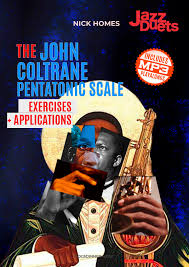

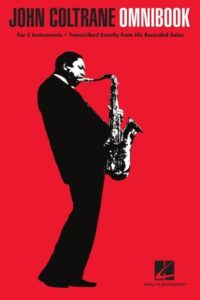
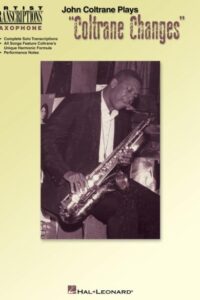


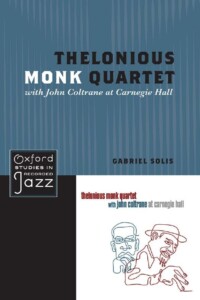


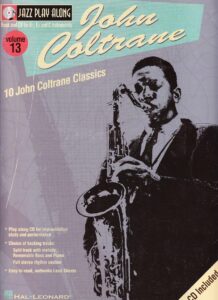
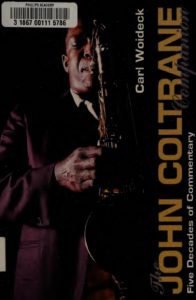
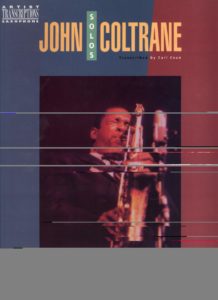
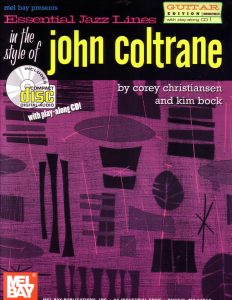
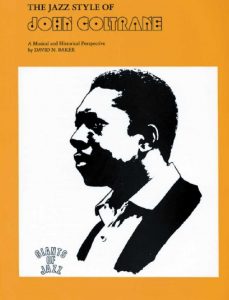

Please, subscribe to our Sheet Music Library. Sheet music should be accessible and affordable for all musicians, from professionals to absolute beginners.
John Coltrane: The Biography, Music, and Legacy of a 20th-Century Icon
John William Coltrane (September 23, 1926 – July 17, 1967) stands as one of the most influential musicians of the 20th century. His work reshaped jazz, pushing its boundaries from hard bop into modal jazz and, ultimately, into the avant-garde.
Biography: From Tragedy to Transcendence
Born in Hamlet, North Carolina, Coltrane grew up in a musical and religious environment. His father, a tailor and part-time musician, sparked his initial interest in music. After a series of family tragedies, including the death of his father and grandparents within a few months of each other, Coltrane moved with his mother to Philadelphia in 1943. Here, he formally studied music, initially playing clarinet and alto horn before falling under the spell of saxophonists like Johnny Hodges and Lester Young. However, one moment changed his trajectory forever: seeing Charlie Parker perform in 1945, an experience that lit a creative fire within him.
After a stint in a Navy band, Coltrane honed his craft throughout the late 1940s and early 1950s, playing with R&B and jazz bands led by Eddie "Cleanhead" Vinson, Dizzy Gillespie, and Johnny Hodges. His first recorded solo is with Gillespie on the track "We Love to Boogie" from 1951.
His career-defining break came in 1955 when he joined Miles Davis's legendary quintet. Yet, this period was also marked by a severe heroin and alcohol addiction, which made him unreliable and led to Davis firing him in early 1957. Facing rock bottom, Coltrane returned to Philadelphia, locked himself in a small room, and underwent a brutal, successful, self-imposed detoxification. Clean and reborn, he accepted an offer from the eccentric pianist Thelonious Monk to join his quartet at New York's Five Spot Café. The six-month residency with Monk was a musical crucible. Coltrane later said, "Playing with Monk brought me close to a musical architect of the highest order". Monk’s rhythmic angularity and harmonic daring pushed Coltrane to think in new ways, as the trombonist J.J. Johnson noted: "Since Charlie Parker… they were something else…".
By the end of 1957, Coltrane had not only kicked his habits but also emerged as a fully-formed, visionary artist. By the early 1960s, he had formed his "Classic Quartet"—featuring pianist McCoy Tyner, bassist Jimmy Garrison, and drummer Elvin Jones—which became the definitive ensemble of his career. Tragically, Coltrane succumbed to liver cancer at the age of 40 in Huntington, New York. He left behind a wife, the pianist Alice Coltrane, and three children, including saxophonist Ravi Coltrane.
Music Style & Evolution
Coltrane’s style can be periodized into three distinct phases, each representing a quantum leap in musical thought:
- The "Hard Bop" and "Sheets of Sound" Era (1955–1959): Working within the Davis and Monk groups, Coltrane developed a densely harmonically vertical improvisational style. Critic Ira Gitler famously coined the term "sheets of sound" to describe the cascading torrents of notes that Coltrane produced, playing fast arpeggios and scale patterns across several octaves at blistering speeds. These were not random; they were a liquid, aggressive way of playing through chord changes at an almost impossible velocity.
- The Modal Period & Soprano Saxophone (1960–1964): Inspired by Davis's seminal album Kind of Blue, Coltrane began to move away from rapid chord changes towards simpler, more spacious modal structures. This freed him from constantly outlining chords, allowing him to explore melody and mood. This era also saw him introduced to the soprano saxophone, an instrument he famously popularized, using its sharp, voice-like tone on his iconic interpretation of "My Favorite Things". His "Classic Quartet" defined this period, creating music that was both rhythmically explosive and spiritually searching. As pianist Brad Mehldau observes, Coltrane’s tone was one of "abundance and generousness".
- The Avant-Garde and Free Jazz Era (1965–1967): In his final years, Coltrane completely dissolved formal boundaries. Spurred on by the free jazz of Ornette Coleman, Coltrane’s music became increasingly atonal, abstract, and dense. Albums like Ascension (1965) featured large ensembles improvising collectively, often with incredible ferocity, embodying the protest and turmoil of the era but also a raw, transcendent spirituality.
Improvisational Licks
Coltrane's improvisational vocabulary is a cornerstone of modern jazz education. While he created "sheets of sound," specific signature patterns (or "licks") are identifiable:
- Diminished Patterns: Coltrane frequently used patterns derived from diminished scales, particularly over dominant chord alterations, creating a tense, chromatic sound.
- Superimposed Chords: He would often play lines that implied one chord while the rhythm section played another, a technique called superimposition. This "three-on-one chord approach," learned from Monk, involved arpeggiating three chords simultaneously, creating a dense, sweeping harmonic texture.
- The "Giant Steps" Licks: The harmonic maze of "Giant Steps" demanded a new kind of vocabulary. Coltrane’s solos on the track are built on arpeggiating the underlying parent scales at breakneck speed, outlining the crazy quilt of key centers a third apart.
Relationship with Other Artists
Coltrane's relationships were symbiotic. From Miles Davis, he learned the power of space, time, and modal harmony. Davis, in turn, absorbed Coltrane’s harmonic daring. Thelonious Monk was his "musical architect," teaching him how to build solos with structural and rhythmic complexity.
In his own "Classic Quartet," he found equals: McCoy Tyner’s powerful, chordal comping provided a harmonic anchor; Elvin Jones’s polyrhythmic drumming created a swirling, multi-layered foundation; and Jimmy Garrison’s bass gave the music a deep, pulsating life.
His collaborations with Eric Dolphy (a fellow boundary-pusher), saxophonist Pharoah Sanders (whom he mentored and who later took the music to an even more spiritual and abrasive place), and his wife Alice Coltrane (who continued his spiritual-musical journey after his death) were crucial to his later period.
Chord Progressions and Music Harmony
Coltrane’s most profound contribution is arguably his radical approach to harmony. His innovation, known as the Coltrane Changes (or Coltrane Matrix), is a system of chord substitutions that replaced the standard ii‑V–I progression with three key centers a major third apart, traveling across an augmented triad.
This system is famously showcased in the composition "Giant Steps," whose chord progression modulates rapidly through three unrelated keys (B, G, and Eb major), creating a dizzying, non-traditional harmonic landscape.
The genius of "Giant Steps" is that it’s not simply a composition; it’s a pure tonal map moving in descending major thirds. The primary chords are all major 7th chords, with their related ii–V progressions inserted to approach them. This logic of moving by major thirds, rather than the classic circle of fifths, broke open jazz harmony. This method was not just a gimmick but a way to create infinite harmonic motion within a repeating phrase.
Influences
Coltrane's music was built on the foundation of giants. He directly cited Lester Young as a key stylistic influence, but it was Charlie Parker ("The Bird") whose revolutionary fire and melodic genius provided the primary blueprint for his conception of improvisation and intensity. Parker "was a primitive next to Coltrane; Coltrane was obsessed by it," highlighting the focused mania Trane had for his craft.
Beyond jazz, his spiritual awakening influenced his theoretical approach. Some scholars and fans link the symmetry of the "Coltrane Changes" and his use of thirds to religious numerology, with the three key areas representing a "magic triangle" or the Holy Trinity, aligning with his deep Christian and later universalist spiritual beliefs.
Legacy
Coltrane’s legacy is almost immeasurable. He is arguably the most studied and revered saxophonist in jazz history. But his influence transcends jazz. Rock icons like Jimi Hendrix and Carlos Santana, numerous hip‑hop artists, and a vast spectrum of modern musicians cite him as a foundational inspiration. His music became a soundtrack for the civil rights movement, and his persona as a "message-giver" tied artistic creation directly to a "greater good". His recordings remain in print, and his solo transcriptions are studied religiously by aspiring musicians worldwide. The fact that the African Orthodox Church canonized him under the title "Saint John Coltrane" affirms that he has transcended secular fame into the realm of pure spiritual reverence.
Works: Major Albums & Discography
Coltrane led over fifty recording sessions as a leader and appeared as a sideman on dozens more. His official discography is vast, but key works include: 45 studio albums, 11 live albums, 23 compilations, and 2 video albums. After his death, a plethora of archives, outtakes, and compilations continued to be released, solidifying his reputation as "The House That Trane Built".
Most Known Compositions and Performances
Some of his most famous compositions include:
- Giant Steps (1959): The ultimate harmonic challenge for players.
- Naima (1959): A deeply beautiful, serene ballad composed for his first wife.
- Blue Train (1957): Quintessential hard bop theme.
- A Love Supreme (1965): A four-part suite that stands as his masterpiece. It is his musical and spiritual autobiography, divided into "Acknowledgement," "Resolution," "Pursuance," and "Psalm." The final movement "Psalm" is Coltrane "speaking" in musical notes a poem he had written to God.
- My Favorite Things (1961): Transformed a Broadway show tune into a 14‑minute modal modal jazz epic on soprano saxophone.
- Ascension: A 38-minute collective improvisation for 11 musicians that pushed jazz into total freedom.
Works on Films
The definitive documentary about Coltrane is *Chasing Trane * (2016). Directed by John Scheinfeld, this critically acclaimed film explores Coltrane’s life, spiritual journey, and revolutionary music using never-before-seen home movies, studio footage, and rare photographs. It is narrated by Denzel Washington, who speaks the words of Coltrane. Another notable documentary is *The World According to John Coltrane *, which includes memorable live performances from European concerts.
Documentaries & Further Viewing
- *Chasing Trane: The John Coltrane Documentary * (2016) – The most definitive and comprehensive biopic (158 minutes), featuring interviews with Bill Clinton, Kamasi Washington, Wynton Marsalis, and many others.
- *The World According to John Coltrane * (1990) – A part of the American Masters series, focusing on his multicultural and spiritual influences, featuring footage of Coltrane in Europe and Africa.
John Coltrane was not merely a saxophonist; he was a relentless musical seeker. He transformed his instrument from a source of entertainment into a vehicle for spiritual exploration and social commentary. From the blazing chordal maze of "Giant Steps" to the meditative chant of A Love Supreme, Coltrane’s genius lay in his relentless ability to dismantle musical conventions in service of a higher emotional and spiritual truth. His life ended too soon, but his sound—in its power, passion, and profound humanity—will echo for generations.
Search your favorite sheet music in the category of Jazz, Blues, Soul, & Gospel.
Directed by veteran filmmaker John Scheinfeld (who also made the acclaimed The U.S. vs. John Lennon and the 2018 documentary on Harry Nilsson Who is Harry Nilsson…? ), Chasing Trane: The John Coltrane Documentary is a full-length film that tells the story of the legendary saxophonist's life from his upbringing in the South to his enduring global influence. The documentary follows the classic narrative of a genius overcoming personal demons to achieve transcendent greatness, spanning his entire career for a complete picture of his life.
"Chasing Trane" The John Coltrane Documentary 2016:
Groundbreaking Production & Biopic Innovation
Chasing Trane was the first documentary about John Coltrane authorized by his estate. This sanctioning granted the filmmakers unprecedented access to his entire studio catalog, allowing the film's score to be composed entirely from master recordings. The film also broke new ground in the biopic genre to overcome a major hurdle: Coltrane, who passed away in 1967, had given very few recorded interviews, and rarely any of sufficient quality to be used in a film. To solve this, director John Scheinfeld decided to bring Coltrane to life in a highly unique way by asking the two-time Academy Award-winning actor Denzel Washington to voice Coltrane's words, sourced exclusively from his print interviews.
Director Scheinfeld explained that the characters Denzel Washington has played typically display "a quiet strength," a quality many friends of Coltrane also identified in him, making Washington the director's first and only choice for this crucial role.
Artistic Vision and Cast Interview Lineup
Rather than focusing purely on technical music history, director Scheinfeld intentionally framed the film as a journey into the human spirit, aiming for Chasing Trane to resonate beyond typical jazz enthusiasts. His goal was not to mythologize, but to tell an "honest story," notably confronting Coltrane's early battles with addiction without omitting his darker moments.
To build this narrative, Scheinfeld assembled a diverse and powerful "cast" of interviewees who knew Coltrane or were touched by him. This reflects Coltrane's wide cultural impact and includes:
- Musicians: Sonny Rollins (a close friend), Wayne Shorter, McCoy Tyner, Benny Golson, Reggie Workman, Santana, Ravi Coltrane (his son), Common, and John Densmore of The Doors.
- Writers & Record Execs: Ben Ratliff, Ashley Kahn.
- Family: His step-daughter Antonia Andrews and Michelle Coltrane.
- Cultural Figures: Former U.S. President Bill Clinton (an accomplished saxophonist) and philosopher Cornel West.
The Role of Denzel Washington and Unique Artistic Choices
Denzel Washington's involvement was more than a simple voice-over. When invited to participate, Washington didn't just accept; he asked to see a rough cut of the film to ensure it met his standards. After viewing it, he famously called director Scheinfeld and said, "It's beautiful brother," making his involvement official and marking a profoundly moving collaboration between two visionary artists.
Washington recorded his parts not in a sterile vocal booth, but on the set of the film he was directing at the time (August Wilson's Fences in Pittsburgh), sitting on a stool and imagining he was across a table from Coltrane to give the reading a more authentic, conversational quality. The resulting narration helps give the film unprecedented realism for a subject long gone.
Technical Details, Release and Critical Reception
Production and Runtime: The film is 99 minutes long, with the added attraction of an additional 43 minutes of bonus material and features not included in the theatrical release. On the review aggregator Rotten Tomatoes, Chasing Trane holds an approval rating of 73% based on 37 reviews, with an average rating of 7.20/10. On Metacritic, the film has a score of 69 out of 100, based on 13 critics, indicating "generally favorable reviews".
Release: Chasing Trane had its world premiere at the Telluride Film Festival in Colorado between September 2–5, 2016. This was followed by its international premiere at the 2016 Toronto International Film Festival (TIFF) before it began a wider global release in April 2017.
Critic and Audience Reviews
Chasing Trane is celebrated for how it encapsulates the man's entire world in a single viewing. Critics widely praised its ambitious scope and ability to communicate the man via his own words. James Reed of The Boston Globe called it "Much more than a clip-filled biography… it’s a thoughtful, moving embrace of what Coltrane achieved". The film was rated 7.3/10 by IMDb users who highlight how the documentary used still shots coupled with interviews to create a film that is "never slow or dull".
Other professional reviews also provided insight into the nature of the documentary. A review in Vreme stated it is "a good and powerful thing that on the fiftieth anniversary of Coltrane's death, a film like this was made". Additionally, some specialized reviewers on MUBI note the film could function as a "solid primer for newcomers". However, some also point out that it offers almost no musical context, focusing more on Coltrane's story arc than his art, a signifier of Scheinfeld's original intention to create a "journey film" rather than a purely musical one.
In-Depth Look at the Bonus Features
Chasing Trane is available in multiple editions, including versions that include the main feature plus a 43-minute cache of content, adding tremendous value for fans who want to dive deeper. The special features are not just filler; they contain significant archival treasures and deep dives into the Coltrane mythology:
- Never-before-seen home movies and photographs shot by Coltrane and his associates.
- Exclusive interviews with people such as legendary recording engineer Rudy Van Gelder about the technical life behind A Love Supreme.
- Extended conversations with musicians like Carlos Santana and others.
- Rare television performances of the classic quartet, including the only known live footage of Coltrane performing "A Love Supreme".
What We Learned: Coltrane's Perspective In His Own Words
The film's greatest achievement is how it uses Denzel Washington’s voice to portray the Coltrane perspective. Without falling into the trap of a typical narrator, Washington’s narration offers what Scheinfeld calls "Coltrane, speaking", revealing the man’s own humility and perspective on his art.
In one poignant moment, Washington reads Coltrane’s own words to articulate his philosophy of music: "I think that music is an instrument. It can create a thought pattern in the mind of the listener. And I believe in having an objective. I hear the guys just blowing changes. I firmly believe that music can be a force for good in the world." This quote reflects the humanitarian and spiritual drive that marked the later part of his career. Another key line from the interview speaks to the man’s own humility and endless drive for improvement as an artist: "My goal is to live the truly religious life, and express it in my music. If you live it, when you play there’s no problem because the music is just part of the whole thing. To be a musician is really something. It’s a really great thing."
Ultimately, Chasing Trane avoids simple hero-worship, focusing instead on a deeply human portrait of a man searching for meaning. John Scheinfeld refused to edit the shadows out of Coltrane's history, instead emphasizing his weaknesses so they could be overcome. By the end of the film, audiences don't simply feel they've seen a history of jazz techniques—they feel they've lived inside a philosophical journey about discipline, spirituality, and the redemptive power of art.