
Scores for all instruments: 16,000+ (active and growing), over 236,000 pages.
All genres and levels: Jazz & Blues, Rock & Pop, Classical & Contemporary, Film & Musicals;
books & biographies; methods, études, play-along tracks (MP3) for Jazz & Rock.
Access & benefits: US$15.99 one-time payment, valid for lifetime, full Library access.
Table of Contents
Who is Daniel Hellbach (b. 1958)?
Search your favorite sheet music in the Sheet Music Library Catalog
Daniel Hellbach: The Swiss Composer Who Bridged Pop and Classical Music for Generations of Learners
Daniel Hellbach (1958–2026) was a Swiss composer and music pedagogue whose impact on music education across Europe is difficult to overstate. Over a career spanning several decades, Hellbach composed more than thirty volumes of piano music and numerous pedagogical works for recorder and other instruments, all published through Acanthus Music. His unique musical language—a seamless fusion of pop, rock, jazz, and classical elements—revolutionized teaching literature by offering young musicians music they could genuinely identify with and enjoy playing. As both a prolific composer and a dedicated piano teacher, Hellbach understood the needs of students and educators from the inside, and his works reflect this deep practical knowledge. This article explores his life, his compositional style and harmonic language, his most significant works, his collaborations, and the enduring legacy he left behind.
The best sheet music download from our Library.


Please, subscribe to our Sheet Music Library. Sheet music should be accessible and affordable for all musicians, from professionals to absolute beginners.
Biography
Daniel Hellbach was born on February 2, 1958, in Switzerland. From an early age, he demonstrated a strong affinity for music, and he eventually pursued formal studies at the Conservatory in Lucerne, where he trained as a musician and educator. This academic foundation provided him with a solid grounding in classical technique, harmony, and composition, which would later serve as the bedrock upon which he built his distinctive pedagogical style.
After completing his studies, Hellbach settled in Dulliken, Switzerland, where he lived for many years and worked as an engaged and passionate piano teacher at various music schools. Unlike many composers who write from a purely theoretical or abstract perspective, Hellbach composed directly from his teaching practice. Every piece he wrote was conceived for his own students, tested in real lessons, and refined through practical pedagogical experience. This hands-on approach gave his music an authenticity and effectiveness that resonated immediately with learners and teachers alike.
Hellbach's reputation grew steadily. Over a period of ten to fifteen years, he established himself not only in his native Switzerland but throughout Europe as a composer of popular teaching literature. His works were published by Acanthus Music, with whom he maintained a close and enduring relationship as composer, author, and friend. The publisher has described him as one of the defining composers of contemporary pedagogical music literature.
Tragically, Daniel Hellbach passed away on July 19, 2026, at the age of 68. His death marked the end of an exceptional creative career, but his musical legacy continues to live on through the countless students, teachers, and musicians who play his works every day. As Acanthus Music poignantly noted, his music does not end with the last note—it continues to live through those who play it. His two final compositions, "Rhapsody in Moods" and "In the Spotlights," were published in 2026, bringing a remarkable body of work to a close.
Search your favorite sheet music in the Sheet Music Library Catalog
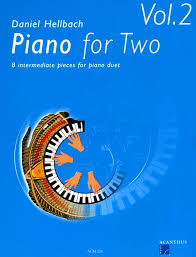
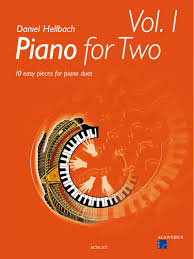
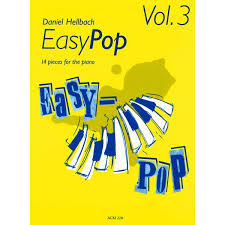

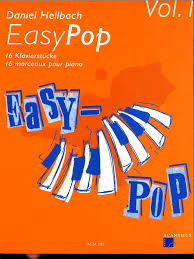

Musical Style and Technique
Hellbach's musical style is characterized by a deliberate and sophisticated fusion of popular and classical idioms. At its core, his music combines stylistic elements from pop, rock, and jazz with the structural and technical foundations of classical music. This combination results in a tonal language that meets the taste of a wide public while simultaneously building bridges to the classical tradition.
What distinguishes Hellbach's approach from that of other composers who work in crossover genres is the pedagogical intentionality behind every stylistic choice. His music is not merely popular in style for the sake of accessibility; rather, he uses popular idioms as a vehicle for teaching serious musical skills. As the publisher Acanthus Music explained, because everything sounds so good, technical difficulties are overcome almost imperceptibly in an enjoyable musical package. All the technical and tonal possibilities of the instrument are assimilated almost without effort.
Hellbach's melodies are consistently described as catchy and memorable. His works are said to unite "eingängige Melodien" (catchy melodies), rhythmic momentum, and harmonic variety between classical and pop styles. This melodic gift is perhaps his most immediately recognizable hallmark—his tunes stick in the mind and invite repeated playing, which is precisely what makes them so effective as teaching material.
Rhythmically, Hellbach's music is characterized by drive and vitality. Rousing rhythms characterize his fast movements, while his slow movements are expressive and ballad-like. He drew extensively on rhythmic patterns from rock, pop, and jazz, including syncopation, swung rhythms, and the driving backbeats of popular music. Yet he integrated these rhythms into formal structures that reflect classical training, creating a synthesis that feels both contemporary and disciplined.
The technical demands of Hellbach's compositions are carefully calibrated to the level of the intended performer. His pedagogical works progress systematically from very easy to intermediate levels, with each piece introducing new technical challenges in a controlled and incremental manner. This systematic approach, combined with the immediate musical gratification of his style, has made his works indispensable tools for music educators.
Harmony
Hellbach's harmonic language represents one of the most distinctive aspects of his compositional voice. His works are noted for their "harmonische Vielfalt zwischen Klassik und Pop" (harmonic variety between classical and pop), and this harmonic richness is a key factor in the enduring appeal of his music.
At the foundation of Hellbach's harmonic approach is a solid understanding of functional tonality, inherited from his classical training. His pieces are generally tonal, with clear key centers and traditional cadential progressions. However, he enriches this classical framework with harmonic colors drawn from popular music: added sixth and ninth chords, suspended fourths, modal borrowings, and the occasional use of chromatic mediants. These harmonic devices give his music a contemporary sheen while remaining accessible to young performers.
The Nocturnes, in particular, demonstrate Hellbach's harmonic depth. These works are described as being characterized by "harmonische Tiefe" (harmonic depth), expressive tonal language, and rhythmic variety. In each piece, Hellbach creates a distinct mood and character—sometimes lyrical and dreamy, sometimes dramatic and powerful. This emotional range is achieved through careful harmonic pacing, with modulations and chromatic inflections that heighten the expressive impact of each piece.
Hellbach's harmonic vocabulary also reflects the influence of jazz. While his music is not jazz in the strict sense, it incorporates jazz-inflected chord voicings and progressions that add sophistication to otherwise straightforward harmonic structures. This jazz influence is particularly evident in his Pop Preludes and Easy Pop collections, where seventh chords, altered dominants, and blues-inflected progressions appear alongside more traditional harmonic materials.
Crucially, Hellbach's harmonic writing always serves the pedagogical purpose. Complex harmonies are introduced gradually, allowing students to absorb new sounds without being overwhelmed. The harmonic language of his works thus grows in sophistication alongside the technical demands, creating a coherent and rewarding progression for the learner.
Best Songs and Compositions
Hellbach's catalogue is extensive, encompassing works for piano, recorder, organ, and various chamber ensembles. Among his most celebrated and widely used compositions are the following:
Easy Pop Series
The Easy Pop volumes represent some of Hellbach's most popular pedagogical works. These collections feature pieces that use stylistic elements from rock and pop music, with titles such as "Wishful," "Misty Day," "Easy," "Solitude," "Gliding," "Springtime," "Energy," "Passing Days," "Harmony," "Skyline," and "Coming Home". These pieces are characterized by their immediate appeal and their effectiveness in engaging young students who might otherwise be resistant to traditional teaching material.
Pop Preludes
The Pop Preludes collections (Volumes 1 and 2) contain ten pieces each for piano, in which the composer uses various elements from pop and rock music. Rousing rhythms characterize the fast movements, while the slow parts are expressive and ballad-like. These works are notable for their formal coherence and their successful integration of popular idioms into a quasi-classical structure.
Nocturnes
The Nocturnes consist of seven pieces for piano that showcase Hellbach's more reflective and expressive side. These works are distinguished by their harmonic depth, expressive tonal language, and rhythmic variety. Each nocturne creates its own distinctive atmosphere, ranging from the lyrical and dreamy to the dramatic and powerful. They are considered among Hellbach's most artistically accomplished compositions.
RockBallads
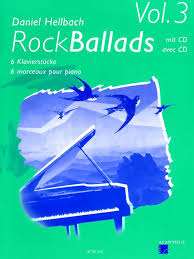
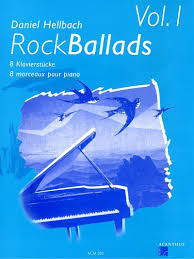
The RockBallads collections offer seven or eight pieces in which the composer explores the ballad form through the lens of rock music. These works are particularly effective for teaching expressive playing, as they require students to shape long melodic lines over rich harmonic accompaniments.
Pop-Concerto
The Pop-Concerto was conceived for a youth orchestra and a young pianist, combining stylistic elements from pop, jazz, and classical music. This work represents Hellbach's engagement with larger forms and his desire to provide young performers with opportunities to experience the concerto genre in a idiom they find immediately engaging. Alongside the Fantasy-Concerto, also for piano and orchestra, these works demonstrate Hellbach's ability to write effectively for larger forces.
Pop Organ, Volume 1
Arranged by Stefan Schättin, this collection presents eleven original pieces for organ that unite the typical Hellbach style: catchy melodies, rhythmic momentum, and harmonic variety between classical and pop. The pieces include "Jolly," "Rise," "Nostalgia," "Big Bang," "Come on," "Deeply moved," "Anthem," "Hardrock," "Pop Prelude," "Sad feelings," and "Fire and love". These works offer a refreshing alternative to the traditional organ repertoire and are suitable for concert, teaching, and worship contexts.
Moods and Mini Pictures
The Moods collections (for two soprano recorders) and Mini Pictures (for recorder and piano) contain short character pieces with titles like "Funny," "Dreaming," "Confident," "Wild," and "Musing". These works are designed to complement any flute course and focus on developing specific technical and expressive skills in a musical context.
Pedagogical Methods
Hellbach's pedagogical methods, particularly the BlockflötenBox series (co-authored with Jeannette Hellbach) and the Flying Fingers piano school, have become standard resources in music education across Europe. The BlockflötenBox is a comprehensive course for soprano recorder that includes pieces from various epochs—from medieval and Renaissance through Baroque to popular music—as well as folk music from different countries. The Flying Fingers piano method contains varied pieces by Hellbach and other composers, along with extensive material for technique, improvisation, theory, and music knowledge.
Music in Films
While Daniel Hellbach is not primarily known as a film composer, his music has had a tangential relationship with film through his pedagogical publications. The BlockflötenBox 3 includes arrangements of well-known pop and rock songs such as "Yesterday" by The Beatles, "He's a Pirate" from the film Pirates of the Caribbean, and "Super Trouper" by ABBA. These inclusions demonstrate Hellbach's awareness of and engagement with film music as a cultural phenomenon that resonates with young musicians.
It is worth noting, however, that Hellbach's own original compositions have not been featured in film soundtracks. His creative energies were directed almost entirely toward pedagogical music and concert works for young performers. Nevertheless, the cinematic quality of some of his character pieces—their ability to evoke specific moods and images—suggests that his music would be well-suited to visual media. Pieces like "Skyline," "Misty Day," and "Evening Breeze" possess a descriptive, atmospheric quality that lends itself to narrative interpretation.
Collaborations with Other Musicians
Hellbach was a collaborative composer by nature, and several important partnerships shaped his creative output. The most significant of these was his collaboration with Jeannette Hellbach, with whom he co-authored the BlockflötenBox series and the Altblockflöten-Reise (Alto Recorder Journey) method. This partnership produced some of the most widely used recorder teaching materials in Europe, with the Altblockflöten-Reise being described as a journey through music theory and notation knowledge designed to help children aged ten and above master the alto recorder.
Hellbach also collaborated with Saskia Coolen on the AltblokfluitReis project, a method for alto recorder that pays attention to improvisation and various genres, including classical, folk, pop, and rock. These collaborations demonstrate Hellbach's commitment to creating comprehensive pedagogical resources that address the full range of musical skills and styles.
On the performance side, Hellbach's Mini Pictures recordings feature performances by Maurice Steger (recorder), Oliver Hartung (guitar), André Buser (bass), Andy Schnyder (drums), and Hellbach himself on piano. These recordings showcase Hellbach's ability to collaborate with professional musicians in bringing his pedagogical works to life with artistry and energy.
Hellbach's works have also been arranged by other musicians, most notably Stefan Schättin, who arranged a selection of Hellbach's piano pieces for organ in the Pop Organ collection. This type of collaboration demonstrates the adaptability of Hellbach's music and its capacity to be reimagined for different instruments and contexts.
Influences and Legacy
Daniel Hellbach's musical influences are diverse and reflect his dual identity as a classically trained musician and a composer deeply engaged with popular culture. His classical training at the Lucerne Conservatory provided him with a thorough grounding in harmony, counterpoint, and form. At the same time, his ear was attuned to the popular music of his time—rock, pop, and jazz—and he drew freely from these idioms in his compositions.
The most significant influence on Hellbach's work, however, was his own teaching practice. He composed for his students, and his music evolved in response to their needs, abilities, and preferences. This practical orientation distinguishes his work from that of composers who write pedagogical music from a more theoretical perspective. As Acanthus Music noted, his pieces were composed for his own students, tested with them, and then developed and refined through pedagogical practice.
Hellbach's legacy is substantial and multifaceted. First and foremost, he leaves behind a body of pedagogical literature that has accompanied generations of students, teachers, and musicians. His works are used in music schools throughout Switzerland and Europe, and his methods have become standard resources for piano and recorder instruction.
Second, Hellbach's approach to composition has influenced the way pedagogical music is conceived and written. By demonstrating that music for learners can be both technically accessible and genuinely engaging, he helped to raise the standard of teaching literature and to close the gap between popular and classical music education. His music has become an indispensable tool for experienced music teachers, satisfying the demands of modern methodological and integrated teaching practices.
Third, Hellbach's music has touched the lives of countless young musicians. He fulfilled the long-standing wish of many young people—and the young at heart—to play music with which they can identify and through which they can express their feelings. In doing so, he helped to keep the joy of music-making alive for a new generation.
Finally, Hellbach's music continues to be published and performed. His final compositions, "Rhapsody in Moods" and "In the Spotlights," were released in 2026, and Acanthus Music has committed to keeping his musical heritage alive and making his works accessible to future generations of musicians. As the publisher movingly stated, his music remains—through those who listen to it, teach it, and play it, again and again.
The Hellbach Style in the Context of Music Education
Hellbach's approach to music education reflects broader trends in pedagogical philosophy. His emphasis on using popular idioms to engage students aligns with constructivist approaches to learning, which emphasize the importance of connecting new material to students' existing knowledge and interests. By composing music that students recognize as relevant to their own lives, Hellbach increased motivation and engagement, which in turn facilitated the development of technical skills.
His music also reflects the influence of movements in music education that seek to integrate performance, improvisation, and composition. Hellbach's One Dollar, for example, is described as a piece in which children show how to improvise on the recorder—the music emerges in the moment. This emphasis on creativity and improvisation is a hallmark of his pedagogical philosophy.
Publications and Availability
Hellbach's works are published primarily by Acanthus Music, based in Balm bei Günsberg, Switzerland. Over thirty volumes of his piano music have been published, along with numerous works for recorder, organ, and chamber ensemble. His works are distributed internationally and are widely available through music retailers and online platforms.
His music is also available in recorded form, with several albums featuring his compositions. These recordings provide valuable models for students and teachers, demonstrating how the pieces should sound and offering accompaniment tracks for practice.
Reception and Critical Acclaim
Hellbach's music has been warmly received by both pedagogues and performers. On music education forums, teachers have praised his works for their effectiveness and musical quality. One online discussion noted that his pieces are "not so simple because he is dumb" but rather because this simplicity allows students to play beautiful, good-sounding pieces early in their development. Another commentator observed that his pieces are extremely well-received by audiences at music school concerts, which encompass listeners from ages 7 to 77.
The Final Years
In his final years, Hellbach continued to compose actively. His last two works, "Rhapsody in Moods" and "In the Spotlights," were published posthumously in 2026, bringing his compositional career to a close. These works reportedly continue and perhaps deepen the musical language he had developed throughout his career, offering a fitting conclusion to a remarkable creative life.
Daniel Hellbach was more than a composer; he was a musical educator in the truest sense of the word. His life's work was devoted to creating music that would inspire, engage, and educate young musicians, and in this he succeeded to an extraordinary degree. His unique style—a seamless blend of pop, rock, jazz, and classical elements—offered students a gateway into music that felt relevant and exciting, while his careful attention to pedagogical principles ensured that technical development was always at the heart of the musical experience.
His catalogue of compositions, from the Easy Pop series to the Nocturnes, from the Pop-Concerto to the Pop Organ collection, represents a substantial and enduring contribution to pedagogical music literature. His collaborations with Jeannette Hellbach and others produced methods that have become standard resources in music schools across Europe. And his legacy, carried forward by Acanthus Music and by the countless teachers and students who continue to play his music, ensures that his influence will be felt for generations to come. As Hellbach himself is reported to have believed, music does not stop with the last note—it continues to live through those who play it. And by that measure, Daniel Hellbach's music will live for a very long time indeed.
Daniel Hellbach: Remember - from Rock Ballads Vol. 3
Listen to Hellbach's music on Spotify
Browse in the Sheet Music Library:
Or browse in the categories menus & download the Library Catalog PDF: