
Scores for all instruments: 16,000+ (active and growing), over 236,000 pages.
All genres and levels: Jazz & Blues, Rock & Pop, Classical & Contemporary, Film & Musicals;
books & biographies; methods, études, play-along tracks (MP3) for Jazz & Rock.
Access & benefits: US$15.99 one-time payment, valid for lifetime, full Library access.
Table of Contents
Who is Elton John?
The best sheet music download from our Library.

Please, subscribe to our Sheet Music Library.
Elton John: The Rocket Man’s Enduring Universe of Music, Spectacle, and Soul
Few artists have managed to simultaneously define the sound of an era, transcend it, and then reshape the entire music industry around their persona. Sir Elton Hercules John—born Reginald Kenneth Dwight on 25 March 1947 in Pinner, Middlesex—has not merely been a pop star. He has been a jukebox for the heart, a cultural lightning rod, a tireless humanitarian, and a living archive of rock and roll’s most flamboyant possibilities. To unpack his universe is to explore a catalogue of more than thirty studio albums, decades of boundary-pushing live performance, a legendary songwriting partnership, and a harmonic language that reveals a classical soul beating beneath sequined showmanship.
The Architect and His Lyrical Twin: Biographies of the Core Partnership
Elton John’s story cannot begin without Bernie Taupin. Their partnership is one of the most extraordinary in popular music—a non-performing lyricist and an extroverted piano virtuoso who have never written a song in the same room. Taupin was born on 22 May 1950 in rural Lincolnshire, an introverted boy who found solace in poetry and the imagery of the English countryside. Elton, six years older, was a child prodigy who won a scholarship to the Royal Academy of Music at eleven, soaking up Chopin and Bach before being seduced by the forbidden energies of Little Richard and Jerry Lee Lewis. In 1967, both answered a Liberty Records advertisement seeking talent. Fate placed Taupin’s envelope of lyrics in front of Dwight, and the alchemy began. Elton would take Taupin’s typed words—never changing a line—and in a matter of minutes conjure melodies, harmonies, and complete song structures. Their creative divorce of labor (Elton composes, Bernie writes) has yielded an unbroken collaboration spanning over five decades.
Search your favorite sheet music in the Sheet Music Library Catalog

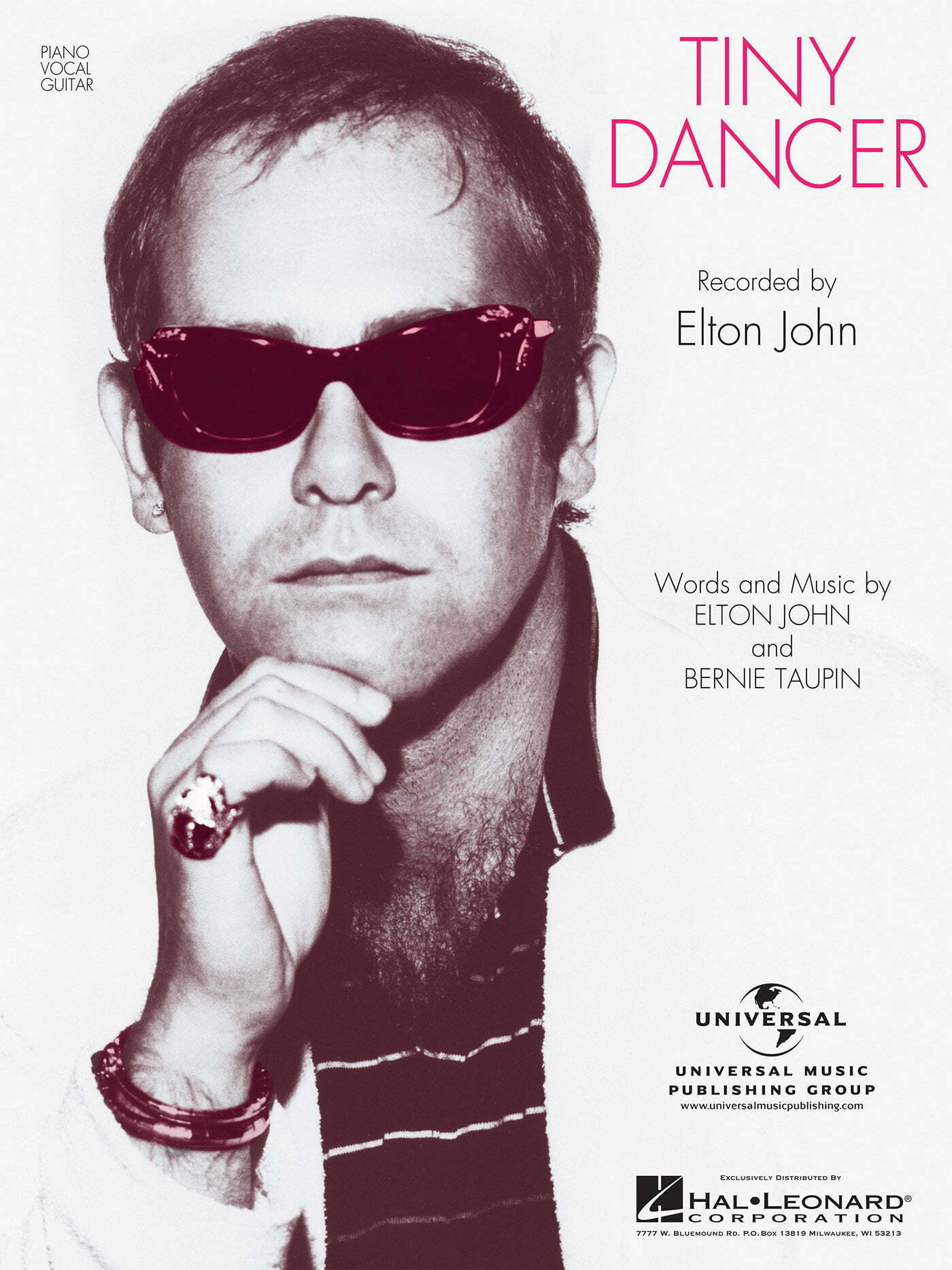

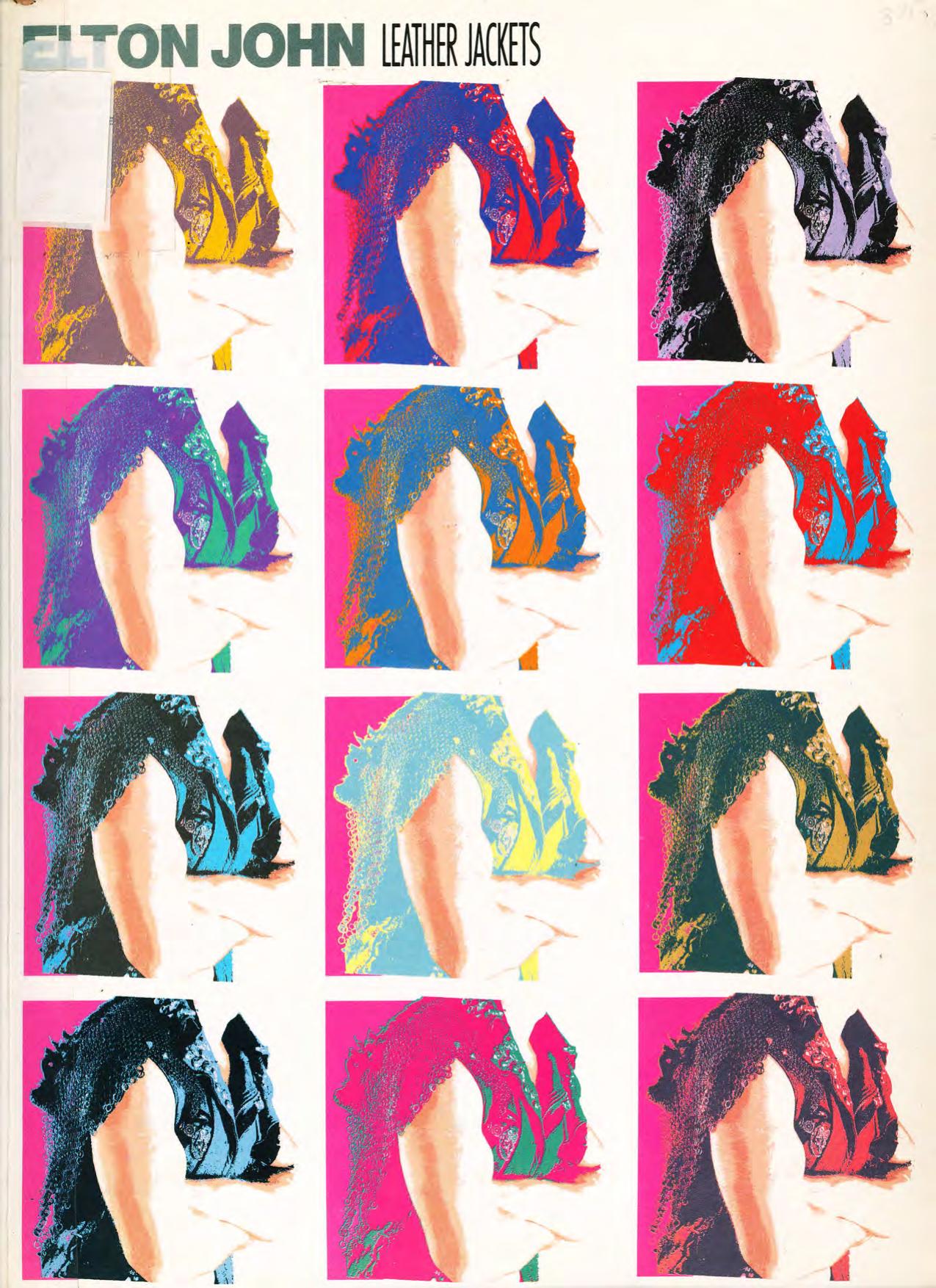
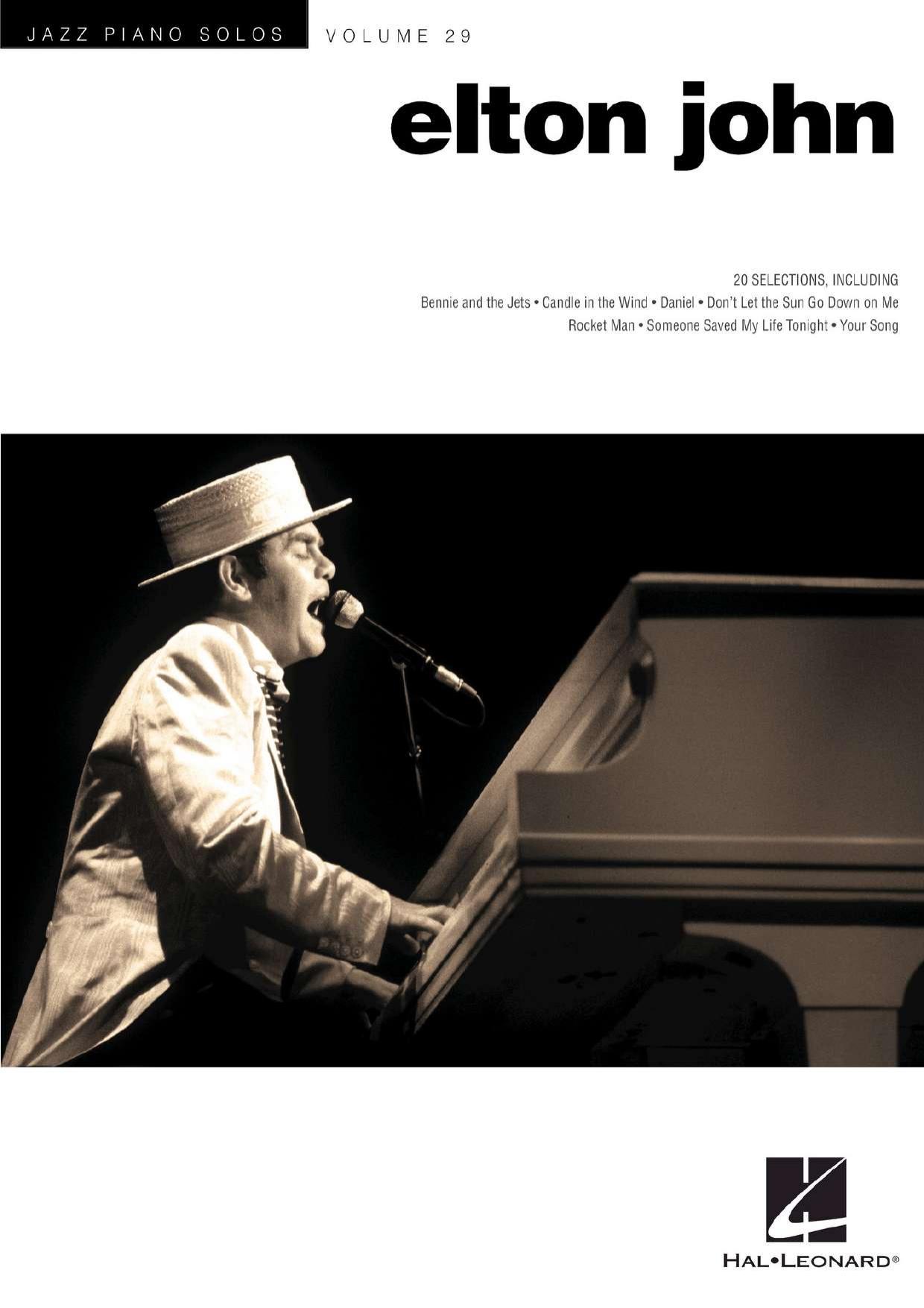

The Elton John Band: Members Who Shaped a Sound
While the Elton/Bernie axis is the creative nucleus, the musicians who interpreted that material live and in the studio are indispensable characters. The classic 1970s lineup established a signature blend of piano-driven rock, gospel-tinged harmonies, and buoyant groove.
Dee Murray (born David Murray Oates, 1946–1992) was Elton’s first great bassist and an unsung architect of his sound. A player of melodic instinct, Murray’s lines were never mere roots; they sang countermelodies, climbing fluidly through arpeggios and chromatic approaches. His work on “Rocket Man” and “Goodbye Yellow Brick Road” demonstrates a Paul McCartney-like sense of independent bass storytelling, anchoring fantasy while pushing the music forward. Murray served as band member and later tour musical director until his untimely death from a stroke.
Nigel Olsson (born 1949) was the propulsive drummer whose high tenor backing vocals became a radiant signature. Joining in 1970, Olsson brought a crisp, punchy groove that could swing (“Crocodile Rock”) or simmer with restrained power (“Don’t Let the Sun Go Down on Me”). His harmony vocals, often stacked with Murray and guitarist Davey Johnstone, created a choir that gave Elton’s choruses their church-like elevation.
Davey Johnstone (born 1951, Edinburgh) arrived in 1971 for Madman Across the Water and never really left. A multi-instrumentalist wielding electric and acoustic guitars, mandolin, banjo, and sitar, Johnstone could be both a sensitive folk colorist (“Come Down in Time”) and a rock force (“Saturday Night’s Alright for Fighting”). His acoustic arpeggios and searing Les Paul leads became inextricable from the Elton John sound. For decades, he has served as the band’s musical director, the steadfast guitar hero at Elton’s right hand.
Ray Cooper (born 1942), the wild-eyed percussionist, added orchestral drama and onstage mania. His thunderous tympani, congas, glockenspiel, and tambourine tantrums turned concerts into ritual theater. Cooper’s contributions on albums like Blue Moves and his ecstatic duet tours with Elton in the late ’70s showcased a percussive brilliance that made two men sound like a full band.
Gus Dudgeon, though not an onstage member, deserves biographical mention as the producer who sculpted the classic era. From Elton John (1970) through Blue Moves (1976), Dudgeon paired classical soundstage dimensions with pop immediacy, mic’ing Elton’s piano with gorgeous clarity and building widescreen arrangements around the core band and Paul Buckmaster’s string orchestrations.



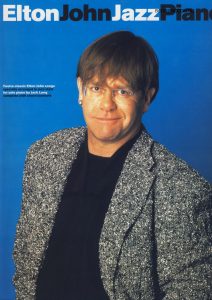
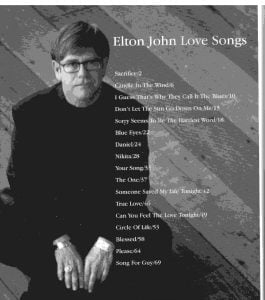
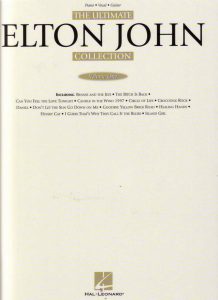
Music Style: Piano-Driven Chameleon
Elton John’s style is fundamentally a fusion of gospel-fuelled rock and roll, classical harmonic sensibility, and a singer-songwriter’s confessional intimacy. His early 1970s work drew on the Americana roots rock of The Band and the soulful country of Leon Russell, filtered through an Englishman’s imagination. Tumbleweed Connection (1970) evoked dusty Civil War ghosts without Elton ever having visited the American West. The 1973 double album Goodbye Yellow Brick Road exploded into glam, hard rock, reggae pastiche, and lush balladry, revealing a restlessly eclectic artist.
His piano playing is percussive and virtuosic. He attacks the keys with the boogie-woogie left hand of Jerry Lee Lewis and the right-hand cascades of a classical prodigy. Songs like “Bennie and the Jets” showcase his ability to create an entire rhythmic foundation from the piano alone—stabbing chords, syncopated stabs, and a growling baritone vocal that sells a character before a single word is understood. The ballads— “Your Song”, “Sorry Seems to Be the Hardest Word”, “Candle in the Wind”—unveil a more vulnerable instrument, with delicate dynamics and breath-like phrasing.
In the 1980s, Elton adapted to the digital age. Albums like Too Low for Zero (1983) brought synthesizers into the mix while retaining his melodic core, yielding the defiant “I’m Still Standing”. The 1990s saw an adult contemporary sheen, but his 2001 return to form Songs from the West Coast stripped back production, returning the piano to center stage.
Chord Progressions and Music Harmony: The Classical-Rock Hybrid
Elton’s harmonic language is a treasure trove for musicologists. His Royal Academy training equipped him with a vocabulary far exceeding standard rock chords. He routinely employs sophisticated devices that elevate pop songwriting into art.
Secondary Dominants and Chromatic Movement: Elton loves to inject momentary key shifts through secondary dominant chords. In “Your Song” (Eb major), the line “I hope you don’t mind” walks chromatically from Eb via Ebmaj7 to Cm, but the pre-chorus suddenly hits a bright Bb7 (V of V) to pivot on “how wonderful life is” before resolving. This gives a surge of unexpected sunshine. “Goodbye Yellow Brick Road” (F major) uses a descending bass line that is almost Baroque: F – E – D – C – Bb, with chords shifting accordingly, creating a sublime melancholy.
Circle of Fifths and Jazz-Tinged Bridges: The bridge of “Rocket Man” (Bb major) embarks on a circle of fifths progression: Cm – F – Bb – Eb, then a chromatic tumble. This is pure Tin Pan Alley craft. “Someone Saved My Life Tonight” begins with an arpeggiated Eb major, but the verse moves into a chromatic descent that feels like a confession unfolding. The song’s chorus explodes with a mighty IV to I resolution, majestic and redemptive.
Suspensions and Pedal Tones: “Don’t Let the Sun Go Down on Me” opens with a suspended piano riff—a Csus4 resolving to C—that becomes a meditation on ache. The verses rely heavily on a tonic pedal point (C bass under shifting chords C – G/B – Am – C/G – F), creating a hovering, devotional stasis before the chorus lifts off with large intervals. That bridge, “I’m growing tired…”, ramps up tension with secondary dominants (E7 – Am) that feel like emotional jabs.
Modulation as Narrative: Elton often uses step-up key changes for final choruses, a classic technique, but he sometimes modulates mid-song to depict emotional transformation. In “We All Fall in Love Sometimes” from Captain Fantastic, the harmonic shifts mirror the lyric’s shifting perspective, with stunningly dense chord clusters voiced in groups like a chorale.
Gospel DNA: The church infuses “Border Song” (with its “Holy Moses” refrain, complete with iv-I “Amen” cadence) and “Take Me to the Pilot” where the piano vamps on a bluesy dominant seventh, building a trance-like groove that suddenly bursts into soaring major-key release.
His instinct to never let complexity overwhelm the song is his genius. The chords are in service of Taupin’s imagery; they paint the sky, the sunset, and the aching heart.
Influences: From Pinner to the Stars
Elton’s primary influences can be traced to the first time he heard Little Richard’s “Long Tall Sally” and Jerry Lee Lewis’s wild pumping piano. He has called these two the “reasons I wanted to be a rock ’n’ roll piano player.” The Beatles, whom he and Taupin worshipped, taught him the power of melody and studio innovation; his 1974 collaboration with John Lennon on “Whatever Gets You Thru the Night” and later performance of “Lucy in the Sky with Diamonds” was a full-circle moment. Leon Russell’s drawl, rhythmic piano, and fusion of gospel and country profoundly shaped albums like Tumbleweed Connection and Madman Across the Water. Aretha Franklin, Ray Charles, and Otis Redding informed his soulful phrasing, while his classical training (Bach, Beethoven, Chopin) surfaced in the harmonic richness of his work. The Band’s Music from Big Pink gave him a model of earthy, mythic Americana.
Relationship with Other Artists: Camaraderie and Collaborations
Elton John’s relationships across the music industry are the stuff of legend—fueled by immense generosity, outspokenness, and a genuine fan’s heart.
John Lennon: A deep friendship blossomed after they met in the early 1970s. Elton played piano on Lennon’s hit “Whatever Gets You Thru the Night” and extracted a playful promise: if the single hit number one, Lennon would perform live with him. True to his word, Lennon joined Elton on stage at Madison Square Garden on 28 November 1974 for three songs—his final major concert appearance. The tale of their bond, which helped heal an estrangement with Yoko Ono, is etched in rock folklore.
George Michael: A true kinship. Their 1991 duet on “Don’t Let the Sun Go Down on Me” (recorded live at Wembley) became a massive hit, with Elton later crediting George as one of his favorite voices. Elton’s raw tribute at Michael’s funeral singing “Don’t Let the Sun Go Down” was heartbreaking.
Eminem: An unlikely but profound friendship. When Eminem faced backlash for homophobic lyrics, Elton—an openly gay man—agreed to perform “Stan” with him at the 2001 Grammy Awards. The duet was a seismic cultural moment of solidarity and dialogue, and they became close friends. Elton later said he saw Eminem’s pain and addiction struggles and wanted to help.
Lady Gaga, Dua Lipa, and the New Generation: Elton has become a mentor and collaborator to younger artists. His duet with Dua Lipa, “Cold Heart” (2021), remixed classic tracks into a global smash, introducing him to Gen Z. He and Gaga share a theatrical kinship. His collaborations album The Lockdown Sessions (2021) with artists like Lil Nas X, Miley Cyrus, and Charlie Puth showed his seamless ability to connect across genres.
Kiki Dee: His duet partner on the chart-topping “Don’t Go Breaking My Heart” (1976), Kiki Dee was the first white British artist signed to Motown. Their chemistry—playful, rootsy—became a defining single. Friendships with Freddie Mercury, Rod Stewart, and the late Gianni Versace further placed Elton at the center of a creative universe, while his very public feuds (Madonna, David Furnish’s restrained diplomacy) only underscored his refusal to be bland.
Legacy: More Than Music
List of awards and nominations received by Elton John
Elton John’s legacy is braided from four strands: the music, the performance, the activism, and the personal journey. He has sold over 300 million records, placing him among the best-selling artists ever. His seven consecutive US number-one albums from 1972–1975 remains a record. The 1997 re-recording of “Candle in the Wind” as a tribute to Princess Diana became the best-selling single since chart records began, with 33 million copies; profits all went to charity.
His AIDS Foundation, established in 1992, has raised over $600 million for HIV prevention, treatment, and education worldwide, and personally shifted the global conversation. He was knighted in 1998, became a Companion of Honour in 2021, and achieved the rare EGOT status—Emmy, Grammy, Oscar, Tony—joining an exclusive club of artistic excellence.
His unapologetic visibility as a gay man, especially after coming out in the late ’80s and eventually marrying David Furnish and raising two sons, has made him a beacon of LGBTQ+ dignity. He has modeled a life of creative dynamism and domestic contentment late in life, dismantling the narrative of the self-destructive rock star.
Discography and Most Known Works
While a complete album list sprawls over 32 studio albums, certain milestones define his trajectory.
- Empty Sky (1969): Debut, still finding voice.
- Elton John (1970): Breakthrough with “Your Song”, “Border Song”. Strings by Paul Buckmaster announce a major new artist.
- Tumbleweed Connection (1970): A concept album of Americana, beloved by purists for “Burn Down the Mission”, “Amoreena”.
- Madman Across the Water (1971): Title track’s epic scale, “Tiny Dancer”, “Levon”.
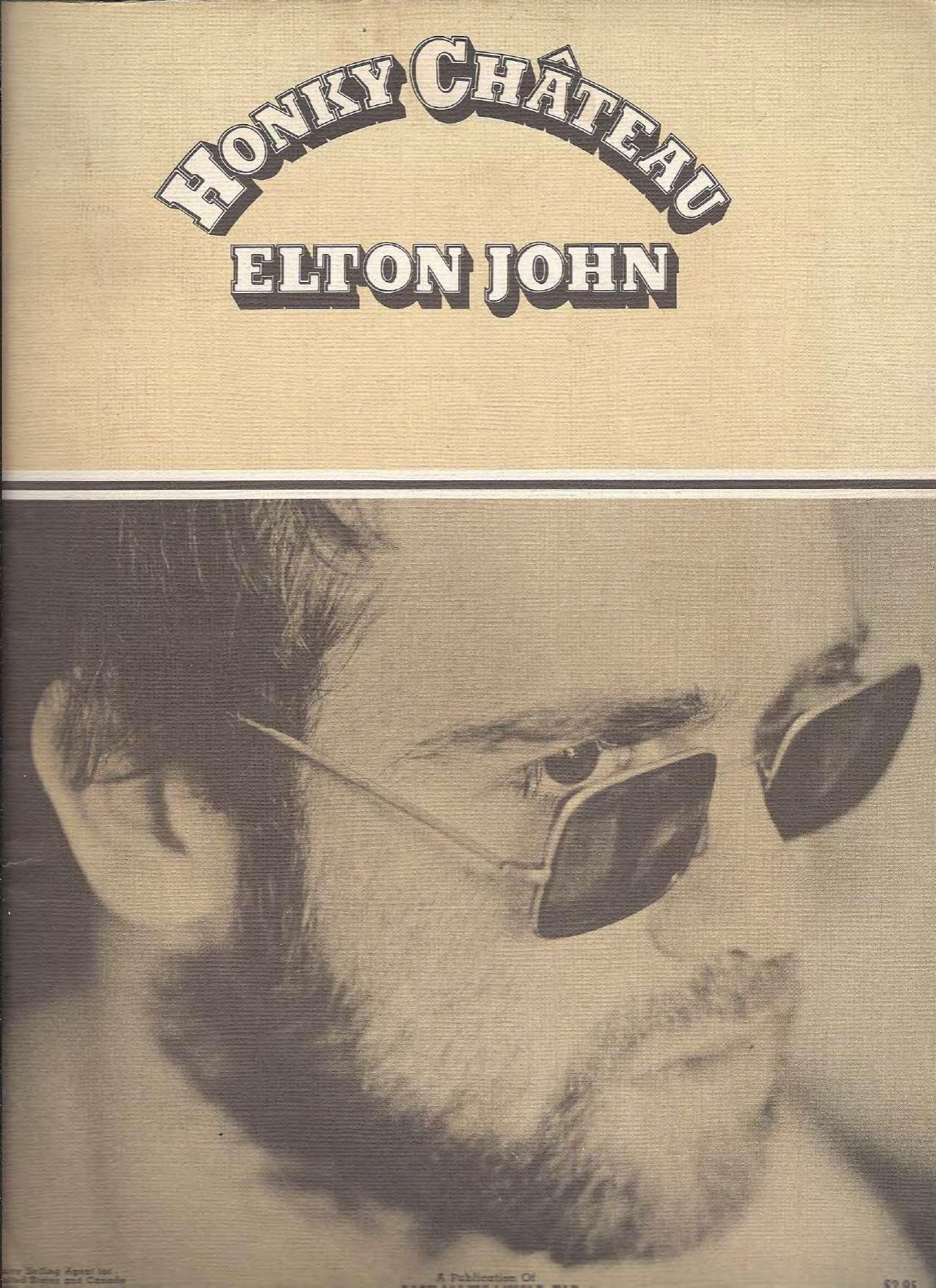
- Honky Château (1972): First number one in the US, with “Rocket Man”, “Honky Cat”. Band hits a relaxed, funky stride.
- Don’t Shoot Me I’m Only the Piano Player (1973): “Daniel”, “Crocodile Rock”.
- Goodbye Yellow Brick Road (1973): The masterpiece double album; “Bennie and the Jets”, “Candle in the Wind”, “Saturday Night’s Alright”, title track, “Funeral for a Friend/Love Lies Bleeding”.
- Caribou (1974): “Don’t Let the Sun Go Down on Me”, “The Bitch Is Back”.
- Captain Fantastic and the Brown Dirt Cowboy (1975): Autobiographical song cycle; first album ever to debut at number one on Billboard 200.
- Rock of the Westies (1975): “Island Girl”.
- Blue Moves (1976): Moody double LP; “Sorry Seems to Be the Hardest Word”.
- Too Low for Zero (1983): Revival with “I’m Still Standing”, “I Guess That’s Why They Call It the Blues”.
- Sleeping with the Past (1989): “Sacrifice”, his first solo UK number one.
- The One (1992): Title track, “The Last Song” about AIDS.
- Made in England (1995): “Believe”.
- Songs from the West Coast (2001): Return to classic piano sound.
- The Diving Board (2013): Stripped-back T Bone Burnett production.
- Wonderful Crazy Night (2016): Joyful band album.
Essential singles not to miss: “Tiny Dancer” (its revival in Almost Famous made it an anthem), “Philadelphia Freedom”, “I’m Still Standing”, “Sacrifice”, “Can You Feel the Love Tonight”, “Circle of Life”, “Candle in the Wind 1997”, “Are You Ready for Love”.
Works on Films: Soundtracks and Cinematic Moments
Elton’s contribution to cinema is substantial both as composer and subject. His most monumental film work is Disney’s The Lion King (1994). Collaborating with Tim Rice, Elton wrote the music and performed several songs for what became one of the best-selling soundtracks ever. “Can You Feel the Love Tonight” won the Academy Award for Best Original Song, while “Circle of Life” and “Hakuna Matata” became cultural touchstones. He returned for The Lion King (2019) reimagining with new end-title song “Never Too Late”.
In 2000, he composed the music for DreamWorks’ The Road to El Dorado with Tim Rice, a colorful score blending Latin rhythms and Elton’s melodic flair. He also wrote songs for the 2011 animated film Gnomeo & Juliet, executive-producing the soundtrack which repurposed his classics and included a duet with Lady Gaga, “Hello, Hello”.
His songs have driven key film sequences. “Tiny Dancer” immortalized a bus singalong in Cameron Crowe’s Almost Famous (2000). “Rocket Man” provided an eerie soundtrack to a space launch in The Martian and a driving moment in The Rock. His music defines nostalgia in films from Moulin Rouge! (“Your Song”) to Kingsman: The Golden Circle (“Saturday Night’s Alright”). As an actor, Elton made cameos in Tommy (1975) as the Pinball Wizard in oversized boots, Spice World (1997), and as himself in The Country Bears.
Live Performances: Costumes, Piano, and Catharsis
An Elton John concert is a spectacle built on duality: the flamboyant costume—feathered, sequined, bedazzled with Swarovski crystals—contrasted with the piano bench, to which he is tethered yet wildly dynamic. His early shows were defined by the “holy trinity” of John, Murray, and Olsson, with Nigel leaping from drums to front stage to sing high harmonies. The 1975 Dodger Stadium shows saw him in a sequined Los Angeles Dodgers uniform, playing to 100,000 people over two nights at his commercial zenith.
The 1980 Central Park free concert, with over 400,000 attendees, featured a poignant tribute to John Lennon. Live Aid in 1985 included Elton performing with George Michael and Kiki Dee. His residency The Red Piano at Caesars Palace, Las Vegas (2004–2009), designed with photographer David LaChapelle, became a multimedia extravaganza of giant inflatables and video art.
The Farewell Yellow Brick Road Tour (2018–2023), spanning over 330 dates and grossing more than $900 million, was the highest-grossing tour of all time at its conclusion. The final show at Stockholm’s Tele2 Arena and the emotional headlining set at Glastonbury 2023—his last UK performance—drew a record TV audience and global tears. At Glastonbury, he played “Your Song” simply, profoundly, and the field sang every word back.
Documentaries and Biographical Screen
Elton’s life has been captured in several essential films. Elton John: Tantrums & Tiaras (1995), directed by his then-partner David Furnish, is a warts-and-all documentary that catches his volatility, humor, and meticulous backstage routines. The Million Dollar Piano (2014) documented his Las Vegas residency. Goodbye Yellow Brick Road: The Final Elton John Performances on Disney+ chronicles the farewell tour’s last North American show at Dodger Stadium.
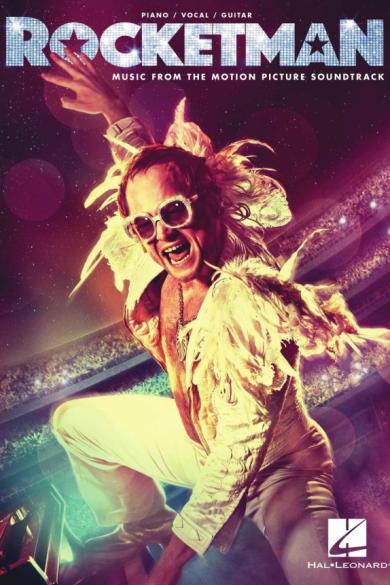
The crowning biographical achievement is Rocketman (2019), a fantastical musical biopic directed by Dexter Fletcher and starring Taron Egerton, who did all his own singing. Executive-produced by Elton himself, the film refused to sanitize his struggles with addiction, sexuality, and family trauma, becoming a critical and commercial hit. Egerton’s performance won a Golden Globe, and the “(I’m Gonna) Love Me Again” duet over the closing credits won the Academy Award for Best Original Song, giving Elton his second Oscar.
These documentaries and the biopic ensure that his story—the shy boy from Pinner who became a global beacon of creativity—will inspire for generations.
Elton John: The Eternal Rocket Man
Elton John’s six-decade career is a monumental edifice of song, built on a partnership that redefined the division of labor in pop music. With Bernie Taupin’s poetic narratives and Elton’s instinctive, harmonically sumptuous melodies, the duo created a songbook that rivals any in the American songbook canon—English as the language, global as the reach. His bands, particularly the unwavering Davey Johnstone, Nigel Olsson, Ray Cooper, and the late Dee Murray, provided the flesh and blood, turning compositions into communal experiences.
Elton’s harmonic genius—secondary dominants, chromatic bass descents, suspensions, and daring modulations—elevates accessible pop into something that rewards deep listening. His pianism remains a bridge between classical discipline and rock’s wild heart. His relationships across generations of artists reveal a man whose embrace has been broad: from John Lennon to Eminem, from Dua Lipa to the late George Michael, he has been an unofficial godfather to pop’s continuous reinvention.
In the end, Elton John’s legacy is not merely a stack of platinum discs or a tally of awards. It is a global chorus singing “Your Song” in moments of love, “I’m Still Standing” as an anthem of resilience, and “Rocket Man” as an expression of existential loneliness transmuted into beauty. The Farewell Yellow Brick Road may have ended, but the music is not going anywhere. It is embedded in the fabric of our collective memory, a constellation of melodies that will shine long after the stage lights dim.
Browse in the Sheet Music Library:
Or browse in the categories menus & download the Library Catalog PDF:
Discography
Main articles: Elton John albums discography, singles discography, and songs
Studio albums
- Empty Sky (1969)
- Elton John (1970)
- Tumbleweed Connection (1970)
- Madman Across the Water (1971)
- Honky Château (1972)
- Don't Shoot Me I'm Only the Piano Player (1973)
- Goodbye Yellow Brick Road (1973)
- Caribou (1974)
- Captain Fantastic and the Brown Dirt Cowboy (1975)
- Rock of the Westies (1975)
- Blue Moves (1976)
- A Single Man (1978)
- Victim of Love (1979)
- 21 at 33 (1980)
- The Fox (1981)
- Jump Up! (1982)
- Too Low for Zero (1983)
- Breaking Hearts (1984)
- Ice on Fire (1985)
- Leather Jackets (1986)
- Reg Strikes Back (1988)
- Sleeping with the Past (1989)
- The One (1992)
- Made in England (1995)
- The Big Picture (1997)
- Songs from the West Coast (2001)
- Peachtree Road (2004)
- The Captain & the Kid (2006)
- The Diving Board (2013)
- Wonderful Crazy Night (2016)
- Regimental Sgt. Zippo (2021)