Scores for all instruments: 16,000+ (active and growing), over 236,000 pages.
All genres and levels: Jazz & Blues, Rock & Pop, Classical & Contemporary, Film & Musicals;
books & biographies; methods, études, play-along tracks (MP3) for Jazz & Rock.
Access & benefits: US$15.99 one-time payment, valid for lifetime, full Library access.
Table of Contents
Remembering Gary Peacock, born on this day in 1935
Gary Peacock’s legacy is inseparable from the very sound of modern jazz bass. Over a sixty-year career, he moved from West Coast jam sessions to the front lines of free jazz in 1960s New York, helped redefine the piano trio, and brought the deep, even tone of the upright bass into uncharted improvisational territory.
The best sheet music download from our Library.
Full Biography
Early Life and Musical Beginnings (1935–1956)
Gary George Peacock was born on May 12, 1935 in Burley, a small rural town in southern Idaho. His father worked as a business consultant for grocery chains, while his mother managed the household. The family soon moved to Yakima, Washington, where Peacock spent the rest of his childhood.
Music entered his life early. He took up piano as his first instrument, later adding trumpet and drums, and by his teens was already performing in high‑school jazz ensembles. At fifteen, he attended a Jazz at the Philharmonic concert featuring Oscar Peterson and bassist Ray Brown. The impact of hearing Brown—a pillar of straight‑ahead swing—was profound and immediate, planting the first seeds of what would become Peacock’s own bass voice.
Please, subscribe to our Sheet Music Library. Sheet music should be accessible and affordable for all musicians, from professionals to absolute beginners.
After graduating from Yakima Senior High School in 1953, Peacock enrolled at the Westlake School of Music in Los Angeles. His studies were interrupted when he was drafted into the United States Army. Sent to Germany, he initially served as a pianist in a small jazz group. When the band’s bassist left to get married, Peacock was handed the double bass almost by accident. He later recalled thinking, “I don’t want to play bass,” but the drummer insisted, and Peacock reluctantly agreed. The instrument felt natural from the start; within months he was working regularly on the German club circuit alongside visiting American musicians such as guitarist Atilla Zoller, saxophonist Hans Koller, and flutist Bud Shank.
West Coast Years and Transition to Avant-Garde (1956–1962)
Discharged from the Army in 1956, Peacock remained in Europe for a short time before returning to the United States, settling in Los Angeles. He resumed his studies briefly at the Westlake School of Music, but the school closed soon after. The city’s fertile jazz scene, however, provided ample opportunity. Peacock quickly found work with a host of West Coast luminaries: saxophonists Bud Shank and Art Pepper, guitarist Barney Kessel, trumpeter Don Ellis, vibraphonist Terry Gibbs, and arranger Shorty Rogers.
During this period, Peacock’s playing reflected the influences of his early heroes, Paul Chambers and Ray Brown. He also struck up a close friendship with the revolutionary bassist Scott LaFaro, who had just finished his celebrated trio work with pianist Bill Evans. Through LaFaro, Peacock was introduced to the music of Ornette Coleman, a revelation that radically altered his conception of the bass. Up to that point, the instrument’s primary role had been to supply rhythmic propulsion and harmonic foundation. Coleman’s harmolodic approach—liberating melody from fixed chord changes—showed Peacock that the bass could function as an independent, melodic voice equal to any horn.
New York, Free Jazz, and Stint with Miles Davis (1962–1969)
In 1962, Peacock relocated to New York City, then the epicentre of jazz innovation. He immediately threw himself into the burgeoning avant‑garde scene, partnering with pianist Paul Bley and drummer Paul Motian in a trio that pushed beyond the polite conventions of the piano‑bass‑drums format. A 1963 tape of the group jamming on standards—wild, interactive, and unpredictable—was later bought by producer Manfred Eicher and released as the ECM album Paul Bley with Gary Peacock, a title that explicitly acknowledged the bassist’s central role.
Simultaneously, Peacock began recording with the free‑jazz firebrand Albert Ayler. On classic albums such as Spiritual Unity (1965) and the single “Ghosts” (1964), Peacock’s bass provided an anchor of raw charisma and songful intensity, matching Ayler’s ecstatic tenor‑saxophone cries note for note. These records—initially reviled by traditionalists—went on to become touchstones of 1960s avant‑garde jazz and a major influence on later noise‑rock and punk musicians.
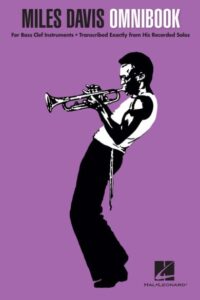
Peacock’s reputation as a bassist who could bridge the experimental and the mainstream led to a short but memorable tenure with Bill Evans in 1964. The resulting album, Trio 64, found Peacock stepping into the role once occupied by Scott LaFaro. Producer Creed Taylor was reportedly dissatisfied with the session’s “fragmentary” style, yet many listeners today consider it Evans’ most exciting studio trio record. Immediately after his time with Evans, Peacock subbed for Ron Carter in Miles Davis’s quintet for two months (April–May 1964), sharing the stage with Wayne Shorter, Herbie Hancock, and Tony Williams.
Japan, Eastern Philosophy, and Hiatus (1969–1972)
The relentless pace of New York’s jazz scene eventually took its toll. Feeling “tapped” both physically and creatively, Peacock stopped playing entirely for two and a half years. During this hiatus, he moved to Japan, where he immersed himself in the study of Zen Buddhism, macrobiotic medicine, and the Japanese language. He later explained how the language’s scarcity of personal pronouns created “a sense of spaciousness that opens up internally and externally,” a concept that would deeply inform his later musical philosophy.
While in Japan, Peacock also recorded two leader albums for the Japanese CBS/Sony imprint, Eastward (1970) and Voices (1971), both featuring pianist Masabumi Kikuchi and a Japanese rhythm section.
Return, ECM, and the Keith Jarrett Standards Trio (1972–2014)
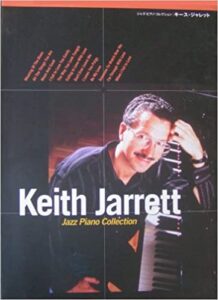
Peacock moved back to the United States in the early 1970s, teaching at the Cornish Institute in Seattle and slowly re‑entering the jazz world. In 1977, producer Manfred Eicher assembled Peacock, pianist Keith Jarrett, and drummer Jack DeJohnette for Peacock’s album Tales of Another. The chemistry was immediate and electric. Six years later, Jarrett invited Peacock and DeJohnette to join him in a New York studio to record a set of American popular songs from the 1930s, 1940s, and 1950s. The resulting albums, Standards Vol. 1, Standards Vol. 2, and Changes (all 1983), gave birth to what became known as the Standards Trio.
For the next thirty‑one years, this trio toured annually and released more than twenty albums, producing a body of work that is widely regarded as the definitive statement of the modern piano trio. Ten of those albums were concert recordings made in different international cities, among them Standards Live (Paris, 1985), Still Live (Munich, 1986), Tribute (Cologne, 1989), and a widely praised six‑CD box set, Keith Jarrett at the Blue Note: The Complete Recordings, which captured three sold‑out nights at the New York club in 1994.
Alongside the trio, Peacock maintained a prolific solo and collaborative career on ECM, releasing albums such as December Poems (1979, with Jan Garbarek), Shift in the Wind (1980, with Art Lande and Eliot Zigmund), and Guamba (1987, with Garbarek, Palle Mikkelborg, and Peter Erskine).
Later Years and Death (2015–2020)
Peacock remained active well into his later years, leading his own trio with pianist Marc Copland and drummer Joey Baron. Two late‑era ECM releases, Now This (2015) and Tangents (2017), were critically acclaimed for their mature lyricism and deep group interplay. In 2017, he told the magazine Arts Fuse, “I’m not after my statement or my identity as a bass player or improviser. It’s not about me. It’s about the music. It’s about my responsibility to be in a particular place that other people can share, enjoy and feel something.”
Gary Peacock died peacefully at his home in Olivebridge, New York, on September 4, 2020, at the age of eighty‑five. Upon his passing, Jack DeJohnette remarked, “Gary will be missed but remembered as one of the giants of the double bass. He’s a legend, and he will remain that.”

Musical Style and Harmony
Peacock’s playing defies easy categorisation, yet several distinctive traits recur throughout his discography.
Tone and Technique
Peacock’s sound was famously “rich, deep and even all over.” DeJohnette once said, “His tone was incredible… his feel was amazing. He could really swing, and his free playing was like a rocket taking off, like a spring exploding.” Unlike many bassists who favour a punchy, percussive attack, Peacock drew his sound from a far subtler palette: long, singing arco lines, delicate pizzicato textures, and the strategic use of space and silence. In the 1999 instructional video Gary Peacock: The Interactive Bassist, he demonstrated how to achieve a full, resonant tone that could support a pianist without crowding the harmonic spectrum.
Melodic Independence
A central tenet of Peacock’s style was the concept of the bass as a melodic instrument. Influenced by Scott LaFaro and Ornette Coleman, he crafted walking lines that were never mere background patterns but fully realised melodies in their own right. On his 1979 solo‑bass piece “A Northern Tale,” Peacock treated the instrument almost like a cello, sustaining long bowed notes while tracing an elegant, song‑like arc.
Harmonic Conception
Peacock’s harmonic approach was rooted in the modal and post‑bop languages he absorbed in the 1960s, but his later years were marked by an increasing absorption of Eastern philosophy. He likened the trio’s treatment of a standard to tending a garden: “The idea is to really nourish them… You wouldn’t trample them; you wouldn’t give them too much water, or you’d drown them.” This Zen‑inspired restraint translated into a harmonic style that favoured openness, ambiguity, and the careful placement of dissonance. Rather than filling every bar with rapid changes, Peacock often let a single note hang in the air, inviting listeners to inhabit the space between sounds.
Rhythmic Conception
Rhythmically, Peacock was equally comfortable swinging hard on a 4/4 walking bass line and floating freely in non‑metrical improvisation. In the Arts Fuse interview, he summed up his philosophy: “It’s about my responsibility to be in a particular place that other people can share, enjoy and feel something.”
Best Songs, Compositions, and Collaborations
Gary Peacock’s recorded legacy is immense—over fifty ECM albums alone bear his name as a sideman or leader. The list below highlights his most essential compositions and recordings.
Key Compositions
| Composition | Album | Year | Notable Feature |
|---|---|---|---|
| “Major Major” | Tales of Another | 1977 | Twelve‑tone melody over pedal‑point triads |
| “December Greenwings” | December Poems | 1979 | Lyrical bass‑saxophone duet with Jan Garbarek |
| “Requiem” | Guamba | 1987 | Melodic solo that bridges tradition and abstraction |
| “Blues for Narada” | Ballads and Blues | 1994 | Soulful minor blues showcasing his groove sensibility |
| “Empty Forest” | Tangents | 2017 | Open‑form trio improvisation rich in texture and space |
| “A Northern Tale” | December Poems | 1979 | Solo‑bass feature of remarkable melodic depth |
Must‑Hear Albums
- Spiritual Unity (1965) – The Albert Ayler trio with Sunny Murray. A founding document of free jazz and a masterclass in interactive playing.
- Tales of Another (1977) – Peacock’s first ECM leader date with Jarrett and DeJohnette; prefigures the Standards Trio.
- December Poems (1979) – Duo with Jan Garbarek, highlighting Peacock’s lyrical side.
- Guamba (1987) – A richly textured quartet with Garbarek, Palle Mikkelborg, and Peter Erskine.
- Amaryllis (2001) – Trio with Marilyn Crispell and Paul Motian, blending free improvisation with near‑classical composition.
- Azure (2013) – Duo with Marilyn Crispell, an intimate and deeply meditative set.
Filmography
Peacock’s filmography is sparse, as he rarely sought the spotlight. His audiovisual appearances include:
- Several concert films and live video releases of the Keith Jarrett Standards Trio, notably Standards I, Standards II, and Tokyo Concert ’96.
- The instructional video Gary Peacock: The Interactive Bassist (1999), in which he discusses his approach to interplay and demonstrates exercises for developing a personal sound.
- Various festival and television broadcasts archived on fan sites and YouTube channels.
Cooperations with Other Jazz Musicians
Peacock’s list of collaborators reads like a who’s‑who of modern jazz.
| Musician | Notable Project(s) | Period |
|---|---|---|
| Paul Bley | Paul Bley with Gary Peacock (1963/1968), Turning Point (1964) | 1960s–1980s |
| Albert Ayler | Spiritual Unity, Ghosts, New York Eye and Ear Control | 1964–1965 |
| Bill Evans | Trio 64 | 1964 |
| Miles Davis | Subbed for Ron Carter in the quintet | April–May 1964 |
| Keith Jarrett & Jack DeJohnette | Standards Trio (over twenty albums) | 1977–2014 |
| Ralph Towner | Duo albums Oracle (1993) and A Closer View (1998) | |
| Marilyn Crispell & Paul Motian | Amaryllis (2001), Azure (2013) | |
| Jan Garbarek | December Poems (1979), Guamba (1987), Voice from the Past (1981) | |
| Bill Frisell | Just So Happen (1994) | |
| Marc Copland & Joey Baron | Now This (2015), Tangents (2017) | |
| Don Cherry, Albert Mangelsdorff, Tomasz Stańko, Masabumi Kikuchi | Various ECM recordings |
Influences and Legacy
Influences
Peacock’s early style bore the imprint of Ray Brown and Paul Chambers, the two pillars of 1950s straight‑ahead bass playing. Through his friendship with Scott LaFaro, he discovered the bass’s potential to be a front‑line voice rather than a background support. Ornette Coleman taught him that melody could exist free of chord‑change constraints, while his later years were shaped by his encounter with Zen Buddhism, which instilled a philosophy of music as service rather than self‑expression.
Legacy
Peacock is widely recognised as one of the key transitional figures who carried the double bass from the swinging tradition of the 1940s and 1950s into the liberated vocabulary of free jazz and beyond. His work with Albert Ayler, Paul Bley, and the trio of Bill Evans and Tony Williams demonstrated that the bass could anchor the most extreme forms of improvisation without losing its essential lyricism. In a 2015 interview, pianist Marc Copland remarked that “from the start of the 1960s, [Peacock] was arguably one of the tiny handful of a vanguard of innovators on his instrument… In 2015, you can make the same argument.”
The Standards Trio alone has become the benchmark against which all subsequent piano trios are measured, inspiring generations of bassists—from Larry Grenadier to Christian McBride—who cite Peacock’s buoyant feel and melodic inventiveness as a formative influence.
Additional Information
- Prizes and Nominations: The Standards Trio received multiple Grammy nominations, and the box set Keith Jarrett at the Blue Note was voted Album of the Year in the 1996 Down Beat Critics Poll.
- Early Recorded Appearances: Peacock’s first known studio session was with Bud Shank and Barney Kessel in 1957.
- Philosophical Outlook: He was a lifelong student of Zen Buddhism and often spoke of music in terms of “surrender” and “nourishment,” once telling All About Jazz, “The question is, How much are you willing to give up to play this music? … It’s just about the music.”
- Personal Life: Peacock was married to singer and keyboardist Annette Peacock (née Coleman) from 1962 to 1968. The couple remained on friendly terms after their divorce, and Annette later married Paul Bley.
Gary Peacock’s career was a rare fusion of exploraºtion and dedication. He stood at the vanguard of the 1960s avant‑garde, absorbed the lessons of Eastern philosophy during a period of retreat, and then poured all that experience into three decades of nightly performing with the Standards Trio. His tone, his melodic conception, and his unshakeable belief that “it’s not about me, it’s about the music” continue to resonate in every bassist who seeks to serve the song rather than themselves. On what would have been his birthday, it is fitting to remember him not as a distant jazz legend but as a musician who remained perpetually curious, perpetually humble, and perpetually in love with the act of making music.
Standards I (Keith Jarret, Gary Peacock, Jack Dejohnette)
Keith Jarret, Gary Peacock, Jack Dejohnette live in Koseinenkin, Tokio (Feb. 1985)
Tracklist:
1. I Wish I knew 2. If I Should Lose You 3. Late Lament 4. Rider 5. It's Easy To Remember 6. So Tender 7. Prism 8. Stella By Starlight 9. God Bless The Child 10. Delaunay's Dilemma.
Search your favorite sheet music in the Sheet Music Library Catalog
ECM50 | 2015 Gary Peacock and Marc Copland
Interview filmed in Olivebridge, New York, September 2019
Studio Photography May 2014: IJ.Biermann
ECM50 | 1969-2019 is a series of 50+1 documentary short films by IJB