
Scores for all instruments: 16,000+ (active and growing), over 236,000 pages.
All genres and levels: Jazz & Blues, Rock & Pop, Classical & Contemporary, Film & Musicals;
books & biographies; methods, études, play-along tracks (MP3) for Jazz & Rock.
Access & benefits: US$15.99 one-time payment, valid for lifetime, full Library access.
Table of Contents
Happy birthday, Georges Brassens, born ont his day in 1921
Please, subscribe to our Sheet Music Library. Sheet music should be accessible and affordable for all musicians, from professionals to absolute beginners.
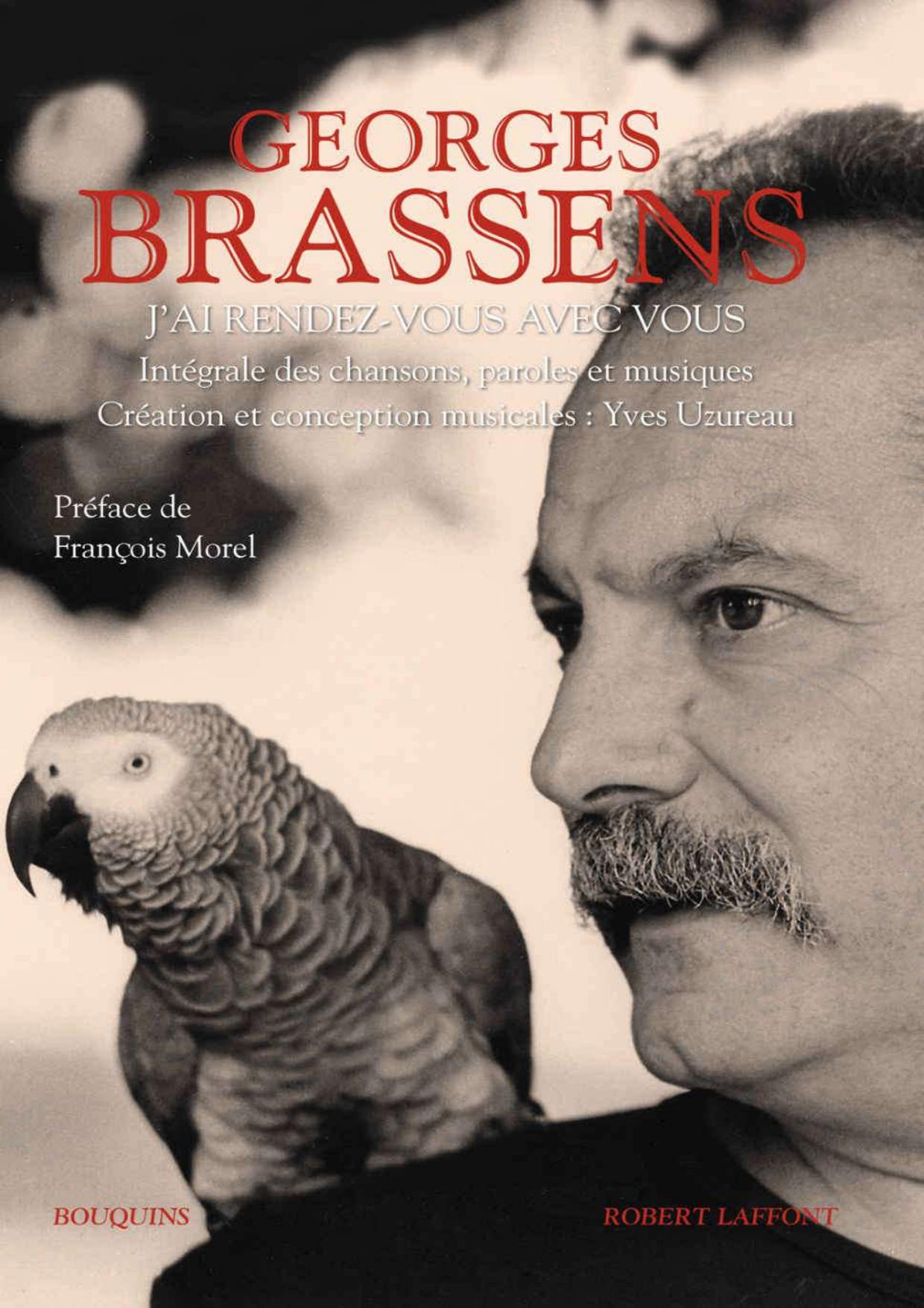

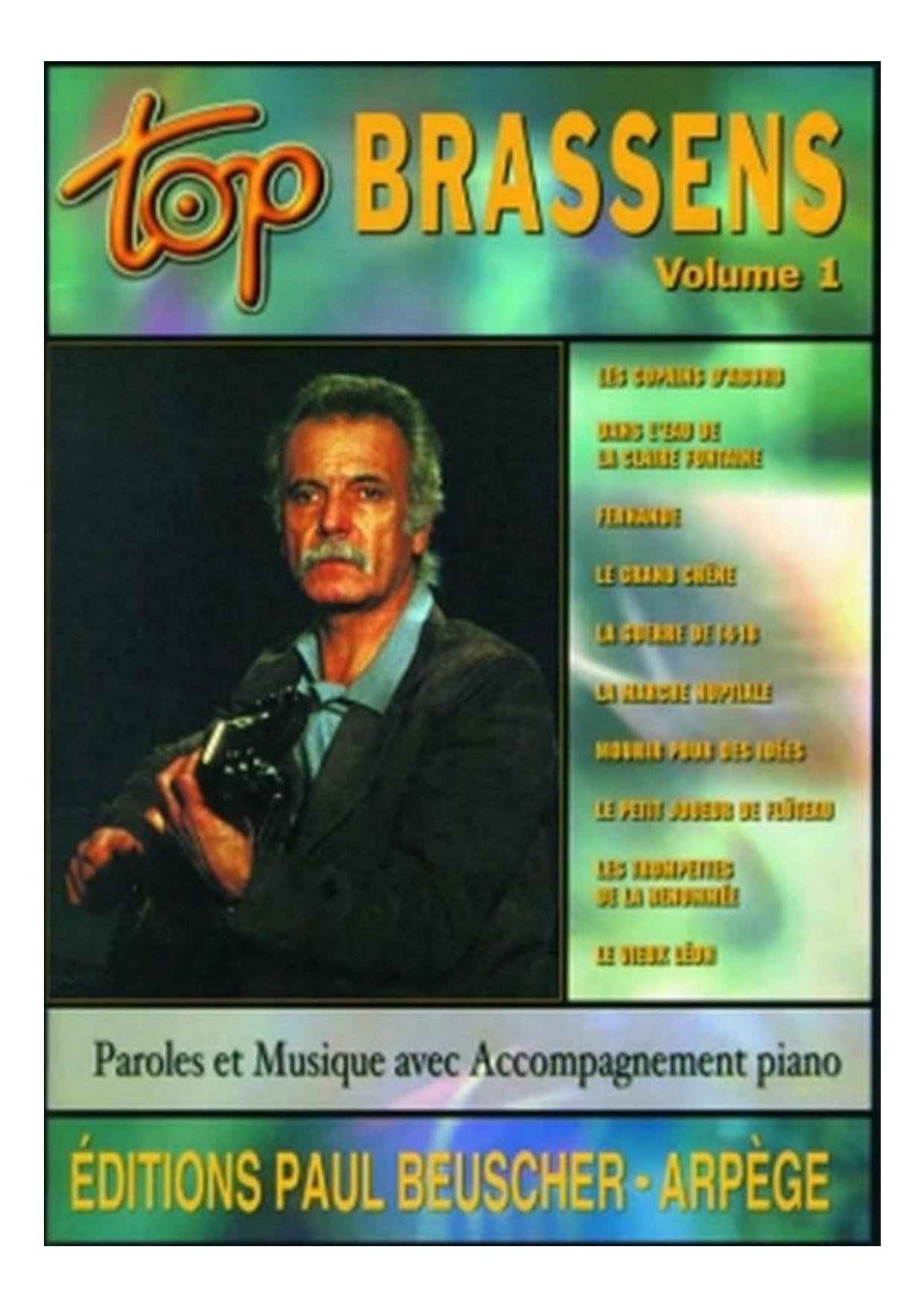
The best sheet music download from our Library.
Georges Brassens: The Anarchist Poet of French Chanson
Born on October 22, 1921, in the Mediterranean port town of Sète, Georges Brassens remains one of the most singular and revered figures in the history of French music. He was not merely a singer-songwriter; he was a poet, a philosopher, and a quiet revolutionary whose influence extends far beyond the borders of France. With his acoustic guitar, his trademark pipe, and his unmistakable gravelly voice, Brassens crafted a world of tender anarchists, misunderstood dreamers, and sharp-witted critics of bourgeois hypocrisy. His songs, characterized by harmonically complex music and articulate, often darkly humorous lyrics, are considered the pinnacle of the chanson française genre. This article explores the life, art, and enduring legacy of a man who, according to Gabriel García Márquez, was "the best French poet of his generation".
Search your favorite sheet music in the Sheet Music Library Catalog




Early Life and the Making of a Poet
Georges Charles Brassens was born into a modest family in Sète, a town in the Hérault department of southern France. His father, Jean-Louis, was a French mason, and his mother, Elvira Dagrosa, was an Italian immigrant from Marsico Nuovo, a fact that gave young Georges a natural connection to both French and Italian cultures. He grew up in a lively household that included his half-sister Simone and his paternal grandfather Jules. His mother, whom Brassens later described as a "militant for songs," fostered in him a lifelong love for music, exposing him to a wide range of popular and classical tunes.
A rebellious and spirited child, Brassens showed little interest in formal education. His true education came from the streets of Sète, the local cinema, and the books he devoured with an almost insatiable appetite. He was an autodidact of immense culture, drawing inspiration from an eclectic array of sources: from the classical fables of La Fontaine and the poetry of Rimbaud and Villon to the anarchist writings of Bakunin and the jazz rhythms of Django Reinhardt. This diverse cultural diet would later become the bedrock of his songwriting.
In 1940, at the age of nineteen, Brassens moved to Paris. He took a job at the Renault factory, a period of his life that exposed him to the struggles of the working class. Shortly after, he was conscripted into the Service du Travail Obligatoire (STO) and sent to Germany. It was during this forced stay that he met Pierre Onténiente, a man who would become a lifelong friend and his loyal secretary. Upon his return to Paris, Brassens, now in his mid-twenties, bought his first guitar in 1945 and began to compose and write in earnest. He found a surrogate family in Marcel and Jeanne Planche, a working-class couple who sheltered him and other artists; their generosity would be immortalized in his song "La Cane de Jeanne".
The turning point in his career came in 1952. After years of obscurity, Brassens was introduced to the singer Patachou, who ran a famous cabaret in Montmartre. Recognizing his raw talent, she invited him to perform at her venue, "Chez Patachou". This exposure led to his first record deal, and the release of his debut album, La Mauvaise Réputation, in 1952. The album was an immediate sensation, and Brassens, already in his thirties, became an overnight star. Despite his newfound fame, he famously shunned the trappings of celebrity, rarely traveling outside France and preferring the quiet company of his friends in Paris.





A Musical Style of Elegant Complexity
At first glance, Brassens's music can seem deceptively simple. His primary instrumentation was his own acoustic guitar, later accompanied by the double bass of his loyal friend Pierre Nicolas and, in his final years, the second guitar of Joël Favreau. However, beneath this minimalist facade lies a world of remarkable harmonic sophistication. As musicologist Étienne Kippelen notes in his book Brassens et la musique, Brassens's 148 songs are works of profound musicality, characterized by a unique and instantly recognizable stylistic syntax. His compositions are far from standard folk tunes; they are complex, through-composed pieces that demand a high level of technical skill from the performer.
Harmony and Rhythm
Brassens's approach to harmony was vast and free, incorporating a wide vocabulary of chords that few of his contemporaries in the chanson genre could match. He had a particular affinity for the 6/8 time signature, a meter he associated with traditional French folk songs like "Auprès de ma blonde" and "Brave marin revient de guerre". This meter gives many of his songs their characteristic waltz-like, lilting, and somewhat old-fashioned feel. However, he also incorporated elements of jazz, tarentella, and fox-trot into his rhythmic palette, creating a style that was both rooted in tradition and distinctly modern.
His guitar technique was equally distinctive. He was a master of the "pompe," a rhythmic style of accompaniment based on alternating bass notes and chords, a technique central to French musette and gypsy jazz. This "pompe-à-la-Brassens" provided the driving, bouncing energy beneath his often melancholic or satirical lyrics. The beauty of his melodies is another crucial element; his vocal lines are often lyrical and singable, yet they carry a subtle melancholy that perfectly complements his poetry. The combination of these intricate guitar parts, his unique voice—which could shift from a soft, almost whispered tenderness to a defiant growl—and his philosophical lyrics created a sound that was entirely his own.
The Art of the Song: Masterpieces and Compositions
Brassens's discography is a treasure trove of French song. His lyrics, often described as "elegant," "florid," and filled with "dark humor," tackle themes of hypocrisy, self-righteousness, love, death, and freedom. He defended the marginalized, mocked the powerful, and celebrated the simple joys of friendship and nature. Here are some of his most enduring masterpieces:
- "La Mauvaise Réputation" (1952): A semi-autobiographical anthem that became his signature. With the iconic refrain, "Mais les braves gens n'aiment pas que l'on suive une autre route qu'eux" ("But good people don't like it when you take a different road than them"), it is a timeless celebration of non-conformity and a defense of the individual against the judgment of the crowd.
- "Le Gorille" (1952): A masterclass in satire and dark comedy. The song tells the story of an escaped gorilla with a large penis who mistakes a robed judge for a woman. The brilliance of the song lies in its contrast between the judge's merciless attitude when sentencing a man to death and his desperate cries for mercy when he becomes the victim. The song was initially banned for its perceived obscenity, but its refrain, "Gare au gori-i-i-i-ille" ("Beware the gorilla"), became universally known.
- "Chanson pour l'Auvergnat" (1954): A tender tribute to simple human kindness. The song praises those who offer help to the downtrodden—the stranger, the poor, the hungry—contrasting their warmth with the cold indifference of society. It is a perfect example of Brassens's humanism and his celebration of the "little people".
- "Les Amoureux des Bancs Publics" (1953): A gentle, observational song about young lovers who kiss on public benches, scandalizing the self-righteous. It is a charming defense of public displays of affection and a critique of societal prudishness.
- "Les Copains d'Abord" (1964): Written for the film Les Copains, this song is a joyous, boisterous ode to friendship. Its catchy melody and lyrics about a boat named "Les Copains d'Abord" (Friends First) have made it an enduring anthem of camaraderie in France.
- "Supplique pour être enterré à la plage de Sète" (1966): A poignant and deeply personal meditation on death and his love for his hometown. In this song, Brassens requests to be buried on the beach of Sète, so he can eternally rest by the sea he loved. It is a beautifully melancholic reflection on mortality and belonging.
- "Fernande" (1972): A humorous and sexually explicit song about a lonely man's fantasies. Its infamous refrain, "Quand je pense à Fernande, je bande, je bande..." ("When I think of Fernande, I get hard..."), is still instantly recognized in France. The song's frankness and humor exemplify Brassens's refusal to bow to censorship or societal taboos.
Brassens in Film and on the Stage
Beyond his recording career, Brassens had a notable, albeit brief, career in cinema. His most famous foray onto the silver screen was in René Clair's 1957 film Porte des Lilas (released in the US as Gates of Paris). He played the role of "L'Artiste," a taciturn and solitary singer who was largely based on Brassens himself. The film, which also starred the legendary Pierre Brasseur, featured several of Brassens's own songs, including "L'Amandier," "Au Bois de mon Coeur," and "Le Vin". These songs are now considered among the best of his classic repertoire. Despite the film's success and his natural screen presence, Brassens made no further films, preferring to focus on his music.
His music, however, has had a rich life in cinema long after his death. His songs have been featured in numerous films, both French and international, including Le Dîner de Cons (The Dinner Game), 8 Women, and even the 2025 film Emilia Pérez. The timeless quality of his music allows it to seamlessly integrate into a wide variety of cinematic contexts.
Collaborations and Musical Encounters
While Brassens is often seen as a solitary figure, he was a generous collaborator. His most important musical partnership was with the double bassist Pierre Nicolas, who accompanied him for nearly thirty years, providing the steady, swinging heartbeat of his sound. Nicolas also played with other legends like Jacques Brel and Barbara. In his later years, guitarist Joël Favreau became his close collaborator, accompanying him from 1972 until his death in 1981. Together, they recorded four albums, including the classic Fernande (1972). Favreau remembers Brassens as a "very good guitarist and an excellent friend," and their partnership was marked by a shared musical understanding and a deep personal bond.
Brassens's love for jazz led to several notable collaborations. The most famous is the 1979 album Brassens-Moustache jouent Brassens en jazz, where he and the jazz musician Moustache recorded jazz versions of his songs. This project was a testament to his respect for jazz and his desire to see his compositions interpreted in new ways. He also shared the stage with a diverse array of artists. Archival recordings have revealed unpublished duets with icons like Charles Trenet and Tino Rossi. He also performed with artists such as Alice Dona, Serge Lama, and Annie Girardot, showcasing his willingness to engage with the broader French musical landscape.
Influences and a Monumental Legacy
Brassens was a voracious cultural omnivore. His influences were vast, ranging from the anarchist philosophy of Bakunin to the jazz guitar of Django Reinhardt, and from the fables of La Fontaine to the poetry of François Villon, Victor Hugo, and Louis Aragon. He famously set to music poems by these literary giants, introducing them to a new, broader audience. This act of musical translation was central to his art, bridging the gap between "high" poetry and popular song.
His legacy in France and around the world is immense. He is considered one of the most influential figures in French chanson, alongside contemporaries like Jacques Brel and Léo Ferré. His influence has reached far beyond the Francophone world. Artists as diverse as Jake Thackray in England, Fabrizio De André in Italy, Paco Ibáñez in Spain, and even the American western swing band Asleep at the Wheel have covered and adapted his songs. He is the French artist most covered by foreign musicians, a testament to the universal appeal of his melodies and the translatable power of his humanist themes.
In France, he is more than a musician; he is a national cultural icon. His songs are taught in schools, his face has appeared on postage stamps, and his centenary in 2021 was celebrated with a nationwide outpouring of tributes, exhibitions, and concerts. His work remains startlingly relevant, addressing issues of social justice, individual liberty, and the struggle against conformity that resonate just as strongly today as they did in the post-war era.
Final Years and Enduring Relevance
Georges Brassens died of intestinal cancer on October 29, 1981, in his beloved Sète, just a week after his 60th birthday. He left behind a body of work that has proven to be immortal. His songs are not mere relics of a bygone era; they are living, breathing testaments to the power of poetry, humor, and music to challenge, comfort, and inspire. In a world that increasingly values the loud and the simplistic, the voice of Georges Brassens—wry, tender, complex, and fiercely independent—remains a vital and necessary beacon, a reminder of the profound beauty that can be found in a well-turned phrase and a perfectly placed chord. His "bad reputation" is, in truth, one of the most glorious in the history of song.
Browse in the Sheet Music Library:
Or browse in the categories menus & download the Library Catalog PDF:
Discography
Studio albums
- 1952: La Mauvaise Réputation
- 1953: Le Vent (or Les Amoureux des bancs publics)
- including Pauvre Martin
- 1954: Les Sabots d'Hélène (or Chanson pour l'Auvergnat)
- 1956: Je me suis fait tout petit
- 1957: Oncle Archibald
- 1958: Le Pornographe
- 1960: Les Funérailles d'antan (or Le Mécréant)
- 1961: Le Temps ne fait rien à l'affaire
- 1962: Les Trompettes de la renommée
- including Jeanne
- 1964: Les Copains d'abord
- 1966: Supplique pour être enterré à la plage de Sète
- 1969: Misogynie à part (or La Religieuse)
- 1972: Fernande
- 1976: Trompe la mort (or Nouvelles chansons)
- 1979: Brassens-Moustache jouent Brassens en jazz (with Moustache and les Petits français, jazz versions of previously released songs; re-released in 1987 as Giants of Jazz Play Brassens)
- 1982: Georges Brassens chante les chansons de sa jeunesse (cover album of old songs)
Live albums
- 1973: Georges Brassens in Great Britain
- 1996: Georges Brassens au TNP (recorded in 1966)
- 2001: Georges Brassens à la Villa d'Este (recorded in 1953)
- 2001: Bobino 64
- 2006: Concerts de 1959 à 1976 (box set featuring concerts from 1960, 1969, 1970, 1973 and 1976)