
Scores for all instruments: 16,000+ (active and growing), over 236,000 pages.
All genres and levels: Jazz & Blues, Rock & Pop, Classical & Contemporary, Film & Musicals;
books & biographies; methods, études, play-along tracks (MP3) for Jazz & Rock.
Access & benefits: US$15.99 one-time payment, valid for lifetime, full Library access.
Star Dust - Hoagy Carmichael piano sheet music, Noten, partitura, spartiti, partition, 楽譜
Please, subscribe to our Sheet Music Library. Sheet music should be accessible and affordable for all musicians, from professionals to absolute beginners.
The best sheet music download from our Library.
For the price of a single songbook, get a full Sheet Music Library!


Search your favorite sheet music in the Sheet Music Library Catalog

Search your favorite sheet music in the Sheet Music Library Catalog
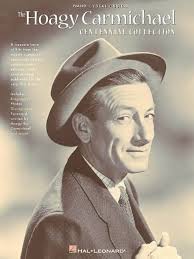
Who was Hoagy Carmichael?
Hoagland Howard Carmichael (November 22, 1899 – December 27, 1981) was an American musician, composer, songwriter, actor, author and lawyer. Carmichael was one of the most successful Tin Pan Alley songwriters of the 1930s and 1940s, and was among the first singer-songwriters in the age of mass media to use new communication technologies such as radio broadcasts, television, microphones, and sound recordings (musical records).
Carmichael composed several hundred songs, including 50 that achieved hit record status. He is best known for composing four of the most-recorded American songs of all time: "Stardust" (1927), with lyrics by Mitchell Parish, "Georgia on My Mind" (1930), with lyrics by Stuart Gorrell, "The Nearness of You" (1937), with lyrics by Ned Washington, and "Heart and Soul" (1938), with lyrics by Frank Loesser.
He also collaborated with lyricist-songwriter Johnny Mercer (1909–1976), on "Lazybones" (1933), and later "Skylark" (1941). Carmichael's "Ole Buttermilk Sky" of 1946, was an Academy Award nominee for an Oscar in the following year of March 1947, with the eponymous theme song from the Western film Canyon Passage (1946), starring Dana Andrews, Brian Donlevy, Susan Hayward and Ward Bond, in which he co-starred as a ukulele and guitar-playing balladeer musician and prospector-miner riding a mule.
Four years later, "In the Cool, Cool, Cool of the Evening", with lyrics by Johnny Mercer, won the Academy Award for Best Original Song in 1951. Carmichael also appeared as a character actor and musical performer in 14 other films, hosted three musical-variety radio programs, performed on television, and wrote two autobiographies or memoirs.
Legacy
Carmichael is considered to be among the most successful of the Tin Pan Alley songwriters of the 1930s, and he was among the first singer-songwriters in the age of mass media to exploit new communication technologies, such as television and the use of electronic microphones and sound recordings. Carmichael was an industry trailblazer who recorded varied interpretations of his own songs and provided material for many other musicians to interpret. His creative work includes several hundred compositions, some of them enduring classics, as well as numerous sound recordings and appearances on radio and television and in motion pictures.
Music historian Ivan Raykoff described Carmichael as "one of America's most prolific songwriters" and an "iconic pianist" whose work appeared in more than a dozen Hollywood films, including his performances in classic films such as To Have and Have Not and The Best Years of Our Lives. Among the hundreds of Carmichael's published songs, "Stardust" is one of the most frequently recorded. Carmichael's greatest strength was as a melodist, but he also became known as an "experimental" and "innovative" songwriter, whose "catchy, often jazz-infused, melodies" and "nostalgic, down-home lyrics" were memorable and had wide public appeal, especially with mass media promotion and through the efforts of numerous entertainers who performed his songs.
In 1986, Carmichael's family donated his archives, piano, and memorabilia to his alma mater, Indiana University, which established a Hoagy Carmichael Collection in its Archives of Traditional Music and the Hoagy Carmichael Room to permanently display selections from the collection. Carmichael was an avid coin collector; his coin collection was auctioned off on January 27 and 28, 1986 at the Century Plaza Hotel.
Honors and tributes
Carmichael and lyricist Johnny Mercer received an Academy Award for Best Music, Song, for "In the Cool, Cool, Cool of the Evening," which was featured in the 1951 film Here Comes the Groom. "Ole Buttermilk Sky" received an Oscar nomination for Best Music, Song, of 1946, but it was not the winner. Carmichael's recording of "Star Dust" in 1927 at the Gennett Records studio that includes him playing the piano solo was inducted into the Grammy Hall of Fame. In addition, it was selected for inclusion in the National Recording Registry at the Library of Congress in 2004.
Carmichael was inducted into the Hollywood Walk of Fame on February 8, 1960. (His sidewalk star tribute is located at 1720 Vine Street in Hollywood.) In 1971 Carmichael was inducted into the Songwriters Hall of Fame as one of its initial ten inductees. In 2007 Carmichael was inducted into the Gennett Records Walk of Fame in Richmond, Indiana. Bronze and ceramic medallions, one for each of the inductees, have been placed near the location of the Starr Piano Company's manufacturing complex.
Carmichael is memorialized with an Indiana state historical marker, installed in 2007 in front of the former Book Nook (one of Carmichael's favorite local hangouts) on South Indiana Avenue, near the corner of Kirkwood and Indiana Streets in Bloomington. The marker is located across the street from the heart of the Indiana University campus. In 2008, the bronze Hoagy Carmichael Landmark Sculpture by artist Michael McAuley was installed at the northeast corner of the IU Auditorium on IU's Bloomington campus.
On June 27, 1979, the Newport Jazz Festival honored Carmichael with a tribute concert, "The Star Dust Road: A Hoagy Carmichael Jubilee," at New York City's Carnegie Hall.
"Georgia On My Mind," composed by Carmichael with lyrics by Stuart Gorrell, is the U.S. state of Georgia's official song.
Carmichael also appeared as a Stone Age version of himself in The Flintstones, in which he sings "The Yabba Dabba Doo Song," written by Barney Rubble, and based on an idea from Fred Flintstone. Fred, Barney, Wilma Flintstone, and Betty Rubble also contribute to the lyrics.
In popular culture
In Ian Fleming's first James Bond novel, Casino Royale, both Bond's fellow secret agent René Mathis and his love interest Vesper Lynd remark that Bond looks like Hoagy Carmichael. Later in the novel, after looking at his reflection in a mirror, Bond disagrees. Ian Fleming repeated the comparison to Carmichael in his third James Bond novel, Moonraker.