Scores for all instruments: 16,000+ (active and growing), over 236,000 pages.
All genres and levels: Jazz & Blues, Rock & Pop, Classical & Contemporary, Film & Musicals;
books & biographies; methods, études, play-along tracks (MP3) for Jazz & Rock.
Access & benefits: US$15.99 one-time payment, valid for lifetime, full Library access.
Table of Contents
How to Play Stride Piano
Stride piano is a dazzling, highly rhythmic solo jazz piano style that emerged from ragtime in the 1920s. Learning it can feel like a big challenge, but you can absolutely get started by breaking it down into simple steps.
What Exactly is Stride Piano?
At its heart, stride piano is a self-contained band. The style gets its name from the continuous, leaping motion of the left hand, which "strides" up and down the keyboard. This creates a powerful, layered sound where a single pianist covers the bass, chords, and melody all at once.
The core of this style is a relentless four-beat pulse in the left hand. This alternation creates the characteristic "oom-pah" sound, with the "oom" being the low bass note and the "pah" being the mid-range chord.
The left hand acts as a tight rhythm section, typically playing:
- A single bass note, octave, or tenth on beats 1 and 3.
- A chord in the middle register on beats 2 and 4.
With the rhythmic foundation locked in by the left hand, your right hand is free to handle:
- Syncopated melodies
- Improvisations
- Harmonic embellishments and riffs
- Swing eighth-note lines, often built on broken chord tones

A Quick Dive into Stride History
Stride piano, also known as Harlem Stride, flourished primarily in New York City from the 1920s to the 1940s. It evolved directly from ragtime, but stride musicians played with more freedom, a heavier swing feel, and greater rhythmic drive.
The style was pioneered and perfected by "The Big Three" of Harlem stride:
- James P. Johnson (1894–1955): Known as the "Father of Stride Piano," his 1918 piece "Carolina Shout" was a rite of passage for aspiring pianists.
- Willie "The Lion" Smith (1897–1973): A flamboyant entertainer and master of the style. His 1939 recording "Finger Buster" is a defining classic of the genre.
- Fats Waller (1904–1943): A student of Johnson, Waller became a hugely popular entertainer and composed enduring jazz standards like "Ain't Misbehavin'" and "Honeysuckle Rose".
Later virtuosos like Art Tatum and Oscar Peterson were heavily influenced by stride and pushed its technical boundaries even further.

Your Step-by-Step Guide to Getting Started
The key is to build the left-hand pattern until it's completely automatic, then gradually add the melody.
Step 1: Master the Left Hand Alone
Don't touch the right hand yet! The left hand is the engine of stride, and it needs to be rock-solid.
- Start Simple: Choose easy chords, like C Major (C-E-G) and G7 (G-B-D-F).
- The Basic Stride Pattern:
- Beat 1: Play the root of the chord (C) as a single bass note with your left-hand pinky (finger 5).
- Beat 2: Jump up and play the chord (C Major) in the middle register.
- Beat 3: Play the fifth of the chord (G) as a bass note.
- Beat 4: Jump back up and play the chord again.
- Practice Slowly: Use a metronome and go extremely slow. Focus on precision and a relaxed arm, not speed. Aim for a steady, swinging pulse without any pauses between the beats.

Step 2: Add a Simple Melody
Once the left hand can play the pattern on autopilot, add a very simple melody in the right hand.
- Start with One Note: Try playing a single, repeated note on beat 1 of each measure while your left hand does its thing.
- Use a Familiar Tune: A simple song like "Mary Had a Little Lamb" or "Ode to Joy" is a great place to start applying the technique.
- Go Slow: It will feel clumsy at first. Keep the tempo slow and focus on coordinating your hands.
Step 3: Develop the Right Hand
As the left hand becomes more secure, you can make the right hand more interesting. Stride is a style of improvisation, so this is where your creativity comes in.
- Swing Your Eighths: Play eighth-note lines with a swing feel, which is essential to the style.
- Embellish the Melody: Add grace notes, short runs, or small fills to the melody.
- Play with Syncopation: Accent off-beats to create rhythmic tension against the steady left-hand pulse.
Essential Techniques and Pro Tips
As you get more comfortable, you can start adding these elements to sound more authentic:
- Use 10ths for a Fuller Sound: Instead of a single bass note, play a "10th" interval on beats 1 and 3 (e.g., C and the E an octave above). This creates a much richer bass sound but requires a larger hand span.
- Create a Melodic Bass Line: Don't just alternate between the root and fifth. Use passing tones on beat 4 to walk from one chord's bass note to the next. This makes the left hand much more melodic.
- Use "Faux Stride" for Difficult Keys: For keys with many black notes, you can minimize left-hand movement by playing the root with your pinky on beat 1, and then the 3rd and 7th of the chord on beat 2, all within an octave.
- Listen to the Masters: This is non-negotiable. You can't learn to swing from a book. Immerse yourself in the sound.
- James P. Johnson: "Carolina Shout," "You've Got to Be Modernistic".
- Fats Waller: "Ain't Misbehavin'," "Honeysuckle Rose," "Lulu's Back in Town".
- Willie "The Lion" Smith: "Finger Buster".
Resources to Deepen Your Learning
- Books & Methods:
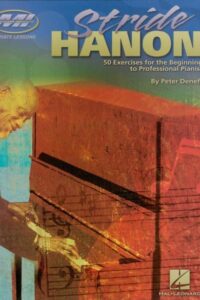
- Stride Hanon by Peter Deneff: 50 essential exercises for the stride pianist.
- You Can Play Authentic Stride Piano by Judy Carmichael: A book with practice drills and arrangements of jazz standards.
- Stride & Swing Piano by John Valerio: A complete guide covering left- and right-hand techniques.
- Online Lessons:
- Piano With Jonny: Offers several free, high-quality video lessons on stride techniques.
- Jazz Lesson Videos: Features breakdowns of core stride concepts with top instructors.
- Yamaha Music: Has a great introductory article, "The Basics of Stride Piano".
Frequently Asked Questions
- How long does it take to learn stride piano?
It varies greatly. You can learn the basic left-hand pattern in a few days or weeks of focused practice. Mastering the style at a performance level with improvisation can take years of dedicated work. - Is stride piano only for solo playing?
While it's most famous as a solo piano style, the techniques are incredibly useful for accompaniment. You can "stride" while comping for a singer or soloist, playing a walking bass line, or even in a full band setting, though you'll need to be careful not to clash with the bass player. - What's the difference between ragtime and stride?
Both use the "oom-pah" left hand, but stride is generally more virtuosic, has a stronger swing feel, and is heavily based on improvisation. Ragtime is typically composed and played more "straight". - What should I practice first?
The left hand alone. Make the bass note/chord alternation your absolute priority. It must be steady, automatic, and swinging before you add the right hand to avoid developing sloppy coordination.
Stride piano is a joyful and impressive style that builds incredible independence between your hands. Start slow, be patient with the process, and have fun with it. If you have more questions as you go, feel free to ask.