
Scores for all instruments: 16,000+ (active and growing), over 236,000 pages.
All genres and levels: Jazz & Blues, Rock & Pop, Classical & Contemporary, Film & Musicals;
books & biographies; methods, études, play-along tracks (MP3) for Jazz & Rock.
Access & benefits: US$15.99 one-time payment, valid for lifetime, full Library access.
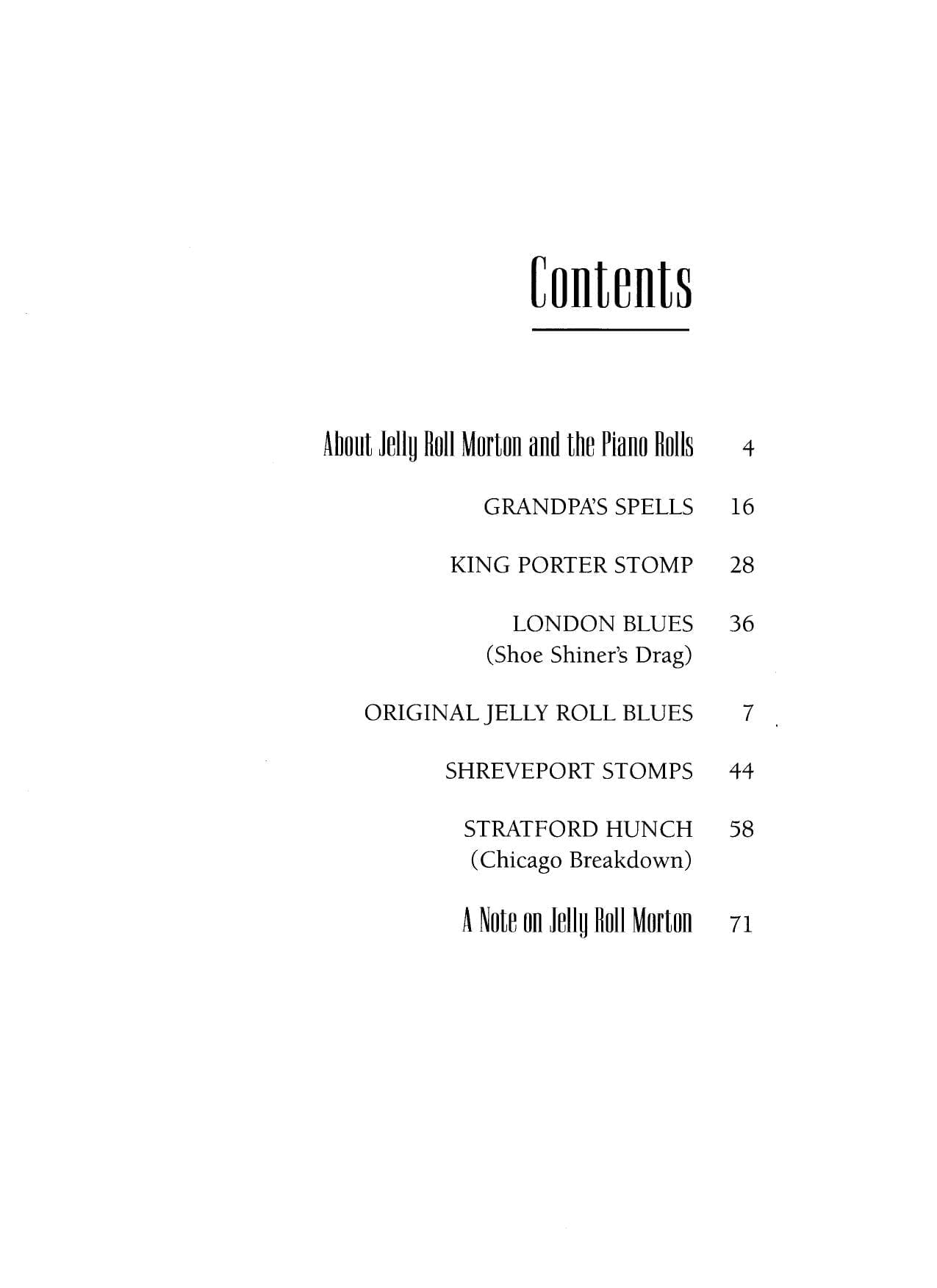
Table of Contents
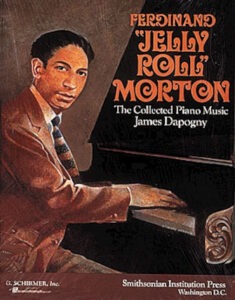
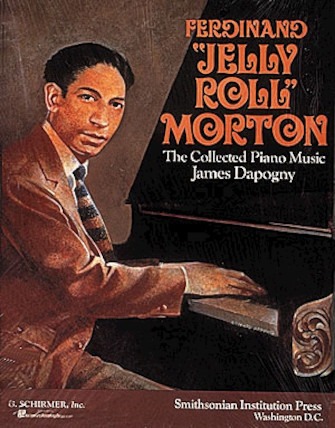
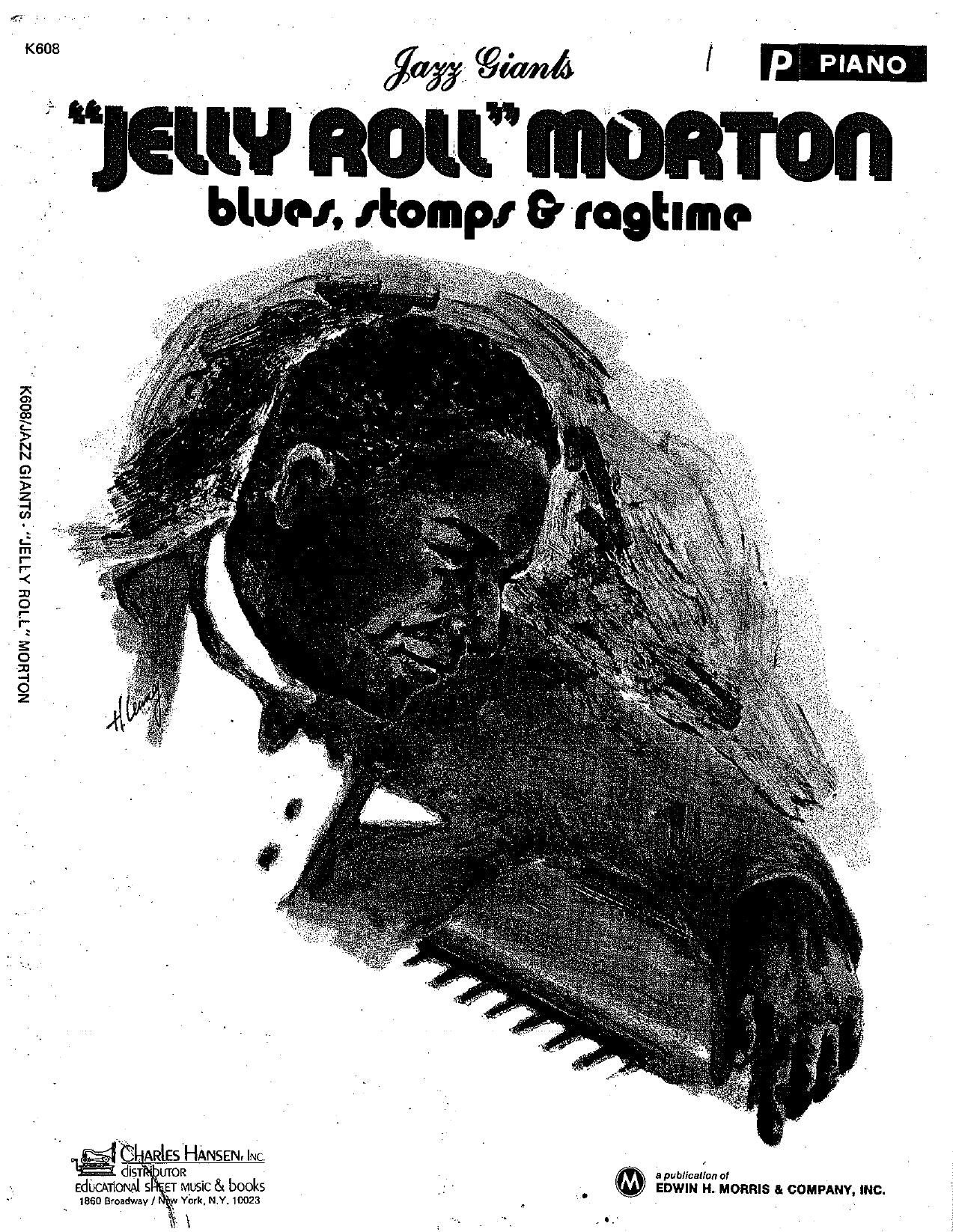
Jelly Roll Morton The Collected Piano Music
Please, subscribe to our Sheet Music Library.
A stunning, comprehensive volume prepared in cooperation with the Smithsonian Institution. The world's first jazz critical edition.
Contents:
40 pieces:
- New Orleans Blues (New Orleans Joys)
- Grandpa's Spells
- Wolverine Blues (The Wolverines)
- Mamanita
- Frog-I-More Rag (Froggie Moore/Sweetheart O' Mine)
- London Blues (London Cafe Blues/Shoe Shiner's Drag)
- Shreveport Stomp
- Big Foot Ham (Big Fat Ham/Ham and Eggs)
- Tom Cat Blues (Midnight Mama)
- Stratford Hunch (Chicago Breakdown)
- Perfect Rag (Sporting House Rag)
- Mr. Jelly Lord
- Black Bottom Stomp (Queen of Spades)
- Dead Man Blues
- Cannonball Blues*
- Billy Goat Stomp
- Wild Man Blues* (Ted Lewis Blues)
- Georgia Swing*
- Boogaboo
- Seattle Hunch
- Frances (Fat Frances)
- Dixie Knows
- Kansas City Stomp (Kansas City Stomps)
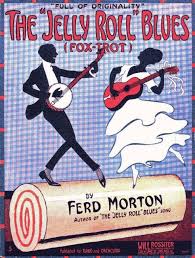
- Jelly Roll Blues (Original Jelly Roll Blues/Chicago Blues)
- Fickle Fay Creep (Soap Suds)
- Jungle Blues
- Sweet Peter
- Hyena Stomp
- State and Madison
- Bert Williams
- Freakish
- Pep
- Creepy Feeling
- Spanish Swat
- The Pearls
- Fingerbuster (Fingerbreaker)
- Honky Tonk Music
- The Crave
- Mister Joe (Buffalo Blues)
- King Porter Stomp
The best Sheet Music download from our Library.
Who was Jelly Roll Morton?
Ferdinand Joseph LaMothe (né Lemott, later Morton; c. September 20, 1890 – July 10, 1941), known professionally as Jelly Roll Morton, was an American blues and jazz pianist, bandleader, and composer of Louisiana Creole descent. Morton was jazz's first arranger, proving that a genre rooted in improvisation could retain its essential characteristics when notated. His composition "Jelly Roll Blues", published in 1915, was one of the first published jazz compositions. He also claimed to have invented the genre.
Morton also wrote "King Porter Stomp", "Wolverine Blues", "Black Bottom Stomp", and "I Thought I Heard Buddy Bolden Say", the last being a tribute to New Orleans musicians from the turn of the 20th century.
Morton's claim to have invented jazz in 1902 was criticized. Music critic Scott Yanow wrote, "Jelly Roll Morton did himself a lot of harm posthumously by exaggerating his worth ... Morton's accomplishments as an early innovator are so vast that he did not really need to stretch the truth." On the other hand, Gunther Schuller says of Morton's "hyperbolic assertions" that there is "no proof to the contrary" and that Morton's "considerable accomplishments in themselves provide reasonable substantiation.
Search your favorite sheet music in the Sheet Music Library Catalog
Form and compositions
Morton's piano style was formed from early secondary ragtime and "shout", which also evolved separately into the New York school of stride piano. Morton's playing was also close to barrelhouse, which produced boogie-woogie.
Morton often played the melody of a tune with his right thumb, while sounding a harmony above these notes with the fingers of the right hand. This could add a rustic or "out-of-tune" sound due to the playing of a diminished 5th above the melody. This technique may still be recognized as belonging to New Orleans. Morton also walked in major and minor sixths in the bass, instead of tenths or octaves. He played basic swing rhythms with both the left and the right hand.
Several of Morton's compositions were musical tributes to himself, including "Winin' Boy", "The Jelly Roll Blues" (subtitled "The Original Jelly-Roll"); and "Mr. Jelly Lord". In the big-band era, his "King Porter Stomp", which Morton had written decades earlier, was a big hit for Fletcher Henderson and Benny Goodman; it became a standard covered by most other swing bands of that time. Morton claimed to have written some tunes that were copyrighted by others, including "Alabama Bound" and "Tiger Rag". "Sweet Peter", which Morton recorded in 1926, appears to be the source of the melody of the hit song "All of Me", which was credited to Gerald Marks and Seymour Simons in 1931.
Morton's musical influence continues in the work of Dick Hyman and Reginald Robinson.
Awards and honors
The Music Box interviews were released posthumously as boxed set and won two Grammy Awards.[28]
    During the same year, Morton was honored with the Grammy Lifetime Achievement Award.
Morton was posthumously nominated in 1992 for the Tony Award for Best Original Score for the musical depicting his life, Jelly's Last Jam.
Morton was inducted in the Rock and Roll Hall of Fame and was elected as a charter member of the Gennett Records Walk of Fame.
He was inducted into the Louisiana Music Hall of Fame in 2008.[38]
Discography
1923–24 - 1923/24 (Milestone, 1974)
1926–27 - Birth Of The Hot - The Classic Chicago "Red Hot Peppers" Sessions (1926-1927) (RCA Bluebird, 1985)
1926–1928 - The Pearls (RCA Bluebird, 1988)
1926–28 - Jazz King of New Orleans (RCA Bluebird, 1961)
1939–40 - Jelly Roll Morton: The Complete Library of Congress Recordings, Vols. 1–8 (8-CD Box Set) (Rounder, 2005)
Browse in the Sheet Music Library:
Or browse in the categories menus & download the Library Catalog PDF: