
Scores for all instruments: 16,000+ (active and growing), over 236,000 pages.
All genres and levels: Jazz & Blues, Rock & Pop, Classical & Contemporary, Film & Musicals;
books & biographies; methods, études, play-along tracks (MP3) for Jazz & Rock.
Access & benefits: US$15.99 one-time payment, valid for lifetime, full Library access.
Table of Contents
Who is Jerry Bergonzi (b. 1947)?
The best sheet music download from our Library.
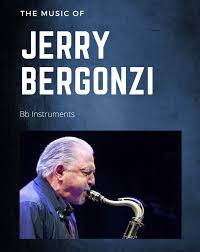


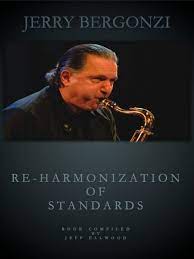

Please, subscribe to our Sheet Music Library. Sheet music should be accessible and affordable for all musicians, from professionals to absolute beginners.
Jerry Bergonzi: The Architect of Modern Tenor Saxophone
Known affectionately as “The Gonz” by his peers and students, Jerry Bergonzi has spent over five decades carving out one of the most distinctive voices in jazz—a voice characterized by a meaty, powerful tone, an encyclopedic command of harmonic language, and an improvisational imagination that seems to know no bounds. When the late, great Michael Brecker—widely considered the most influential saxophonist of his generation—was once asked what it felt like to be the world’s greatest saxophone player, his response was characteristically humble and revealing: “I don’t know, you’ll have to ask Jerry Bergonzi”. Brecker, it should be noted, was a long-term student of Bergonzi, a testament to the depth of knowledge and musicianship that “The Gonz” possesses.
Bergonzi’s career spans nearly every facet of the jazz world: he has performed and recorded with some of the most iconic names in the music’s history, released dozens of albums as a leader, authored an influential series of instructional books that have become standard texts in jazz education worldwide, and has spent over three decades as a professor at the New England Conservatory in Boston. Yet despite these accomplishments, Bergonzi has never achieved the widespread fame of some of his contemporaries—a fact that seems to suit him perfectly. He is a musician’s musician, a dedicated educator, and a relentless pursuer of musical truth. As he told JazzTimes in 2008 with characteristic humor, his greatest accomplishment is simply that “I’m still here, and I’m not a miserable S.O.B.!”.
This article explores the life, music, and legacy of Jerry Bergonzi—a saxophonist whose contributions to jazz performance and pedagogy have shaped the sound of modern jazz and influenced generations of musicians.
Search your favorite sheet music in the Sheet Music Library Catalog


Biography
Early Life and Musical Education
Jerry Bergonzi was born on October 21, 1947, in Boston, Massachusetts. Boston would remain his home base for most of his life and career, and the city’s rich jazz culture would profoundly shape his musical development. Bergonzi’s introduction to music came early and was deeply rooted in the jazz tradition. He began playing clarinet at the age of eight, and his first exposure to jazz came through listening to Duke Ellington, Count Basie, and Lester Young.
Crucially, Bergonzi had a mentor right in his own home—his uncle, a jazz musician who lived upstairs from the Bergonzi family and played guitar, bass, and trombone. This uncle took an active role in young Jerry’s musical education, writing out jazz solos for him to learn. The first solo he was given was on “When the Saints Go Marching In,” which Bergonzi reportedly worked on for three months. This early experience of learning solos by ear and committing them to memory would establish a foundation for the kind of deep, immersive approach to jazz that would characterize his entire career.
At twelve years old, Bergonzi acquired his first saxophone—an old Conn alto—and a year later, when a friend introduced him to the music of Miles Davis, John Coltrane, and Sonny Rollins, there was, as the BBC put it, “no turning back”. The impact of Coltrane and Rollins in particular would reverberate throughout Bergonzi’s career, shaping both his technical approach and his conceptual understanding of jazz improvisation.
By thirteen, Bergonzi was already performing gigs with a band called The Stardusters. During his high school years, he switched from alto to tenor saxophone, and his musical education accelerated rapidly. He participated in weekly sessions with Berklee College students and played in a youth band led by John LaPorta, a jazz educator and saxophonist who had played alto and clarinet with Charles Mingus. LaPorta’s demanding approach left a lasting impression on Bergonzi. “LaPorta would stop the band and tell you why you sucked, in front of everybody,” Bergonzi recalled with a laugh. “But it was so great. He was such a great inspiration and leader”.
Bergonzi also studied with Joe Viola, another legendary Boston saxophone teacher. Bergonzi later described Viola and LaPorta as “the best,” recalling how Viola would sight-read tenor parts on alto, transposing as he played, never making a mistake. These early pedagogical experiences would profoundly influence Bergonzi’s own approach to teaching, which emphasizes directness, honesty, and a deep respect for the tradition.


Formal Education and Early Career
After high school, Bergonzi attended the University of Massachusetts at Lowell, though his experience there was far from positive. He found the academic music environment stifling, later describing it as “just terrible, just pathetic... A bunch of stuffed shirts—music school with no music”. He left after one year because he was continually being thrown out of practice rooms for playing jazz. He briefly attended Berklee College of Music, but financial difficulties forced him to return to Lowell, where he graduated with a B.A. in Music Education in 1971.
After graduation, Bergonzi gigged around Boston, playing electric bass in local bands behind singers, strippers, and comedians—work that helped him save money and develop his rhythmic sensibility, even if it was far removed from the artistic jazz he aspired to play. By 1972, he had saved enough to move to New York City.
New York Years (1972–1981)
Bergonzi’s time in New York City, from 1972 to 1978, represented what he considers his “real college education”. He lived in a third-floor loft, while his friend and bassist Rick Kilburn lived on the first floor. Their building became a gathering place for jam sessions that sometimes featured one drummer, one bass player, and five saxophone players. “Sometimes I was the drummer,” Bergonzi remembered. “Each guy would tell a friend, everyone was hungry to play and it was great experience”.
The list of musicians who participated in these sessions reads like a who’s who of modern jazz: Joe Lovano, Steve Slagle, Billy Drewes, Paul Moen, Pat LaBarbera, Dave Liebman, John Scofield, Michael Brecker, Bob Berg, Tom Harrell, Steve Grossman, and Victor Lewis, among others. These informal gatherings provided an intense, immersive environment for musical growth and experimentation, and Bergonzi’s distinctive voice began to crystallize during this period.
Bergonzi’s first major break came when he joined Two Generations of Brubeck, a band led by Dave Brubeck that featured the legendary pianist alongside his sons. He later became a member of the Dave Brubeck Quartet, recording and touring with the group from 1979 to 1981. In many ways, Bergonzi was seen as filling the void left by Paul Desmond, Brubeck’s longtime alto saxophonist who had died in 1977. However, Bergonzi’s hard-driving, muscular style was the antithesis of Desmond’s cool, dry-toned approach, and he brought a new energy and intensity to Brubeck’s music. His tenure with Brubeck brought him international attention and established him as a major voice on his instrument.
Return to Boston and the Birth of “The Gonz”
In 1981, Bergonzi returned to Boston, where he would build a multifaceted career as a performer, bandleader, composer, and educator. He formed the band Con Brio in 1983, which also included bassist Bruce Gertz and drummer Jeff Williams. The group’s first recording, Con Brio, was released that same year. He also led another group called Gonz, and began recording for a variety of labels including Plug, Not Fat, Red, and Blue Note.
The 1990s saw Bergonzi emerge as a significant recording artist in his own right. His 1991 Blue Note debut, Standard Gonz, announced him as a major creative force, and subsequent albums for Red Records and other labels continued to document his evolution as a composer and improviser. In 1996, he released Inside Improvisation, the first volume of what would become a landmark instructional series, solidifying his reputation as one of the most important jazz educators of his generation.
The Educator
Bergonzi has been on the faculty of the New England Conservatory since the early 1990s (some sources indicate 1990), where he teaches saxophone, improvisation, and ensemble performance. His teaching has influenced countless musicians, from beginners to established professionals. The list of his former students includes some of the most prominent names in contemporary jazz, most notably Michael Brecker, who studied with Bergonzi during his formative years.
Bergonzi’s approach to teaching reflects his own musical philosophy: a deep respect for tradition combined with an uncompromising pursuit of individual expression. He is known for being direct and honest with students, much like his own teachers LaPorta and Viola were with him. His Inside Improvisation series has become a standard text in jazz education programs worldwide, offering a systematic yet flexible approach to developing improvisational skills.
Musical Style and Technique
Tone and Sound
Jerry Bergonzi’s tenor saxophone sound is one of the most immediately recognizable in contemporary jazz. It has been described as “meaty,” “full-bodied,” and possessing an “occasional hard edge”. His tone is deeply rooted in the tradition of Coleman Hawkins, Ben Webster, and Sonny Rollins, but it also incorporates the darker, more complex colors of John Coltrane and Joe Henderson. Bergonzi’s sound is powerful and commanding, yet it also possesses a remarkable flexibility—he can produce a warm, lyrical ballad tone in one moment and a biting, aggressive attack in the next.
One of the most distinctive features of Bergonzi’s playing is his use of dynamics. He is a master of the crescendo and decrescendo, using volume as an expressive tool in ways that many contemporary saxophonists neglect. This dynamic sensitivity, combined with his varied articulation—sometimes legato and flowing, sometimes staccato and percussive—gives his playing a vocal quality that is deeply expressive and emotionally direct.
Articulation and Rhythmic Approach
Bergonzi’s articulation is another defining element of his style. Reviewers have noted his “forceful articulation (reminiscent of Sonny Rollins)” and his “drummerlike rhythms”. His approach to rhythm is perhaps best described as hyper-rhythmic—he thinks like a drummer, constructing lines that are full of syncopation, polyrhythmic accents, and unexpected rhythmic displacements. This drummer-like sensibility is particularly evident in his piano-less trio and quartet recordings, where the absence of a chordal instrument allows his rhythmic imagination to come to the foreground.
Bergonzi is also known for his use of extended techniques, including upper-register altissimo, multiphonics, and various types of tonal manipulation. His solos often feature wide intervallic leaps, “dizzying arpeggios,” and “upper extended note clusters” that push the boundaries of the instrument while remaining musically coherent.
Technical Command
Bergonzi’s technical command of the saxophone is virtually unparalleled. He can navigate the most complex chord changes at blistering tempos, producing “Coltrane-ish sheets of sound” that are both intellectually rigorous and emotionally compelling. Yet his technique is never mere display—it always serves the musical moment. As one reviewer put it, “There is no doubt that Jerry Bergonzi is a technically gifted player. He can tackle even the most complex chord changes at blistering tempos... He has a full...”.
What distinguishes Bergonzi from many technically gifted players is his ability to integrate his formidable technique into a coherent musical statement. His solos are not merely collections of impressive licks but carefully constructed narratives that build, develop, and resolve with a sense of inevitability. This architectural quality is a hallmark of his playing and a key reason why he is so revered by fellow musicians.
Harmony and Improvisation
Harmonic Concept
If there is one area where Bergonzi is most celebrated among musicians, it is his harmonic concept. He is a master of reharmonization, capable of taking familiar standards and transforming them into vehicles for harmonic exploration. As JazzTimes noted, “Bergonzi clearly relishes residing in zones where the harmony is uncertain, taking pleasure in the fact that nudging a single pitch one way or another can alter the whole tonal landscape”.
This approach is evident in albums like Spotlight on Standards and Nearly Blue, where Bergonzi tackles well-known tunes like “Witchcraft,” “Stella by Starlight,” and “Out of Nowhere,” reimagining them with surprising chord substitutions and unexpected harmonic twists. In his hands, the Great American Songbook becomes a laboratory for harmonic experimentation, where familiar melodies serve as launching points for journeys into uncharted tonal territory.
Bergonzi’s harmonic language is deeply influenced by the innovations of John Coltrane, particularly the use of modal interchange, upper-structure triads, and what has been called “Coltrane changes”—the systematic movement of chord progressions by major thirds. But Bergonzi has absorbed these influences and made them his own, developing a personal harmonic vocabulary that is both historically informed and strikingly original.
The Inside Improvisation Series
Bergonzi’s harmonic and improvisational concepts are codified in his landmark instructional series, Inside Improvisation, which comprises seven volumes covering topics ranging from melodic structures and pentatonics to hexatonics and developing a jazz language. The series, published by Advance Music, has become a standard resource for jazz educators and students worldwide.
The central thesis of the Inside Improvisation series is that improvisation can be taught and learned through a systematic approach. The first volume, Melodic Structures, presents a “simple and pragmatic approach to improvisation” that offers “a tangible pathway to inside the creative imagination by getting inside harmony, inside the changes”. Subsequent volumes explore more advanced topics, including the use of pentatonic and hexatonic scales as improvisational tools and the development of a personal jazz language through the study of melodic, harmonic, and sonic devices.
What sets Bergonzi’s approach apart from many other instructional methods is its emphasis on practical application. The books are accompanied by play-along recordings featuring Bergonzi’s regular rhythm section (pianist Bruce Barth, bassist Dave Santoro, and drummer Adam Nussbaum), allowing students to apply the concepts in real musical contexts. This integration of theory and practice reflects Bergonzi’s own experience as a working musician—he teaches what he knows, and what he knows comes from thousands of hours of playing.
Improvisational Philosophy
Bergonzi’s approach to improvisation is rooted in a deep understanding of the jazz tradition combined with an unrelenting drive to discover something new. He has described his practice routine as an endless quest to find “something he couldn’t do before,” and this spirit of exploration permeates his playing.
His improvisations often begin with the melody of the tune—a practice he shares with Sonny Rollins and other masters—but quickly move beyond it, using the melody as a springboard for invention. He is particularly adept at “deconstructing a tune’s form for improvisation,” as one reviewer noted, using his knowledge of harmony to create solos that are both surprising and inevitable.
Best Songs and Compositions
Jerry Bergonzi has composed dozens of original tunes, many of which have become standard repertoire for contemporary jazz musicians. His compositions are characterized by strong melodic hooks, sophisticated harmonic structures, and rhythmic vitality. Here are some of his most celebrated works:
“Splurge” — One of Bergonzi’s most frequently performed compositions, “Splurge” is a medium-tempo burner that showcases his ability to write memorable melodies over complex chord changes. It appears on Tenor Talk (2008) and has been a staple of his live sets for years.
“Bi-Solar” — A harmonic reimagining of Miles Davis’s “Solar,” this composition demonstrates Bergonzi’s gift for taking familiar material and transforming it into something entirely new. The tune appears on Spotlight on Standards and features some of Bergonzi’s most adventurous soloing on record.
“The Seven Rays” — A suite-like composition in seven movements, each inspired by a different metaphysical “ray” (Intention, Magnetism, Creation, Harmony, Knowledge, Devotion, and Order), this ambitious work reflects Bergonzi’s interest in esoteric philosophy and his ability to translate abstract concepts into compelling music.
“Tectonic Plates” — An original from Nearly Blue (2020), this tune exemplifies Bergonzi’s late-period compositional style—angular melodies, unexpected harmonic shifts, and a rhythmic drive that keeps listeners on the edge of their seats. It has been singled out by critics as a highlight of the album.
“Mr. Higgins” — A tribute to drummer Billy Higgins, this composition features an “ever-evolving thematic solo” and demonstrates Bergonzi’s ability to write music that is both challenging and deeply swinging.
“Gecko Plex” — One of Bergonzi’s most recorded compositions, “Gecko Plex” is a rhythmically intricate tune that showcases his drummer-like approach to composition. It has become a favorite among jazz students and is often used as a pedagogical tool.
“Arbonius Unt” — This composition from Standard Gonz (1991) has been covered by multiple artists and is one of Bergonzi’s earliest recorded originals. Its unusual title and angular melody reflect his quirky sense of humor and his willingness to push against convention.
“Con Brio” — Named after his early band, this composition is a high-energy burner that has become a staple of Bergonzi’s repertoire. A new recording appeared on Now and Then (2021).
“Wibble Wobble” — Described as a “topsy-turvy tune” that serves as “a master class on how to build a solo,” this composition from Shifting Gears (2012) demonstrates Bergonzi’s ability to write music that is simultaneously challenging and accessible.
Music in Films
While Jerry Bergonzi is not primarily known for film music, his work has been featured in documentaries and concert films. Most notably, Big Notes Films released two videos featuring Bergonzi: Nobody’s Human and We’ll Be White Black. Nobody’s Human captures four jazz musicians collaborating in the studio to create a fascinating video featuring the music of Jerry Bergonzi. We’ll Be White Black features Bergonzi alongside Billy Peterson, Joe Pulice, and Bill Carrothers.
These films provide valuable documentation of Bergonzi’s creative process in the studio, offering viewers a glimpse into how he works with other musicians to bring his compositions to life. While not narrative films, they serve as important visual records of his artistry and his collaborative approach to music-making.
Bergonzi’s music has also been featured in various jazz festival broadcasts and radio programs, most notably a 2010 BBC Radio 3 Jazz Line-Up feature that captured a live performance at the Jazz Bar in Edinburgh with bassist Dave Santoro and drummer Andrea Michelutti.
Collaborations with Other Musicians
Throughout his career, Jerry Bergonzi has collaborated with an extraordinary range of musicians, from jazz legends to emerging artists. His discography as a sideman is extensive, and his ability to integrate his distinctive voice into a wide variety of musical contexts is one of his defining characteristics.
Dave Brubeck — Bergonzi’s tenure with the Dave Brubeck Quartet from 1979 to 1981 brought him international recognition. He recorded several albums with Brubeck during this period, and his hard-driving style provided a striking contrast to the more restrained approach of Brubeck’s earlier saxophonists.
Michael Brecker — While Brecker was technically Bergonzi’s student rather than his collaborator, their relationship represents an important intersection in modern jazz history. Brecker studied with Bergonzi during his formative years, and the two maintained a mutual respect throughout their careers.
The Renato Chicco Trio — Bergonzi has recorded extensively with Italian organist/pianist Renato Chicco, including the albums Spotlight on Standards (2016), Nearly Blue (2020), and Extra Extra (2023). Their musical partnership is one of the most fruitful of Bergonzi’s later career, with Chicco’s sharp, melodic approach providing an ideal foil for Bergonzi’s harmonic explorations.
Dave Santoro — Bassist Dave Santoro has been one of Bergonzi’s most frequent collaborators, appearing on numerous recordings including Tenor Talk, Convergence, Shifting Gears, and Nearly Blue. Their musical chemistry is evident in the intuitive way they interact, with Santoro’s solid, swinging bass lines providing a foundation for Bergonzi’s rhythmic explorations.
Andrea Michelutti — The Italian drummer has been a key member of Bergonzi’s European touring band for many years, appearing on countless recordings and live performances. His restless, inventive drumming perfectly complements Bergonzi’s hyper-rhythmic approach.
Bruce Barth — Pianist Bruce Barth has been a frequent collaborator, appearing on Shifting Gears and Convergence. His rational, melodic approach to soloing provides a beautiful contrast to Bergonzi’s more abstract improvisations.
Phil Grenadier — Trumpeter Phil Grenadier, brother of bassist Larry Grenadier, has collaborated with Bergonzi on several projects, including Shifting Gears. The two-horn frontline creates a rich, textured sound that expands Bergonzi’s compositional palette.
Andy LaVerne — The pianist and Bergonzi recorded the duo album Intuition in 2004, an intimate setting that highlights both musicians’ deep understanding of harmony and their telepathic interplay.
Con Brio — The band Bergonzi formed in the early 1980s included bassist Bruce Gertz and drummer Jeff Williams, and their self-titled album remains an important document of Bergonzi’s early development as a bandleader and composer.
Ken Schaphorst — Bergonzi has collaborated with composer and arranger Ken Schaphorst, most notably on a concert of their music performed in 2018. The program paired Schaphorst’s compositions with Bergonzi’s The Seven Rays.
Influences and Legacy
Musical Influences
Jerry Bergonzi’s musical influences are deeply rooted in the jazz tradition, particularly the saxophone lineage that stretches from Coleman Hawkins and Lester Young through Charlie Parker, Sonny Rollins, John Coltrane, and Joe Henderson. He has cited Sonny Rollins, Coltrane, and Hank Mobley as particularly important early influences. The influence of Coltrane is evident in Bergonzi’s harmonic adventurousness and his use of modal structures, while Rollins’s influence can be heard in his rhythmic playfulness and his ability to build solos from small motivic ideas.
Bergonzi has also acknowledged the influence of less obvious figures, including the pianist and composer Thelonious Monk, whose angular melodies and unconventional harmonic choices resonate with Bergonzi’s own compositional instincts. His interest in philosophy and metaphysics—evident in works like The Seven Rays—also suggests a broad intellectual curiosity that informs his music.
The Educator’s Legacy
Perhaps Bergonzi’s most lasting legacy will be his contributions as an educator. His Inside Improvisation series has become a standard text in jazz education worldwide, and his teaching at the New England Conservatory has shaped generations of musicians. As one of the few remaining direct links to the golden age of jazz education—he studied with LaPorta and Viola, and taught Brecker—Bergonzi represents a living bridge between the tradition and the future of the music.
His pedagogical approach emphasizes the importance of understanding harmony from the inside out. Rather than simply learning licks and patterns, Bergonzi’s students are taught to understand the underlying harmonic structures that make those licks work, enabling them to create their own improvisational vocabulary. This approach has been widely influential and has helped to raise the level of jazz education globally.
Impact on Contemporary Jazz
Bergonzi’s impact on contemporary jazz extends far beyond his own recordings. As a sideman, he has appeared on over 60 recordings, and his compositions have been recorded by numerous other artists. He has over 60 song titles registered with ASCAP, and his tunes are frequently performed at jam sessions and concerts worldwide.
His influence is perhaps most evident in the work of the many saxophonists who have absorbed his approach—the combination of harmonic sophistication, rhythmic vitality, and deep respect for tradition that defines his playing. In a musical landscape that often prizes novelty over substance, Bergonzi has remained steadfastly committed to the values of craftsmanship, knowledge, and honest expression. As All About Jazz noted, his music is “renowned for its innovation, mastery, and integrity”.
Additional Information
The Seven Rays
One of Bergonzi’s most ambitious projects is The Seven Rays, a suite of compositions inspired by the metaphysical concept of seven rays of spiritual energy. The seven tracks—1st Ray: Intention, 2nd Ray: Magnetism, 3rd Ray: Creation, 4th Ray: Harmony, 5th Ray: Knowledge, 6th Ray: Devotion, and 7th Ray: Order—are named after what Bergonzi describes as “particular ideas and types of people”. The music is characteristically adventurous, with each movement exploring different tonal colors and rhythmic feels. Critics have praised the album as “yet another accomplishment in Jerry Bergonzi’s productive and significant career”.
Not Fat Records
In addition to his work as a performer and educator, Bergonzi is the founder of Not Fat Records, an independent label that has released several of his own recordings as well as albums by other artists. The label reflects Bergonzi’s DIY ethos and his commitment to maintaining artistic control over his work—a value that has guided his career from the beginning.
Discography Highlights
Bergonzi’s discography as a leader includes more than 30 albums spanning nearly four decades. Key recordings include:
- Con Brio (1983) — His first album as a leader
- Standard Gonz (1991, Blue Note) — His major-label debut
- Open Architecture (1993) — A collaboration with Daniel Humair and J.F. Jenny-Clark
- Intuition (2004) — A duo album with pianist Andy LaVerne
- Tenor of the Times (2006) — His first album for Savant Records
- Tenor Talk (2008) — A quartet session featuring his working European band
- Convergence (2011) — A continuation of his Savant series
- Shifting Gears (2012) — A quintet recording with trumpeter Phil Grenadier
- Spotlight on Standards (2016) — An organ-trio exploration of the Great American Songbook
- The Seven Rays (2019) — His most ambitious conceptual work
- Nearly Blue (2020) — A sequel to Spotlight on Standards
- Extra Extra (2023) — His most recent release for Savant
Teaching Philosophy
Bergonzi’s teaching philosophy can be summarized in a single phrase: “Learn the rules, then forget them.” He believes that true improvisational freedom comes from a deep understanding of harmonic and rhythmic structures, which then allows the musician to transcend those structures. His Inside Improvisation series is designed to provide students with the tools they need to achieve this freedom, offering a systematic approach to building a personal jazz language.
His students describe him as demanding but supportive, direct but caring. He expects his students to work hard—as he did when he was a young musician, practicing in the Berklee practice rooms at 6:00 am with fellow student Charlie Banacos. But he also understands that music is ultimately about expression, not just technique. As he once said, “If I had heard me practicing in one of those cubicles I might have thrown myself out!”—a self-deprecating acknowledgment that the process of learning jazz is often messy and frustrating, but ultimately rewarding.
Jerry Bergonzi
Jerry Bergonzi is one of the most important jazz musicians and educators of the past half-century. His contributions to the tenor saxophone tradition are substantial, both as a performer who has extended the language of the instrument and as a teacher who has codified that language in a way that makes it accessible to students worldwide. His music is characterized by a powerful, distinctive tone, a sophisticated harmonic concept, and an improvisational imagination that is both intellectually rigorous and emotionally compelling.
In an era when jazz education has become increasingly institutionalized, Bergonzi represents a vital link to the music’s roots—a musician who learned his craft in late-night jam sessions, on the bandstand with legendary figures, and through countless hours of solitary practice. He has taken that experience and distilled it into a pedagogical system that is both practical and profound, ensuring that future generations will have access to the knowledge and wisdom he has accumulated over a lifetime in music.
As Michael Brecker’s famous quip suggests, Jerry Bergonzi is a musician’s musician—someone whose artistry is most deeply appreciated by those who understand the challenges and rewards of mastering an instrument and an art form. His legacy will be carried forward not only through his recordings and compositions but through the thousands of students he has taught and the countless musicians who have been influenced by his example. In the words of All About Jazz, he is a “musical visionary,” and his contributions to jazz will continue to resonate for generations to come.
Browse in the Sheet Music Library:
Or browse in the categories menus & download the Library Catalog PDF:
Discography
| As a leader | As sideman |
|---|---|
| Con Brio (1983) Featuring Bruce Gertz (1985) Uranian Undertow (1986) Caught in the Act (Not Fat, 1988) On Red (1988) Lineage (1989) Inside Out (1989) Etc Plus One (1991) Standard Gonz (Blue Note, 1991) Tilt (1991) Peek a Boo (Evidence; Label Bleu 1993) Vertical Reality (Musidisc, 1995) Just Within (Double Time, 1997) Together for the First Time (1998) On Again (Ram, 1998) Fast Company (Blue Jackel, 1998) Lost in the Shuffle (Double-Time, 1998) Wiggy (Double-Time, 2000) A Different Look (Double-Time, 2001) Live Gonz! (Double-Time, 2002) Intuition (SteepleChase, 2004) Live Gonz II (Double-Time, 2005) Tenor of the Times (Savant, 2006) Tenorist (Savant, 2007) Tenor Talk (Savant, 2008) Saxology (SteepleChase, 2009) Simply Put (Savant, 2009) Three Point Shot (Double Moon/Intuition, 2010) Three for All (Savant, 2010) Convergence (Savant, 2011) 4+1 with Jerry Bergonzi (Effendi, 2011) Sonic Shapes (Stunt, 2011) Shifting Gears (Savant, 2012) Tetragonz (Stunt, 2013) By Any Other Name Sonora No. 2 Meet Jerry Bergonzi Intersecting Lines (Savant, 2014) Quintonic (Stunt, 2014) Rigamaroll (Savant, 2015) Spotlight on Standards (Savant, 2016) Inner Journey Dog Star (Savant, 2017)[5] Seven Rays (Savant 2019) Nearly Blue (Savant 2020) | With Dave Brubeck 1973 Two Generations of Brubeck 1974 Brother, the Great Spirit Made Us All 1979 Back Home 1980 Tritonis 1981 Paper Moon With Joey Calderazzo 1991 In the Door 1991 To Know One With Miles Donahue 1995 Good Listener 2003 Standards Vol. 1 2003 Standards Vol. 2 2006 In the Pocket With Daniel Humair 1991 Edges 1993 Open Architecture With Hal Galper 1994 Just Us 1995 Rebop 1999 Let's Call This That 2018 Cubist With Bruce Gertz 1992 Third Eye 1995 Blueprint 1996 Discovery Zone 1998 Shut Wide Open 1999 Red Handed With George Gruntz 1992 Blues 'n Dues Et Cetera 1996 Sins 'n Wins 'n Funs With Bob Kaufman 2001 The Line Between 2003 Dreaming Out Loud With Eartha Kitt 1991 Thinking Jazz 1995 Standards: Live With Andy LaVerne 1994 Spirit of '76 2001 True Colors With Nando Michelin 1996 Facing South 1997 Common Grounds 1999 Art 2000 Chants 2006 When Einstein Dreams With Alex Riel 1994 Emergence 1998 Unriel 2000 Rielatin ' 2002 The Riel Deal With Dave Santoro 1999 Dave Santoro Standards 2000 Standards Band II 2001 The New Standard With Brooke Sofferman 1999 Modesty's Odyssey 2002 The Green Between 2004 One Stone Two Birds 2007 Fine Whines With Richard Sussman 1978 Free Fall 2003 Live at Sweet Rhythm 2012 Continuum With others 1987 The Art of the Saxophone, Bennie Wallace 1993 Sunscreams, Mick Goodrick 1995 Grey Angel, Jacek Kochan 2000 Love Everlasting, Bob Moses 2000 On the Inside Looking In, Dan Wall 2000 Restoration Comedy, John D'earth 2001 Global Sound, Dalia Faitelson 2002 The Complete Miles Davis at Montreux 1973–1991, Miles Davis 2006 Sometime Ago, Joachim Kühn 2007 You Don't Know Me, Rebecca Parris 2008 Eastern Standard Time, Alan Baylock 2023 Off the Charts, Richard Baratta |
Listen to Jerry Bergonzi music on Spotify
Jerry Bergonzi Quartet Livestream - Oct 7th, 2026
Personnel Jerry Bergonzi - Tenor and Compositions Plamen Karadonev - Piano Matt Stavrakas - Bass Luther Gray - Drums.