
Scores for all instruments: 16,000+ (active and growing), over 236,000 pages.
All genres and levels: Jazz & Blues, Rock & Pop, Classical & Contemporary, Film & Musicals;
books & biographies; methods, études, play-along tracks (MP3) for Jazz & Rock.
Access & benefits: US$15.99 one-time payment, valid for lifetime, full Library access.
Table of Contents
Remembering Joe Diorio, born on this day in 1936.
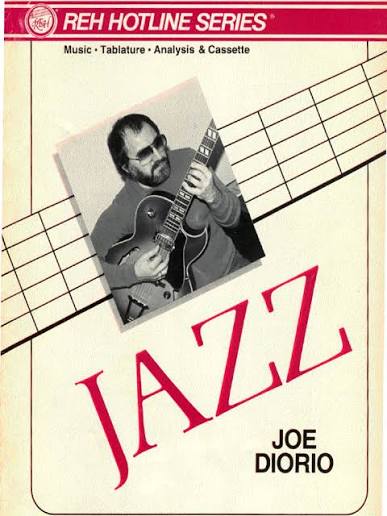

The best sheet music download from our Library.
Joe Diorio: A Comprehensive Exploration of a Jazz Guitar Visionary
Joe Diorio occupies a unique space in the pantheon of jazz guitar. While not a household name like Wes Montgomery or Pat Metheny, his influence, particularly as an educator and a harmonic innovator, has profoundly shaped generations of guitarists. His career, spanning over six decades, wove together the roles of a virtuosic performer, a revered teacher, and a deeply creative artist who was never afraid to push the boundaries of harmony and melody. This article provides an exhaustive look into his life, music, and lasting legacy.
Please, subscribe to our Sheet Music Library.
Biography and Early Life
Joseph Louis Diorio was born on August 6, 1936, in Waterbury, Connecticut . His journey with the guitar began at the age of 15, inspired by an uncle who was a guitarist . This familial influence led him to begin formal musical studies in the early 1950s at a local music school in his home state .
His first professional steps were taken in local bands, but the allure of a larger stage soon called. In the early 1960s, Diorio ventured to Chicago, a city with a thriving and competitive jazz scene . It was here that he began to make his mark, performing and recording with a roster of stellar jazz musicians that included saxophonists Sonny Stitt and Eddie Harris, as well as trombonist Bennie Green . His recording debut came with Eddie Harris on the 1961 album Exodus to Jazz .
During this period, Diorio’s talent did not go unnoticed. Influential jazz critic Leonard Feather reviewed a mid-1960s performance and wrote that Diorio was "one of the most mature and uncompromising (new) plectrists to work the room since Joe Pass," placing him in the esteemed company of one of jazz guitar's legends .
By the late 1960s, Diorio had relocated again, this time to Miami, Florida, to join the quartet of the multi-instrumentalist Ira Sullivan . Miami’s jazz scene proved fertile ground, and Diorio quickly established himself, performing with a wide range of luminaries, including Stan Getz, Freddie Hubbard, and Stanley Turrentine, and leading his own trio with bassist Bob Magnusson and drummer Jim Plank .
Diorio’s life was not without its challenges. In April 2005, he suffered a stroke that impaired the use of his left hand . True to his resilient and creative nature, he worked to regain his faculties, a testament to his dedication to his craft. He passed away on February 2, 2022, at the age of 85, leaving behind a rich and multifaceted legacy.
Search your favorite sheet music in the Sheet Music Library Catalog
Music Style and Harmonic Philosophy
Joe Diorio’s musical style is a fusion of deep-rooted bebop vocabulary, a masterful command of harmony, and a forward-thinking, often modernistic approach to improvisation. His sound is characterized by a clear, articulate tone and a seamless blend of single-note lines and lush chordal accompaniment.
He was a master of "solo guitar" playing, demonstrating how a single instrument could produce a full, orchestral sound that simultaneously conveys melody, harmony, and rhythm. His instructional book, Mel Bay presents Joe Diorio: Solo Guitar Concepts, offers insight into this technique, covering chord fragments, harmonies, arranging solo pieces, fills, comping, bass lines, intervals, and chord inversions . This multifaceted approach allowed him to transform familiar standards into rich, self-contained musical statements.
Chord Progressions and Music Harmony
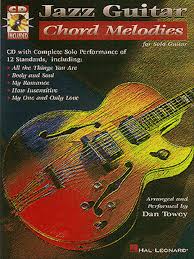
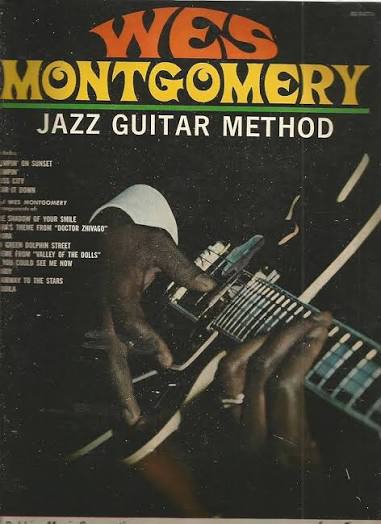
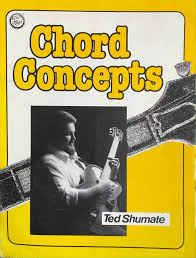


Harmonic innovation lies at the very core of Diorio’s musical identity. He was a tireless explorer of new sounds and chordal possibilities, an area where his dual roles as performer and educator heavily intersected.
His book Jazz Structures for the New Millennium is a prime example of this. Described as containing "96 Intervallic Designs to Expand Your Improvising Vocabulary," the material is rooted in jazz tradition but pushes into more modern territory . The book features chapters on:
- II–V Patterns and Substitutions: It provides an in-depth "Overview of Chord Substitutions" with specific examples for the common II-V-I progression (Dm7, G7, Cmaj7) .
- 4th and 5th Shapes: Diorio explores "4th and 5th Shapes for Lines and Comping," moving away from traditional tertian harmony towards a more open, modal sound .
- 12-Tone Patterns: He incorporates "12-Tone Patterns," reflecting his interest in serialism and atonal concepts, which provide a harmonic ambiguity that encourages a more experimental and intuitive approach to improvisation .
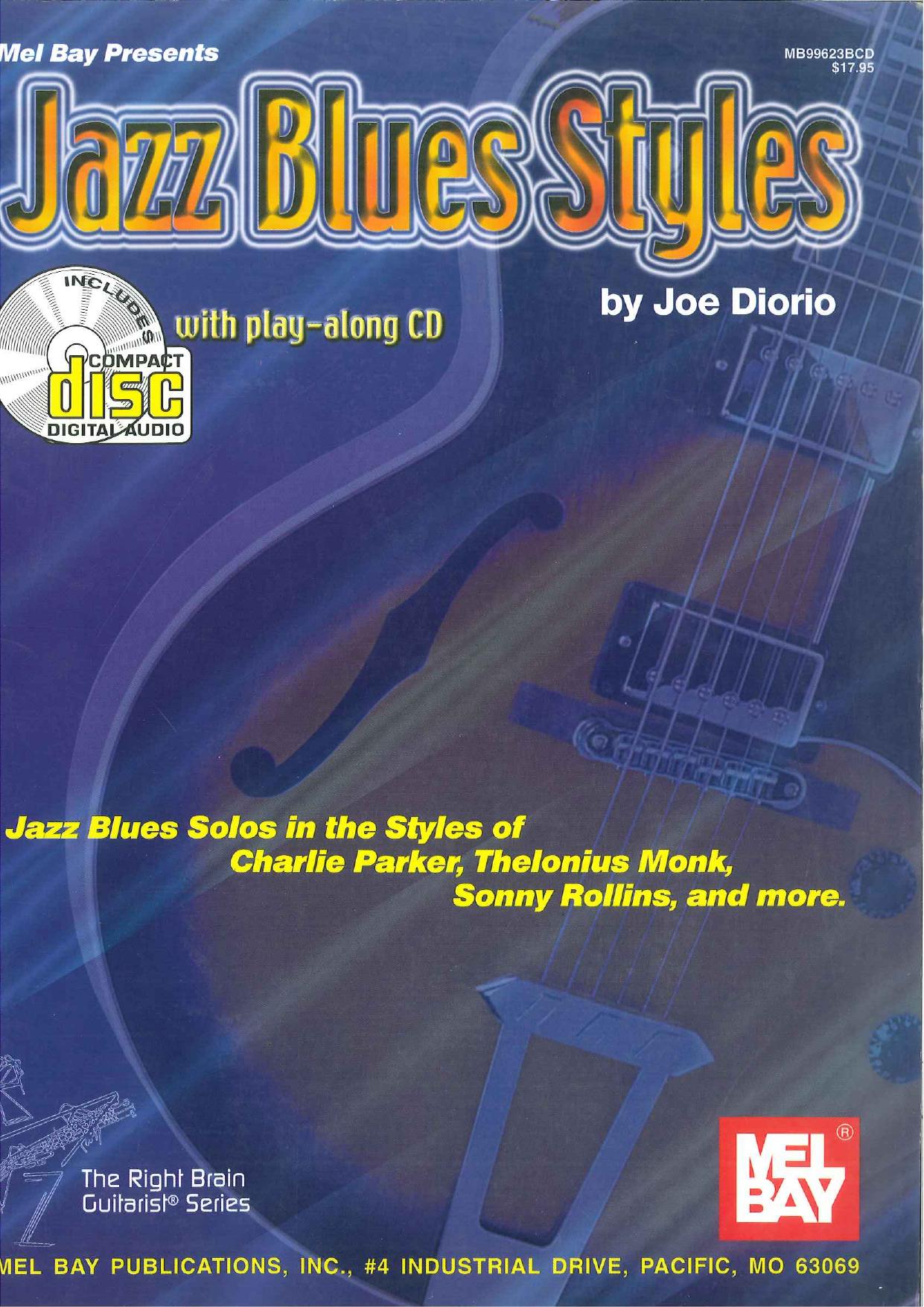
In Jazz Blues Styles, he presents a "new innovative vocabulary of jazz chord sequences" and teaches students how to reharmonize the blues and use "fragments of the chords to outline the harmony and create interesting new sounds" . This focus on "chord fragments" is a hallmark of his style; instead of playing full, blocky chords, he would use small, carefully selected intervals and voicings that implied a rich harmonic structure, giving his playing a lighter, more flexible feel. He also championed a "Right Brain Guitarist(R)" approach, encouraging players to use their "intuitive sense as opposed to their logical sense" .
His 2001 video, Mel Bay presents Joe Diorio: Solo Guitar Concepts, further demonstrates these principles, showing students how to weave together chord fragments, harmonies, bass lines, intervals, and chord inversions into a cohesive musical performance . He composed original compositions as vehicles for these concepts, such as "Monk-ing" and "Blues for All Space Cadets," which appear as part of his educational material .
Relationships with Other Artists
Diorio’s discography is a testament to the respect he commanded among his peers and his ability to collaborate with a wide spectrum of artists. His career is defined by a series of significant musical relationships.
Early Collaborations: His early work with Sonny Stitt, Eddie Harris, and Ira Sullivan established his credentials as a top-tier bop sideman.
A-List Sideman: Over the years, he performed and recorded with an extraordinary list of jazz icons, including Stan Getz, Freddie Hubbard, Horace Silver, Anita O'Day, and Pat Metheny . This demonstrates a versatility that allowed him to fit seamlessly into very different musical contexts, from the soulful hard-bop of Silver to the lyrical modernism of Getz.
Modern and Contemporary Artists: In his later career, he recorded with a new generation of musicians, including Robben Ford, Gary Willis, David Becker, and Mick Goodrick . His duo album with Mick Goodrick, Rare Birds, is a particularly noteworthy meeting of two deeply cerebral and harmonically advanced guitarists . He also toured Italy with bassist Riccardo Del Fra, a musician known for his work with Chet Baker .
Film Works
The available search results do not provide any information regarding Joe Diorio composing for or performing on film soundtracks. While his career was incredibly active in recording and performing, there is no mention of work in cinema.
Discography: A Solo Legacy
Joe Diorio led a prolific recording career, releasing nearly 20 albums under his own name . His discography as a leader spans several decades and showcases a wide range of formats, from solo guitar to duos and full trios.
Key Studio Albums as Leader:
| Album Title | Year | Label | Key Collaborators |
|---|---|---|---|
| Rapport | 1974 | Spitball | Wally Cirillo (piano) |
| Solo Guitar | 1975 | Spitball | Solo |
| Straight Ahead to the Light | 1976 | Spitball | Steve Bagby (drums) |
| Soloduo | 1976 | Spitball | Wally Cirillo |
| Peaceful Journey | 1977 | Spitball | - |
| Bonita | 1980 | Zdenek | - |
| Feedles | 1980 | Timeless | Gijs Hendriks, Bert Van Erk, Michael Baird |
| 20th Century Impressions | 1981 | J Disc | Jeff Berlin (bass), Vinnie Colaiuta (drums) |
| Minor Elegance | 1989 | MGI | Robben Ford (guitar) |
| Italy | 1989 | MGI | - |
| Double Take | 1993 | RAM | Riccardo Del Fra (bass) |
| Rare Birds | 1993 | RAM | Mick Goodrick (guitar) |
| More than Friends | 1994 | RAM | Steve LaSpina, Steve Bagby |
| The Breeze and I | 1994 | RAM | Ira Sullivan (trumpet/sax) |
| Narayani | 1994 | RAM | Hal Crook (trombone) |
| To Jobim with Love | 1996 | RAM | Tribute album to Antonio Carlos Jobim |
| I Remember You | 1998 | RAM | Tribute album to Wes Montgomery |
Most Known Compositions and Performances
While Diorio was primarily known as an interpreter, his performances of jazz standards were renowned for their originality. All About Jazz reviewed his 2001 album Stateside, noting that while the songs were familiar, "everyone brings something fresh to the table." The album, recorded at an engineer’s house, had "the feel of three friends making music after dinner for their own amusement" . Each track was unrehearsed and recorded in one take, a testament to his mastery. Highlights from that album include a version of "Days of Wine and Roses" where he "bounces arpeggios" and a "translucent" take on "A Child is Born," featuring bassist Bob Magnusson on the melody while Diorio played "shimmering chords" .
His tribute albums, To Jobim with Love and I Remember You, are also significant works, showcasing his deep affinity for Brazilian music and the bop-inflected lyricism of Wes Montgomery. He covered many classic standards, including "All the Things You Are," "Body and Soul," "'Round Midnight," "Solar," and "So What," as well as works by jazz icons like John Coltrane ("Moment's Notice," "Mr. P.C.") and Wayne Shorter ("Dance Cadaverous") .
Influences and Legacy
Joe Diorio’s legacy is arguably more profound as an educator than as a performer. He was a foundational figure at two of the world's most influential music institutions. In the late 1970s, he moved to Los Angeles and became one of the first instructors at the Guitar Institute of Technology (G.I.T.) in Hollywood, helping to shape the curriculum that would influence countless rock, fusion, and jazz guitarists . Shortly after, in 1984, he began teaching at the USC Thornton School of Music, remaining a faculty member until 2007 .
As an author, he wrote 14 instructional books that remain cornerstones of jazz guitar education . His Intervallic Designs for Jazz Guitar: Ultramodern Sounds for Improvising and Giant Steps and 21st Century Intervallic Designs are revered for their ability to unlock new harmonic and melodic pathways for improvisers .
Beyond his work on the guitar, Diorio was also an accomplished painter and sculptor, highlighting a creative spirit that transcended music alone .
Documentaries and Teaching Videos
He has at least one dedicated instructional video. The Mel Bay publication, Joe Diorio: Solo Guitar Concepts, is a key resource that documents his techniques and serves as a moving visual and audio record of his approach .
Joe Diorio:
Joe Diorio was far more than just a jazz guitarist; he was a complete musician and a philosopher of the instrument. His path from a sideman in Chicago and Miami to a revered solo artist and educator in Los Angeles is a journey that mirrors the evolution of jazz guitar itself. He navigated the rigors of bebop, the lyricism of bossa nova, and the abstraction of 12-tone music with equal skill and conviction.
His true legacy, however, rests in his work as a teacher and theorist. Through his books and his decades of work at USC and GIT, Diorio deconstructed the guitar, revealing its harmonic potential through concepts of intervallic design and chord fragmentation. He empowered generations of guitarists to think beyond standard chord shapes and scale patterns, encouraging a more intuitive, spacious, and harmonically sophisticated approach. Joe Diorio was a "musician's musician" in the best sense of the phrase—a quietly powerful innovator whose influence will be felt for many decades to come.
Browse in the Sheet Music Library:
Or browse in the categories menus & download the Library Catalog PDF:
Joe Diorio's Discography
As leader
- Rapport with Wally Cirillo (Spitball, 1974)
- Solo Guitar (Spitball, 1975)
- Straight Ahead to the Light with Steve Bagby (Spitball, 1976)
- Soloduo with Wally Cirillo (Spitball, 1976)
- Peaceful Journey (Spitball, 1977)
- Bonita (Zdenek, 1980)
- Feedles with Gijs Hendriks, Bert Van Erk, Michael Baird (Timeless, 1980)
- 20th Century Impressions with Jeff Berlin, Vinnie Colaiuta (J Disc, 1981)
- Earth Moon Earth (Nocturne, 1987)
- Minor Elegance with Robben Ford (MGI, 1989)
- Italy (MGI, 1989)
- Double Take with Riccardo Del Fra (RAM, 1993)
- We Will Meet Again (RAM, 1993)
- Rare Birds with Mick Goodrick (RAM, 1993)
- More than Friends (RAM, 1994)
- The Breeze and I with Ira Sullivan (RAM, 1994)
- Narayani Joe DiOrio and Hal Crook (RAM, 1994)
- To Jobim with Love (RAM, 1996)
- I Remember You (RAM, 1998)
As sideman
With Pete & Conte Candoli
- The Candoli Brothers (Essential Media Group, 1978)
With Eddie Harris
- Exodus to Jazz (Vee-Jay, 1961)
- Mighty Like a Rose (Vee-Jay, 1961)
- Jazz for "Breakfast at Tiffany's" (Vee-Jay, 1961)
- A Study in Jazz (Vee-Jay, 1962)
- For Bird and Bags (Exodus, 1963)
- Come on Down (Atlantic, 1970)
With Sam Lazar
With Anita O'Day
- Mello'day (GNP Crescendo, 1978)
With Horace Silver
- Guides to Growing Up (Silveto, 1981)
With Sonny Stitt
- Move on Over (Argo, 1963)
- My Main Man (Argo, 1964) with Bennie Green
With Ira Sullivan
- Ira Sullivan (A&M, 1976) with Jaco Pastorius
- Peace (Fantasy, 1978)
- Multimedia (Galaxy Music, 1982)
- An Axe to Grind (Ken Tamplin and Friends) (Intense Records, 1990)
With David Becker
Joe Diorio Solo guitar Concepts
Joe Diorio teaches solo guitar.