
Scores for all instruments: 16,000+ (active and growing), over 236,000 pages.
All genres and levels: Jazz & Blues, Rock & Pop, Classical & Contemporary, Film & Musicals;
books & biographies; methods, études, play-along tracks (MP3) for Jazz & Rock.
Access & benefits: US$15.99 one-time payment, valid for lifetime, full Library access.
Table of Contents
The best sheet music download from our Library.
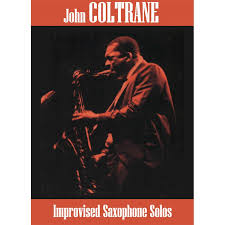




Who was John Coltrane (1926-1957)? The Architect of Spiritual Jazz
Please, subscribe to our Sheet Music Library. Sheet music should be accessible and affordable for all musicians, from professionals to absolute beginners.
John William Coltrane stands as one of the most influential and revered figures in the history of American music. A saxophonist and composer of extraordinary vision, Coltrane transformed the landscape of jazz across a remarkably brief but intensely productive career. Born in 1926 and passing away in 1967 at just forty years of age, he packed multiple musical lifetimes into a span of roughly twelve years of significant recording activity. His journey from a struggling sideman battling addiction to a spiritual leader whose music transcended the boundaries of jazz itself remains one of the most compelling narratives in twentieth-century music.
Merely mentioning the name John Coltrane is likely to evoke a deeply emotional, often spiritual response from even the most casual jazz listener. He has been canonized by the African Orthodox Church as Saint John William Coltrane, and a church in San Francisco bears his name, using his music as the basis of its liturgy. The Pulitzer Prize Board honored him with a posthumous special citation for "his masterful improvisation, supreme musicianship and iconic centrality to the history of jazz". To understand Coltrane is to understand not merely a musician, but a spiritual seeker who used his instrument as a vehicle for transcendence.
Search your favorite sheet music in the Sheet Music Library Catalog

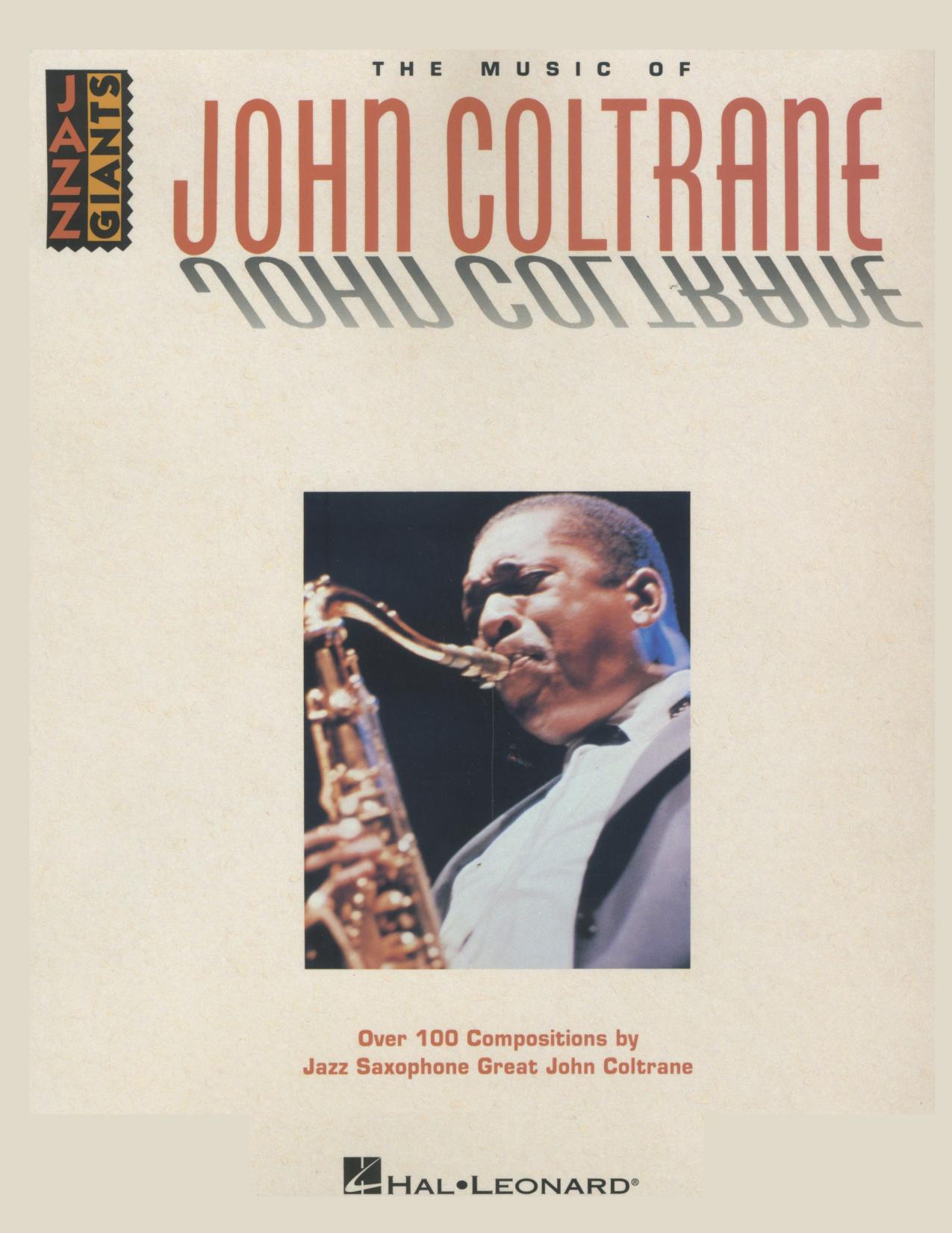



Early Life and Biography
John Coltrane was born on September 23, 1926, in Hamlet, North Carolina, and grew up in High Point, North Carolina, attending William Penn High School. He was surrounded by music from his earliest years. His father played several instruments, which sparked young Coltrane's study of the E-flat horn and clarinet. His ancestors included ministers in the AME Zionist church and musicians, establishing a spiritual and artistic lineage that would profoundly shape his later work.
Coltrane began playing music when he was about twelve years old, initially studying clarinet before switching to alto saxophone. His first horn was the clarinet, an instrument he quickly mastered as a teenager. While in high school, his musical influences shifted toward the likes of Lester Young and Johnny Hodges, prompting him to switch to alto saxophone. He continued his musical training in Philadelphia at Granoff Studios and the Ornstein School of Music.
During World War II, Coltrane enlisted in the navy to avoid being conscripted, and the "top brass" quickly drafted him into one of Pearl Harbor's swing bands. In 1945, he had a transformative encounter with bebop legend Charlie "Bird" Parker, whose main instrument was the alto saxophone. "Bird hit me right between the eyes," Coltrane later claimed. To avoid direct competition, Coltrane settled on the tenor saxophone while Parker reigned supreme on the alto.
After the war, Coltrane moved to Philadelphia, where his now-widowed mother had relocated, and became part of the emerging wave of East Coast bebop musicians. He began playing tenor saxophone and by 1949 was recording with Dizzy Gillespie's orchestra. Prior to joining Gillespie, he performed with Jimmy Heath, where his passion for experimentation began to take shape.
The middle 1950s proved pivotal. Coltrane began playing and recording with Miles Davis in one of the most influential jazz ensembles of all time. However, he had also become an addict, battling alcohol and heroin addiction. He was fired multiple times, including by Davis. The relationship between Davis and Coltrane was complex—characterized by profound mutual respect but also marked by drug abuse and violence. Davis fired Coltrane twice, including after an incident in 1956 in which he physically struck him, before being stopped by pianist Thelonious Monk.
In 1957, Coltrane experienced a profound spiritual awakening. He kicked his drug addiction while his first wife, Naima, converted to Islam. This process marked a turning point, and he refocused on his musicianship, "seeking to completely immerse himself in the saxophone like it was a form of baptism". During this period, he collaborated extensively with Thelonious Monk throughout 1957 while also releasing his debut solo album. He rejoined Davis's band in 1958 and played a pivotal role in the recording of Davis's seminal album Kind of Blue.
By 1960, Coltrane had formed his own quartet, which included pianist McCoy Tyner, drummer Elvin Jones, and bassist Jimmy Garrison. This "Classic Quartet" would become one of the most celebrated ensembles in jazz history. Eventually, he added players like Eric Dolphy and Pharoah Sanders, expanding his sonic palette into freer territories. Coltrane's life was cut short on July 17, 1967, when liver disease took his life, leaving many to wonder what might have been.
Musical Style and Technique
John Coltrane's musical style evolved dramatically across his career, traversing bebop, hard bop, modal jazz, and free jazz. His highly unique playing technique, widely referred to as "sheets of sound," features rapid passages outlining the underlying chords and can also include harmonic superimpositions. Depending on the tempo of a given song, these "sheets of sound" comprise sixteenth, thirty-second, or sixty-fourth note groupings that are often combined with rapid tuplets. Critic Ira Gitler famously coined the term, describing it as if Coltrane were "commanding monsoon rains".
The technique was described by Eric Ajaye of ABC Jazz as "an unrelenting waterfall of notes in a tone that was full and fiery". Coltrane developed and perfected this approach through his obsessive practice routines, known in jazz as "shedding." Fellow saxophonist Jimmy Heath famously remarked that Coltrane would practice "25 hours a day". This rigorous practice laid the foundation for his signature sound.
Coltrane's style was also characterized by his use of the three-on-one chord approach, a method of playing multiple notes simultaneously over a single chord. He explored the full range of the saxophone, from its lowest depths to its most piercing altissimo registers, and was known for his intense, vocal-like tone that could convey profound emotion.
His approach to improvisation was fundamentally different from many of his contemporaries. While some players constructed solos around memorable melodic phrases, Coltrane often built his solos through systematic exploration of harmonic possibilities. By systematically exploring permutations and combinations of the diatonic scale system, Coltrane could build harmony within a solo line, realizing harmony horizontally within a scalar form. This approach allowed him to create complex, multi-layered improvisations that were nonetheless rooted in the underlying harmonic structure.
The "sheets of sound" technique was not merely technical display; it was a spiritual practice. Coltrane viewed his music as fundamentally spiritual, and his explorations of Eastern religion and its connections to what he called "world music" were cut short by his early death. His music became an instrument to create positive thought patterns in the minds of people, reflecting his belief that all must make a conscious effort to effect positive change in the world.
Harmony: Coltrane Changes and Modal Exploration
One of Coltrane's most significant contributions to jazz harmony was the development of what became known as "Coltrane changes"—an advanced variation of the rhythm change technique. These rapid harmonic modulations, most famously demonstrated on compositions like "Giant Steps" and "Countdown," involved dividing the octave into three equal parts through major third intervals, creating a constantly shifting harmonic landscape that posed unprecedented challenges for improvisers.
The harmonic progress on "Giant Steps" is based on a 16-bar form derived from the Eddie "Cleanhead" Vinson composition "Tune Up". In 1960, the "flipbook-fast harmonies of 'Giant Steps' upped the expectations for jazz improvisers by a big margin". This composition became a rite of passage for aspiring jazz musicians, demanding mastery of rapid key changes and harmonic precision.
Simultaneously, Coltrane explored the opposite harmonic direction through modal jazz. He brought his "whirling-dervish attack to a more stationary style of music: raga-like, harmonically planted modal tunes such as 'Impressions,' 'Africa' and 'India'". In modal jazz, the improviser explores a single scale or mode over extended periods, allowing for greater freedom and spiritual intensity. This approach was inspired in part by Miles Davis and George Russell, who initiated Coltrane into modal structures that allowed him to loosen the constraints of harmony and rhythm.
Coltrane's harmonic innovations were not merely intellectual exercises; they served his spiritual quest. The harmonic complexity of "Giant Steps" and the modal explorations of "Impressions" were different paths toward the same goal: transcending the limitations of conventional jazz harmony to achieve a higher state of musical and spiritual expression.
Best Songs and Compositions
John Coltrane's catalog includes some of the most enduring compositions in jazz history. "Blue Train," recorded in 1957 for Blue Note Records, remains one of his most accessible and beloved works. The title track is a hard bop masterpiece that showcases Coltrane's blues sensibility and his emerging voice as a bandleader. The album also features "Moment's Notice," a composition that hints at the harmonic complexity Coltrane would soon fully develop.
"Giant Steps" (1960) stands as a landmark achievement in jazz composition. The title track's rapid harmonic modulations have made it a proving ground for jazz musicians ever since. "Naima," a tender ballad named for his first wife, demonstrates Coltrane's lyrical side and has become a jazz standard. The composition opens the 1964 film Le chat dans le sac, introducing viewers to the film's protagonists as the music plays.
"My Favorite Things" (1960) was Coltrane's greatest popular success. His jazz waltz arrangement of the Rodgers and Hammerstein show tune became a signature piece, showcasing his soprano saxophone work and his ability to transform familiar material into something entirely new. Because of its chordal simplicity, Coltrane's rendition helped inspire the lengthy "jams" associated with psychedelic rock in the late 1960s.
"A Love Supreme" (1965) is widely considered Coltrane's magnum opus. A four-part suite that serves as a paean to God, it attests to the "power, glory, love, and greatness of God". The album was certified gold by the RIAA for exceeding 500,000 units in Japan in 1972, and in the United States in 2001. Its opening track, "Acknowledgement," features the iconic chant of "A Love Supreme" that became a central mantra of Coltrane's spiritual expression.
Other essential compositions include "Impressions," a modal tour de force that became a staple of the Classic Quartet's live performances; "Alabama," a moving elegy written in response to the 1963 bombing of the 16th Street Baptist Church; "Equinox," a brooding minor blues; "Crescent," a hauntingly beautiful ballad; and "Afro Blue," which became a signature piece for the quartet.
Music in Films
John Coltrane's music has appeared in numerous films, both as soundtrack material and as references in dialogue. However, his only known original film soundtrack was for a Quebec film that remained largely forgotten for decades. In 1964, Quebec filmmaker Gilles Groulx convinced Coltrane to score his first feature, Le chat dans le sac (The Cat in the Bag). Groulx even managed to get legendary engineer Rudy Van Gelder on board to record the session at his famed New Jersey studio.
The soundtrack was recorded at the height of Coltrane's powers, with the Classic Quartet—McCoy Tyner on piano, Jimmy Garrison on bass, and Elvin Jones on drums—performing eight tracks, complete with alternate takes of five different compositions. The film's original working title was Chronicle of a Break-up, which complicated the search for the recordings in the National Film Board archive. Only about ten minutes of the music was included in the final cut of the film, and the master tape sat in the NFB archive for decades before being rediscovered and finally released in 2019 as the album Blue World.
In addition to this original soundtrack, Coltrane's music has been featured in numerous films. Recent film projects that have made references to Coltrane's artistry in dialogue or musical compositions include Mr. Holland's Opus, The General's Daughter, Malcolm X, Mo' Better Blues, Jerry Maguire, White Night, and Four Little Girls. Popular television series such as NYPD Blue, The Cosby Show, Days of Our Lives, Crime Stories, and ER have also relied on his beautiful melodies.
Collaborations with Other Musicians
Coltrane's collaborative work was essential to his artistic development and to the history of jazz. His collaborations with Miles Davis and Thelonious Monk stand as two of the most significant partnerships in jazz history. One of the greatest things about the collaboration between Miles Davis and John Coltrane during the mid to late 1950s was that it occurred in two stages, with a significant break in between during 1957 when Coltrane played with Thelonious Monk.
With Davis, Coltrane participated in the recording of Kind of Blue (1959), the best-selling jazz album of all time and a watershed of modern music. The two musicians pushed each other to new heights, with Davis's understated lyricism providing a counterpoint to Coltrane's torrential intensity. Though their relationship was fraught with tension—Davis was the "yin to Coltrane's yang"—their musical chemistry was undeniable.
The collaboration with Thelonious Monk in 1957 was equally transformative. Recordings such as Thelonious Monk with John Coltrane (1961) capture the two musicians engaged in deep musical dialogue, with Monk's angular compositions providing a perfect framework for Coltrane's explorations. Tracks like "Epistrophy," "Trinkle, Tinkle," and "Nutty" showcase their remarkable interplay.
Coltrane also collaborated with numerous other jazz greats, including Sonny Rollins, Tadd Dameron, and Art Taylor. The compilation Another Side of John Coltrane showcases his best recordings as a side artist, featuring collaborations with these musicians and a legendary tenor saxophone solo with Miles Davis on "Someday My Prince Will Come" from the 1961 album of the same title.
Other notable collaborations include Bags and Trane (1961) with vibraphonist Milt Jackson, Kenny Burrell and John Coltrane (1962), John Coltrane and Johnny Hartman (1963), and Duke Ellington and John Coltrane (1962). The album with Duke Ellington features Coltrane's regular group of pianist McCoy Tyner, bassist Jimmy Garrison, and drummer Elvin Jones, and stands as a beautiful meeting of two generations of jazz royalty.
Influences
Coltrane's musical influences were diverse and far-reaching. Early in his career, he was inspired by Lester Young and Johnny Hodges, whose smooth, melodic approach shaped his initial conception of the saxophone. Charlie Parker's bebop innovations "hit him right between the eyes" and motivated his commitment to the music.
He also drew deeply from the blues tradition, which remained a constant thread throughout his career. His 1940s listening included what musicians like Coleman Hawkins, Ben Webster, and Tab Smith were doing—elements he didn't initially understand but "felt emotionally". This emotional connection to the blues became the foundation upon which he built his more experimental structures.
Coltrane's influences extended well beyond jazz. He closely studied spiritual and musical systems from Africa and India, sensing that ancient, non-Western traditions might light the path toward a new creative approach. His explorations of Eastern religion and its connections to what he called "world music" shaped his later work and his conception of music as a spiritual practice.
The political tumult of the 1960s also influenced his music. Coltrane was affected by the intense political activity of the era, and compositions like "Alabama" were direct responses to the civil rights struggle. He felt powerfully concerned with the fate of the world and was sure that music had a role to play in turning the tides.
Legacy
John Coltrane's legacy is profound and far-reaching. He has been described as the last great innovator, a man whose music still overshadows the jazz world over a quarter of a century after his death. His influence has been more widely imitated in jazz over the last fifty years than any other figure, with his recordings exerting as much influence on later generations as Coleman Hawkins and Lester Young had on him.
Coltrane's impact extends beyond jazz into rock, avant-garde, and world music. His chordal simplicity on "My Favorite Things" helped inspire the lengthy "jams" associated with psychedelic rock in the late 1960s. He became a father figure to a new generation of jazz musicians, and his pioneering legacy continues to shape artists such as American saxophonists Branford Marsalis and Kamasi Washington.
His music has been honored with numerous awards and recognitions. In 1982, the RIAA posthumously awarded him a Grammy Award for Best Jazz Solo Performance for his work on the album Bye Bye Blackbird. In 1997, he received the organization's highest honor, the Lifetime Achievement Award. In 2007, he was awarded the Pulitzer Prize Special Citation for his "masterful improvisation, supreme musicianship and iconic centrality to the history of jazz". He reached the peak of his public acclaim in 1965, winning the Down Beat award as America's best tenor saxophonist, Hall of Fame selection, and Jazzman of the Year, while A Love Supreme was voted Record of the Year.
The spiritual dimension of Coltrane's legacy is perhaps his most enduring contribution. In San Francisco, the Saint John Coltrane African Orthodox Church, founded in 1971, takes Coltrane as its patron saint and prophet, using his music and lyrics as the basis of its liturgy. He was posthumously canonized by the African Orthodox Church as Saint John William Coltrane. His music continues to be a source of spiritual inspiration for listeners around the world.
Additional Information
John Coltrane's recording career can be divided into several distinct periods. His early work as a sideman in the 1950s gave way to his first sessions as a leader for Prestige Records. The pivotal year of 1957 saw the release of Blue Train for Blue Note and his first recordings with Thelonious Monk. The Atlantic Records period (1959-1961) produced Giant Steps, Coltrane Jazz, My Favorite Things, and Olé Coltrane. His Impulse! Records period (1961-1967) yielded Africa/Brass, Ballads, Coltrane, A Love Supreme, Crescent, Meditations, and Ascension, among many others.
Coltrane's classic quartet with McCoy Tyner, Jimmy Garrison, and Elvin Jones is considered one of the greatest ensembles in jazz history. Their live recordings, particularly Live at the Village Vanguard and The Complete 1961 Village Vanguard Recordings, capture the quartet at its most expansive and exploratory. The later additions of Eric Dolphy, Pharoah Sanders, and Rashied Ali pushed the music into even freer territory, as heard on Ascension (1965) and Meditations (1965).
Coltrane's personal life included two marriages. His first wife, Naima, inspired the composition "Naima" and converted to Islam during his spiritual awakening in 1957. His second wife, Alice McLeod Coltrane, was a pianist and composer who influenced his later spiritual and musical explorations. Their home was filled with music, and Alice's own artistic journey continued after John's death, establishing her as a significant figure in spiritual jazz.
Coltrane's dedication to his craft was legendary. His practice routines were so intense that fellow musicians marveled at his commitment. This discipline, combined with his spiritual seeking and his relentless pursuit of new musical possibilities, made him a unique figure in American cultural history—an artist who used his instrument not merely for entertainment but as a tool for personal and collective transcendence.
John Coltrane
John Coltrane's life and music represent one of the most remarkable journeys in American art. From a young clarinetist in North Carolina to a cultural icon whose music continues to inspire millions, his path was marked by struggle, revelation, and an unyielding commitment to artistic and spiritual growth. His "sheets of sound" technique, his harmonic innovations with "Coltrane changes," and his modal explorations expanded the possibilities of jazz and influenced musicians across genres and generations.
His collaborations with Miles Davis, Thelonious Monk, and countless others produced some of the most enduring recordings in jazz history. His compositions—"Giant Steps," "Naima," "My Favorite Things," "A Love Supreme," "Impressions," "Alabama"—have become standards that challenge and inspire musicians around the world.
Perhaps most importantly, Coltrane demonstrated that music could be a vehicle for spiritual transcendence. He believed that his music was an instrument to create positive thought patterns in the minds of people, and that all must make a conscious effort to effect positive change in the world. His only film soundtrack, recorded for a forgotten Quebec film and rediscovered decades later, stands as a testament to his willingness to explore new contexts for his art.
In the decades since his death, Coltrane's influence has only grown. He has been canonized as a saint, honored with a Pulitzer Prize, and cited as an influence by artists from Branford Marsalis to Kamasi Washington. His music continues to be heard in films, on television, and in concert halls around the world. For many, Coltrane's saxophone became synonymous with a liberated mind and body, and however ineffable, it carried a message. As the poet A.B. Spellman wrote after the saxophonist's death, "trane's horn had words in it". Those words continue to speak to us today, inviting us into a world of beauty, struggle, and transcendence that remains as vital and necessary as it was when John Coltrane first raised his horn.
Browse in the Sheet Music Library:
Or browse in the categories menus & download the Library Catalog PDF:
Selected discography
Main article on Wikipedia: John Coltrane discography
The discography below lists albums conceived and approved by Coltrane as a leader during his lifetime. It does not include his many releases as a sideman, sessions assembled into albums by various record labels after Coltrane's contract expired, sessions with Coltrane as a sideman later reissued with his name featured more prominently, or posthumous compilations, except for the one he approved before his death. See the main discography link above for a full list.
Prestige and Blue Note records
- Coltrane (debut solo LP; 1957)
- Blue Train (1958)
- John Coltrane with the Red Garland Trio (1958)
- Soultrane (1958)
Atlantic records
- Giant Steps (1960)
- Coltrane Jazz (1961)
- My Favorite Things (1961)
- Olé Coltrane (1961)
Impulse! Records
- Africa/Brass (1961)
- Coltrane "Live" at the Village Vanguard (1962)
- Coltrane (1962)
- Duke Ellington & John Coltrane (1963)
- Ballads (1963)
- John Coltrane and Johnny Hartman (1963)
- Impressions (1963)
- Live at Birdland (1964)
- Crescent (1964)
- A Love Supreme (1965)
- The John Coltrane Quartet Plays (1965)
- Ascension (1966)
- New Thing at Newport (1966)
- Meditations (1966)
- Live at the Village Vanguard Again! (1966)
- Kulu Sé Mama (1967)
- Expression (1967)