
Scores for all instruments: 16,000+ (active and growing), over 236,000 pages.
All genres and levels: Jazz & Blues, Rock & Pop, Classical & Contemporary, Film & Musicals;
books & biographies; methods, études, play-along tracks (MP3) for Jazz & Rock.
Access & benefits: US$15.99 one-time payment, valid for lifetime, full Library access.
Table of Contents
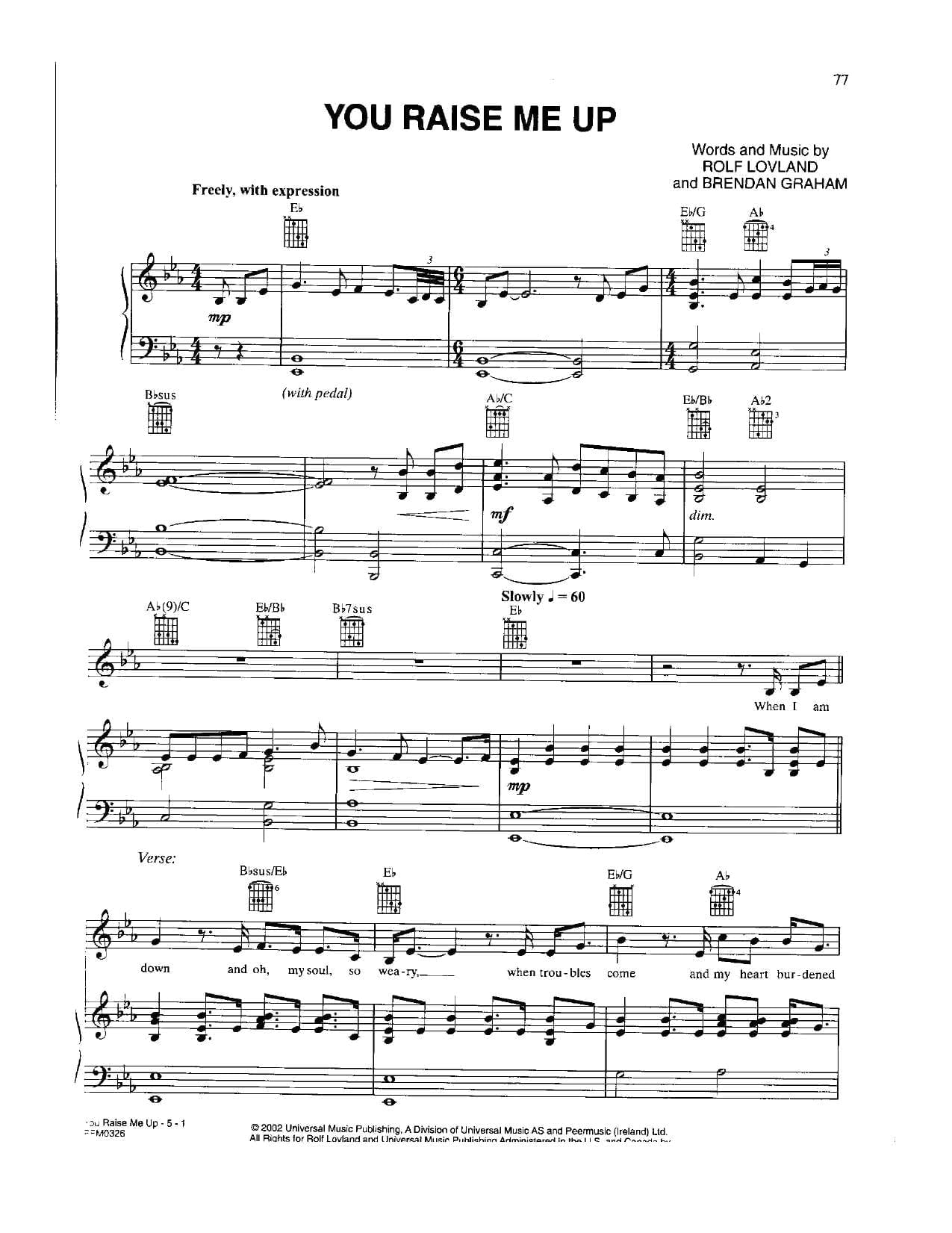
Josh Groban - You Raise Me Up
Josh Groban: The Voice That Bridged Classical and Pop
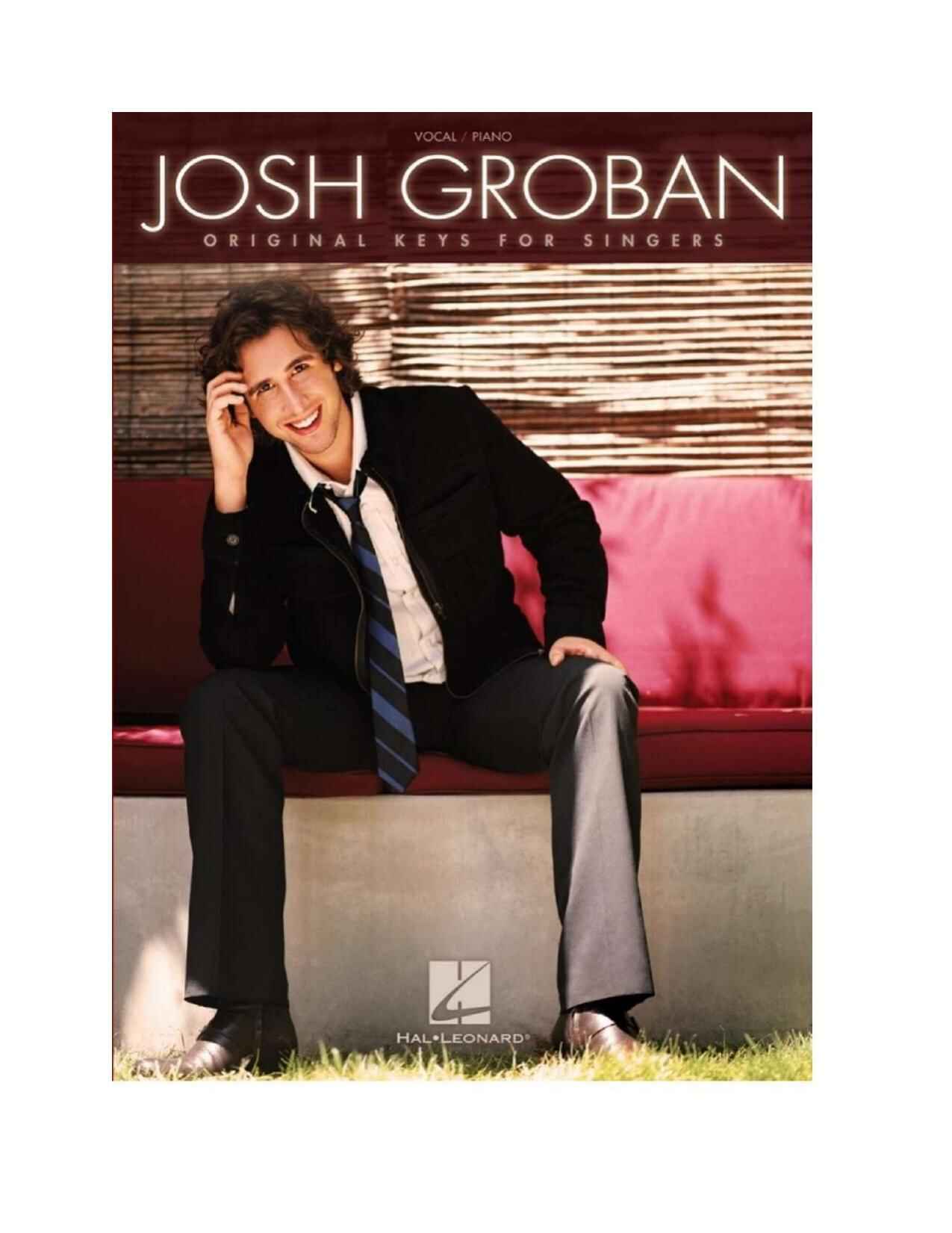
Josh Groban is not merely a singer. He is a cultural bridge, a musician who has spent a quarter of a century dissolving the boundaries between classical music and pop, between the opera house and the arena, between the conservatory and the radio. He possesses, in the words of one critic, "one of the most outstanding and instantly recognizable voices in music"—a high baritone that bends from baritone to tenor without any signs of strain, maintaining what has been described as a "caramel richness" throughout its range. He has sold over 35 million albums worldwide, headlined legendary venues on multiple continents, and scored six No. 1 hits on Billboard's Adult Contemporary charts. Yet he is also a Tony-nominated Broadway actor, a philanthropist, and a self-described "renaissance man" who has never been content to rest on the laurels of his extraordinary voice.
To understand Josh Groban is to understand an artist who was thrust into stardom almost by accident. He was a seventeen-year-old musical theater student when he was asked to stand in for Andrea Bocelli at a Grammy rehearsal with Celine Dion. Within two years, he had a record deal, a debut album, and a devoted fanbase that spanned generations. Within a decade, he had become the best-selling artist in the United States and the defining voice of a genre—"popera," or classical crossover—that he helped to make accessible to a younger, mainstream audience.
The best sheet music download from our Library.
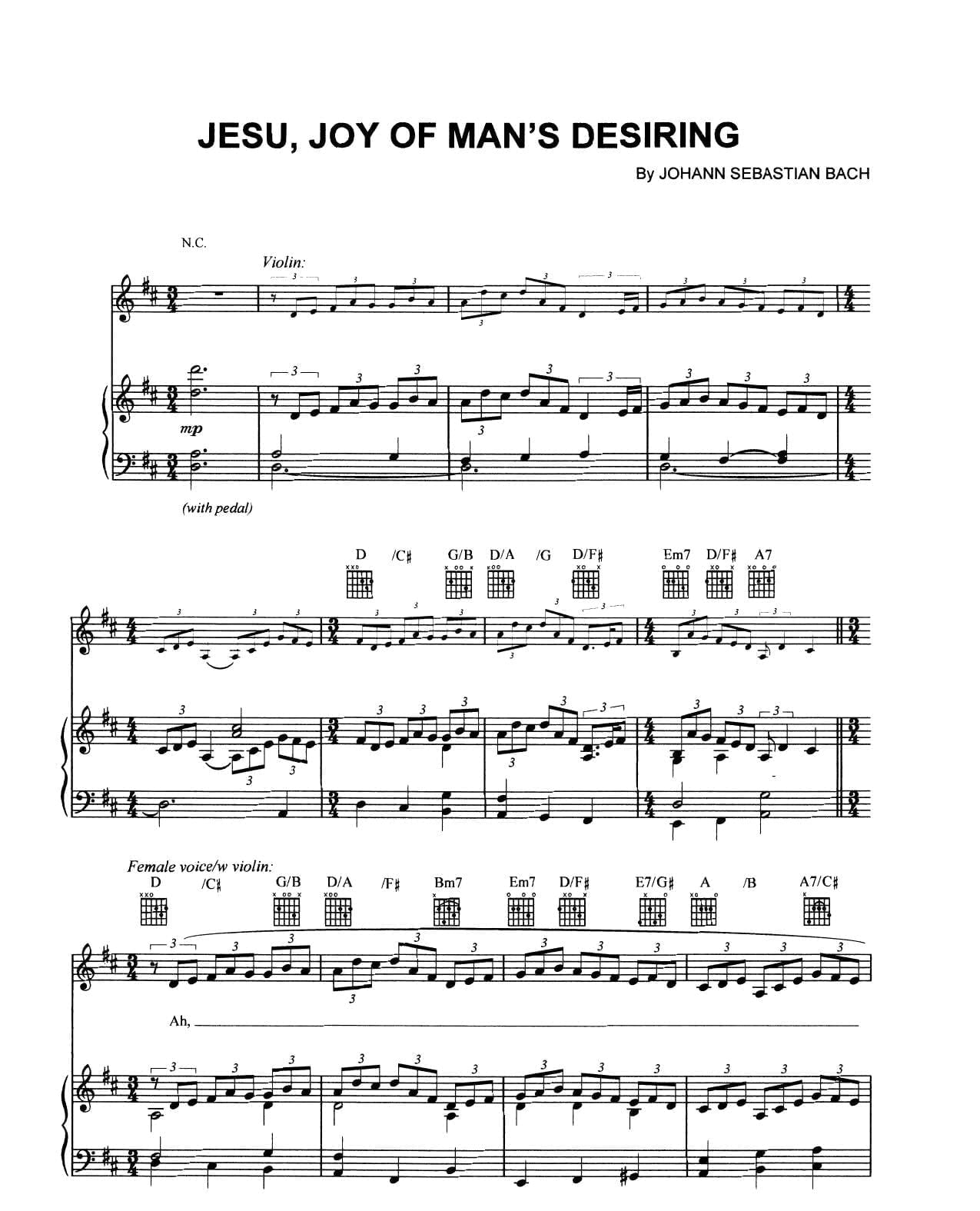
Please, subscribe to our Sheet Music Library. Sheet music should be accessible and affordable for all musicians, from professionals to absolute beginners.
Biography: From Los Angeles to the World Stage
Joshua Winslow Groban was born on February 27, 1981, in Los Angeles, California, to Jack Groban, a businessman, and Melinda "Lindy" Groban, a school teacher. His father is a descendant of Jewish immigrants from Poland and Ukraine who converted to Christianity upon marrying Melinda, while his mother's ancestry is English, German, Norwegian, and one quarter Ashkenazi Jewish. The family was Episcopalian, and Groban grew up in a stable, middle-class household that valued education and the arts.
Groban's first public performance came in the seventh grade, when his music teacher chose him to sing a solo of "'S Wonderful" at the school's cabaret night. At the time, he was more focused on acting than singing, and he played Tevye in his high school's production of Fiddler on the Roof. In the summers of 1997 and 1998, he attended the Interlochen Center for the Arts Camp in Michigan, majoring in musical theater, and began taking vocal lessons. He attended the Los Angeles County High School for the Arts as a theater major and graduated in 1999. He was admitted to Carnegie Mellon University in Pittsburgh, intent on studying musical theater, but four months into his first semester, he was offered a recording contract and left college to pursue a singing career.
The pivotal moment in Groban's career came in late 1997, when the sixteen-year-old was introduced by his vocal coach to producer David Foster. Foster, one of the most successful producers in popular music history, had worked with everyone from Celine Dion to Whitney Houston to Andrea Bocelli. He recognized something in Groban's voice—a maturity and a power that belied his youth—and began hiring him to sing at events. The breakthrough came in 1999, when Groban was called to stand in for an ailing Andrea Bocelli to rehearse a duet, "The Prayer," with Celine Dion at the rehearsal for the 1999 Grammy Awards. The performance was a sensation, and Rosie O'Donnell immediately invited him to appear on her talk show. Foster also asked him to sing at California Governor Gray Davis' 1999 inauguration.
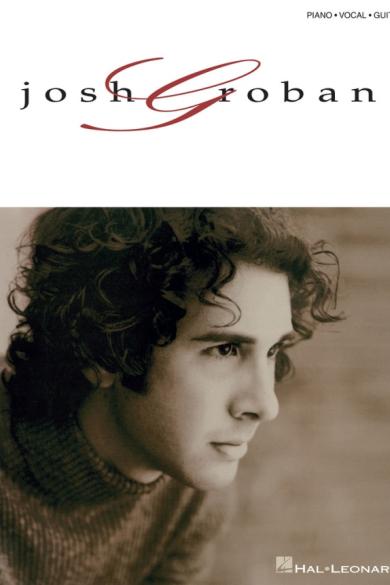
Groban's debut album, Josh Groban, was released in 2001 and was a commercial and critical success, mixing pop with classical songs and showcasing his baritone voice and romantic style. The album was certified five-times platinum and featured songs like "To Where You Are" and "You're Still You," the latter of which he performed on the season four finale of Ally McBeal. His appearance on the show generated some 8,000 emails from young viewers, and it thrust him into the international mainstream.
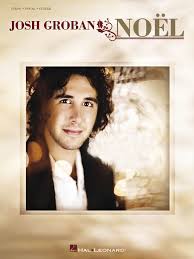
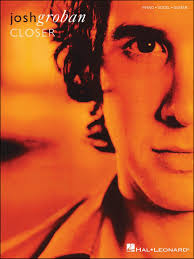
The follow-up album, Closer (2003), was an even greater success, certified six-times platinum and becoming the top-selling album of the 2000s in the United States. It featured "You Raise Me Up," a song that became Groban's signature and one of the most beloved anthems of the decade. Awake (2006) continued his commercial dominance, certified double-platinum, and saw Groban collaborating with artists as diverse as Ladysmith Black Mambazo and Dave Matthews. In 2007, his Christmas album Noël was the best-selling album in the United States, certified seven-times platinum.
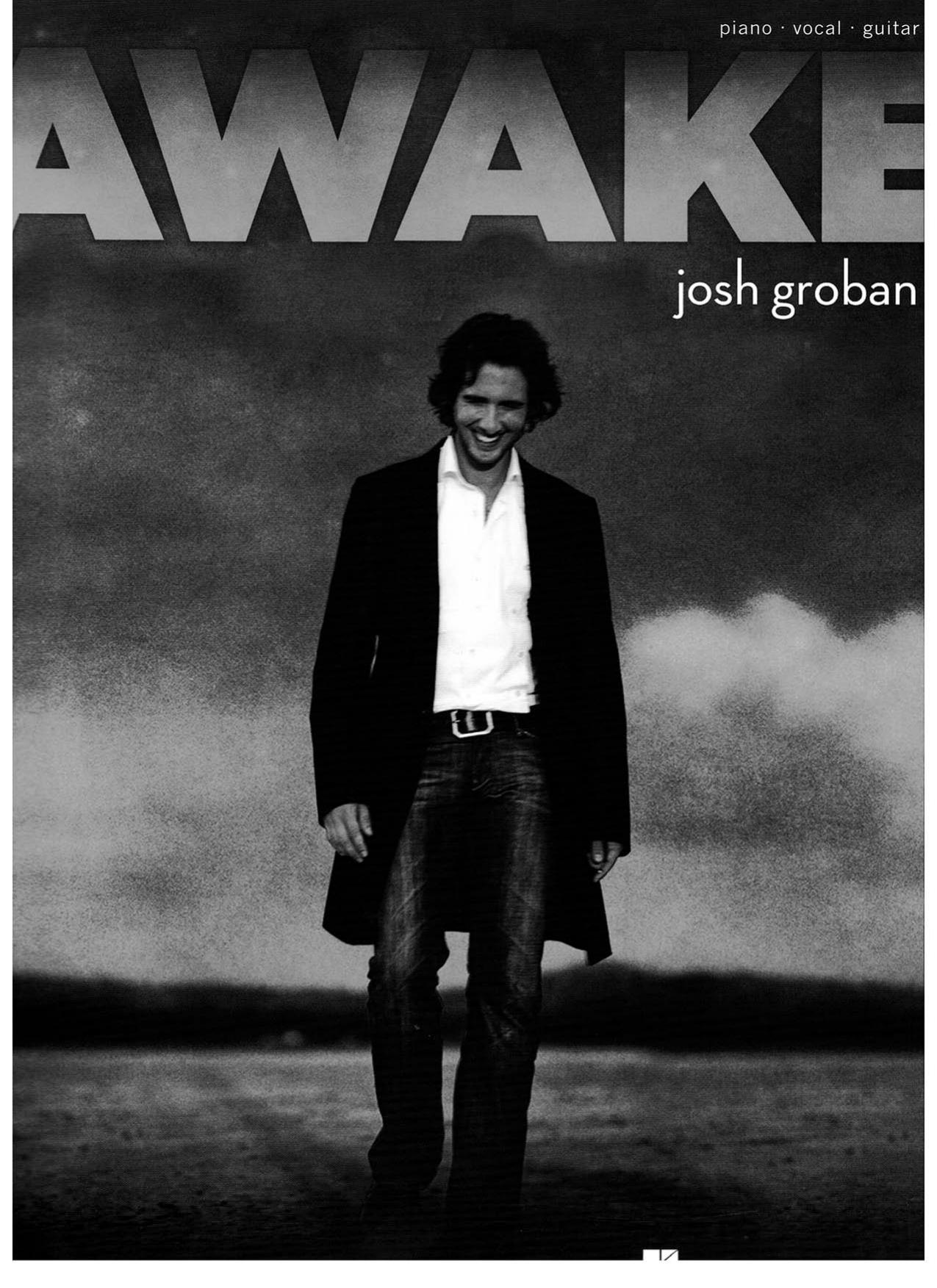
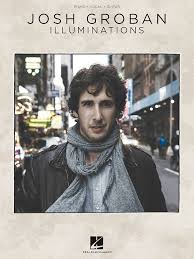
Groban's subsequent albums—Illuminations (2010), All That Echoes (2013), Stages (2015), Bridges (2018), and Harmony (2020)—have explored a range of stylistic territories, from the stripped-back production of Rick Rubin on Illuminations to the Broadway standards of Stages and the eclectic covers of Harmony. His most recent album, Cinematic (2026), is a collection of classic film songs, featuring renditions of "Skyfall," "Moon River," and "Remember Me" from Coco.
In parallel with his recording career, Groban has established himself as a significant actor. He made his Broadway debut in 2016 as Pierre Bezukhov in Natasha, Pierre & The Great Comet of 1812, earning a Tony Award nomination for Best Lead Actor in a Musical. In 2023, he returned to Broadway in a revival of Sweeney Todd: The Demon Barber of Fleet Street, playing the title role and earning his second Tony nomination. He has also appeared in films (Crazy, Stupid, Love, Muppets Most Wanted) and television shows (The Office, The Good Cop, It's Always Sunny in Philadelphia).
Groban remains an active arts education philanthropist and advocate. His Find Your Light Foundation helps enrich the lives of young people through arts, education, and cultural awareness.
Musical Style and Technique: The Voice Between Two Worlds
Josh Groban's musical style is defined by a single, extraordinary instrument: his voice. He is a high lyric baritone—not, as he is often described, a tenor—though his range extends into the tenor register with apparent ease. As one analysis notes, "Groban's throat bends from baritone to tenor without any signs of strain, maintaining its caramel richness throughout". His voice is full but not overripe, and he always sings directly on the note. At its upper end, his voice shades into pure, sweet head tones.
Groban's technique is rooted in classical vocal training, but he has adapted it to a pop idiom. He doesn't swing, scat, or improvise. Instead, he delivers a series of power ballads with complete sincerity and elegant diction in a wide-ranging, well-focused, butterscotch-smooth voice. As one critic observed, "His voice remains a high baritone, verging on tenor, but he no longer just sings: He inhabits his material".
The term "popera"—a portmanteau of pop and opera—was coined to describe Groban's brand of theatrical pop infused with operatic qualities. But Groban's approach is not operatic in the traditional sense. As one analysis notes, he "demonstrates a more natural vocal approach that would fit the famous US operetta titles perfectly". He articulates lyrics flawlessly and never tries to produce "opera sounds," instead favoring a clean, unambiguously delivered melody filtered through heavy vibrato and a slight nasality.
Groban's vocal technique has evolved over the course of his career. On his early albums, his voice was presented in a more classically oriented setting, with lush orchestrations and prominent vibrato. On later albums like Illuminations, produced by Rick Rubin, his voice was pushed to the forefront of the tracks, where his "magnificent tone and supple range can truly shine". Rubin's minimalist production aesthetic, which he had previously applied to artists like Johnny Cash and the Beastie Boys, stripped away the layers of orchestration to expose Groban's core appeal: an incredible vocalist with a voice that emanates "power tempered by impeccable control".
In terms of musical style, Groban specializes in the kind of heart-on-sleeve, Mediterranean-style ballads that were popular long before rock 'n' roll. His material is largely homophonic, with one part or melody predominating, and the many layers of instrumentation and vocals complementing each other. He has been described as a "crooner" in the tradition of Bing Crosby and Perry Como, but with a contemporary sensibility that has made him accessible to younger audiences.
Harmony: Sophistication Beneath the Surface
Josh Groban's harmonic language is one of the most sophisticated aspects of his music, drawing on the rich traditions of classical harmony, Broadway musical theater, and contemporary pop. His songs frequently employ extended chord voicings—major sevenths, ninths, suspended chords—that add color and ambiguity to what might otherwise sound conventional.
A close analysis of Groban's harmonic approach reveals a deep engagement with the principles of tonal harmony and chromatic voice leading. In "Oceano," the lead track from Closer (2003), the song begins by fluidly passing between F major and F minor. In the instrumental interlude between verses, the harmony turns very chromatic, passing through E-flat major and E minor before winding back to the tonal center of F. There is a definitive modulation to D-flat at 3:05, which then segues into a subdued outro in D minor. This level of harmonic detail is unusual in pop music, and it reflects Groban's classical training and his immersion in the Broadway tradition.
Groban's harmonic sophistication extends to his use of modulation—the shifting of a song from one key to another. In "You Raise Me Up," the song moves from A-sharp minor to F major, a modulation that heightens the emotional impact of the chorus. The song's chord progression is built on the I-IV-V foundation of popular music, but Groban's delivery and the arrangement's orchestration elevate it to something approaching the sublime.
Groban's harmonies are often built on the principles of homophonic texture, with a single melodic line supported by chordal accompaniment. But within this framework, he employs a rich palette of harmonic colors. His songs frequently use suspended chords—chords in which the third is replaced by a second or fourth—to create tension and release. They also employ secondary dominants—chords that tonicize a scale degree other than the tonic—to add chromatic color and forward momentum.
In his collaborative work, Groban has shown an instinct for harmony that is both intuitive and sophisticated. In his recent collaboration with YOSHIKI on "Forever Love (Live)," the Japanese rock legend noted that he "lowered it by a seventh for Josh" and "listened to dozens of his songs to find the right range". This attention to the specific harmonic and melodic requirements of Groban's voice demonstrates the care with which his collaborators approach his instrument.
Best Songs and Compositions
Josh Groban's catalog is deep and varied, spanning classical crossover, pop ballads, Broadway standards, and Christmas music. What follows is a survey of some of his most significant compositions and recordings.
"You Raise Me Up" (from Closer, 2003) is Groban's signature song and one of the most enduring anthems of the 2000s. Written by Brendan Graham and Rolf Løvland, the song is a soaring ballad about finding strength in the support of others. Groban's rendition, which reached No. 1 on the Billboard Adult Contemporary chart, is a masterclass in vocal control and emotional restraint, building from a quiet, almost whispered opening to a climactic chorus that showcases the full power of his baritone. The song's lyrics have been interpreted as depicting "the condition of someone in despair who needs emotional strength," and its message of spiritual and emotional encouragement is universal and relevant across cultures.
"The Prayer" (from Josh Groban, 2001) is Groban's duet with Charlotte Church, a song written by David Foster, Carole Bayer Sager, and others for the 1998 film Quest for Camelot. The song is a prayer for guidance and protection, and Groban's performance with Church at the 2002 Winter Olympics closing ceremony helped to cement his status as an international star. The song's key of F minor and its use of C-sharp major give it a sense of solemnity and transcendence.
"To Where You Are" (from Josh Groban, 2001) is one of Groban's earliest and most beloved recordings. A gentle ballad about loss and the hope of reunion, the song features a melody that is both simple and deeply affecting. Groban's vocal performance is characterized by its warmth and its restraint, allowing the song's emotional content to shine through without histrionics.
"February Song" (from Awake, 2006) is a song Groban co-wrote with Marius de Vries and John Ondrasik of Five for Fighting. It is a melancholy reflection on loneliness and longing, with a melody that is both memorable and harmonically sophisticated. The song showcases Groban's growth as a songwriter and his ability to channel personal experience into universal art.
"Brave" (from All That Echoes, 2013) is a song that Groban co-wrote with Tawgs Salter and Chantal Kreviazuk. It is an inspirational anthem about overcoming fear and pursuing one's dreams, and it demonstrates Groban's "accomplished, personal songwriting". The song's melody is uplifting and its message is empowering, making it a favorite among his fans.
"Hidden Away" (from Illuminations, 2010) is a song Groban co-wrote with Dan Wilson, formerly of Semisonic. It is a romantic ballad about the desire to escape the world and find solace in love. The song's production, by Rick Rubin, is stripped-back and intimate, placing Groban's voice at the center of the arrangement.
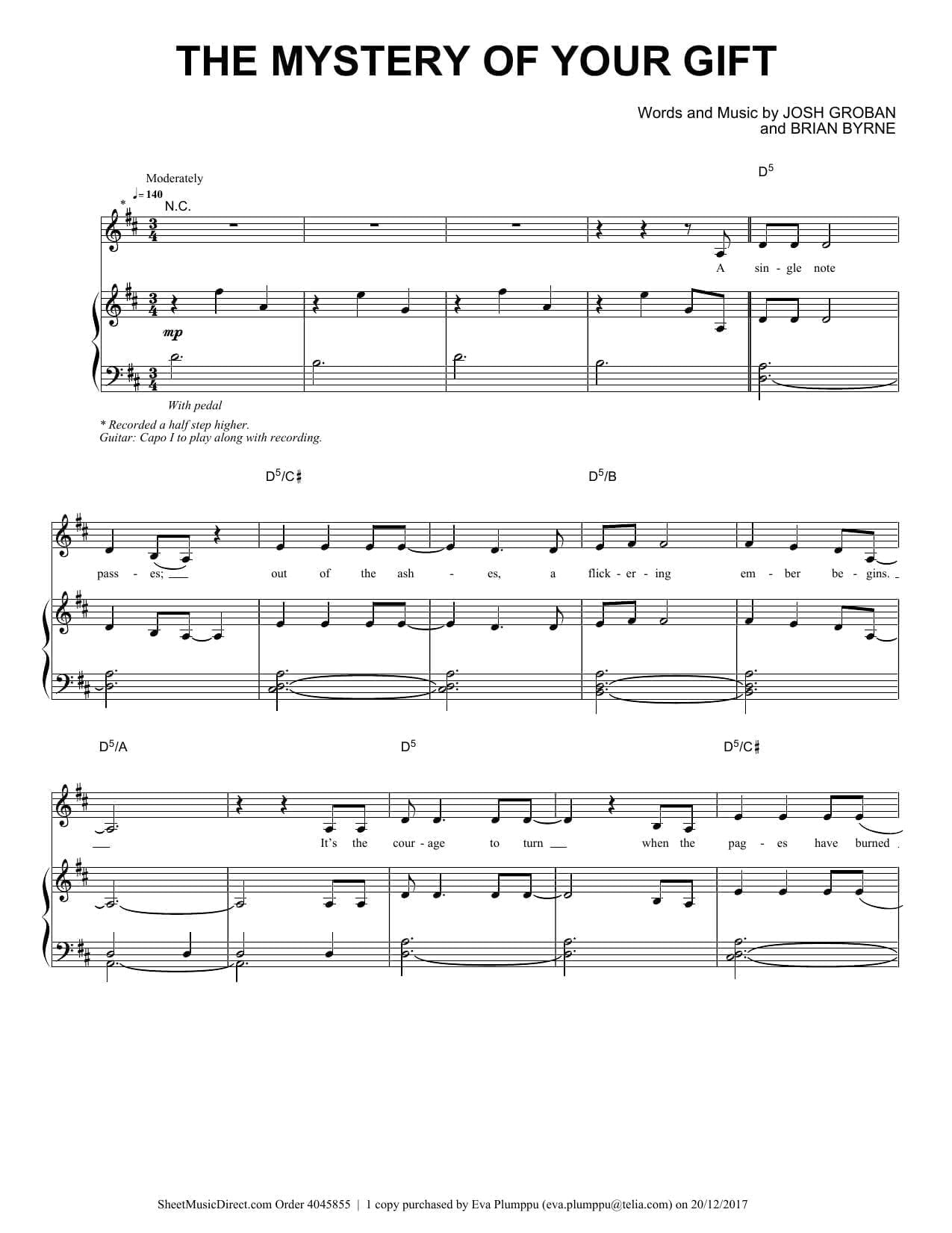
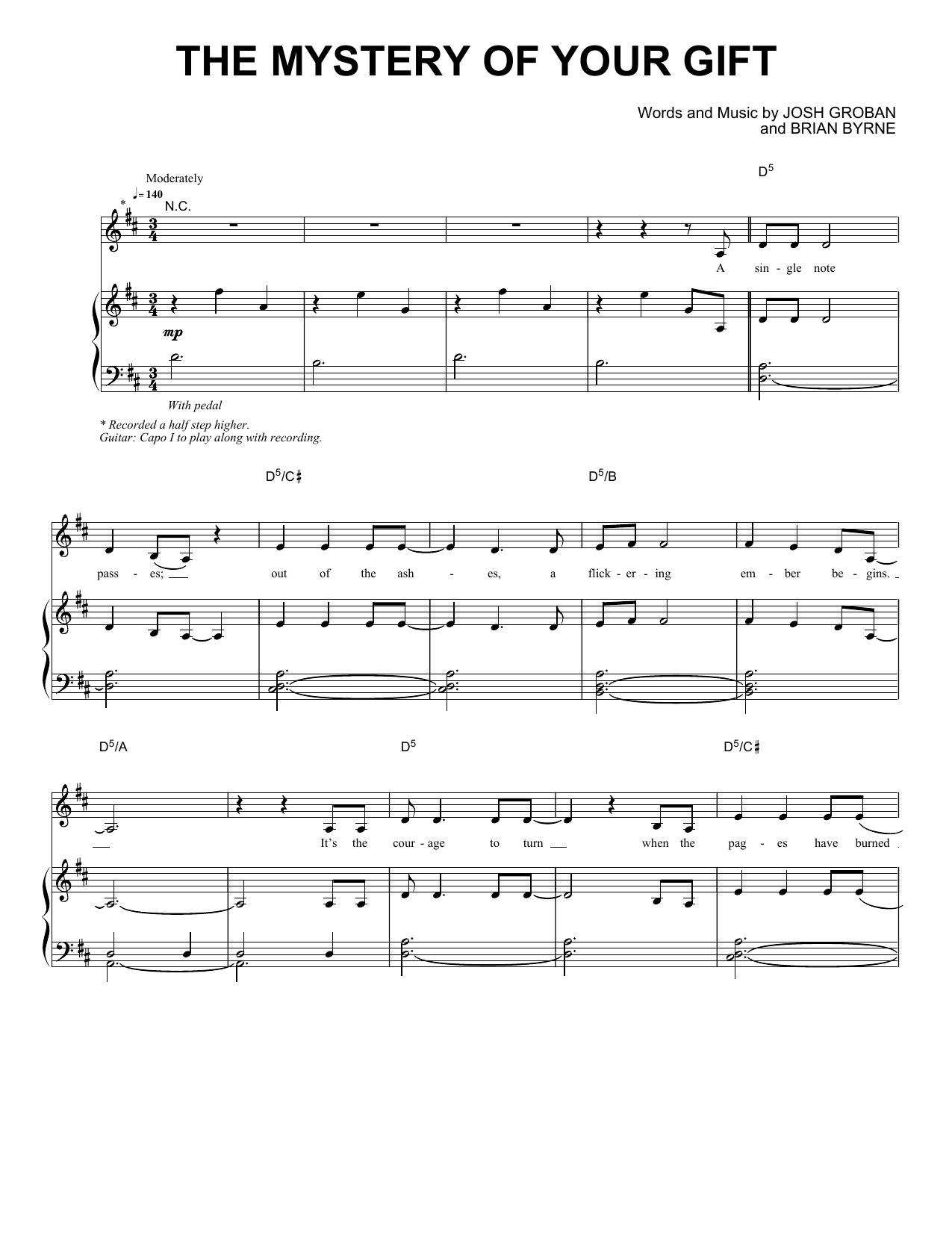
"The Mystery of Your Gift" is a song Groban co-wrote exclusively for the film Boy Choir (2015) with composer Brian Byrne. The track is a beautiful example of Groban's ability to write for specific dramatic contexts, and it demonstrates his versatility as a songwriter.
"The Constant" is a more recent song Groban wrote with EGOT winners Pasek and Paul, featured on his compilation album Hidden Gems. The collaboration with the songwriting team behind Dear Evan Hansen and The Greatest Showman represents a convergence of Groban's Broadway and pop identities.
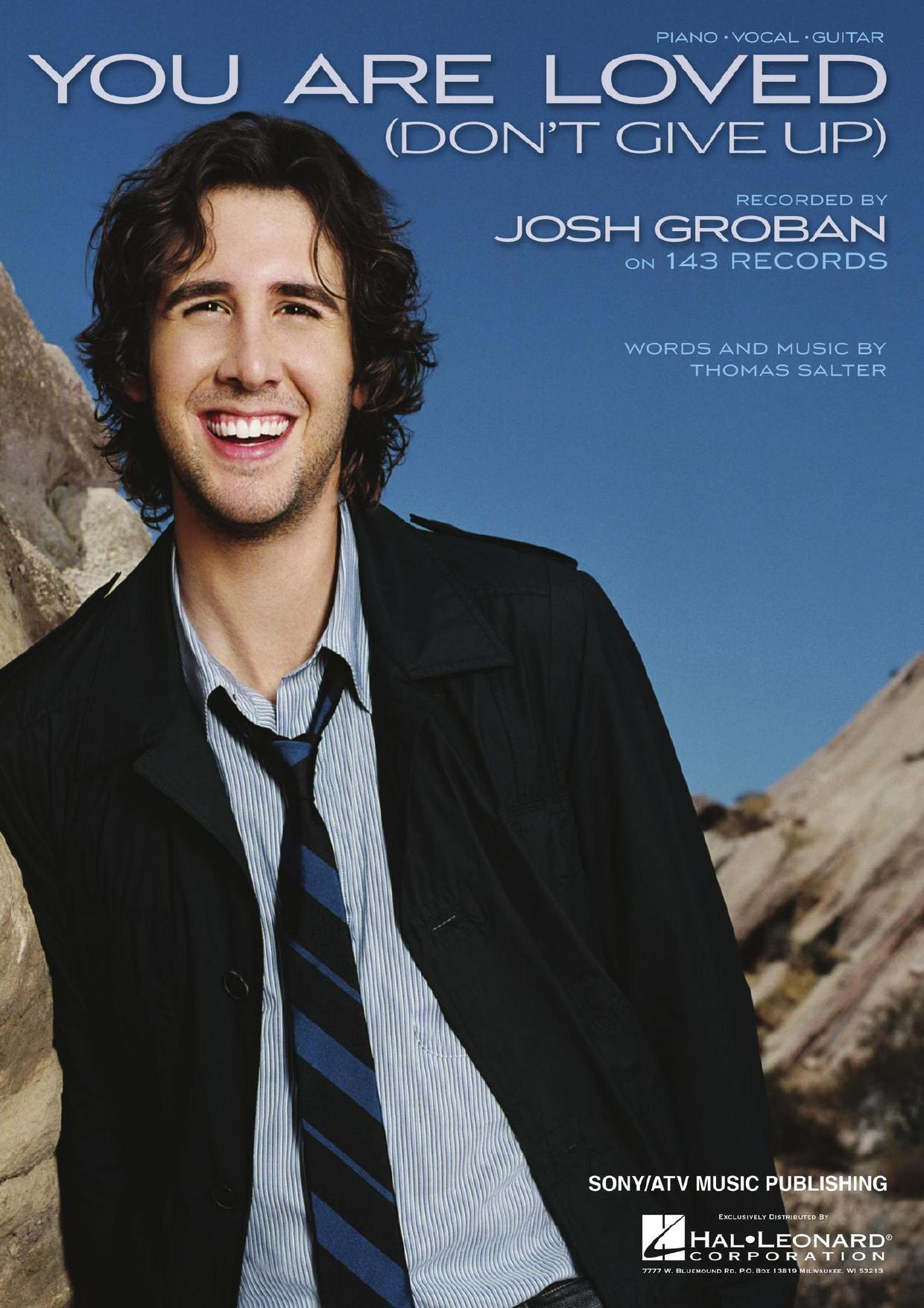
Other notable songs in Groban's catalog include "Oceano" , the atmospheric opener of Closer; "Remember When It Rained" , a haunting ballad from Closer; "You Are Loved (Don't Give Up)" , an inspirational anthem from Awake; "Bells of New York City" , a wistful meditation from Illuminations; and "Granted" , a song about gratitude from Bridges.
Music in Films
Josh Groban's relationship with film music is both deep and ongoing. His music has appeared in numerous films and television shows, and he has contributed original songs to several soundtracks. His most significant film music project is Cinematic (2026), an album devoted entirely to songs that first found life in film.
The inspiration for Cinematic came from a series of events. Groban was asked by Francis Ford Coppola to sing "Brucia La Terra," the love theme from The Godfather, at the gala for Coppola's AFI Lifetime Achievement Award. He also paid tribute to Adele by singing "Skyfall" to close his Las Vegas residency. Audiences responded so well that the idea for an album of film songs began to take shape.
Cinematic features ten songs from across film and television, including "As Time Goes By" from Casablanca, "Skyfall" from the James Bond film of the same name, "Can You Feel the Love Tonight" from The Lion King, "When You Wish Upon a Star" from Pinocchio, "Unchained Melody" from the prison film of the same name, "Remember Me" from Pixar's Coco (which Groban sings in Spanish), "Moon River" from Breakfast at Tiffany's, "Against All Odds" from the film of the same name, and "Stand by Me". The album was recorded with a complete orchestra, with Groban standing beside the conductor without headphones, belting outwards—a process he described as a welcome change from the isolation of the vocal booth.
A particularly poignant moment on the album is the inclusion of Groban's father, Jack Groban, on trumpet for "Moon River." Groban has said that having his father join him on the album was a career highlight, and that it allowed him to celebrate his father's musicality, which he inherited.
Groban's earlier film music contributions include "The Mystery of Your Gift," which he co-wrote with Brian Byrne for the film Boy Choir (2015). His songs have also been featured in films like Crazy, Stupid, Love and Muppets Most Wanted, in which he also appeared as an actor.
Groban's music has also been used extensively in television. His song "You're Still You" was performed on Ally McBeal, and his music has been featured on shows ranging from Glee to The Simpsons to The Office. In 2018, he starred in the Netflix series The Good Cop, further cementing his relationship with visual media.
Collaborations: A Musician's Musician
Josh Groban is a collaborative artist by nature, and his career is marked by a remarkable series of partnerships with musicians across genres and generations. His most important early collaboration was with producer David Foster, who discovered him, mentored him, and produced his first albums. Foster's guidance was instrumental in shaping Groban's early sound and in establishing him as a commercial force.
Groban's duet partners read like a who's who of contemporary music. He has recorded with Charlotte Church ("The Prayer"), Celine Dion ("The Prayer"), Faith Hill ("The First Noel"), Brian McKnight ("Angels We Have Heard on High"), Andrea Bocelli, Sarah McLachlan, and Jennifer Hudson. His 2020 album Harmony featured collaborations with Leslie Odom Jr., Sara Bareilles, and Kirk Franklin, as well as a duet with Elton John on "Empty Sky".
Groban's most significant recent collaboration is with YOSHIKI, the legendary Japanese rock musician and leader of X Japan. The two first met at the Sundance Film Festival in 2016, and they performed together at YOSHIKI CLASSICAL 2026 in Los Angeles at Walt Disney Concert Hall. Their collaborative recording of "Forever Love (Live)" was released for streaming worldwide on August 28, 2026. YOSHIKI explained that he lowered the key by a seventh to accommodate Groban's vocal range, and he added English lyrics to the verse to create a "bilingual version" that would be accessible to both English and Japanese listeners.
Groban has also collaborated with country music artists, Broadway stars, and classical musicians. He worked with Ladysmith Black Mambazo on Awake, and with Dave Matthews and John Ondrasik of Five for Fighting on the same album. His recent Gems World Tour featured collaborations with Filipino artists Julie Anne San Jose, Regine Velasquez, and Martin Nievera.
Groban's collaborative philosophy is rooted in a genuine curiosity about other musicians and a willingness to learn from them. As he has said, "Everything I do—theater, comedy, the genres I have explored—continues to build a toolbox of influences".
Influences and Legacy
Josh Groban's influences are as diverse as his collaborations. He grew up in a musical household—his father was a trumpet player—and he was exposed to a wide range of music from an early age. He has cited Barbra Streisand, Celine Dion, and Andrea Bocelli as vocal influences, and he has spoken about his admiration for the theatricality of Broadway and the emotional directness of pop music. His recent work with Rick Rubin on Illuminations revealed an affinity for the stripped-back aesthetic of artists like Johnny Cash and the Beastie Boys.
Groban's legacy is still being written, but several aspects of his influence are already clear. First, he played a pivotal role in popularizing classical crossover music—"popera"—and making it accessible to a younger, mainstream audience. While the genre already had prominent figures such as Andrea Bocelli and Sarah Brightman, they were mostly marketed as prestige artists for an older, well-heeled audience. With the arrival of Groban, "popera" became something that teenagers and young adults could embrace.
Second, Groban has been a significant influence on a generation of singers who aspire to blend classical technique with pop sensibility. Artists like Christian Bautista in the Philippines and Laufey in the contemporary jazz-pop world have followed in his footsteps, and the genre-less listening habits of Gen Z and Gen Alpha have created a new audience for his brand of music. As Groban himself has observed, "They listen to jazz, classical, world music, and everything in between. And they like singers, too, which is good for me".
Third, Groban has redefined what it means to be a multi-hyphenate artist in the twenty-first century. He is a singer, a songwriter, an actor, a philanthropist, and a television personality. His Broadway performances in Natasha, Pierre & The Great Comet of 1812 and Sweeney Todd earned him Tony nominations and critical acclaim, demonstrating that his talents extend far beyond the recording studio. As the New York Times noted, his "quasi-operatic pop baritone perfectly encompasses the range of the role, and whose technique makes sure every word is bell clear".
Finally, Groban's legacy includes his philanthropic work. His Find Your Light Foundation helps enrich the lives of young people through arts, education, and cultural awareness. He remains an active advocate for arts education, and he has used his platform to support countless charitable causes over the course of his career.
Additional Information: Awards, Discography, and Personal Life
Josh Groban has been nominated for five Grammy Awards, two Tony Awards, and two Emmy Awards. He has scored six No. 1 hits on Billboard's Adult Contemporary charts and has had three No. 1 albums on the Billboard 200: Closer (2004), Noël (2007), and All That Echoes (2017). In 2026, he was honored with a star on the Hollywood Walk of Fame.
Groban's discography includes ten studio albums: Josh Groban (2001, 5x-platinum), Closer (2003, 6x-platinum), Awake (2006, 2x-platinum), Noël (2007, 7x-platinum), Illuminations (2010), All That Echoes (2013), Stages (2015, his first UK No. 1 album), Bridges (2018), Harmony (2020), and Cinematic (2026). He has also released several live albums and compilations, including A Collection (2008) and Hidden Gems (2025).
Groban's personal life has been a subject of media interest, though he has generally kept his private life private. He has been linked romantically to several actresses and musicians over the years, but he has never married. In recent years, he has spoken candidly about his "lifelong outsiderness" and the way that feeling has sustained him as an artist. As he told one interviewer, "Your outsiderness is going to sustain you for your whole life".
Groban is known for his wit and his sense of humor, qualities that have made him a popular guest on talk shows and a memorable presence in comedic roles. He has appeared on The Office, It's Always Sunny in Philadelphia, and Parks and Recreation, and his guest appearance on Never Mind the Buzzcocks in the UK is remembered for its "instantly likeable" charm.
Josh Groban is a singer who was never supposed to be a star. He was a musical theater kid from Los Angeles who happened to be in the right place at the right time—standing in for Andrea Bocelli at a Grammy rehearsal, catching the ear of David Foster, and finding himself thrust into the international spotlight before he had even finished his first semester of college. But what makes Groban matter is not the accident of his discovery. It is what he has done with the opportunity that accident gave him.
He has used his extraordinary voice to bring classical music to people who might never have set foot in an opera house. He has used his platform to champion arts education and to support young people who share his passion for music. He has challenged himself as an artist, moving from classical crossover to Broadway to stripped-back pop, and he has done so with a grace and a humility that have endeared him to fans around the world.
What makes Josh Groban the voice of a generation is not just his vocal range, his commercial success, or his awards. It is his willingness to be vulnerable, to take risks, and to inhabit his material with complete sincerity. He doesn't swing, scat, or improvise. He delivers a series of power ballads with complete sincerity and elegant diction in a wide-ranging, butterscotch-smooth voice. And in doing so, he touches something universal in the human experience—the longing for connection, the search for meaning, the hope for something greater than ourselves. That is his legacy, and it is one that will endure.
Browse in the Sheet Music Library:
Or browse in the categories menus & download the Library Catalog PDF:
Listen to Josh Groban music on Spotify
Discography
Main article on Wikipedia: Josh Groban discography Studio albums
- Josh Groban (2001)
- Closer (2003)
- Awake (2006)
- Noël (2007)
- Illuminations (2010)
- All That Echoes (2013)
- Stages (2015)
- Bridges (2018)
- Harmony (2020)
- Cinematic (2026)