Scores for all instruments: 16,000+ (active and growing), over 236,000 pages.
All genres and levels: Jazz & Blues, Rock & Pop, Classical & Contemporary, Film & Musicals;
books & biographies; methods, études, play-along tracks (MP3) for Jazz & Rock.
Access & benefits: US$15.99 one-time payment, valid for lifetime, full Library access.
Table of Contents
Who was Khachaturian (1903-1978)?
The best sheet music download from our Library.
Aram Khachaturian: The Titan of Soviet Music and the Voice of Armenian Soul
Aram Ilyich Khachaturian stands as one of the most colorful and universally recognized composers of the twentieth century. Alongside Sergei Prokofiev and Dmitri Shostakovich, he is celebrated as one of the three "titans" of Soviet music, a triumvirate whose works defined the sound of an era and continue to captivate audiences worldwide. Khachaturian's music, with its intoxicating blend of Armenian folk melody, rhythmic vitality, and sumptuous orchestration, transcends the political confines of its creation to speak a language of universal emotional power. From the frenetic energy of the Sabre Dance to the profound lyricism of the Adagio of Spartacus and Phrygia, his compositions have become part of the global cultural fabric, appearing in concert halls, ballet stages, and even Hollywood films. This article explores the life, musical style, major works, and enduring legacy of a composer who was both a loyal son of the Soviet system and an irrepressible voice of his Armenian heritage.
Please, subscribe to our Sheet Music Library. Sheet music should be accessible and affordable for all musicians, from professionals to absolute beginners.
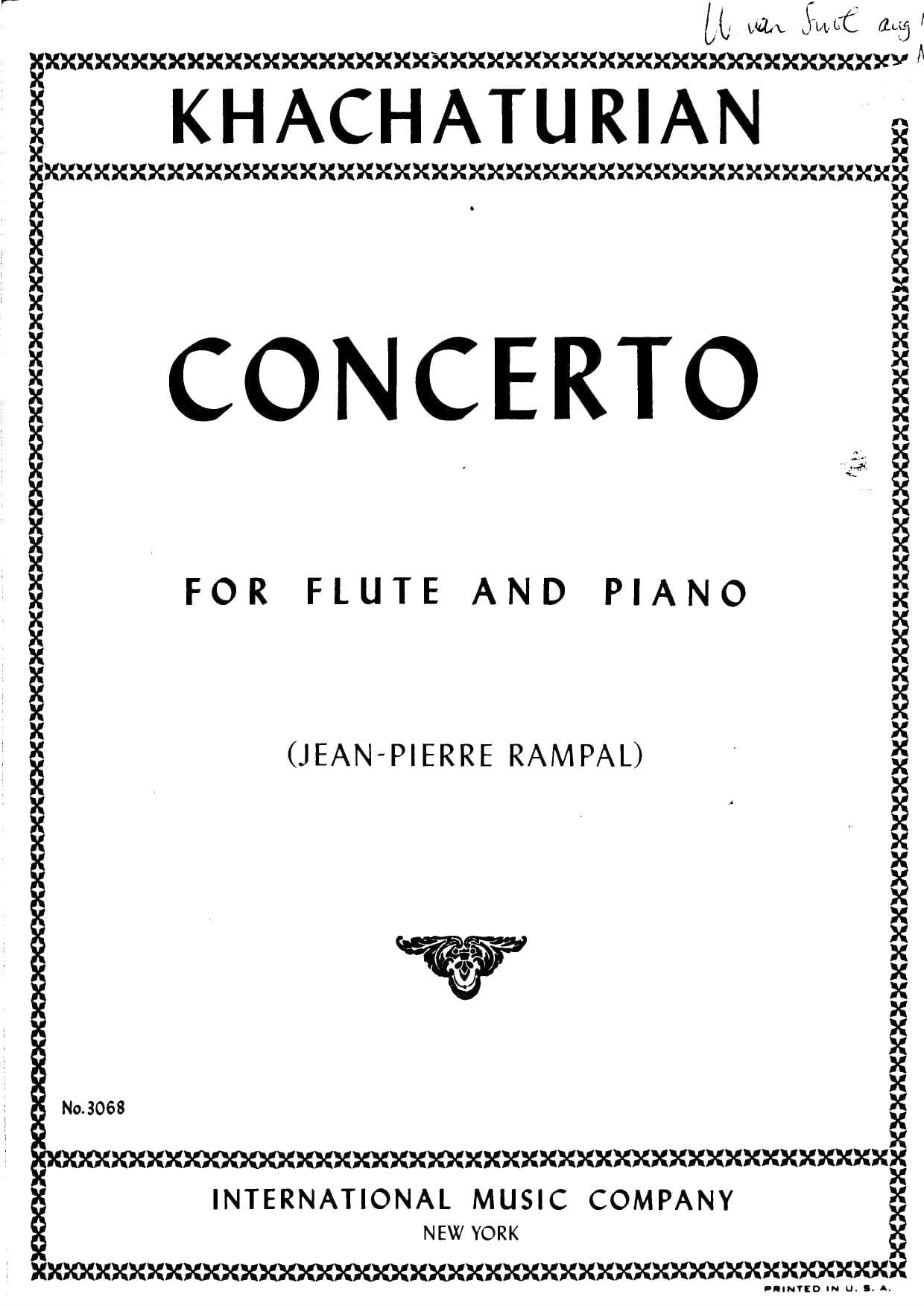

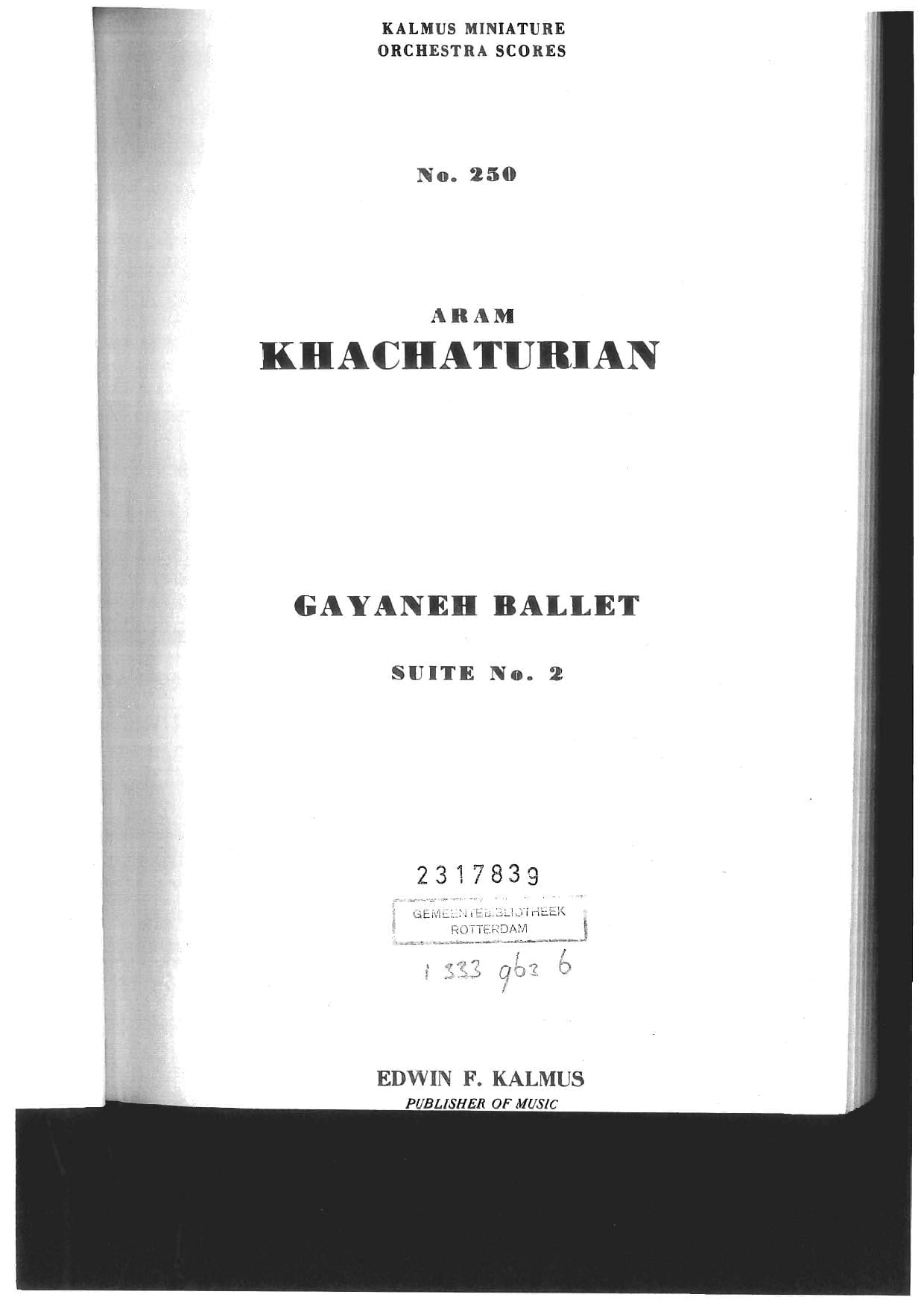
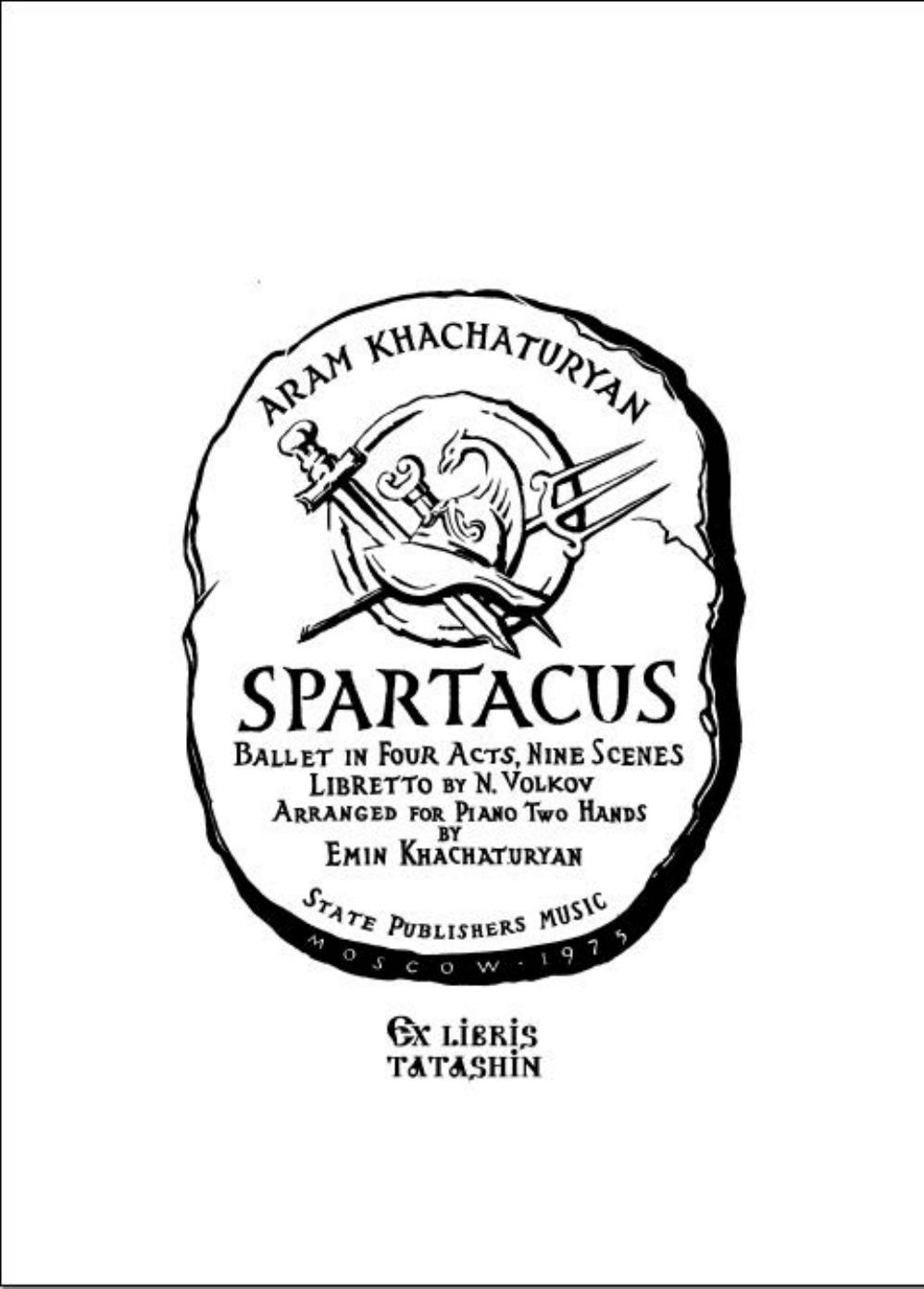
Search your favorite sheet music in the Sheet Music Library Catalog
Biography: From Tiflis to the World Stage
Aram Khachaturian was born on June 6, 1903 (May 24 in the Julian calendar), in Tiflis (now Tbilisi, Georgia), then part of the Russian Empire. He was the fourth son of a modest Armenian family from the Nakhchivan region, and his father worked as a bookbinder. The young Aram grew up in a vibrant, multi-ethnic city where Armenian, Georgian, and Azerbaijani musical traditions intermingled, and the folk songs and dances he heard as a boy would remain a profound influence throughout his life. He later described himself as a "European Armenian," a testament to the dual cultural forces that shaped his identity.
Remarkably, Khachaturian was a late starter in the world of formal music. He received no systematic musical training as a child, and his early musical expressions were spontaneous and untutored—he would reportedly bang out folk rhythms on kitchen utensils. He did not hear a professional classical piano recital until he moved to Moscow at the age of nineteen in 1921. Upon his arrival, he enrolled at the Gnessin Musical Institute, initially drawn to the cello simply because it looked like a "big violin". By the time he began formal study, he was already considered too old to focus on piano performance, so he turned his attention to composition, studying with Mikhail Gnessin and taking private lessons with Reinhold Gliere.
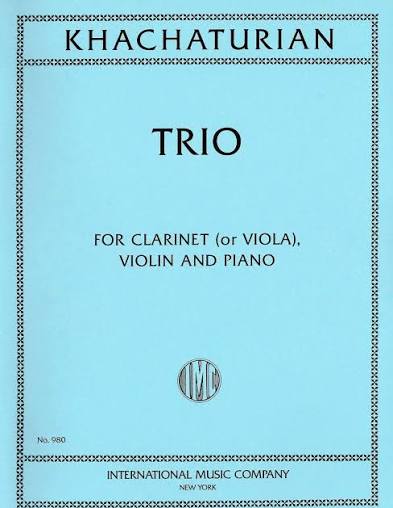
In 1929, Khachaturian transferred to the Moscow Conservatory, where he studied composition under Nikolai Myaskovsky and orchestration under Sergei Vasilenko. His student years were marked by a significant breakthrough: his Trio for clarinet, violin, and piano (1932) made a considerable impression, so much so that Sergei Prokofiev took a copy with him to Paris to have it performed there. Khachaturian completed his studies at the advanced age of thirty in 1933, and the premiere of his First Symphony a year later in 1934 was an instant success.
The 1930s and 1940s were Khachaturian's most productive period, yielding his three concertos and his first two ballets. His Piano Concerto (1936), dedicated to Lev Oborin, was his first work to gain recognition in the West. The Violin Concerto (1940), written for David Oistrakh in just two months, became an international favourite. His ballet Gayane (1942), largely reworked from his first ballet Happiness, included the Sabre Dance, which would become one of the most frequently played pieces of music in the world.
Despite his official success, Khachaturian was not exempt from the political repression of the Stalin era. In 1948, along with Shostakovich, Prokofiev, and Myaskovsky, he was accused of "formalism" and "bourgeois tendencies" by the Central Committee of the Communist Party. He had no choice but to make a public apology, declaring, "How could it happen that I have come to formalism in my art? ... It is a fatal theory. In our country, millions of people, the entire Soviet nation, are now arbiters of music". He performed a sort of penance by scoring the film hagiography Lenin (1949) and The Battle of Stalingrad (1949), for which he was awarded the Stalin Prize in 1950.
After Stalin's death in 1953, Khachaturian was publicly rehabilitated and named People's Artist of the Soviet Union a year later. He became an influential figure in Soviet musical life, serving as a professor at the Gnessin Institute and the Moscow Conservatory from 1950 and 1951, respectively, and turning to conducting, which took him on tours to the United Kingdom, Mexico, and the United States. In his later years, he composed the ballet Spartacus (1956), which became his most acclaimed work in the post-Stalin period. Aram Khachaturian died in Moscow on May 1, 1978, and was buried in Armenia, the land of his ancestors.
Khachaturian Cziffra - Sabre Dance (piano Solo) sheet music, Noten, partitura, spartiti, 楽譜 , 乐谱
Musical Style and Technique
Khachaturian's musical style is immediately recognizable for its vibrant rhythmic energy, lush orchestration, and the pervasive influence of Armenian folk music. What made him unique among Soviet composers, according to James Bakst, was "the blending of national Armenian vocal and instrumental intonations with contemporary orchestral techniques". Music critic Edward Greenfield expressed the opinion that Khachaturian "notably outshone other Soviet contemporaries in creating a sharply identifiable style, something which his successors have found impossible to emulate".
The rhythmic element is arguably the most distinctive feature of his music. Khachaturian's works are characterized by an active rhythmic development, which reaches either a mere repetition of the basic formula (ostinato) or "a game of emphasis within this formula". The Sabre Dance is perhaps the most famous example of this: its relentless, driving pulse and insistent xylophone-accented melody have become a kind of global musical shorthand for urgency and energy. The composer himself acknowledged that his predilection for percussive harmonic seconds and his inclination to pedal and organ point had an Armenian basis. Kabalevsky wrote that the especially attractive features of Khachaturian's music are its roots in "national folk fountainheads" and the "captivating rhythmic diversity of dances of the peoples of Transcaucasia and inspired improvisations of ashugs (bards)".
Khachaturian's melodic writing is equally distinctive. His melodies often have an exotic, oriental flavor, characterized by augmented and diminished intervals, and they frequently unfold in a rhapsodic, improvisatory manner that evokes the tradition of the Armenian ashugh (bard). The Violin Concerto, for instance, is filled with "high-flying virtuosity" and "yearning melodic intensity" that appealed as much to audiences as to the great violinist David Oistrakh, who championed it. The Piano Concerto features a "rather festive, animated theme, with the typically Armenian cadence" that dominates the work like a cyclic motif.
The composer's use of orchestration is another hallmark of his style. His scores are known for their highly colorful and often opulent sound, leading him to be dubbed the "Rubens of Russian Music". He had a "canny ear for sounds" and his energetic momentum embraced the whole of Soviet musical orthodoxy while remaining unmistakably personal. The Sabre Dance requires a large orchestra with prominent parts for winds and percussion, reflecting the influence of Rimsky-Korsakov, while the third symphony calls for fifteen additional trumpets and an organ, demonstrating his penchant for grand, monumental gestures.
Harmony
Khachaturian's harmonic language is a fascinating synthesis of traditional tonality, modal scales derived from Armenian folk music, and twentieth-century techniques of dissonance and color. The creative and unusual use of harmony in his works includes complex polychords and dissonant intervals, yet these are always deployed in the service of expressive clarity rather than abstract experimentation. His use of Armenian folk melodies shaped his harmonic language to be almost modal, and the use of added intervals to basic triads further expanded his harmonic vocabulary.
One of the most distinctive features of Khachaturian's harmony is the abundance of striking augmented and diminished intervals, often with adjacent or "compound" notes, creating an accentuated and colorful sound. These intervals are not merely decorative; they are integral to the emotional and structural fabric of his music. In the Piano Concerto, for example, the dynamism is generated by "spiky 'wrong note' harmony"—such as an A-natural against an A-flat—that creates tension and forward momentum.
The composer's harmonic style also frequently employs seconds, which occur not only in tonic or other stable sonorities based on the intonations of dual modes but also on the degrees of natural modes. These harmonic seconds can be heard in the Masquerade Suite, where the composer's characteristic combination of rich harmony and beautiful melody creates a sound world that is both elegant and emotionally charged. Analysis of his Piano Concerto reveals a sophisticated approach to tonal structure, with the main theme of the first movement returning in the coda of the finale along with the main key of D-flat major, creating a sense of cyclic unity.
Khachaturian's harmonic language also makes extensive use of pedal points and organ points, which provide a stable foundation beneath the often restless melodic and rhythmic activity above. This technique, combined with his use of modal scales, gives his music a sense of rootedness and timelessness even when the surface is highly dynamic. The composer's harmonic palette is thus a crucial element of his personal style, allowing him to create music that is at once accessible and sophisticated, popular and profound.
Major Works and Best Compositions
See also on Wikipedia: List of compositions by Aram Khachaturian
Ballets
Khachaturian is best known internationally for his ballet music, and his two major ballets, Gayane and Spartacus, remain his most successful compositions.
Gayane (1942) was largely reworked from his first ballet, Happiness. Anna Kisselgoff called it "one of the staples of the Soviet and Eastern European ballet repertory". The ballet is set on a collective farm and tells a story of crisis and reconstruction, with a libretto by K. N. Derzhavin. The most famous number from Gayane is undoubtedly the Sabre Dance, a movement in the final act that is based on a Kurdish folk dance. Its "insistent xylophone-accented melody" has become one of the most recognizable pieces of classical music in the world. Other popular numbers from the ballet include the Lullaby, Dance of the Rose Maidens, Hopak, and Russian Dance.
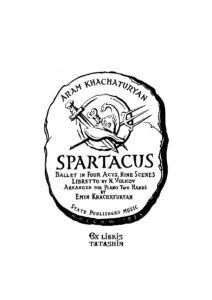
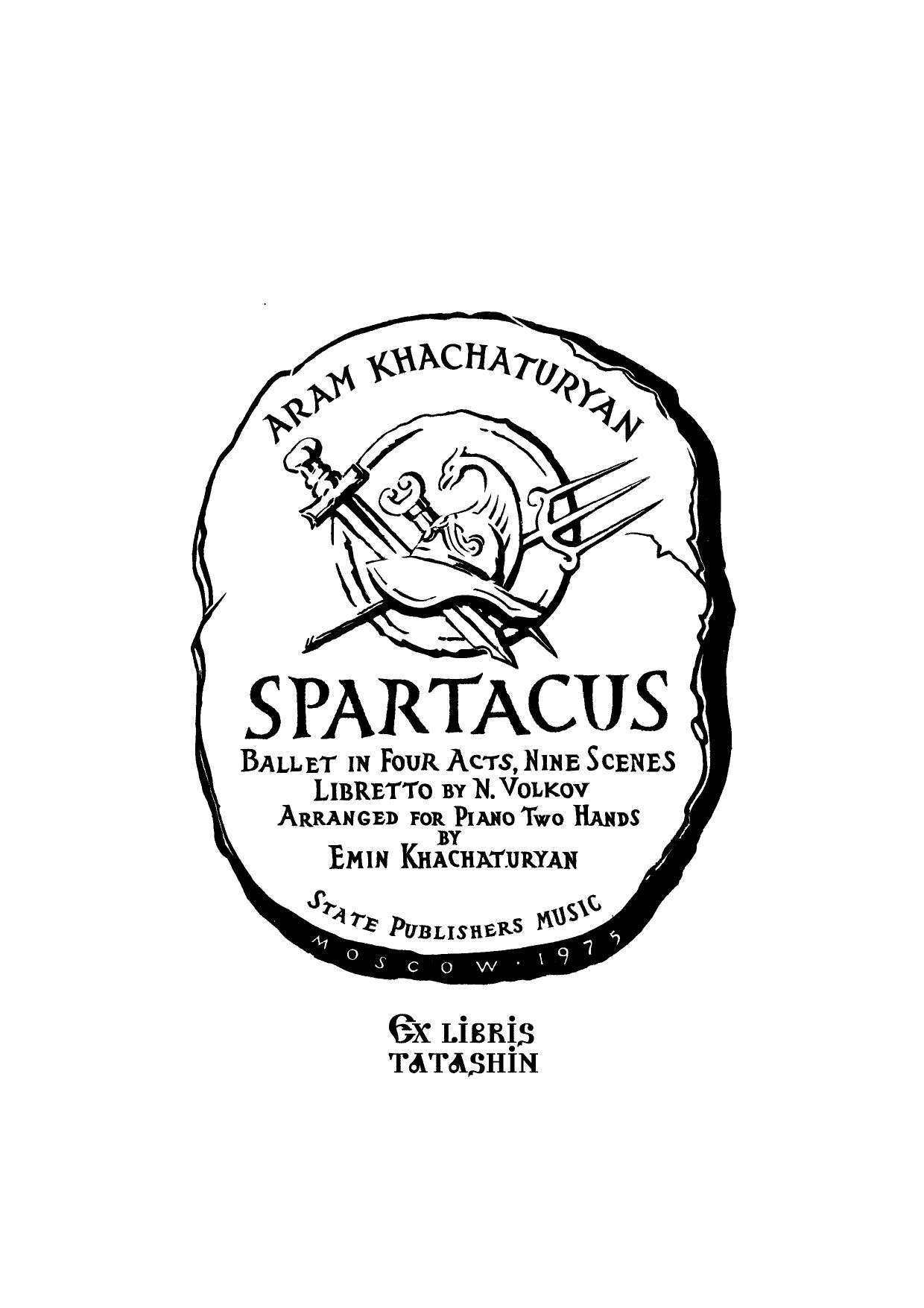
Spartacus (1956) became Khachaturian's most acclaimed work in the post-Stalin period. The ballet depicts the defeat of the Romans by the hero Spartacus, who leads a rebellion of slaves. Its most memorable theme, the Adagio of Spartacus and Phrygia, appears in Act II when the two lovers celebrate their escape from slavery. The Adagio was popularized when it was used as the theme for the popular BBC drama series The Onedin Line during the 1970s, and it has since become one of the most popular of all classical pieces for UK audiences. The climax of Spartacus was also used in films such as Caligula (1979) and Ice Age: The Meltdown (2006).
Concertos
Khachaturian wrote three concertos, each dedicated to a member of the renowned Soviet piano trio that performed together from 1941 until 1963: David Oistrakh (violin), Sviatoslav Knushevitsky (cello), and Lev Oborin (piano).
The Piano Concerto (1936) was his first work to gain him recognition in the West. It is an innovative composition that traces back to the traditions of Rachmaninoff and Prokofiev while forging its own distinctive voice. The piece is cast in the traditional three fast-slow-fast movements, but each movement is sectional itself, with clear motivic relationships developed across all the movements. The concerto originally included an early part for the flexatone, an instrument that imitates Armenian folk instruments.
The Violin Concerto (1940), dedicated to David Oistrakh, is the recognized masterpiece that perfectly illustrates Khachaturian's duality of folk inspiration and contemporary technique. The composer completed it in only two months, and when Oistrakh first played it for him, the violinist "played as if he had been practicing it for months, when in fact it was only a few days". The concerto's premiere took place on November 16, 1940, in Moscow, with Alexander Gauk conducting. The work's "high-flying virtuosity" and "yearning melodic intensity" have made it a favorite of such violinists as Gil Shaham, Julia Fischer, and Sergei Khachatryan.
The Cello Concerto (1946) completed the trilogy, written for Sviatoslav Knushevitsky. Khachaturian later composed concerto-rhapsodies for the same three instruments, further exploring the soloistic possibilities of each.
Symphonies
Khachaturian wrote three symphonies: the First in 1934/5, the Second in 1943, and the Third in 1947. The First Symphony was an instant success upon its premiere in 1934, establishing Khachaturian as a major voice in Soviet music. The Second Symphony, composed during the Second World War, is a darker, more dramatic work that reflects the tensions of the period. The Third Symphony is a monumental, festive work that includes parts for fifteen additional trumpets and organ, creating a sound of immense power and grandeur.
Other Works
Khachaturian wrote incidental music for several plays, including Macbeth (1934, 1955), The Widow from Valencia (1940), Masquerade (1941), and King Lear (1958). The Masquerade Suite, extracted from the incidental music for Mikhail Lermontov's play, has become a popular concert work. It includes movements such as the Waltz, Nocturne, Mazurka, Romance, and Galop. The "Waltz" from Masquerade has been performed and recorded frequently and is one of Khachaturian's most beloved shorter works.
His solo piano works include the Toccata in E-flat minor, a brilliant showpiece that demonstrates his flair for rhythmic drive and harmonic color. He also composed two albums of music for children (Opp. 62 and 100). Children's Album, Book 1, first published in 1947, contains a smooth and melodic Andantino originally composed in 1926, commonly known as Ivan Sings. Children's Album, Book 2, published in 1964, includes a fugue composed in 1928 and a fast-paced programmatic piece entitled Two Funny Aunties Argued.
Film Music
Aram Khachaturian was the first Soviet composer to write music for sound films, and he produced around twenty-five film scores during his career. His work in cinema was, by his own admission, "always a difficult task for me, but also fascinating and deserving".
His debut in film was Pepo (1935), the first Armenian sound film, created in co-operation with the renowned director Amo Bek-Nazarov. The song of the hero in Pepo gained special love in the Caucasus and has existed there as an "own" national song. The film also marked a turning point for Armenian cinematography. His next collaboration with Bek-Nazarov, Zangezur (1938), introduced him as a master of symphonic cinema music, and the Zangezur March from the score enjoyed wide popularity. Some of the principles he developed in Zangezur found their reflection in his later works, including the String Concerto and the ballet Spartacus.
Khachaturian's film work was not limited to Armenian subjects. In 1938, he composed music for the first Tajik talking picture, The Garden, and in 1940 for the historical-revolutionary film Salavat Yulayev. During the Second World War, he worked on Prisoner No. 217 (1943), about a Soviet girl in fascist penal servitude, expressing through musical means his feelings of indignation and protest. He later collaborated with the scenarist M. Romm on The Russian Question, where he replaced the hero's words with music in a key scene, expressing the character's emotions through purely musical means.
One of his most important film scores was for The Battle of Stalingrad (1949), for which he was awarded the Stalin Prize in 1950. The composer recalled, "It was for the first time that the material of such amplitude came up before me. Two hours of battle music!". He also scored the film hagiography Lenin (1949) as part of his penance after the 1948 denunciation. One of his last scores was for Sergei Yutkevich's 1955 film of Othello, which offers "martial chaos for the sea-battle prologue and a perfectly judged passage of organ music that hovers between wedding and funeral idioms".
Khachaturian's film music has had an enduring legacy. The "Adagio" from Gayane was used in Stanley Kubrick's 2001: A Space Odyssey, and Joel Coen's The Hudsucker Proxy (1994) prominently featured music from both Spartacus and Gayane, including the Sabre Dance. His music has also appeared in foreign films such as Terence Young's Mayerling and Tinto Brass's Caligula.
Collaborations
Khachaturian's career was marked by fruitful collaborations with some of the greatest performers and artists of his time. His three concertos were written for the members of a renowned Soviet piano trio: David Oistrakh (violin), Sviatoslav Knushevitsky (cello), and Lev Oborin (piano). The Violin Concerto was dedicated to Oistrakh, who became its definitive interpreter and frequently performed it under the composer's baton. Oistrakh also wrote the cadenza for the first movement.
The Piano Concerto was dedicated to Lev Oborin, its first performer. Oborin had visited the Gnessin School and was introduced there to Khachaturian, and the composer decided to write a piano concerto with Oborin in mind. The Cello Concerto was written for Sviatoslav Knushevitsky.
Khachaturian also had significant interactions with Sergei Prokofiev. As a student, his Trio attracted Prokofiev's attention, who arranged for its performance in Paris. Prokofiev's influence can be seen in Khachaturian's early works, though the two composers developed distinct styles. Later, both were denounced together in 1948, along with Shostakovich, creating a bond of shared adversity.
In the world of cinema, Khachaturian collaborated with several important directors. His work with Amo Bek-Nazarov on Pepo and Zangezur was particularly significant for Armenian cinema. He also worked with M. Romm on several films, including Prisoner No. 217, The Russian Question, Secret Mission, Admiral Ushakov, and Ships Storming the Bastions. His collaboration with director Petrov on The Battle of Stalingrad was of great importance, representing a new level of ambition in film music.
Khachaturian also collaborated with poets and writers, setting texts by poets such as Gegham Saryan to music, with assistance from his nephew, the conductor Emin Khachaturian. His incidental music for plays by Shakespeare, Lermontov, and others brought him into contact with the world of theatre, further enriching his creative output.
Influences and Legacy
The primary influence on Khachaturian's music was the folk music of Armenia. Beginning with his earliest works, he extensively used Armenian folk music in his compositions, and most of his works are saturated with centuries-old motifs of Armenian culture. The wealth of melodies and rhythms of Armenian folk music was the main source of his creations, and his works paved the way for new styles and daring explorations. Kabalevsky wrote that the especially attractive features of Khachaturian's music are its roots in "national folk fountainheads" and the "captivating rhythmic diversity of dances of the peoples of Transcaucasia and inspired improvisations of ashugs".
Classical European music was the other major influence on his style. His works were often influenced by classical European music and Armenian folk music, and he studied the works of Tchaikovsky, Rachmaninov, and Prokofiev, whose influence can be heard in his lush harmonies and virtuosic writing. Musicologist Marina Frolova-Walker describes Khachaturian as the only internationally renowned Soviet composer "who emerged from the nationalist project," highlighting his unique position within Soviet musical culture.
Khachaturian's legacy is immense. His works have been included in UNESCO's Memory of the World Register, placing his name alongside such composers as Beethoven, Brahms, and Chopin. His influence can be traced in nearly all trends of Armenian classical traditions, whether in symphonic or chamber music. The wealth of melodies and rhythms of Armenian folk music that he brought to the world's attention has led to a better understanding of the development of the classical music of Armenia and other Transcaucasian and Central Asian peoples.
His music continues to be performed and recorded extensively. The Sabre Dance remains one of the most recognizable pieces of classical music, appearing in everything from cartoons to video games. The Adagio of Spartacus and Phrygia is a staple of the concert repertoire, and his concertos are championed by leading soloists. His ballets are regularly staged by major companies around the world. In 2013, his manuscripts and film music were included in UNESCO's Memory of the World programme, ensuring that his legacy will be preserved for future generations.
Additional Information
Khachaturian was a complex figure whose relationship with the Soviet state was both productive and fraught. He joined the Communist Party in 1943 and was, in many ways, a loyal son of the system, serving as a role model for legitimizing propaganda. Yet he was also a victim of Stalin's purges, denounced for formalism in 1948 and forced to make a humiliating public apology. After Stalin's death, he publicly denounced the committee's judgment and was named People's Artist of the Soviet Union in 1954. In 1956, he gave a new liberal definition of the relation between the Communist party and the artist, saying that artists should not feel constrained by ideological requirements.
He was also the composer of the state anthem of the Armenian Soviet Socialist Republic, whose tune is one of the five current choices to become the next state anthem of Armenia. His nephew, Karen Khachaturian, also became a composer of note, and his son, Karen, has been involved in preserving his father's legacy.
Khachaturian's music continues to inspire new generations of musicians and audiences. His ability to blend the folk traditions of his homeland with the techniques of contemporary orchestral writing created a body of work that is both deeply personal and universally accessible. As a composer, conductor, and teacher, he left an indelible mark on the musical life of the twentieth century, and his music remains a testament to the power of cultural heritage to transcend political boundaries and speak to the human spirit.
Aram Khachaturian's life and work embody the vibrant intersection of Armenian folk tradition and Soviet musical modernity. From his humble beginnings in Tiflis to his emergence as one of the three titans of Soviet music, his journey was one of remarkable determination and creative genius. His distinctive style—characterized by rhythmic vitality, modal harmony, and lush orchestration—gave the world some of its most beloved musical works, from the frenetic Sabre Dance to the profound Adagio of Spartacus and Phrygia. His contributions to film music, his collaborations with the greatest performers of his time, and his role as a teacher and conductor all contributed to a legacy that continues to resonate. Khachaturian's music, rooted in the soil of Armenia yet reaching for the heights of universal expression, remains a powerful testament to the enduring power of melody, rhythm, and cultural identity. As UNESCO's recognition of his manuscripts attests, his place among the great composers of the twentieth century is secure, and his music will continue to delight and move audiences for generations to come.
Browse in the Sheet Music Library:
Or browse in the categories menus & download the Library Catalog PDF: