
Scores for all instruments: 16,000+ (active and growing), over 236,000 pages.
All genres and levels: Jazz & Blues, Rock & Pop, Classical & Contemporary, Film & Musicals;
books & biographies; methods, études, play-along tracks (MP3) for Jazz & Rock.
Access & benefits: US$15.99 one-time payment, valid for lifetime, full Library access.
Table of Contents
What is so special about King Crimson (formed 1968)?

The best sheet music download from our Library.
Please, subscribe to our Sheet Music Library. Sheet music should be accessible and affordable for all musicians, from professionals to absolute beginners.
00:00:00 21st Century Schizoid Man (Including 'Mirrors') 00:07:23 I Talk To The Wind 00:13:29 Epitaph (Including 'March For No Reason' and 'Tomorrow And Tomorrow') 00:22:15 Moonchild (Including 'The Dream' and 'The Illusion') 00:34:27 The Court Of The Crimson King (Including 'The Return Of The Fire Witch' and 'The Dance Of The Puppets') 00:43:52 21st Century Schizoid Man (Radio Version) Bonus Track 00:51:12 I Talk To The Wind (Duo Version) Bonus Track 00:55:55 A Man A City (Live At The Fillmore West) Bonus Track
King Crimson: The Court of the Crimson King and the Architecture of Progressive Rock
Few bands in the history of rock music have exercised such a profound influence while remaining so deliberately elusive as King Crimson. Formed in London in 1968, the band was less a conventional rock group than what its leader, guitarist Robert Fripp, would later describe as “a way of doing things.” Across more than five decades, through numerous disbandments and reformations, King Crimson continually reinvented itself, leaving behind a body of work that redefined the possibilities of rock music and cast a long shadow over progressive rock, metal, post-punk, and experimental music.
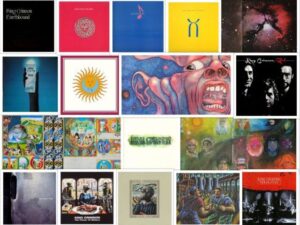
Search your favorite sheet music in the Sheet Music Library Catalog
Biography and Personnel: A Revolving Door of Innovation
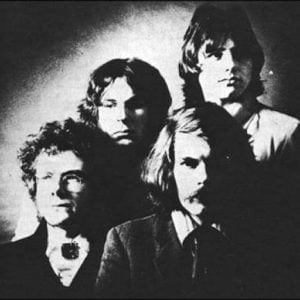
King Crimson emerged from the ashes of Giles, Giles and Fripp, a trio formed in 1967 by brothers Michael and Peter Giles alongside Robert Fripp. The addition of vocalist and bassist Greg Lake, multi-instrumentalist Ian McDonald, and lyricist Peter Sinfield completed the original lineup. The band’s first official rehearsal took place on January 13, 1969, and by October of that year, they had released their debut album, In the Court of the Crimson King, a record that would alter the course of rock music.
The original quintet—Fripp, Lake, McDonald, Michael Giles, and Sinfield—was short-lived. By December 1969, McDonald and Giles had departed, exhausted by touring. Greg Lake soon followed, leaving to form Emerson, Lake & Palmer. Fripp, however, remained the sole constant member throughout the band’s history. The early 1970s saw a bewildering series of lineups: In the Wake of Poseidon (1970) and Lizard (1970) were recorded with ever-shifting personnel before a settled lineup of Fripp, Sinfield, Mel Collins, Boz Burrell, and Ian Wallace recorded Islands (1971).
In mid-1972, Fripp disbanded this version and assembled what many consider the definitive King Crimson: drummer Bill Bruford (formerly of Yes), bassist and vocalist John Wetton (formerly of Family), violinist David Cross, and percussionist Jamie Muir. This quintet released Larks’ Tongues in Aspic (1973), Starless and Bible Black (1974), and Red (1974), albums of extraordinary intensity and complexity. Fripp disbanded the group again at the end of 1974.
After a seven-year hiatus, King Crimson was reborn in 1981 with Fripp and Bruford joined by American guitarist and vocalist Adrian Belew (who had worked with Frank Zappa, David Bowie, and Talking Heads) and bassist Tony Levin (a veteran of Peter Gabriel’s band). This “Discipline” era produced Discipline (1981), Beat (1982), and Three of a Perfect Pair (1984), drawing on African music, gamelan, post-punk, and New York minimalism.

The band reformed again in 1994 as a sextet Fripp called “The Double Trio,” adding drummer Pat Mastelotto and touch guitarist Trey Gunn. This lineup released Thrak (1995). A reduced quartet—Fripp, Belew, Mastelotto, and Gunn—recorded The ConstruKction of Light (2000) and The Power to Believe (2003). After another hiatus, the band returned in 2008 with Gavin Harrison of Porcupine Tree added on drums, and in 2013, a seven-piece (later eight-piece) configuration emerged featuring three drummers, vocalist and guitarist Jakko Jakszyk, and the return of Mel Collins and Tony Levin. This final incarnation toured until 2021, when Fripp commented that King Crimson had “moved from sound to silence”.
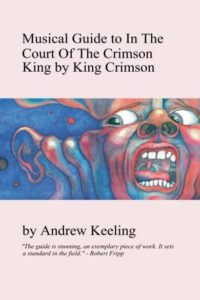
King Crimson - In The Court Of The Crimson King
Music Style: Between Structure and Chaos
King Crimson’s music defies easy categorization. The band drew inspiration from an astonishingly wide array of sources: classical music (particularly Stravinsky and Bartók), jazz (from swing to free improvisation), folk, heavy metal, gamelan, blues, industrial music, electronic music, and experimental minimalism. This omnivorous approach meant that each incarnation of the band possessed a distinct sonic identity, yet certain constants remained: a preoccupation with dynamic contrast, rhythmic complexity, and a willingness to embrace dissonance and dissonant beauty.
The early albums were characterized by a lush, orchestral grandeur. Ian McDonald’s Mellotron playing gave tracks like “Epitaph” and “The Court of the Crimson King” a symphonic sweep, while the title track of the debut album featured a haunting, almost medieval quality. “21st Century Schizoid Man,” by contrast, was a explosion of distorted guitar, saxophone, and dual-tracking vocals—a sound that prefigured both progressive metal and industrial rock.
The mid-1970s lineup created music of ferocious intensity. Larks’ Tongues in Aspic opened with a percussion-driven title track that moved from delicate gamelan-like textures to crushing heavy metal riffs. Red was even darker, its title track built on a relentless descending figure and John Wetton’s anguished bass. The 1980s band introduced a new vocabulary: interlocking guitar lines, polyrhythmic drumming, and a stark, almost minimalist aesthetic. Tracks like “Discipline” and “Frame by Frame” were built on intricate patterns that felt both mathematical and deeply emotive.
Chord Progressions and Music Harmony
King Crimson’s harmonic language was as sophisticated as any in rock. The band frequently employed modal structures, chromaticism, and symmetrical scales. One of their most distinctive harmonic fingerprints was the use of the octatonic scale—a scale built from alternating whole and half steps, which divides the octave symmetrically and creates a sense of tonal ambiguity. This scale, along with the whole-tone scale, formed the basis for many of the band’s most distinctive riffs, particularly during the Discipline era and on works like “Larks’ Tongues in Aspic”.
The band also made frequent use of unusual chord progressions. “Starless,” from Red, is a prime example. As composer Andrew Keeling has noted, the song is built around a G minor modal center, with Phrygian Eb major to D minor cadences, and a Neapolitan chord progression (G minor–Ab major–G minor) that underscores John Wetton’s plaintive vocal melody. This harmonic language—drawing on modes, chromatic mediants, and unexpected cadences—gave King Crimson’s music a sense of unresolved tension and emotional depth rarely matched in rock.
The band’s approach to tonality was often progressive in the literal sense: pieces would begin in one key and end in another, with the tonal center shifting through a series of carefully controlled modulations. The ConstruKction of Light, for instance, constantly shifts tonality through octatonic collections and diminished chordal aggregates, beginning on C# and ending on B.
Relationships with Other Artists
The interconnectedness of King Crimson with the broader musical world is remarkable. Robert Fripp has contributed to albums by an astonishing range of artists: Brian Eno (with whom he recorded No Pussyfooting and Evening Star), David Bowie (playing on “Heroes”), Peter Gabriel, Blondie, Talking Heads, Daryl Hall, and The Orb, among many others. His 1979 solo album Exposure was described as “the Sergeant Pepper of avant punk”.
Adrian Belew brought his own pedigree from Frank Zappa’s ensemble, David Bowie’s band, and Talking Heads before joining King Crimson. Tony Levin has been a member of Peter Gabriel’s band since 1977 and has appeared on albums by John Lennon and David Bowie. Bill Bruford came from Yes and later formed Bruford and Earthworks. Pat Mastelotto had been a member of Mr. Mister and later worked with David Sylvian before joining Crimson.
The band’s influence extends far beyond direct collaborations. King Crimson exerted a powerful influence on the early 1970s progressive rock movement, including contemporaries such as Yes and Genesis. More recently, their impact has been acknowledged by artists across multiple genres: Radiohead’s drummer Philip Selway has cited King Crimson as an influence, and Tool have acknowledged a mutual influence and toured with the band. Maynard James Keenan of Tool once joked on tour with King Crimson: “Now you know who we ripped off”. Kurt Cobain cited Red as a major influence on Nirvana’s In Utero.
Influences and Legacy
The band’s own influences were as diverse as their output. They drew from African music, gamelan, post-punk, and New York minimalism. The early albums incorporated elements from classical, jazz, folk, and heavy metal. The 1972–1974 lineup was particularly influenced by European free improvisation and modernist classical music.
The legacy of King Crimson is difficult to overstate. The band has been a powerful influence on everyone from Genesis and Yes to Roxy Music and Radiohead, creating a legacy that will live on for decades more. Their debut album, In the Court of the Crimson King, remains their most commercially successful and influential release, frequently cited as one of the most significant albums of the progressive rock genre. The album is credited with triggering the rise of prog rock.
Beyond individual artists, King Crimson’s influence can be heard in the DNA of entire genres. Progressive metal owes a debt to the band’s dynamic shifts and rhythmic complexity. Post-punk and alternative rock absorbed their willingness to experiment with texture and dissonance. Hip-hop artists, including Kanye West, have sampled their work.
Works on Film and Documentaries
King Crimson’s music has appeared in numerous films. “The Court of the Crimson King” was used in Alfonso Cuarón’s Children of Men (2006), a fitting choice given the song’s apocalyptic themes. “Starless” was featured in Panos Cosmatos’s Mandy (2018).
The band’s most significant cinematic document is Toby Amies’s documentary In the Court of the Crimson King: King Crimson at 50 (2022). The film premiered at South by Southwest and later received a limited theatrical run in the UK. It avoids the conventions of the rock documentary, focusing instead on the idea of King Crimson as “a way of doing things as opposed to a set organism”. The documentary was released physically in multiple editions, including an 8-disc boxed set featuring the full film, an early edit titled Excerpts From CosmiKc F*Kc, live recordings, and a 48-page booklet.
Discography
King Crimson’s studio discography spans thirteen albums, released across five distinct periods:
The Original Era (1969–1974):
- In the Court of the Crimson King (1969)
- In the Wake of Poseidon (1970)
- Lizard (1970)
- Islands (1971)
- Larks’ Tongues in Aspic (1973)
- Starless and Bible Black (1974)
- Red (1974)
The Discipline Era (1981–1984):
- Discipline (1981)
- Beat (1982)
- Three of a Perfect Pair (1984)
The Double Trio/Double Duo (1994–2003):
- Thrak (1995)
- The ConstruKction of Light (2000)
- The Power to Believe (2003)
The band also released numerous live albums, EPs, and archival collections, including Earthbound (1972), USA (1975), Vrooom (1994), and the extensive King Crimson Collectors’ Club series.
Most Known Compositions and Performances
“21st Century Schizoid Man” remains King Crimson’s most famous composition. Its opening riff—a jagged, distorted figure—and its frenzied middle section, featuring extended improvisation, made it a live staple for every incarnation of the band. The song evolved dramatically over the years; a 1974 performance at Central Park was described as “incendiary,” taken at a lumbering tempo and expertly belted by John Wetton. By the time of the band’s final tours, “Schizoid Man” had become a showcase for the three-drummer frontline.
“Starless” is another cornerstone of the Crimson canon. A sprawling, thirteen-minute epic, it moves from a somber ballad section through a series of building instrumental passages before culminating in one of the most cathartic endings in rock music. The song was a highlight of the band’s final concert in Tokyo in December 2021, footage of which appears in the documentary.
Other essential compositions include “Epitaph,” with its mournful Mellotron and apocalyptic lyrics; “The Court of the Crimson King,” a song of almost operatic grandeur; “Larks’ Tongues in Aspic, Part One,” a masterclass in dynamic contrast; “Red,” a relentless instrumental that showcases Fripp’s unique approach to guitar; “Discipline,” with its interlocking guitar patterns; and “Frame by Frame,” a showcase for the band’s polyrhythmic capabilities.
Live performances were central to King Crimson’s identity. The band incorporated improvisation into their performances from the beginning, embedding improvised sections into pieces such as “Moonchild,” “Providence,” and “No Warning”. The 1972–1974 lineup was particularly renowned for its improvisational prowess, with performances that could stretch for twenty minutes or more. The Great Deceiver box set (1992) and the Collectable King Crimson series document this era extensively.
King Crimson was never a band in the conventional sense. It was, as Fripp insisted, a methodology—a way of approaching music that prioritized innovation over commercial success, exploration over comfort, and the integrity of the musical moment over the demands of the marketplace. From the apocalyptic grandeur of In the Court of the Crimson King to the mathematical precision of Discipline, from the ferocious improvisations of the mid-1970s to the expansive three-drummer frontline of the final tours, King Crimson consistently pushed against the boundaries of what rock music could be.
The band’s influence is incalculable. It can be heard in the progressive metal of Tool, the experimental rock of Radiohead, the post-punk of Nirvana, and countless other artists across genres and generations. But perhaps its greatest legacy is the example it set: that a band could be commercially viable without compromising its vision, that complexity and accessibility need not be mutually exclusive, and that music could be a lifelong pursuit of the unknown. As Fripp himself put it, King Crimson was always “more a way of doing things. When there is nothing to be done, nothing is done: Crimson disappears. When there is music to be played, Crimson reappears”. The music remains, and it will continue to challenge and inspire for as long as there are listeners willing to enter the court of the Crimson King.
Browse in the Sheet Music Library:
Or browse in the categories menus & download the Library Catalog PDF:
King Crimson - Red
00:00:00 Red 00:06:16 Fallen Angel 00:12:16 One More Red Nightmare 00:19:28 Providence 00:27:36 Starless 00:40:01 Improv: A Voyage To The Centre Of The Cosmos Bonus Track 00:54:48 Improv: Providence (Full Version) Bonus Track 01:05:03 Starless (Live in Central Park) Bonus Track
Search your favorite sheet music in the category of Rock, Pop, Folk and Popular Music.
Discography
Main article on Wikipedia: King Crimson discography
- In the Court of the Crimson King (1969)
- In the Wake of Poseidon (1970)
- Lizard (1970)
- Islands (1971)
- Larks' Tongues in Aspic (1973)
- Starless and Bible Black (1974)
- Red (1974)
- Discipline (1981)
- Beat (1982)
- Three of a Perfect Pair (1984)
- Thrak (1995)
- The Construkction of Light (2000)
- The Power to Believe (2003)
The Artistry and Creativity of Robert Fripp
If King Crimson was the vehicle, Robert Fripp was its engine, its architect, and its most enigmatic driver. Born on May 16, 1946, in Wimborne Minster, Dorset, England, Fripp began playing guitar at the age of eleven and soon became interested in jazz and rock music. What set him apart from the blues-based guitar heroes of his generation was not merely technical proficiency—indeed, he was initially tone-deaf and had no natural sense of rhythm—but a conceptual approach to the instrument that treated the guitar less as a vehicle for virtuosic display than as a tool for sonic exploration. His renegade guitar technique would eventually drip down into the palettes of players as disparate as Kirk Hammett of Metallica and Annie Clark (St. Vincent), yet Fripp himself remained, throughout his career, the least-spotted of cult heroes.
Musical Philosophy: The Guitarist as Receiver
Fripp's approach to music was inseparable from a broader philosophy that drew on Gurdjieffian ideas, Buddhist meditation, and a deep skepticism toward the commercial machinery of the music industry. His most famous formulation of the creative principle was that "the creative musician is the radio receiver, not the broadcasting station." His personal discipline is to improve the quality of the components, the transistors, the speakers, the alloys in the receiver itself, but never to concern himself overmuch with putting out the program. The program is there; all he has to do is receive it as far as possible". This conception of the artist as a conduit rather than an originator shaped everything Fripp did, from his improvisational practices to his teaching methods.
Central to this philosophy was the aphorism "Honor sufficiency"—the idea that when you can play anything, the challenge is to know what not to play. One, two, or three notes are often more expressive than ten, twenty, or thirty. Fripp illustrated this with an athletic metaphor: "It may be that the visual appeal of the Tai Chi master is not equal in appeal to the heavyweight contest. But I would prefer to see a Tai Chi master do nothing, superbly". This aesthetic of restraint and precision would become one of the defining characteristics of his playing, whether in the dense counterpoint of King Crimson or the glacial unfolding of his solo soundscapes.
Fripp also held a somewhat contrarian view of recordings themselves. He consistently maintained that "recordings cannot convey a quality experience of music," and that King Crimson was "primarily a live band, not a recording unit". For Fripp, the special quality arising from direct contact between musician and audience in a live performance was inevitably missing from a recorded account of the event, and that quality was more important than the sound itself. This conviction explains much about his career: the relentless touring, the proliferation of live albums, and his frequent disbanding of groups when the creative impulse waned.
Guitar Technique and Innovation
Fripp's technical innovations were as significant as his philosophical convictions. He developed a unique approach to the guitar that emphasized cross-picking—a technique more commonly associated with mandolin playing, involving rolling or flat-picking across three or more strings simultaneously. This technique, combined with his preference for clean, precise execution, gave his playing a distinctive quality that a New York Times critic described as having "the boxiness of blues or rock riffs; more like motifs, they acted on the ear like melodies".
His compositions often sounded as if they were born in a recording studio, with segments that in their choppy precision seemed spliced, pieces that ended abruptly as if the recording tape had run out. This studio-like aesthetic, even in live performance, reflected Fripp's obsession with exactitude and his view of music-making as a disciplined craft. He valued clean technique, reproducing the musical exactitude usually found in a studio, and his rhythmic and melodic ideas often sounded as if they had been generated by synthesizers.
Fripp's harmonic language on the guitar was equally distinctive. He favored what he called New Standard Tuning (CGDAEG), a tuning that opened up possibilities unavailable in conventional guitar tunings and became a cornerstone of his teaching at Guitar Craft seminars. This tuning, combined with his cross-picking technique, allowed him to create the interlocking, polyphonic textures that became a hallmark of King Crimson's sound, particularly during the Discipline era.
Frippertronics and Soundscapes: The Guitar as Orchestra
Perhaps Fripp's most significant technological contribution to music was the development of Frippertronics, a tape-delay system that allowed him to layer an almost infinite number of loops in real time. The system was not originally his invention: Brian Eno had created it using two Revox A77 reel-to-reel recorders arranged to create a tape delay system with a feedback loop. On September 8, 1972, in Eno's London home studio, Fripp was handed the controls, and that first night yielded "The Heavenly Music Corporation," a 21-minute immersion that filled side one of (No Pussyfooting), released the following year.
As Fripp played, his Gibson Les Paul would be recorded, and delay would be added by the second tape machine, which fed the signal back to the first tape deck, creating an endless loop onto which new sounds could be added infinitely. The tones that emerged seemed alive, slowly shifting and mutating into layers of ambient texture that were at once hypnotic, mysterious, and unpredictable. Over this evolving bed of sound, Fripp would solo, weaving melodies that pushed the music into uncharted dimensions.
Fripp would go on to fine-tune the system and adopt it for both studio and live performances. His girlfriend Joanna Walton dubbed it Frippertronics for a 1977 performance in New York City. The technique made its first recorded appearance on his 1979 solo album Exposure, where the instrumentals "Breathless" and "NY3" featured the first recorded examples of the system.
In the 1990s, digital technology afforded Fripp a more mutable and expansive kit, now known as Soundscaping. Instead of using two tape machines as had been the norm with Frippertronics, Soundscapes utilized digital technology and guitar-synthesizers to create and loop the endless mass of sound created from his guitar. A New York Times review of a 2005 Soundscapes performance described how notes turned into "disembodied, hovering chords that evolve as new elements arrive, shimmering above or humming deep below. Nothing is rushed. The motion is tectonic, and the timing seeks timelessness". The processed guitar tones were orchestral, like violins, cellos, horns, bells, and, in one passage, female voices that could have been electronic Lorelei.
Solo Work: Exposure and Beyond
Fripp's solo career was inextricably linked to his work with King Crimson, yet it followed its own distinctive trajectory. His first solo album, Exposure, released in 1979, was the record that announced his post-King Crimson turn toward what he called the "Drive To 1981," a three-album program intended to transform him from a band guitarist into a productive solo entity. The cast was vast and unlikely: Peter Gabriel, Daryl Hall, Phil Collins, Tony Levin, Peter Hammill, Terre Roche, and Sid Smith all contributed, with production by Fripp himself and layering as intricate as anything he had done with Crimson.
The album's songs swerved dramatically in style. "You Burn Me Up I'm A Cigarette" was two minutes of taut new-wave punk, while "Disengage" featured Peter Hammill's most unhinged vocal performance of the late 1970s. "I May Not Have Had Enough Of Me But I've Had Enough Of You," a duo with Daryl Hall, became the de-facto blueprint for Sacred Songs, the album Hall would record with Fripp and that RCA would shelve for two years. Exposure was described as the central document of Fripp's late-1970s reinvention, the album where everything that made the next decade of King Crimson, League of Gentlemen, and Frippertronics possible was first stress-tested.
Fripp followed Exposure with God Save the Queen/Under Heavy Manners (1980), a Frippertronics album, and Let the Power Fall: An Album of Frippertronics (1981). He also formed The League of Gentlemen in 1980, a new-wave instrumental band that allowed him to explore the danceable side of his musical personality. In 2022, a comprehensive box set titled Exposures collected his complete studio and live solo material from 1977 to 1983, including over 70 hours of Frippertronics concerts newly archived and restored.
Collaborations: Eno, Bowie, and Beyond
Fripp's collaborative work was as significant as his solo output. His partnership with Brian Eno produced three albums under the Fripp & Eno moniker: (No Pussyfooting) (1973), Evening Star (1975), and The Equatorial Stars (2004). On these records, Fripp truly developed the orchestral possibilities of the guitar, while Eno's studio finesse coaxed the sounds into hitherto unheard-of aural landscapes. A review of The Equatorial Stars noted that Fripp's tone had become "warmer and more subtle," with Eno's processing creating "lush and unique timbres". The album succeeded on two levels: it could be played at a quiet level, supplanting other ambient sounds around it, or at a louder volume, creating a hypnotic and wholly involving space that demanded attention in a strangely non-intrusive fashion.
Fripp's work with David Bowie was equally transformative. An invitation from Bowie and Eno in July 1977 resulted in his appearance as lead guitarist on "Heroes", marking Fripp's return to full-time musicianship. When Bowie called Fripp to Berlin, he asked simply: "Do you think you can play some hairy rock 'n' roll guitar?" Fripp replied: "Well, I haven't played guitar for a while. I'm not sure. But if you're prepared to take the risk, so am I". Fripp's sustained guitar parts on the title track may sound as if they were generated using an Ebow, but they were in fact the result of carefully controlled feedback, with the guitarist measuring various distances from the amplifier to find points at which certain notes would feed back.
Fripp also played on six of the ten songs on Bowie's Scary Monsters (1980), including the singles "Fashion" and "Ashes to Ashes". Reflecting on these collaborations, Fripp said: "Working with Eno and Bowie was an utter joy. The key thing was lots of laughs, which is a necessary part of the creative process. King Crimson? Not so many laughs".
Beyond Eno and Bowie, Fripp contributed to albums by Peter Gabriel, Talking Heads, Blondie, Daryl Hall, The Orb, and many others. He worked with Porcupine Tree from 2007 until 2009, bringing his distinctive guitar approach to their album Fear of a Blank Planet. His credits grace some 700-plus releases, a testament to his voracious appetite for collaboration and his willingness to place his distinctive sound at the service of other artists' visions.
Guitar Craft: Teaching as Artistry
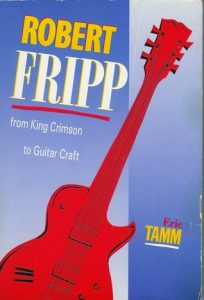
In 1985, Fripp founded Guitar Craft, a school dedicated to the teaching of his guitar techniques and, more broadly, his philosophy of music-making as a discipline of attention and awareness. The school held its first course at Claymont Court, West Virginia, and over the following decades Fripp directed GC Seminars on four continents. The teaching was rigorous, emphasizing the New Standard Tuning, cross-picking technique, and what Fripp called "the quality of attention" required to play music in a group.
The League of Crafty Guitarists, an ensemble drawn from Guitar Craft students, performed and recorded under Fripp's direction. A 1988 New York Times review of a League concert at Washington Square Church captured the unique quality of these performances: "The 23 acoustic guitarists that make up the League of Crafty Guitarists sat in a semicircle facing the audience. Starting on the left, each guitarist played one note in sequence, person by person, until a melody landed in the lap of Robert Fripp, their leader, on the far right. The composition set the rules for the rest of the sold-out show: mixing theater, music, and audio effects, Mr. Fripp turned music making into an amiable ritual".
The reviewer noted that Fripp's compositions often sounded as if they were born in a recording studio, with segments that in their choppy precision sounded spliced. The pieces ended abruptly, as if the recording tape had run out. The 23 guitarists, an unusual concentration of instruments, sounded overdubbed. Melodies zipped by as if the tape they had been recorded on had been speeded up. At the second set, "wave after wave of metronomically perfect riffs marched by, upper and lower registers were worked for their sounds, symmetrical melodies stiffly appeared and disappeared. Movements segued abruptly from one meter and key to another, and the pieces often had an epic, symphonic reach to them".
The Producer and the Sage
Fripp's artistry extended beyond performance and composition into production and mentorship. He produced albums for The Roches, The League of Gentlemen, and others, bringing to production the same obsessive attention to detail that characterized his playing. His 1979 solo album Exposure was described by some critics as "the Sergeant Pepper of avant punk," though Fripp himself was characteristically ambivalent about such comparisons.
In interviews and public appearances, Fripp cultivated a persona that was part professor, part guru, and part provocateur. He was known for sitting on a stool facing his laptop during Soundscapes performances, then strolling to center stage afterward to jovially call for questions from the audience. Asked about the balance of the demonic and the sublime in his music, and about his faith, he replied that it was in "the irrepressible benevolence of the creative impulse, despite all evidence to the contrary".
Bill Bruford, who played drums with King Crimson across multiple eras, described Fripp as "one part Joseph Stalin, one part Mahatma Gandhi, one part Marquis de Sade". The description captures something essential about Fripp: a man of immense discipline and spiritual aspiration who could also be ruthlessly demanding and, at times, seemingly cruel in his pursuit of musical integrity.
Legacy: The Invisible Influence
Robert Fripp's influence on music is difficult to overstate precisely because it is so diffuse. His renegade guitar technique has been cited as an influence by players as diverse as Kirk Hammett of Metallica and Annie Clark of St. Vincent. His experiments with tape loops and sound processing laid the groundwork for entire genres of ambient and electronic music, influencing artists from Radiohead to Kanye West. His compositional approach, with its emphasis on interlocking patterns, polyrhythmic complexity, and dynamic contrast, became a foundational vocabulary for progressive metal and post-rock.
Yet Fripp himself remained, throughout his career, deeply skeptical of the music industry and its trappings. He was an outspoken advocate for artists' rights, involved in organizations including the Musicians' Union and the Featured Artists Coalition. He described his relationship to rock music with characteristic ambivalence: "I think rock n roll is interesting and some of it is more interesting than it used to be in the fifties. Yet basically it's not something that means very much to me. If the whole history of rock'n'roll disappeared tomorrow morning, I wouldn't care. I'm delighted that I've influenced rock'n'roll musicians".
In the end, Fripp's artistry is best understood not as a body of work—though the body of work is immense and enduring—but as a way of being in the world. His guitar was not an instrument of expression but a tool of discovery. His bands were not vehicles for his ego but laboratories for collective inquiry. His career was not a march toward commercial success but a lifelong pursuit of what he called "the quality of attention" that transforms music from sound into meaning. As he himself put it, the creative musician is a receiver, and the program is already there—all he has to do is receive it as far as possible. For more than five decades, Robert Fripp received it, and in doing so, he changed what the guitar could be and what rock music could become.