Scores for all instruments: 16,000+ (active and growing), over 236,000 pages.
All genres and levels: Jazz & Blues, Rock & Pop, Classical & Contemporary, Film & Musicals;
books & biographies; methods, études, play-along tracks (MP3) for Jazz & Rock.
Access & benefits: US$15.99 one-time payment, valid for lifetime, full Library access.
Table of Contents
Erich Wolfgang Korngold: The Last Prodigy and the Architect of Hollywood's Symphonic Sound
Few composers in the twentieth century embodied the turbulent transition from Old World Romanticism to New World modernism as vividly as Erich Wolfgang Korngold. Hailed as the greatest musical prodigy since Mozart, admired by Mahler, Strauss, and Puccini, and later dismissed by a European avant-garde that had little patience for his unabashed lyricism, Korngold lived at least three distinct musical lives. He was a child sensation in imperial Vienna, a celebrated opera composer in the 1920s, and the founding father of the symphonic Hollywood film score. Today, his Violin Concerto is a staple of the concert repertoire, his opera Die tote Stadt has returned to major stages worldwide, and his influence on composers from John Williams to Bernard Herrmann is widely acknowledged. Yet for decades after his death, Korngold remained a marginal figure—too Romantic for the modernists, too serious for the film-music industry, and too Viennese for the New World he helped define. Understanding his music means understanding a career that was as remarkable for its precocity as for its resilience in the face of historical catastrophe.
The best sheet music download from our Library.
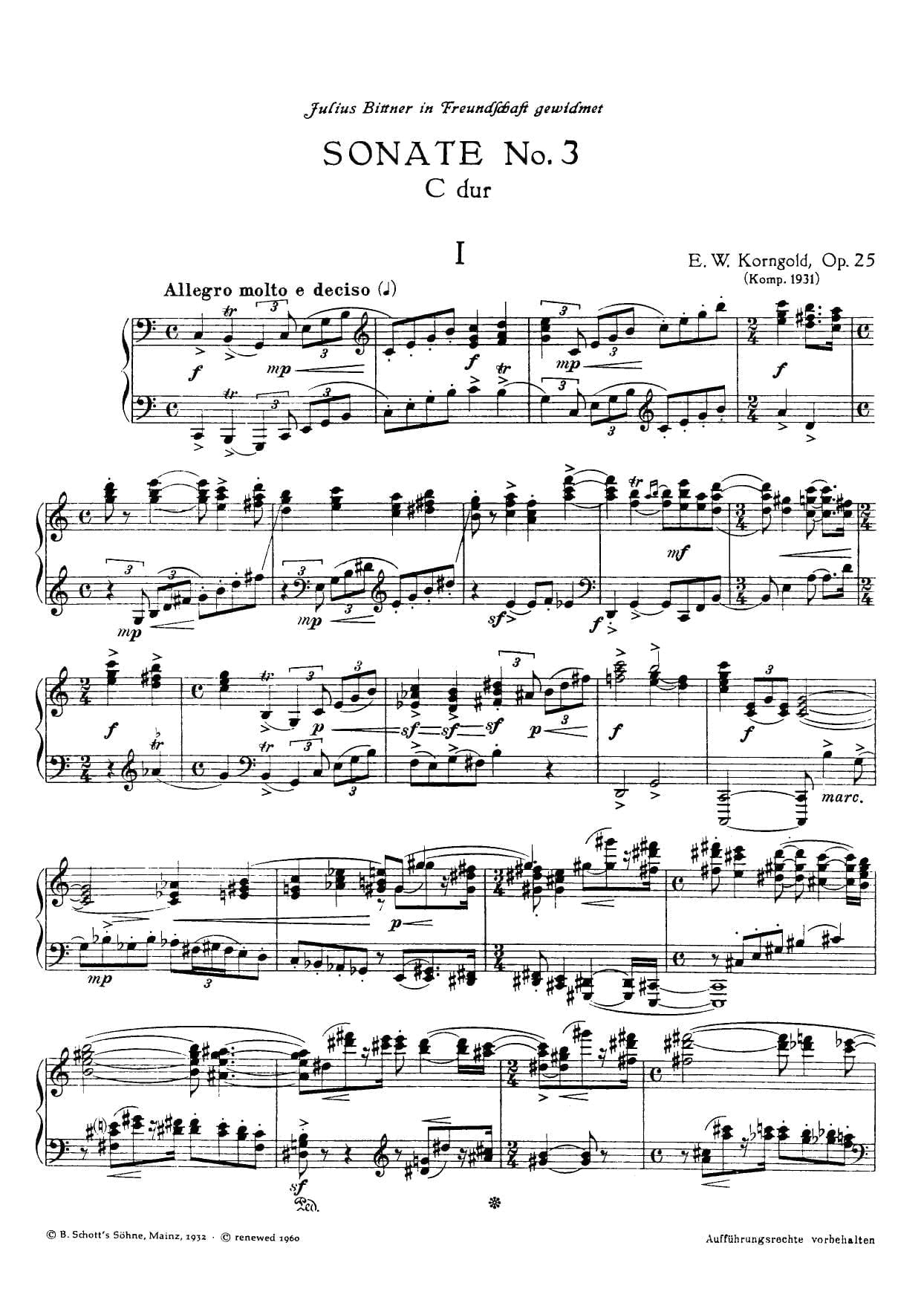
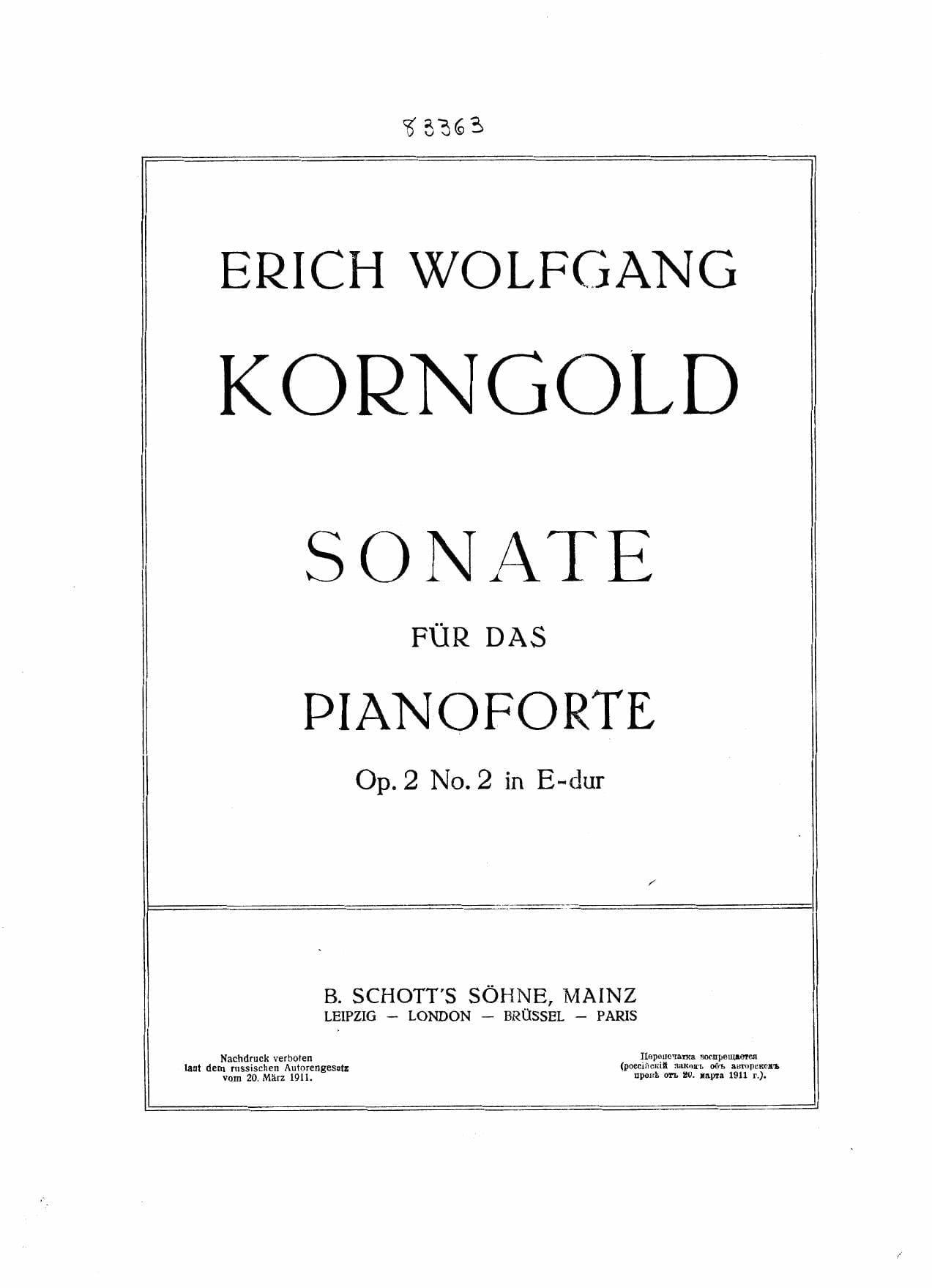
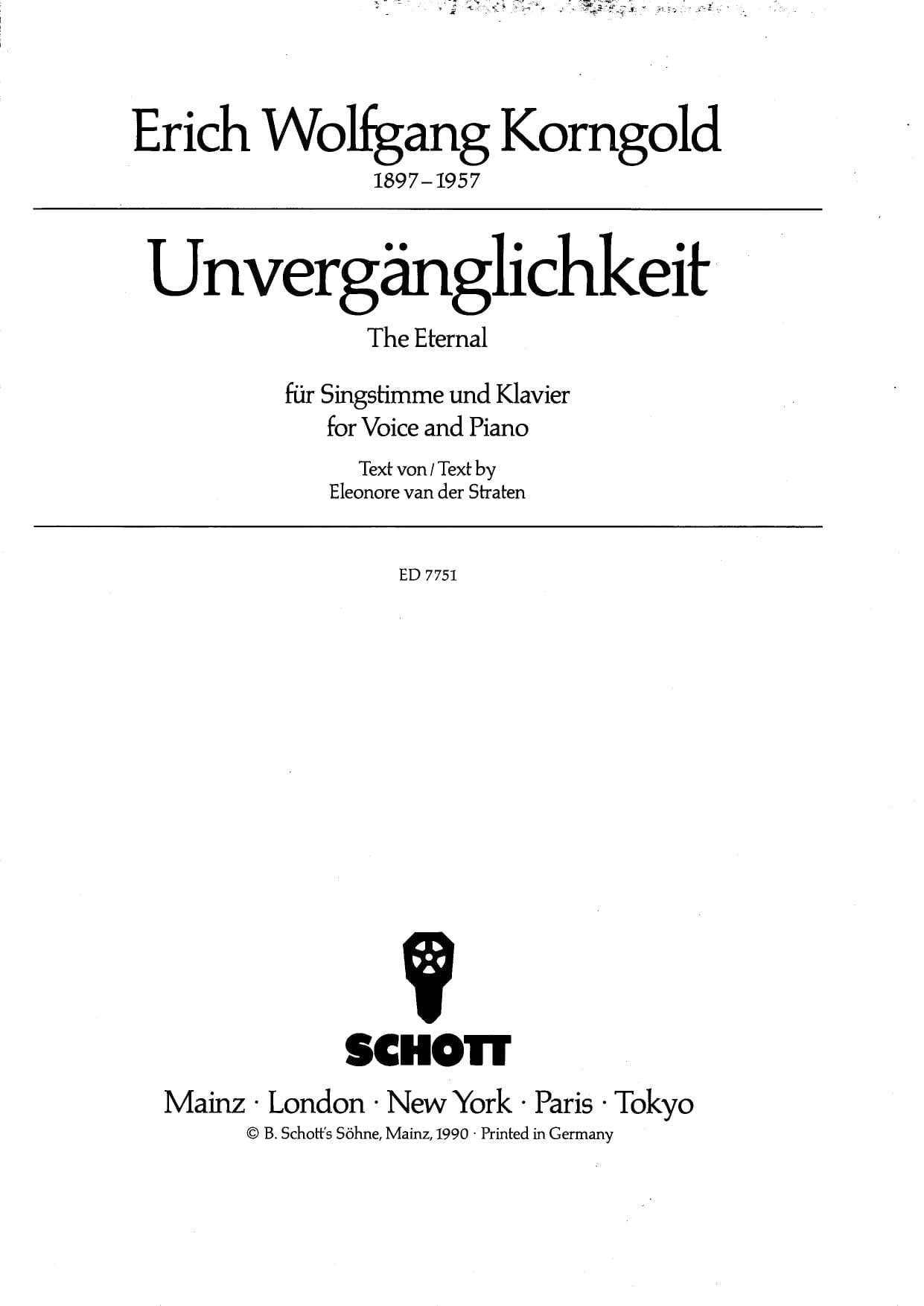
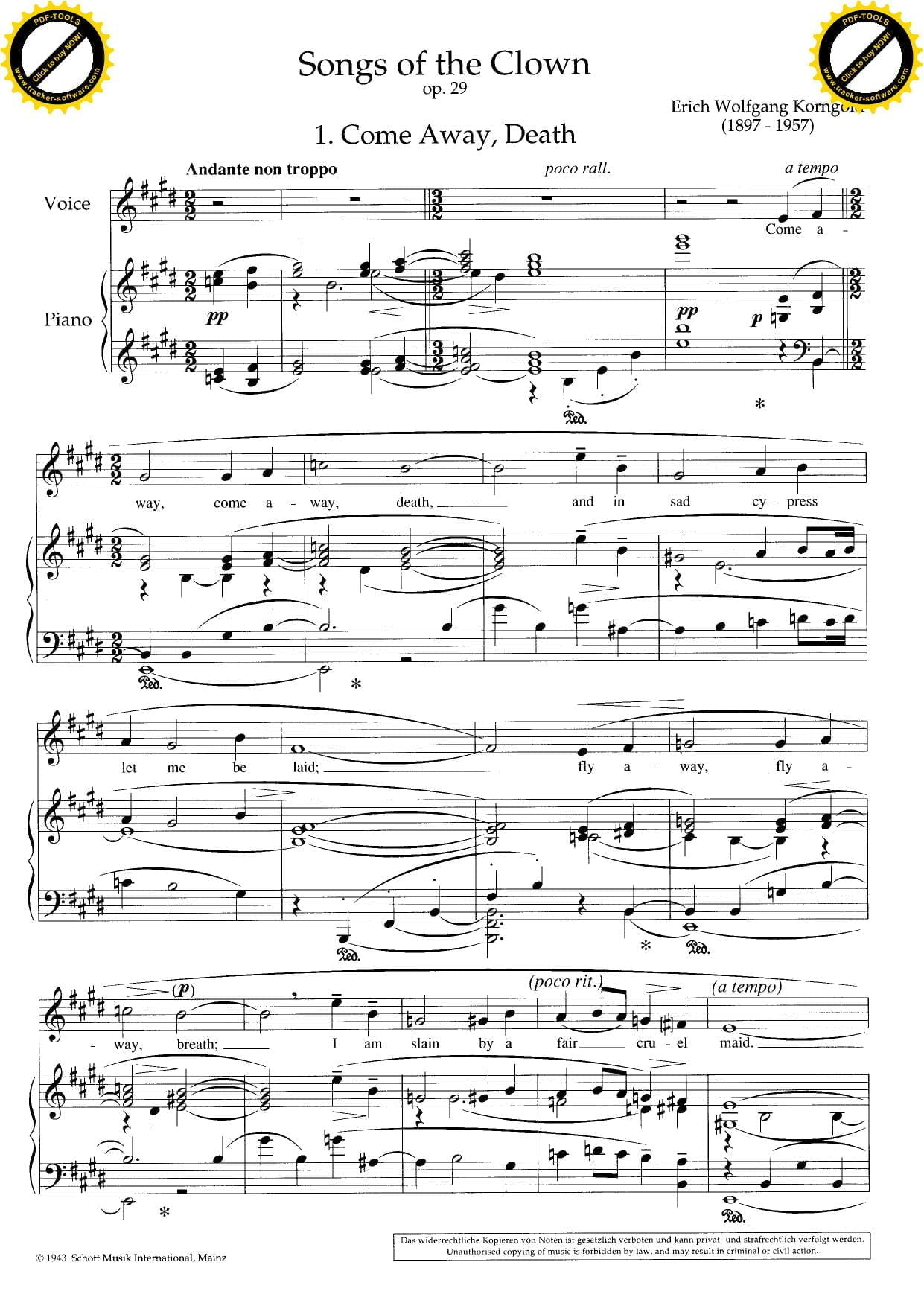
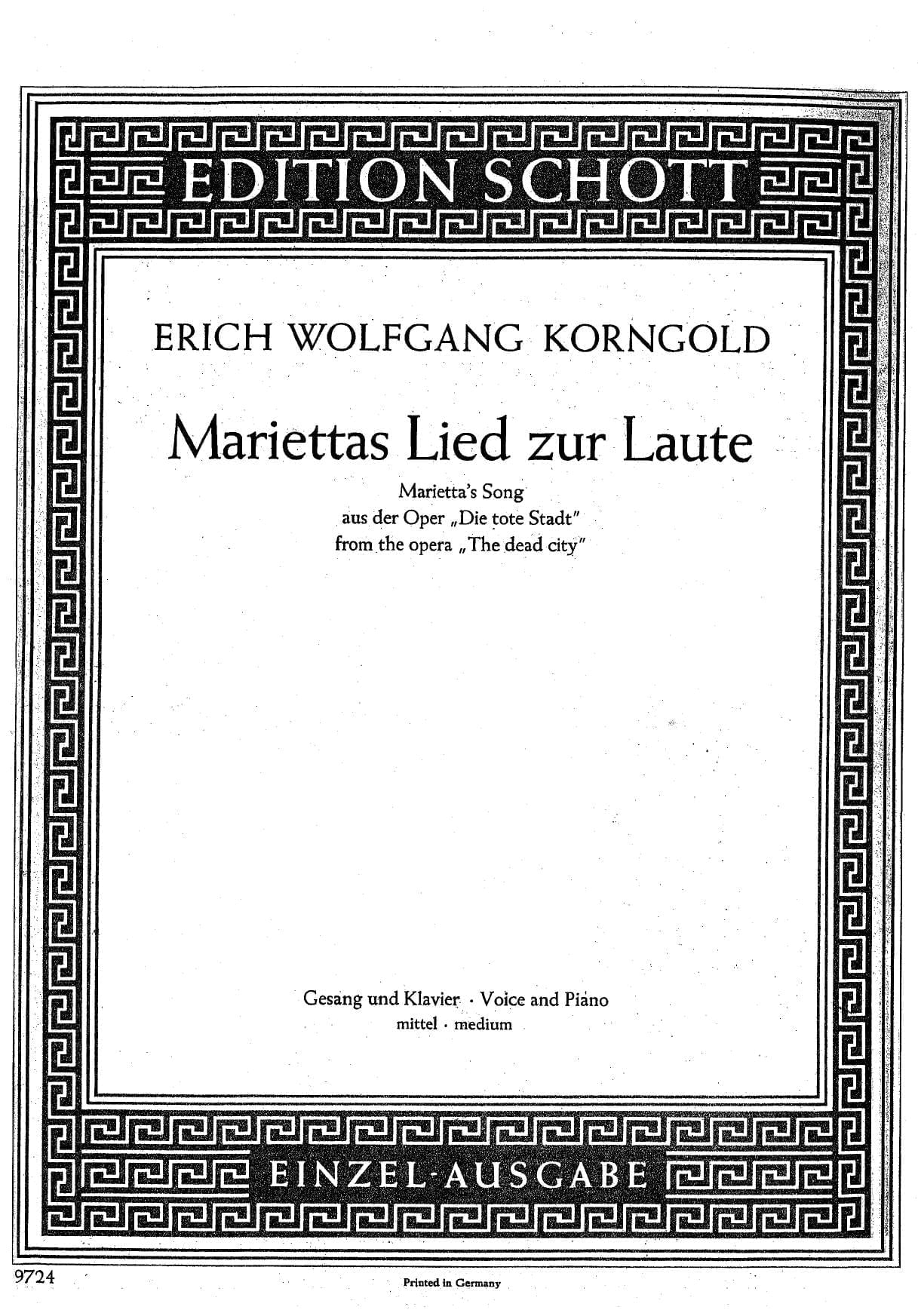
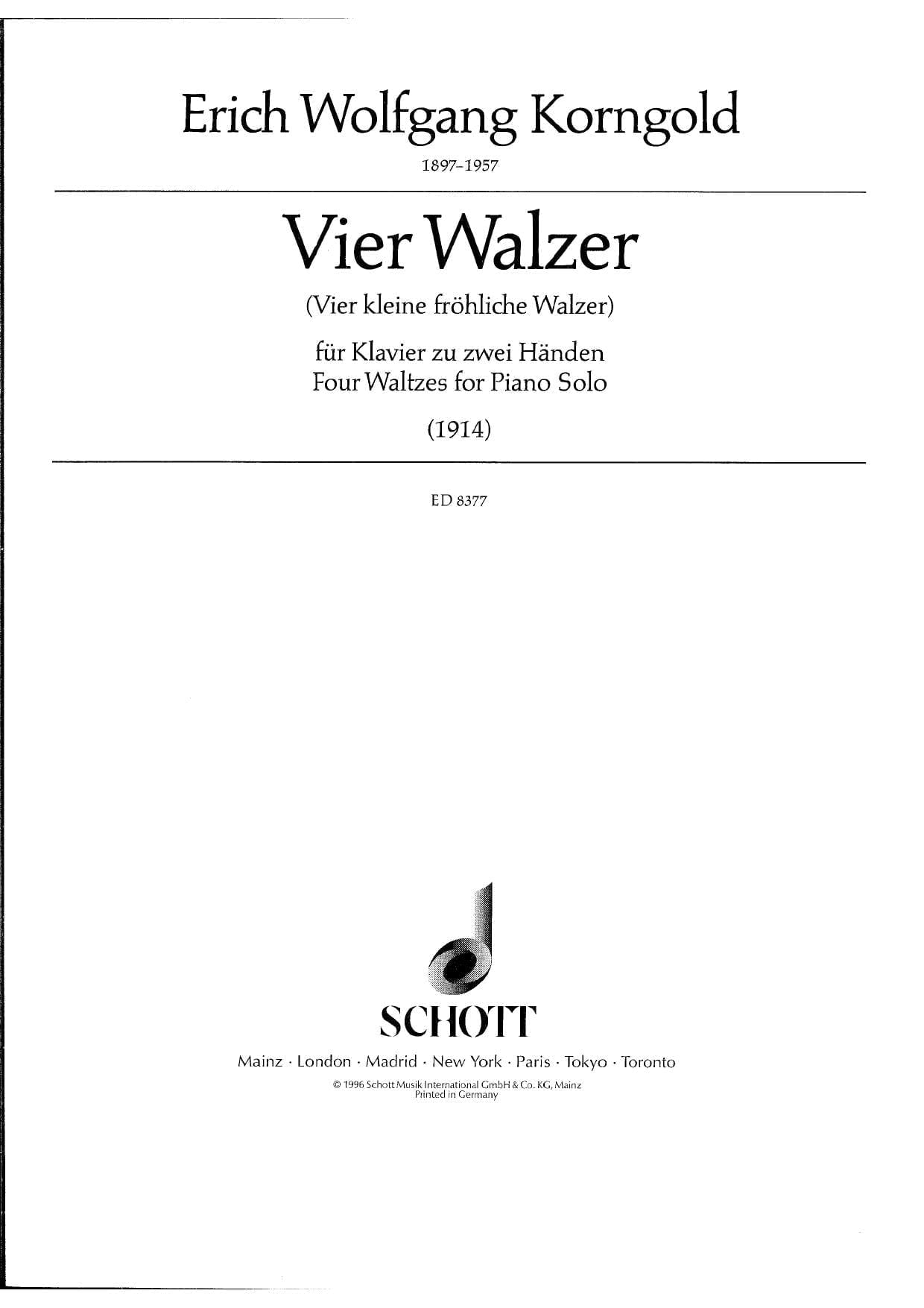
Please, subscribe to our Sheet Music Library. Sheet music should be accessible and affordable for all musicians, from professionals to absolute beginners.
Biography: From Wunderkind to Hollywood
Erich Wolfgang Korngold was born on May 29, 1897, in Brünn, Moravia, then part of the Austro-Hungarian Empire and today the Czech city of Brno. He was the second son of Dr. Julius Korngold, one of the most feared and influential music critics in Vienna, and the boy's extraordinary gifts manifested almost immediately. By the age of five, he was playing four-handed piano arrangements with his father; by nine, he had composed a fairy-tale cantata titled Gold, which he performed for Gustav Mahler. Mahler, never a man easily impressed by child prodigies, declared the boy a genius and recommended that he study with Alexander von Zemlinsky. That endorsement launched one of the most celebrated prodigy careers in musical history.
The young Korngold quickly surpassed every expectation. In 1910, at just thirteen, his ballet-pantomime Der Schneemann (The Snowman) was premiered at the Vienna Court Opera under Franz Schalk, causing a sensation and even prompting speculation that his father had secretly written the music. Two years later, Artur Schnabel performed his Piano Sonata, and by the age of fourteen he had composed his first orchestral work, the Schauspiel-Ouvertüre, which attracted the attention of Richard Strauss. Strauss would become a lifelong admirer and a decisive influence on Korngold's harmonic language, though the younger composer's voice was never merely derivative. By his late teens, Korngold had written a Sinfonietta, a Piano Trio, and two one-act operas—Der Ring des Polykrates and Violanta—both premiered in 1916 under Bruno Walter, cementing his reputation as the most astonishing compositional talent of his generation.
The 1920 premiere of Die tote Stadt (The Dead City) in Hamburg, conducted by the composer himself, transformed Korngold from prodigy into international celebrity. The opera was an overnight triumph, performed in dozens of cities across Europe and America, and its most famous number, Marietta's Lied "Glück, das mir verblieb," became a hit on a scale comparable to the great Puccini arias. Korngold followed this with Das Wunder der Heliane in 1927, a monumental, mystical work that became entangled in a bitter cultural controversy orchestrated in part by his father's critical rivalries. Though Heliane is now regarded by many as his most ambitious and forward-looking score, its initial reception was compromised by the political and aesthetic battles of the moment, and Korngold's career as a European opera composer never fully recovered.
In 1934, the theatre director Max Reinhardt, a Viennese émigré who had already established himself in Hollywood, invited Korngold to America to arrange and conduct Felix Mendelssohn's music for a film version of A Midsummer Night's Dream. Korngold accepted, and the experience proved transformative. What had been intended as a brief engagement became a permanent relocation. In 1935, he signed a contract with Warner Brothers—at the time the most lucrative ever offered to a Hollywood composer—and over the next twelve years he would score seventeen films, sixteen of them for Warner Bros.. The annexation of Austria by Nazi Germany in 1938 made his decision to remain in America a matter of survival as well as career; he became a naturalized American citizen in 1943.
Korngold's Hollywood years were professionally successful but personally ambivalent. He won two Academy Awards, for Anthony Adverse (1936) and The Adventures of Robin Hood (1938), and his scores for Captain Blood, The Sea Hawk, and Kings Row are still regarded as landmarks of the medium. Yet he never regarded film music as his true calling. "Music is music," he once wrote, "whether composed for the stage, the conductor's desk or for the cinema". But the European concert world to which he hoped to return after the war had moved on. In 1949, he returned to Vienna with his wife Luzi, only to find the city in ruins and his music dismissed as reactionary. He moved back to his home in the Toluca Lake district of North Hollywood, where he spent his final years composing concert works that the world largely ignored. He suffered a stroke in 1956 and died on November 29, 1957, at the age of sixty.
Musical Style and Technique
Korngold's musical language is a paradox: it is at once deeply conservative in its emotional directness and strikingly modern in its technical sophistication. He was formed by the late Romantic tradition of Mahler, Strauss, and Puccini, but he was never simply a late bloomer of that tradition. From his earliest works, he displayed a mastery of orchestral color and contrapuntal intricacy that set him apart from his contemporaries. The composer and scholar Brendan G. Carroll has described his scores as "richly melodic and contrapuntally intricate," symphonic in scope even when they were written for the cinema.
One of the most distinctive features of Korngold's style is his rhythmic flexibility. He had an instinct for portraying narrative in music, replete with atmosphere and action, and his rhythmic language is characterized by constant changes of time signature and written-out rubatos that give his music a supple, almost improvisatory quality. This was evident as early as his Don Quixote Character Pieces for piano, written when he was eleven, and it became a defining feature of his film scores, where he could shift seamlessly between grandeur, intimacy, and suspense within a single cue.
Korngold's orchestration is another hallmark. He favored lush string writing, prominent brass fanfares, and a rich palette of percussion, harp, celesta, and piano. His orchestral technique established a model of composition and orchestration that is still used in Hollywood film scoring today. He was particularly skilled at using instrumental color to delineate character and mood, a skill that translated naturally from opera to film. In The Sea Hawk, for instance, the sea itself becomes a character through the surging string figures and brass calls that accompany it; in Kings Row, the small-town Americana of the source material is evoked through a chamber-like transparency that contrasts sharply with his more epic scores.
Harmony and Polytonality
Korngold's harmonic language is among the most individual aspects of his music, and it is here that his relationship to twentieth-century modernism becomes most interesting. His late Romanticism is often doubled by a polytonality that applies to harmonic writing as well as counterpoint. This was not the systematic polytonality of Milhaud or Stravinsky, but a flexible, expressive technique that allowed him to juxtapose different tonal centers for dramatic effect. As one study notes, while his contemporaries were deserting tonality altogether, Korngold wrote in a kind of extended polytonality, using all twelve chromatic notes as adjuncts to a central tonality.
This approach placed him in direct opposition to the Second Viennese School. By choosing polytonality—inseparable from diatonic harmony and counterpoint—Korngold set himself against atonality, which he regarded as the endpoint of a chromaticism that had lost its expressive purpose. His harmonic idiom is rich with the third-related triadic sequences that he inherited from Strauss, and these sequences, of both octatonic and hexatonic varieties, would later become a signature of John Williams's film scores.
The Symphony in F sharp major, Op. 40, is perhaps the clearest demonstration of Korngold's harmonic method. Although its nominal key is F sharp, its home tonality is fluid and polytonal, with the music traveling both in tonality and in its constantly changing tempo markings across four movements. The first movement alone moves from F sharp to C major between its first and second subjects, a relationship that deconstructs traditional sonata-form key logic while retaining the dramatic tension that key contrast provides. This is not the harmony of a nostalgic conservative; it is the harmony of a composer who understood the expressive possibilities of tonal ambiguity and used them with precision.
Best Compositions and Songs
Korngold's catalogue is dominated by his operas, his film scores, and a smaller but significant body of concert works. Any survey of his finest music must begin with Die tote Stadt, the 1920 opera that remains his masterpiece. Based on Georges Rodenbach's symbolist novel Bruges-la-Morte, the opera tells the story of Paul, a man mourning his dead wife Marie, who becomes obsessed with a dancer named Marietta who resembles her. The score is a feast of melody, fantasy, and high emotion, as one critic has put it, and its central duet "Glück, das mir verblieb" is one of the most beautiful pieces of music written in the twentieth century. The opera's orchestration is sumptuous, its dramatic pacing masterful, and its psychological depth—the entire second act may be a dream—anticipates the cinematic techniques Korngold would later pioneer.
The one-act opera Violanta, premiered alongside Der Ring des Polykrates in 1916, is a darker, more compact work, a tragedy of jealousy and murder in Renaissance Venice. Its seventy-five-minute span contains some of Korngold's most intense dramatic writing, and it has experienced a modest revival in recent decades. Das Wunder der Heliane, though less frequently performed, is arguably his most ambitious score, a mystical parable of love and resurrection that employs every harmonic and instrumental invention at his disposal, including bitonality, polytonality, and a vast orchestral apparatus.
Among Korngold's concert works, the Violin Concerto in D major, Op. 35, composed in 1945 and premiered by Jascha Heifetz in 1947, is his most popular and frequently performed piece. The concerto is a unique hybrid: its themes are drawn directly from four of his film scores, including Another Dawn, Anthony Adverse, and The Prince and the Pauper, yet it is far more than a pastiche. The opening movement, marked "nobile," is in a flexible sonata form, with the solo violin immediately stating a theme that combines the "Motif of the Cheerful Heart"—Korngold's personal signature tune, based on two interlocking rising fourths and a rising fifth—with a haunting, homesick tritone that transforms the motif into something altogether more poignant. The concerto's slow movement is one of the most tender and lyrical passages in the twentieth-century violin repertoire, while the finale is a brilliant, energetic romp that recalls the swashbuckling spirit of his Errol Flynn scores.
The Symphony in F sharp major, Op. 40, composed between 1947 and 1952 and premiered in 1954, is Korngold's greatest post-war work and his only true symphony. It is a dark, tense, and bitter piece, colored by the composer's experiences of exile and disillusionment, yet it also contains moments of expansive lyricism that recall Mahler. The opening moderato suggests a striving, menace-laden drama, with psychological overtones provided by marimba and xylophone; the scherzo is a swift, adventurous chase; and the slow movement is the emotional heart of the work, its aching melodies at times recalling the Mahler who had decades earlier dubbed the nine-year-old Korngold a genius.
Korngold's chamber music is less well known but equally rewarding. The three string quartets, written between 1923 and 1945, chart his artistic journey from prodigy of post-imperial Vienna to pioneering film composer in Hollywood. The String Quartet No. 3 in D major, Op. 34, his last chamber work, employs a masterful blend of Hollywood drama and Viennese refinement, and it explicitly quotes material from his film scores, including The Sea Wolf and Devotion. The Piano Quintet in E major, Op. 15, composed in 1921, is a sprawling, passionate work that deserves a place alongside the great piano quintets of the Romantic tradition.
Korngold was also a significant composer of songs. His Fünf Lieder, Op. 38, completed in 1948, sets poems by Richard Dehmel, Eichendorff, Howard Koch, and Shakespeare, among others, and was dedicated to the soprano Maria Jeritza, who had created major roles in three of his operas. The songs show Korngold's melodic gift in its purest form, unencumbered by the demands of orchestration or dramatic pacing. His posthumous songs, collected as Lieder aus dem Nachlass, include settings of Eichendorff and other poets that date from his early years and reveal the depth of his literary sensibility.
Music in Films
Korngold's contribution to film music is difficult to overstate. He was the first composer of international renown to be signed by Hollywood despite having no prior experience with the medium, and his approach—predominantly theatrical and operatic—was described by the composer himself as being akin to writing an opera. He once remarked that Puccini's Tosca was "the best film score ever written," a telling comment that reveals how he understood the relationship between dramatic music and visual narrative.
His first major film assignment was Captain Blood (1935), a swashbuckling adventure starring Errol Flynn that established the template for the symphonic Hollywood score. The music is stirring, string-laden, and brilliantly paced, and it earned Korngold his first Academy Award nomination. The following year, Anthony Adverse won him his first Oscar, and in 1938, The Adventures of Robin Hood—widely regarded as the archetype of the swashbuckler score—brought him his second. In these scores, Korngold frequently employed a unique, even operatic approach to composition through the use of brief musical themes, or Leitmotiven, to represent the film's various characters. The association of a specific character with a specific musical theme allowed great flexibility in depicting a character's general nature and mood at a given moment, as well as imparting to the character a psychological depth that could not be expressed through purely visual means.
The Sea Hawk (1940) is often cited as Korngold's finest film score. Many film-music scholars regard this score as his best movie music, and its influence can be heard in everything from Erich Wolfgang Korngold's own later concert works to the adventure scores of the 1980s and 1990s. The score's opening fanfare, its surging sea music, and its romantic interludes demonstrate Korngold's mastery of orchestral narrative on a grand scale. Kings Row (1942), a dark psychological drama based on Henry Bellamann's novel, shows a different side of his talent: the score is more intimate and chamber-like, though it builds to a devastating climax in the famous "Main Title" that would later be appropriated by John Williams for the Star Wars score.
Korngold's film career was not without frustration. He grew weary of the studio system's demands and the increasing tendency of producers to cut and paste his music. In 1946, the New York Times reported that after twelve years as the reigning Hollywood composer, he had decided it was time to move on. His final film score was for the German production Magic Fire (1954), a biopic of Richard Wagner. By then, the Hollywood he had helped create had changed, and the musical language he had pioneered was being taken in new directions by composers who had learned from him.
Collaborations with Other Musicians
Korngold's career was marked by fruitful collaborations with some of the most significant musical figures of his time. His earliest and most important mentor was Alexander von Zemlinsky, with whom he studied from the age of nine. Zemlinsky, himself a composer of considerable gifts and the teacher of Arnold Schoenberg, provided the young Korngold with a rigorous grounding in counterpoint and harmony that would serve him throughout his career. The relationship between Korngold and Zemlinsky is documented in Korngold's own recollections, which were published in Korngold and His World.
Gustav Mahler's early endorsement was decisive in launching Korngold's career, and Richard Strauss remained a supportive admirer throughout his life. Strauss's harmonic language, particularly his use of third-related triadic sequences, left a permanent mark on Korngold's style, though Korngold's own voice was always distinct. Giacomo Puccini was another admirer, and Korngold's melodic writing owes something to the Italian master's gift for long-breathed, emotionally direct phrases.
In Hollywood, Korngold's closest collaborator was the orchestrator Hugo Friedhofer, who worked with him on numerous films and became a significant film composer in his own right. Their partnership was one of the most productive in the history of film music, with Friedhofer's orchestral expertise complementing Korngold's compositional vision. Korngold also worked closely with the violinist Jascha Heifetz, who premiered the Violin Concerto in 1947 and whose recording of the work remains a benchmark of the repertoire. The conductor Erich Leinsdorf led the first recording of Die tote Stadt, and the soprano Maria Jeritza, who created roles in three of his operas, was a devoted interpreter of his vocal music.
Influences and Legacy
Korngold's influence on the development of film music is difficult to overstate. He is credited with "inventing" the syntax of orchestral film music, and his approach—symphonic in scope, leitmotivic in structure, and unapologetically emotional in tone—defined the genre for generations. Even Max Steiner, the great pioneer of Hollywood film scoring, admitted to being influenced by Korngold's work. The list of composers who have acknowledged his impact includes Bernard Herrmann, Franz Waxman, Miklós Rózsa, and, most notably, John Williams.
The connection between Korngold and Williams is particularly striking. Williams has spoken openly about his admiration for Korngold, and the influence is audible in the Star Wars scores, which share Korngold's fondness for leitmotifs, his use of third-related harmonic sequences, and his flair for grand, brass-heavy fanfares. The main title of Kings Row, with its soaring, heroic melody, is often cited as a direct ancestor of the Star Wars main theme, and the debt is one that Williams has never sought to hide.
Korngold's legacy in the concert hall has been slower to establish, but it has grown steadily since the 1990s. The revival of Die tote Stadt at major opera houses, the increasing frequency of performances of the Violin Concerto and the Symphony in F sharp, and the growing discography of his chamber music all testify to a reassessment that is long overdue. The Library of Congress, which holds the Erich Wolfgang Korngold Collection, has recognized his importance as a composer whose "inventive approach to the creation of film music" resulted in scores that were "literally and figuratively symphonic in scope" and that "defined the genre even to our day".
Perhaps the most fitting tribute to Korngold's legacy is the simple fact that his music refuses to go away. It is too melodic, too emotionally direct, too well crafted to be consigned to the dustbin of history. In an age that has rediscovered the pleasures of tonal harmony and the power of narrative music, Korngold sounds less like a relic and more like a prophet.
Korngold's personnal life
Korngold's personal life was marked by a strong partnership with his wife, Luzi von Sonnenthal, whom he married in 1924. Luzi was the daughter of a prominent Viennese actor and became Korngold's devoted companion and advocate; her memoirs, published in Korngold and His World, provide an intimate portrait of the composer's life and work. The couple had two sons, Ernst and George, and their home in Toluca Lake became a gathering place for musicians and filmmakers.
Korngold's relationship with his father was complex and formative. Julius Korngold was a powerful critic whose advocacy of his son's music was both a blessing and a burden. The younger Korngold's early career was shadowed by accusations of nepotism, and the critical backlash against Das Wunder der Heliane was exacerbated by his father's professional rivalries. Yet Julius was also a source of unwavering support, and his letters to his son, published in Korngold and His World, reveal a deep and tender bond.
Korngold's health declined in his final years. He suffered a stroke in 1956 that left him partially paralyzed, and he died of a heart attack on November 29, 1957. He was sixty years old. At the time of his death, he was working on a second symphony and an opera based on The Ring of the Nibelung—projects that would never be completed.
In 2019, the Bard Music Festival devoted its annual season to Korngold, and the accompanying volume Korngold and His World brought together leading scholars to reassess his life and music. The festival and the book marked a significant moment in the composer's rehabilitation, confirming that Korngold is no longer a footnote to the history of film music but a major figure in twentieth-century music in his own right. His music, in all its richness and contradiction, continues to reward the listener who approaches it with an open mind and an open heart.
Browse in the Sheet Music Library:
Or browse in the categories menus & download the Library Catalog PDF: