Scores for all instruments: 16,000+ (active and growing), over 236,000 pages.
All genres and levels: Jazz & Blues, Rock & Pop, Classical & Contemporary, Film & Musicals;
books & biographies; methods, études, play-along tracks (MP3) for Jazz & Rock.
Access & benefits: US$15.99 one-time payment, valid for lifetime, full Library access.
Table of Contents
Who is Lang Lang (b. 1982)?
Lang Lang: The Pianist Who Redefined Classical Music for the 21st Century
Very few artists can claim to have had the same profound impact on the world of music as Lang Lang. As a pianist, educator, and philanthropist, as well as an influential ambassador for the arts, he has fully embraced new technology and innovation, leading the way in bringing classical music into the 21st century. Heralded by The New York Times as "the hottest artist on the classical music planet," Lang Lang plays sold-out concerts all over the world, equally at home performing for billions of viewers at the 2008 Olympic Opening Ceremony in Beijing or for a few hundred children in public schools. His unique ability to unite excellence and accessibility, building bridges between Eastern and Western culture, has made him one of the most influential and committed ambassadors for the arts in the modern era.
The best sheet music download from our Library.

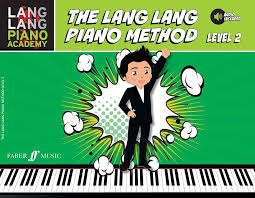


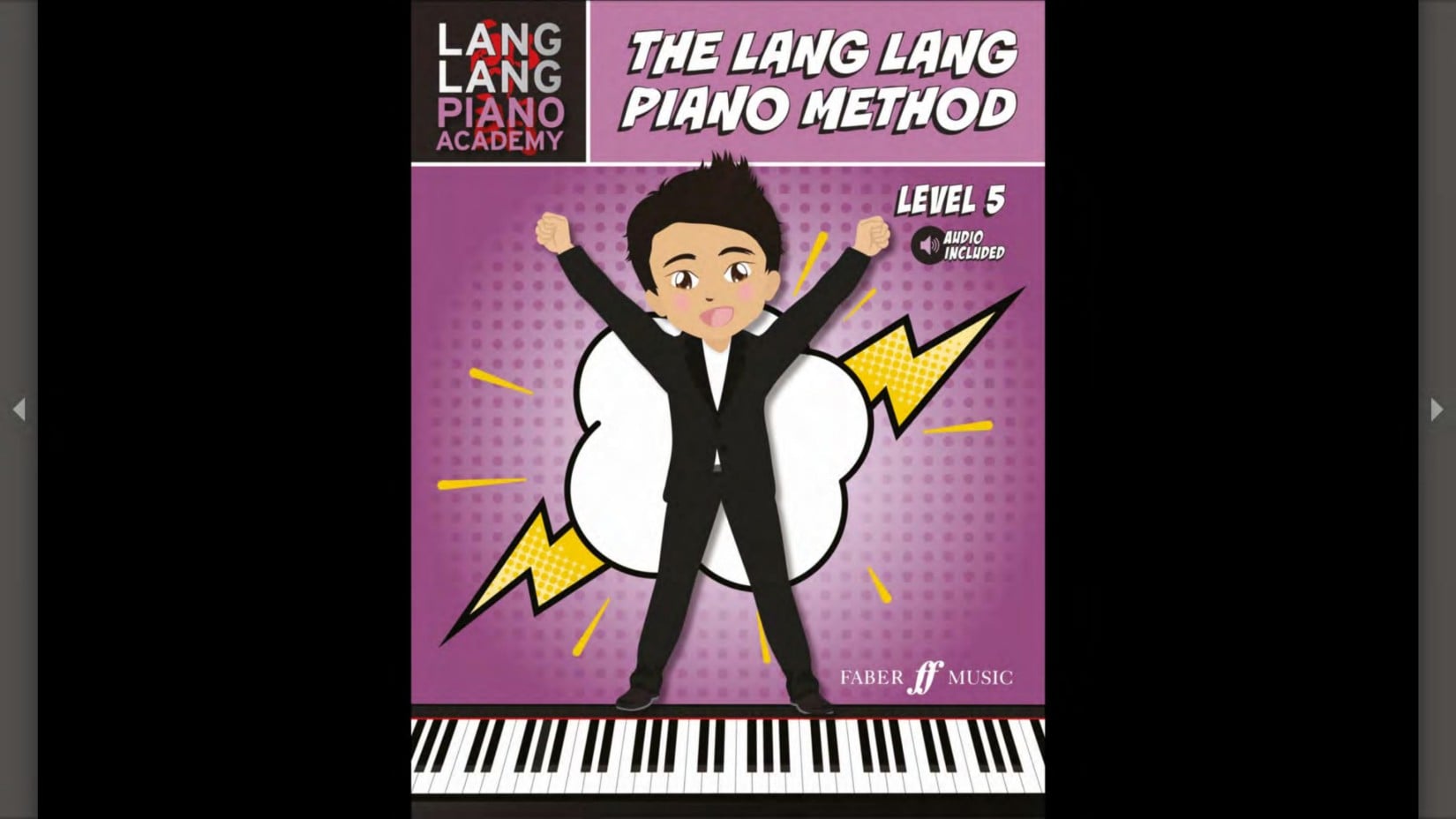
Please, subscribe to our Sheet Music Library. Sheet music should be accessible and affordable for all musicians, from professionals to absolute beginners.
Early Life and Biography
Lang Lang was born on June 14, 1982, in Shenyang, the capital city of Liaoning province in Northeast China. His father, Lang Guoren, was a musician who played the traditional Chinese instrument known as the erhu, while his mother was a singer. Growing up in a household steeped in music, Lang Lang began playing the piano at the remarkably young age of three and gave his first public recital before he was five years old.
His early training was rigorous and demanding. He received instruction from Zhu Yafen, a professor at the Shenyang Conservatory of Music. At age nine, Lang Lang relocated with his father to Beijing to study at the Central Music Conservatory under Professor Zhao Ping-Guo. The move was a significant sacrifice for the family, as it meant separation from his mother for extended periods—a period of intense discipline and dedication that would later be chronicled in his memoir, "Journey of a Thousand Miles," published in 2008 in eight languages.
His extraordinary talent quickly became apparent on the international stage. At age thirteen, Lang Lang won First Prize at the International Tchaikovsky Competition for Young Musicians, a victory that marked the beginning of his meteoric rise. Following this triumph, he traveled to Philadelphia to study with the legendary pianist Gary Graffman at the prestigious Curtis Institute of Music.
Search your favorite sheet music in the Sheet Music Library Catalog
The pivotal moment in Lang Lang's career came when he was just seventeen years old. He was called upon to substitute for the celebrated pianist André Watts at the Gala of the Century at the Ravinia Festival, performing Tchaikovsky's First Piano Concerto with the Chicago Symphony Orchestra under the baton of Christoph Eschenbach. The performance was a triumph of such magnitude that it instantly transformed him into an overnight sensation, and invitations from major orchestras and concert halls around the world began pouring in.
Since that breakthrough, Lang Lang has performed in cities all around the world, playing for presidents, Queen Elizabeth II, Pope Francis, and television audiences numbering in the billions. His career has been marked by an unrelenting schedule of performances, recordings, and philanthropic endeavors that have solidified his position as one of the most recognized and influential musicians of his generation.
Musical Style and Technique
Lang Lang's pianism is characterized by an extraordinary combination of technical mastery, emotional intensity, and theatrical flair. His approach to the instrument is rooted in a comprehensive training that encompasses both the Russian and Western European schools of piano technique. In his book "Mastering the Piano," he explains his pedagogical approach, emphasizing that a semicircular hand transfers the power of the hand to the fingertips—a fundamental principle of his technique.
What he nurtured at the Central Conservatory of Music in Beijing and honed at the Curtis Institute in Philadelphia has developed into an immaculate, fearless technique that is capable of navigating the most demanding passages of the piano repertoire with apparent ease. As one prominent Steinway profile observed, "The fabulous technique, the absolute control (even at hell-bent tempos), the flexible rhythm, the firmly centered tone from tornadolike intensity to supple delicacy"—these are the hallmarks of his playing.
A detailed critical review of a 2026 recital at the Jacobs Music Center in San Diego captured the full range of Lang Lang's technical arsenal: "firmness of tone, clean articulation grounded in finger independence, hand coordination to highlight voices and create harmonic drama, continual deft use of rubato and agogic shaping, athletic velocity and power". The reviewer noted that "technically, the forty-three-year-old can do whatever he, or anyone else, could imagine or dream of on a keyboard".
Lang Lang's physical approach to the piano is highly distinctive. He is known for playing with dramatic, physical flair and visible emotion, often leaning his head in various directions, his fingers bouncing furiously across the keys, and his arms stretching far above the instrument. This physicality is not merely showmanship; it is an integral part of his interpretive approach. As he himself has explained, "You have to hug the piano and connect your spirit to it. For Lang Lang, music is more than performance—it's storytelling through sound. To make a melodic line beautiful, think of it as floating or flowing. Breathe before the first note".
His interpretive philosophy emphasizes the primacy of emotion and personal understanding over mechanical precision. As he has stated, the key is "to first capture the emotion, and then the technique". He has proposed three core dimensions of performance cognition: first, the perception of the work, opposing mechanical repetitive practice, and emphasizing the formation of personal understanding through the analysis of the structure of the score and the direction of the melody. This approach reflects a deep commitment to artistic individuality that has defined his career since its earliest days.
One notable aspect of Lang Lang's style is his evolving approach to different musical periods. Early in his career, he was sometimes criticized for excessive theatricality and for prioritizing showmanship over subtlety. However, as he has matured, his interpretations have gained new depth, particularly in slow movements. As he himself observed, his style continues to evolve: "Although my style will not change significantly, I'm always able to find room for improvement. And that manifests itself more in the slow movements such as the andante and the largo, which tend to receive less attention when one is younger and bursting with energy". A 2026 review confirmed this evolution, noting that "Lang Lang's slow movements were the happy exception. In the Pathétique's Adagio, his tasteful, honest, gently lyrical playing cast a welcome spell".
Harmonic Language and Interpretation
Lang Lang's approach to harmony is closely tied to his broader interpretive philosophy, which prioritizes dramatic architecture and emotional communication. In his performances, he demonstrates a keen awareness of harmonic structure and its role in shaping musical narrative. A 2026 critical review observed that he possesses "hand coordination to highlight voices and create harmonic drama," suggesting a deliberate and sophisticated engagement with harmonic texture.
His interpretation of Bach's Goldberg Variations, recorded in both live and studio versions in 2020, provides a particularly illuminating case study of his harmonic approach. One detailed critical analysis noted that "in some variations, he made significant changes to the score, adding embellishments and even filling in the harmony, as in the strictly two-part seventh variation". This willingness to engage actively with the harmonic fabric of a work—rather than merely reproducing the notes on the page—reflects a creative and interpretive approach that has characterized his performances throughout his career.
In his performance of Spanish repertoire, Lang Lang's harmonic sensibilities are equally evident. In Albéniz's "El Puerto," for example, he establishes "a clear and precise rhythm with emphasis on the first beat in 6/8 time and the D-flat note in the bass," while also highlighting "the syncopated rhythm and the line in minor thirds". This attention to harmonic color and rhythmic detail demonstrates his ability to illuminate the inner voices and structural underpinnings of complex works.
Lang Lang's harmonic interpretation is also informed by his willingness to draw connections between different musical traditions. In discussing his collaboration with Metallica, he noted that "Franz Liszt or Sergei Prokofiev both composed very modernly for piano and integrated romantic elements at the same time. Part of the Metallica song now uses similar harmonies". This observation reveals a musician who thinks deeply about harmonic language as a unifying element across genres and eras.
His recordings of Mozart's piano concertos, particularly the Andante movements, have been praised for their "beautiful, arioso-like, singing quality," with piano textures that sound "light, transparent, and beautiful, with the timbral characteristics inherent to Mozart's dialogical contradictions or 'mutual understandings' (sequences in thirds, sixths, tenths, etc.)". This sensitivity to the harmonic dialogue in Mozart's music reflects a sophisticated understanding of classical style that coexists with his more Romantic inclinations.
Key Recordings and Compositions
Discography
Main article on Wikipedia: Lang Lang discography
Lang Lang's discography is vast and varied, encompassing the core classical repertoire as well as contemporary works and crossover projects. His breakthrough recording, "Live at Carnegie Hall," released in 2004, peaked at No. 9 on Billboard's Classical Albums chart and remains one of his most celebrated albums.
His early recordings for Deutsche Grammophon include complete cycles of major piano concertos. The "Complete Recordings 2000–2009" box set features five CDs of the greatest piano concertos, including works by Beethoven, Tchaikovsky, Rachmaninoff, Chopin, and Mendelssohn, alongside four CDs of solo works by Mozart, Chopin, Schumann, and Liszt, and a chamber music CD featuring Tchaikovsky. Among his most acclaimed concerto recordings is his rendition of Beethoven's Piano Concertos Nos. 1 & 4, which earned him his first Grammy nomination in 2007 for Best Instrumental Soloist(s) Performance (With Orchestra).
Lang Lang's solo recordings span a wide range of repertoire. His 2011 album "Liszt — My Piano Hero" celebrates the virtuoso composer who has been a lifelong influence, while his 2012 Chopin album showcases his affinity for the Polish master's lyrical and dramatic works. In 2020, he released his highly anticipated recording of Bach's Goldberg Variations, a work he approached with characteristic individuality and interpretive depth.
A significant recent project is the "Piano Book" series. The original "Piano Book," released in 2019, became his highest-streaming album to date, with over 1.2 billion streams worldwide, and remains one of the biggest-selling classical albums from that year. The sequel, "Piano Book 2," released in 2025, offers 32 miniature masterpieces spanning composers such as Bach, Chopin, Liszt, and Rachmaninoff to contemporary figures like Tony Ann, Yu-Peng Chen, Ludovico Einaudi, and Joe Hisaishi. The album also includes music from films such as "Amélie" and "La La Land," anime like "Naruto," and the viral internet phenomenon "Rush E". Lang Lang refers to these pieces as "miniature masterpieces," selected based on messages from fans, school syllabus content, and his own teaching experience.
The album "Saint-Saëns," released in 2024, features the composer's large-scale works alongside classical favorites and revelatory discoveries, with performances by Lang Lang, his wife Gina Alice, the Leipzig Gewandhaus Orchestra, and conductor Andris Nelsons. This album won the Opus Klassik award for best-selling album of the year, contributing to Lang Lang's record total of fifteen Opus Klassik awards—more than any artist in the history of Germany's leading classical music awards.
Among the individual compositions most closely associated with Lang Lang are Liszt's Hungarian Rhapsody No. 2, Chopin's "Minute" Waltz and "La campanella" from the Grandes études de Paganini, and Chinese works such as "Autumn Moon on a Calm Lake" and "Spring Wind". His performances of these works have become signature interpretations that showcase both his technical brilliance and his emotional range.
Film Music and Soundtracks
Lang Lang has made significant contributions to the world of film music, both as a performer of existing classical repertoire used in films and as a recording artist for original soundtracks. In 2020, he released "Lang Lang at the Movies," a compilation album that brings together his interpretations of legendary movie themes and classical pieces that found new fame through their use in cinema.
The album features a diverse selection of film music, including Chopin's Nocturne in C-sharp minor as featured in "The Pianist," Hans Zimmer's "Gladiator Rhapsody" from "Gladiator," Paul and Linda McCartney's "Live and Let Die" from the James Bond film, Alexandre Desplat's "Marilyn's Theme" from "My Week with Marilyn," and "Flight" from "Man of Steel". The album also includes "Oogway's Legacy" from "Kung Fu Panda 3," a film to which Lang Lang contributed piano music.
Lang Lang's association with film music extends beyond compilation albums. He has contributed to the soundtracks of blockbuster films such as "My Week with Marilyn" and "Kung Fu Panda 3". His ability to bring classical artistry to film music has made him a sought-after collaborator for composers and directors seeking to elevate their scores with virtuosic piano performances.
His commitment to film music as an art form was formally recognized when he was appointed Global Film Music Promoter for the 16th Beijing International Film Festival. As the announcement noted, "For over thirty years, Lang Lang has consistently promoted film music exchange through a global lens, making the powerful voice of Chinese cinematic music heard on the world stage". This appointment reflects his belief in the power of film music to reach audiences beyond traditional classical music listeners and his commitment to bridging cultural boundaries through musical collaboration.
Collaborations Across Genres and Generations
One of the most defining aspects of Lang Lang's career has been his willingness to collaborate with artists across an extraordinarily wide range of genres and generations. His classical collaborations include partnerships with the world's leading conductors—Sir Simon Rattle, Gustavo Dudamel, Daniel Barenboim, Christoph Eschenbach, and Andris Nelsons, among many others—and performances with all the world's top orchestras, including the Berlin Philharmonic, Vienna Philharmonic, and Boston Symphony Orchestra.
His chamber music collaborations include a notable partnership with violinist Hilary Hahn, his former classmate at the Curtis Institute, with whom he performed in a duo recital at Carnegie Hall during the 2025-2026 season. This collaboration reflects his ongoing commitment to the intimate dialogue of chamber music, a genre in which he continues to explore new interpretive possibilities.
Lang Lang's crossover collaborations have been particularly impactful in bringing classical music to new audiences. Millions of viewers have watched his performances at the Grammy Awards with the heavy metal band Metallica, with producer and musician Pharrell Williams, and with jazz legend Herbie Hancock. His 2014 Grammy performance with Metallica of the song "One" was a genre-defying moment that demonstrated his ability to bridge the gap between classical and heavy metal. As he explained in an interview before the performance, "Musically, Metallica sounds to me a little bit like Liszt... Franz Liszt or Sergei Prokofiev both composed very modernly for piano and integrated romantic elements at the same time. Part of the Metallica song now uses similar harmonies".
His collaborations with pop icons have been equally significant. He has worked with global pop stars such as Ed Sheeran, John Legend, Rose from BLACKPINK, J Balvin, and Jay Chou, bringing classical music to new and diverse audiences. His collaboration with Disney, which resulted in "The Disney Book" album, blended his classical artistry with the magic of Disney storytelling, further expanding his reach to family audiences.
Lang Lang has also collaborated with Chinese-Canadian pianist Tony Ann on a four-hand arrangement of Ann's viral composition "Icarus," which was premiered on "Piano Book 2". Other notable collaborations include performances with Andrea Bocelli, Celine Dion, Lady Gaga, and Mariah Carey, demonstrating his ability to connect with artists across the entire spectrum of musical entertainment.
In the realm of contemporary classical and electronic music, Lang Lang has collaborated with artists such as Jean-Michel Jarre and has recorded piano music for video games, further demonstrating his commitment to exploring new musical territories. His performance at the 2026 Milano Cortina Winter Olympics Opening Ceremony alongside Mariah Carey and Andrea Bocelli continued this tradition of high-profile cultural collaborations.
Influences and Legacy
Lang Lang's musical influences are as diverse as his collaborations. He has cited Franz Liszt as a particularly important figure, both for his virtuosic piano writing and for his integration of romantic and modern elements. His recordings of Liszt's works, including the Hungarian Rhapsodies and the Grandes études de Paganini, demonstrate a deep affinity for the composer's blend of technical display and emotional expression. Mozart holds a special place in his artistic imagination; when asked which composer he would most like to meet, he named Wolfgang Amadeus Mozart.
His interpretive approach has been shaped by a wide range of pianistic traditions. He has acknowledged the influence of Glenn Gould's recordings, particularly Gould's second recording of the Goldberg Variations, which served as a starting point for Lang Lang's own radically different interpretation of the work. His studies with Gary Graffman at the Curtis Institute exposed him to the great traditions of Russian and European pianism, while his early training in China instilled in him a discipline and work ethic that have remained with him throughout his career.
Lang Lang's legacy extends far beyond his recordings and concert performances. In 2008, he founded the Lang Lang International Music Foundation, dedicated to cultivating tomorrow's top pianists, championing music education at the forefront of technology, and building a young audience through live music experiences. The foundation endows music education for children and has been supported by a $5 million grant. Through this foundation, Lang Lang has brought music education curriculum to schools in the United States, Europe, and China, and has provided masterclasses, mentoring schemes, and other initiatives to support young musicians.
The scale of Lang Lang's influence on music education is perhaps best captured by the phenomenon known as "The Lang Lang Effect." Since he burst onto the international scene, he has inspired more than 40 million children in China to learn to play classical piano. This extraordinary impact on musical culture in his home country and beyond has been recognized by media outlets around the world, and it represents one of the most significant individual contributions to music education in modern history.
Lang Lang's commitment to social causes is equally notable. In 2013, he was designated by the Secretary-General of the United Nations as a Messenger of Peace, focusing on global education. He has served as a UNICEF Global Goodwill Ambassador since 2006. In 2010, he was honored with the Crystal Award in Davos for his tireless efforts in attracting new audiences to classical music, and he was named one of the Young Global Leaders by the World Economic Forum.
His contributions to music and culture have been recognized with numerous awards and honors. He has received honorary doctorates from the Royal College of Music, the Manhattan School of Music, and New York University. In December 2011, he was honored with the highest prize awarded by the Ministry of Culture of the People's Republic of China, and he has received Germany's Order of Merit and been named Officer of France's Ordre des Arts et des Lettres. In 2008, he was named the Grammy Cultural Ambassador to China to promote music education and cultural understanding between the United States and China.
Lang Lang's influence extends into the luxury and fashion worlds as well. He serves as a Global Ambassador for Allianz, Dior, Hublot, and Hennessy, and has partnered with Alicia Keys for a high-profile campaign with Hennessy. His unique blend of artistry and creativity led him to design his limited-edition Steinway Black Diamond piano, debut the Steinway Spirio Cast to the world, create his Hublot limited-edition watch, and design the interior of a Bugatti car. These ventures showcase his diverse talents beyond music and his status as a cultural icon whose influence transcends the concert hall.
Lang Lang's career represents a singular achievement in the history of classical music. From his humble beginnings in Shenyang to his current status as a global cultural ambassador, he has consistently broken down barriers between genres, generations, and cultures. His extraordinary technique, combined with his deeply personal interpretive approach, has made him one of the most recognizable and influential musicians of his generation.
As he continues to perform, record, and advocate for music education around the world, Lang Lang's legacy is already secure. He has inspired millions of children to take up the piano, brought classical music to audiences who had never before engaged with it, and demonstrated that the piano repertoire can be a living, evolving art form that speaks to contemporary concerns and sensibilities. In an era when classical music often struggles to find its place in popular culture, Lang Lang has shown that the piano can be as thrilling, as emotionally compelling, and as culturally relevant as any other form of musical expression.
His artistic journey continues to unfold, with each new recording and performance adding new dimensions to his already remarkable body of work. As the New York Times described him, he remains "the hottest artist on the classical music planet," and his passion for innovation and his commitment to accessibility ensure that his influence will be felt for generations to come. In the truest sense of the word, Lang Lang is not merely a pianist—he is a cultural force whose impact extends far beyond the notes on the page.
Browse in the Sheet Music Library:
Or browse in the categories menus & download the Library Catalog PDF:
Lang Lang on 'Sadness & Sorrow' (from 'Naruto')
Lang Lang - Bach: Goldberg Variations, BWV 988: Aria
"I’ve been studying this work for more than 20 years – performing and recording it has been a lifelong dream.” So says Lang Lang about J.S. Bach’s Goldberg Variations, a monumental keyboard work consisting of 30 variations introduced and concluded by an Aria. "This is the most creative and multidimensional work in the keyboard repertoire, it is also deeply emotional and goes straight to the heart,” he adds. “One can delve deeper and deeper into its different dimensions and always discover something new.”