
Scores for all instruments: 16,000+ (active and growing), over 236,000 pages.
All genres and levels: Jazz & Blues, Rock & Pop, Classical & Contemporary, Film & Musicals;
books & biographies; methods, études, play-along tracks (MP3) for Jazz & Rock.
Access & benefits: US$15.99 one-time payment, valid for lifetime, full Library access.
Table of Contents
Happy heavenly birthday, Lester Young, born on this day in 1909.
Lester Young: The President of the Tenor Saxophone
On August 27, 1909, in Woodville, Mississippi, a child was born who would forever change the course of jazz music. Lester Willis Young, known to the world as "Pres" or "Prez"—short for "President of the Tenor Saxophone"—would become one of the most influential and innovative musicians in the history of American music. His light, floating tone and relaxed phrasing stood in stark contrast to the dominant style of his era, and his impact would ripple through generations of jazz musicians, from Charlie Parker and Stan Getz to John Coltrane and beyond.
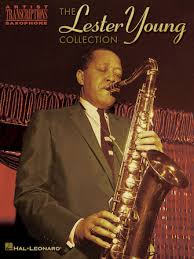
The best sheet music download from our Library.
Young's influence extended far beyond the realm of music. He was jazz's first true hipster—a fashion icon who performed in sunglasses, a linguistic innovator who coined and popularized phrases like "that's cool" and "you dig?" He was a cultural force who embodied a new kind of cool, an aesthetic that would come to define an entire generation. His life, however, was marked by profound struggles: racism, the trauma of military service, alcoholism, and the pain of watching white imitators profit from his innovations while he struggled for recognition and fair compensation.
Early Life and Musical Beginnings
Lester Young was born into a musical family. His father, Willis Handy Young, was a teacher and band leader, and his mother, Lizetta Young (née Johnson), came from Louisiana. He had two siblings: a brother, Leonidas Raymond (known as Lee Young), who would also become a professional drummer, and a sister, Irma Cornelia.
Please, subscribe to our Sheet Music Library. Sheet music should be accessible and affordable for all musicians, from professionals to absolute beginners.
The Young family moved to New Orleans, where Lester grew up in the Algiers neighborhood. From the age of five, he worked to help support the family, selling newspapers and shining shoes. Despite these hardships, music was always present. By the time he was ten years old, he had learned the basics of the trumpet, violin, and drums, and had joined the Young Family Band, touring with carnivals and playing in cities across the Southwest.
Young's early musical influences were diverse and would shape his unique approach to the saxophone. He admired Louis Armstrong, the great cornetist and trumpeter; Bix Beiderbecke, the lyrical cornetist; Jimmy Dorsey, the versatile saxophonist and clarinetist; and Frankie Trumbauer, a C-melody saxophonist who would become Young's most important early influence. Young later often said that his distinctive sound was the result of his attempt to imitate on his tenor saxophone the lighter, more delicate timbre of Trumbauer's C-melody saxophone.
Search your favorite sheet music in the Sheet Music Library Catalog
At age thirteen, Young began playing the saxophone and decided to concentrate on mastering the instrument. His teenage years were marked by conflict with his father, and he often left home for long periods. In 1919, the family moved to Minneapolis, Minnesota, where Young would spend much of the 1920s and where he first picked up the tenor saxophone.
The turning point came in 1927. At the age of eighteen, Young refused to tour in the Southern United States because of the Jim Crow laws that enforced racial segregation in public facilities. This act of defiance led him to leave the family band permanently. He joined the Bostonians, a band led by Art Bronson, and made the crucial decision to choose the tenor saxophone over the alto as his primary instrument.
For the next several years, Young moved between bands, developing his craft and his distinctive voice. In 1929, he briefly returned to his father's orchestra. He played with Eddie Barefield's band in 1931 and with Walter Page's Blue Devils from 1932 to 1933. He also played briefly with Bennie Moten and King Oliver in 1933. These years of apprenticeship, moving through the vibrant Kansas City jazz scene, were essential in shaping the musician he would become.
The Count Basie Years: A Star Is Born
In 1934, Young joined Count Basie's orchestra for the first time. However, he soon left to replace Coleman Hawkins in Fletcher Henderson's orchestra. This proved to be a difficult experience. Hawkins was the dominant tenor saxophonist of the day, known for his forceful, heavy tone and aggressive style. Henderson's sidemen expected Young to emulate Hawkins's approach, but Young's laid-back, lighter sound did not fit their expectations. His playing "angered Henderson's sidemen, resulting in Pres not lasting long."
After a tour with Andy Kirk and several brief jobs, Young returned to Basie in 1936, just in time to star with the band as they headed East. This was the beginning of a golden era. Young made history during his years with Basie, participating not only in Count's record dates but also starring with Billie Holiday and Teddy Wilson on a series of classic small-group sessions.
Young's playing in the Basie band was characterized by a relaxed style that contrasted sharply with the more forceful approach of Coleman Hawkins. His tone was a striking departure from the accepted full-bodied, dark, heavy variety with its quick vibrato. Instead, Young's tone was "light in weight, colour, and texture, with a slow vibrato." His improvisations had a swinging, rhythmic feeling that was "far more relaxed and graceful than that usually heard in the work of others during the 1930s." His lines were "streamlined, logical, and refreshingly melodic."
The nickname "Pres" (or "Prez") came from Billie Holiday, who called him the "president of the tenor saxophonists." It was a title that stuck and perfectly captured his status in the jazz world. Young was not just a great player; he was the standard by which others would be measured.
Musical Style and Harmonic Innovation
Lester Young's musical style represented a fundamental shift in jazz improvisation. He "fundamentally changed the way the saxophone was played—his long, flowing lines brought new levels of expressiveness and subtlety to the jazz language, setting the standard for all modern players."
The Sound
Young's tone was revolutionary. In contrast to the hard-driving, robust sound of his contemporaries, Young played with "a relaxed, cool tone" that floated over the music. Critics described his style as "free-floating, wheeling and diving like a gull, banking with low, funky riffs that pleased dancers and listeners alike." This lightness of tone was not a limitation but a choice—a conscious rejection of the dominant aesthetic in favor of something more subtle, more lyrical, and ultimately more expressive.
Harmonic Sophistication
Young used "sophisticated harmonies" in his playing. He was not just playing melodies; he was reharmonizing standards, finding unexpected chord substitutions, and creating new harmonic pathways in his improvisations. This harmonic sophistication was one of the key elements that made his playing so influential, particularly on the emerging bebop movement.
Charlie Parker, the architect of bebop, was deeply influenced by Young. Parker took Young's harmonic innovations and extended them even further, but the foundation was laid by "Pres." As one historian notes, Young was "the greatest improviser between Coleman Hawkins and Louis Armstrong of the 1920s and Charlie Parker in the 1940s."
Rhythmic Approach
Young's sense of rhythm was also groundbreaking. He played "behind the beat," creating a sense of relaxed swing that was entirely different from the more driving rhythmic feel of his peers. This approach to rhythm—floating over bar lines rather than being anchored to them—became a hallmark of the cool jazz style that would emerge in the 1950s.
The "Cool" Aesthetic
Young's musical style was inseparable from his personal style. He was "jazz's first hipster." He performed in sunglasses, wore distinctive clothes, and created his own vocabulary. He is credited with inventing or popularizing much of the hipster jargon that became associated with jazz, including phrases like "that's cool" and "you dig?"
This cool aesthetic—both musical and personal—had a profound impact on American culture. As one commentator observes, "Lester Young and Billie Holiday were musical soulmates who together invented cool as an aesthetic mode of music."
The Clarinet Recordings
While Young is primarily remembered as a tenor saxophonist, he also played clarinet, and his recordings on this instrument are among the most fascinating in his catalog. On his rare clarinet recordings with Basie and the Kansas City Six, Young "displayed a very original cool sound that almost sounded like altoist Paul Desmond in the 1950s."
These clarinet recordings show another dimension of Young's genius. The lighter, more agile instrument seemed to bring out an even more delicate and lyrical side of his playing, anticipating the cool jazz sound that would emerge years later.
Best Songs and Compositions
Lester Young's discography is vast, spanning from his early days with Count Basie to his later recordings for Verve. Some of his most celebrated performances and compositions include:
"Lester Leaps In"
One of Young's most famous compositions, "Lester Leaps In" is a showcase for his improvisational genius. The tune is built on the chord changes of "I Got Rhythm" and features Young's signature floating lines and relaxed swing.
"Jumpin' with Symphony Sid"
This is "one of Young's best-known compositions" and "abounds with good humor and his own funky feel for the blues." The tune was named after Symphony Sid Torin, a famous jazz radio disc jockey, and became a standard in the jazz repertoire.
"Taxi War Dance"
This Basie-era classic is one of Young's best-known performances. It features the kind of relaxed, melodic playing that made him famous.
"D.B. Blues"
Another of Young's signature compositions, "D.B. Blues" shows his deep connection to the blues tradition.
"Oh, Lady Be Good!"
Young helped make this George Gershwin tune a standard while with Basie. His recording of the song is a masterclass in melodic improvisation.
Ballad Interpretations
Young recorded a string of "concise but memorable ballad renditions" including "On the Sunny Side of the Street," "Almost Like Being in Love," "I Can't Give You Anything But Love," "There Will Never Be Another You," and "I'm Confessin'." These recordings show Young's ability to bring emotional depth and subtlety to the most familiar material.
"Ad Lib Blues"
This track from his session with the Oscar Peterson Trio is a beautiful example of Young's later style. The relaxed, conversational quality of the playing shows a musician who had nothing to prove and everything to share.
Film Appearances
Lester Young appeared in one of the most important jazz films ever made: Jammin' the Blues (1944).
Jammin' the Blues (1944)
This short film, directed by Gjon Mili and produced by Norman Granz (the founder of Verve Records), was a groundbreaking achievement. It was one of the first films to treat jazz musicians with the seriousness and artistry they deserved. Rather than presenting jazz as a novelty or a backdrop, the film captured the spontaneity and creativity of a jam session.
The film featured an all-star lineup of musicians, including Young on tenor saxophone, along with drummer Jo Jones, trumpeter Harry "Sweets" Edison, and fellow tenor saxophonist Illinois Jacquet. In the film, "Lester Young becomes a moody, film noir figure wreathed in cigarette smoke."
The film includes performances of "Midnight Symphony," "On the Sunny Side of the Street" (sung by Marie Bryant), and "Jammin' the Blues." It remains "one of few film records of black jazzers of the day."
Legacy in Film: 'Round Midnight
Young's influence extended to one of the most acclaimed jazz films ever made. Bertrand Tavernier's 1986 film 'Round Midnight is "based on the life of the saxophonist Lester Young." The protagonist, Dale Turner, is played by the great bebop artist Dexter Gordon, and his character is largely based on Young.
The film captures the struggles and triumphs of an American jazz musician living in Paris, and its soundtrack features music by Thelonious Monk and Bud Powell, among others. Young's legacy in cinema is thus twofold: he appears in one of the great jazz films of the 1940s, and his life inspired one of the great jazz films of the 1980s.
Collaborations with Other Musicians
Lester Young collaborated with some of the most important musicians in jazz history.
Billie Holiday
Young's collaborations with Billie Holiday are legendary. They recorded together in a series of studio sessions from 1937 to 1941. The musical rapport between the two was extraordinary. Holiday's phrasing and emotional depth found a perfect counterpart in Young's floating, lyrical lines. Together, they "invented cool as an aesthetic mode of music."
Their recordings together are among the most beloved in jazz history. The way they seemed to breathe together, to anticipate each other's moves, created a kind of musical intimacy that has rarely been matched.
Count Basie
Young's association with Count Basie was the foundation of his career. From 1936 to 1940, he was the star soloist in Basie's orchestra, and their recordings together are classics of the swing era.
The Oscar Peterson Trio
In 1952, Young recorded with Oscar Peterson's trio, featuring Ray Brown on bass and Barney Kessel on guitar, plus drummer J.C. Heard. The resulting album, Lester Young with the Oscar Peterson Trio, is one of his finest later recordings. The relaxed, conversational quality of the session shows Young at his most comfortable and creative.
Nat "King" Cole
Young recorded with Nat "King" Cole in June 1942, and they collaborated several more times over the years. These sessions show Young adapting his style to a smaller group setting.
Buddy Rich
Young recorded with drummer Buddy Rich and Nat "King" Cole in a trio setting in 1946. The combination of Young's lyrical saxophone, Cole's elegant piano, and Rich's powerful drumming created a unique sound.
Slam Stewart
Young recorded a memorable quartet session with bassist Slam Stewart in 1944. Stewart's bowed bass and Young's tenor saxophone created a beautiful, singing sound.
Other Collaborations
Young also performed and recorded with Teddy Wilson, Harry "Sweets" Edison, Roy Eldridge, and many others. His ability to adapt his style to different contexts—from big bands to small groups, from swing to bebop—was one of his greatest strengths.
Military Service and Its Aftermath
In 1944, at the height of his fame, Lester Young was drafted into the U.S. Army. This proved to be a devastating experience that would affect him for the rest of his life.
Young's experiences dealing with racism in the military were "horrifying, affecting his mental state of mind for the remainder of his life." He was court-martialed for using marijuana and spent several months in a military prison in Georgia. The racism he experienced before and during the war created "deep emotional distress, which was exacerbated by the breakup of his first two marriages to white women."
When he was released at the end of 1945, he resumed playing, recording, and touring. But he was never the same. The trauma of his military experience "built a wall between himself and the outside world."
The Later Years
Many critics have written that Lester Young never sounded as good after getting out of the military. However, this is not entirely accurate. Despite erratic health, Young "actually was at his prime in the mid- to late-'40s." His recordings from this period, particularly for the Aladdin label, show a musician of extraordinary depth and emotional range.
Young toured with Norman Granz's Jazz at the Philharmonic on and off through the 1940s and 1950s. He also "adopted his style well to bebop (which he had helped pave the way for in the 1930s)." His ability to remain relevant as jazz evolved is a testament to the fundamental modernity of his approach.
However, the later years were also marked by struggle. Young was "bothered by the fact that some of his white imitators were making much more money than he was." He drank heavily, and his health deteriorated. His recordings in the 1950s, while often excellent, showed "a greater emotional depth than in his earlier days"—a depth born of suffering.
In 1958, Young recorded his last album, Laughin' to Keep from Cryin', with Roy Eldridge and Harry Edison. The title says everything about the tragic irony of his later years.
Young died on March 15, 1959, at the Hotel Alvin in New York City, at the age of 49. The cause was complications from alcoholism. His death marked the end of an era, but his music would live on.
Influence and Legacy
Lester Young's influence on jazz and American culture is almost impossible to overstate.
Influence on Saxophonists
Young's impact on the saxophone was profound. He "fundamentally changed the way the saxophone was played." His light tone, melodic phrasing, and relaxed rhythmic feel created a new template for jazz improvisation.
The impact of his style was so broad that he "has been cited as a favourite by such diverse modern jazz figures as Charlie Parker, Stan Getz, and John Coltrane." Each of these musicians took something different from Young's playing, but all acknowledged his importance.
Much of the West Coast "cool" style "was a direct product of Lester Young's approach, many saxophonists playing his lines note for note in their own performances." Stan Getz, in particular, was deeply influenced by Young's sound and phrasing.
Young is now regarded as one of the most respected saxophonists in jazz history, "along with John Coltrane, Sonny Rollins and Stan Getz."
Influence on Jazz Language
Young's influence extended beyond the saxophone. His "long, flowing lines brought new levels of expressiveness and subtlety to the jazz language." His harmonic innovations helped pave the way for bebop. His rhythmic approach—floating over bar lines, playing behind the beat—became a fundamental element of modern jazz.
Influence on Culture
Young was jazz's first hipster. "He performed in sunglasses and coined and popularized phrases like 'that's cool' and 'you dig?'" He "influenced everyone from B. B. King to Stan Getz to Allen Ginsberg." His influence on American culture, from music to fashion to language, was profound.
As the Smithsonian Institution notes, Young is now recognized as a figure who defined what it meant to be "hip and cool." "His musicianship set the standard for modern jazz and his recording legacy continues to inspire generations of saxophonists influenced by his playing style."
Recognition
In 2022, the Smithsonian Institution accepted artifacts from Young's life, recognizing his importance to American cultural history. This official recognition is a testament to Young's enduring significance.
Discography Highlights
Lester Young recorded for many labels throughout his career. Key recordings include:
- The Complete Decca Recordings (1937–39)
- Super Chief (1936–1940) with Count Basie
- The Kansas City Sessions (1938 and 1944) on Commodore Records
- The Master's Touch (1944) on Savoy Records
- The Complete Aladdin Recordings (1942–1947)
- Lester Young Trio (1946) with Nat King Cole and Buddy Rich
- The Complete Savoy Recordings (1944–1950)
- One Night Stand - The Town Hall Concert 1947
- Lester Young with the Oscar Peterson Trio (1952)
- Live at Birdland (1953)
- Pres and Teddy (1956)
- The Jazz Giants '56 (1956)
- The Complete Lester Young Studio Sessions on Verve (an 8-CD boxed set that includes the only two Young interviews in existence)
- Lester Young in Washington, D.C., 1956 (5 volumes)
- Going for Myself (1957–1958), released posthumously
Lester Young was a revolutionary figure in jazz history. His light, floating tone, his sophisticated harmonies, and his relaxed, graceful rhythmic feel transformed the way the saxophone was played and set the stage for modern jazz.
But Young was more than just a great musician. He was a cultural icon—jazz's first hipster, a fashion innovator, a linguistic pioneer. He embodied a new kind of cool that would influence music, fashion, and language for generations to come.
His life was marked by triumph and tragedy. He rose from humble beginnings to become the "President of the Tenor Saxophone." He created some of the most beautiful music in the jazz canon. But he also faced racism, the trauma of military service, and the pain of watching others profit from his innovations. He died at the age of 49, a victim of alcoholism and a broken spirit.
Yet his music endures. His recordings continue to inspire and delight listeners. His influence can be heard in the playing of every saxophonist who came after him. And his legacy as one of the great innovators of American music is secure.
As Billie Holiday said, he was the president. And like any great president, his influence extends far beyond his own time. Lester Young was, and remains, one of the true giants of jazz.
Browse in the Sheet Music Library:
Or browse in the categories menus & download the Library Catalog PDF: