Scores for all instruments: 16,000+ (active and growing), over 236,000 pages.
All genres and levels: Jazz & Blues, Rock & Pop, Classical & Contemporary, Film & Musicals;
books & biographies; methods, études, play-along tracks (MP3) for Jazz & Rock.
Access & benefits: US$15.99 one-time payment, valid for lifetime, full Library access.
Table of Contents
Who was Ligeti (1923-2006)?
Few composers of the twentieth century cast as long and unlikely a shadow as György Ligeti. Born into a Hungarian-Jewish family in Transylvania, he survived forced labor and the loss of much of his family in the Holocaust, navigated the cultural strictures of Soviet-era Hungary, and then, after fleeing to the West in 1956, remade himself as one of the most original voices of the postwar avant-garde.
Please, subscribe to our Sheet Music Library. Sheet music should be accessible and affordable for all musicians, from professionals to absolute beginners.
His name is inseparable from “micropolyphony,” from the slowly shifting sound-clouds of Atmosphères and Lux aeterna, and from the strange, terrifying beauty those works acquired when Stanley Kubrick placed them in 2001: A Space Odyssey. But Ligeti was far more than the composer of a few famous atmospheres. He was a miniaturist and a dramatist, a humorist and a mathematician of rhythm, a folk-music scholar and an electronic experimenter, a maverick who refused every orthodoxy offered him. Over six decades he produced piano miniatures of diabolical intricacy, a grotesque anti-opera, concertos of gleaming, mechanized energy, and choral works of luminous stillness.
Ligeti: From Transylvania to the Avant-Garde
The best sheet music download from our Library.
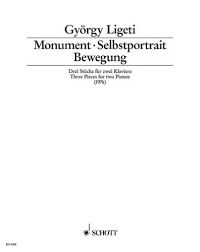
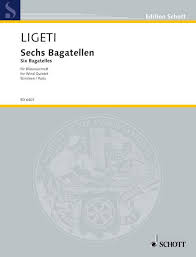
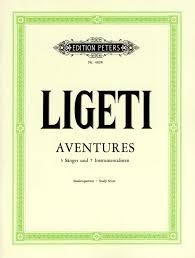


György Sándor Ligeti was born on 28 May 1923 in Dicsőszentmárton (now Târnăveni, Romania), in the Transylvania region, to Hungarian-Jewish parents. He grew up in Cluj (Kolozsvár), where he attended secondary school and began studying composition at the conservatory with Ferenc Farkas from 1941 to 1943. Music was in the family: his great-uncle was the legendary violinist Leopold Auer, and the young Ligeti absorbed a broad range of influences, from Bartók and Kodály to the folk music of Romania and Hungary that surrounded him.
The Second World War shattered this world. As a Jew under the Horthy regime, Ligeti was conscripted into a forced labor brigade in 1944; most of the rest of his family was deported and murdered in concentration camps. He survived, and after the war resumed his studies at the Franz Liszt Academy in Budapest from 1945 to 1949, working with Sándor Veress and Ferenc Farkas. He graduated in 1949 and was appointed to the Academy’s faculty in 1950, teaching harmony, counterpoint, and formal analysis.
Search your favorite sheet music in the Sheet Music Library Catalog
These Budapest years were professionally secure but artistically constrained. Under the dictates of socialist realism, Ligeti composed folk-influenced works in the manner of Bartók and Kodály for public consumption, while privately writing more adventurous, dissonant pieces “for the desk drawer”. The First String Quartet, Métamorphoses nocturnes (1953–54), belongs to this hidden repertoire; it shows the influence of Bartók and Berg and already hints at the textural preoccupations that would define his later music. The piano cycle Musica ricercata (1951–53) is another product of this period, a set of eleven studies that build entire pieces from remarkably restricted pitch material—the first uses only two pitches, the second three, and so on—demonstrating an early fascination with constructive limits.
The turning point came in 1956. During the Hungarian Revolution, Ligeti escaped on foot to Austria, a dramatic flight that severed him from his Hungarian career and plunged him into the ferment of the West European avant-garde. He settled first in Vienna and then moved to Cologne, where he worked at the electronic music studio of West German Radio (WDR) from 1957 to 1959. There he met Karlheinz Stockhausen, Gottfried Michael Koenig, Pierre Boulez, Luciano Berio, and Mauricio Kagel, and he composed the electronic tape piece Artikulation (1958) in collaboration with Koenig and, in part, Cornelius Cardew. The experience of working directly with sound material—splicing tape, shaping noise, building textures from the inside out—would leave a permanent mark on his instrumental writing.
Ligeti’s international breakthrough came with Apparitions (1958–59), premiered in 1960, which introduced orchestral clusters and the technique he would later call micropolyphony. It was followed by the works that made his name: Atmosphères (1961), Volumina for organ (1962–66), Aventures and Nouvelles Aventures (1962–65), Requiem (1963–65), Lux aeterna (1966), and Lontano (1967). During the 1960s he was a regular at the Darmstadt Summer Courses (1959–1972) and taught in Stockholm as a visiting professor (1961–1971). A DAAD fellowship took him to Berlin in 1969–70, and in 1972 he was composer-in-residence at Stanford University. In 1973 he accepted a permanent position at the Hochschule für Musik in Hamburg, where he taught composition until 1989, and he became an Austrian citizen in 1967.
The later decades of Ligeti’s life saw a remarkable stylistic evolution. After the dense textures of the 1960s, his music became more melodic and transparent in the 1970s, as heard in Melodien (1971) and, most spectacularly, in his only opera, Le Grand Macabre (1974–77, revised 1996), premiered in Stockholm in 1978. From the 1980s onward he turned to complex mechanical rhythms, displaced tonal triads, and poly-modal structures, producing the three books of Études for piano (1985–2001), the Piano Concerto (1985–88), the Violin Concerto (1990–93), and the Hamburg Concerto for horn (1999). He received numerous honors, including the Berliner Kunstpreis, the Bach Prize of Hamburg, and the Praemium Imperiale. Dogged by ill health in his final years, he died in Vienna on 12 June 2006, at the age of 83.
Musical Style and Technique: From Clusters to Micropolyphony
Ligeti’s mature style is best understood as a series of solutions to a single problem: how to compose music that is richly polyphonic yet perceived as a single, evolving mass. His answer was micropolyphony, a technique in which many closely spaced instrumental or vocal lines move independently at different speeds, creating a dense, shimmering web in which individual melodies are no longer distinguishable. The result is not a chord or a cluster in the conventional sense but a process—a sound-surface that drifts, thickens, thins, and transforms with a sense of continuous, almost geological motion.
The origins of this technique lie in Ligeti’s study of Renaissance and Baroque polyphony, particularly the music of Ockeghem and Bach, as well as in the canonic procedures he adapted from those traditions. In works such as Lux aeterna and Lontano, the micropolyphonic web is generated by strict canons: a line is imitated at different speeds and intervals, and the resulting simultaneities are so dense that the ear hears not individual voices but a slowly changing harmonic color. Ligeti himself preferred the term “saturated polyphony” to micropolyphony, emphasizing the fullness of the texture rather than its miniature scale. He abandoned the technique around the end of the 1960s, judging that he had exhausted its possibilities, but its influence on his later rhythmic and harmonic thinking remained profound.
Crucially, micropolyphony is tied to Ligeti’s radical approach to musical time. In the 1960s he became fascinated by processes that unfold too slowly to be perceived as events, and by mechanical or automatic processes that generate rhythmic patterns beyond human control. The extreme case is Poème Symphonique for 100 metronomes (1962), in which a hundred ticking machines are set going at different speeds; the resulting forest of pulses gradually thins as the metronomes run down, creating a form that is at once utterly mechanical and strangely organic. This interest in mechanical rhythm, inspired in part by Conlon Nancarrow’s Studies for Player Piano, would return with a vengeance in the Études and concertos of the 1980s and 1990s, where ferociously complex cross-rhythms and irrational meters create a sense of dizzying, machine-like energy.
Ligeti’s music is also marked by a distinctive theatricality and humor. Works such as Aventures and Nouvelles Aventures are “absurdist” pieces for singers and small ensemble in which invented languages, exaggerated gestures, and the smashing of a tea service replace conventional narrative. Le Grand Macabre, which he called an “anti-anti-opera,” is a grotesque parable of death and excess, drawing on the theatre of the absurd, the medieval dance of death, and carnival imagery. Even in ostensibly abstract instrumental works, there is often an ironic distance, a sense of play with historical forms and stylistic fragments—what one scholar has called a fusion of “rigour and sensuality, tradition and the new,” held together by “a certain critical and ironic distance”.
Harmony and Pitch Organization
Ligeti’s harmonic language is notoriously difficult to reduce to a system, and that is precisely the point. He was neither a serialist nor a tonal composer, and he rejected the dogmatism of the Darmstadt school even as he was deeply entangled with it in the late 1950s and 1960s. His harmony is best described as intervallic rather than functional: instead of building chords from stacked thirds or organizing pitches around a tonic, he works with recurring intervallic cells—minor thirds, major seconds, perfect fourths—that act as harmonic “cores” around which textures crystallize.
In the micropolyphonic works, harmony emerges from the interaction of canonic lines. The simultaneous sounding of many closely spaced intervals produces complex, beating sonorities that hover between consonance and dissonance; the ear perceives a slowly shifting harmonic field rather than a succession of chords. In later works, Ligeti reincorporated tonal materials in a characteristically distorted way. He became interested in “displaced” major and minor triads, poly-modal structures, and the friction between equal-tempered instruments and the natural harmonics of horns and strings. The Hamburg Concerto is a striking example: the solo horn and a quartet of natural horns produce “dirty” harmonies when their just-intonation harmonics collide with the equal-tempered orchestra, creating intervals that are neither conventionally consonant nor conventionally dissonant but exist in a kind of shimmering intermediate zone.
Ligeti also explored microtonal deviations from equal temperament, notated in cents, particularly in works involving natural horns and in some of the later piano music. His harmonic thinking is thus plural and pragmatic: clusters, canonic intervallic fields, displaced triads, natural harmonics, and microtonal inflections all coexist in a single compositional universe, united less by a fixed system than by a consistent attitude toward sound as a malleable, physical phenomenon.
The Major Works: A Survey
See also on Wikipedia: List of compositions by György Ligeti
Ligeti’s catalogue is large and varied, but a number of works stand as landmarks. The orchestral Apparitions (1958–59) announced his mature style and introduced orchestral clusters and micropolyphony to the European avant-garde, laying the foundation of his international reputation. Atmosphères (1961), perhaps his most famous orchestral piece, is a seventeen-minute study in slowly evolving texture, with no discernible melody or beat; it became globally known through its use in 2001: A Space Odyssey. Lontano (1967) continues this line of exploration, building vast canonic textures that seem to recede into the distance like a landscape in fog.
The Requiem (1963–65) is a large-scale choral-orchestral work of extraordinary power, setting the Latin Mass for soloists, chorus, and orchestra. Its Kyrie is a monumental exercise in micropolyphonic canon, while the Dies irae unleashes terrifying brass and percussion; the work is at once a sacred ritual and a dark, modern meditation on death. Lux aeterna (1966) for sixteen solo voices is a luminous, unaccompanied setting of the text from the Requiem Mass, its micropolyphonic web creating an effect of timeless, suspended light. It is one of the most ethereal pieces in the twentieth-century choral repertoire.
For organ, Volumina (1962–66) is a radical graphic-score work that demands the use of palms and elbows to produce moving clusters, and even requires turning the motor on and off during performance; its first recording attempt famously ended with the organ catching fire, earning Ligeti an undeserved reputation as “the destroyer of organs”. Continuum (1968) for harpsichord is a relentless prestissimo piece, only about four minutes long but technically and aurally intense, written for the harpsichordist Antoinette Vischer. The Second String Quartet (1968) and the Chamber Concerto (1969–70) are dense, virtuosic works that push micropolyphony and mechanical rhythm to new extremes.
In the 1970s, Melodien (1971) marked a turn toward greater melodic transparency, and Le Grand Macabre (1974–77) stands as his only opera—a masterpiece of the absurd that has been staged widely, from Stockholm and Hamburg to London and Paris. The 1980s and 1990s produced the Trio for Violin, Horn, and Piano (1982), the Piano Concerto (1985–88), the Violin Concerto (1990–93), and the Hamburg Concerto (1999). The three books of Études for piano (1985–2001) are a summation of his late style: eighteen studies of diabolical rhythmic complexity, each exploring a different mechanical or perceptual problem, and together constituting one of the most important bodies of piano music written after Debussy and Bartók. The Piano Concerto and Violin Concerto are dazzling, coloristic works that combine intricate cross-rhythms with strange, displaced harmonies and moments of eerie lyricism.
Ligeti in Film: Kubrick and Beyond
Ligeti’s music reached an enormous popular audience through the films of Stanley Kubrick, though the relationship was fraught. Kubrick used excerpts from Atmosphères, the Requiem, and Lux aeterna in 2001: A Space Odyssey (1968), without what Ligeti regarded as proper authorization; the composer apparently never sanctioned the use of his music in the film. Nevertheless, the association proved indelible. The slow, alien drift of Atmosphères and the terrifying choral clusters of the Requiem became, for many listeners, the sound of deep space and of the inhuman sublime.
Kubrick returned to Ligeti in later films. Lontano (1967) was used in The Shining (1980), its shimmering, unstable textures perfectly suited to the film’s atmosphere of mounting dread. The second movement of Musica ricercata appeared in Eyes Wide Shut (1999), a sinister, obsessive piano miniature that underscores the film’s ritualistic and dreamlike qualities. Ligeti’s music has also been used in numerous other films and television programs beyond Kubrick, and its influence on film scoring—particularly in the use of texture and cluster as a means of generating atmosphere and unease—is difficult to overstate.
Collaborations and Musical Relationships
Ligeti was not a collaborative composer in the manner of a jazz musician or a rock bandleader, but he maintained important working relationships with performers, conductors, and institutions. In Cologne in the late 1950s he worked closely with Gottfried Michael Koenig and, in part, Cornelius Cardew on the realization of Artikulation, and he absorbed the ideas of Stockhausen, Boulez, Berio, and Kagel even as he resisted their dogmas. The conductor Friedrich Cerha and his ensemble die reihe gave premieres of Aventures (1962) and the Chamber Concerto (1969–70), with Cerha’s wife and artistic partner Gertraud at the harpsichord; these performances helped establish Ligeti in Vienna’s new-music scene.
The harpsichordist Antoinette Vischer commissioned Continuum in 1968, and the unpublished correspondence between composer and performer documents a fascinating negotiation over the modern identity of the harpsichord as “some sort of machine”. In later years, Ligeti’s music found devoted interpreters in pianist Pierre-Laurent Aimard, who recorded much of the piano music and worked closely with the composer, as well as in the Berlin Philharmonic, the Schönberg Ensemble, the Asko Ensemble, and conductors such as Reinbert de Leeuw and Elgar Howarth. The Ligeti Project, a major recording enterprise, documented much of his output with these and other artists. His son, Lukas Ligeti, became a composer and percussionist based in New York, working across experimental, jazz, and African-influenced idioms and collaborating with musicians such as John Zorn, Gary Lucas, and the Kronos Quartet—a different kind of Ligeti legacy, but one that extends the family’s commitment to boundary-crossing music.
Influences and Legacy
Ligeti’s influences were eclectic and often surprising. He drew on Bartók and Kodály, on Renaissance and Baroque polyphony, on the folk music of Romania and Hungary, on non-Western musics (Caribbean, central African, and East Asian), on non-standard tunings, on the visual art of M. C. Escher, on cartoons and comics, and on scientific ideas about order and chaos, clocks and clouds. He was deeply marked by Conlon Nancarrow’s player-piano studies, which showed how rhythmic processes could be layered beyond the limits of human performance, and he admired the late music of Franz Schubert as a kind of musical ideal. Although he was often grouped with the Darmstadt avant-garde, he remained an outsider to its doctrinal disputes, describing himself as someone who “set out to do something new in each piece” while remaining “always the same composer”.
His legacy is correspondingly broad. He is widely regarded as one of the most important and innovative composers of the second half of the twentieth century, and his music has found a permanent place in the canon of Western art music. His influence extends to spectralism—composers such as Gérard Grisey, Tristan Murail, and Claude Vivier have acknowledged his example—and to the American minimalists, who drew on his textural procedures even as they pursued different rhythmic and harmonic goals. British composers such as George Benjamin were marked by Ligeti from an early age, and his micropolyphonic and mechanical-rhythmic techniques have been taken up by figures as diverse as Kaija Saariaho and Helmut Lachenmann. His piano Études have become a cornerstone of the modern virtuoso repertoire, and his orchestral works remain staples of concert programs worldwide.
Beyond specific techniques, Ligeti’s legacy is a model of artistic independence. He refused to belong to any school, rejected the ideological certainties of both socialist realism and serialist orthodoxy, and insisted on following his own perceptual and imaginative curiosities wherever they led—from the ticking of a hundred metronomes to the shimmering canons of Lux aeterna, from the grotesque comedy of Le Grand Macabre to the diabolical clockwork of the Études. In an age of increasing specialization, he remained a generalist of the musical imagination, and that is perhaps the most enduring lesson of his work.
Additional Perspectives of Ligeti
Several aspects of Ligeti’s career deserve further emphasis. His early years in Hungary, though constrained, were not merely a period of apprenticeship; the Musica ricercata and the First String Quartet contain the seeds of ideas—constructive limitation, folk inflection, textural experimentation—that he would develop in radically different forms later. His electronic work at the WDR studio, especially Artikulation, is a crucial link between his instrumental textures and his later interest in mechanical and perceptual processes; the piece was conceived as an articulated artificial language, and its montage of phoneme-like sounds anticipates the invented vocal languages of Aventures and Nouvelles Aventures.
His teaching career, at the Budapest Academy in the 1950s and later at the Hamburg Hochschule from 1973 to 1989, influenced generations of composers, even if Ligeti himself was skeptical of pedagogical systems. His writings and interviews are full of penetrating observations about music, perception, and culture, and they reveal a mind equally at home with mathematics, literature, and the visual arts. The image of Ligeti that emerges from these sources is not that of a puritanical modernist but of a sensualist and a skeptic, a composer who loved the sound of clocks and clouds, machines and voices, order and chaos, and who found in their collisions a music of inexhaustible strangeness.
In sum, György Ligeti’s life and work constitute one of the great artistic journeys of the twentieth century. From the forced labor camps of wartime Hungary to the electronic studios of Cologne, from the dense canons of Lux aeterna to the wild carnival of Le Grand Macabre, he continually reinvented his language without ever losing his distinctive voice. His music remains alive because it is at once rigorously constructed and sensuously immediate, intellectually ambitious and emotionally unsettling. It is music that does not console or reassure, but it rewards attention with a sense of wonder—the wonder of hearing sound itself become a living, transforming substance.
Ligeti - Musica ricercata (with sheet music)
Browse in the Sheet Music Library:
Or browse in the categories menus & download the Library Catalog PDF: