Scores for all instruments: 16,000+ (active and growing), over 236,000 pages.
All genres and levels: Jazz & Blues, Rock & Pop, Classical & Contemporary, Film & Musicals;
books & biographies; methods, études, play-along tracks (MP3) for Jazz & Rock.
Access & benefits: US$15.99 one-time payment, valid for lifetime, full Library access.
Table of Contents
Remembering Michael Brecker (1949-2007)
Michael Brecker: The Titan of the Tenor Saxophone
Michael Leonard Brecker (March 29, 1949 – January 13, 2007) stands as a colossus in the landscape of modern music. Widely regarded as the most influential and imitated tenor saxophonist since John Coltrane, Brecker was a musician of staggering versatility. He was equally at home in the avant-garde, the crucible of jazz fusion, the sophisticated arrangements of pop icons, and the intimate setting of an acoustic jazz quartet. Over a career that spanned nearly four decades, he participated in more than 900 recordings, a testament to his insatiable appetite for creation and his unparalleled command of his instrument. His sound—a powerful, focused tone that could cut through a rock mix or caress a ballad with breathy tenderness—became a defining voice of the late 20th century.
The best sheet music download from our Library.
For the price of a single songbook, get a full Sheet Music Library!
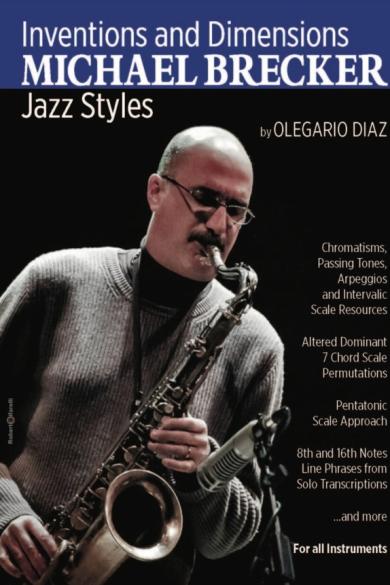
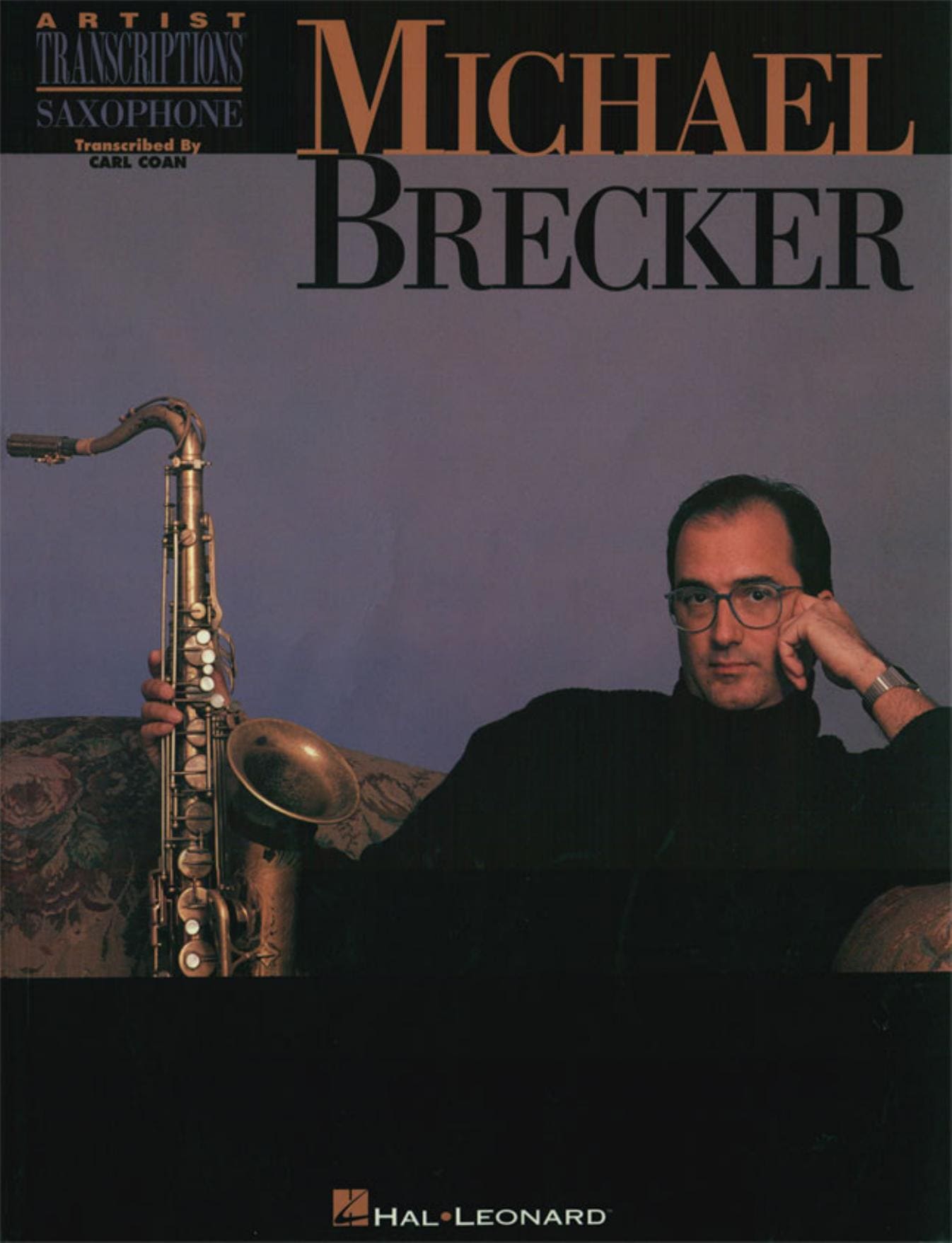
Biography: From Philadelphia to the World Stage
Born in Philadelphia into a musical household, Michael Brecker’s path was set early. His father, a lawyer and amateur jazz pianist, filled the home with the sounds of jazz and took Michael and his older brother, trumpeter Randy Brecker, to see legends like Miles Davis, Thelonious Monk, and Duke Ellington perform live. While Randy gravitated to the trumpet, Michael began on clarinet before switching to alto saxophone and finally settling on the tenor saxophone in high school, profoundly moved by the genius of John Coltrane.
After a brief stint at Indiana University, Brecker moved to New York City in 1969, quickly immersing himself in the city’s vibrant music scene. His first major exposure came with the pioneering jazz-rock band Dreams in 1970, a group he co-founded with his brother and drummer Billy Cobham. This was followed by a pivotal stint in Horace Silver’s quintet, a proving ground for his burgeoning talents. In 1975, Michael and Randy joined forces to form the Brecker Brothers, a band that became one of the most innovative and successful jazz-funk fusion groups of the decade. Their self-owned club, Seventh Avenue South, became a hub for the New York scene and incubator for the all-star fusion group Steps Ahead, which Brecker co-led with vibraphonist Mike Mainieri.
Please, subscribe to our Sheet Music Library. Sheet music should be accessible and affordable for all musicians, from professionals to absolute beginners.
While his jazz credentials were impeccable, the 1970s and 1980s saw Brecker become one of the most sought-after session musicians in the world. His discography as a sideman reads like a who’s who of popular music: Steely Dan, Paul Simon, James Taylor, Joni Mitchell, Frank Zappa, Aerosmith, Bruce Springsteen, and John Lennon all benefited from his distinctive horn lines. He cut his first album as a leader in 1987, the eponymously titled Michael Brecker, which was voted "Jazz Album of the Year" by Downbeat and Jazziz. This began a prolific solo career that would produce a string of critically acclaimed and Grammy-winning albums. In 2004, Brecker was diagnosed with myelodysplastic syndrome (MDS), a rare bone marrow disorder that later progressed to leukemia. Despite a grueling search for a bone marrow donor and an experimental transplant, he passed away on January 13, 2007, at the age of 57. Remarkably, he completed his final album, Pilgrimage, just two weeks before his death.
Musical Style, Harmony, and Technique
Search your favorite sheet music in the Sheet Music Library Catalog

Michael Brecker’s style was a revolutionary synthesis. He took the harmonic and technical ambition of John Coltrane as his foundation and fused it with the rhythmic aggression of rock guitar and the soulful, direct phrasing of R&B saxophonists. As the New York Times noted, he was "above all a condenser of exciting devices into short spaces," able to fold the full pitch range of the horn—from a visceral altissimo to a growling low B-flat—into a concise, gripping solo.
His harmonic language was famously sophisticated, characterized by a deep exploration of chromaticism. Analytical studies of his improvisations highlight his use of melodic devices based on diminished, altered, pentatonic, and augmented scales. A signature element of his vocabulary was the superimposition of "Giant Steps" chord progressions—complex, rapidly modulating cycles—over the underlying harmony of a piece, a technique that created a sense of dizzying, forward-leaning momentum. He also mastered the art of "side-slipping," using pentatonic scale patterns to temporarily step outside the background harmony, transforming a usually consonant scale into a device for chromatic dissonance and tension.
Technically, Brecker was a pioneer. He possessed a formidable command of the altissimo register, which he used not merely for show but as an integral part of his melodic contour and motivic development. He was also a master of multiphonics—the production of multiple simultaneous notes on the saxophone—which he integrated into his improvisations with a fluency that was unprecedented. Beyond the acoustic horn, Brecker was an early adopter and innovator of the Electronic Wind Instrument (EWI). He began recording with the instrument in the mid-1980s with Steps Ahead and featured it prominently on his solo debut. The EWI allowed him to trigger synthesizers and sampled sounds with the breath and fingering of a saxophonist, expanding his sonic palette into the digital realm.
Listen to Michael Brecker music on Spotify
The Best Songs and Compositions
Brecker’s compositional output, though less voluminous than his playing, reveals a writer of sophisticated harmony and memorable melody. His solo albums are essential listening. From his debut, “Syzygy” stands as a fiery, intricate showcase of his harmonic concept. “Itsbynne Reel” (co-written with Don Grolnick) is a quirky, endlessly inventive tune that has become a modern jazz standard. The ballad “The Cost of Living” and the through-composed “Nothing Personal” (from Don’t Try This at Home) demonstrate his lyrical depth and structural ingenuity.
With the Brecker Brothers, the anthemic “Some Skunk Funk” became a fusion classic, a vehicle for the brothers’ tightly interlocking, high-energy improvisations. In Steps Ahead, his compositions like “Safari” and “Both Sides of the Coin” helped define the polished, intelligent sound of 1980s fusion. His final album, Pilgrimage, is a profound capstone. Composed entirely of his originals, it features the moving “Anagram” , a track that earned him a posthumous Grammy for Best Jazz Instrumental Solo. The solo is a stunning, packed exploration of ideas, described as "busy without feeling crowded". Other highlights from that session include the title track “Pilgrimage” and the elegiac “When Can I Kiss You Again?” .
Music in Films
While not a primary film composer, Brecker’s unmistakable sound graced several soundtracks. His most prominent contribution is to the 1986 erotic drama 9½ Weeks. He performs the saxophone solo on the film’s theme song, “I Do What I Do,” adding a layer of smoky, late-night sophistication to the track. He was also a member of the all-star studio band assembled by Quincy Jones for the 1978 film adaptation of The Wiz, contributing woodwinds and saxophone to the soundtrack. Additionally, his music was featured in the animated children’s series Little Bill, for which he performed the theme song.
Collaborations: The Ubiquitous Sideman
The sheer breadth of Brecker’s collaborative work is staggering. In the pop and rock world, his solos are legendary. He crafted the iconic, yearning saxophone line on Paul Simon’s “Still Crazy After All These Years” and the soulful solo on James Taylor’s “Don’t Let Me Be Lonely Tonight” . His work with Steely Dan—particularly on albums like Katy Lied and Aja—is a masterclass in constructing concise, memorable solos that elevate the song. He also recorded and toured with Joni Mitchell, adding depth to her jazz-inflected period.
In the jazz world, his partnerships were equally profound. He was a crucial voice on Pat Metheny’s 80/81 and Chick Corea’s Three Quartets, albums that cemented his reputation among hardcore jazz fans. He recorded and toured extensively with Herbie Hancock (on The New Standard and the collaborative Directions in Music with Roy Hargrove) and McCoy Tyner (on Infinity). His final recording, Pilgrimage, features an all-star rhythm section of Herbie Hancock, Brad Mehldau, Pat Metheny, John Patitucci, and Jack DeJohnette—a testament to the high regard in which he was held by his peers.
Instruments
Early in his career, Brecker played a Selmer Super Balanced Action tenor saxophone, later moving to a lacquer-finished Selmer Mark VI with a silver-plated neck, fitted with a Dave Guardala MB1 mouthpiece and LaVoz medium reeds. His earlier mouthpieces included a metal Otto Link "New York" Super Tone Master (during the mid-1970s) and a metal Dukoff in the late 1970s and early 1980s.
From 1986/7 onwards he played EWI (Electronic Wind Instrument), starting with a Kyle Steiner EWI "Steinerphone", one of only a handful made. A couple of years later, he moved on to the first Akai version, the EWI1000 with built-in MIDI. By 1991, his EWI was controlling two racks of modules including a Lexicon JamMan, and an Oberheim Matrix 12 synth – this configuration is visible in the 1991 Paul Simon's Concert in the Park. Nyle Steiner continued to develop and adapt instruments for Brecker, including the 2004 Rad EWI (which is played with the hands side-by-side, rather than one above the other) and a newer in-line model, while Michael moved away from racks of sound modules to a wireless PowerBook/Logic–based system.
Brecker also played the drums as he often talked about time, or rhythm, being musically the most important. He displayed his drum prowess during shows with his own ensembles or accompanying students during masterclasses.
Awards and Recognition
Michael Brecker’s contributions were recognized with the highest honors in music. He was a prolific Grammy winner, with most sources citing 15 Grammy Awards as both a performer and composer. These include wins for Best Jazz Instrumental Album for Don’t Try This At Home (1989), Tales From The Hudson (1997), Wide Angles (2004), and posthumously for Pilgrimage (2008). His solo on “Anagram” from Pilgrimage also won for Best Jazz Instrumental Solo. He was posthumously inducted into the DownBeat Jazz Hall of Fame in 2007 and had received an honorary doctorate from the Berklee College of Music in 2004. He was also named "Jazz Man of the Year" by Japan’s Swing Journal and "Best Soloist of the Year" by JazzLife.
Influences and Legacy
Brecker’s primary influence was undeniably John Coltrane, whose spiritual intensity and harmonic daring provided the template upon which Brecker built his own language. He also drew from Wayne Shorter for his oblique melodic sense, Sonny Rollins for his rhythmic brawn, and Joe Henderson and Stanley Turrentine for their soulful, blues-drenched tonality.
His legacy is immense. He is the bridge between the jazz tradition and the modern world, a musician who proved that virtuosity and accessibility were not mutually exclusive. His sound is so pervasive that it has become a lingua franca for contemporary saxophonists. As the Jazziz magazine put it, "You'll find no better example of stylistic evolution than Michael Brecker, inarguably the most influential tenor stylist of the past 25 years". His approach is studied in music schools worldwide, and his compositions are part of the modern jazz repertoire. His life and music have been documented in the biography Ode to a Tenor Titan and the film More to Live For, which chronicles his battle with leukemia and the race to complete his final masterpiece. More than a dozen lives have been saved as a result of the bone-marrow donor drives he inspired. Michael Brecker was not just a saxophonist; he was a force of nature, a musician whose heart, intellect, and technique expanded the very possibilities of his instrument and left an indelible mark on the sound of modern music.
MICHAEL BRECKER'S "Tales from The Hudson" BAND : Live By The Sea '97
00:58 Slings And Arrows 15:46 Midnight Voyage 35:48 Song For Bilbao 50:01 Every Day I Thank You
Michael Brecker - Tenour Sax Pat Metheny - Guitar Dave Holland - Bass Jack DeJohnette - Drums Joey Calderazzo - Piano
At Tokyo Bay NK Hall, Tokyo, Japan 1997.8.23/24
Selected discography
See also onn Wikipedia: Michael Brecker discography
As leader/co-leader
- 1975: The Brecker Bros. with the Brecker Brothers
- 1976: Back to Back with the Brecker Brothers
- 1976: Don't Stop the Music with the Brecker Brothers
- 1978: Heavy Metal Be-Bop with the Brecker Brothers
- 1980: Detente with the Brecker Brothers
- 1981: Straphangin' with the Brecker Brothers
- 1982: Cityscape (Michael Brecker and Claus Ogerman) with Marcus Miller, Eddie Gómez, Steve Gadd, and Paulinho da Costa
- 1983: Steps Ahead with Mike Mainieri, Eddie Gómez, Peter Erskine, and Eliane Elias
- 1984: Modern Times with Mike Mainieri, Eddie Gómez, Peter Erskine, and Warren Bernhardt
- 1986: Magnetic with Steps Ahead – Victor Bailey, Mike Mainieri, Peter Erskine, Chuck Loeb, Kenny Kirkland, Hiram Bullock, Paul Jackson Jr., Peter Schwimmer, Mitchel Forman, and Dianne Reeves
- 1987: Michael Brecker with Pat Metheny, Kenny Kirkland, Charlie Haden, and Jack DeJohnette
- 1988: Don't Try This at Home
- 1990: Now You See It... (Now You Don't)
- 1992: Return of the Brecker Brothers with the Brecker Brothers
- 1994: Out of the Loop with the Brecker Brothers
- 1996: Tales from the Hudson with Pat Metheny, Joey Calderazzo, McCoy Tyner, Dave Holland, Jack DeJohnette, and Don Alias
- 1998: Two Blocks from the Edge with Joey Calderazzo, James Genus, Jeff "Tain" Watts, and Don Alias
- 1999: Time Is of the Essence with Larry Goldings, Pat Metheny, Elvin Jones, Jeff "Tain" Watts, and Bill Stewart
- 2001: Nearness of You: The Ballad Book with Pat Metheny, Herbie Hancock, Charlie Haden, Jack DeJohnette, James Taylor
- 2003: Wide Angles
- 2007: Some Skunk Funk with Randy Brecker
- 2007: Pilgrimage with John Patitucci, Jack DeJohnette, Pat Metheny, Herbie Hancock, and Brad Mehldau
As sideman
- 1969: Score – Randy Brecker
- 1970: Dreams – Dreams
- 1971: Air – Air
- 1971: Imagine My Surprise – Dreams
- 1971: The Guerilla Band – Hal Galper (Mainstream)
- 1972: Wild Bird – Hal Galper (Mainstream)
- 1972: Bridging a Gap – Mark Murphy (Muse)
- 1972: One Man Dog – James Taylor
- 1972: Something/Anything? – Todd Rundgren
- 1972: The Section – The Section (band)
- 1973: Berlin – Lou Reed
- 1973: A Wizard, a True Star – Todd Rundgren
- 1973: Mind Games – John Lennon
- 1973: In Pursuit of the 27th Man – Horace Silver
- 1974: Todd – Todd Rundgren
- 1974: The Chicago Theme – Hubert Laws (CTI)
- 1974: Crosswinds – Billy Cobham (Atlantic)
- 1974: Journey – Arif Mardin (Atlantic)
- 1974: Hotcakes – Carly Simon
- 1974: Walking Man – James Taylor
- 1974: Get Your Wings – Aerosmith (Columbia)
- 1974: It's Always Dark Before the Dawn – Jonah (20th Century Records)
- 1974: Waitin' for the Change – Jonah (20th Century Records)
- 1975: The Rape of El Morro – Don Sebesky (CTI)
- 1975: Good King Bad – George Benson (CTI)
- 1975: Shabazz – Billy Cobham
- 1975: A Funky Thide of Sings – Billy Cobham
- 1975: Still Crazy After All These Years – Paul Simon
- 1975: Mothership Connection – Parliament
- 1975: Born to Run – Bruce Springsteen
- 1976: At the Sound of the Bell – Pavlov's Dog
- 1976: The Main Attraction – Grant Green (Kudu)
- 1976: Tring-a-Ling – Joanne Brackeen
- 1976: End of a Rainbow – Patti Austin
- 1976: The Art of Tea – Michael Franks
- 1976: Songs for the New Depression – Bette Midler
- 1976: Ringo's Rotogravure – Ringo Starr
- 1976: Blue Moves – Elton John
- 1976: Smile – Laura Nyro
- 1976: In the Pocket – James Taylor
- 1976: Good King Bad – George Benson
- 1976: Jaco Pastorius – Jaco Pastorius
- 1976: Hear & Now – Don Cherry
- 1976: Reach Out! – Hal Galper (SteepleChase)
- 1976: Red Beans – Jimmy McGriff (Groove Merchant)
- 1977: Mel Lewis and Friends − Mel Lewis (A&M/Horizon)
- 1977: Ghost Writer – Garland Jeffreys
- 1977: Havana Candy – Patti Austin
- 1977: "Live at the Berlin Philharmonic" – Hal Galper
- 1977: Tightrope – Steve Khan
- 1977: Sleeping Gypsy – Michael Franks
- 1977: Lady Put the Light Out – Frankie Valli
- 1977: You Can't Live Without It – Jack Wilkins
- 1977: Never Letting Go – Phoebe Snow
- 1977: Ghost Writer – Garland Jeffreys
- 1977: Ringo the 4th – Ringo Starr
- 1977: You Can't Go Home Again – Chet Baker
- 1977: The Best Thing for You – Chet Baker
- 1978: Zappa in New York – Frank Zappa
- 1978: Love Explosion – Tina Turner
- 1978: The Blue Man – Steve Khan
- 1978: Phonogenic – Not Just Another Pretty Face – Melanie
- 1978: Double Fun – Robert Palmer
- 1978: Against the Grain – Phoebe Snow
- 1978: One-Eyed Jack – Garland Jeffreys
- 1978: Chaka – Chaka Khan
- 1978: Boys in the Trees – Carly Simon
- 1978: Clayton – David Clayton-Thomas
- 1978: Live at the Bottom Line – Patti Austin
- 1978: Merge – Jack Wilkins
- 1978: Cheryl Lynn – Cheryl Lynn
- 1979: Shadows and Light – Joni Mitchell with Pat Metheny, Jaco Pastorius, Lyle Mays and Don Alias
- 1979: In a Temple Garden – Yusef Lateef
- 1979: Arrows – Steve Khan
- 1979: Keep the Fire – Kenny Loggins
- 1979: Spy – Carly Simon
- 1979: Thighs and Whispers – Bette Midler
- 1979: In Out and Around – Mike Nock Quartet with Mike Nock (p), Michael Brecker (ts) and Al Foster (d)
- 1979: Fate for Breakfast – Art Garfunkel
- 1979: Casiopea – Casiopea
- 1979: To Touch You Again – John Tropea
- 1980: Gaucho – Steely Dan
- 1980: To Chi Ka – Kazumi Watanabe (Columbia)
- 1980: Body Language – Patti Austin
- 1980: Aretha – Aretha Franklin
- 1980: Naughty – Chaka Khan
- 1980: 80/81 – Pat Metheny
- 1980: Candi Staton – Candi Staton
- 1981: Escape Artist – Garland Jeffreys
- 1981: Scissors Cut – Art Garfunkel
- 1981: Word of Mouth – Jaco Pastorius
- 1981: Torch – Carly Simon
- 1981: The Innocent Age – Dan Fogelberg
- 1981: Three Quartets – Chick Corea
- 1981: Season of Glass – Yoko Ono
- 1982: The Nightfly – Donald Fagen
- 1982: Objects of Desire – Michael Franks
- 1982: Peter Erskine – Peter Erskine
- 1983: Pacific Fire – George Benson
- 1983: In My Life – Patti Austin
- 1983: Hello Big Man – Carly Simon
- 1983: In Your Eyes – George Benson
- 1983: Emergency – Melissa Manchester
- 1983: Wins – Franco Ambrosetti (Enja)
- 1983: An Innocent Man – Billy Joel
- 1983: Fast Emotion – UZEB
- 1984: Valotte – Julian Lennon
- 1984: New Sensations – Lou Reed
- 1984: L.A. Is My Lady – Frank Sinatra
- 1984: Night – John Abercrombie
- 1984: Mobo I – Kazumi Watanabe
- 1984: Mobo II – Kazumi Watanabe
- 1985: Brothers in Arms – Dire Straits
- 1985: Tentets – Franco Ambrosetti (Enja)
- 1985: Mastertouch (Torsten de Winkel (g), with (b), Alphonse Mouzon (dr), Joachim Kühn (p))
- 1985: That's Why I'm Here – James Taylor
- 1985: Gettin' Away with Murder – Patti Austin
- 1985: Amanda – Eliane Elias and Randy Brecker
- 1985: Mezgo – Eddie Gómez
- 1985: Skin Dive – Michael Franks
- 1986: The Bridge – Billy Joel
- 1986: Word Up! – Cameo
- 1986: August – Eric Clapton
- 1986: Destiny – Chaka Khan
- 1986: A House Full of Love – Grover Washington Jr.
- 1986: Gil Evans and His Orchestra with Gil Evans and His Orchestra – VHS, later DVD-Video in 2007[27]
- 1986: Hearts and Numbers – Don Grolnick
- 1987: Exiles – Dan Fogelberg
- 1987: The Camera Never Lies – Michael Franks
- 1987: Coming Around Again – Carly Simon
- 1988: Times Like These – Gary Burton
- 1988: Getting There – John Abercrombie
- 1988: Patti Austin – Patti Austin
- 1988: Lefty – Art Garfunkel
- 1988: Time in Place – Mike Stern
- 1988: Never Die Young – James Taylor
- 1989: Soul Provider – Michael Bolton
- 1989: City Streets – Carole King
- 1989: So Far So Close – Eliane Elias
- 1990: The Language of Life – Everything but the Girl
- 1990: Have You Seen Me Lately – Carly Simon
- 1990: The Rhythm of the Saints – Paul Simon
- 1990: Master Plan – Dave Weckl
- 1990: My Romance – Carly Simon
- 1991: New Moon Shine – James Taylor
- 1991: I'm on Your Side – Jennifer Holliday
- 1991: Don't Call Me Buckwheat – Garland Jeffreys
- 1993: Walk the Dog and Light the Light – Laura Nyro
- 1994: Crossings – Steve Khan
- 1994: SMAP 006: Sexy Six – SMAP (Victor)
- 1995: Young Lions & Old Tigers – Dave Brubeck (Telarc)
- 1995: Infinity – McCoy Tyner (Impulse!)
- 1995: Strength – Toko Furuuchi (Sony)
- 1995: Beauty and Harmony – Miwa Yoshida (Epic/Sony)
- 1995: Abandoned Garden – Michael Franks
- 1996: The New Standard – Herbie Hancock (Verve)
- 1996: Across America – Art Garfunkel
- 1996: Stardust – Natalie Cole
- 1996: Wilderness – Tony Williams
- 1996: Merge – Jack Wilkins with Randy Brecker, recorded in 1977
- 1996: Village – Wallace Roney
- 1997: West Side Story – Dave Grusin
- 1997: Give and Take – Mike Stern
- 1997: Hourglass – James Taylor
- 1997: A Story – Yoko Ono
- 1998: Eliane Elias Sings Jobim – Eliane Elias
- 1999: The Truth: Heard Live at the Blue Note – Elvin Jones (Half Note)
- 1999: Timeless: The Classics Vol. 2 – Michael Bolton
- 1999: Barefoot on the Beach – Michael Franks
- 1999: What It Is – Jacky Terrasson
- 2000: "Cyrus Chestnut and Friends: A Charlie Brown Christmas" with Cyrus Chestnut
- 2001: Reunion – Jack Wilkins with Randy Brecker
- 2001: Drum'n voice (All that Groove) – Billy Cobham [Nicolosi Productions]
- 2002: Rendezvous in New York with Chick Corea's Three Quartets Band
- 2002: American Dreams with Charlie Haden
- 2002: October Road – James Taylor
- 2002: Live in Paris (2002) (aka A Night in Paris)
- 2003: Louis Bellson and His Big Band with Michael Brecker, Randy Brecker, Herb Geller, Benny Bailey, Howard Johnson, and Lew Soloff[28]
- 2003: Nature Boy: The Standards Album – Aaron Neville
- 2004: Dreamer – Eliane Elias
- 2004: The Passage Andy Narell – Song for Mia Solo
- 2004: Live from the Village Vanguard, Vol. 3 with the John Abercrombie Quartet
- 2004: Horacio Hernandez: Live at the Modern Drummer Festival with Marc Quiñones, Michael Brecker, John Patitucci, and Hilario Durán
- 2005: Listen Here! with Eddie Palmieri
- 2005: In The Now – Darren Kramer Organization