
Table of Contents
Scores for all instruments: 16,000+ (active and growing), over 236,000 pages.
All genres and levels: Jazz & Blues, Rock & Pop, Classical & Contemporary, Film & Musicals;
books & biographies; methods, études, play-along tracks (MP3) for Jazz & Rock.
Access & benefits: US$15.99 one-time payment, valid for lifetime, full Library access.
Happy birthday, Michael Bublé, born on this day in 1975
Please, subscribe to our Sheet Music Library. Sheet music should be accessible and affordable for all musicians, from professionals to absolute beginners.


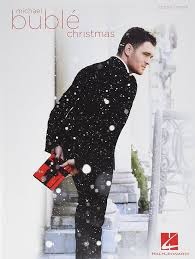


The best sheet music download from our Library.
Michael Bublé: The Modern Voice of the Great American Songbook
Michael Bublé: The Neo-Crooner for a New Generation
On September 9, 1975, a future standard-bearer for the Great American Songbook was born in Burnaby, British Columbia. Michael Steven Bublé would grow from a teenager performing in smoky Vancouver clubs into a global superstar who managed the extraordinary feat of making jazz standards and swing music feel contemporary and relevant to a 21st-century audience. With his supple vocal chops and nonchalant charisma, he became the preeminent neo-crooner of his generation, believably selling old-school jazz and adult contemporary pop alike. Bublé represents something rare in modern music: an artist who looks to the past not to recreate it, but to build a bridge connecting generations of listeners to a timeless musical heritage.
His debut album in 2003 reintroduced classics like "Fever" and "The Way You Look Tonight" to a new audience. But Bublé was never content to merely be a nostalgia act; he understood that to carry the torch of Sinatra and Bennett, he had to forge his own identity. "Through emulating and copying my favorite artists I found myself," Bublé said. He explains, "I was as into the Beastie Boys and Michael Jackson as I was into Dean Martin or Bobby Darin, and naturally I took some of the things that I loved about music and infused them with my love of the American songbook or jazz. Thankfully, people accepted it and it worked".
This article explores the full breadth of Bublé's career: his humble beginnings, his meticulous musical craft, the chart-topping albums and Grammy-winning performances, his personal trials, and the enduring legacy he builds with every velvet-phrased note. It is the story of an artist who learned to honor tradition by making it his own.
Search your favorite sheet music in the Sheet Music Library Catalog
Early Life and The Jazz Awakening (1975–2000)
A Grandfather's Musical Gift
Bublé's introduction to music came not through formal training, but through the love of his maternal grandfather, Demetrio Santaga. This relationship was formative and deeply personal. "My grandfather was really my best friend growing up," Bublé explained. "He was the one who opened me up to a whole world of music that seemed to have been passed over by my generation".
Bublé vividly recalled the first moment the music clicked: "Although I like rock 'n' roll and modern music, the first time my granddad played me the Mills Brothers, something magical happened. The lyrics were so romantic, so real, the way a song should be for me. It was like seeing my future flash before me". Immersed in the sounds of Ella Fitzgerald, Frank Sinatra, and the Mills Brothers, the young Bublé realized that this music—largely foreign to his generation—was exactly what he wanted to perform.
His grandfather's support was practical as well. A plumber by trade, the elder Santaga would offer his services for free to nightclub owners in exchange for allowing his grandson to sing on stage. Bublé began performing at the age of 16, gaining experience by singing with local bands. Although he never learned to read or write music, relying instead on emotion to drive his artistry, his natural talent was undeniable.
The Grind and The Near-Give Up
Throughout his teens and early twenties, Bublé pursued his dream relentlessly. He won the Canadian Youth Talent Search as a teenager and independently recorded albums like First Dance (1996), Babalu (2001), and Dream (2002). He performed in a musical revue titled Swing that traveled across the United States. Yet these early successes did not translate into a career.
Bublé's manager, Bev Delich, who first encountered him at a talent contest, had him take on every conceivable gig: talent shows, conventions, cruise ships, hotel lounges, bars, corporate functions, musical revues, singing telegrams, and even performing as a singing Santa Claus. "Bublé would do every gig imaginable," Delich recalled. He appeared in a 1996 television movie and even had uncredited roles in episodes of The X-Files.
He also performed regularly on the Vicki Gabereau Show, a national talk show where he shared guest duties with fellow British Columbian Diana Krall. According to the show's music producer, Krall was suitably impressed with Bublé's performance. But despite this exposure, success remained elusive.
By the age of 25, Bublé was living in Toronto and on the verge of giving up. He told his grandfather he was ready to move back to Vancouver to pursue a career in journalism. It was then that his fortunes changed dramatically.
The Wedding That Changed Everything
In a chain of events that seems almost too perfect to be real, Bublé's career took a miraculous turn in 2000. An aide to former Canadian Prime Minister Brian Mulroney saw Bublé perform at a business party and received a copy of his independent album. The aide showed it to the Mulroneys, and Bublé was invited to sing at the wedding of the Mulroneys' daughter Caroline. It was a pivotal moment. Bublé performed "Mack the Knife" and caught the attention of the most powerful man in music he could possibly have met: super-producer David Foster.
Foster, a multi-Grammy winner who had worked with Madonna, Whitney Houston, and Michael Jackson, recognized Bublé's raw talent and signed him to a major record deal with Reprise Records. This was the break Bublé had been waiting for.
The Music Career: From Breakthrough to Global Icon (2000–Present)
2000–2003: The David Foster Era and Major-Label Debut
With Foster's guidance, Bublé began work on his major-label debut. The self-titled album, released in early 2003, was designed to showcase Bublé's aptitude for pop standards and newer classics. It featured jazzy takes on old standards like "Fever" and "The Way You Look Tonight," alongside Van Morrison's "Moondance" and the Bee Gees' "How Can You Mend a Broken Heart".
The album was an instant success, topping the charts in Canada and earning Bublé the New Artist of the Year award at the Juno Awards. It also cemented his status as a new kind of pop star. Bublé was not only a jazz singer; he was a showman and an entertainer. He finished 2003 with an EP of holiday material, Let It Snow, and began 2004 with a live CD/DVD set, Come Fly with Me.
2005–2007: International Stardom and "Home"
Bublé's follow-up album, 2005's It's Time, was a phenomenon. It was a number one hit in Canada, Japan, Italy, and Australia, and cracked the Top Ten on the Billboard 200 in the U.S.. The album's success signaled that Bublé's appeal was global. He followed up with the live album Caught in the Act and released a holiday album, Christmas, in 2006.
In 2007, Bublé released Call Me Irresponsible. This album marked a significant shift, winning the Grammy for Best Traditional Pop Vocal Album. It also featured "Home," a number one adult contemporary hit. For the first time, Bublé was not just covering standards; "Home" was an original song, signaling his move into songwriting. "Lost," another track from the album inspired by a painful breakup with his fiancée, also became a major UK hit. This was the moment Bublé transformed from a revivalist into a contemporary artist in his own right.
2009–2013: Grammy Dominance and The Power of "Crazy Love"
The late 2000s and early 2010s saw Bublé reach the pinnacle of commercial and critical success. In 2009, he released his live concert album/DVD, Michael Bublé Meets Madison Square Garden, which documented his first-ever performance at the storied New York City venue and earned him a Grammy.
His 2009 studio effort, Crazy Love, became his third multi-platinum album in the U.S.. It featured a duet with Sharon Jones & the Dap-Kings on "Baby (You've Got What It Takes)" and collaborations with Ron Sexsmith. The album's lead track, "Cry Me a River," showcased his theatrical ambition. The singer wrote an opening for the cover in a Bond-like theme because he wanted the song to sound "very cinematic and bombastic". The result was a powerful, filmic reinterpretation that set the tone for the album's epic scoring.
Crazy Love also featured the pop smash "Haven't Met You Yet," one of Bublé's few pure pop originals. The track was "wrapped up in a frankly commercial, chart-orientated arrangement," demonstrating Bublé's willingness to adapt his sound to reach a wider audience.
In 2011, Bublé returned to the holiday well with a full album, Christmas, featuring duets with Shania Twain, the Puppini Sisters, and Thalía. The album quickly topped the Billboard 200, proving that Bublé had become the de facto modern voice of Christmas music. In 2013, he released To Be Loved, which featured guest vocalists including Reese Witherspoon and Naturally 7, and became his fourth consecutive chart-topper in the U.S. and his fourth Grammy winner.
2016–Present: Personal Trials and A Triumphant Return
Bublé's career was put on hold in 2016 when his three-year-old son, Noah, was diagnosed with liver cancer. The artist stepped away from the spotlight to focus on his family, a decision he later described as a transformative experience.
"It has been such a difficult exercise," he said. "It hurts, and it hurts to talk about Noah because it's not my story, it's his. But my whole being has changed. My perception of life. I don't know if I can finish this conversation without crying. And I've never lost control of my emotions in public. But, in a strange way, talking about this is therapy for me".
Noah overcame his illness, and in 2018 Bublé returned to music with Love, an album dedicated to his fans for their support during his family's crisis. The album was a collection of intimate interpretations of jazz classics. The lead single, "Love You Anymore," was co-written by pop star Charlie Puth, indicating Bublé's continued engagement with contemporary pop.
He also collaborated with diverse artists during this period, including Gary Barlow, Sebastián Yatra on "Elita," Sofia Reyes, Barenaked Ladies, and Dolly Parton on "Cuddle Up, Cozy Down Christmas". These collaborations showcase Bublé's versatility and willingness to cross genres while remaining true to his core sound.
In 2022, Bublé released Higher, which once again balanced cover tunes with original pop anthems. The album won the Grammy for Best Traditional Pop Vocal Album, his fifth such win. He then embarked on the final leg of his Higher tour, celebrating a career that has spanned over two decades. In 2024, he released The Best of Bublé, a greatest hits collection featuring 21 essential tracks from his career. That same year, he joined the coaching panel on The Voice.
Musical Style and Harmony: The Architecture of A Modern Crooner
The "Bublé Sound": A Fusion of Eras
Bublé's musical style is deceptively complex. On the surface, it sounds like a smooth, romantic crooner. But Bublé's music is built on sophisticated jazz harmonies and meticulously arranged big-band compositions. "Right away, I just loved the musicianship, the arrangements, the greatness that came with each chart," Bublé said.
An analysis of Bublé's music reveals a "masterclass in modern vocal jazz and 'crooner' styling". Unlike the simpler triad harmonies of pop, Bublé's arrangements "move away from simple triads and lean heavily into extended chords (9ths, 11ths, and 13ths)". This harmonic richness creates the signature "big band" vocal warmth, with "tight, crunchy harmonies in the inner voices" providing a lush, jazz-club atmosphere.
The Importance of Phrasing and Emotion
A defining characteristic of Bublé's artistry is his rhythmic phrasing. The singer often employs "rubato phrasing," singing slightly behind the beat to create a sense of intimacy and vulnerability. This technique, reminiscent of his idols Sinatra and Tony Bennett, allows him to invest familiar lyrics with a "conversational touch as though newly minted".
Bublé has always emphasized the importance of emotional connection over technical perfection. He admits that he has never learned to read or write music, using "only emotion to drive his songwriting ability". This emotional core is the engine of his performances. "I connect emotionally to these songs. I want to say what I say when I say it, and that allows the audience to connect," he stated. "That's the number one reason why all music is successful, because people feel something".
The Three Shades of Bublé
The singer's style can be broken down into three distinct "shades," reflecting his wide-ranging influences.
- The Crooner: This is the Frank Sinatra-inspired Bublé. It is characterized by smooth, seductive jazz performances of the Great American Songbook, like "The Way You Look Tonight" and "Save the Last Dance for Me." He is "very charming" and embodies the classic romanticism of the 1950s and 60s.
- The Contemporary Original Artist: This is the Bublé of "Home," "Everything," and "Haven't Met You Yet." He is the "grounded, straightforward guy" who writes and performs original pop and adult contemporary music. This side of Bublé is responsible for his chart-topping hits and demonstrates his songwriting skills.
- The Rock & Roll/Motown Performer: This is the most energetic side of Bublé. He covers pop standards and Motown hits with a rock 'n' roll energy, "the rough and tumble guy" of the group. It is this side that makes him a dynamic live performer and connects him to a broader pop audience.
Film, Television, and Other Collaborations
The Silver Screen and Television
Beyond music, Bublé has expanded his career into acting and film. In 2001, he co-starred in the film Totally Blonde as a nightclub singer. His early songwriting also earned him two Genie Award nominations in 2000 for songs he wrote for the film Here's to Life!.
His music has been prominently featured in films and television. Songs from his debut album were included in the soundtrack for the movie Down with Love. More notably, his cinematic version of "Cry Me a River" was selected as the theme tune for the BBC's coverage of the 2012 Olympic Games. He has also appeared as a guest on a wide variety of television programs, from The Today Show to The Voice.
A Rich History of Duets and Collaborations
Bublé is a collaborative artist. His duets are a key part of his discography. He has sung with a diverse range of artists, including:
- Fellow Crooners and Legends: Tony Bennett, Diana Krall.
- Pop Stars: Nelly Furtado ("Quando, Quando, Quando"), Bryan Adams ("After All"), Charlie Puth ("Love You Anymore").
- Latin Artists: Thalía, Sebastián Yatra ("Elita"), Sofia Reyes.
- Soul and R&B: Sharon Jones & the Dap-Kings ("Baby (You've Got What It Takes)").
- Country Stars: Shania Twain, Dolly Parton.
These collaborations demonstrate Bublé's respect for and ability to bridge different genres, enhancing his legacy as a versatile artist.
Personal Life and Challenges
Bublé's personal life, like his music, is the stuff of romance and heartache. He married Argentine actress Luisana Lopilato in 2011, and they have three children: Noah, Elias, and Vida. Their love story began in 2008 when Lopilato, a huge fan, attended his concert in Buenos Aires. They began a romance shortly after and married in two ceremonies, one in Argentina and one in Canada.
The couple experienced a profound crisis in 2016 when their son Noah was diagnosed with cancer. Bublé's decision to step away from his career to be with his family demonstrated his priorities and his strength of character. Their battle with Noah's illness and his eventual recovery is a testament to their resilience as a family.
Influence and Legacy
The Torchbearer of the American Songbook
Michael Bublé's legacy lies in his role as a torchbearer for the Great American Songbook. He, along with friends like Lady Gaga, represents a generation of artists trusted to "hold on and carry on one of the greatest things America has ever given to the arts". "I look over at her and it makes me so happy that it's in those hands," Bublé said of Lady Gaga. "I know why Tony chose her, and I just love that we're lucky enough to be some of the chosen few that have been able to introduce it to a new generation of kids and keep it alive".
This role was earned through respect, not imitation. "I didn't want to modernize it or change it. I just wanted to make it mine," he once said. Bublé's reverence for his musical forebears, combined with his willingness to integrate his love of modern pop, created a bridge between the jazz clubs of the 1950s and the digital streaming era of the 2020s.
A Legacy of Record-Breaking Success
Bublé's commercial success speaks for itself. With five Grammy awards, 12 nominations, and over 75 million records sold, he is one of the best-selling music artists of all time. His albums have routinely topped the charts in multiple countries. He has repeatedly proved that traditional pop and jazz are not niche genres but forms of music with massive, universal appeal.
The singer has also cemented his place in popular culture as the modern voice of Christmas. Christmas (2011) remains a best-selling holiday album, and Bublé's presence during the season has become a beloved tradition for many families. His version of "Feeling Good" is now a modern standard that rivals Nina Simone's iconic version.
Bublé's relationship with his fans is a key component of his identity. He referred to his album Love (2018) as being dedicated to his fans for their support when he stepped back from his career. "People need a tent under the rain. I'm here to take you for a few hours, entertain you, let you escape, to know that there can be hope and that romance is still alive and kicking," he once said.
He is also a known Spanish speaker due to his wife's influence and has shown a connection to Spain, even declaring himself a fan of FC Barcelona.
Michael Bublé: The Enduring Romance
Michael Bublé's career is a remarkable narrative of persistence, talent, and evolution. From his humble beginnings in a Canadian suburb to global stages, he has become the definitive modern voice of the classic crooner tradition, while never being defined by it. He inherited the mantle from icons like Sinatra and Bennett but infused it with the energy of pop and his own vulnerable artistry. His journey was not easy; it involved years of grueling work and a devastating personal crisis. But through it all, his music has remained a source of comfort and joy for millions.
His legacy is secured not just by his sales or his awards, but by the spirit he brings to his music. He is a reminder that romance, elegance, and a good melody are not things of the past. "The lyrics were so romantic, so real, the way a song should be for me," he said of the music his grandfather introduced him to as a boy. As he continues to perform and record, Michael Bublé ensures that this legacy of romance and musicality will survive for at least another hundred years.
Browse in the Sheet Music Library:
Or browse in the categories menus & download the Library Catalog PDF:
Michael Bublé - The Best of Bublé (Full Album)
Tracklist: 0:00 Feeling Good 3:56 Haven't Met You Yet 8:01 Sway 11:10 Everything 14:42 Me and Mrs. Jones 19:16 Home 24:00 L O V E 25:54 Cry Me a River 30:07 Don't Blame It On Me 32:57 Baby (You've Got What It Takes) 36:13 Fever 40:08 Quando, Quando, Quando 44:52 Save the Last Dance for Me 48:30 Bring It On Home To Me 53:08 Moondance 57:20 Spider-Man 1:00:20 It's A Beautiful Day 1:03:45 Hold On 1:07:49 Quizás, Quizás, Quizás 1:11:12 Higher 1:14:35 You & I