Scores for all instruments: 16,000+ (active and growing), over 236,000 pages.
All genres and levels: Jazz & Blues, Rock & Pop, Classical & Contemporary, Film & Musicals;
books & biographies; methods, études, play-along tracks (MP3) for Jazz & Rock.
Access & benefits: US$15.99 one-time payment, valid for lifetime, full Library access.
Table of Contents
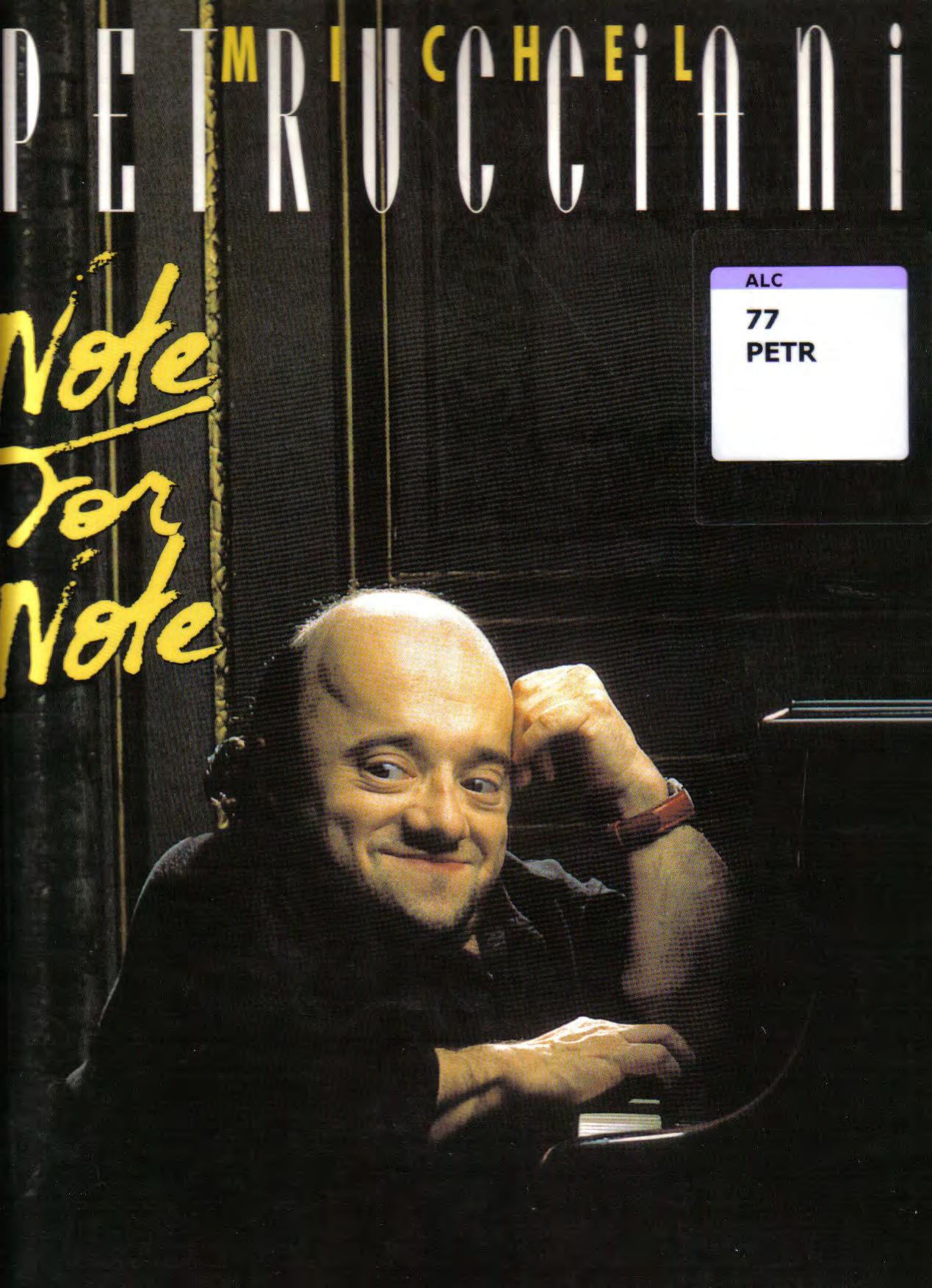
Michel Petrucciani: The Unstoppable Genius of the Piano
Michel Petrucciani was a paradox made flesh. Born with osteogenesis imperfecta, a genetic condition that left him with brittle bones and a stature of just 91 centimeters (roughly three feet), he possessed one of the most expansive, powerful, and joyful musical voices of the twentieth century. In a career that spanned barely two decades before his death at thirty-six, the French pianist and composer bridged the worlds of American and European jazz, leaving behind a body of work that continues to captivate listeners and challenge musicians. He was a man in a hurry, aware that his time was limited, and he channeled that urgency into every note—a torrent of lyricism, virtuosity, and rhythmic drive that defied the limitations of his body. This is the story of a musician who turned adversity into an advantage and became, in the words of those who knew him, a giant of jazz.
The best sheet music download from our Library.
For the price of a single songbook, get a full Sheet Music Library!


Please, subscribe to our Sheet Music Library. Sheet music should be accessible and affordable for all musicians, from professionals to absolute beginners.
A Life in Accelerated Motion
Michel Petrucciani was born on December 28, 1962, in Orange, in the south of France, into a Franco-Italian family steeped in music. His father, Tony Petrucciani, was a jazz guitarist of Neapolitan descent, and his brothers, Louis and Philippe, became a bassist and a guitarist, respectively. It was an environment where music was not merely an activity but a language. Michel discovered the piano very young; one of his earliest idols was Duke Ellington, and he harbored the ambition to become a pianist like him.
From birth, however, his life was marked by the "glass bone disease". The condition stunted his growth, made his bones fragile, and subjected him to constant pain and a string of minor ailments. It also, in a cruel twist, often brought respiratory complications. Yet Petrucciani rarely indulged in self-pity. He once remarked that the disease had its advantages: it removed the distractions of sports and other childhood pursuits that occupied other boys, allowing him to devote himself entirely to music. His hands, crucially, were of average length, unaffected by the condition, and he studied classical piano for eight years. Because he could not reach the pedals, special extensions had to be made for him. When he played, he often had to be carried to and from the instrument.
Search your favorite sheet music in the Sheet Music Library Catalog
His prodigious talent revealed itself early. At thirteen, he gave his first professional concert at the Cliousclat Festival, where he was discovered by the American trumpeter Clark Terry. Terry introduced the teenager to expatriate jazz musicians, and the encounter proved decisive: Petrucciani embraced jazz as his idiom rather than continuing on a classical path. By eighteen, he had helped form a successful trio, and he was already making a name for himself in French jazz circles.
The turning point came in 1982, when he moved to the United States. There, he sought out the saxophonist Charles Lloyd, who had retreated from active performance. Petrucciani’s talent and persistence persuaded Lloyd to return to the road, and the two formed a musical partnership that would last for several years. Lloyd was so impressed by the young pianist that he helped launch his American career. Petrucciani soon found himself playing with giants: Dizzy Gillespie, Wayne Shorter, Jim Hall, and others. In 1986, he became the first French musician—and one of the first Europeans—to sign with the legendary Blue Note label, a symbolic validation of his standing in the American jazz capital.
His personal life was as intense and hurried as his career. He had several significant relationships, including a marriage to the Navajo woman Erlinda Montaño, who helped facilitate his move to California, and later to the Italian classical pianist Gilda Buttà. He fathered children, one of whom inherited his condition. He lived with a sense of urgency, aware that his illness was incurable and that his days were numbered. The subtitle of Franck Médioni’s biography, “Un pianiste pressé” (“A Pianist in a Hurry”), captures this perfectly: he went fast because he had no time to waste. He also struggled with excess—drugs, alcohol, and relentless touring—which, according to Médioni, may have precipitated his end.
Michel Petrucciani died on January 6, 1999, in Manhattan, from a pulmonary infection, just a week after his thirty-sixth birthday. He was buried in the Père Lachaise Cemetery in Paris, one tomb away from Frédéric Chopin—a fitting resting place for a pianist whose lyricism and Romantic sensibility echoed the Polish master.
Style, Harmony, and Technique: A Lyricist with a Percussive Edge
Petrucciani’s musical style was a synthesis of seemingly opposing forces: intimate lyricism and explosive rhythmic energy, classical precision and jazz spontaneity, delicate introspection and extroverted drama. He was, by his own admission and by the consensus of critics, deeply influenced by Bill Evans, whose harmonic language and introspective ballad playing left an indelible mark on him. But he was also shaped by Duke Ellington’s orchestral color and by the pianistic virtuosity of Oscar Peterson and Keith Jarrett, to whom he was often compared. From this constellation of influences, he forged a voice that was unmistakably his own.
At the heart of his style was a profound sense of lyricism. The French critic and biographer Franck Médioni describes his playing as possessing “a kind of cantabile” that may have stemmed from his Italian, Neapolitan origins—a singing quality that “carries everything away”. Even in his most technically demanding passages, there was always a melody at the core. This lyrical impulse was paired with a powerful and articulate technique and a “sharpened sense of the swing and drama of music”. His right hand was capable of soaring, fluid melodic lines, while his left hand often provided a syncopated, staccato foundation that gave his music a distinctive rhythmic bite, sometimes evoking the tango and its forebears.
His harmonic approach was sophisticated but accessible. He had a gift for reharmonization, often taking familiar standards and recasting them in unexpected colors. In his hands, a well-known tune could emerge from “a cloud of atmospheric harmonies,” with the original theme peeking through the openings in his variations. He was fond of modulation, using V7-based transitions and II-V motion patterns to shift the tonal center, and his arrangements could be dense and richly voiced one moment and spare and transparent the next. Reviewers have noted that his chords could sometimes be “clumsy and inelegant” in the way the centers were hollowed out, but this was a deliberate part of his expressive palette—a way of creating tension and surprise. Ultimately, his harmony served the drama of the music, always in service of a larger emotional arc.
His technique was, by any standard, extraordinary. Despite his physical limitations, he developed a formidable independence of hands and a polyrhythmic command that allowed him to suggest multiple layers of rhythm simultaneously. He was a master of the solo piano, and he believed that a pianist was not complete until he could hold an audience entirely on his own. In 1993, he took the radical step of canceling his trio dates for a year to focus exclusively on solo recitals. “I had a wonderful time playing alone,” he said, “and discovering the piano and really studying every night… It was an incredible experience”. This period of intense solo exploration deepened his already profound relationship with the instrument and produced some of his most compelling recorded work.
The Composer: A Catalogue of Lyrical Gems
Petrucciani was not only an interpreter of exceptional sensitivity; he was also a prolific composer, leaving behind roughly a hundred original pieces. His compositions are characterized by the same qualities that defined his playing: strong melodies, harmonic sophistication, and a rhythmic vitality that is both playful and deeply swinging. While he recorded many standards, his original works form the core of his legacy.
Among his most celebrated compositions are “Looking Up,” an overtly optimistic and hopeful piece that ranks among his most streamed and beloved works. “Little Peace in C for U” is a charming, buoyant tune that he recorded in various settings, most memorably in a duo with the violinist Stéphane Grappelli, with whom he shared a natural rapport. “Home” is a warm, clearly enunciated statement of comfort and belonging, while “Rachid” is a lively, rhythmically intricate piece that became a staple of his live sets. “Brazilian Like” and “Brazilian Suite #3” reveal his affinity for Brazilian music, filtering its rhythms through his own harmonic prism.
Other notable originals include “September Second,” with its sophisticated modulations; “La Champagne,” a flowing, elegant waltz; “Chloé Meets Gershwin,” a witty and affectionate homage; “Trilogy in Blois,” a sprawling solo piece that unfolds like a narrative; and “Miles Davis’ Licks,” a blues that playfully incorporates melodic fragments from Davis’s late-period work. His album Playground (1991) is a particularly rich showcase of his compositional range, featuring the intense “Brazilian Suite #3” and the Keith Jarrett–inflected “P’tit Louis”. Posthumously, the solo live album Solo Live (1999) has come to be regarded by many as his definitive statement, a powerful testament to his genius that captures the full scope of his artistry in a single, uninterrupted performance.
Petrucciani on Film: A Subtle Presence
Petrucciani’s music has had a modest but meaningful presence in cinema, both as a composer and as a performer. He composed the original score for Claude Berri’s 2002 film Une femme de ménage (The Housekeeper), a French drama starring Jean-Pierre Bacri. The soundtrack featured his performances, including the poignant “J’aurais tellement voulu” and the evocative “Colors”. The music, with its intimate jazz sensibility, added a layer of emotional depth to the film, and the soundtrack was released on the Dreyfus label.
His music also appeared in other films. He contributed to the soundtrack of Route One/USA (1989), a documentary by Robert Kramer, and his playing was featured in La rue ouverte (1988). More significantly, his life and art became the subject of a major documentary: Michel Petrucciani (2011), directed by the Oscar-nominated filmmaker Michael Radford (director of Il Postino). The film, which premiered at the Cannes Film Festival, used interviews, archival footage, and photographs to paint an intimate portrait of the pianist, exploring the nature of creativity and the triumph of the human spirit over physical adversity. It remains the most comprehensive visual document of his life and legacy.
Collaborations: A Magnet for Greatness
Petrucciani’s talent drew the attention and admiration of some of the greatest names in jazz. His most important early partnership was with Charles Lloyd, whom he essentially coaxed out of retirement. Their collaboration produced several albums and years of live performances, including the live recording A Night in Copenhagen (1983), which also featured Palle Danielsson and Woody Theus, and a notable quartet performance with Cecil McBee and Jack DeJohnette at the “One Night With Blue Note” reunion concert in 1985.
He recorded the album Power of Three (1986) with two other legends: guitarist Jim Hall and saxophonist Wayne Shorter. This trio setting showcased his ability to engage in subtle, interactive conversation with master improvisers. He also performed and recorded with Dizzy Gillespie, an experience that affirmed his place in the lineage of jazz. His duet album with alto saxophonist Lee Konitz, Toot Sweet (1982), is a sublime example of his sensitivity as an accompanist and his gift for melodic counterpoint.
In the 1990s, he worked extensively with bassist Anthony Jackson and drummer Steve Gadd, a trio that combined visceral groove with his signature lyricism, documented on albums like Trio in Tokyo. He also collaborated with organist Eddy Louiss on the album Conférence de Presse, which won the Victoires de la Musique award for Best Jazz Album in 1995. Other notable collaborators include the violinist Stéphane Grappelli (with whom he recorded Flamingo), the saxophonists Joe Lovano and Steve Grossman, the trumpeter Freddie Hubbard (who invited him to join his All Star band), and the bassist Dave Holland. The breadth of these partnerships is a testament to his versatility and his magnetic musical personality.
Awards and Honors: Recognition of a Giant
Despite his short life, Petrucciani received a remarkable number of honors. In 1984, he was awarded the prestigious Prix Django Reinhardt, one of France’s highest jazz distinctions. That same year, his album 100 Hearts won the Grand Prix du Disque, the precursor to the Victoires de la Musique. Over the course of his career, he won the Victoires de la Musique (the French equivalent of the Grammys) six times, a record that underscores his popularity and critical standing in his home country. In 1994, he was made a Chevalier de la Légion d’honneur (Knight of the Legion of Honor) by President François Mitterrand, and he was also named a Chevalier de l’Ordre des Arts et des Lettres. In 2003, a square in the 18th arrondissement of Paris was named Place Michel-Petrucciani in his honor. Posthumously, his album Solo Live has been widely acclaimed as a masterpiece and a powerful testament to his enduring legacy.
Influences and Legacy: A Bridge Between Worlds
Petrucciani’s influences are clear to anyone who listens closely: Bill Evans is present in the harmonic sophistication and the introspective beauty of his ballads; Duke Ellington in the orchestral scope of his solo piano arrangements and his sense of color; Oscar Peterson and Keith Jarrett in the sheer technical brilliance and the rhythmic propulsion of his up-tempo playing. Yet he was never a mere imitator. He synthesized these influences into a style that was immediately recognizable—a style that, in the words of one critic, “seems to have evolved from the tango and its forebears,” with a two-beat left-hand rhythm that makes even his most complex music swing.
His legacy is multifaceted. First and foremost, he is remembered as one of the most accomplished jazz pianists of his generation, a musician who overcame seemingly impossible odds to achieve greatness. He is often deemed to be among the best jazz pianists to ever come from France, and his work is considered one of the most influential bodies of music in both European and American jazz of the late twentieth century. He was a pioneer in breaking down the barriers between European and American jazz, proving that a musician from the Old World could not only hold his own in the New World but could also lead and inspire it.
Beyond his musical achievements, his life story is a source of profound inspiration. He refused to be defined by his disability, choosing instead to focus on what he could do rather than what he could not. His decision to embark on a year of solo recitals in 1993, to “really study every night,” speaks to his insatiable curiosity and his humility before the instrument. His music continues to be discovered by new generations of listeners, and his compositions are performed and recorded by contemporary artists. The documentary by Michael Radford has introduced his story to a wider audience, ensuring that his legacy extends beyond the confines of the jazz world.
Michel Petrucciani:
Michel Petrucciani lived a life that was, by any measure, too short. But in that brief span, he produced a body of work that is rich, varied, and deeply human. He was a virtuoso who never let technique overshadow melody, a composer of memorable and affecting tunes, and a collaborator who brought out the best in everyone he played with. He was a man who, in the face of a cruel genetic condition, chose to celebrate life through music. His piano playing—at once delicate and thunderous, introspective and extroverted, classical and deeply swinging—remains a benchmark for jazz pianists. And his spirit, that unstoppable, joyful, urgent spirit, lives on in every recording, every composition, and every listener who has been moved by the sound of Michel Petrucciani. He was, in the truest sense, a giant.
Browse in the Sheet Music Library:
Or browse in the categories menus & download the Library Catalog PDF:
Discography
As leader/co-leader
- Flash (Bingow, 1980)
- Michel Petrucciani (Owl, 1981)
- Date with Time (Celluloid, 1981)
- Estate (IRD, 1982)
- Darn that Dream (Celluloid, 1982)
- Toot Sweet with Lee Konitz (Owl, 1982) – live
- Oracle's Destiny (Owl, 1983) – rec. 1982
- 100 Hearts (Concord/The George Wein Collection, 1984) – rec. 1983
- Note'n Notes (Owl, 1984)
- Live at the Village Vanguard (Concord, 1985) – live rec. 1984
- Cold Blues with Ron McClure (Owl, 1985)
- Pianism (Blue Note, 1986) – rec. 1985
- Power of Three with Wayne Shorter and Jim Hall (Blue Note, 1987) – live rec. 1986
- Michel plays Petrucciani (Blue Note, 1988) – rec. 1987
- Music (Blue Note, 1989)
- Playground (Blue Note, 1991)
- Promenade with Duke (Blue Note, 1993)
- Live (Blue Note, 1994) – live rec. 1991 at Arsenal de Metz
- Marvellous (Dreyfus, 1994)
- Conference De Presse with Eddy Louiss (Dreyfus, 1994)
- Au Theatre Des Champs-Élysées (Dreyfus, 1994) – live
- Flamingo with Stéphane Grappelli (Dreyfus, 1996) – rec. 1995
- Michel Petrucciani (Dreyfus, 1996)
- Both Worlds (Dreyfus, 1997)
- Solo Live in Germany (Dreyfus, 1998) – live rec. 1997
Posthumous releases
- Trio in Tokyo with Steve Gadd and Anthony Jackson (Dreyfus, 1999) – live rec. 1997
- Conversations With Michel with Bob Malach (Go Jazz, 2000) – rec. 1988–1989
- Conversation with Tony Petrucciani (Dreyfus, 2001) – rec. 1992
- Dreyfus Night in Paris with Marcus Miller, Biréli Lagrène, Lenny White, Kenny Garrett (Dreyfus, 2003) – live rec. 1994
- Piano Solo - The Complete Concert In Germany (Dreyfus, 2007)[2CD] – live rec. 1997
- Michel Petrucciani & NHOP (Live) (Dreyfus, 2009)[2CD] – live rec. 1994
- Both Worlds Live North Sea Jazz Festival (Dreyfus, 2016)[2CD + DVD-Video] – live at North Sea Jazz Festival plus bonus CD including live at Montreux Jazz Festival
- One Night In Karlsruhe (Jazzhaus, 2019) – live rec. 1988
- Solo in Denmark (Storyville, 2022) – live rec. 1990, at the Riverboat Jazz Festival in Silkeborg
Compilations
- The Complete Recordings of Michel Petrucciani: The Blue Note Years 1986–1994 (Blue Note, 1998)
- Concerts Inedits (Dreyfus, 1999)[3CD]
- Days of Wine and Roses: 1981-1985 (Owl, 2000)[2CD]
- So What: Best of Michel Petrucciani (Dreyfus, 2004)
- The Blue Note Albums (Blue Note, 2015)[9CD]
- The Montreux Years (BMG/Montreux, 2023)[CD/2LP] – rec. 1990–1998[16]
As a member
The Manhattan Project
(With Wayne Shorter, Stanley Clarke, Lenny White, Gil Goldstein and Pete Levin)
- The Manhattan Project (Blue Note, 1990) – rec. 1989
As sideman
With Charles Lloyd
- Montreux 82 (Elektra Musician, 1983) – live rec. 1982 at Montreux Jazz Festival
- A Night in Copenhagen (Blue Note, 1985) – live rec. 1983
- One Night with Blue Note (Blue Note, 1985) Volume 4 – live
With others
- Steve Grossman, Quartet (Dreyfus Jazz, 1999) – rec. 1998
- Joe Lovano, From the Soul (Blue Note, 1992) – rec. 1991
- Serge Forté, Thanks for All (Ella Productions, 2004) – rec. 1997