
Scores for all instruments: 16,000+ (active and growing), over 236,000 pages.
All genres and levels: Jazz & Blues, Rock & Pop, Classical & Contemporary, Film & Musicals;
books & biographies; methods, études, play-along tracks (MP3) for Jazz & Rock.
Access & benefits: US$15.99 one-time payment, valid for lifetime, full Library access.
Table of Contents
Happy birthday, Nick Cave, born on this day in 1957
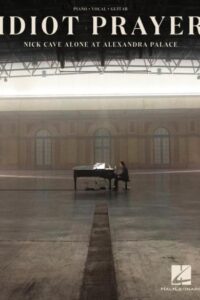
The best sheet music download from our Library.
Nick Cave: The Dark Poet of Rock and Roll
Born on September 22, 1957, in Warracknabeal, a small town in rural Victoria, Australia, Nicholas Edward Cave has spent more than four decades constructing one of the most singular and uncompromising bodies of work in contemporary music. As the frontman of The Birthday Party and later Nick Cave and the Bad Seeds, as a novelist, screenwriter, and film composer, Cave has moved from post-punk provocation to something approaching national treasure status—without ever diluting the morbid romanticism, spiritual searching, and darkly humorous storytelling that have defined his art.
Please, subscribe to our Sheet Music Library. Sheet music should be accessible and affordable for all musicians, from professionals to absolute beginners.

Search your favorite sheet music in the Sheet Music Library Catalog
Early Life and the Birth of a Performer
Cave was the son of an English teacher and a librarian, raised in the Anglican faith and singing in his cathedral choir from the age of eight. His creative influences were eclectic from the start. He has recalled seeing Johnny Cash perform on television at the age of ten and understanding, in that moment, that "music could be some other thing, that it was dangerous". The sharp-tongued Dame Edna Everage character created by Barry Humphries also left an impression, as did the somber poetry of Leonard Cohen.
At twelve, Cave was sent to a boarding school in Melbourne, where he met the friends with whom he would form his first band. He briefly studied painting at art school before dropping out, and at nineteen his father died in a car crash—a loss that would later become a central motif in his songwriting, though Cave has said he was "unconscious of the effect of grief entirely" at the time.
The Birthday Party: Ferocious Beginnings
In the mid-1970s, Cave and school friend Mick Harvey formed The Boys Next Door in Melbourne, joined by guitarist Rowland S. Howard, bassist Tracy Pew, and drummer Phil Calvert. The band relocated to London in 1980 and changed its name to The Birthday Party. Known for ferocious live shows that drew on blues, noise, and grotesque theatre, the group quickly earned a cult following and appeared on John Peel's BBC radio program.
The Birthday Party's music was a visceral assault—post-punk pushed to its most theatrical extremes, with Cave's shrieking vocals and gothic lyrics about sin, damnation, and violence. The band released several records before dissolving in 1983, but their influence on alternative music would prove enduring.
The Bad Seeds: A Creative Universe
Following the demise of The Birthday Party, Cave founded Nick Cave and the Bad Seeds in 1983 with Mick Harvey and guitarist-vocalist Blixa Bargeld, formerly of Einstürzende Neubauten. Their first album, From Her to Eternity, was released in 1984. The Bad Seeds would become Cave's primary creative vehicle for the next four decades, with a rotating cast of collaborators including Warren Ellis, Martyn Casey, Jim Sclavunos, and Conway Savage.
The band's early work retained some of the Birthday Party's abrasiveness, but gradually evolved toward more structured songcraft. Albums like The Firstborn Is Dead (1985), Kicking Against the Pricks (1986), and Tender Prey (1988) established Cave as a master of the murder ballad and the gothic love song. Tender Prey featured "The Mercy Seat," a harrowing first-person narrative from the perspective of a death row inmate that remains one of Cave's most powerful compositions.
The 1990s brought both commercial breakthrough and artistic expansion. The Good Son (1990) and Henry's Dream (1992) showcased Cave's growing melodic sophistication, while Let Love In (1994) produced "Red Right Hand," a menacing, swampy track that became one of his best-known songs through its use in the Scream film franchise and the BBC series Peaky Blinders. Murder Ballads (1996) was the band's biggest commercial success, driven by the unlikely duet "Where the Wild Roses Grow" with Kylie Minogue.
Discography
Main article on Wikipedia: Nick Cave discography
Musical Style and Harmonic Language
Nick Cave's musical style defies easy categorization. Over his career, he has moved through raucous post-punk cacophony, blues-rock balladry, hymnal introspection, deconstructed garage rock, and ambient electronica. What unites this diverse output is Cave's distinctive voice—a baritone that can shift from a whisper to a sermon, from tender croon to apocalyptic howl—and his narrative-driven approach to songwriting.
Harmonically, Cave's music often favors modal progressions and minor keys, drawing on the blues, gospel, and traditional folk ballad traditions. His chord vocabulary is deceptively simple; songs like "Into My Arms" and "The Ship Song" rely on straightforward diatonic progressions that serve the emotional directness of the lyrics. More recent work, particularly the albums with Warren Ellis—Push the Sky Away (2013), Skeleton Tree (2016), Ghosteen (2019), and Carnage (2021)—has moved toward a more atmospheric, beatless approach, with drifting, serpentine melodies uncoupled from standard verse-chorus structures.
The harmonic language of later Cave records is characterised by sustained drones, slowly shifting chord pads, and a use of space that owes as much to ambient music as to rock. The tessellated choirs and "thundering harmonies" of the 2024 album Wild God represent a culmination of this approach, with angelic swells and phosphorescent horns creating a sound that is simultaneously elegiac and ecstatic.
Essential Songs and Compositions
Any survey of Cave's finest work must begin with "The Mercy Seat," a song that transforms the gallows into a pulpit. "Tupelo" reimagines the birth of Elvis Presley as an apocalyptic event, correlating tornado-stricken weather with the arrival of a demonic presence. "Into My Arms" is perhaps his most perfect love song, a spare piano ballad that opens with the line "I don't believe in an interventionist God" and proceeds to argue for love as its own form of divinity.
"The Ship Song" remains a perennial favourite, its stately melody and maritime imagery creating a sense of timeless romance. "Red Right Hand" is a masterclass in menace, its whispered verses and ominous organ creating one of the most unsettling atmospheres in rock. "Stagger Lee" transforms the traditional murder ballad into something genuinely terrifying, while "Henry Lee," the duet with PJ Harvey, is a model of narrative economy and dramatic tension.
Later songs like "Higgs Boson Blues," "Distant Sky," and "Ghosteen Speaks" demonstrate Cave's continued evolution, trading narrative clarity for a more impressionistic, spiritually searching mode. The title track of Wild God is a late-career triumph, its "paroxysmal pleas" and "thundering harmonies" representing Cave at his most ecstatically vulnerable.
Music in Film and Television
Cave's music has found a natural home in cinema. His first major foray into film composition came with The Proposition (2005), a brutal outback western for which he wrote both the screenplay and, with Warren Ellis, the score. The soundtrack comprises sixteen "ballad-type musical segments" that Cave described as "soft chamber pieces, ghostly moodscapes, and whispered laments". The partnership with Ellis proved so fruitful that they went on to score The Road (2009), West of Memphis (2012), Hell or High Water (2016), and Back to Black (2024).
The Back to Black score, composed for Sam Taylor-Johnson's Amy Winehouse biopic, was praised for achieving "heartbreak without being sad, without overindulging in the tears". The end title song "Song for Amy" stands as one of Cave's most moving recent compositions, a solemn tribute to a fallen artist that echoes his own experiences with grief and loss.
Beyond his own compositions, Cave's songs have been extensively licensed for film and television. "Red Right Hand" became the theme song for Peaky Blinders, while "Into My Arms" and "The Ship Song" have appeared in numerous films and television episodes. His music's cinematic quality—its combination of narrative specificity and emotional universality—makes it uniquely suited to visual storytelling.
Collaborations
Collaboration has been central to Cave's practice. The most celebrated is undoubtedly "Where the Wild Roses Grow," his 1995 duet with Kylie Minogue. Written by Cave with Minogue specifically in mind, the song cast the pop princess as the doomed Eliza Day opposite Cave's murderous narrator—a stark departure from her public image that won the 1996 ARIA Award for Song of the Year and remains one of the most celebrated collaborations in Australian music history.
His relationship with PJ Harvey produced both "Henry Lee" and a body of work shaped by their mid-1990s romance. Harvey's influence extends beyond that single collaboration; she covered "Red Right Hand" for Peaky Blinders in 2014, and their artistic dialogue has continued long after their romantic relationship ended.
Cave's partnership with Warren Ellis is arguably the most significant creative relationship of his career. The two met when Ellis's band The Dirty Three supported the Bad Seeds, and Ellis joined the Bad Seeds in 1994. Their musical chemistry—Ellis's violin, loops, and electronic textures providing a counterpoint to Cave's piano and vocals—has driven Cave's most adventurous work, from Push the Sky Away to Ghosteen and beyond.
Other collaborators include Anita Lane, with whom Cave wrote "From Her to Eternity" and "Stranger Than Kindness"; Blixa Bargeld, whose abrasive guitar was a defining element of the Bad Seeds' sound for two decades; and Grinderman, the raw garage-rock side project formed in 2005 with Ellis, Martyn Casey, and Jim Sclavunos. Grinderman was created, in Cave's words, to explore "a more raw, primal sound" that leaned closer to the Birthday Party's ferocity.
Influences and Legacy
Cave's influences are as eclectic as his output. The Bible, Greek myth, and literature have provided source material throughout his career, as have the gospel, blues, and progressive rock traditions. Johnny Cash showed him that music could be dangerous; Leonard Cohen showed him how to be a poet in a rock band; Elvis Presley, Kris Kristofferson, and Anita Lane are among the artists he has cited as shaping his sense of songcraft.
His legacy is already substantial. He was inducted into the ARIA Hall of Fame in 2007, and his work has been covered by artists as diverse as Snoop Dogg, Arctic Monkeys, and Johnny Cash. He has published two novels, And the Ass Saw the Angel (1989) and The Death of Bunny Munro (2009), and his Red Hand Files website has become a singular space for reflection on grief, creativity, and spiritual life.
More importantly, Cave has demonstrated that it is possible to sustain a career of uncompromising artistic vision over decades, to evolve without abandoning one's core identity, and to find new audiences without pandering to them. His journey from vampiric, drug-addled iconoclast to something akin to a national treasure in both Australia and the UK is, as one critic observed, "as remarkable as it is".
Nick Cave's personal life has been marked by profound tragedy. His son Arthur died in 2015 at the age of fifteen, a loss that shaped the haunting Skeleton Tree and the transcendent Ghosteen. His ongoing dialogue with grief—and with the possibility of joy in its aftermath—has become a central theme of his later work. As he told Rolling Stone, "Joy is an emotion that understands the nature of loss".
He has also been an outspoken critic of cancel culture and a defender of artistic freedom, while maintaining a deep commitment to his Christian faith—albeit a faith shot through with doubt, questioning, and a keen awareness of human fallibility. His music remains a space where the sacred and the profane meet, where murder ballads sit alongside hymns, and where the darkness is always accompanied by the possibility of light.
At sixty-eight years old, Nick Cave continues to tour, record, and write. Wild God, released in 2024, was hailed as a masterpiece, with critics noting its "rapturous" quality and its capacity to "make you fall back in love with life". Whether performing to arena crowds or writing meditations on grief and grace, he remains one of the most vital and distinctive voices in contemporary music—a true dark poet of rock and roll, still finding new ways to sing about love, death, and everything in between.
Browse in the Sheet Music Library:
Or browse in the categories menus & download the Library Catalog PDF: