
Scores for all instruments: 16,000+ (active and growing), over 236,000 pages.
All genres and levels: Jazz & Blues, Rock & Pop, Classical & Contemporary, Film & Musicals;
books & biographies; methods, études, play-along tracks (MP3) for Jazz & Rock.
Access & benefits: US$15.99 one-time payment, valid for lifetime, full Library access.
Table of Contents
Who are Oasis?
Oasis: The Definitive Story of Britpop’s Most Volatile and Beloved Rock Band

The best sheet music download from our Library.
Please, subscribe to our Sheet Music Library.
Oasis are more than a rock band; they are a cultural earthquake. Formed in Manchester in 1991, the group rose from the working-class suburbs of Burnage to become the defining British rock act of the 1990s, selling out stadiums, dominating charts, and embodying a swaggering, anthemic spirit that came to be known as Britpop. Led by the notoriously combative Gallagher brothers—Liam on vocals and Noel as chief songwriter and guitarist—Oasis produced a catalog of songs that have become secular hymns for millions: “Wonderwall,” “Don’t Look Back in Anger,” “Live Forever,” and “Champagne Supernova,” among many others. Their story is one of stratospheric success, bitter sibling rivalry, and an enduring legacy that culminated in a long-awaited reunion in 2025. This article provides an exhaustive exploration of the band’s biography, musical style, harmonic characteristics, relationships with other artists, discography, film and documentary works, and their lasting impact on rock music.
The best sheet music download from our Library.
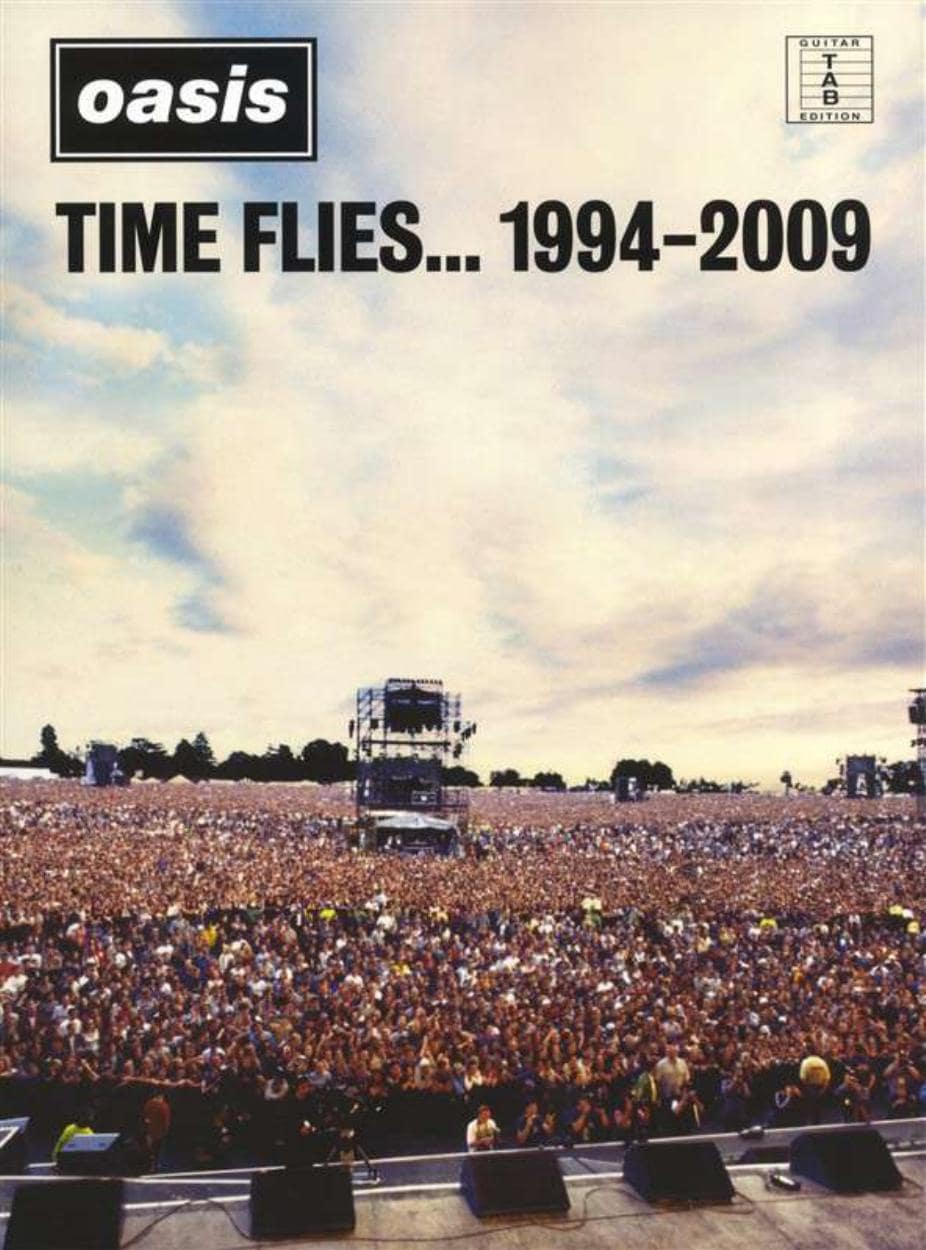
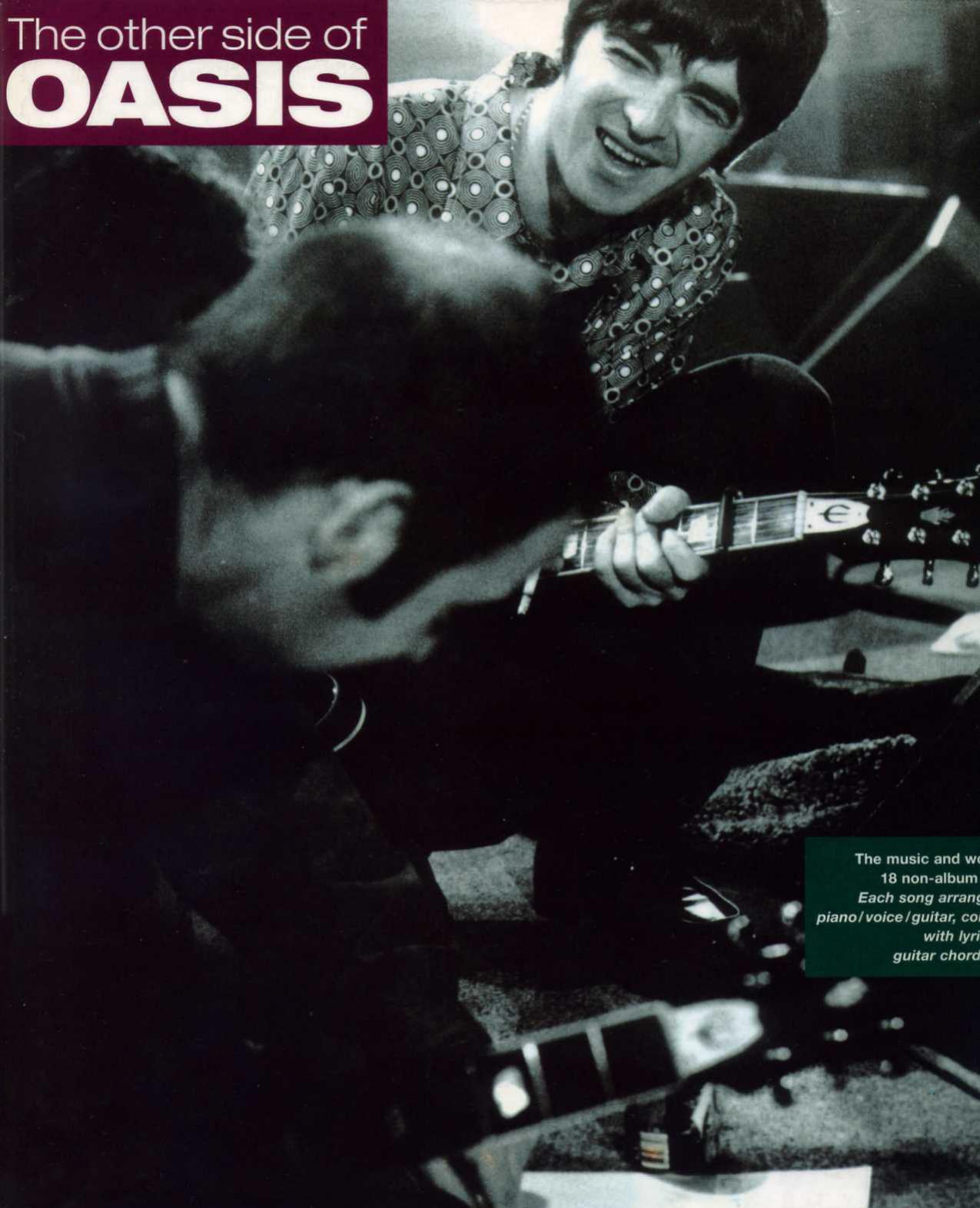
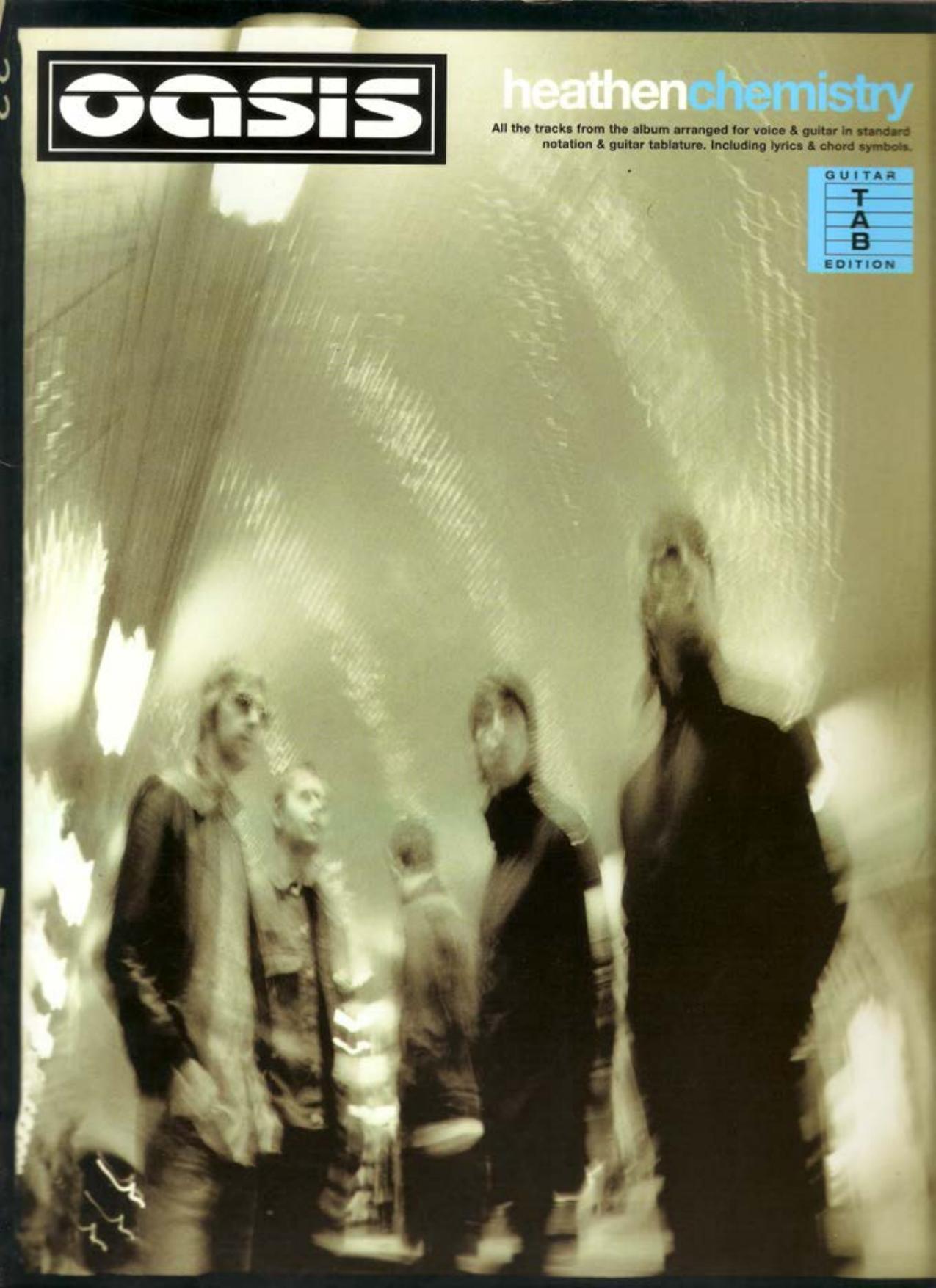
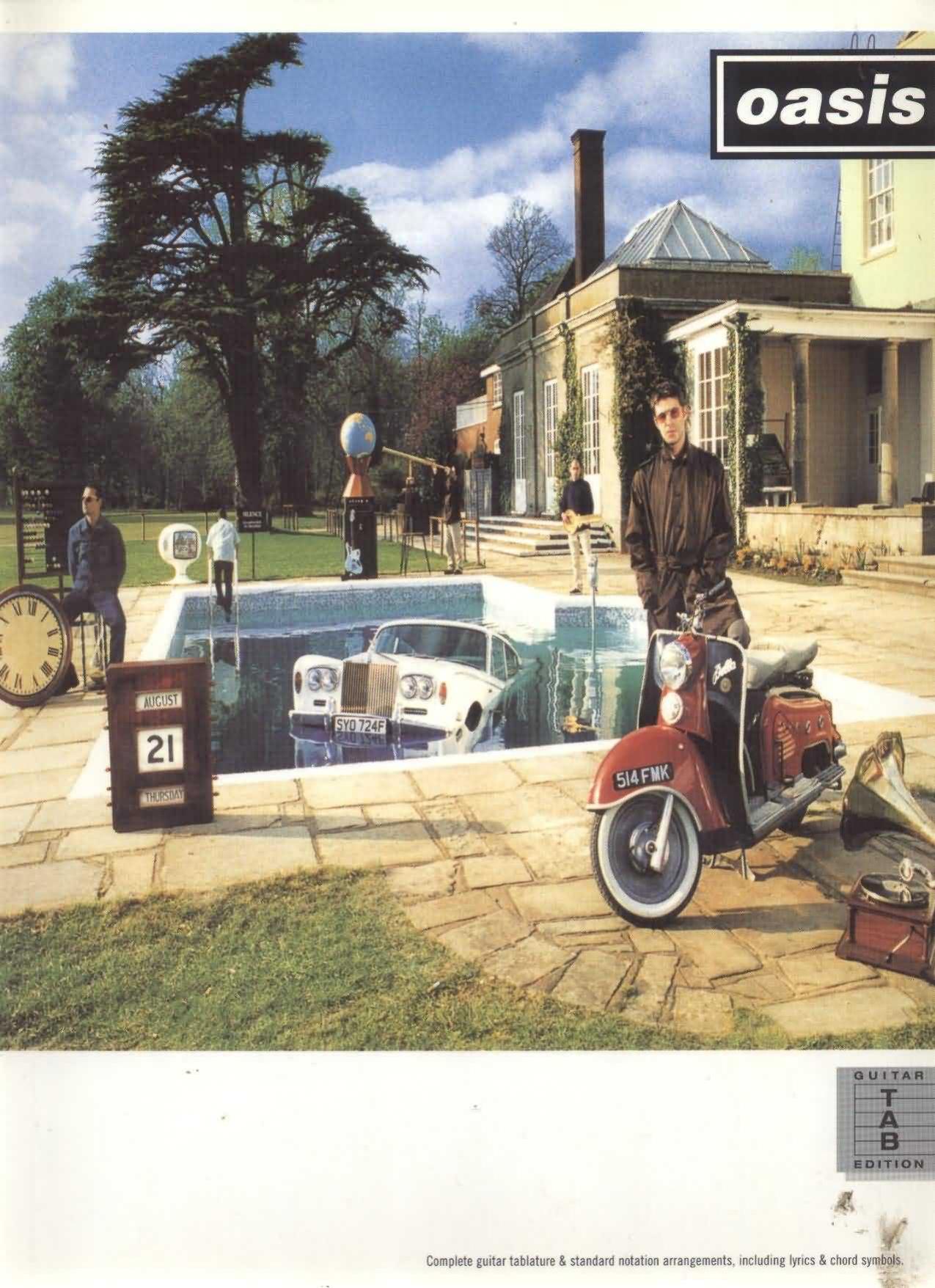
Search your favorite sheet music in the Sheet Music Library Catalog
Oasis: From The Rain to the World’s Biggest Band
Oasis’s origins lie in a band called The Rain, formed in 1991 by bassist Paul McGuigan, drummer Tony McCarroll, and guitarist Paul “Bonehead” Arthurs. The lead singer at the time was Chris Hutton, but Arthurs, dissatisfied with Hutton’s performance, auditioned and recruited a charismatic local named Liam Gallagher. Liam, then eighteen, brought not only his sneering, John Lennon-inspired vocal delivery but also a new name for the group: Oasis. The band’s first gig took place on 14 August 1991 at Manchester’s Boardwalk club.
Please, subscribe to our Sheet Music Library.
The pivotal moment came when Liam’s older brother Noel, who had been working as a roadie for Inspiral Carpets, saw the band perform and was approached to join. Noel agreed on the condition that he would become the band’s sole songwriter and de facto leader. His arrival transformed Oasis from a promising local act into a songwriting powerhouse. Noel brought a cache of compositions, including early versions of “Live Forever” and “Supersonic,” that would soon define the band’s sound.
Oasis signed to the independent label Creation Records in 1993. Their debut single, “Supersonic,” released on 11 April 1994, was a statement of intent—a feedback-drenched, attitude-heavy track that laid the blueprint for their entire career. It was followed by “Shakermaker,” “Live Forever,” and “Cigarettes & Alcohol,” all of which built anticipation for their debut album. Definitely Maybe, released in August 1994, became the fastest-selling debut album in UK chart history at the time, shifting 100,000 copies in its first four days. The album’s success was fueled by a working-class, aspirational energy that resonated with a generation disillusioned by American grunge’s nihilism.
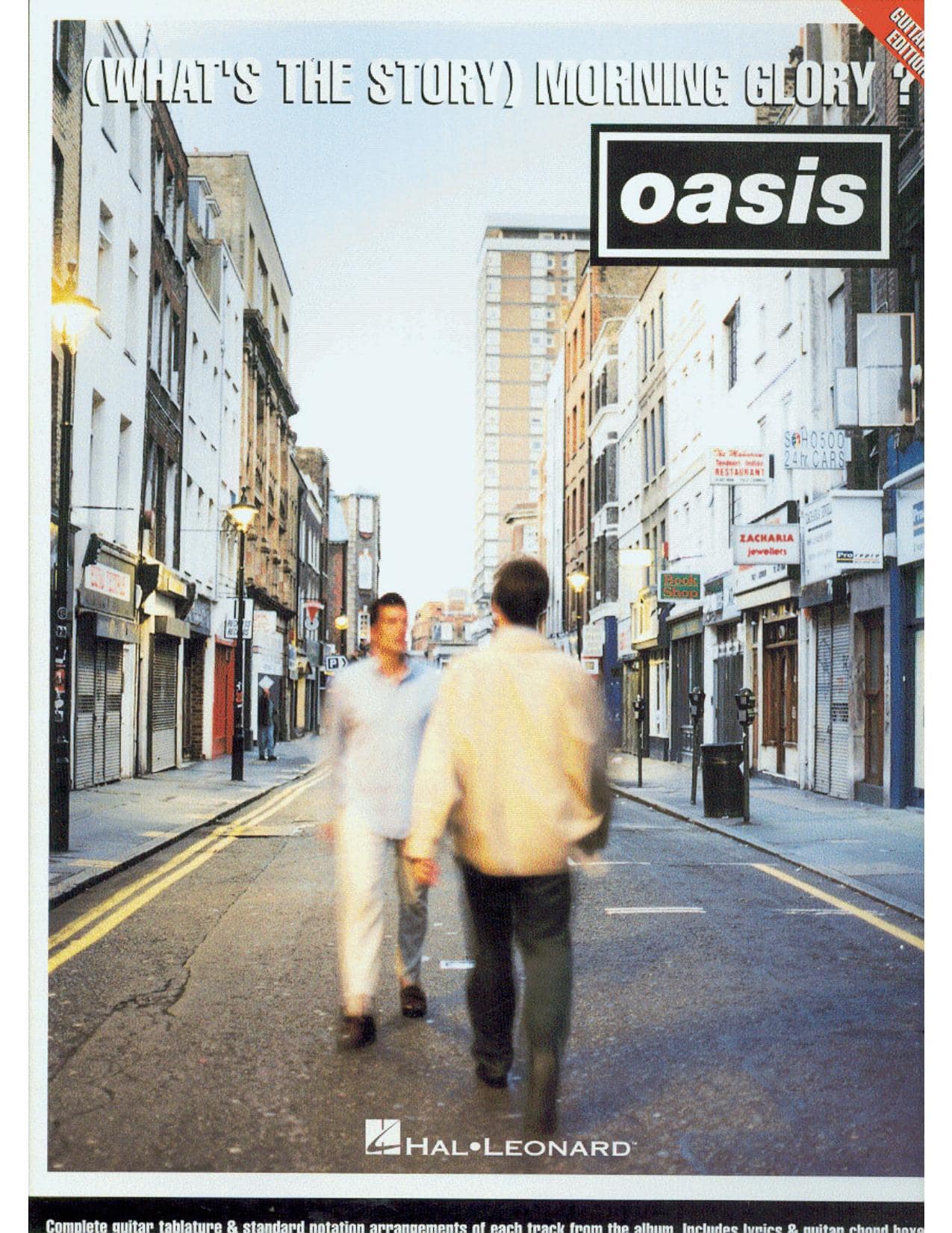
The band’s lineup shifted ahead of their second album. Founding drummer Tony McCarroll was replaced by Alan White, a more technically proficient player who could handle the increasingly ambitious arrangements Noel was writing. The result was (What’s the Story) Morning Glory? (1995), an album that transcended Britpop to become a global phenomenon. It spawned “Wonderwall,” “Don’t Look Back in Anger,” “Some Might Say,” and “Champagne Supernova,” and remains one of the best-selling albums in UK history.
The imperial phase peaked in August 1996 with two legendary concerts at Knebworth Park, where Oasis played to 250,000 people over two nights—the largest demand for a UK concert in history at that point. However, the excesses of fame were taking their toll. The follow-up album, Be Here Now (1997), was massively anticipated but critically divisive, its dense, cocaine-fueled production and bloated arrangements signaling the end of Britpop’s golden era.
The 2000s saw a series of lineup changes and a gradual commercial decline. Standing on the Shoulder of Giants (2000) introduced a more experimental, psychedelic sound but lacked the anthemic punch of earlier work. Heathen Chemistry (2002) and Don’t Believe the Truth (2005) were partial returns to form, but the chemistry between the Gallagher brothers was increasingly volatile. In August 2009, backstage at a festival in Paris, a violent argument between Liam and Noel led to Noel’s abrupt departure. The band disbanded that night.
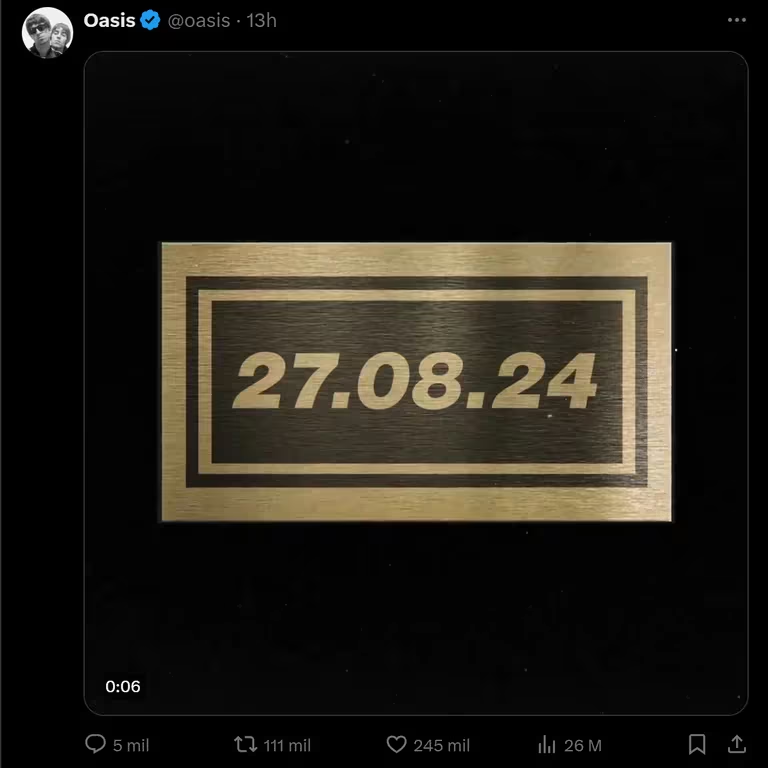
For fifteen years, the brothers pursued solo careers—Noel with the High Flying Birds and Liam as a solo artist—while fans clung to the hope of a reunion. That hope was realized in August 2024, when Oasis announced the Oasis Live ’25 reunion tour. The tour, which began in Cardiff on 4 July 2025, saw the Gallagher brothers share a stage for the first time in sixteen years, with a lineup including original guitarist Bonehead, Andy Bell, and drummer Joey Waronker.
Musical Style, Influences, and Harmonic Characteristics
Oasis’s music is rooted in the rock tradition, but its specific character draws from a remarkably deep well of influences. The most frequently cited is, of course, The Beatles—an influence so pervasive that British media often labeled it an “obsession”. The band’s penchant for melodic, sing-along choruses, Lennon-McCartney-esque harmonies, and even direct lyrical references (the title “Wonderwall” was inspired by George Harrison’s 1968 instrumental album Wonderwall Music) made the comparison inevitable. However, Oasis were equally shaped by other 1960s British Invasion acts, including The Kinks, The Rolling Stones, and The Who. The 1970s punk rock of the Sex Pistols, The Damned, and The Jam provided the raw energy and rebellious attitude that distinguished Oasis from their more polished Britpop contemporaries. Members also cited AC/DC, David Bowie, The Doors, Nirvana, Pink Floyd, The Smiths, The Stone Roses, and Neil Young as inspirations.
Musically, Oasis’s sound is characterized by loud, distorted guitars playing open chord voicings, Liam’s nasal and sneering lead vocals, and a rhythm section that prioritized drive over technical complexity. Their compositions stood in stark contrast to the more artful, genre-hopping approach of Blur, their chart rivals. The lyrics, especially in the early years, were grounded in the working-class experiences and aspirational defiance of the Gallagher brothers, who became known as much for their rebellious demeanor and sibling rivalry as for their music.
Chord Progressions and Harmony
While Oasis are often reduced to “three chords and the truth,” a closer analysis reveals a more sophisticated harmonic vocabulary. Noel Gallagher’s songwriting frequently employs unexpected chord voicings and subtle harmonic shifts that elevate simple progressions into emotionally resonant anthems.
“Wonderwall” is built around a capo-assisted progression of Em7–G–Dsus4–A7sus4 (sounding as F#m7–A–Esus4–B7sus4 with a capo on the second fret). The use of suspended chords—Dsus4 and A7sus4—creates an “otherworldly” quality that Rick Beato of Ultimate Guitar compared to The Beatles’ psychedelic era. Crucially, the chord shapes are designed so that the third and fourth fingers remain fixed on the same notes throughout the entire song, a technique known as the “stuck 3&4 grips” that gives the progression a seamless, hypnotic quality.
“Don’t Look Back in Anger” opens with a piano figure reminiscent of John Lennon’s “Imagine” before moving into a verse progression of C–G–Am–E–F–G–C–Am–G. The song’s pre-chorus features one of the most debated chords in modern rock: an E7/G# voicing that Noel Gallagher plays with a unique finger placement, placing the G# on the fourth fret of the low E string while muting the A string and letting the other strings ring open. This chord adds a chromatic tension that propels the song toward its anthemic chorus.
“Champagne Supernova” begins with a progression built around an Asus2 chord, with the root note walking down from A to G to F# to E while the Asus2 shape is maintained. This technique creates the impression of a moving bassline underneath a static chord, a device that adds harmonic depth and a sense of dreamy drift to the song. The progression is closely based on Pachelbel’s Canon in D, a harmonic sequence that has underpinned countless pop and rock songs.
“Little by Little” features an Esus2 chord whose distinctive voicing sets it apart from more conventional uses of the chord, contributing to the song’s introspective, melancholic mood. These examples demonstrate that beneath the anthemic surface, Oasis’s music contains a wealth of harmonic detail that rewards close listening.
Relationships with Other Artists
Oasis’s relationships with other artists were as dramatic and consequential as their music. The most famous rivalry was with Blur, which escalated into the so-called “Battle of Britpop” in 1995. While the two bands had initially been cordial, tensions rose after Oasis scored their first UK Number One with “Some Might Say” in April 1995. Blur then moved the release date of their single “Country House” to coincide with Oasis’s “Roll With It,” turning a chart contest into a cultural war between the working-class, northern Oasis and the middle-class, southern Blur. Blur won the singles battle, but Oasis won the war, as their album Morning Glory outsold Blur’s The Great Escape and went on to define the era. In later years, the feud softened; Damon Albarn and Noel Gallagher performed together in 2013, and Blur’s bassist, Alex James admitted the rivalry was “the thing that took both bands into worldwide fame”.
Oasis’s relationship with The Beatles was one of reverence rather than rivalry. Noel and Liam frequently acknowledged the Fab Four’s influence, and the comparisons were both a blessing and a burden. In 2016, Liam claimed that “what [Oasis] did in three years took the Beatles eight,” a characteristically bold assertion. Oasis incorporated a sample of John Lennon’s voice into “I’m Outta Time” from Dig Out Your Soul, a track that NME described as “floating along on psychedelic Beatles waves”.
The band also had a complex relationship with The Verve, whom they supported on an early foreign gig. The Verve’s Richard Ashcroft later became a close friend of Noel Gallagher, and the two collaborated on several occasions. Oasis’s influence on subsequent generations of rock bands is immense: Arctic Monkeys, Kasabian, The Killers, Catfish and the Bottlemen, and countless others have cited them as an inspiration.
Discography: The Studio Albums
Oasis released seven studio albums during their original run, each marking a distinct phase in their evolution.
Definitely Maybe (1994) — The debut remains a landmark of British rock, a collection of raw, urgent songs that captured the optimism and frustration of youth. It includes “Rock ’n’ Roll Star,” “Shakermaker,” “Live Forever,” “Supersonic,” and “Cigarettes & Alcohol”.
(What’s the Story) Morning Glory? (1995) — The commercial and critical zenith, featuring “Hello,” “Wonderwall,” “Don’t Look Back in Anger,” “Some Might Say,” “She’s Electric,” “Morning Glory,” and “Champagne Supernova”. It is one of the best-selling albums in UK history.
Be Here Now (1997) — A sprawling, overproduced epic that polarized critics but debuted at Number One. It contains “D’You Know What I Mean,” “Stand by Me,” “Don’t Go Away,” and “All Around the World”.
Standing on the Shoulder of Giants (2000) — The first album after the departure of Bonehead and McGuigan, it introduced a more electronic, psychedelic texture with tracks like “Go Let It Out” and “Who Feels Love?”.
Heathen Chemistry (2002) — A return to a more straightforward rock sound, featuring “The Hindu Times,” “Stop Crying Your Heart Out,” “Little by Little,” and “Songbird”.
Don’t Believe the Truth (2005) — Widely regarded as their strongest post-2000 album, it includes “Lyla,” “The Importance of Being Idle,” and “Let There Be Love”.
Dig Out Your Soul (2008) — The final studio album before the split, it combined heavy rock with psychedelic elements on tracks like “The Shock of the Lightning” and “I’m Outta Time”.
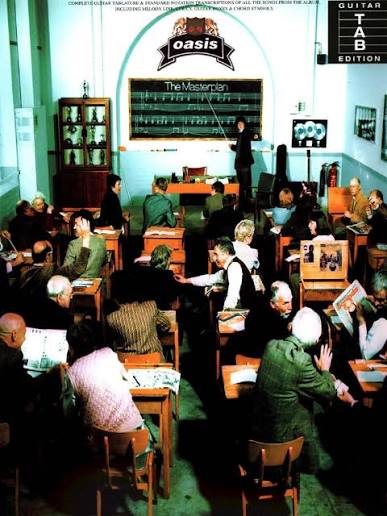
Compilation and live albums include The Masterplan (1998), a collection of B-sides that is often considered as strong as their studio albums, Familiar to Millions (2000), and Time Flies… 1994–2009 (2010).
Discography
Main articles on Wikipedia: Oasis discography and List of songs recorded by Oasis Studio albums
- Definitely Maybe (1994)
- (What's the Story) Morning Glory? (1995)
- Be Here Now (1997)
- Standing on the Shoulder of Giants (2000)
- Heathen Chemistry (2002)
- Don't Believe the Truth (2005)
- Dig Out Your Soul (2008)
Concert tours
- Definitely Maybe Tour (1994–1995)
- (What's the Story) Morning Glory? Tour (1995–1996)
- Be Here Now Tour (1997–1998)
- Standing on the Shoulder of Giants Tour (1999–2001)
- The Tour of Brotherly Love (2001)
- 10 Years of Noise and Confusion Tour (2001)
- Heathen Chemistry Tour (2002–2003)
- Don't Believe the Truth Tour (2005–2006)
- Dig Out Your Soul Tour (2008–2009)
- Oasis Live '25 Tour (2025)
- Oasis Live '27 Tour (2027)
Most Known Compositions and Performances
Oasis’s most enduring songs have become embedded in the cultural fabric of Britain and beyond. “Wonderwall” is their most streamed song by a wide margin, a ubiquitous acoustic anthem that has been covered by countless artists. “Don’t Look Back in Anger” is the band’s most played song on UK radio and television since 2000, its piano-driven chorus a staple of football terraces and pub singalongs. “Live Forever” was written as a direct rebuttal to the nihilism of grunge, offering a soaring, optimistic vision of transcendence. “Champagne Supernova” is a sprawling, psychedelic epic that closes Morning Glory with a sense of cosmic wonder. “Supersonic” and “Cigarettes & Alcohol” remain raw, adrenaline-fueled statements of intent.
The band’s live performances were legendary for their intensity and the unpredictable chemistry between the Gallagher brothers. The 1996 Knebworth concerts were the largest of their career, capturing Oasis at the absolute peak of their powers. The 2025 reunion tour, documented in the film Don’t Look Back in Anger, proved that the songs retained their power to unite vast crowds in collective euphoria.
Works on Film and Documentaries
Oasis’s music has been featured in numerous films, often used to evoke a specific sense of time, place, or emotional release. “Wonderwall” appeared in the 1997 film Mommy and has been used in countless other soundtracks. “Round Are Way” was featured in Danny Boyle’s A Life Less Ordinary (1997), and the band contributed three tracks to the soundtrack of the 2005 football film Goal!. “Cigarettes & Alcohol” was included in the Britpop thriller Kill Your Friends (2015). “Champagne Supernova” was used in the trailer for the 2026 film Project Hail Mary, though it did not appear in the final film.
The most significant documentary about the band is Oasis: Don’t Look Back in Anger (2026), directed by Will Lovelace and Dylan Southern and written by Steven Knight. The film charts the band’s 2025 reunion tour, beginning with the notorious 2009 Paris backstage incident that ended the band and following the Gallagher brothers through rehearsals and a global tour. It has been praised as a surprisingly moving portrait of reconciliation, capturing both the tension of the lead-up and the triumphant release of the concerts. Earlier documentaries include Live Forever (2004), which chronicled the Britpop era, and Supersonic (2016), a critically acclaimed film by Mat Whitecross that covered the band’s rise from formation to their Knebworth triumph.
Legacy
Oasis’s legacy is complex and fiercely debated. They were, unquestionably, the defining British rock band of the 1990s. They achieved eight UK Number One albums and eight UK Number One singles, and their songs remain in constant rotation on radio, in stadiums, and in the collective memory of multiple generations. Furthermore, they gave British music international swagger at a time when American grunge dominated the global conversation. Their working-class, no-nonsense attitude and their refusal to apologize for their ambition inspired a generation of young musicians.
Yet their legacy is also marked by the excesses and conflicts that tore them apart. The Guardian once called them “the most damaging pop cultural force in recent British history,” a testament to the polarizing nature of their cultural impact. The sibling rivalry between Liam and Noel became a tabloid staple, often overshadowing the music. But the 2025 reunion, and the emotional response it generated, demonstrated that for all the chaos and contradictions, Oasis’s songs possess a rare and enduring power. They are anthems of escape, defiance, and hope—songs that make people feel, as Noel Gallagher once put it, that they are part of something “biblical.”
Oasis are a band of contradictions: raw yet melodic, arrogant yet vulnerable, deeply traditional yet utterly of their moment. Their music, built on deceptively simple chord progressions and elevated by Noel Gallagher’s melodic gift and Liam Gallagher’s unmistakable voice, tapped into a vein of universal emotion. From the Manchester Boardwalk to Knebworth, from the Britpop battle with Blur to the bitter Paris split and the triumphant 2025 reunion, their story is one of the most compelling in rock history. More than three decades after “Supersonic” first burst from the speakers, Oasis’s songs continue to live forever—not just as relics of the 1990s, but as living, breathing anthems that still have the power to make a stadium full of strangers sing as one.
Browse in the Sheet Music Library:
Or browse in the categories menus & download the Library Catalog PDF:
Awards and nominations
Main article on Wikipedia: List of awards and nominations received by Oasis
Brit Awards: 7 wins from 17 nominations, including Outstanding Contribution to Music and Best Album of the Last 30 Years for "(What's the Story) Morning Glory?".
Grammy Awards: 3 nominations, including Best Rock Vocal Performance by a Duo or Group and Best Rock Song.
NME Awards: 17 wins from 26 nominations.
Q Awards: 9 wins from 19 nominations.
MTV Europe Music Awards: 4 wins from 4 nominations.
Ivor Novello Awards: 2 wins from 3 nominations.
Oasis has also been recognized by other award bodies, such as the MTV Japan Awards, UK Video Music Awards, and the Mercury Prize.