
Scores for all instruments: 16,000+ (active and growing), over 236,000 pages.
All genres and levels: Jazz & Blues, Rock & Pop, Classical & Contemporary, Film & Musicals;
books & biographies; methods, études, play-along tracks (MP3) for Jazz & Rock.
Access & benefits: US$15.99 one-time payment, valid for lifetime, full Library access.
Table of Contents
Who is Olegario Díaz?

The best sheet music download from our Library.
Please, subscribe to our Sheet Music Library.
Olegario Diaz: The Complete Musician—A Comprehensive Biography
In the vast landscape of modern jazz and Latin jazz, few artists embody the dual role of performer and educator with as much dedication as Olegario Diaz. A Venezuelan-born pianist, composer, arranger, and author, Diaz has spent decades navigating the worlds of performance, education, and music production with remarkable versatility. His journey from Caracas to the hallowed halls of Berklee College of Music and the Manhattan School of Music, and his subsequent career performing alongside legends such as Tito Puente, Celia Cruz, and Randy Brecker tell a story of artistic commitment and cross-cultural musical exploration.
Diaz is perhaps best understood as a complete musician—one who not only performs and composes at the highest level but also dedicates himself to decoding the language of jazz for future generations through his numerous instructional books. His discography, spanning from the early 1990s to the present day, reveals a musician deeply rooted in the post-bop tradition while maintaining a distinctive Latin American sensibility. This article explores every facet of Olegario Diaz's remarkable career, from his formative years in Venezuela to his current status as one of the most respected jazz educators and performers in the Americas.
Search your favorite sheet music in the Sheet Music Library Catalog




Early Life and Formative Years in Venezuela
Olegario Diaz was born in Caracas, Venezuela, a city that would remain a spiritual and creative home throughout his life. Growing up in the vibrant cultural environment of the Venezuelan capital, Diaz was exposed to a rich tapestry of musical influences from an early age. Caracas, with its thriving jazz scene and deep Afro-Caribbean musical traditions, provided the perfect incubator for a young musician with eclectic tastes.
At the tender age of seventeen, Diaz made the life-changing decision to move to the United States to pursue formal musical education. This leap of faith, undertaken at such a young age, demonstrated an early commitment to mastering his craft that would define his entire career. The decision to leave Venezuela for the United States was not merely about escaping the familiar; it was about immersing himself in the epicenter of jazz education and performance.
Diaz enrolled at Berklee College of Music in Boston, Massachusetts, where he earned his Bachelor's degree in composition in 1978. Berklee, renowned for its rigorous contemporary music curriculum, provided Diaz with a solid foundation in harmony, arranging, and composition. The institution's emphasis on practical, performance-oriented education suited Diaz's ambitions perfectly, and he absorbed the lessons of his teachers while beginning to develop his own distinctive voice as a pianist and composer.
Advanced Studies at the Manhattan School of Music
Following his undergraduate studies at Berklee, Diaz continued his education at the Manhattan School of Music in New York City, where he earned a Master's degree in Jazz Studies in 1986. This period of advanced study marked a crucial phase in Diaz's artistic development. The Manhattan School of Music, with its distinguished faculty and rigorous academic standards, offered Diaz the opportunity to deepen his understanding of jazz theory, history, and performance practice.
New York City in the 1980s was a particularly fertile environment for a young jazz musician. The city's jazz clubs, sessions, and concert halls provided endless opportunities for musical growth and networking. During his time at the Manhattan School of Music, Diaz not only honed his technical skills but also began to build the professional relationships that would sustain his career for decades to come. It was during this period that he developed what one critic would later describe as "an excellent Venezuelan modern pianist" aesthetic.
Performing Career: Collaborations with Legends
Olegario Diaz's performing career reads like a who's who of Latin jazz and salsa. He has performed as a pianist on both the East and West Coasts of the United States with an extraordinary array of artists, including Tito Puente, Willie Bobo, Celia Cruz, Mario Bauzá Big Band, Paquito D'Rivera, Victor Paz, Daniel Ponce, Johnny Pacheco, Willie Colón, José Fajardo, and Louie Ramírez.
The significance of these collaborations cannot be overstated. Tito Puente, known as "El Rey de los Timbales," was one of the most influential figures in Latin music history. Performing with Puente placed Diaz in the lineage of the great Latin jazz pianists who had preceded him. Similarly, working with Celia Cruz, the "Queen of Salsa," exposed Diaz to the highest levels of Afro-Cuban vocal artistry and the demanding requirements of accompanying a legendary vocalist. Willie Bobo, a master percussionist and bandleader, further deepened Diaz's understanding of the rhythmic foundations of Latin jazz.
The Mario Bauzá Big Band, led by one of the founding fathers of Afro-Cuban jazz, provided Diaz with invaluable experience in big band arranging and performance. Paquito D'Rivera, the Cuban-born saxophonist and clarinetist, is one of the most technically gifted and musically adventurous artists in Latin jazz, and his collaborations with Diaz represent meetings of like-minded virtuosos.
In addition to his work with Latin jazz and salsa artists, Diaz has also collaborated with leading figures in mainstream jazz. For his SteepleChase debut album, he surrounded himself with renowned musicians from the New York jazz scene: Rich Perry on tenor saxophone, Ron McClure on bass, and Billy Hart on drums. For his second SteepleChase album, he reunited with Randy Brecker, Lewis Nash, Ron McClure, and Rich Perry, adding these heavyweight names to his growing discography. Subsequent albums have featured such luminaries as Alex Sipiagin, Seamus Blake, Scott Colley, Jeff "Tain" Watts, James Genus, Nate Smith, Bob Franceschini, and Bill Stewart.
Recording Career and Discography
Diaz's recording career spans several decades, with a discography that reflects his dual commitments to Latin jazz and post-bop idioms. His earliest recordings date back to the early 1990s, and he has since produced a steady stream of albums that document his evolution as a pianist and composer.
His 1992 album Casi en el Guaire represents an early landmark in his recording career. Recorded for Archivo de la Ciudad, the album features a mix of standards and originals, including his composition "Real y Medio" and a distinctive interpretation of Charlie Parker's "My Little Suede Shoes". The title itself—"Almost in the Guaire"—references the Guaire River, which runs through Caracas, signaling Diaz's ongoing engagement with his Venezuelan roots even while working within the jazz tradition.
Jazz Figures, released in 2003, is a solo piano album that showcases Diaz's command of the instrument in its most exposed setting. The album features interpretations of standards such as Cole Porter's "All of You," George Gershwin's "Embraceable You," and Antônio Carlos Jobim's "Desafinado," alongside jazz classics like John Coltrane's "Giant Steps". A solo piano recording demands the highest level of technical proficiency and harmonic sophistication, and Jazz Figures demonstrates that Diaz possesses both in abundance.
Diaz's association with SteepleChase Records has been particularly fruitful. His debut for the label, Having Fun, was released in 2011 and featured Rich Perry, Ron McClure, and Billy Hart. The album includes original compositions such as "Salvador" and "To Mom" alongside standards like Thelonious Monk's "In Walked Bud" and Dizzy Gillespie's "Groovin' High". The title track, "Having Fun," captures the playful spirit that Diaz brings to his music-making, even when navigating complex harmonic territory.
The Skyline Sessions, released in 2012, expanded the ensemble to include Randy Brecker on trumpet and Lewis Nash on drums alongside Perry and McClure. The album's repertoire includes "You Stepped Out of a Dream," "You Are My Everything," "Easy Come, Easy Go," "Just Friends," and Diaz's original "Rosa del Viento," as well as Wayne Shorter's "Eronel". Lewis Nash, a classmate of Diaz from City College, remarked of the session: "It was a wonderful session, and I'm sure that the joy we all experienced that day can also be heard and felt when listening to this recording".
Basquiat By Night/Day, released in 2014, represents one of Diaz's most ambitious projects. The album is a quintet recording that pays tribute to Jean-Michel Basquiat, the New York-born Haitian-American artist whose work profoundly moved Diaz. The title track and "J. M. Basquiat" reflect Diaz's deep appreciation of the visual arts and his ability to translate artistic inspiration across media. The album also features "Dance Steps," "Wayne and Joe," "Astoria Years," "Trane Station," "Try Not to Lose It," and "Alone at Last," alongside a rendition of Irving Berlin's "They Say It's Wonderful".
Aleph in Chromatic, released in 2016, is Diaz's fourth SteepleChase album and features seven originals alongside two standards. The album opens with "Grolnick," named after the late American pianist Don Grolnick, whom Diaz cites as a major influence on his aesthetic. "Samba Gandhi" reflects Diaz's philosophical allegiances, while "Broadway & 96th" is named after the New York City location of a regular early-career gig. The sprightly "Run Tino Run" celebrates the memory of Diaz's recently deceased canine companion. The ensemble for this recording includes Alex Sipiagin on trumpet, Bob Franceschini on saxophone, James Genus on bass, and Nate Smith on drums.
I Remember Chet, released in 2018, is Diaz's fifth SteepleChase album and his tribute to the legendary trumpeter and vocalist Chet Baker. The album features Diaz's interpretations of songs associated with Baker, including "Everything I Love," "Star Eyes," "You'd Be So Nice to Come Home To," "I Remember Chet," "You've Changed," "Bernie's Tune," "Rise and Fall Baker," "CTA," and "Oh You Crazy Moon". The album represents Diaz's ability to curate a program that tells a story about a fellow artist, treating Baker's legacy with the reverence of a biographer.
Musical Style and Improvisational Approach
Olegario Diaz's musical style is best described as Latin-tinged post-bop. He operates firmly within the modern jazz tradition, drawing on the harmonic innovations of the bebop era while incorporating the rhythmic vitality of Afro-Caribbean music. His playing is characterized by melodic clarity, harmonic sophistication, and a rhythmic sensibility that owes as much to his Venezuelan heritage as it does to his formal jazz education.
One of the defining features of Diaz's style is his attention to melody. Even in the most harmonically complex passages, his improvisations retain a singable quality that reflects his deep respect for the jazz tradition's song-based origins. Reviewers have noted that his original compositions are "melodic and focused," a quality that can be attributed both to his natural gifts and to his extensive experience writing jingles and music for advertising.
Diaz's approach to improvisation is deeply informed by the work of the great post-bop innovators. He has dedicated entire books to the study of John Coltrane, Michael Brecker, Wayne Shorter, Herbie Hancock, Chris Potter, Jerry Bergonzi, and Bob Berg, and their influence can be heard in his own playing. His improvisations often feature chromatic lines, intervallic leaps, and harmonic substitutions that reveal a thorough understanding of the modernist jazz vocabulary.
The Latin element in Diaz's music is ever-present but rarely overt in a clichéd sense. He does not simply superimpose Latin rhythms onto jazz harmony; instead, he integrates them organically, allowing the rhythmic and harmonic elements to inform each other. This approach is evident in compositions like "Samba Gandhi," which is described as "sinewy bossa," and "Broadway & 96th," which is "samba inflected".
Diaz's pianistic technique combines the percussive attack of Latin jazz pianists with the legato phrasing of mainstream jazz. He is equally comfortable in solo, trio, and larger ensemble settings, demonstrating the adaptability that has made him a first-call sideman for so many bandleaders. His comping behind soloists is sensitive and supportive, while his own solos display a restless creative energy that always serves the music.
Compositional Output
As a composer, Diaz has contributed a substantial body of original work to the jazz repertoire. His compositions often draw on personal experiences, paying tribute to people, places, and ideas that have shaped his life. "Grolnick" honors Don Grolnick, the pianist and composer whose work with James Taylor and Steely Dan made him a major influence on Diaz's aesthetic. "Broadway & 96th" commemorates the location of an early career gig in New York City. "Run Tino Run" is a joyful celebration of a beloved pet.
Other original compositions include "Salvador," "To Mom," "Rosa del Viento," "Real y Medio," and "Joropito". The latter two titles suggest Diaz's engagement with Venezuelan musical traditions—the joropo is a traditional Venezuelan musical genre characterized by its distinctive rhythmic patterns and harp-driven melodies. By incorporating such elements into his jazz compositions, Diaz participates in the broader movement of Latin American jazz musicians who have sought to create a synthesis of their native traditions and the African-American art form of jazz.
"Alone at Last," "Dance Steps," "Wayne and Joe," and "Trane Station" are among his other originals, each representing a different facet of his compositional personality. "Wayne and Joe" is likely a tribute to Wayne Shorter and Joe Henderson, two saxophonists whose influence on Diaz is well documented. "Trane Station" similarly references John Coltrane, acknowledging the profound impact of the saxophone colossus on Diaz's musical thinking.
Educational Books and Instructional Methods
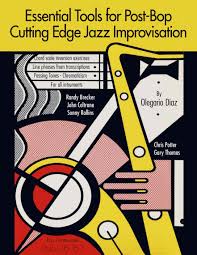
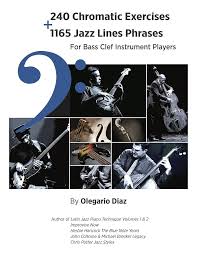
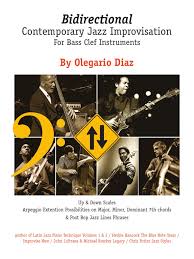
Olegario Diaz has established himself as one of the most prolific authors of jazz instructional materials in the world. His books, which number more than thirty according to some sources, cover a wide range of topics related to jazz improvisation, piano technique, and the styles of specific jazz masters.
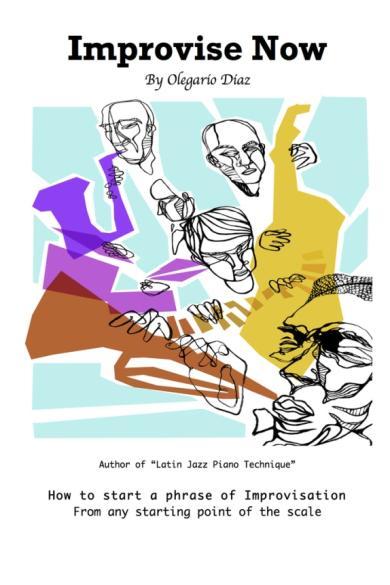
His first book, Improvise Now, laid the foundation for a series of publications that would establish Diaz as a leading voice in jazz pedagogy. The book addresses fundamental concepts of jazz improvisation, including scale choices, arpeggio patterns, and the development of melodic lines. It is designed for musicians of all instruments, reflecting Diaz's belief that the principles of jazz improvisation are universal.
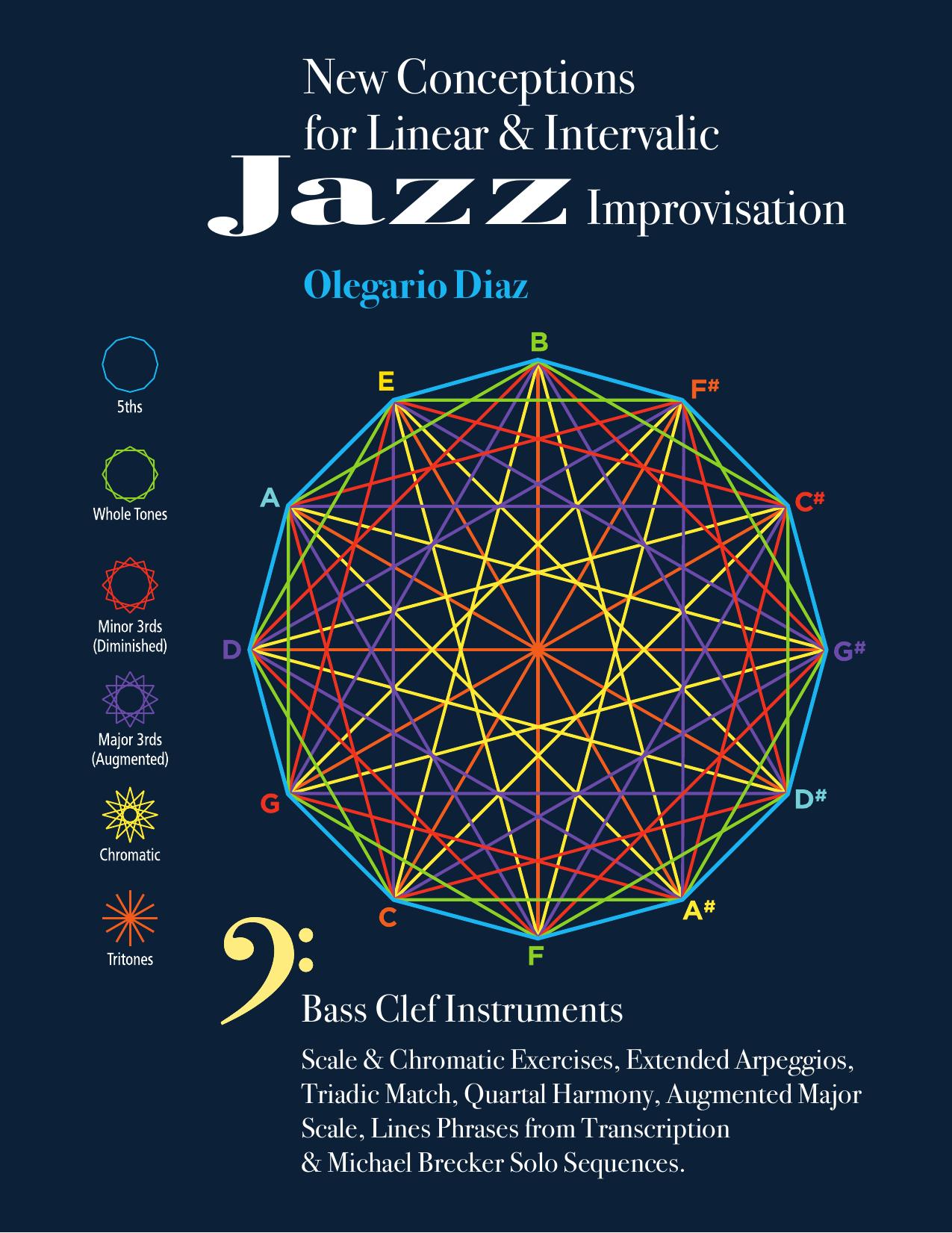
220 Chromatic Exercises & 1165 Jazz Lines & Phrases for the Modern Improviser represents an expansion and refinement of the methods introduced in Improvise Now. The book is divided into sections on scales, arpeggios, chromatic exercises, and jazz line phrases drawn from the work of Brecker, Berg, Mintzer, Coltrane, Henderson, and other modern masters. These exercises are designed to be transposed into all twelve keys, ensuring that students develop fluency across the entire range of tonalities.
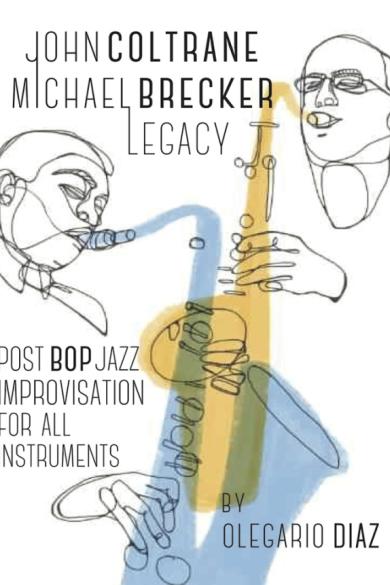
The John Coltrane Michael Brecker Legacy is Diaz's third book and represents a deep dive into the improvisational language of two of the most influential saxophonists in jazz history. The book examines Coltrane's harmonic innovations and Brecker's rhythmic sophistication, offering students a comprehensive guide to the post-bop idiom.
Chris Potter Jazz Styles focuses on the work of one of the most important saxophonists of the contemporary era. The book is divided into sections on scale exercises, arpeggios, chromatic exercises, and jazz line phrases drawn from transcriptions of Potter's solos. Diaz has expressed his admiration for Potter's playing, and the book serves as both a tribute and a pedagogical tool.
Wayne Shorter Retrospective: Miles Davis Quintet Blue Note Years examines Shorter's work with the Miles Davis Quintet and his own Blue Note recordings, providing students with insight into the compositional and improvisational techniques of one of jazz's greatest composers.
Jerry Bergonzi: Emblematic Jazz Styles is a celebration of the creative plasticity of musical improvisation, drawing on transcriptions of Bergonzi's playing to provide students with a comprehensive guide to his approach. Diaz has stated that he had the honor of sharing his work with Bergonzi, receiving feedback that encouraged him to continue his pedagogical mission.
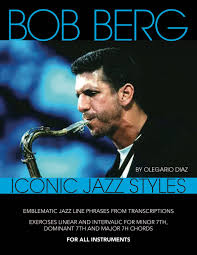
Inventions and Dimensions: Michael Brecker Jazz Styles and Bob Berg Iconic Jazz Style represent further explorations of the saxophone tradition, while Herbie Hancock: The Blue Note Years applies Diaz's analytical approach to the great pianist and composer.
In addition to his books on improvisation, Diaz has authored Latin Jazz Piano Technique, a two-volume method for playing Latin rhythms on the piano. The first volume, published in 1991, teaches pianists how to voice Latin rhythms from any chord inversion, according to the melody. The second volume expands on these concepts, providing a comprehensive guide to the Afro-Caribbean rhythmic vocabulary that is essential for any pianist working in Latin jazz.
Diaz's pedagogical philosophy emphasizes the importance of transposition, rhythmic variety, and the development of a personal voice. He encourages students to move beyond static patterns and repetitive phrases, urging them to develop what he calls "creative plasticity"—the ability to adapt and evolve as an improviser. His books are used by students and professional musicians around the world.
Film and Media Music
Beyond his work as a performer and educator, Olegario Diaz has established a significant career in music production for advertising, film, and television. He is described as a music producer, composer, arranger, and musical director in the advertising industry and in soundtracks for advertising campaigns, film, and television. This commercial work has allowed Diaz to apply his musical skills in a different context while providing a stable income that supports his artistic endeavors.
One notable film credit is the 2018 Argentine film Maracaibo, directed by Miguel Ángel Rocca. A review of the film notes that "Music by Olegario Diaz helps give substance to this low budget movie," acknowledging the role that his score plays in supporting the film's dramatic narrative. The film, which deals with themes of grief and revenge, benefits from Diaz's sensitive musical accompaniment.
Diaz's experience writing jingles and advertising music has had a positive impact on his jazz composition. As one reviewer noted, "the original compositions are melodic and focused" as one would expect from someone with extensive experience in commercial music. The discipline of writing music that must communicate effectively in thirty or sixty seconds has helped Diaz develop a clarity and directness that serves him well in his longer jazz compositions.
In 2026, Diaz continues to be active as a performer, with scheduled appearances including a performance with his quartet at the Centro Venezolano Americano. He has also performed at venues such as The Betsy Hotel in Miami Beach, where he presented Latin jazz in the hotel's lobby bar as part of its long-running live music series.
Influences and Legacy
Olegario Diaz's musical influences reflect the full range of modern jazz. His book titles alone—John Coltrane, Michael Brecker, Wayne Shorter, Herbie Hancock, Chris Potter, Jerry Bergonzi, Bob Berg—reveal the saxophonists, pianists, and composers who have shaped his musical imagination. Don Grolnick, the late pianist and composer, is cited as a "major influence on the core Diaz aesthetic". Grolnick's work as a sideman with James Taylor, Steely Dan, and Paul Simon, as well as his own recordings as a leader, demonstrated a model of musical versatility and integrity that Diaz has sought to emulate.
The Latin jazz tradition, as represented by Tito Puente, Celia Cruz, Mario Bauzá, and Paquito D'Rivera, is equally central to Diaz's musical identity. These artists demonstrated that Latin music and jazz are not separate traditions but rather deeply interconnected streams of the same river. Diaz's career can be understood as an extension of their pioneering work.
Diaz's legacy is already substantial. As a performer, he has contributed to dozens of recordings and performed with the most important figures in Latin jazz and mainstream jazz. As a composer, he has created a body of work that reflects his Venezuelan heritage and his profound engagement with the jazz tradition. As an educator, he has provided students around the world with the tools they need to develop their own voices as improvisers. As a producer and arranger, he has demonstrated the relevance of jazz skills in the commercial music world.
Looking to the future, Diaz continues to perform, record, and teach, ensuring that his influence will be felt for generations to come. His recent album I Remember Chet shows that he remains creatively vital, and his ongoing pedagogical work ensures that his methods will continue to shape the next generation of jazz musicians. In a career that has spanned more than four decades, Olegario Diaz has proven himself to be not just a gifted pianist and composer, but a true custodian of the jazz tradition—one who honors the past while building the future.
Olegario Díaz
Olegario Diaz embodies the ideal of the complete musician. Born in Caracas, educated at Berklee and the Manhattan School of Music, he has performed with the greatest names in Latin jazz and mainstream jazz, recorded a substantial discography as a leader, composed a body of original music that reflects his dual heritage, and authored more than thirty instructional books that have helped countless musicians develop their own voices.
His music is at once deeply rooted in tradition and unmistakably personal. The post-bop harmonic vocabulary, the Afro-Caribbean rhythmic sensibility, the melodic clarity, and the improvisational adventurousness all combine to create a sound that is recognizably his own. As a performer, he brings joy and intensity to every setting. As an educator, he has demystified the language of jazz for students around the world. As a composer, he has created works that stand alongside the standards he so lovingly interprets.
In the pantheon of Venezuelan jazz musicians who have made their mark on the international stage, Olegario Diaz occupies a special place. He is not only a representative of his country's rich musical heritage but also a global citizen of jazz, equally at home in Caracas and New York, in the recording studio and the concert hall, in performance and pedagogy. His legacy is one of dedication, versatility, and artistic excellence—a legacy that will inspire musicians for generations to come.
Browse in the Sheet Music Library:
Or browse in the categories menus & download the Library Catalog PDF: