
Scores for all instruments: 16,000+ (active and growing), over 236,000 pages.
All genres and levels: Jazz & Blues, Rock & Pop, Classical & Contemporary, Film & Musicals;
books & biographies; methods, études, play-along tracks (MP3) for Jazz & Rock.
Access & benefits: US$15.99 one-time payment, valid for lifetime, full Library access.
Table of Contents
Remembering Pat Martino, born on this day in 1944
The best sheet music download from our Library.
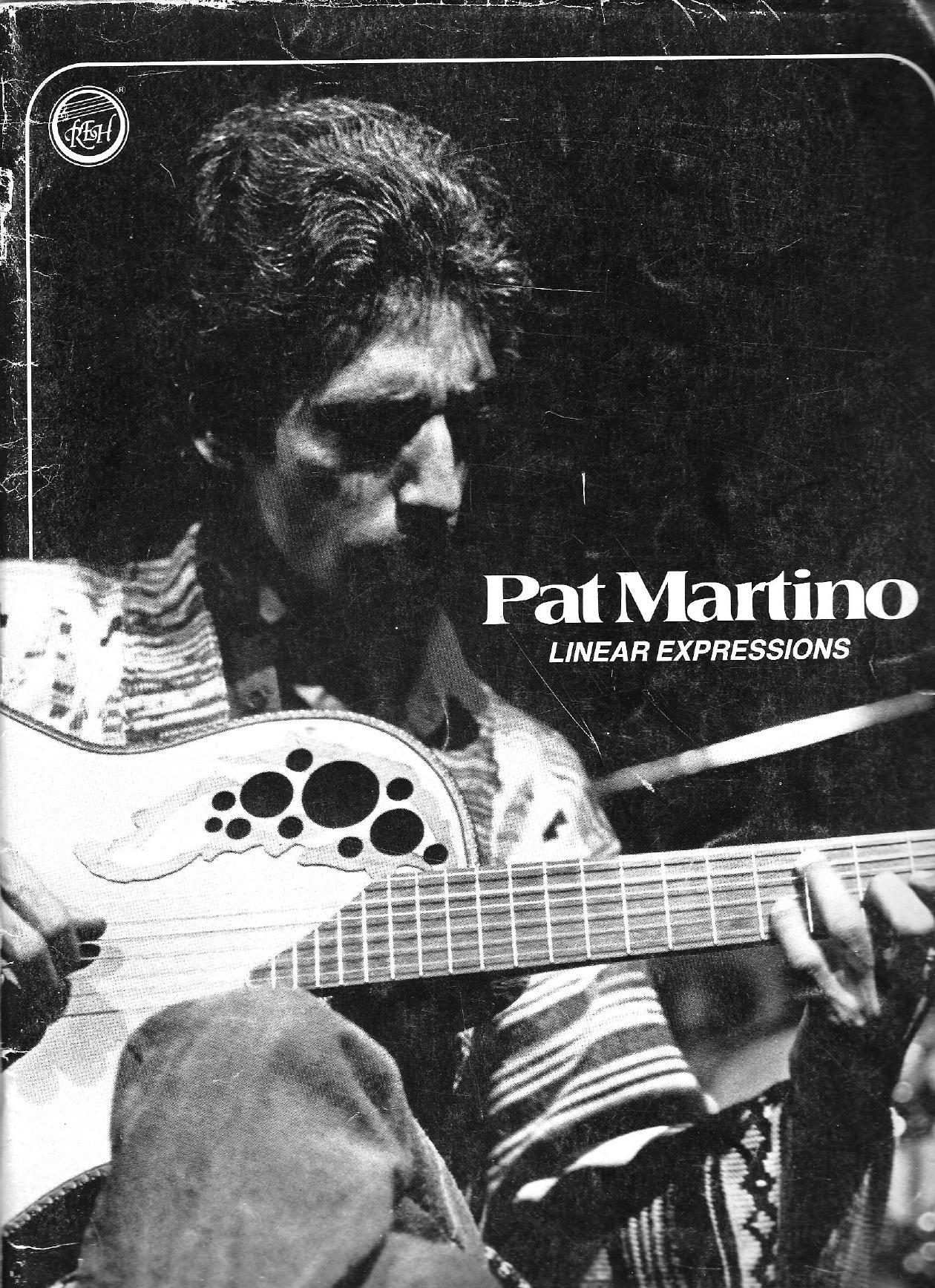


Please, subscribe to our Sheet Music Library. Sheet music should be accessible and affordable for all musicians, from professionals to absolute beginners.
Pat Martino: The Architect of Modern Jazz Guitar
Pat Martino—born Patrick Carmen Azzara on August 25, 1944, in Philadelphia, Pennsylvania—was not merely a jazz guitarist. He was a force of nature, a philosophical thinker of the fretboard, and one of the most singular voices in the history of improvised music. When he passed away on November 1, 2021, at the age of 77, the jazz world lost a giant whose influence had permeated the DNA of jazz guitar itself.
What makes Martino's story so extraordinary is not just his musicianship—though that alone would secure his place in history—but the improbable arc of his life. He was a child prodigy who became a professional at fifteen, a virtuoso who suffered a catastrophic brain aneurysm that erased his memory and musical knowledge, and then a man who, against all odds, relearned his craft from scratch and returned to the highest echelons of jazz. This is the story of Pat Martino: guitarist, composer, philosopher, and survivor.
Biography
Early Years in Philadelphia (1944–1959)
Pat Martino was born into a musical household in Philadelphia. His father, Carmen "Mickey" Azzara, was a tailor who sang in local clubs and had briefly studied guitar with the legendary Eddie Lang. It was through his father that Martino was first exposed to jazz, and the elder Azzara would take his young son to all the city's hot spots to hear and meet the greats, including Wes Montgomery. "I have always admired my father and have wanted to impress him," Martino later reflected. "As a result, it forced me to get serious with my creative powers".
Martino began playing guitar at the age of twelve, secretly experimenting with his father's instrument. His natural aptitude was immediately apparent. During his visits to his music teacher, Dennis Sandole, the young Martino would often encounter another gifted student: John Coltrane. The legendary saxophonist would treat the teenager to hot chocolate as they discussed music together—an early encounter that would shape Martino's artistic consciousness.
Search your favorite sheet music in the Sheet Music Library Catalog


Beyond Coltrane, Martino drew inspiration from Wes Montgomery, whose album Grooveyard had "an enormous influence" on him, and from Johnny Smith, the virtuosic guitarist known for his work with Stan Getz. "He seemed to me, as a child, to understand everything about music," Martino recalled of Smith.
The Prodigy Emerges (1959–1967)
At just fifteen years old, Martino made a decision that would define his life: he left school and Philadelphia to pursue music full-time, relocating to New York City. Upon arriving in the jazz mecca, he quickly secured a regular gig at Small's Paradise, a renowned jazz club in Harlem that was known for developing exceptional young talent. He split his time between Small's Paradise and Club Harlem in Atlantic City, New Jersey.
Martino's first road gig was with jazz organist Charles Earland, a high school friend. His reputation spread rapidly, and he was soon recruited by bandleader Lloyd Price to play onstage with musicians like Slide Hampton and Red Holloway. He moved to Harlem to immerse himself in the "soul jazz" played by Earland and others. "Previously, I had heard all the white man's jazz. I never heard that other part of the culture," he remembered.
The organ trio concept—guitar, Hammond B-3 organ, and drums—had a profound influence on Martino's rhythmic and harmonic approach. He remained in this idiom as a sideman, gigging with Jack McDuff, Don Patterson, Jimmy Smith, Richard "Groove" Holmes, and Jimmy McGriff. These organ combos, with their driving rhythms and blues-infused harmonies, would forever shape Martino's sound.
The Prestige Years and Early Masterpieces (1967–1976)
An icon before his eighteenth birthday, Martino was signed as a leader for Prestige Records when he was just twenty years old. His debut album as a leader, El Hombre, was released in 1967 and solidified his reputation as a fleet-fingered bebopper who could find his voice within the bluesy soul of an organ trio. The album featured Trudy Pitts, an under-appreciated organist with whom Martino had been working.
What followed was a remarkable string of albums that showcased Martino's evolution as an artist:
- Strings! (1967) - Featuring all original compositions
- East! (1968)
- Baiyina (The Clear Evidence) (1968) - One of jazz's first successful ventures into psychedelia, weaving Indian influences into the jazz guitar idiom
- Desperado (1970) - Featuring 12-string guitar explorations
- Consciousness (1974) - Featuring more electric instrumentation
These albums were not merely virtuosic displays; they were bold artistic statements that pushed the boundaries of what jazz guitar could be. Martino was experimenting with Indian modalities, psychedelic textures, and increasingly complex harmonic structures.
The Crisis: Brain Aneurysm and Amnesia (1980–1987)
In 1976, Martino began experiencing excruciating headaches. These were eventually diagnosed as symptoms of an arteriovenous malformation (AVM)—a congenital disorder of tangled blood vessels in the brain. In 1980, he suffered a severe brain aneurysm and underwent emergency surgery after being told his condition could be terminal.
The surgery saved his life but exacted a devastating price. When the anesthesia wore off, Martino could remember almost nothing. He barely recognized his parents and had no memory of his guitar or his career. He later described the experience as feeling as if he had been "dropped cold, empty, neutral, cleansed... naked". He had to relearn everything—how to read, how to speak, and how to play the instrument that had defined his life.
What makes this story remarkable is what happened next. Rather than accept his fate, Martino embarked on an intensive program of self-reclamation. Through studying his own historic recordings and with the help of computer technology, he managed to reverse his memory loss and return to form on his instrument. His past recordings eventually became "an old friend, a spiritual experience which remained beautiful and honest".
The Return (1987–1994)
In 1987, Martino made his triumphant return to the stage in New York City—a gig that was released as an album with the appropriately titled The Return. The album featured all original compositions: "Do You Have a Name?", "Slipback", "All That You Have", and "Turnpike".
He then took another hiatus when both of his parents became ill, and he didn't record again until 1994, when he recorded Interchange and The Maker. The Maker, recorded for the Japanese Paddlewheel label, featured compositions including "Noshufuru" and "You're Welcome to a Prayer".
Later Career and Final Years (1995–2021)
The post-recovery period saw Martino release some of his most acclaimed work. All Sides Now (1997) on Blue Note featured Martino sharing tracks with other famed guitarists, including Les Paul. Live at Yoshi's (2001) was nominated for the 2002 Grammy Award for Best Jazz Instrumental Album. The album, recorded at the renowned Oakland nightclub, featured a trio with Joey DeFrancesco on Hammond B-3 organ and burned with intensity from start to finish.
Remember: A Tribute to Wes Montgomery (2006) saw Martino paying homage to one of his earliest influences. The album featured Martino's reinterpretations of Montgomery classics including "Four on Six" and "West Coast Blues". This was followed by Think Tank (2003), Undeniable: Live at Blues Alley (2011), Alone Together (2012), Nexus (2015), and his final full-length album, Formidable (2017).
Due to a chronic respiratory disorder, Martino had to retire from performing in 2018. He died on November 1, 2021, in his hometown of Philadelphia, at the age of 77.
Music Style
The Martino Sound
Pat Martino's guitar sound was immediately recognizable. His tone was the standard jazz-guitar tone: mellow, organlike, nearly muffled. Yet within that traditional framework, he created something utterly distinctive. He used extremely high gauge strings—his high E string was a .015, which most guitarists would find almost unplayable. Despite this, he moved around the neck with incredible virtuosity.
Fareed Haque, a fellow guitarist and admirer, summed up Martino's style with remarkable clarity: "Lines, Blues and modern pentatonics, diminished and Chromatic harmonies but most of all—swing!!!" What a feel Pat has!!!"
The BeBop-Modal Bridge
Haque proposed a compelling thesis about Martino's historical significance: "Pat is the only major jazz guitarist to move from the traditional BeBop and Blues approach to a modern pentatonic/modal approach to jazz without abandoning the traditional jazz guitar sound and feel".
This is a crucial observation. In the 1960s, many jazz musicians were moving toward modal and post-bop approaches, but guitarists often struggled to bridge the gap between the bebop language and the newer harmonic concepts. Martino managed this transition seamlessly. He maintained the swinging, blues-inflected feel of the organ trio tradition while incorporating the harmonic sophistication of Coltrane and McCoy Tyner.
Tempo and Feel
Martino's sense of time was legendary. Russell Malone, another master guitarist, observed: "Pat's time was rock solid. He had a deep sense of time and that drive in his playing was like a locomotive. It was just so strong and forward moving".
Many modern improvisers play with a swagger, often behind the beat. But Martino could sometimes be very in front of the beat, giving the feeling of acceleration and excitement. This forward momentum, combined with his rock-solid time, created a sense of urgency and propulsion that was uniquely his.
The Technical Approach
Martino's technique was built on an extraordinarily deep understanding of the fretboard. He viewed the guitar not as a collection of arbitrary fingerings but as a logical system that could be understood through patterns and relationships. He developed a systematic approach to visualizing harmony, melody, and improvisation on the fretboard that he called "The Nature of Guitar".
His playing was at once mathematically dense and puritanical in its economy, capable of long bursts of harmonic complexity and stylistic flourishes that could cross from rockabilly-esque chicken scratch to ECM-style repetition.
Encounters with Other Artists
The Organ Trio Years
Martino's early career was defined by his work with organists. The list of B-3 giants he performed with reads like a who's who of the instrument: Charles Earland, Richard "Groove" Holmes, Jack McDuff, Don Patterson, Jimmy Smith, Trudy Pitts, Gene Ludwig, and Joey DeFrancesco.
These encounters were not merely gigs; they were formative experiences that shaped Martino's entire approach to music. The organ trio format—with its driving rhythms, blues-inflected harmonies, and emphasis on groove—became the foundation upon which Martino built his sound.
John Coltrane
Perhaps the most significant early encounter was with John Coltrane. As a young student visiting his teacher Dennis Sandole, Martino would regularly run into Coltrane, who would treat the youngster to hot chocolate as they talked about music. This mentorship, however informal, planted seeds that would bloom years later in Martino's more experimental work.
Wes Montgomery
Wes Montgomery was a towering influence on Martino. Martino heard Montgomery live through his father's connections and was deeply affected by the experience. This influence culminated decades later in Remember: A Tribute to Wes Montgomery (2006), where Martino paid homage to his hero while maintaining his own distinctive voice.
Les Paul
In a delightful crossing of generations, Martino collaborated with the legendary Les Paul on the 1997 album All Sides Now. The album also featured other guitarists including Joe Satriani and Charlie Hunter.
Joe Satriani
The connection with Joe Satriani is particularly interesting. Satriani, primarily known as a rock guitarist, was deeply influenced by Martino's approach to harmony. He remembered a jam session where Martino's use of chords—"He just moved the voicing up while the bass note was the same, but it sounded perfect"—expanded Satriani's harmonic consciousness. Years later, Satriani was invited to play on All Sides Now, and Martino surprised him by busting into Satriani's signature hit "Satch Boogie".
The Generational Bridge
Howard Paul, President of Benedetto Guitars, captured Martino's influence succinctly: "For legions of players over decades (including me in the mid-'70s) Pat was the generational bridge into post-bebop modern jazz, and the sound of Philadelphia".
Composition Characteristics
Original Compositions
Martino was a prolific composer whose original works have become standards in the jazz guitar repertoire. His compositions include:
- "El Hombre" - The title track from his debut album, a blues-drenched hard bop burner
- "Mac Tough" - A composition that became a staple of his live performances
- "Recollection" - A frequently recorded original that appeared on multiple albums
- "Catch" - Another original that appeared on his later work
- "Interchange" - The title track from his 1994 album
- "Strings" - From his 1967 album of the same name
- "Lean Years" - An early composition
- "Querido" - From the Strings! album
- "Mom" - A personal tribute
- "Starbright" - The title track from his 1976 Warner Bros. album
- "Law" - From the same album
- "Noshufuru" and "You're Welcome to a Prayer" - From The Maker
- "Do You Have a Name?", "Slipback", "All That You Have", "Turnpike" - From The Return
The Nature of His Compositions
Martino's compositions typically feature sophisticated harmonic structures, memorable melodies, and a strong rhythmic foundation. They often blend hard bop intensity with modal explorations, creating music that is both intellectually stimulating and deeply grooving.
Covers and Interpretations
In addition to his originals, Martino recorded numerous covers that became definitive interpretations. These include:
- "Sunny" (Bobby Hebb)
- "Alone Together" (Leo Reisman)
- "Along Came Betty" (Art Blakey)
- "Blue in Green" (Miles Davis)
- "Body and Soul" (Jack Hylton)
- "Days of Wine and Roses" (Henry Mancini)
- "Dreamsville" (Henry Mancini)
- "Footprints" (Wayne Shorter)
- "I Remember Clifford" (Benny Golson)
- "In a Sentimental Mood" (Duke Ellington)
- "'Round Midnight" (Thelonious Monk)
Music Harmony and Tonality Treatment
The Twelve-Point Star Concept
Martino developed a comprehensive system for understanding harmony on the guitar that he called the "Twelve-Point Star Concept". This system divides the octave into twelve parts and organizes them into patterns that reveal the relationships between chords and scales.
The system is based on the recognition that the guitar fretboard is not a linear instrument like the piano, but a grid of repeating patterns. Martino argued that the piano is linear with two repeating systems (seven white notes and five black notes), while the guitar requires a different kind of visualization.
Symmetrical Cycles
Martino developed what he termed "Symmetrical Cycles". These are systematic ways of moving through harmonic territory using symmetrical patterns. The diminished chord, which repeats itself every four frets, became a cornerstone of his approach. By working with each diminished chord in between, Martino developed a method for learning all twelve keys.
The Minor Perspective
In a 2001 interview, Martino spoke about his tendency "to see everything from a minor perspective". This orientation toward minor tonalities gave his playing a distinctive character—darker, more introspective, and harmonically rich than the more common major-oriented approach.
Modal Improvisation
Martino was a modal improviser, similar to John Abercrombie or Attila Zoller. However, unlike many modal players who might sacrifice harmonic specificity for color, Martino maintained a wide harmonic vocabulary that allowed him to navigate complex changes with precision.
The Grand Unified Field
Martino's harmonic theories have been described as a "Grand Unified Field of Harmony". His system sought to unify all harmonic possibilities into a coherent framework that could be applied to any musical situation. This was not merely an intellectual exercise; it was a practical system that allowed him to improvise with extraordinary freedom and accuracy.
Melodic and Formal Style
Melodic Construction
Martino's melodic style was characterized by:
- Long, flowing lines - His phrases often extended over multiple bars, creating a sense of continuous development
- Eighth-note intensity - His burning eighth-note lines were a hallmark of his style
- Chromatic sophistication - He used chromatic passing tones and approach notes with remarkable fluidity
- Pentatonic fusion - He integrated modern pentatonic concepts into a traditional jazz framework
- Blues inflection - Despite his harmonic sophistication, he never lost touch with the blues
Formal Structure
Martino's improvisations typically followed the structure of the underlying composition, but he was not bound by it. His solos often built from relatively simple statements to increasingly complex and intense passages, creating a sense of dramatic arc.
The Ballad Approach
While Martino was known for his up-tempo virtuosity, his ballad playing was equally remarkable. Russell Malone noted "his warm and beautiful touch on ballads". On Formidable, a couple of ballads performed in a trio setting showcased "Martino's mastery of tempo and illustrating that a smoldering flame can be just as hot as a raging inferno".
Influences
Early Influences
Martino's earliest influences came from his father. But the musicians who shaped his playing were:
- Johnny Smith - "In terms of precision and my need for almost a Virgo-type of representation of everything, my influences came from Johnny Smith, who was so precise". Smith's advanced technical facility and astonishing inventiveness left a deep impression
- Wes Montgomery - Montgomery's legacy, combined with Smith's influence, created the foundation for Martino's approach
- Dennis Sandole - Among the local guitarists, Sandole had the strongest influence
- John Coltrane - Through personal encounters and musical influence
Later Influences
As Martino's career progressed, he incorporated influences from:
- Indian music - As heard on Baiyina
- Psychedelic music - His late 1960s experiments with psychedelia
- Soul jazz and hard bop - The foundation of his sound
- Post-bop - The harmonic sophistication of the Coltrane-influenced generation
Martino's Influence on Others
Martino's influence on subsequent generations of guitarists cannot be overstated. As Ant Law wrote: "Martino (who preceded Metheny) hugely influenced the sonic characteristics of every living jazz guitar player, whether they like it, whether they admit it, or whether they are even aware of it or not. It's built into the DNA of jazz guitar at this point".
He influenced multiple generations of jazz guitarists, including Russell Malone, who acknowledged: "Pat Martino sounds like Pat Martino". Guitarists like Dave Stryker cited Martino as one of their biggest inspirations.
Legacy
The Father of Modern Jazz Guitar
For many, Pat Martino is "the father of modern jazz guitar whose pioneering approach has influenced generations of players". This is not hyperbole. His systematic approach to the guitar, his integration of modal and bebop languages, and his distinctive sound have shaped virtually every jazz guitarist who came after him.
The Philosophical Approach
Martino viewed the guitar as "simply a toy". This was not a dismissal but a profound philosophical stance. He saw the instrument as something that, once mastered, should become transparent—a means of expression rather than an end in itself. "The guitar has become a significant member of the family," he said. "Whenever I need that experience I go back to it, and it fulfills me".
The Educator
Martino was also a passionate educator, known for his kind, caring, and open approach to teaching. He taught online courses through TrueFire and published numerous instructional books. His educational materials, including "The Nature of Guitar," continue to influence students worldwide.
The Autobiography
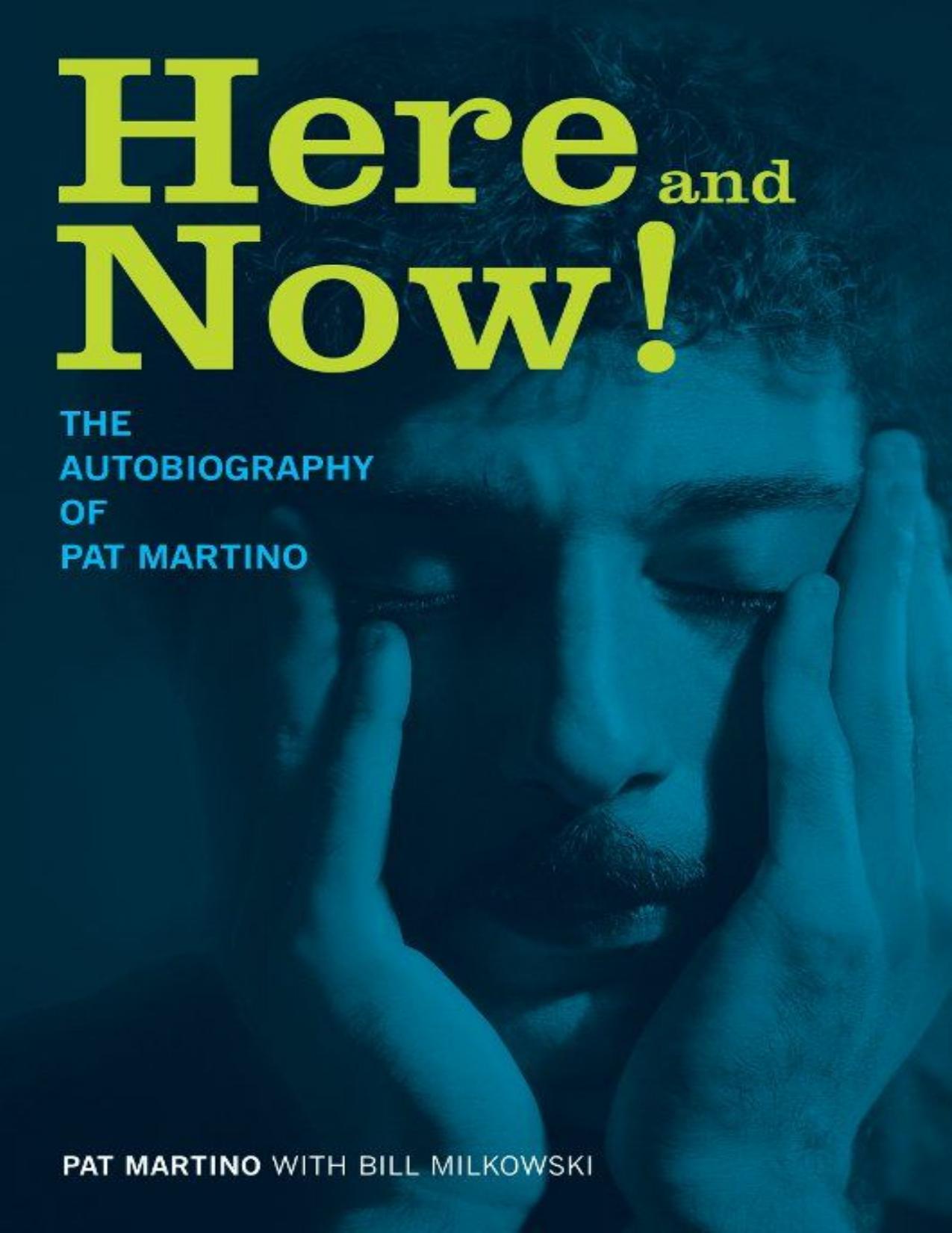
In 2011, Martino published his autobiography, Here and Now, co-authored with Bill Milkowski. The book offers a detailed account of his life, his music, and his remarkable recovery from brain surgery.
List of Works
Studio Albums
| Year | Album | Label |
|---|---|---|
| 1967 | El Hombre | Prestige |
| 1967 | Strings! | Prestige |
| 1968 | East! | Prestige |
| 1968 | Baiyina (The Clear Evidence) | Prestige |
| 1970 | Desperado | Prestige |
| 1972 | The Visit | Cobblestone |
| 1974 | Consciousness | Muse |
| 1975 | Exit | Muse |
| 1976 | Starbright | Warner Bros. |
| 1977 | Joyous Lake | Warner Bros. |
| 1987 | The Return | Muse |
| 1994 | Interchange | |
| 1994 | The Maker | Paddlewheel |
| 1995 | Stone Blue | |
| 1997 | All Sides Now | Blue Note |
| 2003 | Think Tank | Blue Note |
| 2006 | Remember: A Tribute to Wes Montgomery | Blue Note |
| 2012 | Alone Together | HighNote |
| 2017 | Formidable | HighNote |
Live Albums
| Year | Album | Label |
|---|---|---|
| 1972 | Live! | Muse |
| 2001 | Live at Yoshi's | Blue Note |
| 2011 | Undeniable: Live at Blues Alley | HighNote |
| 2015 | Nexus | HighNote |
Compilations and Reissues
| Year | Album | Label |
|---|---|---|
| 1999 | First Light | 32 Records |
| 2018 | The Christmas Collection | Craft Recordings |
Works on Films and Documentaries
Martino Unstrung (2008)
The most significant film about Martino is the documentary Martino Unstrung, directed by Ian Knox and funded by the Wellcome Trust in London. The film features neuropsychologist Paul Broks, who travels America in search of "the soul of legendary jazz guitarist Pat Martino who was brutally silenced by memory stripping brain surgery".
The documentary explores the mysteries of memory, identity, creativity, and the self. It features appearances by Delmar Brown, Red Holloway, John Patitucci, Les Paul, Joe Pesci, Carlos Santana, and Pete Townshend. Martino himself provides "the sublime soundtrack".
The film has been described as "perhaps the best documentary about a jazz musician ever made". It holds one's attention from beginning to end, rapidly shifting scenes "effortlessly but powerfully".
Open Road
Another documentary, Open Road, tells the story of Martino's difficult journey back from his brain aneurysm.
Live at Lotos Jazz Festival
Martino was also featured in a live performance film directed by Samuel Thiebaut.
Discography (Comprehensive)
The All About Jazz discography lists 75 albums in Martino's catalog. The following is a more detailed listing of his major releases:
Prestige Years (1967-1970)
- El Hombre (1967)
- Strings! (1967)
- East! (1968)
- Baiyina (The Clear Evidence) (1968)
- Desperado (1970)
Cobblestone/Muse Years (1972-1977)
- The Visit (1972)
- Consciousness (1974)
- Exit (1975)
Warner Bros. Years (1976-1977)
- Starbright (1976)
- Joyous Lake (1977)
The Return and Beyond (1987-1997)
- The Return (1987)
- Interchange (1994)
- The Maker (1994)
- Stone Blue (1995)
- All Sides Now (1997)
Blue Note Years (2001-2006)
- Live at Yoshi's (2001)
- Think Tank (2003)
- Remember: A Tribute to Wes Montgomery (2006)
HighNote Years (2011-2017)
- Undeniable: Live at Blues Alley (2011)
- Alone Together (2012)
- Nexus (2015)
- Formidable (2017)
Compilations
- First Light (1999)
- The Christmas Collection (2018)
Most Known Compositions and Recordings
Signature Compositions
Martino's most widely recognized compositions include:
- "El Hombre" - The title track of his debut album, a hard bop classic
- "Mac Tough" - A live favorite that showcases his burning intensity
- "Recollection" - A frequently recorded original
- "Catch" - Another original composition
- "Interchange" - The title track from his 1994 album
- "Starbright" - From his 1976 Warner Bros. album
- "Lean Years" - An early composition
- "Strings" - From the 1967 album
- "Querido" - From Strings!
Most Celebrated Recordings
- Live at Yoshi's (2001) - Grammy-nominated, featuring a trio with Joey DeFrancesco
- El Hombre (1967) - His groundbreaking debut
- Baiyina (The Clear Evidence) (1968) - His psychedelic experiment
- Consciousness (1974) - Included in Tom Moon's 1,000 Recordings to Hear Before You Die
- Remember: A Tribute to Wes Montgomery (2006) - His homage to his hero
- Formidable (2017) - His final album
Covers in Modern Music
Martino's Covers of Others
Martino recorded numerous covers throughout his career, including:
- "Sunny" (Bobby Hebb, 1966)
- "Consciousness" (Eric Kloss)
- "Man and Woman" (1967)
- "Blue Bossa" (Kenny Dorham)
- "Days of Wine and Roses" (Henry Mancini, 1977)
- "Fall" (1976)
- "I Remember Clifford" (Benny Golson, 1977)
- "Alone Together" (Leo Reisman, 1972)
- "West Coast Blues" (Wes Montgomery, 2006)
- "Groove Yard" (2006)
- "Both Sides Now" (Joni Mitchell)
- "I'm Confessin' (That I Love You)" (Chris Smith)
- "Too High" (Stevie Wonder)
Modern Artists Covering Martino
The Alternative Guitar Summit has released two tribute albums honoring Martino: Honoring Pat Martino, Vol. 1 (2022) and Honoring Pat Martino, Vol. 2 (2026). Volume 2 includes performances of "Villa Hermosa," "Lean Years," "Remembrance," "A Blues for Mickey O," "City Lights," "El Hombre," "Song Bird," and "A Portrait of Diana".
Various guitarists continue to perform Martino's compositions in jazz clubs and concert halls around the world.
His Music in Films
Martino Unstrung (2008)
Martino's music serves as the soundtrack for the documentary about his own life. The film explores his remarkable journey from amnesia back to artistic mastery.
Other Film Appearances
Beyond the documentaries about his life, Martino's music has been featured in various film and television contexts, though he was not primarily known as a film composer.
Famous Performers of His Music
The Tributes
A remarkable array of guitarists have performed and recorded Martino's music. The 2022 "Celebration of Life" event in Somers Point, New Jersey, featured an extraordinary lineup of six-string talent:
- Mark Whitfield
- Peter Bernstein
- Sheryl Bailey
- Dave Stryker
- Fareed Haque
- Joel Harrison
- Wolf Marshall
- Charlie Apicella
- Howard Paul
- Rodney Jones
- Jonathan Kreisberg
- Russell Malone
- Jimmy Bruno
The Younger Generation
Guitarists like Dave Stryker have cited Martino as a primary influence. Fareed Haque has written extensively about Martino's importance. The Alternative Guitar Summit's tribute albums feature numerous contemporary guitarists carrying on Martino's legacy.
Part Sixteen: Last Works
Formidable (2017)
Formidable was Martino's final full-length album, recorded in April 2017 at Jankland Recording in Wall Township, New Jersey, and released by HighNote Records later that year. The album features Martino joined by saxophonist Adam Niewood, trumpeter Alex Norris, organist Pat Bianchi, and drummer Carmen Intorre Jr..
The album's tracks include:
- "El Nino" (J. Calderazzi)
- "Hipsippy Blues" (Hank Mobley)
- "Homage" (G. Niewood)
- "Duke Ellington's Sound of Love" (Charles Mingus)
- "El Hombre" (Martino)
- "In Your Own Sweet Way" (Dave Brubeck)
- "Nightwings" (Martino)
The album received positive reviews. DownBeat praised "a sturdy commitment to swing, and the generosity of a leader who lets his gifted accompanists stretch out with solos". The Guardian noted that "the poised and unflappable Martino still manages to dominate the proceedings, turning a good session into something a bit special".
Retirement and Passing
Due to a chronic respiratory disorder, Martino retired from performing in 2018. He spent his final years in his hometown of Philadelphia, where he had been born and where his musical journey had begun. He died on November 1, 2021, at the age of 77.
Posthumous Releases
In 2018, Craft Recordings released The Christmas Collection, a compilation of holiday-themed recordings. The Alternative Guitar Summit has continued to release tribute albums featuring Martino's compositions.
Pat Martino's life and career represent one of the most extraordinary stories in the history of jazz. He was a child prodigy who became a professional at fifteen, a virtuoso who redefined the possibilities of jazz guitar, and a survivor who overcame a devastating brain injury to reclaim his artistry.
His contributions to music are manifold. He developed a systematic approach to the guitar that transformed how musicians understand the instrument. He bridged the gap between bebop and modal jazz, creating a synthesis that influenced generations. He composed music that has become part of the jazz guitar canon. And he demonstrated, through his remarkable recovery, the resilience of the human spirit.
As Fareed Haque wrote: "Pat has always been MY jazz guitar hero, my ideal, my source of inspiration, and a deep well for the study of both the craft and art of improvised American music on the guitar".
For legions of players, Pat Martino was not just a guitarist—he was a guiding light, a philosophical teacher, and proof that music is not merely something we do but something we are. His sound, his spirit, and his extraordinary story will continue to inspire musicians and listeners for generations to come.
Pat Martino (Patrick Carmen Azzara)
Born: August 25, 1944 – Philadelphia, Pennsylvania
Died: November 1, 2021 – Philadelphia, Pennsylvania
"The guitar has become a significant member of the family. Whenever I need that experience I go back to it, and it fulfills me, and that's all I've ever asked it to do."
Browse in the Sheet Music Library:
Or browse in the categories menus & download the Library Catalog PDF: