Scores for all instruments: 16,000+ (active and growing), over 236,000 pages.
All genres and levels: Jazz & Blues, Rock & Pop, Classical & Contemporary, Film & Musicals;
books & biographies; methods, études, play-along tracks (MP3) for Jazz & Rock.
Access & benefits: US$15.99 one-time payment, valid for lifetime, full Library access.
Table of Contents
Who is Pat Metheny (b. 1954)?
Pat Metheny: A Comprehensive Portrait of Jazz's Restless Innovator
Patrick Bruce Metheny stands as one of the most singular and influential figures in modern music. Born August 12, 1954, in Lee's Summit, Missouri, he has spent more than five decades at the forefront of contemporary music, redefining not only what the guitar can do but what jazz itself can encompass. With over 20 million albums sold, 20 Grammy Awards in an unprecedented ten different categories—a record unmatched by any other artist—and a creative output that spans solo guitar, small ensembles, orchestras, ballet, and mechanical orchestrions, Metheny has built a legacy that transcends genre boundaries. He is a member of the DownBeat Hall of Fame, a National Endowment for the Arts Jazz Master, and widely regarded as the dominant jazz guitarist of his generation.
Search your favorite sheet music in the Sheet Music Library Catalog
Pat Metheny - America The Beautiful / The People United Will Never Be Defeated
Biography
The best sheet music download from our Library.

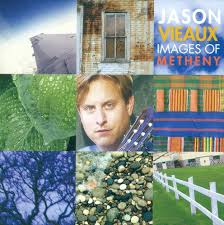
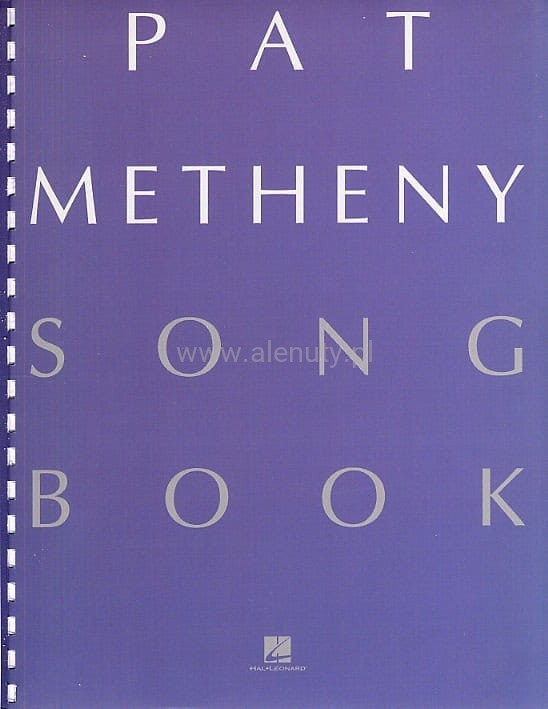

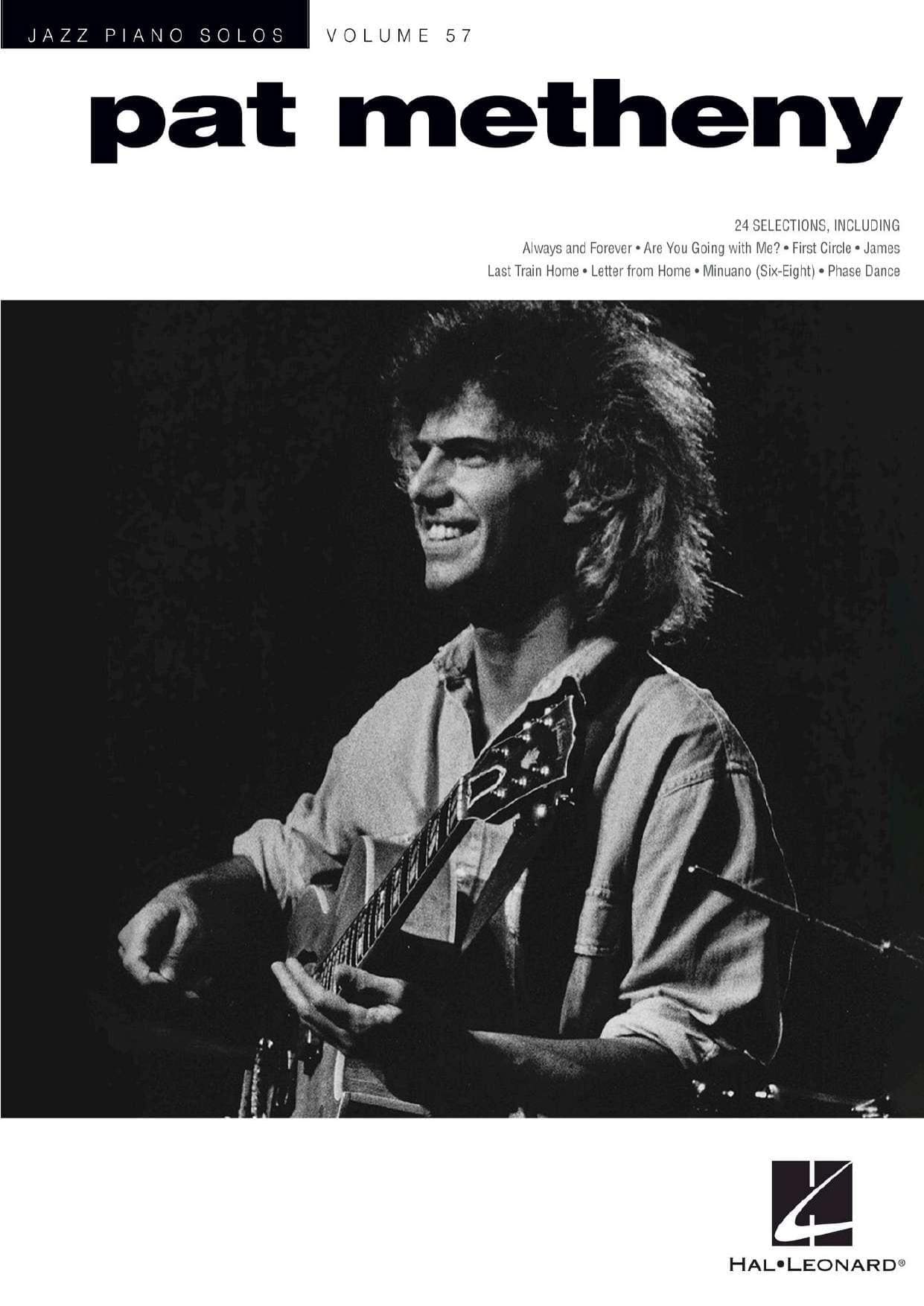


Please, subscribe to our Sheet Music Library. Sheet music should be accessible and affordable for all musicians, from professionals to absolute beginners.
Early Years and Musical Awakening
Metheny was born into a deeply musical family. His father Dave played trumpet, his mother Lois sang, and his maternal grandfather Delmar was a professional trumpeter. His brother Mike, also a trumpeter, gave Pat his first lessons on the instrument at age eight. The family home was filled with music—Pat's brother, father, and grandfather played trios together, and his parents, fans of Glenn Miller and swing music, took him to concerts featuring Clark Terry and Doc Severinsen.
Yet his parents had little respect for the guitar. That changed dramatically in 1964 when the eleven-year-old Pat saw the Beatles perform on television. For his 12th birthday, his parents relented and allowed him to buy a Gibson ES-140 3/4 guitar. The course of his life was permanently altered.
Two recordings proved transformative. The first was Miles Davis's Four & More; the second, Wes Montgomery's Smokin' at the Half Note, released in 1965. Metheny cites the Beatles, Miles Davis, and Montgomery as having the biggest impact on his music. By age 15, he was already working regularly with the best jazz musicians in Kansas City, gaining invaluable on-the-bandstand experience at an extraordinarily young age. That same year, he won a scholarship from Down Beat magazine to a jazz camp, where he was mentored by guitarist Attila Zoller, who subsequently invited him to New York to meet Jim Hall and bassist Ron Carter.
The Prodigy Years
While playing at a Kansas City club, Metheny was approached by Bill Lee, a dean at the University of Miami, and offered a scholarship. After less than a week, however, Metheny realized that his years of playing guitar all day had left him academically unprepared. He admitted this to Lee, who offered him a job as a professor instead—the school had recently introduced electric guitar as a course of study. At just 18, Metheny became the youngest teacher ever at the University of Miami.
He subsequently moved to Boston to teach at the Berklee College of Music under the supervision of jazz vibraphonist Gary Burton, establishing a reputation as a prodigy. At 19, he became the youngest teacher ever at Berklee, where he would later receive an honorary doctorate in 1996.
The Debut and the Group
In 1974, Metheny joined Burton's band alongside guitarist Mick Goodrick, bassists Steve Swallow and Eberhard Weber, and percussionist Bob Moses. He immediately appeared on Burton's studio recordings, from Ring (1974) to Dreams So Real (1976) and Passengers (1977). In June 1974, he and bassist Jaco Pastorius took part in a session with pianist Paul Bley, unaware they were being recorded; the material was later released as an album unofficially titled Jaco.
Metheny's debut album as a leader, Bright Size Life (1976), was recorded for ECM Records with Pastorius on bass and Bob Moses on drums. The album reinvented the traditional "jazz guitar" sound for a new generation of players. His follow-up, Watercolors (1977), marked the first time he recorded with pianist Lyle Mays, who would become his most frequent and significant collaborator. The album also featured drummer Danny Gottlieb, who, along with bassist Mark Egan, completed the first incarnation of the Pat Metheny Group.
The Pat Metheny Group, active from 1977 to 2010, became the primary vehicle for Metheny's artistic vision, producing a string of landmark albums that defined contemporary jazz for an entire generation. After the Group's dissolution, Metheny has continued to work in various small-combo, duet, and solo settings, as well as numerous side projects.
Music Style and Harmony
The Metheny Sound
Metheny's playing style is instantly recognizable—a rare achievement for any instrumentalist. He blended the loose, flexible articulation customarily reserved for horn players with an advanced rhythmic and harmonic sensibility. His approach was modern in conception yet grounded deeply in the jazz tradition of melody, swing, and the blues.
His versatility is almost without peer on any instrument. He has composed for solo guitar, small ensembles, electric and acoustic instruments, large orchestras, and ballet pieces, with settings ranging from modern jazz to rock to classical. He has also been a true pioneer in electronic music, treating the synthesizer as a serious musical instrument years before MIDI technology existed, using the Synclavier as a composing tool.
Harmonic Approach
Metheny's approach to harmony is both sophisticated and deeply melodic. In an interview with Richard Niles (later compiled in The Pat Metheny Interviews), Metheny demonstrated his approach using a two-chord framework—A minor and F Major—to show how an improviser can lead the listener's ear into the harmony by playing "inside" and then progressively going "outside". As he explained: "So much of the melodic quality I try to [evoke] in improvisation is really just having clear destinations".
His philosophy is that once you establish a clear harmonic foundation, "you can get away with anything". His improvisations often begin with simple, melodic statements before progressively introducing chromatic approaches, chord substitutions, and eventually, genuinely "outside" playing. He regularly employs pentatonic and blues phrasing, chromatic approaches, and expanded harmony including altered dominants and sophisticated chord substitutions.
Harmonic Techniques
Analysis of Metheny's compositions reveals several distinctive harmonic techniques. His piece "Question & Answer" employs line clichés, diatonic chords from D Minor and D Harmonic Minor scales, modal techniques from the Aeolian mode, and John Coltrane's "three tonic" technique, along with constant structure—a method where identical harmonic patterns move at regular intervals.
His composition "Unity Village" features intervallic leaps in the melody and basic triadic harmony, with the A section shifting between i, V, and bVI chords in A minor. He frequently employs slash chord harmonies—chords with a bass note other than the root—such as C/D harmony, and uses open-string pedal points to create rich, resonant textures.
Metheny also demonstrates a distinctive approach to scale choice, using Dorian scale patterns over major chords and Lydian scale patterns over minor chords—a characteristically unconventional approach that contributes to his unique sound.
Tension and Release
Scholarly analysis has identified a clear evolution in Metheny's approach to tension and release. His pre-2000 recordings tend to resolve tension earlier in his solos, while his post-2000 work builds to dramatic climaxes in the final four to eight measures, often employing ascending chordal sequences or quotations of ascending composition melodies. This approach to architectural tension-building has become a hallmark of his mature style.
Relationship with Other Artists
Metheny's collaborative breadth is extraordinary. Over the years, he has performed with artists as diverse as Steve Reich, Ornette Coleman, Herbie Hancock, Jim Hall, Milton Nascimento, David Bowie, Charlie Haden, Ron Carter, and Joni Mitchell.
Gary Burton
Metheny's three-year stint with vibraphonist Gary Burton (1974-1977) was foundational. Burton served as both mentor and collaborator, and Metheny cites him as a major influence. Their work together established Metheny's reputation and provided the platform for his early development.
Lyle Mays
The collaboration with pianist and keyboardist Lyle Mays was the most significant of Metheny's career. Mays appeared on Watercolors (1977) and became the co-architect of the Pat Metheny Group's sound for over three decades. Their compositional partnership produced some of the most celebrated works in contemporary jazz, including "First Circle," "The Way Up," and countless others.
Jaco Pastorius
Metheny's early work with the legendary bassist Jaco Pastorius—on Bright Size Life and the unreleased session with Paul Bley—captured lightning in a bottle. The chemistry between the two young virtuosos helped define the sound of jazz in the late 1970s.
Ornette Coleman
Metheny's collaboration with the free-jazz pioneer Ornette Coleman on the album Song X (1985) demonstrated his willingness to venture into avant-garde territory. Coleman's exploratory imagination was a significant influence on Metheny's conception of improvisation.
David Bowie
Perhaps surprisingly, Metheny collaborated with David Bowie on the song "This Is Not America" for the film The Falcon and the Snowman (1985). The track became a hit and showcased Metheny's ability to work across the pop-rock spectrum.
Herbie Hancock
Metheny has collaborated extensively with Herbie Hancock, including a notable project where Metheny co-produced and performed with a band featuring Hancock and Dave Holland.
Other Collaborations
Metheny has also worked with Milton Nascimento, bringing Brazilian musical elements into his work; composed with Japanese pianist and singer Akiko Yano; and collaborated with the Pinpeat Orchestra of the Royal Ballet of Cambodia on his album Secret Story. His work with Steve Reich brought together jazz improvisation and minimalist composition.
Influences
Primary Influences
Metheny's musical influences are remarkably diverse. In a 2011 interview with JazzTimes, he identified his biggest guitar influence as Wes Montgomery: "the biggest one by far". He has described Montgomery's ability to "describe very complex ideas in ways that were so clear and well backed up with spirit and soul".
Beyond Montgomery, he cites Clifford Brown, Miles Davis, and Freddie Hubbard as major influences. His life changed after hearing Davis's Four & More. He also acknowledges the profound impact of Gary Burton, Jim Hall, John Coltrane, and Ornette Coleman.
Broader Musical Influences
Metheny's music shows traces of musical movements that are both accessible and intellectual. He was influenced by the Beatles' melodic conception as well as the complexity of bop and post-bop jazz. His work embraces influences as diverse as bebop, free jazz, rock, pop, country and western, Brazilian music, classical music, minimalism, and the avant-garde.
Perhaps surprisingly, he has also acknowledged the influence of Dolly Parton. His music is rooted in the fluid electric guitar phrasing of Wes Montgomery, the hybrid compositional forms favored by Steve Swallow and Gary Burton, and the exploratory imagination of Ornette Coleman.
The Beatles and Pop
The Beatles' appearance on the Ed Sullivan Show in 1964 was the catalyst for Metheny's switch from trumpet to guitar. Their melodic conception has remained a touchstone throughout his career, informing his commitment to memorable, singable melodies even within complex harmonic frameworks.
Legacy and Impact
Awards and Recognition
Metheny's list of accolades is staggering. He has won 20 Grammy Awards in 10 different categories—more than any other artist in Grammy history. His wins span Best Rock Instrumental, Best Contemporary Jazz Recording, Best Jazz Instrumental Solo, Best Instrumental Composition, and many others. He has three gold albums: Still Life (Talking), Letter from Home, and Secret Story.
He is a member of the DownBeat Hall of Fame, a National Endowment for the Arts Jazz Master, and a member of the Missouri Hall of Fame. He has sold more than 20 million albums worldwide.
Influence on Guitarists
Metheny has had a major influence on guitarists over the last 40 years. He helped bridge the gap between jazz and rock and was instrumental in freeing the guitar from traditional jazz guitar orthodoxy, keeping it from becoming a merely antiquarian instrument. He reinvented the traditional sound of jazz guitar, bringing fresh sonic potential to the instrument while offering a deep reservoir of improvisational insight and musicality.
The Unaligned Identity
Metheny describes his musical identity as "unaligned"—not bound by orthodoxies of genre. This freedom has allowed him to move between jazz, classical, rock, Brazilian music, and avant-garde without ever sounding derivative. His influence extends across genres and generations.
Cultural Significance
As one commentator observed, "Pat Metheny performances have quickened the soul of the academic, the layman and the musician for many years. He has been so much a part of the furniture for so long, one needs a book like this as a reminder of his considerable contribution to American cultural life". His music has been the subject of scholarly analysis, including Bob Gluck's Pat Metheny: Stories beyond Words (2024), which provides an in-depth exploration of his style and influence.
Works
Pat Metheny - And I Love Her (The Beatles)
Main article on Wikipedia: Pat Metheny discography
The Pat Metheny Group Era (1977-2010)
The Pat Metheny Group produced a remarkable string of albums that defined contemporary jazz:
- Pat Metheny Group (1978) – The debut featuring "Phase Dance" and "San Lorenzo"
- American Garage (1979)
- Offramp (1982) – featuring "Are You Going With Me?"
- Travels (1983) – a live double album
- First Circle (1984) – the title track became a signature piece
- Still Life (Talking) (1987) – featuring "Last Train Home," one of his most beloved compositions
- Letter from Home (1989)
- The Road to You (1993) – live recordings from Europe
- We Live Here (1995)
- Imaginary Day (1997) – a Grammy winner
- Speaking of Now (2002)
- The Way Up (2005) – a through-composed 68-minute suite, the Group's most ambitious work
Solo and Small Ensemble Works
Metheny has also released numerous albums outside the Group context:
- Bright Size Life (1976) – his debut
- Watercolors (1977)
- New Chautauqua (1979) – solo acoustic guitar
- 80/81 (1980) – with Charlie Haden, Michael Brecker, and Jack DeJohnette
- Secret Story (1992) – his ambitious solo album featuring orchestras and world music elements
- Zero Tolerance for Silence (1994) – a confrontational free improvisation
- One Quiet Night (2003) – solo baritone guitar
- Orchestrion (2010) – featuring his mechanical orchestra
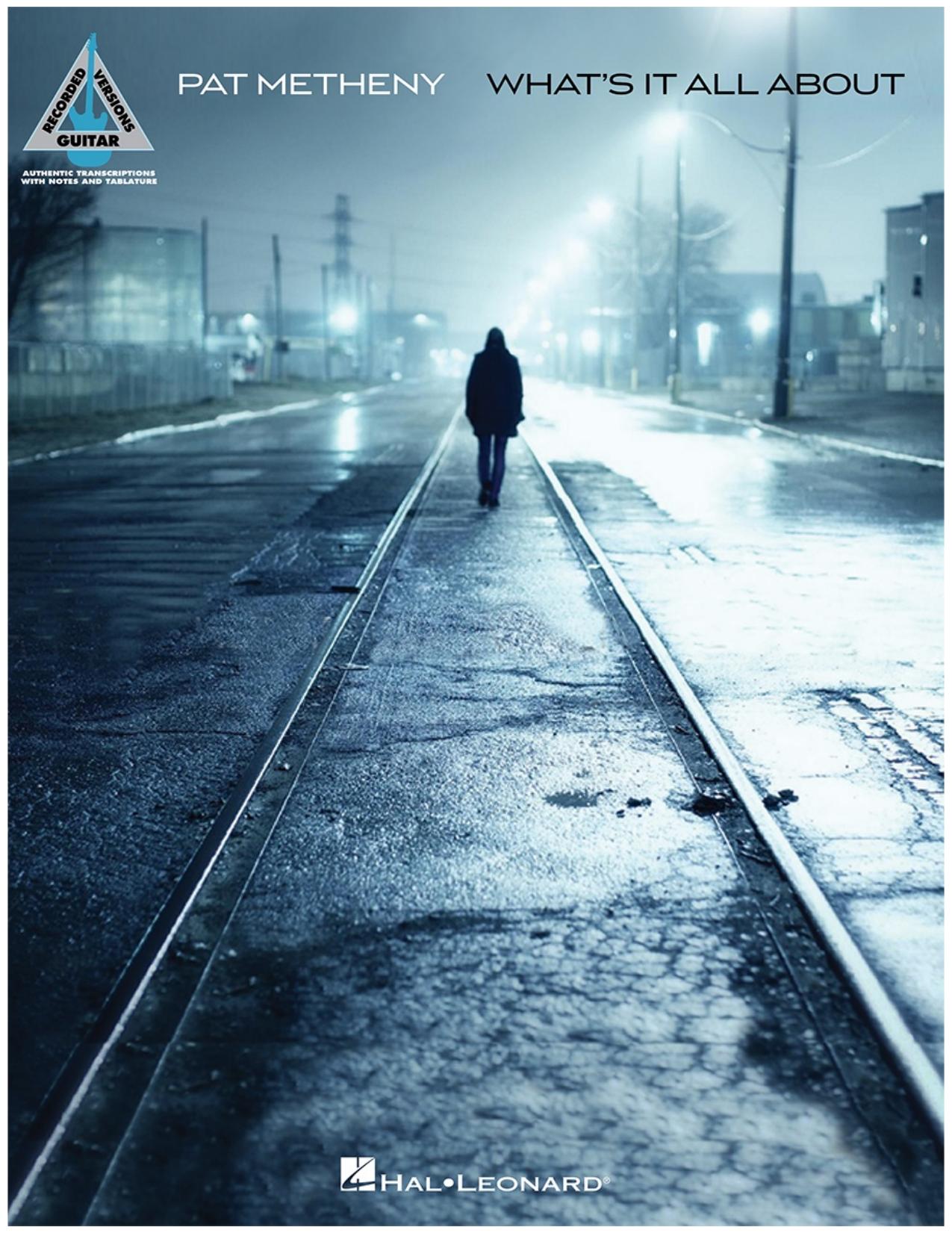
- What's It All About (2011) – solo acoustic interpretations of pop standards
- Unity Band (2012) – with Chris Potter, Ben Williams, and Antonio Sanchez
- From This Place (2020)
- Road to the Sun (2021)
- Dream Box (2023)
- MoonDial (2024)
- Side-Eye III+ (2026)
Collaborations and Side Projects
- Song X (1985) – with Ornette Coleman
- Rejoicing (1984) – with Charlie Haden and Billy Higgins
- Question and Answer (1990) – with Dave Holland and Roy Haynes
- I Can See Your House from Here (1994) – with John Scofield
- Beyond the Missouri Sky (1997) – with Charlie Haden
- Upojenie (2002) – with Polish vocalist Anna Maria Jopek
Works on Film
Metheny has composed scores for several films and has had his music featured in numerous motion pictures:
Film Scores
- The Falcon and the Snowman (1985) – featuring the hit "This Is Not America" with David Bowie
- Twice in a Lifetime (1985) – a Bud Yorkin film
- The Little Sister (1985)
- Amazing Stories (1986) – television series episode
- Lemon Sky (1987) – composed and scored by Metheny
- Big Time (1989)
- Passaggio Per Il Paradiso (1996)
- A Map of the World (1999) – a full orchestral score, featuring 28 tracks; described as a "very cerebral and quasi-minimalist score"
Featured Music in Films
- Fandango (1984) – featured approximately nine minutes of music from As Falls Wichita, So Falls Wichita Falls
- Under Fire (1983) – music featured in the score
Soundtrack Albums
- The Falcon and the Snowman (1985)
- A Map of the World (1999) – billed as "music from and inspired by the motion picture"
- The Orchestrion Project (2012) – soundtrack to the documentary film
Most Known Compositions and Performances
Signature Compositions
- "Last Train Home" – from Still Life (Talking) (1987), perhaps his most recognizable melody, evoking a sense of longing and journey
- "Are You Going With Me?" – from Offramp (1982), featuring his signature guitar synthesizer sound
- "First Circle" – the title track from the 1984 album, featuring complex rhythms and wordless vocals
- "Phase Dance" – from the debut Group album (1978), a classic example of the Group's early sound
- "Minuano (Six-Eight)" – a beloved live staple
- "The Way Up" – the 68-minute suite that represents the Group's magnum opus
- "Song X" – the title track from his collaboration with Ornette Coleman
- "As Falls Wichita, So Falls Wichita Falls" – an epic collaborative piece with Lyle Mays
Notable Performances
Metheny has toured continuously for five decades, with his many creative musical projects. Notable live recordings include:
- Travels (1983) – a double live album capturing the Group at its peak
- The Road to You (1993) – live recordings from Europe
- Quartet Live (2006) – with Gary Burton, Steve Swallow, and Antonio Sanchez
- Tokyo Day Trip (2008) – live EP
- The Unity Sessions (2015) – filmed in a small New York theater after a 150-date world tour
Documentaries and Films
Several documentaries and concert films have captured Metheny's work:
The Orchestrion Project (2012)
Directed by Pierre and François Lamoureux, this documentary film explores Metheny's ambitious Orchestrion project—a vast collection of mechanical, solenoid-driven instruments that respond to his guitar playing. The film features Metheny performing the Orchestrion Suite, including "Unity Village," "Orchestrion," "Entry Point," "Expansion," "Soul Search," "Spirit of the Air," "Sueño Con Mexico," and "Stranger in Town". The project was based on a childhood fascination with his grandfather's player piano.
Imaginary Day Live (1998)
A concert documentary featuring music from the Grammy-winning Imaginary Day album.
We Live Here Live In Japan (2001)
A live performance film featuring the eight-member Pat Metheny Group performing in Japan.
Speaking of Now Live (2003)
A concert film documenting the Group's tour supporting the Speaking of Now album.
Secret Story (2001 DVD release)
A video recording of a live performance of the 1992 album at New Brunswick, New Jersey.
The Unity Sessions (2015)
A documentary featuring an intimate studio performance with Metheny's Unity Band, wrapping up a world tour. The release includes an insightful filmed interview backstage with Metheny and the band.
Instrument Innovation
Metheny has been instrumental in the development of several new kinds of guitars, including the soprano acoustic guitar, the 42-string Pikasso guitar, Ibanez's PM-100 jazz guitar, and a variety of other custom instruments. He took instrument development to a different level with his mechanical, solenoid-driven Orchestrion—a room-sized contraption of acoustic instruments triggered by his guitar.
He was also one of the first jazz musicians to treat the synthesizer as a serious musical instrument, using the Synclavier as a composing tool years before MIDI technology.
Educator and Mentor
Metheny has participated extensively in music education. At 18, he was the youngest teacher ever at the University of Miami; at 19, he became the youngest teacher ever at Berklee College of Music. He received an honorary doctorate from Berklee in 1996. He has taught workshops worldwide, from the Dutch Royal Conservatory to the Thelonious Monk Institute of Jazz to clinics in Asia and South America.
Pat Metheny's career represents one of the most remarkable artistic journeys in modern music. From his prodigious beginnings in Kansas City to his status as a 20-time Grammy winner and one of the most influential guitarists in history, he has consistently pushed boundaries while maintaining an unwavering commitment to melody and emotional expression. His music—whether solo acoustic guitar, the Pat Metheny Group's lush textures, the avant-garde explorations with Ornette Coleman, or the mechanical wonder of the Orchestrion—is instantly recognizable as his own.
His legacy is not merely one of technical achievement or commercial success, though both are considerable. It is the legacy of an artist who has spent more than fifty years asking what music can be, and answering with a body of work that continues to inspire, challenge, and move listeners around the world. As Bob Gluck wrote in Pat Metheny: Stories beyond Words, Metheny's work offers "a bird's-eye view of Metheny's musical ideas... the metaphor of storytelling, the complementarity of simplicity and complexity, and the integrated roles of composer, performer, and band leader". In a career defined by restless innovation, Metheny has never stopped telling stories—and the world has never stopped listening.
Listen to Pat Metheny music on Spotify
Browse in the Sheet Music Library:
Or browse in the categories menus & download the Library Catalog PDF: