
Table of Contents
Search Alan Jackson’ best sheet music, books, and transcriptions in the Library:
| Artist or Composer / Score name | Cover or sample | Contents (if available)* |
|---|---|---|
| Alan Jackson – Between the Devil and Me |  | |
| Alan Jackson – Buicks to the Moon |  | |
| Alan Jackson – I’ll Go On Loving You | 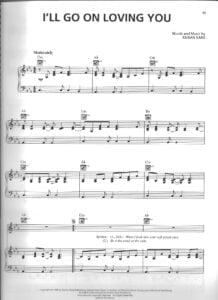 | |
| Alan Jackson – It’s Five Oclock Somewhere | 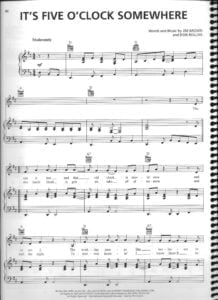 | |
| Alan Jackson – Little Bitty |  | |
| Alan Jackson – Once In A Lifetime Love |  | |
| Alan Jackson – Remember When | 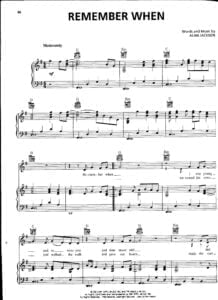 | |
| Alan Jackson – That’d Be Alright |  | |
| Alan Jackson – There Goes |  | |
| Alan Jackson – Where I Come From |  | |
| Alan Jackson Precious Memories Piano Vocal Guitar | 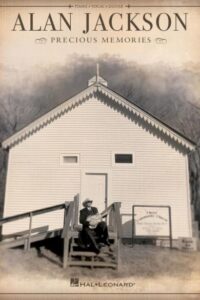 | Alan Jackson Precious Memories Piano Vocal Guitar |
| Alan Jackson Remember When Piano Solo |  |
Alan Jackson – Livin’ On Love
Best Sheet Music download from our Library.
Community Musicians, building a worldwide Community Music.
All the music you want to play on one site. Sharing the world’s best Contemporary, Jazz, Popular, Film, and Classical Sheet Music.
Scores for all instruments: over 15,000
(active and growing), over 231,000 pages.
All genres, styles, and instruments — Jazz & Blues, Rock & Pop, Classical & Contemporary, Film & Musicals;
books, methods, études, play-along tracks (MP3) for Jazz & Rock.
Access & benefits: $15.99 one-time payment, valid for lifetime.
Alan Jackson is an American country music singer, songwriter, and musician—one of the most influential and commercially successful artists in the history of modern country music, especially associated with the neotraditional country movement of the 1990s.
Who is Alan Jackson?
Early Life and Background
- Full name: Alan Eugene Jackson
- Born: October 17, 1958
- Birthplace: Newnan, Georgia, USA
Jackson grew up in a working-class family in rural Georgia. His music was shaped early by gospel hymns, traditional country, and Southern culture. He began writing songs as a teenager and moved to Nashville, Tennessee in the mid-1980s to pursue a music career.
A key turning point came when his wife, Denise Jackson, gave a demo tape of his songs to Glen Campbell, which eventually helped Jackson secure a recording contract with Arista Nashville.

Career Breakthrough
Alan Jackson’s debut album:
- Here in the Real World (1990)
was a major success, producing several hit singles and establishing his reputation as a traditionalist in an era when country music was becoming increasingly pop-oriented.
Throughout the 1990s, Jackson became one of the defining voices of country music, alongside artists like George Strait, Garth Brooks, and Clint Black.
Musical Style and Songwriting
Alan Jackson is known for:
- Traditional country sound (fiddle, steel guitar, acoustic rhythm)
- Strong influences from honky-tonk, Western swing, and Southern gospel
- Plainspoken, narrative lyrics about everyday life, love, heartbreak, faith, family, and patriotism
- Writing or co-writing most of his own songs, which is relatively rare among mainstream country superstars
His songwriting style favors:
- Simple but emotionally resonant chord progressions
- Clear verse-chorus structures
- Storytelling rooted in realism and nostalgia
Signature Songs
Some of Alan Jackson’s most famous and enduring songs include:
- “Chattahoochee”
- “Here in the Real World”
- “Don’t Rock the Jukebox”
- “Remember When”
- “Livin’ on Love”
- “Gone Country”
- “Drive (For Daddy Gene)”
- “Where Were You (When the World Stopped Turning)”
- “It’s Five O’Clock Somewhere” (with Jimmy Buffett)
Many of these songs have become standards of modern country music.
Cultural Impact and Legacy
Alan Jackson is widely respected for preserving traditional country values during a time when the genre was increasingly influenced by pop and rock. He helped prove that authentic, roots-based country music could still achieve massive commercial success.
His song “Where Were You (When the World Stopped Turning)”, written after the September 11, 2001 attacks, is especially notable for its restrained, reflective tone and is considered one of the most powerful country songs of its era.
Awards and Achievements
- Over 75 million records sold worldwide
- 2 Grammy Awards
- 16 CMA Awards
- 17 ACM Awards
- Inducted into the Country Music Hall of Fame (2017)
He has had:
- More than 35 No. 1 singles on Billboard’s Hot Country Songs chart
Later Career and Health
In 2021, Alan Jackson revealed that he had been living for years with Charcot-Marie-Tooth disease, a hereditary nerve disorder affecting muscle strength and mobility. Despite this, he has continued to perform selectively and remains a revered figure in country music.
Why Alan Jackson Matters?
Alan Jackson is important because he:
- Bridged classic country traditions with modern mainstream success
- Elevated the role of the singer-songwriter in commercial country music
- Created a catalog that reflects American Southern life with honesty and emotional depth

Please, subscribe to our Sheet Music Library.
If you are already a subscriber, please, check our NEW SCORES’ page every month for new sheet music. THANK YOU!
Search your favorite sheet music in the Sheet Music Catalog
1. Alan Jackson – Discography Overview
Alan Jackson’s catalog is remarkable for its consistency, stylistic coherence, and authorial voice. Across more than three decades, he has remained rooted in traditional country idioms while adapting production aesthetics to different eras.
Studio Albums (Chronological)
1. Here in the Real World (1990)
Key tracks:
- “Here in the Real World”
- “Wanted”
- “Chasin’ That Neon Rainbow”
Importance:
This album defined Jackson’s persona: working-class realism, emotional restraint, and classic country instrumentation (steel guitar, fiddle, telecaster). It positioned him as a neotraditionalist during a pop-heavy period in country music.
2. Don’t Rock the Jukebox (1991)
Key tracks:
- “Don’t Rock the Jukebox”
- “Dallas”
- “Midnight in Montgomery”
Importance:
A direct homage to classic country (Hank Williams, Lefty Frizzell).
“Midnight in Montgomery” is especially notable for its modal harmony and atmospheric storytelling.
3. A Lot About Livin’ (And a Little ’Bout Love) (1992)
Key tracks:
- “Chattahoochee”
- “She’s Got the Rhythm (And I Got the Blues)”
Importance:
His commercial breakthrough.
Balances upbeat honky-tonk with reflective ballads. This album established Jackson as both a hitmaker and a credible songwriter.
4. Who I Am (1994)
Key tracks:
- “Livin’ on Love”
- “Gone Country”
- “Summertime Blues” (Eddie Cochran cover)
Importance:
Themes of identity, industry satire, and domestic life.
“Livin’ on Love” is harmonically simple but lyrically profound.
5. Everything I Love (1996)
Key tracks:
- “Little Bitty”
- “There Goes”
Importance:
More polished production but still rooted in tradition.
Demonstrates Jackson’s mastery of short-form songwriting.
6. High Mileage (1998)
Key tracks:
- “Right on the Money”
- “I’ll Go On Loving You”
Importance:
A road-themed album—tour life, distance, and aging.
Strong cohesion and classic Nashville session playing.
7. Under the Influence (1999)
Key tracks:
- Covers of Merle Haggard, George Jones, Hank Williams
Importance:
A pure tribute album—reveals Jackson’s deep reverence for country tradition and his interpretive skill.
8. When Somebody Loves You (2000)
Key tracks:
- “Where I Come From”
- “Where Were You (When the World Stopped Turning)”
Importance:
Thematically mature; understated production.
The latter song became one of the most important post-9/11 American musical statements.
9. Drive (2002)
Key tracks:
- “Drive (For Daddy Gene)”
- “Work in Progress”
Importance:
Autobiographical and reflective.
“Drive” is one of his most emotionally nuanced compositions.
10. Good Time (2008)
Key tracks:
- “Good Time”
- “Small Town Southern Man”
Importance:
Reasserts Jackson’s rural identity amid changing country trends.
11. Thirty Miles West (2012)
Key tracks:
- “So You Don’t Have to Love Me Anymore”
Importance:
Late-career introspection; softer tempos and darker emotional tone.
12. Angels and Alcohol (2015)
Key tracks:
- “You Never Know”
- “The Older I Get”
Importance:
Themes of mortality, faith, regret, and wisdom.
Musically spare and lyrically honest.
13. Where Have You Gone (2021)
Key tracks:
- “Where Have You Gone”
- “You Can Always Come Home”
Importance:
A manifesto for traditional country music.
Explicit critique of modern country’s stylistic drift.
Major Compilations
- Greatest Hits (1995)
- The Essential Alan Jackson (2007)
- 34 Number Ones (2010)
2. Songwriting Analysis
Alan Jackson is best understood as a craft songwriter, not an experimental one.
Lyrical Characteristics
a) Narrative Realism
His songs often read like short stories:
- Clear setting
- Defined narrator
- Temporal movement (past → present → reflection)
Example:
- “Remember When” traces a relationship across decades with minimal metaphor.
b) Emotional Restraint
Jackson avoids melodrama:
- No exaggerated imagery
- No vocal excess
- Meaning comes from understatement
This restraint increases emotional impact.
c) Everyday Language
His lyrics favor:
- Plain diction
- Conversational phrasing
- Regional specificity (“Chattahoochee,” “Mercury,” “neon rainbow”)
3. Harmonic Language and Tonal Treatment
Alan Jackson’s harmony is intentionally conservative, serving narrative clarity.
a) Common Harmonic Frameworks
Most songs rely on:
- I – IV – V
- I – V – vi – IV
- I – IV – I – V
These progressions align with:
- Honky-tonk
- Gospel hymns
- Folk ballads
Example:
- “Livin’ on Love”:
Simple I–IV–V structure supports its message of emotional wealth over material success.
b) Use of Minor and Modal Harmony
Occasionally employed for dramatic effect:
Minor keys:
- “Midnight in Montgomery”
Uses minor tonal centers to evoke mystery and ghostly atmosphere.
Modal inflections:
- Mixolydian tendencies (flat 7) appear in blues-influenced tracks.
- Common in up-tempo barroom songs.
c) Harmonic Rhythm
Jackson often uses:
- Slow harmonic movement
- Long tonic pedals
- Predictable cadences
This reinforces:
- Lyrical intelligibility
- Listener familiarity
- Radio accessibility
4. Melody and Vocal Writing
a) Narrow Melodic Range
- Mostly stepwise motion
- Few large leaps
- Comfortable baritone tessitura
This enhances:
- Singability
- Authenticity
- Storytelling focus
b) Phrase Symmetry
- Balanced 4- and 8-bar phrases
- Strong sense of arrival at cadences
- Clear verse/chorus contrast
5. Formal Structures
Alan Jackson favors classic song forms:
- Verse – Chorus – Verse – Chorus – Bridge – Chorus
- Occasionally strophic (especially ballads)
Bridges often:
- Shift harmony briefly
- Introduce emotional or narrative turning point
Example:
- “Drive”: the bridge reframes childhood memory as adult gratitude.
6. Why His Musical Approach Endures
Alan Jackson’s strength lies in discipline, not innovation:
- Harmony serves lyrics
- Melody serves narrative
- Production serves tradition
He proves that simplicity, when intentional and well-crafted, can be artistically profound.