
Table of Contents
Who was Amy Winehouse?
Amy Winehouse – Back To Black
Search Amy Winehouse’s best sheet music, books, and transcriptions in the Library:
| Artist or Composer / Score name | Cover or sample | Contents (if available)* |
|---|---|---|
| Amy Winehouse – Valerie |  | |
| Amy Winehouse – Valerie (sheet music) |  | |
| Amy Winehouse Amy Amy Amy |  | |
| Amy Winehouse Back To Black Songbook |  | Amy Winehouse Back To Black Songbook |
| Amy Winehouse Frank Songbook | 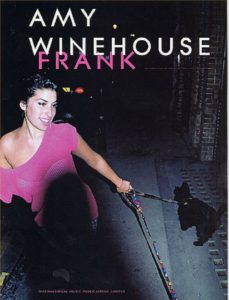 | Amy Winehouse Frank |
| Amy Winehouse Half Time | Amy Winehouse Half Time | |
| Amy Winehouse I Heard Love Is Blind |  | |
| Amy Winehouse Just Friends |  | |
| Amy Winehouse Rehab |  | |
| Amy Winehouse Stronger Than Me | Amy Winehouse Stronger Than Me | |
| Amy Winehouse What Is It About Men | Amy Winehouse What Is It About Men | |
| Amy Winehouse You Know Im No Good | 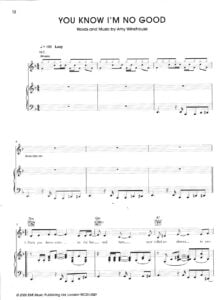 |
Please, subscribe to our Sheet Music Library.
If you are already a subscriber, please, check our NEW SCORES’ page every month for new sheet music. THANK YOU!
Come join us now, and enjoy playing your beloved music and browse through great scores of every level and styles!
Can’t find the songbook you’re looking for? Please, email us at: sheetmusiclibrarypdf@gmail.com We’d like to help you!
Best Sheet Music download from our Library.
Amy Winehouse: A Soul in Torment, A Voice for the Ages
The story of Amy Winehouse is one of the most compelling, tragic, and artistically potent narratives in modern popular music. She was a paradox: a shy Jewish girl from North London who became a global, Grammy-sweeping superstar; a songwriter of piercing, self-lacerating honesty who often seemed unable to heed her own warnings; a voice steeped in the deep traditions of jazz and soul that sounded utterly, disruptively contemporary. Her life was a blaze of talent and turmoil, cut devastatingly short, leaving behind a slender but monumental catalogue that continues to resonate with raw power. This exhaustive article delves into every facet of her being: the artist, the musician, the icon, and the legacy she left indelibly stamped upon the cultural landscape.
Full Biography: From Southgate to Stardom to Sadness
Early Life (1983-2002)
Amy Jade Winehouse was born on September 14, 1983, in the Southgate area of North London, to a family of mixed Russian and Polish Jewish heritage. Her father, Mitch, was a taxi driver, and her mother, Janis, a pharmacist. Music permeated their home—from the jazz standards her father sang to the jazz greats (Sarah Vaughan, Dinah Washington) she discovered through her older brother, Alex. At the age of ten, she and a friend formed a short-lived rap group, “Sweet ‘n’ Sour,” revealing an early affinity for streetwise, rhythmic lyricism. However, it was at the Sylvia Young Theatre School (which she attended briefly before being expelled for defiance and piercing her nose) and later the BRIT School in Croydon that her formidable talent was nurtured and formalized.
Even as a teenager, her voice was an extraordinary instrument—a rich, expressive contralto with remarkable control and a natural feel for phrasing far beyond her years. Her rebellious streak and troubles with depression and bulimia also began to manifest. At 16, she got the first of her iconic tattoos and began playing with a jazz band. A school friend passed a demo tape to an A&R, leading to her signing with Simon Fuller’s 19 Management and, subsequently, Island/Universal in 2002.
Breakthrough: Frank (2003-2006)
Her debut album, Frank (2003), co-produced chiefly by Salaam Remi, was an instant critical sensation. Its title, a nod to the blunt honesty of Sinatra, was apt. Lyrically, it was a precocious mix of jazz-club cool, hip-hop swagger, and sardonic observations on love and life. Musically, it blended live jazz instrumentation with hip-hop beats. It earned her an Ivor Novello Award for best contemporary song (“Stronger Than Me”), a Mercury Prize nomination, and established her as a serious, singular new voice. However, Winehouse soon expressed dissatisfaction with the album, feeling it was too polished and compromised by label pressure for commercial radio play.
Global Phenomenon: Back to Black and Personal Chaos (2006-2008)
The period following Frank was one of personal drift and creative ferment. A relationship ended badly, and she began the deeper dive into the 1960s girl-group sound that would define her next work. Introduced to producer Mark Ronson by their mutual A&R, Nick Gatfield, she found her perfect sonic conspirator. Ronson shared her passion for the Wall of Sound and vintage R&B. Teaming with Salaam Remi for a portion of the tracks, they created Back to Black (2006).
The album was a seismic event. Lyrically, it was a brutally honest, stylized tragicomedy about love, addiction (“Rehab”), betrayal (“You Know I’m No Good”), and heartbreak (“Love Is a Losing Game”). Sonically, it was a timeless yet fresh fusion of Spector-esque grandeur, Motown soul, and ska rhythms, all anchored by her now-iconic voice—darker, grittier, and laden with devastating emotion. It catapulted her to global superstardom, selling over 20 million copies worldwide.
But the album’s themes of self-destruction became horrifically mirrored in her personal life. Her tumultuous, addictive relationship with Blake Fielder-Civil (whom she married in 2007) played out in the tabloid glare. Her physical deterioration, marked by erratic performances, a drastic weight loss, and public scandals, became a source of morbid fascination. In 2008, she won five Grammy Awards, including Record of the Year, Song of the Year, and Best New Artist, but was unable to attend due to visa issues, performing via satellite from London. The image of a fragile, bewildered Winehouse watching her triumphs from afar became a poignant symbol of her conflict.
Decline and Death (2009-2011)
The years following the Grammys were a desperate cycle of attempted rehab, relapses, cancelled tours, and sporadic performances. Her marriage to Fielder-Civil ended, but her health continued to falter. A brief attempt at a comeback tour in 2011 ended disastrously in Belgrade, with a visibly intoxicated Winehouse unable to sing. She returned to London, and on July 23, 2011, was found dead in her Camden home at the age of 27. The inquest ruled her death was from alcohol poisoning. The world mourned the loss of a generational talent, and Camden Square became a shrine.
Music Style: A Retro-Alchemist
Amy Winehouse cannot be pinned to a single genre. She was a masterful alchemist:
- Jazz & Vocal Jazz: The foundation. Her phrasing, scatting ability, and harmonic sensibility were deeply rooted in the bebop and vocal jazz traditions.
- Soul & R&B: Specifically, the 1960s golden era of Motown, Stax, and Atlantic. The emotional rawness of Aretha Franklin and the melodic sweetness of the Shangri-Las were key touchstones.
- Skatalites & Rocksteady: The rhythmic bounce and upbeat brass of 1960s Jamaican music, a love instilled by her brother and perfected with Salaam Remi.
- Hip-Hop: Less sonically obvious than the others, but crucial. Her lyrical delivery—confessional, witty, internal-rhyme heavy—was deeply informed by hip-hop’s flow and attitude. She often cited Salt-N-Pepa as an influence.
Her genius was in fusing these elements not as pastiche, but as a wholly integrated, organic sound that felt both classic and utterly contemporary.
Encounters and Collaborations with Other Artists
Winehouse collaborated sparingly but meaningfully:
- Mark Ronson: The defining creative partnership. He provided the sonic architecture for Back to Black and remained a loyal friend and advocate.
- Salaam Remi: Her other primary producer, from Frank onwards. He provided the jazz-hip-hop bedrock and co-wrote key songs like “Tears Dry on Their Own.”
- Tony Bennett: A dream collaboration for the jazz-loving Winehouse. Their 2011 duet on “Body and Soul” for his Duets II album was her final studio recording, winning a posthumous Grammy. Bennett consistently praised her as “a true jazz singer.”
- The Specials & Paul Weller: She recorded covers with both (The Specials’ “You’re Wondering Now,” Weller’s “Don’t Go to Strangers”), affirming her ska and mod connections.
- Nas: She collaborated with the rapper on “Cherry Wine,” a track from his Life Is Good album (released posthumously in 2012), which sampled her voice from an interview.
Composition Characteristics: The Poet of Personal Wreckage
Winehouse was, first and foremost, a songwriter of extraordinary skill.
- Lyrical Content: Unflinchingly autobiographical, confessional, and self-analytical. She wrote with the detailed, wry eye of a novelist, turning her personal chaos into universal drama. Her lyrics are full of sharp metaphors (“He left no time to regret / Kept his dick wet”), dark humour, and heartbreaking vulnerability.
- Point of View: She often adopted a persona of the tough, wronged woman who was ultimately vulnerable—a modern-day torch singer. Songs were direct addresses to lovers, to herself, or to an implied jury of public opinion.
- Title Hooks: She had a knack for unforgettable, punchy titles that encapsulated a whole narrative: “Rehab,” “You Know I’m No Good,” “Love Is a Losing Game,” “Tears Dry on Their Own.”
Harmony, Tonality, Melodic, and Formal Style
- Harmony & Tonality: Deeply informed by jazz harmony. Her songs, even the poppiest, often feature rich, extended chords (7ths, 9ths, 11ths), chromatic passing chords, and modulations that reflect the emotional shifts in the lyrics. “Love Is a Losing Game” is a masterclass in sophisticated, melancholic chord progression. Her work is predominantly in minor keys or blues-based modes, reinforcing the themes of heartache and struggle.
- Melodic Style: Her melodies are deceptively simple, often revolving around pentatonic or blues scales, but delivered with miraculous phrasing. She possessed an innate sense of rhythmic placement, delaying or anticipating beats for dramatic effect (a technique called rubato, borrowed from jazz). Her melismas were never gratuitous; they served the emotional truth of the line.
- Formal Style: She largely worked within classic pop song structures (verse-chorus-bridge), but infused them with jazz and soul conventions. Many songs feature a spoken-word or semi-sung bridge that acts as a dramatic monologue (“You Know I’m No Good”). Her arrangements, guided by Ronson and Remi, were dense and layered, with brass sections, backing vocals, and intricate percussion creating a vast, emotive soundscape.
Influences: The Canon She Carried
Her influences were a direct line to the pantheon of mid-20th century greats:
- Vocal Jazz: Sarah Vaughan (her primary idol), Dinah Washington, Ella Fitzgerald, Billie Holiday (for emotional delivery).
- Soul & R&B: Aretha Franklin, Donny Hathaway, Ray Charles, Marvin Gaye, The Supremes, The Shangri-Las.
- Reggae/Ska: The Skatalites, Toots and the Maytals, Alton Ellis.
- Hip-Hop: Salt-N-Pepa, Mary J. Blige, The Fugees.
Legacy: An Unending Echo
Amy Winehouse’s legacy is multifaceted and profound:
- The Vocal Blueprint: She shattered the pop vocal paradigm of the mid-2000s, re-legitimizing technically skilled, emotionally raw, jazz-inflected singing. Her direct influence is audible in artists like Adele, Duffy, Florence Welch, Lana Del Rey, Sam Smith, and countless others who emerged in her wake, often dubbed the “Winehouse Wailers.”
- The Retro-Soul Revival: Back to Black was the catalyst for a global revival of interest in 1960s soul and analogue production, paving the way for labels like Daptone Records (Sharon Jones, Charles Bradley) and shaping the sound of Mark Ronson’s later work (e.g., “Uptown Funk”).
- Authenticity and Confession: She raised the bar for autobiographical songwriting in pop, making unvarnished emotional honesty a premium.
- A Cautionary Tale: Her life became a stark, modern parable about the perils of fame, addiction, and media intrusion. It sparked ongoing debates about the public’s complicity in the downfall of troubled stars.
- The Amy Winehouse Foundation: Established by her family after her death, it works to prevent the effects of drug and alcohol misuse on young people, a positive legacy born from tragedy.
List of Works
Studio Albums:
- Frank (2003)
- Back to Black (2006)
Posthumous Compilations/Releases:
- Lioness: Hidden Treasures (2011) – A collection of demos, alternate takes, and unfinished songs.
- At the BBC (2021) – A comprehensive set of live BBC performances.
Filmography
- Amy (2015): The Oscar-winning documentary by Asif Kapadia, constructed entirely from archival footage, is the defining visual document of her life and career.
- I Told You I Was Trouble: Live in London (2007): A concert film.
- Various music videos, most notably for “Rehab” (directed by Phil Griffin) and “You Know I’m No Good” (directed by Anthony Mandler), which solidified her iconic beehive, winged eyeliner, and tattooed style.
Discography
- Frank (2003)
- Back to Black (2006)
- Back to Black: Deluxe Edition (2007)
- Lioness: Hidden Treasures (2011)
- Amy Winehouse at the BBC (2021)
Most Known Compositions and Recordings
- “Rehab” – The career-defining hit. A defiant, Motown-infused anthem of denial.
- “Back to Black” – The title track, a slow-burning, devastating dirge of heartbreak.
- “You Know I’m No Good” – A funky, brass-driven confession of infidelity.
- “Love Is a Losing Game” – A sparse, heartbreaking ballad, considered her finest vocal and compositional moment.
- “Tears Dry on Their Own” – A masterful interpolation of Marvin Gaye & Tammi Terrell’s “Ain’t No Mountain High Enough,” transforming it into a song of resilient self-recovery.
- “Valerie” (with Mark Ronson) – Her version of The Zutons’ song became a ubiquitous, joyful hit.
- “Body and Soul” (with Tony Bennett) – Her final, poignant studio performance.
Covers in Modern Music
Her songs have been covered extensively, a testament to their strength as compositions:
- “Rehab” covered by artists across genres, from rock bands to jazz singers.
- “Love Is a Losing Game” has become a standard, covered by Prince, Sam Smith, and countless contestants on talent shows.
- “Back to Black” has been covered by Beyoncé, Andra Day, and The Roots.
- “Valerie” remains a staple of covers bands worldwide.
Her Music in Films
Her music is frequently used in film and TV to denote a specific emotional tone—often one of retro-cool, heartbreak, or defiance:
- 27 Dresses (“Valerie”)
- Sex and the City 2 (“Back to Black” in a cover)
- The Secret Life of Walter Mitty (“Stay”)
- The Great Gatsby (2013) (“Back to Black” in a cover)
- Bridget Jones’s Baby (“Tears Dry on Their Own”)
- Documentaries and series about addiction, fame, and music frequently use her work.
Famous Performers of Her Music
Beyond covers, her influence is seen in the performance style of a generation of female artists. Adele is the most direct successor in terms of commercial scale and vocal depth rooted in soul. Lady Gaga has cited her as an influence on her own commitment to musical theatre and jazz. Andra Day channels a similar vintage soul spirit. Male artists like Bruno Mars (in his earlier, more retro work) and Jacob Collier (in his harmonic playfulness) also show traces of her impact.
Last Works
Her final studio work was the duet with Tony Bennett, “Body and Soul,” recorded in March 2011. The sessions for a prospective third album were sporadic and unfocused. Tracks like “Half Time” (later on Lioness) and the demo “Like Smoke” featuring Nas hint at potential directions—perhaps a deeper return to jazz or a more hip-hop-oriented sound. We are left only with fragments and immense potential unfulfilled.
Amy Winehouse: The Voice That Won’t Be Silenced
Amy Winehouse was a perfect storm of talent, timing, and personal vulnerability. In an era of manufactured pop, she was an uncompromising, flawed, and profoundly real artist. Her music endures because it is built on the bedrock of timeless musical traditions and elevated by the unmistakable stamp of her personality—a combination of brutal wit, deep sorrow, and unwavering authenticity. Her life story is a tragedy of Shakespearean proportions, but her artistic legacy is one of triumph. She reminded the world of the power of a great song, sung by a great voice, telling a true story. As she herself sang on Frank, “They tried to make me go to rehab, I said no, no, no.” In that refusal, and in all her music, we hear the defiant, unforgettable sound of a soul insisting on being heard on its own terms, no matter the cost.
Browse in the Library:
Or browse in the categories menus & download the Library Catalog PDF:
Please, subscribe to our Sheet Music Library.
If you are already a subscriber, please, check our NEW SCORES’ page every month for new sheet music. THANK YOU!