Table of Contents
Who was André Gagnon?
André Gagnon Greatest Hits Collection – Best Piano Music By Andre Gagnon
Search André Gagnon’s best sheet music, books, and transcriptions in the Library:
| Artist or Composer / Score name | Cover or sample | Contents (if available)* |
|---|---|---|
| Andre Gagnon – Le Reve De L’automne (sheet music Collection) |  | Andre Gagnon – Le Reve De L’automne (sheet music Collection) |
| Andre Gagnon – Les Jours Tranquilles | Andre Gagnon – Les Jours Tranquilles | |
| Andre Gagnon – Meguriai |  | |
| Andre Gagnon – Nelligan |  | |
| Andre Gagnon – Petite Nostalgie | 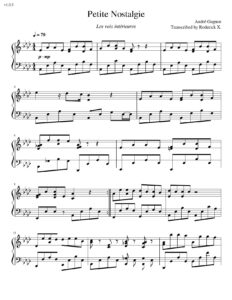 | |
| Andre Gagnon – Reves D’Automne | Andre Gagnon – Reves D’Automne | |
| Andre Gagnon – The Very Best Of Andre Gagnon (Sheet Music Songbook) |  | Andre Gagnon – The Very Best Of Andre Gagnon (Sheet Music Songbook) |
| Andre Gagnon Ciel D’Hiver |  | |
| Andre Gagnon Entre Le Boeuf et l’Ane Gris Musique Traditionelle | 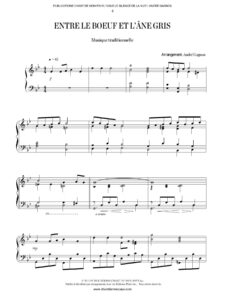 | |
| André Gagnon L’air Du Soir |  | |
| Andre Gagnon Neiges | 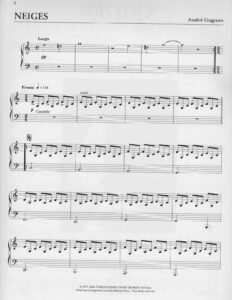 | |
| André Gagnon Nelligan | 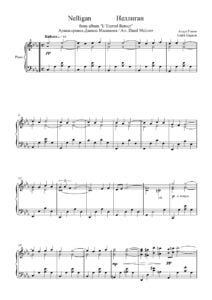 | |
| André Gagnon Origami | 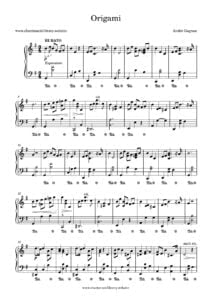 | |
| Andre Gagnon Pensées Fugitives | 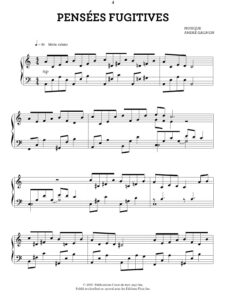 | |
| André Gagnon Piano Solitude |  | Gagnon, André Piano Solitude |
| Andre Gagnon Prologue | 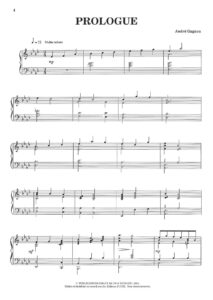 | |
| André Gagnon Selection Speciale de chansons (partitions musicales) |  | André Gagnon Selection Speciale de chansons (partitions musicales) |
| André Gagnon Un Piano Sur La Mer (Piano Solo Partition Sheet Music) | Gagnon André Un Piano Sur La Mer (Piano Solo Partition Sheet Music) |
Please, subscribe to our Sheet Music Library.
If you are already a subscriber, please, check our NEW SCORES’ page every month for new sheet music. THANK YOU!
Come join us now, and enjoy playing your beloved music and browse through great scores of every level and styles!
Can’t find the songbook you’re looking for? Please, email us at: sheetmusiclibrarypdf@gmail.com We’d like to help you!
Best Sheet Music download from our Library.
André Gagnon stands as one of the most important figures in Canadian music history, a prolific composer and pianist who masterfully blurred the lines between classical and popular music. Over a career spanning more than six decades, he created a rich and diverse body of work, from intimate piano solos to grand operas and international disco hits. This article explores the life, style, and enduring legacy of this remarkable artist.
Biography: The Prodigy from Saint-Pacôme
Early Life and Musical Beginnings
André Gagnon was born on August 2, 1936, in the small town of Saint-Pacôme-de-Kamouraska, Quebec . He was the youngest in an astonishingly large family of 19 children . This position as the baby of the family, surrounded by siblings, might have fostered his early need for self-expression, which he found in music. His innate talent emerged at a remarkably young age; he began picking out tunes on the piano at just three years old and was composing short pieces by the age of six . Recognizing his prodigious gift, his family supported his musical education. He took theory lessons with Léon Destroismaisons in Sainte-Anne-de-la-Pocatière from 1952 to 1953 . His formal training continued at the prestigious Conservatoire de musique à Montréal from 1957 to 1961, where he studied piano with Germaine Malépart, composition with Clermont Pépin, and solfège with Gilberte Martin . This rigorous classical foundation would become the bedrock upon which he built his eclectic and accessible style. A government scholarship in 1961 allowed him to further his studies in Paris with the renowned pianist Yvonne Loriod, the wife of composer Olivier Messiaen, exposing him to the heart of European musical tradition.
Career Breakthrough
Returning to Quebec, Gagnon immersed himself in the vibrant “chansonnier” scene, a movement of singer-songwriters that was defining a new Québécois cultural identity. In 1959, he became the official pianist for Les Bozos, a legendary collective that included Clémence Desrochers, Jean-Pierre Ferland, Claude Léveillée, Raymond Lévesque, and Hervé Brousseau . This role as an accompanist was crucial; it connected him to the heart of Quebec’s artistic renaissance and honed his skills as an arranger and collaborator. His partnership with Claude Léveillée was particularly fruitful, resulting in two celebrated albums of piano duets, Léveillée-Gagnon (1965) and Une voix, deux pianos (1967), which showcased their unique blend of classical and jazz-influenced improvisation .
Gagnon’s reputation grew, leading him to work as a musical director for popular television shows and as an arranger for major singers like Monique Leyrac and Renée Claude. In 1968, he traveled to London to record the album Pour les amants, a project that launched his international career . He continued to innovate, creating the 1969 album Mes quatre saisons, which featured baroque-style arrangements of popular Quebec folk songs. This concept was a hit, and he revisited it in 1972 with Les turluteries, an album dedicated to the music of the comedic folk singer La Bolduc .
The year 1974 marked a turning point with the release of Saga, his first album composed entirely of original instrumental pieces . This set the stage for his true masterpiece, Neiges (1975). The album was a phenomenon. The single “Wow,” with its driving disco beat, became an international club anthem, while the title track and other pieces showcased his lyrical, classically-informed writing. Neiges stayed on the American Billboard chart for 24 weeks, sold an astounding 700,000 copies worldwide, and won a Juno Award in 1977 for best-selling album in Canada.
Téléchargement des meilleures partitions dans notre bibliothèque.
Throughout the late 1970s and 1980s, Gagnon’s career was a whirlwind of activity. He released hit albums like Le Saint-Laurent (1977) and Movements (1979), won numerous Prix Félix awards, and toured the world, including the United States, Europe, Mexico, and Venezuela . In 1981, he fulfilled a dream by recording the album Impressions at the legendary Abbey Road Studios in London . The 1980s also saw his popularity explode in Japan, where he became a major star and toured frequently .
In 1990, Gagnon reached a new artistic peak with the premiere of the romantic opera Nelligan, for which he composed the music, collaborating with the celebrated playwright Michel Tremblay on the libretto . The work was a major cultural event in Canada. He continued to compose and perform prolifically into the 21st century, releasing reflective, intimate albums like Piano solitude (2003) and Les chemins ombragés (2010), the latter of which was certified gold . His later work, such as Les voix intérieures (2016), demonstrated an artist at peace, creating music of profound serenity.
Final Years and Passing
André Gagnon’s final years were marked by a quiet battle with illness. In April 2019, it was revealed that he was suffering from Alzheimer’s disease . He passed away on December 3, 2020, in Montreal at the age of 84, from Lewy body disease, surrounded by his loved ones . His death prompted an outpouring of grief and tributes from across Canada, honoring a man whose music was the soundtrack to the lives of millions.
Music Style and Influences
The music of André Gagnon is instantly recognizable and defies easy categorization. Its foundation is his conservatory training in the classical tradition. One can hear the clarity, formal structure, and melodic grace of composers like Mozart, Bach, and Chopin in his writing . Works like Petit concerto pour Carignan et orchestre (1976) are witty and affectionate homages to the Baroque era, drawing a direct line between the violin writing of the old masters and the Québécois fiddling style of the great Jean Carignan . His albums Mes quatre saisons and Les turluteries are essentially Baroque pastiches, borrowing forms and styles from Vivaldi and Bach but infusing them with the melodic materials of Quebec’s popular culture .
However, Gagnon was not content to be merely a classical artist. He was a child of his time, deeply influenced by the popular music of the 20th century. The “chansonnier” movement taught him the power of a simple, memorable melody. He then brilliantly fused this with the rhythmic energy of disco in the mid-1970s. Tracks like “Wow,” “Surprise,” “Donna,” and “Smash” are perfect examples of this fusion, placing his lyrical piano lines over insistent, danceable basslines and orchestral arrangements . This fearless blending of “high” and “low” art was his signature. He treated popular tunes with the same care and sophistication one might apply to a classical theme, creating entertainments based on the reconciliation of musical idioms that were often kept separate .
Improvisational Licks and Piano Style
For pianists, Gagnon’s style is a fascinating study. His improvisational “licks” are not about flashy, virtuosic displays of speed. Instead, they are rooted in melodic embellishment and harmonic sophistication. He often decorates simple, folk-like melodies with classical ornamentation: graceful appoggiaturas, mordents, and flowing arpeggios that fill out the harmonic texture . His left hand often provides a solid, rooted foundation, while his right hand weaves singing lines that seem to float effortlessly above.
Gagnon’s touch is equally important. His playing is characterized by a singing, lyrical tone and a sensitive use of the sustain pedal to create a wash of sound, a quality that led many to associate his music with the “new age” genre, though his classical rigor sets him apart . He was a master of dynamics, able to build a piece from a whisper to a powerful, orchestral climax and back again. His improvisations, whether in live performance or on recordings, feel organic and inevitable, as if the melody is discovering itself in the moment.
Cooperation with Other Artists
Collaboration was a cornerstone of André Gagnon’s career. His early work was almost exclusively about supporting and enhancing the work of others. This began with Les Bozos and continued throughout his life.
- With Singers and Songwriters: He was a sought-after accompanist, conductor, and arranger for the great voices of Quebec. He composed for Diane Dufresne (“Le 304”), Renée Claude (“Je suis une femme d’aujourd’hui,” “Ballade pour mes vieux jours”), and Nicole Martin (“Mannequin”) . His long association with Claude Léveillée produced some of the most memorable piano duets in Canadian music .
- With Other Musicians: His Petit concerto pour Carignan et orchestre was a brilliant and ambitious project that brought together the legendary fiddler Jean Carignan and the world-renowned violinist Yehudi Menuhin for a CBC television performance in 1978, a true meeting of musical worlds .
- With Writers: His most significant collaboration was with author and playwright Michel Tremblay on the opera Nelligan. Tremblay’s libretto, based on the life and poetry of the tragic Québécois poet Émile Nelligan, provided the perfect dramatic framework for Gagnon’s lush, romantic, and deeply emotional score .
Chord Progressions and Music Harmony
Gagnon’s harmonic language is a key element of his accessible yet sophisticated style. While he never published a treatise on his methods, his work can be analyzed for its common traits. He had a preference for rich, extended harmonies, often using major 7th, minor 7th, and add9 chords, which give his music a warm, lush, and slightly nostalgic quality . He frequently employed modal interchange, borrowing chords from parallel major or minor keys to add color and surprise without breaking the melodic flow.
His harmonic progressions often follow classical models, such as the circle of fifths, but he would reinterpret them in a pop context. The sense of “movement” in his music, aptly titled in his 1979 album, often comes from a carefully paced harmonic rhythm, where chords change slowly to create a sense of space, or accelerate to build towards a climax. The “impressionistic” title of his 1983 album is also telling; his use of harmony, while not as radical as Debussy’s, shares a similar goal of creating mood and atmosphere through coloristic chord choices .
Legacy
André Gagnon’s legacy is immense and multi-faceted. He is remembered as a pioneer who broke down musical barriers, proving that classical training and popular appeal were not mutually exclusive. He paved the way for countless instrumental artists in Canada and beyond. His music is deeply woven into the cultural fabric of Quebec. For many, his melodies are inseparable from their sense of home, memory, and identity.
His influence extends beyond his own recordings. As a composer for film and television, he shaped the sound of Quebec’s visual culture for decades . As a mentor and collaborator, he supported and elevated the work of his peers. The numerous awards he received—including multiple Junos, over a dozen Félix awards, the SOCAN William Harold Moon Award, and appointments as an Officer of the Order of Canada (1978) and the National Order of Quebec (2018)—are a formal recognition of his monumental contribution .
Works, Filmography, and Discography
André Gagnon’s catalogue is vast, spanning over 40 albums and countless scores for film, television, and theatre.
Discography
The following table presents a selection of his most significant albums, highlighting the breadth of his career.
| Year | Title | Notes |
|---|---|---|
| 1965 | Léveillée-Gagnon | Collaboration with Claude Léveillée |
| 1968 | Pour les amants | His international breakthrough |
| 1969 | Mes quatre saisons | Baroque arrangements of Québécois songs |
| 1972 | Les Turluteries | Homage to La Bolduc |
| 1974 | Saga | First album of all-original compositions |
| 1975 | Neiges | His masterpiece, featuring “Wow,” winner of a Juno Award |
| 1977 | Le Saint-Laurent | Multi-platinum selling album, won his first Félix Award |
| 1979 | Movements | |
| 1983 | Impressions | Recorded at Abbey Road Studios |
| 1990 | Nelligan | The studio recording of his opera, with Michel Tremblay |
| 1992 | Noël | Recorded with the Prague Philharmonic |
| 1996 | Twilight Time | |
| 1999 | Juliette Pomerleau | Soundtrack to the mini-series |
| 2003 | Piano solitude | |
| 2010 | Les chemins ombragés | Certified gold album |
| 2016 | Les voix intérieures | His final studio album |
Filmography (Selection)
Gagnon’s film scores demonstrate his ability to underscore narrative and emotion on the silver screen.
- Running (1979)
- Phobia (1980), directed by John Huston
- The Hot Touch (1981), directed by Roger Vadim
- Tell Me That You Love Me (1981)
- The Pianist (1992)
- Kamouraska (for which he composed music)
- Night Flight
Television Scores (Selection)
His work for television made him a household name in Quebec.
- La Souris Verte
- Format 60 / Format 30
- Les Forges de Saint-Maurice
- Des dames de cœur
- Un signe de feu
- Juliette Pomerleau (mini-series)
Theatre Scores (Selection)
- La Poudre aux Yeux
- La Dame de Chez Maxim’s
- Doña Rosita
Most Known Compositions and Performances
While his entire body of work is respected, certain pieces and performances stand out as defining moments in his career.
- “Neiges” and “Wow”: These two pieces, from the same 1975 album, represent the two sides of Gagnon. “Neiges” is the sweeping, lyrical, and cinematic title track, while “Wow” is the infectious, genre-defying disco hit that brought him global fame.
- “Pour les amants”: This 1968 track was his first major success and remains a classic of the era.
- The Opera Nelligan: Its premiere in 1990, followed by performances at the Place des Arts in Montreal and the National Arts Centre in Ottawa, was a landmark event, cementing his status as a serious composer for the stage .
- The Petit concerto pour Carignan et orchestre performance: The 1978 CBC television broadcast featuring André Gagnon (piano/conductor), Jean Carignan (fiddle), and Yehudi Menuhin (violin) was a magical and unique moment in music history, embodying his lifelong mission to connect different musical traditions .
- His tours of Japan: His immense popularity in Japan, with numerous sold-out tours throughout the 1990s and 2000s, was a significant and deeply satisfying part of his later career .
André Gagnon left behind a legacy of extraordinary music that continues to be discovered and cherished. He was, in every sense, a musical architect who built beautiful, lasting bridges between the concert hall and the popular imagination.
Browse in the Library:
Or browse in the categories menus & download the Library Catalog PDF:
Please, subscribe to our Sheet Music Library.
If you are already a subscriber, please, check our NEW SCORES’ page every month for new sheet music. THANK YOU!