Table of Contents
Bruce Springsteen – Dancing In the Dark
Search best Bruce Springsteen’s sheet music, books, and transcriptions in the Library:
| Name | Cover | Contents |
|---|---|---|
| Bruce Springsteen Tougher Than The Rest Piano Vocal Guitar Chords | Bruce Springsteen Tougher Than The Rest Piano Vocal Guitar Chords | |
| Bruce Springsteen – Born To Run |  | Bruce Springsteen Born to run |
| Bruce Springsteen – Secret Garden (Piano Score) | Bruce-Springsteen-Secret-Garden 1st page | |
| Bruce Springsteen Born In The USA Piano Vocal Chords | 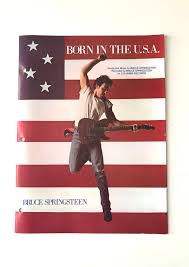 | Bruce Springsteen Born In The USA Piano Vocal Chords |
| Bruce Springsteen By Peter Basham (Book) | 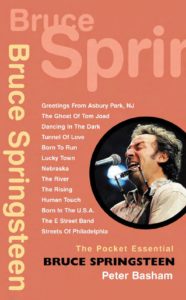 | |
| Bruce Springsteen Cadillac Ranch Piano Vocal Guitar Chords | Bruce Springsteen Cadillac Ranch Piano Vocal Guitar Chords | |
| Bruce Springsteen Devils And Dust Guitar Tab Songbook | 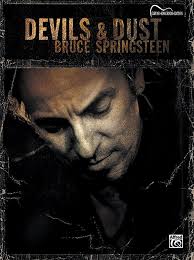 | Bruce Springsteen Devils And Dust Guitar Tab Songbook |
| Bruce Springsteen Greatest Hits (Piano-Guitar-Vocal) | 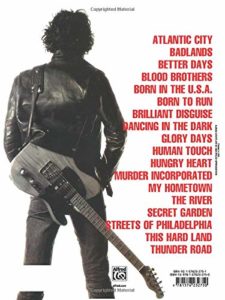 |  |
| Bruce Springsteen Guitar Anthology Authentic Guitar Tab Edition | 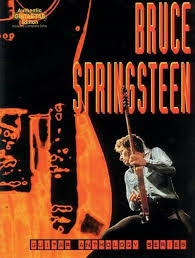 | Bruce Springsteen Guitar Anthology Authentic Guitar Tab Edition |
| Bruce Springsteen Lucky Town Piano Vocal Guitar Chords | 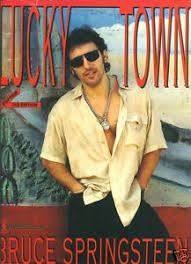 | Bruce Springsteen Lucky Town Piano Vocal Guitar Chords |
| Bruce Springsteen Springsteen On Springsteen Interviews Speeches Encounters by Jeff Burger (Book) | 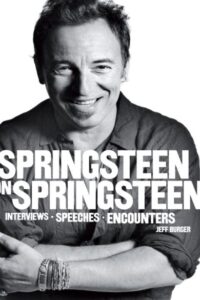 | |
| Bruce Springsteen Streets of Philadelphia sheet music (vocal piano accomp.) | Philadelphia-Streets Of Philadelphia | |
| Bruce Springsteen Tunnel Of Love Piano Vocal Chords | 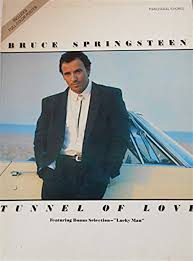 | Bruce Springsteen Tunnel Of Love Piano Vocal Chords |
The best sheet music download from our Library.
Scores for all instruments: 16,000+ (active and growing), over 236,000 pages.
All genres and levels: Jazz & Blues, Rock & Pop, Classical & Contemporary, Film & Musicals;
books & biographies; methods, études, play-along tracks (MP3) for Jazz & Rock.
Access & benefits: US$15.99 one-time payment, valid for lifetime, full Library access.
Please, subscribe to our Sheet Music Library. Sheet music should be accessible and affordable for all musicians, from professionals to absolute beginners.
Who is Bruce Springsteen (b. 1949)?
Bruce Springsteen: The Voice of the American Heartland
Biography: From Freehold to the World Stage
Bruce Frederick Joseph Springsteen was born on September 23, 1949, in Long Branch, New Jersey, and grew up in the working-class town of Freehold. His father, Douglas "Dutch" Springsteen, worked as a laborer, while his mother, Adele, was a legal secretary. Raised in a Roman Catholic household alongside two younger sisters, Springsteen's childhood was shaped by the economic struggles and cultural tensions of post-war industrial America.
Springsteen's musical awakening came in 1956 when he saw Elvis Presley perform on The Ed Sullivan Show—a moment he later described as his "genesis moment". As a teenager, he turned to rock & roll as an escape, playing in a series of local bands from the mid-1960s onward, ranging in style from garage rock to power trio blues-rock. After an apprenticeship in bar bands along the mid-Atlantic coast, Springsteen reinvented himself as a solo singer-songwriter in 1972 and auditioned for legendary talent scout John Hammond, Sr., who immediately signed him to Columbia Records.
His first two albums, Greetings from Asbury Park, N.J. and The Wild, the Innocent & the E Street Shuffle, were released in 1973 to critical acclaim but modest commercial success. It was 1975's Born to Run that catapulted him to international fame, landing him simultaneous covers of Time and Newsweek magazines. After a legal dispute with his former manager kept him out of the studio for two years, he returned with the ferocious, stripped-down Darkness on the Edge of Town (1978), followed by the ambitious double album The River (1980), which gave him his first Top 40 single, "Hungry Heart".
The 1980s saw Springsteen reach unprecedented commercial heights with Born in the U.S.A. (1984), which spawned seven Top 10 singles and sold over 17 million copies in America alone, equal to Michael Jackson's Thriller. Yet he consistently challenged his audience, following that blockbuster with the introspective Tunnel of Love (1987) and later the solo acoustic The Ghost of Tom Joad (1995). His career has continued to evolve through the 21st century, from the 9/11-inspired The Rising (2002) to the reflective Letter to You (2020), and his one-man show Springsteen on Broadway, which ran for 236 performances at the Walter Kerr Theatre. With over 140 million records sold worldwide, 20 Grammy Awards, an Academy Award, a Special Tony Award, the Kennedy Center Honors (2009), and the Presidential Medal of Freedom (2016), Springsteen stands as one of the most decorated and influential artists in rock history.
Browse in the Sheet Music Library:
Or browse in the categories menus & download the Library Catalog PDF:
Music Style: The Architecture of Heartland Rock
Springsteen is widely recognized as a pioneer of heartland rock, a genre that blends American roots music—rockabilly, blues, R&B, folk, and country—with poetic, narrative-driven lyrics centered on the lives of everyday Americans. His sound is a tapestry woven from the twang of Duane Eddy, the grandeur of Phil Spector's "Wall of Sound," the lyrical ambition of Bob Dylan, and the raw energy of early rock and soul.
As Rolling Stone noted, Springsteen's work "epitomizes rock's deepest values: desire, the need for freedom and the search to find yourself". His versatility is remarkable: from the arena-sized anthems of Born to Run to the stark, Dust Bowl folk of Nebraska; from the synth-infused pop-rock of Born in the U.S.A. to the orchestral sweep of Western Stars (2019). Springsteen himself has described his approach with characteristic humility: "I was never really much of a revolutionary musician, but I was an alchemist. I put a lot of things together along with stuff I pulled up out of myself".
A distinctive feature of his songwriting is the intentional contrast between music and message. Many of his most uplifting, anthemic songs contain darker, more complicated lyrics—"Born in the U.S.A.," for instance, pairs a rousing, fist-pumping chorus with verses about a disaffected Vietnam veteran "chewed up and spat out by his country". As Springsteen explained to NPR's Terry Gross, "The pride was in the chorus… the blues and your daily realities are in the details of the verses".
Improvisation and Guitar Techniques
Though not a technical virtuoso in the mold of Clapton or Hendrix, Springsteen is a formidable and deeply expressive guitarist. His playing is rooted in rhythmic energy, blending elements of rock, blues, and folk into a style that is instantly recognizable.
Signature Techniques
Springsteen's guitar vocabulary includes several distinctive techniques:
- Barre Chords: He relies heavily on barre chords to create a full, rich "wall of sound" effect, though he has often expressed a dislike for them, preferring open chord voicings that allow the guitar to ring out with natural resonance.
- Double Stops: Throughout many of his solos, he employs double stops—playing two notes simultaneously to create a harmonized effect that adds thickness and melodic interest.
- String Bending and Slides: His emotional lead lines feature expressive string bending and fluid slides, contributing to a vocal, almost conversational quality in his solos.
- Achieving the "Boss" Guitar Tone: Springsteen's signature guitar tone is often described as a "wall of sound." It's achieved by pushing the amplifier's master volume and channel volume together to produce natural tube breakup, along with generous use of reverb. This approach allows him to fill enormous spaces—from clubs to stadiums—with a roaring, anthemic presence that feels both intimate and epic.
Live Improvisation
Springsteen's "muscular," "diver-bomber rockabilly-esque guitar licks" are a staple of his live performances. His concerts are famous for spontaneous moments—from extending solos to trading "high-octane licks" with guitarist Nils Lofgren mid-song. This improvisatory spirit extends to his acoustic work as well. In his Springsteen on Broadway performances, he would talk while playing "little licks on his acoustic guitar to keep up the tempo," seamlessly weaving storytelling and music together.
Chord Progressions and Harmonic Language
Springsteen's harmonic language, while rooted in rock and folk traditions, is more sophisticated than it might first appear. Analysis of his catalog reveals several recurring harmonic fingerprints.
The Power of Simplicity: "Dancing in the Dark"
The intro to "Dancing in the Dark" alternates between G and G6 chords—a deceptively simple progression that creates a shimmering, suspended quality. This minimalist approach, where a single chord is subtly varied, is a hallmark of Springsteen's later pop-oriented work.
The Epic Sweep: "Born to Run"
"Born to Run," written in E major, is built around a driving chord progression that incorporates tremolo guitar riffs, glockenspiel arpeggios, and what one analyst described as "endless sus chords". The song features unusual structural elements: B sections that are 14 bars long, solos that run 12 bars, and bridges of varying lengths (14 and 17 bars respectively). There is also a dramatic modulation to F major during the climactic saxophone solo and the creative use of a chromatic scale for the grand finale.
Reharmonization and Sleight-of-Hand: "I'm on Fire"
In "Born in the U.S.A." track "I'm on Fire," the arpeggiated guitar line plays an E5 power chord with an additional B note, creating harmonic ambiguity. Springsteen often uses what analysts call "chord progression sleight-of-hand," where upward-moving chord roots mask the fact that the key is actually moving back down—a technique that gives the songwriter greater control over the emotional trajectory of a song.
Harmonic Range
From the folk simplicity of Nebraska to the complex song structures of his early albums, Springsteen has demonstrated a remarkable harmonic range throughout his career. As one study notes, his songs have evolved "from the complex song structures found on his earlier albums to the folk simplicity and narrative drive of his later work". He frequently avoids barre chords in his playing style, gravitating instead toward open voicings and arpeggiated figures that prioritize texture over technical display.
The E Street Band and Artistic Collaborations
No discussion of Springsteen would be complete without acknowledging the E Street Band, named after the street in New Jersey where Springsteen first assembled the original quintet. The band has been his primary backing ensemble since 1972, appearing on the majority of his studio albums and live releases.
The Core Lineup
Clarence Clemons (Saxophone): Clemons' tenor saxophone provided an unmistakable voice in Springsteen's music—its unique resonance takes center stage in classics such as "Born to Run" and "Spirit in the Night". Their legendary partnership began almost by chance one night in the early 1970s in Asbury Park when Clemons sat in with Springsteen. "I sat in with him that night. It was phenomenal," Clemons later recalled. "After that first song, he looked at me, I looked at him, and we said, 'This is it'". Clemons remained a cornerstone of the band until his death in 2011.
Steven Van Zandt (Guitar/Mandolin): A key architect of the E Street sound, Van Zandt co-produced Born in the U.S.A. and has been Springsteen's musical right hand for decades.
Patti Scialfa (Vocals/Guitar): Scialfa joined the E Street Band in 1984, three days before the Born in the U.S.A. Tour launched, and her shimmering vocals and guitar playing added a new dimension to the group's sound. She later married Springsteen in 1991.
Max Weinberg (Drums), Garry Tallent (Bass), and Nils Lofgren (Guitar/Vocals) round out the core lineup that has powered Springsteen's marathon concerts for decades.
The E Street Band members have also had significant solo careers and collaborations beyond Springsteen: Clemons recorded five solo albums and had a 1985 hit duet with Jackson Browne, "You're a Friend of Mine." Van Zandt is an accomplished solo artist and actor (memorably on The Sopranos). Max Weinberg served as the bandleader for Late Night with Conan O'Brien.
Broader Collaborations
Springsteen has collaborated widely across genres: he co-wrote and produced two albums for Gary U.S. Bonds in the early 1980s (Dedication and On the Line), sang a duet on "Jole Blon" with Bonds, and lent his Gretsch Country Gentleman guitar to Blondie's Frank Infante, who used it to record the iconic spaghetti-western guitar lick on Blondie's hit "Atomic". More recent collaborations include duets with Zach Bryan on "Sandpaper" (2024), a re-recording of "A Dustland Fairytale" with The Killers (2021), and "Chinatown" with Bleachers. He has also performed with Lady Gaga, Neil Young, Bono, Billy Joel, Bob Seger, Dave Grohl, and Elvis Costello.
Influences: The Roots of the Boss
Springsteen's music is a rich synthesis of multiple traditions. Growing up in the 1950s and 1960s, he absorbed an extraordinarily wide range of music: The Beatles, Bob Dylan, Frank Sinatra, Merle Haggard, Emmylou Harris, and Otis Redding, among many others.
Foundational Figures
- Chuck Berry: Springsteen has called Berry "the greatest of rockers, the greatest of guitarists, and the greatest of rock lyricists". Berry's storytelling approach—setting up vivid narrative scenes within three-minute rock songs—was a direct model for Springsteen's own songwriting.
- Bob Dylan: Dylan's influence on Springsteen cannot be overstated. The young New Jersey musician was transfixed by how Dylan "wrote about everything that mattered at once in every song". Springsteen has stated his intention was "to do what Bob Dylan did for me, which is to kick open the door to your mind and your body".
- Elvis Presley: Elvis's 1956 television appearance was Springsteen's "genesis moment," and the King's fusion of rockabilly energy, charisma, and danger left an indelible mark.
- Woody Guthrie and Pete Seeger: The folk tradition of social commentary and advocacy runs deep in Springsteen's work. He has often cited Guthrie as a major influence and paid direct tribute to Seeger with his 2006 album We Shall Overcome: The Seeger Sessions.
- Phil Spector: Spector's "Wall of Sound" production technique—lush, orchestral, densely layered—is a recurring strain in Springsteen's catalog, most evident on Born to Run, which Springsteen has said he wanted to sound like "Roy Orbison singing Bob Dylan, produced by Spector".
The Born to Run Trinity
For his breakthrough album specifically, Springsteen identified three critical influences: Duane Eddy (for "the twangy guitar sound"), Roy Orbison (for "the very unusually and unstructured songs"), and Bob Dylan (for the poetic, staunchly American lyrical approach).
Other Influences
Additional touchstones include Van Morrison (particularly his work with Them), The Animals ("Gotta Get Out of This Place"—which Springsteen said "is every song I've ever written"), Chuck Berry, Roy Orbison, Gary "U.S." Bonds, and the Stax/Volt soul catalog.
Legacy: More Than a Rock Star
Springsteen's legacy extends far beyond music. He is one of the best-selling music artists of all time, with over 140 million records sold worldwide, ranking as the seventh best-selling male solo artist in U.S. history according to the RIAA. Born in the U.S.A. alone has sold more than 30 million copies globally.
Cultural Impact
Springsteen's music has become woven into the fabric of American cultural discourse. "Born in the U.S.A.," despite being a critique of the Vietnam War's impact on working-class veterans, was widely misinterpreted as a patriotic anthem—adopted by politicians across the spectrum, including Ronald Reagan's 1984 re-election campaign. This very misinterpretation speaks to the complexity of his art: songs that function as both rousing anthems and subtle social critiques.
As he said in a press conference for his 2012 album Wrecking Ball: "I have spent my life judging the distance between American reality and the American dream".
Influence on Other Artists
Springsteen's influence can be heard across multiple generations of musicians, from heartland rockers like John Mellencamp and Tom Petty to indie acts like The Killers, Bleachers, The Gaslight Anthem, and The War on Drugs. His marathon concert performances—regularly exceeding three hours—set a new standard for live rock shows, and his commitment to authenticity over artifice has inspired countless artists to prioritize substance over style.
Awards and Recognition
Springsteen's accolades reflect his singular status in American music: 20 Grammy Awards, an Academy Award for Best Original Song ("Streets of Philadelphia," 1994), two Golden Globes, a Special Tony Award (for Springsteen on Broadway), induction into both the Rock and Roll Hall of Fame and the Songwriters Hall of Fame (1999), the Kennedy Center Honors (2009), the Presidential Medal of Freedom (2016), and the National Medal of Arts.
Springsteen on Screen: Film, Television, and Documentary Works
Springsteen's music has been used extensively in film and television, often to underscore moments of working-class struggle, redemption, and emotional transformation.
Film Soundtracks and Songs
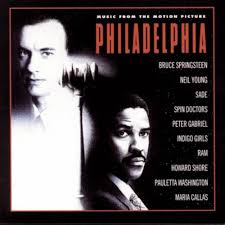
His most famous contribution to cinema is undoubtedly "Streets of Philadelphia," written for Jonathan Demme's 1993 film Philadelphia—a song that won the Academy Award for Best Original Song and four Grammy Awards. Other notable film appearances include "Dead Man Walking" (for the 1995 film of the same name), "The Wrestler" (written for the 2008 Darren Aronofsky film and winning a Golden Globe), and "Missing" (from the 2003 film The Missing).
Springsteen's songs have also been featured in films such as Mask, High Fidelity, Reign Over Me, and Show Me a Hero, and have appeared in television series including The Sopranos. The 2019 film Blinded by the Light, directed by Gurinder Chadha, is built entirely around a British-Pakistani teenager's transformative relationship with Springsteen's music.
Biopics
The 2025 biographical drama Deliver Me from Nowhere, directed by Scott Cooper, stars Jeremy Allen White as Springsteen and chronicles the creation of the Nebraska album during a period of personal and professional turmoil. White performs multiple Springsteen songs in the film, including "I'm on Fire," "Atlantic City," and "Born to Run".
Documentaries
Director Thom Zimny has become Springsteen's definitive documentarian, creating a series of films that capture pivotal moments in his career:
- Wings for Wheels: The Making of Born to Run (2005): An intimate look at the creation of the 1975 masterpiece.
- The Promise: The Making of Darkness on the Edge of Town (2010): Chronicles the difficult birth of Springsteen's 1978 album.
- Springsteen on Broadway (2018): A performance film of his one-man theatrical show.
- Letter to You (2020): An ode to friendship, the E Street Band, and the passing of time.
- Road Diary: Bruce Springsteen and the E Street Band (2024): Follows the band's 2023-2024 world tour, their first since the COVID-19 pandemic, and features "exclusive footage" from rehearsals through global performances.
Additionally, Springsteen & I (2013), directed by Baillie Walsh, is a unique documentary that tells Springsteen's story through the eyes and experiences of his fans around the world.
Discography: The Studio Albums
Springsteen's 21 studio albums represent one of the richest catalogues in popular music:
| Year | Album | Notable |
|---|---|---|
| 1973 | Greetings from Asbury Park, N.J. | Debut; folk-rock and soul influences |
| 1973 | The Wild, the Innocent & the E Street Shuffle | Jazz and R&B experimentation |
| 1975 | Born to Run | Breakthrough; "wall of sound" production |
| 1978 | Darkness on the Edge of Town | Stripped-down, fierce rock |
| 1980 | The River | Double album; first #1; "Hungry Heart" |
| 1982 | Nebraska | Solo acoustic; stark folk |
| 1984 | Born in the U.S.A. | 7 Top 10 hits; 17x platinum |
| 1987 | Tunnel of Love | Introspective relationship songs |
| 1992 | Human Touch / Lucky Town | E Street-less double release |
| 1995 | The Ghost of Tom Joad | Acoustic; social commentary |
| 2002 | The Rising | 9/11 response |
| 2005 | Devils & Dust | Solo folk narratives |
| 2006 | We Shall Overcome: The Seeger Sessions | American folk tradition |
| 2007 | Magic | Return to E Street rock |
| 2009 | Working on a Dream | Lush, orchestral pop-rock |
| 2012 | Wrecking Ball | Political rock |
| 2014 | High Hopes | Covers, outtakes, re-recordings |
| 2019 | Western Stars | Orchestral, cinematic Americana |
| 2020 | Letter to You | E Street reunion; mortality themes |
| 2022 | Only the Strong Survive | Soul covers album |
Most Known Compositions and Performances
Springsteen's catalogue includes some of the most enduring songs in rock history. Among his most celebrated compositions:
- "Born to Run": An anthem of youthful escape and romantic longing, regularly ranked among the greatest songs of all time.
- "Thunder Road": The iconic album opener that "slowly brings you in with piano and harmonica".
- "Born in the U.S.A.": His most commercially successful—and most widely misunderstood—song, a searing critique wrapped in an anthemic chorus.
- "Dancing in the Dark": His highest-charting single, which explores themes of frustration and longing, netting Springsteen his first Grammy.
- "Streets of Philadelphia": The Academy Award-winning theme from Philadelphia, a haunting meditation on loss and mortality.
- "The River," "Badlands," "Jungleland," "Atlantic City," "The Rising," "My City of Ruins": Each represents different facets of Springsteen's artistic range—from intimate storytelling to epic rock opera to social protest.
More than fifty years after his first recordings, Bruce Springsteen remains a singular figure in American music—an artist who has balanced unwavering artistic integrity with mass commercial appeal. From the boardwalk clubs of the Jersey Shore to the largest stadiums on Earth, from the intimate confessions of Nebraska to the roaring anthems of Born in the U.S.A., Springsteen has chronicled the American experience with rare empathy, honesty, and power. His journey from a working-class kid in Freehold to a global icon mirrors the very stories he tells: stories of struggle, redemption, and the enduring belief that "tramps like us, baby we were born to run."