
Table of Contents
White Christmas by Irving Berlin, arr. for piano by Carsten Gerlitz
White Christmas by Irving Berlin, arr. Carsten Gerlitz performed by Jamorn Supapol, piano.
Search the best Carsten Gerlitz’s sheet music, books, and transcriptions in the Library
Search your favorite sheet music in the Sheet Music Library Catalog
Scores for all instruments: 16,000+ (active and growing), over 236,000 pages.
All genres and levels: Jazz & Blues, Rock & Pop, Classical & Contemporary, Film & Musicals;
books & biographies; methods, études, play-along tracks (MP3) for Jazz & Rock.
Access & benefits: US$15.99 one-time payment, valid for lifetime, full Library access.
Please, subscribe to our Sheet Music Library. Sheet music should be accessible and affordable for all musicians, from professionals to absolute beginners.
Who is Carsten Gerlitz?
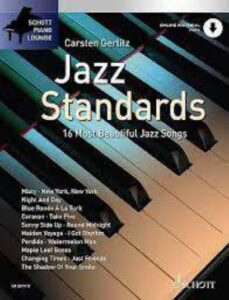

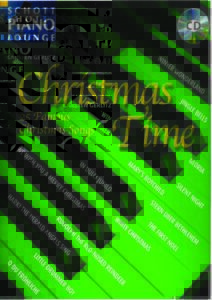

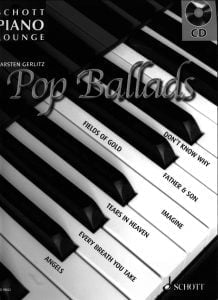
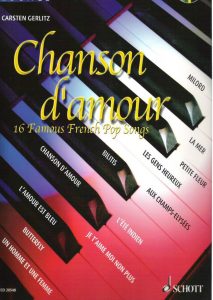


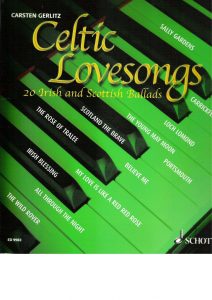
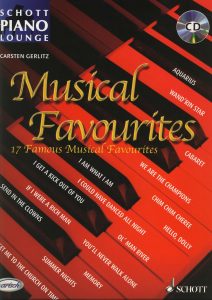
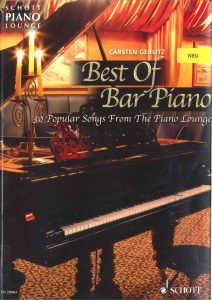
The best sheet music download from our Library.
Carsten Gerlitz: The Art of Accessible Excellence
In the landscape of German popular music, few figures have bridged the gap between professional sophistication and grassroots accessibility as seamlessly as Carsten Gerlitz. Born in Berlin in 1966, Gerlitz has carved out a unique and influential niche as a musician, arranger, composer, publisher, and, above all, a fervent advocate for the modern pop choir. His name appears on well over 250 published piano and choir arrangements, making him one of the most prolific and recognizable figures in the German-language choral world. Gerlitz’s work embodies a philosophy where complex harmony and pop sensibility converge, creating a body of work that is as technically satisfying as it is immediately enjoyable.
Biography: From Berlin to the Burning Man
Carsten Gerlitz was born in Berlin and pursued a characteristically dual academic path, studying music at the Berlin University of the Arts (HdK) and, simultaneously, computer science at the Free University (FU). His musical training was shaped by a distinguished lineage of instructors. He studied piano, arrangement, and composition under Clemens Kühn, Hartmut Fladt, and the renowned composer Heinrich Riethmüller, figures who grounded him in rigorous classical theory while fostering a creative spirit.
The year 1985 marked a pivotal moment. While still a student, Gerlitz founded The Happy Disharmonists, what he and many others consider to be Germany’s oldest pop choir. This was not merely a hobby; it was an early step onto uncharted territory. The pop choir movement was in its infancy, and a lack of suitable arrangements compelled Gerlitz to begin writing his own, a necessity that would become his life’s work.
Since then, Gerlitz has built a multifaceted career. He operates his own recording studio, Greenlandmusic, where he oversees text and music productions. His professional reach extends far beyond the choir loft. He has served as Musical Director for major German television networks, including SAT.1, ZDF, and RTL, and has held musical leadership roles at prominent theatres across Germany and Switzerland, such as the Berliner Schlosspark Theater, Nationaltheater Mannheim, and Theater Bonn. This versatility is perhaps best symbolized by his globe-spanning activities: he has arranged and conducted shows for the sophisticated Palazzo dinner-spectacle in cities like Vienna, Berlin, and Munich, and at the other end of the spectrum, he has repeatedly conducted the Playa)(Pops Symphony orchestra at the Burning Man festival in the USA.
Music Style: The “Piano Lounge” Ethos
The core of Gerlitz’s musical identity can be best described by the term he has popularized: “Piano Lounge.” This style is the conceptual umbrella for his series of the same name, published by Schott Music. It is characterized by a sophisticated yet relaxed approach to arrangement, transforming well-known pop and classical melodies into something that feels both familiar and freshly minted.
Gerlitz’s Piano Lounge style is not defined by a single genre but by a particular sensibility. It freely incorporates elements of jazz, swing, pop, and light classical music. The goal is to create atmospheric, “loungy” versions of famous tunes—from the roaring 1920s hits of Schellack-Hits & Evergreens to the timeless pop of Movie Classics. A description of his Jazz Standards volume perfectly captures his approach: he “bridges the gap between traditional and modern classics of jazz music, adding the one special note or other and improvisation to the famous melodies”. This is not radical deconstruction but tasteful, stylistic re-clothing, where the essence of the original is preserved while being bathed in warm, jazzy harmonies and gentle rhythmic grooves.
His choral style mirrors this. It is marked by a love for a “full, harmonically dense choral sound,” achieving a richness that belies the often simple source material. Whether arranging a folk song, a Beatles classic, or a hit by Pharrell Williams, Gerlitz aims for a sound that is both immediately appealing to an audience and genuinely satisfying for the singers to perform. His arrangements are known for being idiomatically written for voices, a skill honed by decades of directing his own choir.
Improvisational Licks and Techniques
Gerlitz’s approach to improvisation is pedagogical and taste-driven, designed to empower rather than intimidate. He is not known for extended, free-form jazz solos in the avant-garde tradition. Instead, his improvisational style, meticulously laid out in his widely-used workshop book Modern Bar Piano: Harmonik – Arrangement – Interpretation, is about “styling.” The book’s description likens his method to a master chef presenting the right ingredients for a star-quality menu. He provides the tools for pianists to move from a lead sheet to a fully realized performance.
His signature “licks” are less about virtuosic scalar runs and more about the “one special note or other” that gives a melody a new character—a chromatically altered passing tone, a tasteful suspension, or a jazz-influenced grace note that shifts the mood. The promotional material for his Love Ballads and Jazz Standards volumes consistently highlights this point: he adds “a specific note and improvisation to the famous melodies—entirely in the unmistakable Piano-Lounge style”. This is the art of subtle embellishment, of filling the spaces in a melody with sophisticated, often blues-inflected, connective tissue that makes a standard pop song feel like a personal, intimate performance.
Chord Progressions and Music Harmony
Gerlitz’s harmony is the engine of his style. While his foundational training with teachers like Clemens Kühn and Hartmut Fladt gave him a command of classical four-part writing and Schenkerian analysis, his professional work is a masterclass in applied jazz and pop harmony.
His chord progressions rarely follow the simplest triadic paths. A Gerlitz arrangement is recognizable by its use of extended and altered chords. Major sevenths, minor ninths, suspended chords, and chromatically descending bass lines are fundamental to his harmonic vocabulary. He uses these devices not to obscure the melody but to enhance its emotional content, transforming a straightforward pop song into a lush ballad.
The concept of reharmonization is central to his work. In his Classical Highlights volume, he takes “the most beautiful works for classical music with a new, stylishly pop look,” which involves re-harmonizing melodies from Ravel’s “Bolero” or Schumann’s “Träumerei” with jazz chords, giving them a completely different color. This shows a deep understanding of harmonic function: he knows how to substitute diatonic chords with secondary dominants, tritone substitutions, and modal interchange chords without disrupting the melody’s integrity. His work with The Happy Disharmonists often features complex, jazz-inflected choral harmonies, demonstrating that these sophisticated progressions can be sung, not just played, producing a rich, sonorous blend.
Relationship with Other Artists
Gerlitz’s career is a nexus of collaborations, connecting him to a diverse array of German and international musical figures. His reputation as a first-call arranger has led to work for a remarkable list of artists, demonstrating his stylistic range:
- Max Raabe and the Palast Orchester: Arranging for this iconic ensemble, which recreates the sound of 1920s German dance and film music, shows Gerlitz’s deep fluency in pre-war popular styles.
- Reinhard Mey: Working with the legendary German Liedermacher (singer-songwriter) shows his ability to sensitively arrange for an artist known for his lyrical storytelling.
- Ute Lemper: Collaborating with this world-renowned interpreter of cabaret and Weimar-era music further cements his connection to sophisticated, theatrical vocal music.
- Pepe Lienhard and the Wise Guys: This links him to both the Swiss big band tradition and one of Germany’s most successful a cappella pop groups, highlighting his versatility in both instrumental and vocal arranging.
- Ernie & Bert (Sesamstraße): The fact that he has arranged for the characters of Sesame Street is a testament to his playful side and his philosophy of making music accessible to all ages.
- Oliver Gies (of Maybebop): His co-composition Alles das kann nur Musik with Oliver Gies is a landmark piece, fusing Gerlitz’s “love of full, harmonically dense choral sound” with Gies’s “ear for groove and verbal punch from a-cappella pop”.
- Conni Adventures: A charming personal project where he set several Conni children’s book adventures to music with his own children, further solidifying his role in music education.
His institutional collaborations are equally significant. He has arranged for major German radio orchestras (NDR, MDR, WDR) and choirs, as well as the Dresden Philharmonic, bridging the gap between the pop and classical worlds.
Influences
While Gerlitz rarely cites specific pop-music idols as his sole inspiration, his influences can be triangulated from his biography and body of work.
- Formal Education: His teachers Clemens Kühn, Hartmut Fladt, and Heinrich Riethmüller were his most direct and formative influences. From them, he inherited a rigorous understanding of music theory, counterpoint, and classical composition, providing the bedrock upon which his entire house of popular arrangements is built.
- The 1920s-1940s German Schlager and Film Music: The music he arranges for Max Raabe and the Palast Orchester, and which fills his Schellack-Hits & Evergreens volume, is a clear and pervasive influence. The harmonic language and elegant melodic sensibilities of this era are a direct ancestor of his “Piano Lounge” style.
- The Pop-Rock Canon: The sheer breadth of his output—from The Beatles and Sting to Pink Floyd and Pharrell Williams—reveals a deep influence from the entire sweep of Anglo-American popular music. His work is a constant dialogue between this global pop language and his own European harmonic sensibility.
- Jazz and American Songbook: His Jazz Standards album and his frequent use of jazz harmonies place the American Songbook and the tradition of cool jazz piano firmly in his lineage. The entire Schott Piano Lounge concept is indebted to the relaxed intimacy of the jazz piano bar.
Legacy: The Architect of the German Pop Choir
Carsten Gerlitz’s legacy is profound and, in its own quiet way, revolutionary. His most significant achievement is the mainstreaming of the pop choir in Germany. When he founded The Happy Disharmonists in 1985, he was pioneering a new form. Through his hundreds of published arrangements and his two essential books—Just Sing It! (2012) and PopChor – fast 1001 Tipps zur Chorleitung (2018)—he provided the roadmap for a generation of choir directors.
He demystified pop music for a choral world still largely oriented around classical and sacred repertoire. His books are not dry theory but practical, lively guides filled with tips on rehearsal didactics, rhythm, and stage presence, all drawn from his own decades of experience. As one description notes, “Anyone who knows his books… knows: this is someone who actually stands in front of a choir”. He has created a vast library of sheet music that is designed to be “musically satisfying and technically achievable,” fostering enjoyment and musical growth. His influence is felt in thousands of school, community, and professional choirs across German-speaking Europe that use his editions. The German Music Edition Prize (“Best Edition” 2006) for his Pop Ballads is a formal recognition of this contribution.
Works: A Prolific Catalogue
Scholarly and Pedagogical Works
- Just Sing It! (2012): The foundational text on pop choir conducting.
- PopChor – fast 1001 Tipps zur Chorleitung (2018): A comprehensive “recipe book” of practical advice.
- Modern Bar Piano: Harmonik – Arrangement – Interpretation: The definitive workshop book for his Piano Lounge style.
- Arrangieren und Instrumentieren: Barock bis Pop: A study book co-authored with Ulrich Kaiser, used in music schools.
Major Arrangement Series (Schott Music)
- Schott Piano Lounge: The flagship instrumental series, including volumes like Jazz Standards, Movie Classics, Classical Highlights, Schellack-Hits & Evergreens, Pop Ballads, and Love Ballads.
- Schott Vocal Lounge: A choral counterpart, with volumes like Sing Movie Classics featuring masterful arrangements of film songs.
- Choirbook Series: Thematically organized collections such as The Women’s Choirbook, The Movie Choirbook, The Celtic Choirbook, and The Christmas Choirbook.
Compositions for the Stage
- “Heiße Zeiten”: A successful musical about menopause, for which he wrote and arranged the music.
- “Höchste Zeit” and “Himmlische Zeiten”: The sequels, for which he also wrote the lyrics.
Works on Films
Gerlitz’s relationship with film music is that of an arranger par excellence, rather than a composer of original scores. He bridges the distance between the cinema and the concert hall or living room. His film-related work falls into two categories:
- Arrangements of Film Music for Piano and Choir: The core of his film work is in volumes like Movie Classics 2 and Sing Movie Classics, which include his signature treatments of themes from Flashdance, Fantasia, Titanic, Casablanca, and The Wizard of Oz. The Movie Choirbook adapts legends like “Moon River” and Chaplin’s “Smile” for a cappella mixed choir, with arrangements that “go far beyond the usual” in complexity to guarantee an effect like the original.
- Arrangements of Songs Featured in Films: He has also arranged chart-topping hits that became culturally dominant through their use in films. A prime example is his five-voice SSATB arrangement of Pharrell Williams’s “Happy,” which “took the world by storm” after its feature in Despicable Me 2.
Discography (Selected)
Gerlitz’s discography is vast and primarily published through his own label, Greenland Music, and Schott Music. It consists of both artist albums and the companion CDs that accompany his sheet music volumes, on which he often performs himself. A representative selection includes:
With The Happy Disharmonists:
- Weihnachts-Oratorium Kantaten I-III (BWV 248) – A unique pop-choir take on Bach.
- Numerous other CDs showcasing their eclectic repertoire.
Piano Lounge & Arranger Series (with companion CDs/audio):
- Jazz Standards – Gerlitz’s own performances of 16 most beautiful jazz songs.
- Movie Classics 1 & 2 – All pieces recorded live by the author.
- Schellack-Hits & Evergreens – 16 German hits from the 1920s-40s.
- Classical Highlights – 20 classical masterpieces in lounge style.
- Pop Ballads – The award-winning volume of 16 pop classics.
- Love Ballads – A volume “into the world of great feelings”.
Compositional Albums and Projects:
- Alles das kann nur Musik – Single and collaborative piece with Oliver Gies.
- Here, There and Everywhere (2023) – A family project featuring Carsten, Lina, Paul, and Jule Gerlitz performing Beatles songs.
- Blues & Boogie For Kids – 15 original easy piano pieces for young learners.
- Conni soundtracks – Music for the popular children’s book series.
Most Known Compositions and Performances
Signature Composition: The choral piece “Alles das kann nur Musik” (co-written with Oliver Gies) stands as perhaps his most recognized original concert work. It is a love letter to communal singing and has “long since found its place in so many choir programmes” across Germany.
Defining Performances:
- His enduring leadership of The Happy Disharmonists, who won the Berlin Culture Award BONZO, remains the heart of his musical life.
- His role as arranger and conductor of the Palazzo Shows in Vienna, Berlin, and Munich is a highlight of his theatrical work.
- His repeated direction of the Playa)(Pops Symphony at Burning Man has become a legendary and unexpected facet of his career, demonstrating his ability to bring a large-scale, symphonic pop experience to one of the most unique stages in the world.
Documentaries and Media
There is no dedicated, feature-length biographical documentary on Carsten Gerlitz. His media presence is instead functional and pedagogical, embedded in the DNA of his work. The most important “documentary” materials are the instructional CDs and online audio files that accompany nearly all of his sheet music publications. These are recorded by Gerlitz himself and serve as definitive sonic documents of his interpretations. Furthermore, recordings of his workshops and choir performances, many of which circulate on platforms like YouTube, offer valuable insight into his conducting style and rehearsal methods. These videos are the primary visual documentary of his work with pop choirs. The video recordings he produces for various groups and ensembles in his own studio also contribute to this unofficial visual archive.
Carsten Gerlitz is more than a prolific arranger; he is a musical democratizer. By filtering the vast world of pop, jazz, and classical music through his elegant “Piano Lounge” and pop choir sensibilities, he has made high-quality musical experiences accessible to millions. His legacy is written in the countless choir folders of German schools and communities, in the lively sound of hundreds of thousands of voices, and in the enduring, joyful practice of singing together that he has so ardently championed. He is, in essence, a quiet giant of the German popular music landscape, a figure whose arrangements are sung daily by people who may never know his name, but whose musical lives are richer for his work.