Table of Contents
Chick Corea – Full Concert [HD] | Live at North Sea Jazz Festival 2010
LINEUP: Kenny Garrett (saxophone); Chick Corea (piano); Christian McBride (bass); Roy Haynes (drums).
Search your favorite sheet music in the Sheet Music Catalog
Scores for all instruments: 16,000+ (active and growing), over 236,000 pages.
All genres and levels: Jazz & Blues, Rock & Pop, Classical & Contemporary, Film & Musicals;
books & biographies; methods, études, play-along tracks (MP3) for Jazz & Rock.
Access & benefits: US$15.99 one-time payment, valid for lifetime, full Library access.
Please, subscribe to our Sheet Music Library.
If you are already a subscriber, please, check our NEW SCORES' page every month for new sheet music. THANK YOU!
Who was Chick Corea (1941-2021)?
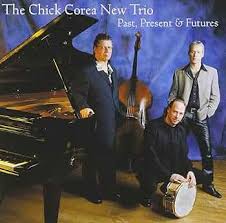
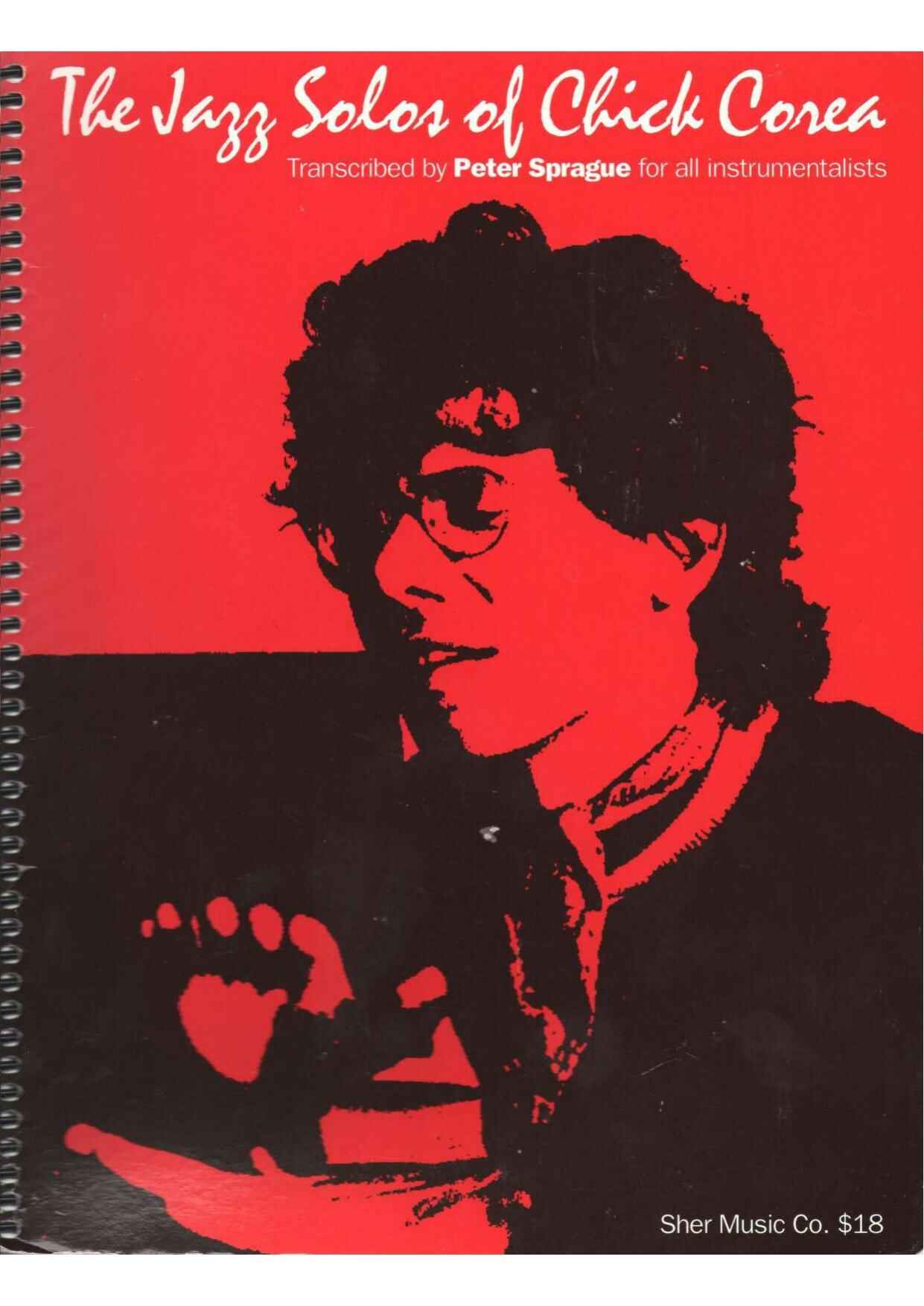
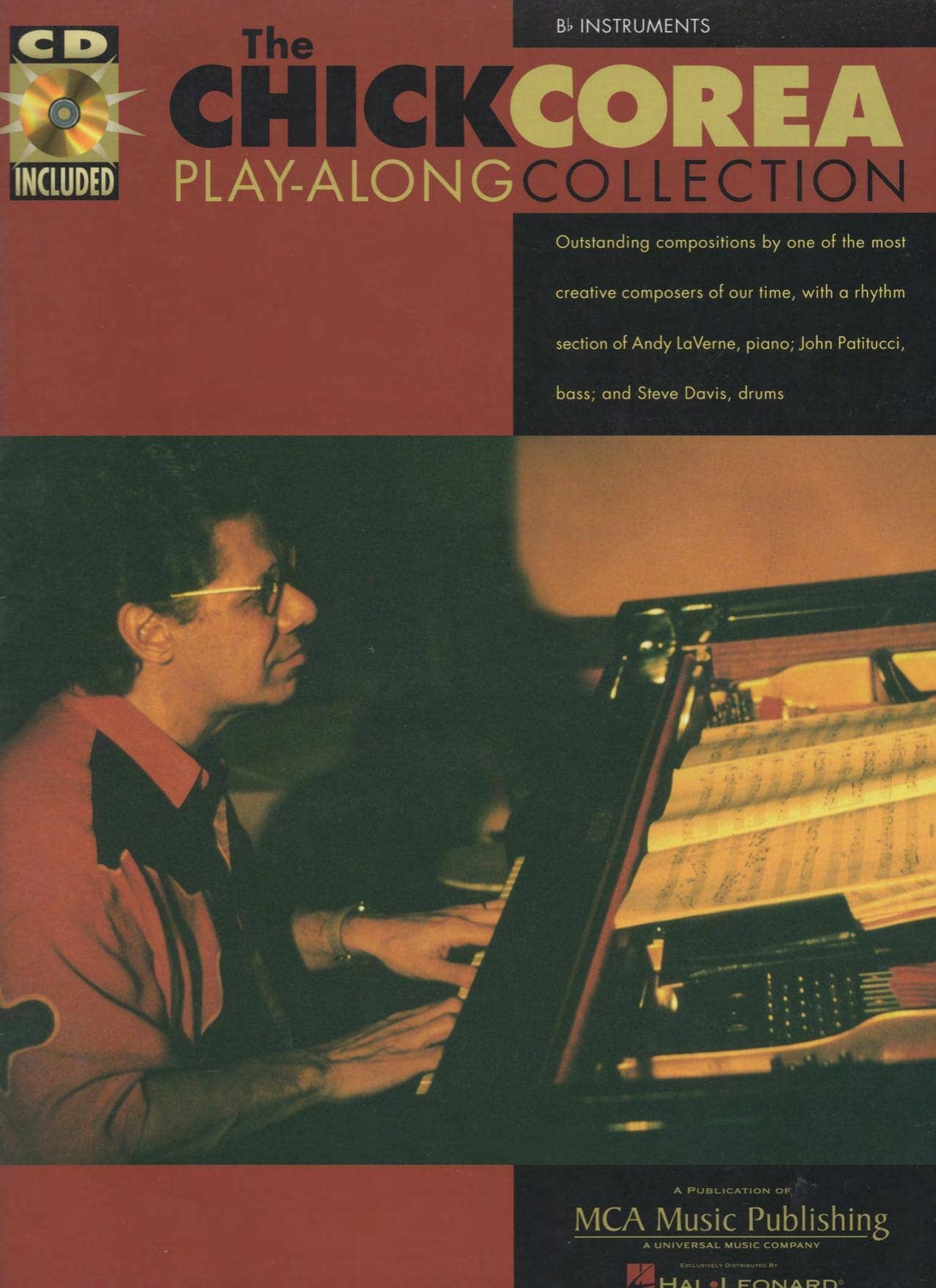
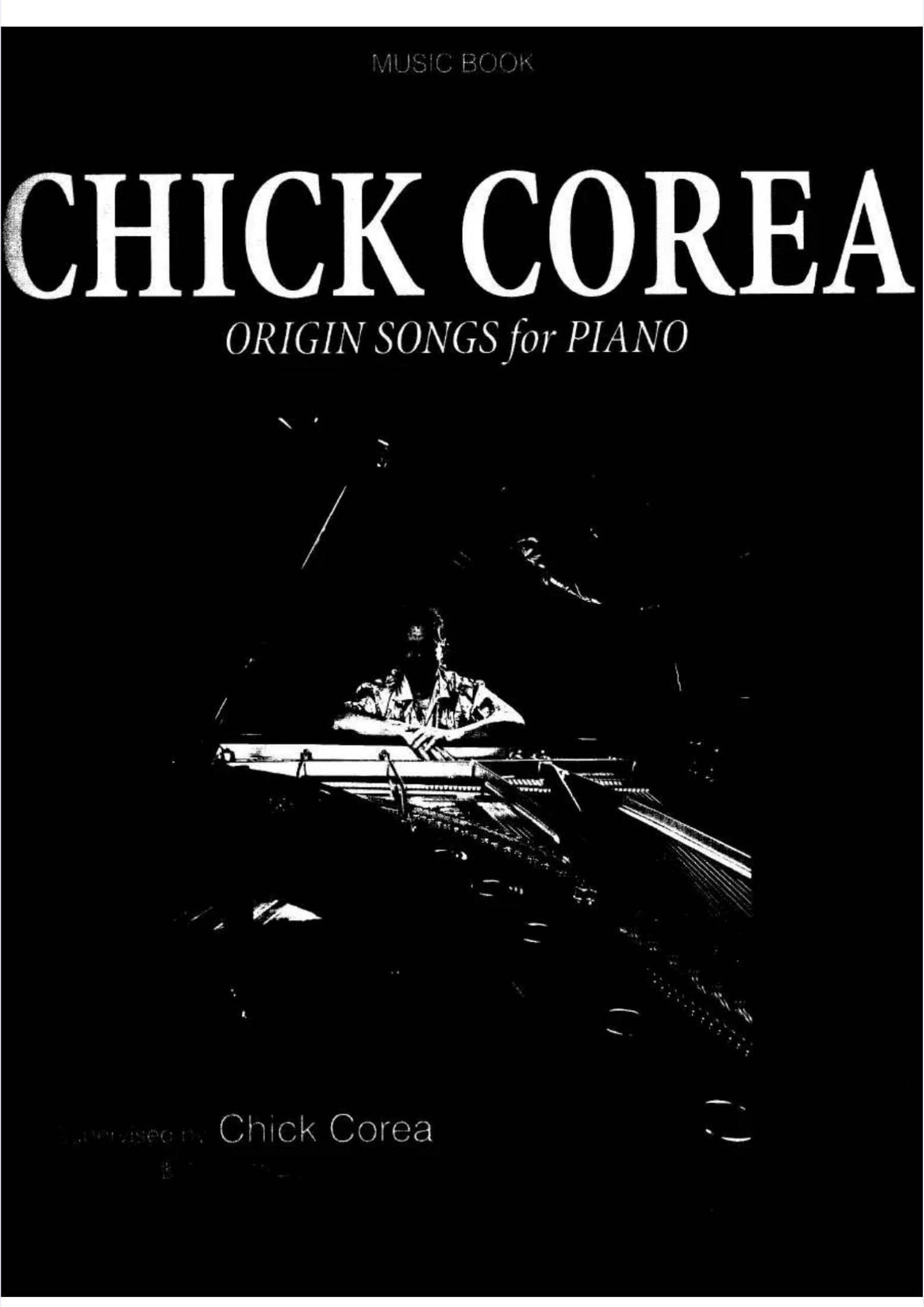


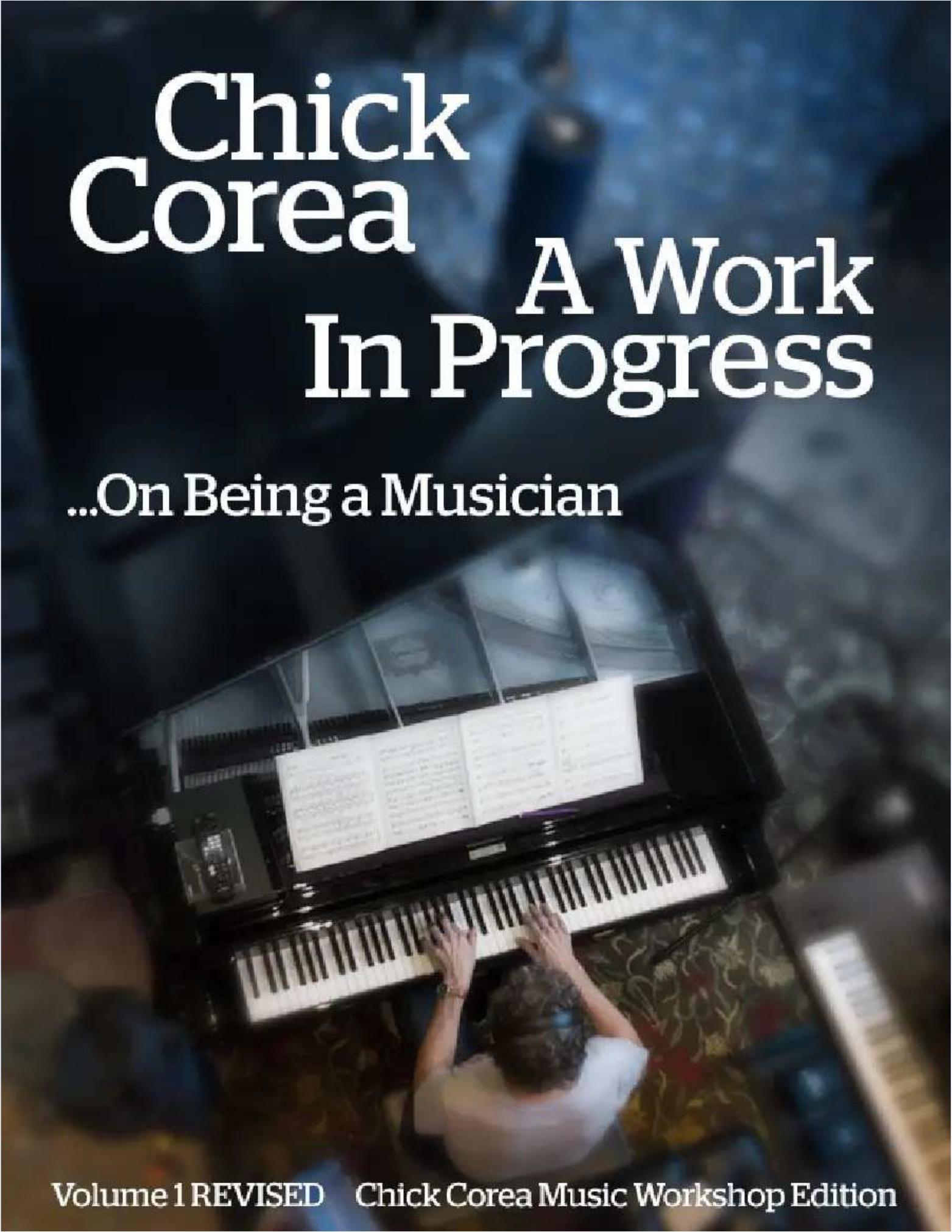
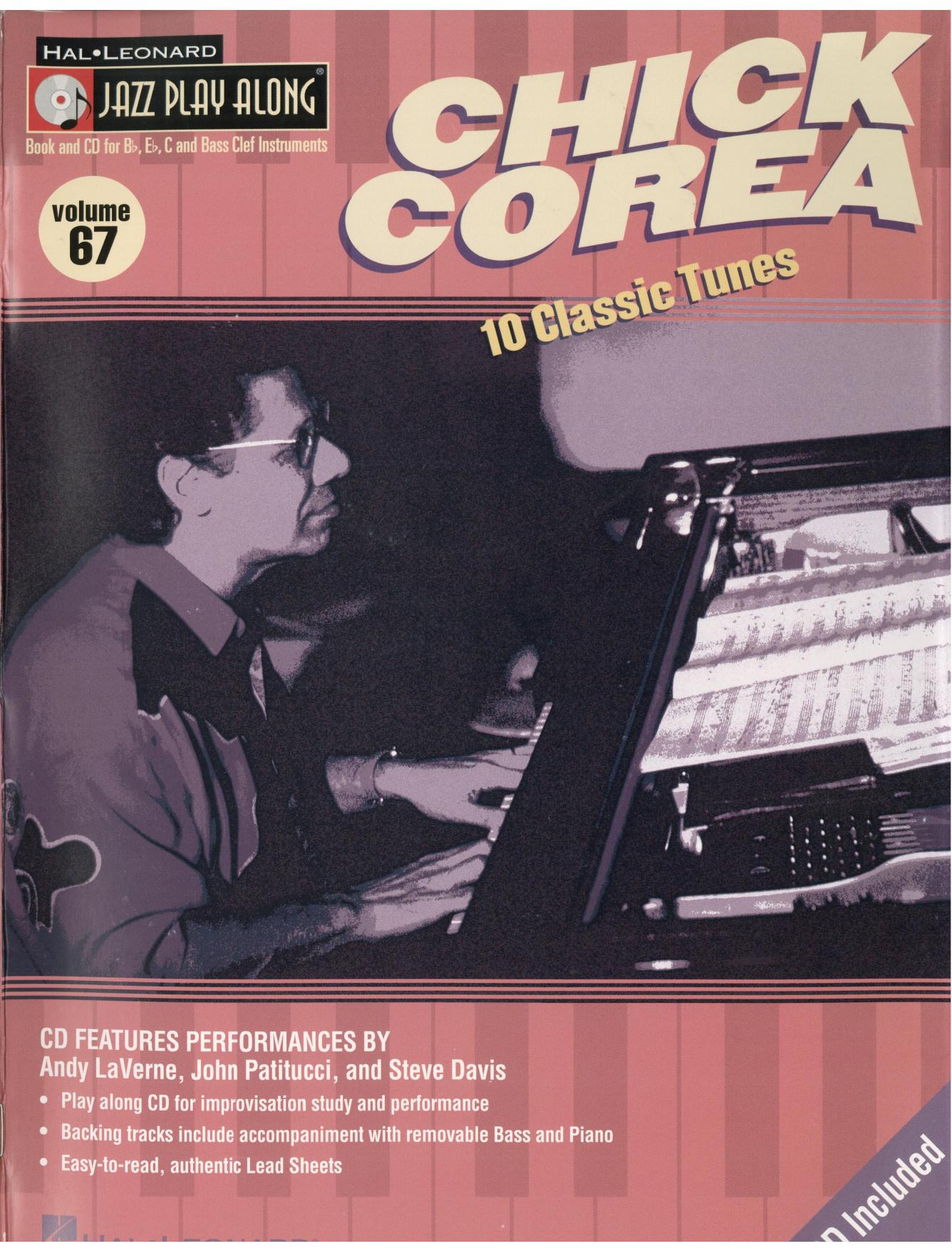

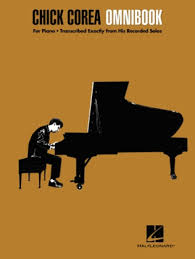
The best Sheet Music download from our Library.
Browse in the Library:
Or browse in the categories menus & download the Library Catalog PDF:
Chick Corea: The Infinite Explorer of Jazz and Beyond
Armando Anthony “Chick” Corea (June 12, 1941 – February 9, 2021) was not merely a jazz pianist and composer; he was a universe of musical curiosity compressed into one human being. Across six decades, Corea demolished stylistic boundaries, from searing acoustic post‑bop to epoch‑defining electric fusion, from the sophisticated geometries of classical chamber music to the earthy cadences of Spanish flamenco. With 23 Grammy Awards and a catalogue that numbers over 100 albums as leader or co‑leader, Corea stands shoulder to shoulder with only a handful of artists—Miles Davis, John Coltrane, Duke Ellington—who fundamentally altered the course of music. This article explores every facet of his life and art: biography, musical style, harmonic innovations, signature piano licks, relationships with fellow icons, deep influences, documented legacy, film work, essential compositions and discography, and the documentaries that capture his restless genius.
Biography: From Chelsea to the Cosmos
Born in Chelsea, Massachusetts, to a family of Italian descent, Chick Corea was introduced to the piano at age four by his father, Armando J. Corea, a Dixieland‑style trumpeter. The house was filled with the sounds of jazz, classical music, and Latin records. Young Armando quickly absorbed the bebop vocabulary of Bud Powell, the ebullient swing of Horace Silver, and the classical complexity of Bach and Mozart. By his teens, he was already performing professionally in Boston, and his early recordings with local Latin bands hinted at the rhythmic fluency that would later define him.
Corea moved to New York in the early 1960s, a rite of passage that plunged him into the crucible of the city’s jazz scene. He worked as a sideman with trumpeter Blue Mitchell, flutist Herbie Mann, and Latin percussionists Willie Bobo and Mongo Santamaría, sharpening his instinct for groove and clave. The real turning point came when he joined Stan Getz’s group in 1967, recording with the saxophonist on albums such as Sweet Rain, where his edgy, impressionistic comping and agile solos earned widespread notice.
Between 1968 and 1970, Corea entered the orbit of Miles Davis, becoming a crucial component of the “electric” Davis ensembles. He appears on the groundbreaking In a Silent Way, Bitches Brew, and A Tribute to Jack Johnson, often alternating between Fender Rhodes and acoustic piano. At Miles’s side, he absorbed the possibilities of open‑form improvisation, electronic textures, and raw rhythmic power. Simultaneously, he recorded a string of exploratory acoustic albums as a leader—most notably Now He Sings, Now He Sobs (1968), a trio masterpiece with bassist Miroslav Vitouš and drummer Roy Haynes that remains a touchstone of modernist jazz piano.
After leaving Davis, Corea formed the avant‑garde quartet Circle with bassist Dave Holland, drummer Barry Altschul, and saxophonist Anthony Braxton, a short‑lived but ferociously creative collective. By late 1971, however, his focus shifted dramatically. Inspired in part by the fusion experiments of Davis and the spiritual aura of John Coltrane, Corea founded Return to Forever. What began as an airy, Latin‑tinged ensemble featuring vocalist Flora Purim, reedist Joe Farrell, bassist Stanley Clarke, and drummer Airto Moreira—yielding the crystalline classic Light as a Feather (1973)—morphed into a powerhouse electric group with guitarist Bill Connors (later replaced by a teenaged Al Di Meola), Clarke on electric bass, and drummer Lenny White. Albums like Hymn of the Seventh Galaxy (1973), Where Have I Known You Before (1974), and the quasi‑symphonic Romantic Warrior (1976) crystallized the sound of jazz‑rock fusion, combining complex through‑composed themes, odd‑meter vamps, and explosive improvisation.
The late 1970s saw Corea expand even further: sprawling orchestral projects (The Leprechaun, My Spanish Heart), intimate duets with vibraphonist Gary Burton (Crystal Silence), and a deeper immersion in the spiritual philosophy of Scientology, to which he had converted in 1968 and which he credited for sharpening his creative focus. The 1980s brought the formation of the Chick Corea Elektric Band, a sleek, synth‑heavy outfit featuring drummer Dave Weckl, bassist John Patitucci, and guitarists Frank Gambale and Scott Henderson, whose records (beginning with the 1986 self‑titled debut) brought fusion to a new generation. Concurrently, Corea launched the Akoustic Band, proving that his unamplified jazz fire remained undimmed.
In the 1990s and 2000s, Corea seemed omnipresent. He recorded classical‑leaning solo piano albums (Piano Improvisations Vol. 1 & 2), paid tribute to Bud Powell (Remembering Bud Powell), reconstructed Mozart with both reverence and irreverence, and formed new bands: the electrified To the Stars quintet and the Latin‑rock Vigil. Duet partnerships blossomed with Herbie Hancock, Bobby McFerrin, Stefano Bollani, Béla Fleck, and Hiromi Uehara. He celebrated his 60th birthday with a month‑long retrospective at the Blue Note in New York, his 70th with an extensive world tour, and his 75th with an eight‑week residency at the same club, documented in the 2017 film Chick Corea: The Musician. In early 2021, Corea passed away at age 79 from a rare form of cancer, leaving behind a farewell message urging everyone to “keep on creating.”

Musical Style: A Constellation of Selves
To call Chick Corea an eclectic is an understatement. He did not merely dabble in styles—he mastered them, reimagined them, and fused them at a molecular level. His musical personality could be mapped as a series of interconnected galaxies:
Acoustic Post‑Bop: On recordings like Now He Sings, Now He Sobs and the Akoustic Band albums, Corea’s playing brims with tart harmonies, asymmetrical phrasing, and an almost percussive attack. He treats the piano as an orchestra, using dense left‑hand voicings and skittering right‑hand lines that dart inside and outside the changes with effortless precision.
Latin Jazz and Flamenco: Corea’s deep love for Afro‑Cuban and Spanish music produced some of his most iconic compositions. Light as a Feather is drenched in samba and bossa nova; My Spanish Heart integrates flamenco guitar, handclaps, and brass fanfares. His collaboration with flamenco giant Paco de Lucía on Zyryab (1990) and “Spain” are living proof of a cross‑cultural dialogue built on mutual respect.
Fusion and Electric Soundscapes: With Return to Forever and the Elektric Band, Corea pioneered a genre that prized both instrumental virtuosity and compositional architecture. He wielded synthesizers—Minimoog, Prophet‑5, Yamaha DX7—not as novelties but as extensions of his piano voice, crafting lead lines that sing with the same nuance as his acoustic improvisations. Rhythms borrowed from rock and funk anchored music that was as danceable as it was cerebral.
Chamber and Orchestral Music: Albums such as The Leprechaun, Septet, and The Continents showcase Corea’s classical inclinations. He wrote for string quartet, brass ensemble, and full orchestra, often merging written passages with improvised solos, a dialogue between the composed and the spontaneous that recalls his work with Miles Davis.
Solo Piano Meditations: Whether reharmonizing standards or exploring free improvisation, Corea’s solo concerts were luminous events. He would build entire sets from audience suggestions, weaving spontaneous sonatas that revealed the piano as a universe of possibility.
Across all these guises, a few constants emerge: a clean, incisive touch; a rhythmic buoyancy informed by Latin clave and bebop swing; a fascination with chromaticism and symmetrical scales; and an unshakable belief in melody as the heart of music.
Harmonic Language and Chord Progressions
Chick Corea’s harmonic palette is one of the most distinct in jazz. He crafted a syntax that feels simultaneously scientific and deeply emotional, balancing dense polychords with sublime simplicity.
Chromatic Descending Sequences: Perhaps Corea’s most recognizable harmonic fingerprint is the descending minor‑seventh chord sequence, often spiced with dominant‑altered colors. The classic “Matrix” (from Now He Sings, Now He Sobs) uses a series of minor‑seventh chords descending in half‑steps over a steady pedal: Cm7 → B7alt → B♭m7 → A7alt → A♭m7 → G7alt, before resolving. This “constant structure” motion, moving an identical chord quality down chromatically, generates a hypnotic, kaleidoscopic effect.
The “Spain” Progression: The introduction to “Spain” (from Light as a Feather) immediately sets Corea’s harmonic agenda. Over a bolero‑like bass vamp, the chords move: Gmaj7 → F♯7 → Fm7 → E7 → A7sus → A7 → Dmaj7. Notice the parallel harmony (major‑seventh to dominant‑seventh to minor‑seventh) slipping in half‑steps, followed by a classical‑flavored suspension chain. The main theme then lays out a conventional but elegant sequence: Dmaj7 → C♯7(♯9) → F♯m7 → B7 → Em7 → A7 → Dmaj7. Corea reharmonizes the final A section with an ascending chromatic bass line that has become a rite of passage for jazz students.
Quartal Voicings and Modal Ambiguity: Corea frequently stacks fourths instead of thirds, creating open, ambiguous sonorities that blur major and minor. Tunes like “500 Miles High” float over a lush E♭maj7♯11 sound built from fourths (e.g., B♭–E♭–A♭–D). This approach, borrowed partly from McCoy Tyner and Bill Evans, is pushed further through polytonality: a solo might superimpose an E major triad over an F♯ minor context, generating sparkling dissonance.
Phrygian Flamenco Vamps: “La Fiesta” and much of My Spanish Heart ride on the Phrygian mode, with chords oscillating between I and ♭II (e.g., E minor and F major). Corea decorates these vamps with rapid chromatic runs and scalar flourishes that evoke flamenco guitar falsetas. The harmonic rhythm often slows during solos, allowing improvisers to blaze through modes while the static backdrop churns with polyrhythmic energy.
Symmetrical Scales and Constant Structure: Corea adored diminished scales and whole‑tone scales as sources for both melodic lines and chord movement. In “Got a Match?”, the bridge employs diminished symmetry, while “Humpty Dumpty” integrates symmetrical patterns in both melody and harmony. His constant‑structure planing—sliding the exact same chord shape up or down in pitch—is derived from classical impressionism (Debussy, Ravel) but filtered through a distinctly Corean rhythmic drive.
Reharmonization and Pedal Points: Like his hero Bill Evans, Corea was a master at re‑imagining standard tunes. He would frequently hold a tonic pedal while chords above it shift chromatically, creating a sense of suspension and release. On ballads like “Crystal Silence,” he uses inner‑voice movement and unexpected cadences (e.g., ♭VI → V → I) to keep the familiar fresh.
Metric and Rhythmic Structures: Corea’s compositions often feature odd meters: “Humpty Dumpty” in 7/8, the bridge of “Spain” in a staggered 4/4 that feels like 3+3+2, and “Romantic Warrior” moving between 4/4, 7/8, and 5/4. These rhythms, rooted in rock, Indian, and flamenco traditions, became part of his harmonic identity, as chord changes are phrased to accentuate the asymmetrical pulse.
Jazz Piano Licks and Improvisational Vocabulary
Transcribing a Chick Corea solo is an education in melodic construction. His lines are marked by crisp articulation, steep angularity, and a rhythmic elasticity that can stretch a single phrase across bar lines. A few signature devices define his vocabulary:
Pentatonic Shifting: Corea often plays a pentatonic scale a half‑step above the underlying chord (e.g., D♭ major pentatonic over Cmaj7) to create a bright, “outside” tension before resolving back inside. This technique, heard throughout his solos on “Matrix” and “500 Miles High,” generates a shimmering overlay that never fully abandons tonality.
Three‑Note and Four‑Note Groupings: Instead of smooth eighth‑note streams, Corea frequently breaks lines into rhythmic cells of three or five notes, creating a speech‑like irregularity. A typical Corea line over a dominant chord might group a diminished arpeggio in triplets, then spill into a flurry of sixteenth notes grouped as 3+3+2, all leading to an unexpected chord tone.
Symmetrical Diminished Runs: His use of the half‑whole diminished scale over dominant chords yields those cascading, serpentine runs that seem to spiral without beginning or end. He often couples this with chromatic approach notes to every chord tone, giving his lines a slippery, searching quality.
Upper‑Structure Triads: Corea regularly superimposes triads over a root that imply complex extended harmonies. Over Dm7, he might outline an E major triad (implying Dm9♮13) or an F major triad (Dm7♯9). Over an altered dominant, he’ll dash through a G♭ major triad (♭V substitution) or a D♭ major triad (♭II cadence). This “slash‑chord” thinking opens the door to multi‑tonal colors.
Double‑Time Chromaticism: A Corea uptempo solo often erupts into double‑time passages where the right hand traces long chromatic lines punctuated by wide, pianistic leaps. He might begin a phrase on a low register chord, leap to a high trill, then scurry down in a torrent of chromatic sixteenth notes, landing squarely on the downbeat.
Rhythmic Displacement and Syncopation: Corea’s time feel owes as much to Latin clave as to bebop swing. He will often place accents on the “ands” of beats 2 and 4, or shift a repeated motive an eighth note earlier each bar, creating a delightful sense of polyrhythmic interplay with the rhythm section.
Clusters and Percussive Effects: In free‑improvisation settings, Corea was not afraid to use the piano as a drum. He would strike the body of the instrument, pluck strings inside, or pound dense fist‑clusters that recall Henry Cowell and Cecil Taylor. These timbral explorations add a tactile, physical dimension to his sound.
Relationships with Other Artists
Chick Corea’s collaborative spirit was legendary. He treated every musical partnership as a conversation between equals, and his discography reads like a who’s who of modern music.
Miles Davis: Corea’s tenure with Davis was short but transformative. Miles encouraged him to “play what you hear, not what you know,” and the electric freedom of the Bitches Brew sessions directly informed Return to Forever. Their mutual respect persisted long after Corea’s departure, with Corea joining Davis alumni for tribute tours and recording the duo album The Sorcerer (a posthumous release of live material).
Herbie Hancock: More than colleagues, Corea and Hancock were kindred spirits. Their 1978 double‑piano tour, released as An Evening with Herbie Hancock & Chick Corea, remains a landmark of duo improvisation, moving seamlessly from effervescent swing to abstract sound painting. The pair reunited regularly, their onstage banter and effortless interplay a masterclass in listening.
Gary Burton: The piano‑vibraphone duets with Gary Burton, spanning nearly five decades, produced jewels like Crystal Silence, Duet, and Native Sense. The clarity of their combined textures and the telepathic nature of their exchanges, often on Corea’s most intricate compositions, set a gold standard for chamber jazz.
Stanley Clarke, Al Di Meola, Lenny White: The Return to Forever rhythm section—and later, the guitar fireworks of Di Meola—created a musical brotherhood. Their reunion tours (2008, 2011) showed that the chemistry of the 1970s had deepened rather than faded. Corea’s writing for this group balanced each member’s virtuosity, with Clarke’s fleet‑fingered bass and White’s ferocious drumming creating a rhythmic engine few could match.
Paco de Lucía: The friendship between the flamenco titan and Corea produced Zyryab, a sublime melding of jazz and flamenco. Corea’s “Spain” had already internalized flamenco’s spirit, but de Lucía’s guitar gave it an authenticity that resonated across cultures.
Bobby McFerrin: The vocal‑piano collaborations—particularly their playful, breathtaking take on “Spain”—revealed Corea’s whimsical side. McFerrin’s vocal acrobatics, coupled with Corea’s sensitive accompaniment, turned concerts into communal celebrations of sound.
Béla Fleck: In the banjo virtuoso, Corea found a bluegrass‑trained mind just as hungry for harmonic adventure. Albums like The Enchantment and Two blend folk, classical, and jazz with such organic grace that genre dissolves.
Hiromi Uehara, Stefano Bollani, Marcus Roberts: Corea consistently championed younger pianists, engaging them in duets that allowed his partners to shine. Hiromi’s explosive energy, Bollani’s Mediterranean lyricism, and Roberts’s stride‑inflected genius all found generous space in these dialogues.
Chick Corea's Awards and honors
Influences
Corea’s artistic DNA absorbed an astonishing array of sources:
Jazz Lineage: Bud Powell’s rhythmic drive and horn‑like right‑hand lines, Bill Evans’s impressionistic voicings, McCoy Tyner’s modal power and quartal stacks, Art Tatum’s torrential technique, and Horace Silver’s soulful economy were all foundational. Corea internalized the entire history of jazz piano, yet never sounded derivative.
Classical Composers: Béla Bartók’s percussive approach to piano and use of Eastern European folk rhythms, Igor Stravinsky’s rhythmic asymmetry and harmony, and the Spanish nationalism of Manuel de Falla and Joaquín Rodrigo directly shaped pieces like “Spain” (which borrows from Rodrigo’s Concierto de Aranjuez). Corea also revered Scriabin, Chopin, and Mozart—the latter inspiring his delightfully hybrid Mozart Sessions.
Latin and Afro‑Cuban Music: From early gigs with Mongo Santamaría to lifelong collaborations with Airto Moreira, Corea’s rhythmic foundation was rooted in Afro‑Cuban clave, samba, and rumba. The vocal melodies of Brazilian legend Milton Nascimento and the dance forms of flamenco further enriched his vocabulary.
Scientology and Philosophy: Corea was an outspoken advocate of Scientology, which he credited with helping him maintain creative focus and clarity. While controversial, his philosophical pursuits undeniably affected his artistic worldview, emphasizing communication as the central purpose of music. This belief manifested in his warm, audience‑centered stage presence and his tireless educational outreach.
Legacy
Chick Corea’s legacy is monumental. He normalized the idea that a jazz musician could be a composer of near‑classical ambition, a virtuoso improviser, a bandleader in multiple genres, and an approachable teacher. His Children’s Songs—20 miniatures for solo piano, some only 30 seconds long—introduced countless young pianists to the beauty of contemporary harmony. His online workshops and the Chick Corea Foundation’s scholarships continue to nurture emerging talent.
He influenced generations of pianists: from fusion heads to acoustic purists, everyone has wrestled with his voicings and scalar patterns. Tunes like “Spain,” “500 Miles High,” and “Armando’s Rhumba” have become part of the jazz standard repertoire, played at jam sessions around the world. His insistence that “music is a conversation” reshaped ensemble dynamics; his bands became models of interactive listening.
Perhaps most enduringly, Corea demonstrated that musical curiosity is inexhaustible. He never stopped searching for new sounds, new partnerships, new ways to frame a melody. At an age when many artists rest on laurels, he was still debuting daring projects and engaging new audiences through social media.
Works and Discography (Wikipedia article: Chick Corea discography)
Corea’s discography is vast. Below is a curated roadmap through his essential recordings, categorized by era and ensemble.
Early Acoustic Trio and Circle (1966–1970)
- Tones for Joan’s Bones (1966)
- Now He Sings, Now He Sobs (1968) – with Miroslav Vitouš, Roy Haynes
- The Song of Singing (1970)
- Circle – Paris Concert (1970), Circle 1 & 2 (1970)
Miles Davis Collaborations (1968–1970)
- In a Silent Way (1969)
- Bitches Brew (1970)
- A Tribute to Jack Johnson (1971)
- Live at the Fillmore East (1970)
Return to Forever (1972–1976, reunions 2008, 2011)
- Return to Forever (1972) – ECM, acoustic
- Light as a Feather (1973) – featuring “Spain”
- Hymn of the Seventh Galaxy (1973) – electric turn
- Where Have I Known You Before (1974)
- No Mystery (1975)
- Romantic Warrior (1976)
- Returns (2009) – live reunion
Solo, Duo, and Chamber Projects (1970s–2020s)
- Piano Improvisations Vol. 1 (1971) and Vol. 2 (1972)
- Crystal Silence (1973) – with Gary Burton
- The Leprechaun (1976)
- My Spanish Heart (1976)
- An Evening with Herbie Hancock & Chick Corea (1978)
- Duet (1979) – with Gary Burton
- Touchstone (1982) – with Paco de Lucía on some tracks
- Children’s Songs (1984) – solo
- Native Sense (1997) – with Gary Burton
- The Enchantment (2007) – with Béla Fleck
- Orvieto (2011) – with Stefano Bollani
- Two (2015) – with Béla Fleck
- Chinese Butterfly (2017) – with Steve Gadd
Elektric Band (1986–2004)
- The Chick Corea Elektric Band (1986)
- Light Years (1987)
- Eye of the Beholder (1988)
- Inside Out (1990)
- Beneath the Mask (1991)
- To the Stars (2004)
Akoustic Band (1989–2018)
- Chick Corea Akoustic Band (1989)
- Live from the Blue Note Tokyo (1992)
- Live (2018)
Later Concept Albums and Tributes
- Remembering Bud Powell (1997) – with Kenny Garrett, Wallace Roney, Joshua Redman
- The Ultimate Adventure (2006) – with Rubén Blades, Hubert Laws
- The Vigil (2013) – with Marcus Gilmore, Tim Garland
- Antidote (2019) – Spanish Heart Band
- Plays (2020) – solo live, capturing his final creative vision
As a Sideman of Note
- Stan Getz – Sweet Rain (1967)
- Blue Mitchell – Boss Horn (1966)
- Joe Farrell – Moon Germs (1972)
- Paco de Lucía – Zyryab (1990)
Compositions in Film and Media
While Corea did not pursue a Hollywood scoring career with the same vigor as some peers, his music has appeared in numerous films and television shows, and he composed directly for the screen on occasion. The most notable original film score is for the 1980 survival drama The Earthling, directed by Peter Collinson and starring William Holden and Ricky Schroder. Corea’s music underscores the rugged Australian wilderness with poignant, pastoral themes that blend orchestral writing with his signature harmonic depth.
Beyond an original score, Corea’s pre‑existing compositions have enriched the cinematic landscape. The effervescent “Spain” appears in Matchstick Men (2003, Ridley Scott), with the version by Corea and Hiromi Uehara bookending a pivotal scene. It also features in The Wolf of Wall Street (2013, Martin Scorsese), where the track’s mounting intensity mirrors the characters’ excess. “500 Miles High” was used in Steven Soderbergh’s Logan Lucky (2017), and various Return to Forever cuts have surfaced in documentaries and television soundtracks. In addition, Corea made cameo appearances in films like The Last Days of Disco (1998) and the Miles Davis biopic Miles Ahead (2015), underlining his iconic status beyond the jazz world.
Essential Compositions and Landmark Performances
- “Spain” (1972) – The definitive Corea anthem. Its flamenco‑jazz fusion, built on the Concierto de Aranjuez introduction and a memorable samba‑inflected theme, has been covered by virtually every jazz and Latin ensemble. The 1995 live recording with Bobby McFerrin (on Play) where McFerrin vocally imitates the entire band remains a viral sensation.
- “500 Miles High” (1972) – A dreamlike bossa nova with shimmering Fender Rhodes, ethereal vocals, and a solo that perfectly demonstrates Corea’s pentatonic‑shift technique.
- “La Fiesta” (1972) – A Phrygian‑mode tour de force that opens with a dramatic fanfare and evolves into a fervent improvisational ride, frequently performed by Stan Getz and countless others.
- “Matrix” (1968) – A minor blues unlike any other, its chromatic descending sequence of minor and dominant chords is a laboratory for modern jazz harmony.
- “Crystal Silence” (1973) – A delicate, meditative ballad that has become a standard for piano‑vibraphone duets. Corea and Gary Burton’s performances are timeless.
- “Armando’s Rhumba” (1976) – A joyful, dancing rumba that encapsulates Corea’s love of Latin rhythms and his father’s memory.
- “Humpty Dumpty” (1978) – A complex fusion piece in 7/8 from The Mad Hatter, full of symmetrical patterns and sweeping synth melodies.
- “Got a Match?” (1986) – An Elektric Band staple, built on a tricky up‑tempo head and a bridge that modulates through diminished symmetry, a workout for virtuosos.
- “Windows” (1968) – A waltz with an acrobatic melody that’s become a vocalist favorite and a proving ground for improvisers.
Iconic performances include the Return to Forever reunion at Montreux (2008), the dueling‑piano magic with Herbie Hancock at Carnegie Hall (1978), his solo concert at the Blue Note (2001), the grand 60th‑birthday series documented on DVD as Rendezvous in New York, and the duo with Paco de Lucía at the 1992 Seville Expo, where jazz and flamenco merged into a transcendent single language.
Documentaries and Concert Films
Several films capture Corea’s musical life and personality in depth:
- Chick Corea: The Musician (2017) – A comprehensive documentary directed by Michael J. Urann, spanning his 75th‑birthday Blue Note residency. It weaves together interviews, archival footage, and concert performances to paint a holistic portrait of the artist’s philosophy and creative process.
- Rendezvous in New York (2005) – A two‑DVD set capturing Corea’s 60th‑birthday celebration at the Blue Note with his many bands: Akoustic Band, Elektric Band, Origin, duets with Bobby McFerrin and Gary Burton, and a historic reunion of the original Return to Forever. It is both a concert and a documentary of a living history.
- Chick Corea & Gary Burton: Live at the Munich Philharmonie (1997) – A beautifully shot concert that emphasizes the telepathic rapport of the duet partners.
- Chick Corea Elektric Band: Live at the Maintenance Shop (1987) – An early, high‑energy document of the original Elektric Band in its prime.
- Remembering Bud Powell: The Documentary (1997) – A shorter film accompanying the tribute album, in which Corea discusses Powell’s influence and performs with a stellar band.
- The Ultimate Adventure Documentary (2006) – A behind‑the‑scenes look at the recording of the album, featuring contributions from flamenco and Moroccan musicians, underscoring Corea’s global reach.
Chick Corea was a perpetual student and a generous teacher, a musical chameleon who never lost his unmistakable voice. From the visceral thrill of a Return to Forever riff to the hushed introspection of a solo piano vignette, his work continues to challenge, comfort, and exhilarate. He believed that music was a universal language meant to connect souls, a conviction he lived out in every note. The chords he voiced, the licks he spun, the friendships he forged—all are threads in a tapestry that keeps expanding long after his final cadence. As he himself said in his parting note, “It’s not that I’m gone—I’m just not around.” Through the vast legacy he left behind, he remains very much present, a luminary whose light will guide jazz and beyond for generations.