Scores for all instruments: 16,000+ (active and growing), over 236,000 pages.
All genres and levels: Jazz & Blues, Rock & Pop, Classical & Contemporary, Film & Musicals;
books & biographies; methods, études, play-along tracks (MP3) for Jazz & Rock.
Access & benefits: US$15.99 one-time payment, valid for lifetime, full Library access.
Table of Contents
Duke Ellington Orchestra - Live in Het Concertgebouw Amsterdam 1958
This unique and ultra rare performance was filmed by AVRO tv on film at the Concertgebouw in Amsterdam, The Netherlands on November 2, 1958.
Setlist: 00’00” - The Mooche 07’16” - My Funny Valentine 13’39” - Rockin' & Rhythm 19’13” - Mr. Gentle & Mr. Cool 26’12” - All Of Me 28’45” - Things Ain't What They Used To Be 33’18” - Hi Ei Fo Fum 41’10” - Medley: - “Sophisticated lady"; - "Don't get around much any more"; - "In a sentimental mood"; - "Mood indigo"; - "I'm beginning to see the light"; - "Caravan"; - "I got it bad"; - "I don't mean thing"; - "If it ain't got that living"; - "Solitude"; - "Duke Ellington". 53’26” - Mid Nuendo in Blue and Crescendo in Blue
Please, subscribe to our Sheet Music Library.
The best Sheet Music download from our Library.
Scores for all instruments: 16,000+ (active and growing), over 236,000 pages.
All genres and levels: Jazz & Blues, Rock & Pop, Classical & Contemporary, Film & Musicals;
books & biographies; methods, études, play-along tracks (MP3) for Jazz & Rock.
Access & benefits: US$15.99 one-time payment, valid for lifetime, full Library access.
Please, subscribe to our Sheet Music Library.
Who was Duke Ellington?
The best Sheet Music download from our Library.
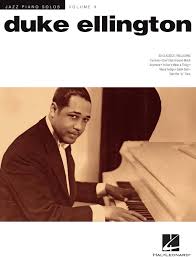
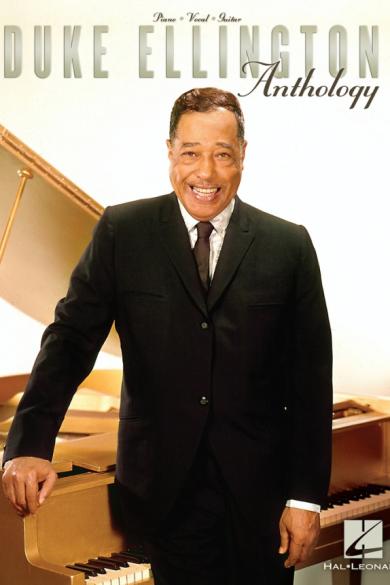




Search your favorite sheet music in the Sheet Music Library Catalog
Please, subscribe to our Sheet Music Library.
Duke Ellington: The Maestro of American Music
Edward Kennedy "Duke" Ellington (April 29, 1899 – May 24, 1974) stands as one of the most towering figures in the history of American music. A jazz pianist, composer, and bandleader, he led his eponymous orchestra for more than half a century, from 1923 until his death. He composed thousands of scores and created one of the most distinctive ensemble sounds in all of Western music. In the opinion of scholars Gunther Schuller and Barry Kernfeld, he was "the most significant composer of the genre". Yet Ellington himself embraced the phrase "beyond category," considering it a liberating principle and referring to his music as part of the more general category of "American Music".
Biography
Early Life and Education
Ellington was born on April 29, 1899, in Washington, D.C., to James Edward Ellington and Daisy Kennedy Ellington. Both his parents were pianists—Daisy primarily played parlor songs, while James preferred operatic arias. The Ellingtons were middle-class people who struggled at times to make ends meet. His mother was particularly devoted to him, and they belonged to Washington's Black elite, who placed great stock in racial pride.
Ellington developed a strong sense of his own worth and a belief in his destiny—which at times shaded into egocentricity. Because of this attitude and his almost royal bearing, his schoolmates early named him "Duke". He began studying piano at age seven, though his interest in music was slow to develop. He was finally awakened to music at about fourteen when he heard a pianist named Harvey Brooks, who, as Ellington later recalled, "was swinging, and he had a tremendous left hand".
Rather than taking formal piano lessons, Ellington picked the brains of local pianists. He was always looking for shortcuts—ways of getting effects without much arduous practicing, a tendency that typified his musical methods throughout his life. As he improved, Ellington discovered that playing for his friends at parties was a route to popularity, and he began composing small, derivative pieces.
By age sixteen or seventeen, Ellington was playing occasional professional jobs with other young musicians, including saxophonist Otto "Toby" Hardwick and trumpeter Arthur Whetsol. The music they played was not jazz—which was still not widely known—but rags and ordinary popular songs. Ellington was also studying commercial art, for which he showed aptitude, but he never graduated from high school.
In 1918, he married Edna Thompson; the following spring, their son Mercer was born. Although Ellington later lived with several different women, he never divorced his wife. Now with a family to support, he was drawn into the music business—one of the few areas in which Black Americans could earn good incomes and achieve a species of fame.
Search your favorite sheet music in the Sheet Music Library Catalog


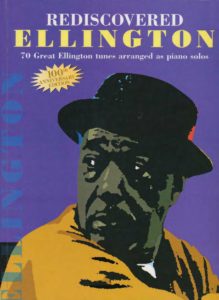

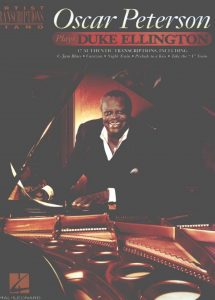
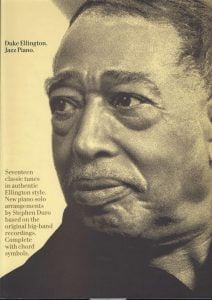
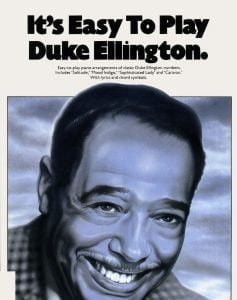

Rise to Fame
In 1923, Ellington ventured to New York City. There, in Broadway nightclubs, he led a sextet that gradually grew into a ten-piece ensemble. The singular blues-based melodies, the harsh vocalized sounds of trumpeter Bubber Miley (who used a plunger "wa-wa" mute), and the sonorities of trombonist Joe "Tricky Sam" Nanton (who played muted "growl" sounds) all influenced Ellington's early "jungle style". Masterpieces such as "East St. Louis Toodle-oo" (1926) and "Black and Tan Fantasy" (1927) emerged from this period.
Ellington gained a national profile through his orchestra's appearances at the Cotton Club in Harlem. Extended residencies there (1927–1932, 1937–1938) stimulated him to enlarge his band to fourteen musicians and to expand his compositional scope.
Throughout the 1930s, Ellington made hundreds of recordings, appeared in films, and toured Europe on two occasions.
The Creative Peak and Later Years
In the late 1930s, Ellington began a nearly thirty-year collaboration with composer-arranger-pianist Billy Strayhorn, whom he called his "writing and arranging companion". With Strayhorn, he composed multiple extended compositions and suites, as well as many short pieces. For a few years at the beginning of Strayhorn's involvement, Ellington's orchestra featured bassist Jimmy Blanton and tenor saxophonist Ben Webster and reached a creative peak.
Following a low-profile period, an appearance by Ellington and his orchestra at the Newport Jazz Festival in July 1956 led to a major revival and regular world tours. He recorded for most American record companies of his era, performed in and scored several films, and composed stage musicals.
Ellington died of lung cancer and pneumonia on May 24, 1974, at the age of 75. At his funeral, attended by over 12,000 people at the Cathedral of St. John the Divine, Ella Fitzgerald summed up the occasion: "It's a very sad day… A genius has passed".
Music Style
Orchestration and Sound
Ellington's music is defined by his masterful orchestration and his ability to combine the different timbres of his band's instruments to create a unique, instantly recognizable sound. He selected his musicians for their expressive individuality, and several members of his ensemble became important jazz artists in their own right.
His compositions are characterized by sophisticated arrangements and complex harmonic structures. He revolutionized jazz by mingling the tropes of blues, swing, and big band into his works.
The "Jungle Style"
Ellington's early "jungle style" featured harsh, vocalized sounds created by mutes and growls, as exemplified by the work of Bubber Miley and Joe Nanton. This style produced some of his earliest masterpieces, including "East St. Louis Toodle-oo" and "Black and Tan Fantasy".
The Ellington Suites
Beyond his popular songs, Ellington is particularly remembered for his extended suites. From 1943's Black, Brown and Beige to 1972's The Uwis Suite, Ellington used the suite format to give his jazz songs greater meaning, resonance, and purpose: to exalt, mythologize, and re-contextualize the African-American experience on a grand scale.
Evolving Artistry
Ellington's approach to his music was organic rather than static. As his orchestra changed players over the years and as new arranging and composing partners entered his life, he evolved and perfected what he created. No song he crafted was truly done, even decades later.
Members of His Bands
Ellington's genius lay not only in his composing but also in his ability to identify and showcase exceptional musicians. He sought out players with unique styles. Some of the most notable members of his orchestra over the decades include:
Trumpeters and Cornetists
- Bubber Miley – pioneered the plunger "wa-wa" sound that defined Ellington's early jungle style
- Cootie Williams – replaced Miley and became one of Ellington's most celebrated soloists
- Rex Stewart – cornetist known for his half-valve effects and growling sound
- Artie Whetsol – one of Ellington's earliest collaborators
Trombonists
- Joe "Tricky Sam" Nanton – famous for his muted "growl" sounds
- Lawrence Brown – brought a smoother, more lyrical approach
- Juan Tizol – valve trombonist who composed "Caravan" and "Perdido"
Saxophonists and Clarinetists
- Johnny Hodges – alto saxophonist, the most popular of Ellington's sidemen, who rendered ballads with a full, creamy tone and long portamentos
- Barney Bigard – clarinetist
- Ben Webster – tenor saxophonist who joined in the early 1940s
- Harry Carney – baritone saxophonist who remained with Ellington for decades
- Otto "Toby" Hardwick – bass and saxophone
Rhythm Section
- Sonny Greer – drummer, a founding member of the band
- Jimmy Blanton – bassist whose arrival in 1939 revolutionized jazz bass playing
- Elmer Snowden – banjoist who was the nominal leader of the early band
Vocalists
- Ivie Anderson – Ellington's favorite female vocalist, who sang many of his hits
Later Members
- Louis Bellson – drummer who gave Ellington's early 1950s band a "depth charge of power"
Relationship with Other Artists
Billy Strayhorn
The most significant collaborative relationship in Ellington's career was with Billy Strayhorn. They first met in Pittsburgh in 1938. Ellington once referred to Strayhorn as "my right arm, my left arm, all the eyes in the back of my head, my brainwaves in his head". Strayhorn composed the Ellington Orchestra's signature theme, "Take the 'A' Train". The collaboration lasted nearly thirty years, until Strayhorn's death in 1967.
Other Collaborators
Ellington also collaborated with his bandsmen as composers. Juan Tizol's "Caravan" and "Perdido" became staples of the Ellington repertoire, bringing a Spanish tinge to big band jazz. Ellington recorded for most American record companies of his era, collaborating with a wide range of artists and producers.
Chord Progressions and Musical Harmony
Ellington's harmonic language was one of the most sophisticated in jazz history. His music was rich in harmony—a characteristic uncommon in the music of the Swing Era. He developed unique harmony with unusual chord progressions, enabling him to present pieces with ambiguous introductions and interludes that connected the central themes.
Harmonic Characteristics
- Advanced Chromatic Harmony – Ellington employed seventh chords, secondary dominant chords, and substitution chords extensively.
- Unconventional Progressions – In "The Mooche," Ellington alternates between Eb+ and Eb- blues with a C minor start. The final move from Eb- to C minor is harmonically unconventional, but Ellington "gets away with it since it works structurally".
- Substitution Chords – In "Black and Tan Fantasy," Ellington used a Gb7 chord instead of an F7, demonstrating his innovative approach to chord substitution.
- Plagal Cadences – He often used chord IV to create a plagal feel, linking to the idea of spirituals.
- Diminution – Ellington employed techniques such as diminution, where a chord progression is presented in shorter rhythmic values each time it appears.
Analysis of "Mood Indigo"
"Mood Indigo" begins with the progression B♭–C7–Cmi7–F7–B♭. The first C7 can be embellished by adding a Gmi7 before it, creating a temporary ii–V that then proceeds to another ii–V—a sophisticated harmonic device.
Head Arrangements
Many Ellington pieces were based on "head arrangements"—chord progressions that provided a pattern of changes that players kept in their heads and used for improvisation. The 12-bar blues form was often used as a foundation.
Influences
Early Influences
Ellington's earliest influences were the ragtime pianists. He was also inspired by Claude Debussy and Maurice Ravel. He taught himself harmony at the piano.
The Harlem Renaissance
Ellington was enduringly influenced by the many Black doers and shakers in his midst, particularly during the Harlem Renaissance. He drew inspiration from the cultural and artistic ferment of the era.
Influence on Others
Ellington's influence on subsequent musicians is immense. He influenced the likes of Thelonious Monk, Charles Mingus, and Bill Evans. His impact extended far beyond jazz to pop artists including Stevie Wonder, Steely Dan, Miles Davis (who had himself interred next to Ellington at Woodlawn Cemetery as the ultimate tribute), Sun Ra, James Brown, Sly Stone, George Clinton, Prince, Frank Zappa, and Ravi Shankar.
As music scholar David Schiff wrote, Ellington's music "is as vital to musical modernism as anything by Stravinsky, more influential than anything by Schoenberg, and has had a lasting impact on jazz and pop that reaches from Gershwin to contemporary R&B".
Legacy
Cultural Impact
Ellington's legacy continues to live on and endure for generations. Wynton Marsalis captured it best when he said, "His music sounds like America". Ellington gave American music its own sound for the first time. In his fifty-year career, he played over 20,000 performances in Europe, Latin America, the Middle East, and Asia.
Honors and Awards
Ellington received numerous honors, including:
- Honorary doctorates from Howard and Yale Universities
- Membership in the American Institute of Arts and Letters
- Election as the first jazz musician member of the Royal Music Academy in Stockholm
- The Presidential Medal of Freedom (1969)
- The Legion of Honor by France (1973)
- The Grammy Lifetime Achievement Award (1966)
- 12 Grammy awards from 1959 to 2000
- A posthumous Pulitzer Prize Special Award for music in 1999
"Beyond Category"
Ellington's music transcended boundaries. He insisted that jazz was the most quintessentially American musical genre—one pioneered by Black artists and performers. As he wrote for the British magazine Rhythm, "The music of my race is something more than the American idiom. It is the result of our transplantation to American soil and was our reaction in the plantation days to the tyranny we endured. What we could not say openly, we expressed in music".
Discography and Most Known Works
Standards and Popular Songs
Ellington wrote or collaborated on more than one thousand compositions. Some of his best-known titles include:
| Song | Year | Notes |
|---|---|---|
| "It Don't Mean a Thing (If It Ain't Got That Swing)" | 1932 | Became the anthem of the Swing Era |
| "Sophisticated Lady" | 1933 | Lyric by Mitchell Parish |
| "Mood Indigo" | 1930 | One of his most famous pieces |
| "Solitude" | 1934 | |
| "In a Sentimental Mood" | 1935 | Lyric by Manny Kurtz |
| "Prelude to a Kiss" | 1938 | Lyric by Irving Gordon |
| "I Let a Song Go Out of My Heart" | 1938 | Lyric by Henry Nemo |
| "I Got It Bad (And That Ain't Good)" | 1941 | Lyric by Paul Francis Webster |
| "Don't Get Around Much Anymore" | 1942 | Lyric by Bob Russell |
| "Do Nothin' Till You Hear from Me" | 1943 | Lyric by Bob Russell |
| "Satin Doll" | 1958 | Written with Billy Strayhorn |
| "Take the 'A' Train" | 1941 | Composed by Billy Strayhorn, became Ellington's signature tune |
Masterworks of the 1940s
In the 1940s, Ellington composed several masterworks, including:
- "Concerto for Cootie"
- "Cotton Tail"
- "Ko-Ko"
Extended Suites
Ellington's suites represent some of his most ambitious works:
- Black, Brown and Beige (1943)
- The Uwis Suite (1972)
- The Afro-Eurasian Eclipse
Notable Albums
Some of Ellington's most significant albums include:
- Masterpieces by Ellington – featuring "Mood Indigo" and "Sophisticated Lady"
- Ellington at Newport (1956) – the legendary concert that revived his career
- Money Jungle (1962) – a trio collaboration with Charles Mingus and Max Roach
Works on Film
Ellington performed in and scored several films. His most significant film scores include:
| Film | Year | Notes |
|---|---|---|
| Anatomy of a Murder | 1959 | His signature shadings and harmonies are in profusion |
| Paris Blues | 1960 | Offered the loosest jazz of the three scores |
| Assault on a Queen | 1966 | Full of color |
His scores "fit the moods of their films and the temper of the times in which they were made—and they do not compromise Ellington's big band idiom in the slightest".
Ellington also appeared in films including:
- Black and Tan (1929)
- Symphony in Black (1935) – featuring Billie Holiday
- Belle of the Nineties (1934) – with Mae West
Live Performances
The Newport Jazz Festival (1956)
The most famous live performance in Ellington's career was at the Newport Jazz Festival on July 7–8, 1956. This concert revitalized Ellington's flagging career. The complete performance was later released as Ellington at Newport.
The Sacred Concerts
Between 1965 and 1973, Ellington presented three "Sacred Concerts". These were ambitious works that combined jazz with religious themes, performed at venues including Grace Cathedral.
Other Notable Live Recordings
- Duke Ellington at Fargo, 1940 Live – recorded at a dance in Fargo, North Dakota; won the Grammy Award for Best Large Jazz Ensemble Album in 1980
- Live at the Blue Note – recorded in Chicago in 1959
- Eastbourne Performance – recorded in England in December 1973
- 70th Birthday Concert – one of Ellington's finest recordings of his final decade
Tours
Ellington's orchestra toured extensively, including domestic and international tours to Canada, the Caribbean, Latin America, Africa, Asia, and Europe. The Travelog Edition of his recordings spans the band's activities between 1946 and 1964.
Documentaries
Several documentaries have been made about Ellington's life and career:
- "A Duke Named Ellington" (1988) – A two-hour American Masters program blending previously undiscovered archival performance footage with recollections of Ellington
- "On the Road With Duke Ellington" (1967) – Directed by Robert Drew, a 58-minute TV documentary capturing Ellington on the road
- "Love You Madly" (1965) – An hour-long TV documentary by Ralph J. Gleason
- "Duke Ellington: In Hollywood: Swing Era" – A documentary celebrating Ellington's time in Hollywood
- "Memories of Duke" (1980) – A documentary reminiscence featuring interviews with Cootie Williams and Russell Procope, capturing the Duke and his band on a 1968 Mexican tour
- "Beyond Category: The Music of Duke Ellington" – Explores Ellington's musical legacy with vintage film clips and quotes from contemporary musicians
Transcendetal Duke Ellington
Duke Ellington was far more than a jazz musician. He was a composer of the highest order, an orchestrator of genius, a bandleader of unparalleled vision, and a cultural icon who gave voice to the African-American experience through music. His body of work—over a thousand compositions, hundreds of recordings, countless live performances—remains one of the most significant artistic legacies of the twentieth century.
As the Kennedy Center observes, Ellington "transcends boundaries and fills the world with a treasure trove of music that renews itself through every generation of fans and music-lovers". His music continues to be performed, recorded, and cherished around the world. He was, and remains, truly "beyond category."
Search your favorite sheet music in the category of Jazz, Blues, Soul, & Gospel.
Browse in the Sheet Music Library:
Or browse in the categories menus & download the Library Catalog PDF:
The Great Music Of: Duke Ellington
Track List:
00:00:00 Take the A train 3' 39" STRAYHORN W. PAOLO DI SABATINO,GIANLUCA CAPORALE,SIMONE SULPIZIO,GLAUCO DI SABATINO 00:03:38 Caravan 3' 41" ELLINGTON E.,TIZOL J.,MILLS I. TITTI CASTRINI,FRANCESCO CASALE,MAURO SERENO 00:07:20 Come Sunday 4' 54" ELLINGTON E. MASSIMO FARAÒ TRIO,SOPHIA TOMELLERI 00:12:13 Do Nothin' Till You Hear From Me 3' 38" ELLINGTON E.,RUSSELL B. MASSIMO FARAÒ TRIO,CLAUDIA ZANNONI 00:15:51 Don't get Around Much Anymore 3' 33" ELLINGTON E. JAZZSET ORCHESTRA
00:19:17 I'm beginning to see the light 2' 25" ELLINGTON E.,GEORGE D.,HODGES J.,JAMES H. LA DOLCE VITA JAZZ QUARTET 00:21:41 It Don't Mean a Thing 1' 52" ELLINGTON E.,MILLS I. LA DOLCE VITA JAZZ QUARTET 00:23:33 Mood Indigo 3' 39" MILLS I.,BIGARD B.,ELLINGTON E. ALAN FARRINGTON,ALAN'S BAND 00:27:13 My Little Brown Book 2' 25" STRAYHORN W. MASSIMO FARAÒ TRIO,CLAUDIA ZANNONI 00:29:39 Satin Doll 5' 44" ELLINGTON E.,STRAYHORN W.,MERCER J. TITTI CASTRINI,FRANCESCO CASALE,MAURO SERENO 00:35:23 Solitude 4' 57" DE LANGE E.,ELLINGTON E.,MILLS I. MASSIMO FARAÒ TRIO,DAMIANA DELLANTONIO 00:40:20 Sophisticated Lady 4' 25" ELLINGTON E.,PARRISH M.,MILLS I. VALENTINA MATTAROZZI,FRANCESCO CAVALIERE,IGOR PALMIERI 00:44:45 St. Louis Blues 4' 12" HANDY W. TITTI CASTRINI,FRANCESCO CASALE,MAURO SERENO,KARIN MENSAH 00:48:57 Stardust 7' 27" CARMICHAEL H.,PARISH M. MASSIMO FARAÒ TRIO,CESARE MECCA