Table of Contents
Search Ennio Morricone’ best sheet music, books, and transcriptions in the Library:
| Artist or Composer / Score name | Cover or sample | Contents (if available)* |
|---|---|---|
| Ennio Morricone Chi Mai Piano Duet | Ennio Morricone Chi Mai Piano Duet | |
| Ennio Morricone Cinema Paradiso (Guitar) |  | |
| Ennio Morricone Cinema Paradiso Piano Duet | Ennio Morricone Cinema Paradiso Piano Duet | |
| Ennio Morricone The Untouchables Main Title Morricone (Easy Piano Solo) | 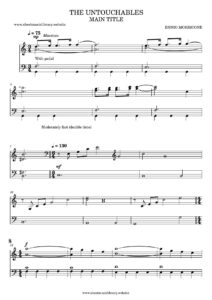 | |
| Ennio Morricone – 12 Musiques de Films pour Piano songbook | 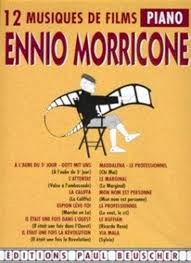 | Ennio Morricone – 12 Musiques de Films pour Piano songbook |
| Ennio Morricone – Amapola (C’Era una Volta in America) | Ennio Morricone – Amapola | |
| Ennio Morricone – Best of |  | Morricone Ennio, best of |
| Ennio Morricone – Cinema Paradiso – Se | Ennio Morricone – Cinema Paradiso – Se | |
| Ennio Morricone – Death Theme from The Untouchables Piano Solo arr. | Ennio Morricone – Death Theme from The Untouchables Piano Solo arr. Sample | |
| Ennio Morricone – Death Theme from The Untouchables Piano Solo arr..mscz | ||
| Ennio Morricone – Ecstacy Of Gold Guitar with Tablature |  | |
| Ennio Morricone – Good Bad Ugly | ||
| Ennio Morricone – Le Vent Le Cri Ennio (Guitar arr.) from the film The Professional with Tablature | Ennio Morricone – Le Vent Le Cri Ennio (Guitar arr.) from the fil The Professional | |
| Ennio Morricone – Le vent, le cri (Le Professionnel OST) | Le-vent-le-cri-Le-Professionnel-OST-Ennio-Morricone | |
| Ennio Morricone – Love Affair theme | Ennio Morricone – Love Affair theme | |
| Ennio Morricone – Once upon a time in the West – C’era Una Volta Il West | Morricone Once upon a time in the West | |
| Ennio Morricone – Once Upon A Time In The West – C’era Una Volta Il West (piano solo) | Ennio Morricone – Once Upon A Time In The West – C’era Una Volta Il West (piano solo) | |
| Ennio Morricone – Roger Waters Lost Boys Calling (From The Legend Of 1900) Complete | 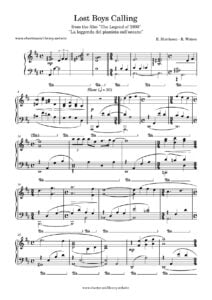 | |
| Ennio Morricone – Roger Waters Lost Boys Calling (From The Legend Of 1900) Complete (Musescore File).mscz | ||
| Ennio Morricone – Roger Waters Lost Boys Calling (From The Legend Of 1900) Guitar (Musescore File).mscz | ||
| Ennio Morricone – The best of 1970 piano sheet music songbook | 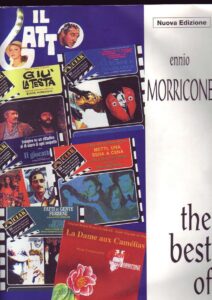 | Ennio Morricone – The best of 1970 piano sheet music songbook |
| Ennio Morricone – The Book (best scores selection for piano) | Ennio Morricone – The Book (best scores selection for piano) | |
| Ennio Morricone A Mozart Reincarnated |  | |
| Ennio Morricone Best Piano Collection New Age Piano Solo |  | Ennio Morricone Best Piano Collection New Age Piano Solo |
| Ennio Morricone Cinema Paradiso Main Theme Piano Solo by Ennio and Andrea Morricone | 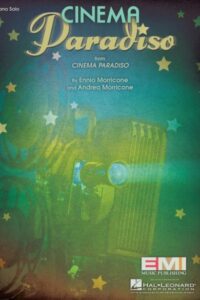 |  |
| Ennio Morricone For A Few Dollars More Guitar | 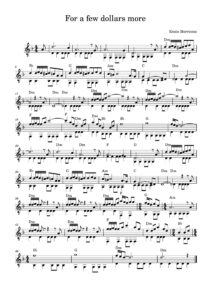 | |
| Ennio Morricone For Band Partitura arr. Loreto Perrini | Ennio Morricone For Band Partitura arr. Loreto Perrini | |
| Ennio Morricone For Classical Guitar Arr. By Mauro Di Domenico |  | Ennio Morricone For Classical Guitar Arr. By Mauro Di Domenico |
| Ennio Morricone For Guitar TABs (arr. by Carlo Marchione) |  | Ennio Morricone For Guitar TABs (arr. by Carlo Marchione) contents |
| Ennio Morricone Gabriel’s Oboe For Oboe And Piano |  | |
| Ennio Morricone Giu La Testa Duck You Sucker! Once Upon A Time The Revolution | 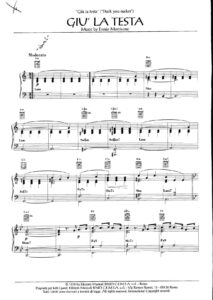 | |
| Ennio Morricone Il Principe Del Deserto | Ennio Morricone Il Principe Del Deserto | |
| Ennio Morricone In His Own Words (Alessandro De Rosa) Book |  | |
| Ennio Morricone Inseguendo Quel Suono (Alessandro De Rosa Ennio Morricone) Book (Italian) | 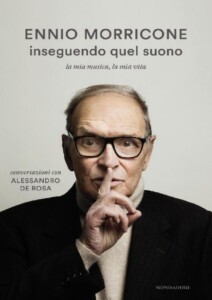 | |
| Ennio Morricone La Califfa (Piano Solo arr. sheet music) | 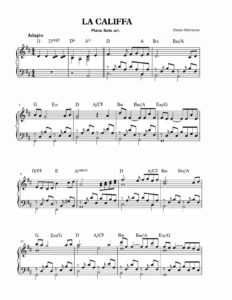 | |
| Ennio Morricone Magic Waltz from the Legend of 1900 Piano Solo | 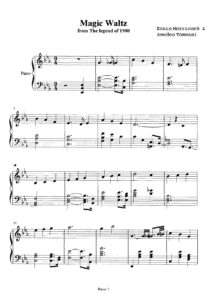 | |
| Ennio Morricone Moment For Morricone for band arr. Johan De Mey |  | |
| Ennio Morricone Once upon a time in Amercia (Il Etait Une Fois En Amerique) Deborah’s Theme | Morricone Il Etait Une Fois En Amérique – Deborah’s Theme sample | |
| Ennio Morricone Playing Love | Ennio Morricone – Playing Love | |
| Ennio Morricone Successi Spartiti |  | Ennio Morricone Successi Spartiti |
| Ennio Morricone The Best Of – Original Soundtrack Collection – Volume 1 |  | Ennio Morricone – The Best Of – Original Soundtrack Collection – Volume 1 |
| Ennio Morricone The Best Of – Original Soundtrack Collection – Volume 2 | 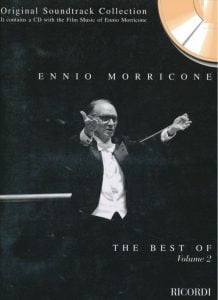 | Ennio Morricone – The Best Of – Original Soundtrack Collection – Volume 2 |
| Ennio Morricone The Best Of – Original Soundtrack Collection – Volume 3 | 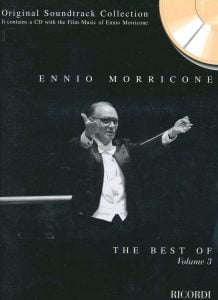 | Ennio Morricone – The Best Of – Original Soundtrack Collection – Volume 3 |
| Ennio Morricone The Good, The Bad and The Ugly (Il Buono, Il Brutto, Il Cattivo) Piano Solo | 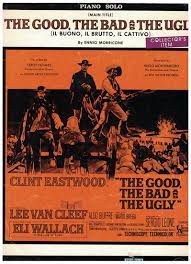 | |
| Ennio Morricone The Legend Of 1900 – (Complete) | 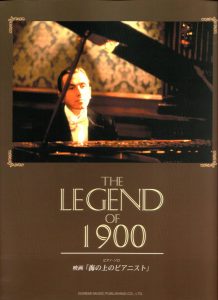 | Ennio Morricone -The Legend Of 1900 |
| Ennio Morricone The Mission (full Book piano solo arrangements) | 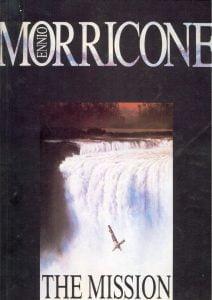 | Ennio Morricone – The Mission (Book) |
| Ennio Morricone- The Good The Bad And The Ugly (Musescore File).mscz |
Ennio Morricone – Amapola (Piano ver.) (sheet music, Noten, partitura, partition, spartiti)
Best Sheet Music download from our Library.
Come join us now, and enjoy playing your beloved music and browse through great scores of every level and styles!
Can’t find the songbook you’re looking for? Please, email us at: sheetmusiclibrarypdf@gmail.com We’d like to help you!
Please, subscribe to our Sheet Music Library.
If you are already a subscriber, please, check our NEW SCORES’ page every month for new sheet music. THANK YOU!
Ennio Morricone (1928-2020)
Who Was Ennio Morricone? Ennio Morricone: The Maestro of Cinematic Sound
Full Biography
Early Life and Musical Foundations (1928-1944)
Ennio Morricone was born on November 10, 1928, in Rome, Italy, to Libera Ridolfi and Mario Morricone, a professional trumpet player. This musical environment proved foundational—by age six, Ennio was already composing, and at nine he entered the Santa Cecilia Conservatory, studying trumpet, composition, and choral music under Goffredo Petrassi, a leading figure in Italian classical music. His early exposure to both classical rigor and his father’s practical musicianship created a unique duality that would define his career.
Formative Years and Arrangement Work (1944-1961)
Morricone’s professional career began during World War II, playing trumpet in jazz bands and hotels to support his family. After graduating from the conservatory in 1954 with a diploma in trumpet, he continued studying composition while beginning work as an arranger for RAI, Italy’s national broadcaster. When RAI rejected him for a permanent position (reportedly due to his “avant-garde tendencies”), he turned to the burgeoning Italian popular music scene, arranging for singers like Mario Lanza, Paul Anka, and Françoise Hardy. This period honed his skill for crafting memorable melodies within commercial constraints—a crucial preparation for film scoring.
Entry into Cinema and Spaghetti Western Revolution (1961-1969)
Morricone’s film career began in 1961 with Luciano Salce’s “Il Federale,” but his breakthrough arrived via a schoolmate from the conservatory: director Sergio Leone. Their collaboration on “A Fistful of Dollars” (1964) revolutionized both the Western genre and film music. Rejecting traditional symphonic scores, Morricone created a startling sonic palette: electric guitars, jew’s harp, whistling, whip cracks, gunshots, and the unforgettable two-note motif performed on a Fender electric guitar and an ocarina. This score, and those for “For a Few Dollars More” (1965) and “The Good, the Bad and the Ugly” (1966), established his international reputation.
Artistic Expansion and Collaboration with Major Directors (1970-1989)
Throughout the 1970s and 80s, Morricone demonstrated staggering versatility, working with Italy’s leading auteurs: Dario Argento (“The Bird with the Crystal Plumage,” 1970), Pier Paolo Pasolini (“Salò, or the 120 Days of Sodom,” 1975), Bernardo Bertolucci (“1900,” 1976), and with international directors like Henri Verneuil, Brian De Palma (“The Untouchables,” 1987), and Roland Joffé (“The Mission,” 1986). His output during this period—sometimes scoring over a dozen films per year—showcased an unparalleled ability to adapt his style to diverse narratives, from political thrillers to horror, historical epics to intimate dramas.
Late Career and Recognition (1990-2020)
Despite decades of critical acclaim, major industry awards initially eluded Morricone. He received honorary Oscars in 2007 and 2016, but his competitive Oscar win came only in 2016 for Quentin Tarantino’s “The Hateful Eight”—his first Western in decades. He remained prolific into his eighties, composing for cinema while also conducting concerts worldwide of his film music. His final film scores included “The Correspondence” (2016) and “Mosquito State” (2020). Ennio Morricone died in Rome on July 6, 2020, at age 91, following complications from a fall.
Please, subscribe to our Sheet Music Library.
If you are already a subscriber, please, check our NEW SCORES’ page every month for new sheet music. THANK YOU!
Music Style and Composition Characteristics
Eclectic Synthesis and Genre Deconstruction
Morricone’s style defies categorization. He synthesized disparate elements: classical counterpoint, avant-garde techniques, jazz harmony, Italian folk music, pop song structures, and musique concrète. Rather than merely supporting visuals, his scores often deconstructed genre conventions, providing ironic commentary or emotional subtext. In the Dollars trilogy, his music didn’t just accompany Westerns—it reimagined the American frontier through a distinctly European, almost surrealist lens.
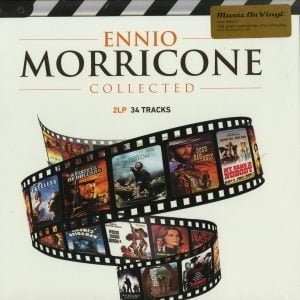
Orchestration and Unconventional Sound Sources
Morricone’s orchestrations were revolutionary. He treated the orchestra not as a homogeneous bloc but as a collection of distinctive timbres. His arrangements often foregrounded unusual instruments:
- Electric and twangy guitars: Used percussively or for melodic motifs
- Jew’s harp and ocarina: Providing folkloric color
- Trumpet (often played by Morricone himself): Employed with extreme mutes for expressive, vocal-like quality
- Wordless vocals (notably by Edda Dell’Orso): Soprano lines that functioned as another instrumental texture
- Whistling and vocalizations: Humanizing abstract compositions
- Found sounds: Typewriters, gunshots, animal cries integrated rhythmically
The “Morricone Sound”
His signature sound emerged from specific techniques:
- Timbral juxtaposition: Placing delicate textures (flute, strings) against harsh, percussive elements
- Extreme registers: Exploiting the highest soprano notes and lowest contrabass ranges
- Static harmonies with melodic activity: Creating tension through motionless chords under evolving melodies
- Repetition with variation: Minimalist-like patterns that subtly transform
- Melodic doubling: Unison lines across unrelated instruments (e.g., trumpet and harmonica)
Harmony and Tonality Treatment
Modal and Chromatic Language
While Morricone could write lush tonal harmonies (as in “The Mission”), his harmonic language often leaned modal, particularly in his Western scores. He favored Dorian and Mixolydian modes, evoking folk music while avoiding major/minor clichés. In more dramatic works, he employed intense chromaticism, sometimes bordering on atonality, especially in his giallo and political thriller scores.
Planing and Parallel Harmony
A distinctive technique was his use of parallel chord movement, where entire chord structures move up or down without traditional voice-leading. This created a shimmering, sometimes eerie effect, divorcing harmony from functional progression and focusing attention on timbral shifts.
Dissonance and Cluster Chords
Influenced by his avant-garde studies, Morricone frequently employed dissonant clusters, particularly in suspense or violence scenes. However, he contextualized these within accessible frameworks, making avant-garde techniques palatable to mass audiences. In “The Battle of Algiers” (1966), he used percussive clusters and Algerian folk elements to create a politically charged soundscape.
Tonal Ambiguity and Pedal Points
Many scores establish tonal centers through pedal points (sustained bass notes) while upper voices move freely, creating tension between stability and ambiguity. This technique features prominently in “The Good, the Bad and the Ugly” main theme, where a relentless three-note bass ostinato anchors wandering melodic fragments.
Melodic and Formal Style
Memorable, Economical Themes
Morricone’s genius for melody remains his most recognized trait. His themes are often built from small, memorable cells expanded through repetition and variation. The main theme from “Cinema Paradiso” (1988) exemplifies this: a simple, nostalgic melody that blossoms through orchestral variation. Similarly, “Gabriel’s Oboe” from “The Mission” achieves profound emotion through melodic purity rather than complexity.
Through-Composed Structures
Unlike many film composers who rely on leitmotif systems, Morricone often employed through-composed structures, where music develops organically rather than recurring predictably. His scores feel like independent musical narratives parallel to the film’s story.
Influence of Cantabile and Italian Opera
His melodic writing reflects Italy’s operatic tradition—long, singing lines (cantabile) that prioritize emotional expressiveness. Even in instrumental pieces, one hears the vocal influence: phrases breathe, build to climaxes, and decay like a human voice. This is particularly evident in his collaborations with soprano Edda Dell’Orso, whose wordless vocals function as a primordial, emotionally direct instrument.
Encounters with Other Artists
Sergio Leone: The Defining Partnership
The Morricone-Leone collaboration represents one of cinema’s most symbiotic director-composer relationships. They developed a unique working method: Morricone would compose themes based on Leone’s script and ideas before filming began, and Leone would play the music on set to establish rhythm and mood. This pre-composition allowed the music to shape the film’s editing and pacing rather than merely react to it. Their partnership spanned eight films, culminating in the epic “Once Upon a Time in America” (1984).
The “Circle”: Gruppo di Improvvisazione di Nuova Consonanza
In 1964, Morricone co-founded this avant-garde collective, exploring free improvisation and experimental techniques. The group (including Franco Evangelisti and Egisto Macchi) influenced his willingness to incorporate noise, unconventional performance techniques, and aleatoric elements into his film scores.
International Directors
- Brian De Palma: Their collaboration on “The Untouchables” (1987) yielded a score blending Prohibition-era jazz with heroic brass themes.
- Roland Joffé: “The Mission” (1986) featured perhaps Morricone’s most spiritually profound music, combining Baroque influences with indigenous South American sounds.
- Quentin Tarantino: A lifelong admirer, Tarantino used Morricone’s existing tracks in earlier films before commissioning an original score for “The Hateful Eight” (2015).
- Giuseppe Tornatore: Their partnership produced some of Morricone’s most lyrical later works, including “Cinema Paradiso” (1988) and “Malèna” (2000).
Popular Music Collaborations
Morricone’s arrangement work connected him with diverse pop artists. He arranged Mina’s early hits, collaborated with French singer Christophe, and his music has been sampled or covered by numerous contemporary artists, creating a dialogue between high and popular culture.
Influences
Classical Influences
- Goffredo Petrassi: His conservatory teacher instilled rigorous counterpoint and modernist exploration.
- Igor Stravinsky: Evident in rhythmic vitality and orchestral innovation.
- Anton Webern and Serialism: Influenced his economical use of material.
- Gustav Mahler: Grandiose emotional landscapes and folk music integration.
- J.S. Bach: Contrapuntal mastery, particularly in sacred-inspired works like “The Mission.”
Film Music Predecessors
While distinct from Hollywood tradition, Morricone admired certain film composers:
- Nino Rota: Fellow Italian whose work with Fellini blended lyricism and irony.
- Bernard Herrmann: Innovative orchestration and psychological depth.
- Alex North: Willingness to experiment within mainstream cinema.
Jazz and Popular Music
His early trumpet playing in jazz bands informed his harmonic language and improvisational approach to composition. The influence of cool jazz and bebop appears in his use of extended chords and rhythmic syncopation.
Italian Folk and Sacred Music
Folk melodies and religious music permeate his work, from the tarantella rhythms in some scores to the sacred polyphony of “The Mission.”
Legacy
Transformation of Film Music
Morricone elevated film scoring from accompaniment to essential narrative voice. He demonstrated that film music could be both commercially successful and artistically ambitious, bridging the gap between popular and avant-garde traditions.
Influence on Subsequent Composers
- John Williams: Acknowledged Morricone’s influence in creating distinctive themes.
- Hans Zimmer: Cites Morricone’s textural innovations and integration of electronic elements.
- Radiohead’s Jonny Greenwood: Explicitly references Morricone’s dissonant string writing.
- Contemporary film composers: His shadow looms over the industry, particularly in unconventional orchestration.
Cultural Impact Beyond Cinema
Morricone’s music transcends its original context, performed in concert halls worldwide and recognized as significant 20th-century composition. His work redefined the possibilities of what film music could achieve artistically.
List of Major Works and Filmography (Selected)
Essential Film Scores:
- The Dollars Trilogy (1964-1966)
- Once Upon a Time in the West (1968)
- The Battle of Algiers (1966)
- The Sicilian Clan (1969)
- Investigation of a Citizen Above Suspicion (1970)
- The Mattei Affair (1972)
- 1900 (1976)
- Days of Heaven (1978)
- The Thing (1982)
- Once Upon a Time in America (1984)
- The Mission (1986)
- The Untouchables (1987)
- Cinema Paradiso (1988)
- Hamlet (1990)
- Malèna (2000)
- The Hateful Eight (2015)
Concert Works:
- Ut (for trumpet, strings, and piano, 1991)
- Voci dal silenzio (cantata, 2002)
- Vuoto d’anima piena (for strings, 2008)
Discography Highlights:
- The Good, the Bad and the Ugly (original soundtrack, 1966)
- Morricone 1966-1987 (compilation, 1987)
- The Mission (original soundtrack, 1986)
- Crime and Dissonance (compilation of avant-garde film works, 2005)
- Morricone Segreto (rare and experimental works compilation, 2021)
Most Known Compositions and Recordings
Iconic Themes:
- “The Ecstasy of Gold” (The Good, the Bad and the Ugly): A breathtaking vocal showcase for Edda Dell’Orso that builds from delicate mystery to frenzied climax.
- “Gabriel’s Oboe” (The Mission): A simple, profoundly moving oboe melody over strings.
- “Chi Mai” (from Maddalena and later The Professional): A haunting theme that became a European pop hit.
- “Love Theme from Cinema Paradiso”: Nostalgic, sweeping strings that capture cinematic romance.
- “Man with a Harmonica” (Once Upon a Time in the West): A harmonica as ominous character theme.
- “The Untouchables” Main Theme: Majestic, Chicago-skyline brass.
Definitive Recordings:
- The 2004 “We All Love Ennio Morricone” tribute album featuring Celine Dion, Bruce Springsteen, and Metallica.
- Yo-Yo Ma’s “Morricone” (2004) album of cello interpretations.
- “Morricone conducts Morricone” live recordings with the Roma Sinfonietta.
Covers in Modern Music
Direct Covers and Samples:
- Metallica: Has used “The Ecstasy of Gold” as concert entrance music since 1983 and recorded covers of Morricone themes.
- Jay-Z: Sampled “The Good, the Bad and the Ugly” theme in “The Prelude.”
- Gnarls Barkley: Used elements from “The Good, the Bad and the Ugly” in “Crazy.”
- Radiohead: Jonny Greenwood’s film scores show clear Morricone influence.
- Muse: Incorporate Morricone-esque spaghetti Western elements in songs like “Knights of Cydonia.”
- Lana Del Rey: Her cinematic style references Morricone’s romanticism.
- Hans Zimmer and Pharrell Williams: “100 Revolutions” from The Amazing Spider-Man 2 directly homages Morricone’s Western style.
Influence on Genres:
- Post-rock: Bands like Godspeed You! Black Emperor employ similar crescendo structures and textural builds.
- Hip-hop: Producers sample his dramatic tension and distinctive sounds.
- Electronic: Artists like Danger Mouse and DJ Shadow incorporate his atmospheric quality.
His Music in Films: Beyond His Own Scores
Morricone’s pre-existing music has been powerfully deployed by other directors:
- Quentin Tarantino: Used “The Big Silence” theme in Inglourious Basterds and “The Mercenary” in Django Unchained.
- John Woo: Incorporated Morricone tracks in his heroic bloodshed films.
- Guillermo del Toro: References Morricone’s style and specific themes in his films.
- Wes Anderson: Uses Morricone-esque whimsy in his scores, often via composer Alexandre Desplat.
This practice demonstrates how Morricone’s music contains such strong inherent narrative that it can enhance films beyond its original context.
Famous Performers of His Music
Collaborators:
- Edda Dell’Orso: Soprano who provided the ethereal vocals on many iconic tracks.
- Alessandro Alessandroni: Guitarist, whistler, and founder of the choir I Cantori Moderni who performed on countless Morricone scores.
- Gilda Butta: Pianist and longtime collaborator in concert performances.
- Yo-Yo Ma: Championed his music in the classical world.
Interpreters:
- John Zorn: Recorded radical reinterpretations on his album “The Big Gundown.”
- Bruce Springsteen: Incorporated Morricone influences in his “Nebraska” album.
- Renée Fleming: Performed and recorded his vocal works.
- Kronos Quartet: Included his pieces in their repertoire.
Last Works and Final Years
Late Film Scores:
- “The Hateful Eight” (2015): A return to the Western genre with a score featuring ominous string clusters, a haunting vocal theme (“L’Ultima Diligenza di Red Rock”), and typical Morricone signatures. Recorded with a 70-piece orchestra and 40-voice choir, it earned him his only competitive Oscar.
- “The Correspondence” (2016): A romantic score featuring pianist Gilda Butta.
- “Mosquito State” (2020): One of his final scores, blending electronic and orchestral elements.
Concert Activities:
Even in his late eighties, Morricone conducted major orchestras worldwide in concerts of his film music, treating them as serious concert repertoire rather than light “pops” concerts. His final tour, “Morricone 60,” celebrated 60 years of film composition.
Unrealized Projects:
At his death, he left sketches for several projects, including an opera about the life of physicist Galileo Galilei.
Ennio Morricone: The Timeless Maestro
Ennio Morricone’s staggering output—over 400 film and television scores, plus concert works—represents one of the most significant musical legacies of the 20th century. He dismantled barriers between high and low art, between avant-garde experimentation and popular accessibility. His music gave voice to the silent archetypes of cinema: the lonely cowboy, the tragic heroine, the conflicted hero, the innocent witness.
Beyond technical innovation, his work possessed an unmistakable humanity. Whether through a solitary trumpet line, a soaring soprano, or the simple purity of an oboe melody, Morricone touched something fundamental in the human experience—our capacity for love, grief, nostalgia, and redemption. He didn’t just score films; he scored our collective emotional landscape, creating a sonic universe that continues to resonate, inspire, and move audiences worldwide.
In the words of director Giuseppe Tornatore: “Ennio wasn’t just a composer; he was a storyteller. His music didn’t accompany images—it revealed their soul.” As cinema evolves, Morricone’s music remains a testament to the transformative power of sound in storytelling, ensuring that his legacy will endure as long as films are made and music is heard.
Ennio Morricone – Once Upon a Time in the West Piano Solo (sheet music, Noten, partitura, spartiti)
Browse in the Library:
Or browse in the categories menus & download the Library Catalog PDF: