Table of Contents
Who was Louis Armstrong?
Louis Armstrong – What A Wonderful World (At The BBC)
Louis Armstrong performs “What A Wonderful World” live at BBC Studios in 1968.
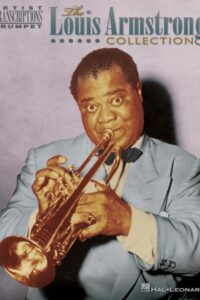
Search best Louis Armstrong’s sheet music, books, and transcriptions in the Library:

The best Sheet Music download from our Library.
Scores for all instruments: 16,000+ (active and growing), over 236,000 pages.
All genres and levels: Jazz & Blues, Rock & Pop, Classical & Contemporary, Film & Musicals;
books & biographies; methods, études, play-along tracks (MP3) for Jazz & Rock.
Access & benefits: US$15.99 one-time payment, valid for lifetime, full Library access.
Please, subscribe to our Sheet Music Library.

Louis Armstrong: The Architect of Modern Jazz
Louis Daniel Armstrong (August 4, 1901 – July 6, 1971) stands as one of the most consequential figures in American music history. Known affectionately as "Satchmo," "Satch," and "Pops," Armstrong was the leading trumpeter and one of the most influential artists in jazz history. His career spanned five decades and several eras in the history of jazz, during which he fundamentally transformed the music from a collective ensemble art form into a vehicle for individual expression and virtuosic solo performance.

Early Life and Formative Years
Armstrong was born into dire poverty in New Orleans, Louisiana, at a time when jazz was still in its infancy. His father, William Armstrong, abandoned the family soon after his birth, leaving his mother, Mary "Mayann" Albert, to raise Louis and his younger sister in the rough "Back o' Town" neighborhood—an area so dangerous it was nicknamed "The Battlefield".
Young Louis left school after only a fifth-grade education and went to work to help support his family. By age five, he was delivering coal to the Storyville brothels of New Orleans. One of his earliest jobs involved selling coal for a local merchant, riding in the coal cart and playing a tin horn to attract customers—an early glimpse of his innate musicality.
At the age of 11, Armstrong began developing an interest in music, harmonizing on street corners and playing a toy horn. But his path to musical greatness took an unexpected turn on New Year's Eve in 1913, when he fired a gun during a celebration and was arrested for disturbing the peace. He was sent to the Colored Waifs' Home for Boys, a reform school that would prove to be the turning point of his life.
At the Waifs' Home, Armstrong was taken under the wing of Peter Davis, the music teacher, who taught him to play the cornet in the home's band. Armstrong's talent blossomed rapidly; he became the band's leader and discovered his life's calling. Released on June 16, 1914, he immediately began establishing himself as a musician in New Orleans.

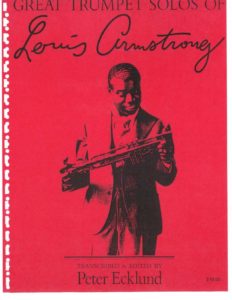
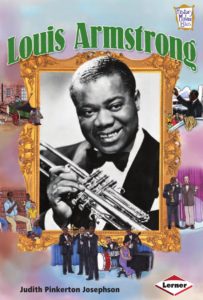
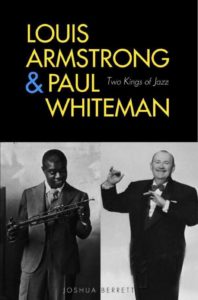
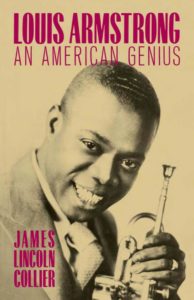
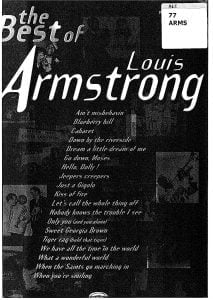
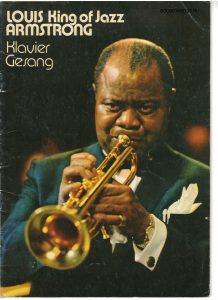
Search your favorite sheet music in the category of Jazz, Blues, Soul, & Gospel.
Rise to Prominence
The New Orleans Years
In the years following his release, Armstrong played in marching bands and jazz bands around New Orleans, becoming skillful enough to replace his mentor Joe "King" Oliver in the important Kid Ory band around 1918. He also played in brass bands on Mississippi riverboats, where he learned to sight-read music and gained invaluable experience playing alongside other musicians.
Chicago and King Oliver
In 1922, fame beckoned when King Oliver, then leading a band in Chicago, sent for Armstrong to play second cornet in his Creole Jazz Band. Oliver's band was the apex of the early, contrapuntal New Orleans ensemble style and included outstanding musicians such as the Dodds brothers—Johnny and Baby—and pianist Lil Hardin. Armstrong's inventive ensemble lead and second cornet lines, his duet passages (called "breaks") with Oliver, and his solos quickly made him popular. He recorded his first solos as a member of the Oliver band in pieces like "Chimes Blues" and "Tears".
It was also during this period that Armstrong married Lil Hardin in 1924. Encouraged by his wife, Armstrong quit Oliver's band to seek further fame, moving to New York City to play in Fletcher Henderson's band. Under Hardin's influence, Armstrong came out from Oliver's shadow and began to forge his own path.
Search your favorite sheet music in the Sheet Music Library Catalog
The Revolutionary Recordings: Hot Five and Hot Seven
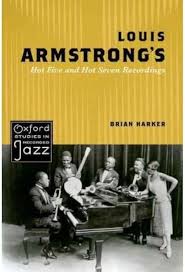
Armstrong created his most important early works with the Hot Five and Hot Seven recordings of 1925–1928. On these records, he emerged as the first great jazz soloist. The New Orleans ensemble style, which allowed few solo opportunities, could no longer contain his explosive creativity.
The Hot Five and Hot Seven recordings changed the course of American popular music for good. Prior to Armstrong, jazz was played either in highly orchestrated arrangements or in loosely structured "Dixieland"-type ensembles where no one musician soloed for any extended period. Armstrong introduced the extended solo, shifting the focus of the music from collective improvisation to solo performance. These recordings remain among the most beloved and influential documents in jazz history.
His 1928 recordings with pianist Earl "Fatha" Hines—including "West End Blues," "Weather Bird," and many others—are particularly worth singling out for their innovation and brilliance. "West End Blues," in particular, opens with a legendary cadenza that showcases Armstrong's virtuosity, covering a range of two octaves and a third, with a dramatic rip up to B-flat.
Musical Style
Trumpet and Cornet
Armstrong started on the cornet, an instrument very similar to the trumpet, and later began playing the trumpet itself. He was a major innovator in terms of making the trumpet an important vehicle for improvisation, developing a highly fluid approach to rhythm and a bold experimental approach to phrasing that flirted with rhythmic disaster but never stumbled.
His trumpet style was distinguished by its expressive and soulful feel, clear tone and broad range, and precise phrasing that included daring experiments with rhythm. His articulation and range were revolutionary, and he ushered in soloing as the centerpiece of jazz performance. His vibrant melodic phrasing, inventive harmonic improvisation, and swinging rhythmic conception established the vernacular of jazz music.
Armstrong's powerful tone and dramatic structure influenced an entire generation of trumpeters during the swing era, who attempted to emulate his inclination to dramatic structure, melody, or technical virtuosity.
Vocal Style and Scat Singing
Armstrong was also a pioneering vocalist. His distinctive gravelly-voiced singing had a huge influence on later artists. His vocal improvisations and the powerful feeling of swing that he brought to everything he sang loosened up the more formal style of his contemporaries.
He pioneered the wordless vocal style known as scat singing, using his voice as an instrument to improvise melodies and rhythms. As a singer, he was just as influential as he was as a trumpeter, popularizing scat and interpreting both jazz and pop songs with style and heart. His gritty tenor mirrored his trumpet and influenced practically every singer in pop and jazz thereafter.
Chord Progressions and Music Harmony
Armstrong's harmonic approach was rooted in the blues and the standard chord progressions of early jazz, but he constantly pushed boundaries through inventive improvisation. His playing frequently employed the 12-bar blues structure with substitution chords. Simple chord changes—the I, IV, and V chords as triads and sevenths—formed the foundation of much of his work, but he introduced chromatic alterations and extended harmonies that expanded the harmonic vocabulary of jazz.
In "West End Blues," for example, Armstrong's opening features broken chords and leaps of diminished fifths, with chromatic movement that suggests modulation without actually leaving the tonic key. The piece opens with a solo trumpet playing six bars of syncopated, rubato arpeggios and broken chords in the key of E-flat major, using the blue notes of the key—F-sharp and D-flat.
In "Hotter Than That," Armstrong employed diminished seventh chords and secondary dominants. He also used unusual chromaticism, which may have been influenced by ragtime music and the chromatic harmony of European salon music.
His later hit "What a Wonderful World" (in F major) features a sophisticated progression with borrowed chords, including a D-flat chord borrowed from F minor for emotional depth. The progression F–Am–B♭–Am–Gm7–F–A7–Dm–D♭–Gm7–C7–F demonstrates how Armstrong and his arrangers used harmonic sophistication within a pop framework.
Armstrong's virtuosity was also evident in his confidence in navigating complex harmonic terrain. He was known for cadenza-like passages that started very high and covered a range of two octaves and a third. He frequently worked over the opening intervals of melodies, constructing his improvisations around the harmonic framework of the tune.
Relationships with Other Artists
Armstrong's most important musical relationship was with his mentor, Joe "King" Oliver, who was the closest thing Armstrong ever had to a father figure. Oliver gave the young Armstrong pointers on the instrument and helped launch his career.
His marriage to Lil Hardin, the pianist in Oliver's band, was both personal and professional. Under her influence, Armstrong came out from Oliver's shadow and struck out on his own. Hardin encouraged him to seek greater fame and helped shape his early career.
In the late 1920s, Armstrong teamed up with legendary pianist and bandleader Earl "Fatha" Hines in Chicago. The two made the perfect combination, and their collaborations—including the seminal "West End Blues" and "Weather Bird"—remain landmarks of jazz history.
Armstrong also collaborated extensively with other major figures. He recorded and performed with vocalist Ella Fitzgerald, pianist Oscar Peterson, Duke Ellington, and Dave Brubeck. His duets with musicians such as Bing Crosby, Ella Fitzgerald, and Jack Teagarden gave their careers dramatic upswings.
However, Armstrong's relationships were not always smooth. He had frequent feuds with fellow musicians Earl Hines and Zutty Singleton. He also had a complex personality, marked by an endless need for approval and a streak of jealousy. He had four wives: Daisy Parker (m. 1919–1923), Lil Hardin (m. 1924–1938), Alpha Smith (m. 1938–1942), and Lucille Wilson (m. 1942 until his death).
Influences
Armstrong was influenced by the dexterity of New Orleans clarinetists and his study of classical trumpet literature, two influences that would make fluid technique and dazzling high notes into hallmarks of his style. He also absorbed the contrapuntal style of early jazz as mastered by Oliver's Creole Jazz Band.
But Armstrong himself became the dominant influence on generations of musicians. He was the foundational influence in jazz, shifting the focus of the music from collective improvisation to solo performance. His influence extended well beyond jazz, and by the end of his career in the 1960s, he was widely regarded as a profound influence on popular music in general.
Armstrong influenced practically every singer in pop and jazz thereafter. Artists including Frank Sinatra, Bing Crosby, Ella Fitzgerald, and Sarah Vaughan deeply admired Armstrong's singing and molded their own vocal styles from his example. One of the key architects of modern jazz famously said "no him, no me" in reference to Armstrong.
His influence across jazz, American music, and around the world has such continuing stature that he is one of the few who can easily be mentioned with Stravinsky, Picasso, and Joyce. Louis Daniel Armstrong supplied revolutionary language that took on such pervasiveness that it became commonplace, like the light bulb, the airplane, the telephone.
The All Stars and Later Career
Throughout the 1930s and 1940s, Armstrong maintained one of the most grueling continual tours of all time. He began playing with the large bands that were popular at the time but soon realized that his style was better suited to a smaller ensemble. With the help of his manager, Joe Glaser, he formed Louis Armstrong and His All Stars in 1947. The band, which had a rotating cast of "all stars," first included Jack Teagarden, Barney Bigard, Earl Hines, and Big Sid Catlett.
The final 24 years of his career found him recording with the All Stars, with big bands, with strings, with vocalists such as Ella Fitzgerald, and with jazz legends such as Oscar Peterson, Duke Ellington, and Dave Brubeck. These were also the years of his biggest hits—"Hello, Dolly!," "Mack the Knife," "What a Wonderful World," and more.
Though many believed the 1940s marked the beginning of a decline in Armstrong's playing, the recordings bear out his continued technical proficiency, spirited interpretations, and the depth and soul of his playing during these years.
Legacy and Cultural Impact
Armstrong received numerous accolades, including the Grammy Award for Best Male Vocal Performance for "Hello, Dolly!" in 1965, as well as a posthumous Grammy Lifetime Achievement Award in 1972. His influence crossed musical genres, with inductions into the DownBeat Jazz Hall of Fame, the Rock and Roll Hall of Fame, and the National Rhythm & Blues Hall of Fame.
Armstrong was one of the first truly popular African-American entertainers to "cross over," whose skin color was secondary to his music in an America that was extremely racially divided. He rarely publicly politicized his race, often to the dismay of fellow African-Americans, but took a well-publicized stand for desegregation during the Little Rock Crisis. His artistry and personality allowed him socially acceptable access to the upper echelons of American society, which were highly restricted for Black men of his era.
As a Black man living and working in a segregated society, he symbolized the civil rights struggle that was part of the changing America in which he lived. He traveled the globe for the U.S. State Department, earning the nickname "Ambassador Satch".
Wynton Marsalis once said, "Louis Armstrong is jazz. He represents what the music is all about".
Discography and Most Known Works
Louis Armstrong made thousands of recordings over his career, which stretched from 1923 until 1971. Most have been reissued and repackaged many times over the years.
Essential Early Recordings
- The Hot Five and Hot Seven recordings (1925–1928)—including "West End Blues," "Hotter Than That," "Struttin' with Some Barbecue," and "Weather Bird"—are considered the Rosetta Stone of jazz.
- His recordings with King Oliver's Creole Jazz Band (1923), including "Chimes Blues" and "Tears".
Big Band Era
- Armstrong began fronting big bands in 1929, making standards out of songs such as "I Can't Give You Anything But Love," "Ain't Misbehavin'," "When You're Smiling," and countless others.
- In 1935, he began recording for Decca, a wonderful run of music that lasted until 1946.
Later Hits
- "Mack the Knife" (1955)
- "Hello, Dolly!" (1965)—Grammy winner
- "What a Wonderful World" (1968)—one of his most enduring classics
Other Best-Known Songs
Armstrong's best-known songs include "La Vie en Rose," "On the Sunny Side of the Street," "Dream a Little Dream of Me," "When You're Smiling," and "When the Saints Go Marching In".
Notable Albums
- Satch Plays Fats: A Tribute to Fats Waller (1955)
- Louis Armstrong Plays W.C. Handy
Film Works
Armstrong appeared in a large number of feature-length films and shorts, often as himself, from the early 1930s to the late 1960s. He appeared in more than twenty feature films and numerous short subjects.
Early Film Appearances
- Ex-Flame (1930)
- A Rhapsody in Black and Blue (1932 short)
- I'll Be Glad When You're Dead You Rascal You (1932 short)
Notable Feature Films
- Cabin in the Sky (1943)
- New Orleans (1947)
- Glory Alley (1952)
- The Glenn Miller Story (1954)
- High Society (1956)—starring opposite Bing Crosby and Grace Kelly
- The Five Pennies (1959)
- Paris Blues (1961)—alongside Duke Ellington
- When the Boys Meet the Girls (1965)
- A Man Called Adam (1966)—as Willie Ferguson
- Hello, Dolly! (1969)—his most famous film role, as orchestra leader
Television and Other Appearances
Armstrong was also a memorable presence on radio and television. He appeared in the TV series New York: A Documentary Film (1999, using archival footage).
Live Performances
Throughout the 1930s and 1940s, Armstrong maintained one of the most grueling continual tours of all time. His live performances with the All Stars were legendary, and he continued performing until the end of his life.
One of the most significant live recordings is Louis in London: Live at the BBC, a commemorative album from a concert recorded on July 2, 1968, by Louis Armstrong and his All-Stars for British radio. The BBC performance opens with Armstrong's theme song, "When It's Sleepy Time Down South". This 13-track set captures Armstrong and a strong five-piece backing combo recorded before an audience at the BBC. The performance came just weeks after Armstrong hit the #1 spot on the UK charts with "What a Wonderful World". Heralded as his "last great performance," this recording captures the vitality and joy that Armstrong brought to his live shows even in his final years.
Other significant live recordings include Armstrong's Standard Oil Sessions, his 1950s club date performances, his 1964 Sparks, Las Vegas concert, and Louis Armstrong Live in Europe.
Documentaries
Several documentaries have explored Armstrong's life and legacy:
Louis Armstrong's Black & Blues (2022)
Directed by Sacha Jenkins, this documentary offers an intimate and revealing look at the world-changing musician, presented through a lens of archival footage and never-before-heard home recordings and personal conversations. Armstrong meticulously recorded audio diaries of himself that reveal a different side of his personality than the showman on camera. The documentary honors Armstrong's legacy as a founding father of jazz, one of the first internationally known and beloved stars, and a cultural ambassador of the United States. With the full support of the Louis Armstrong Educational Foundation, the film lets Armstrong tell his story in his own words. The website's consensus reads: "A fitting tribute to a titan of American music".
Satchmo: The Life of Louis Armstrong
A documentary on the life and work of Armstrong, covering every aspect of his life and career, from his birth in New Orleans and rise to prominence in the 1920s to his global success in the decades that followed.
American Masters: Satchmo: The Life of Louis Armstrong (PBS)
This PBS documentary explores Armstrong's life from a New Orleans boys' home to Hollywood, Carnegie Hall, and television. His trumpet playing revolutionized the world of music, and he became one of the century's most recognized and best-loved entertainers.
Louis Armstrong "Satchmo"
Louis Armstrong's impact on music and culture is immeasurable. He transformed jazz from a collective ensemble music into an art form centered on the virtuosic soloist. His innovations in trumpet playing, vocal phrasing, and scat singing established the vernacular of jazz and influenced generations of musicians across all genres. His recordings with the Hot Five and Hot Seven remain foundational documents of American music, and his later hits—"What a Wonderful World," "Hello, Dolly!," and "Mack the Knife"—have become enduring classics known around the world.
Beyond his musical achievements, Armstrong broke racial barriers as one of the first African-American entertainers to achieve widespread popularity across racial lines. He served as a cultural ambassador for the United States, spreading American music and culture around the globe. His life story—from poverty in New Orleans to international stardom—epitomizes the American success story.
As Duke Ellington once said, "Louis Armstrong is jazz." But Armstrong was more than that: he was the architect of modern American music, a pioneering artist whose innovations continue to resonate more than fifty years after his death.
Browse in the Sheet Music Library:
Or browse in the categories menus & download the Library Catalog PDF:
The Best Of Louis Armstrong
Track List:
1) Louis Armstrong and his Orchestra - Drop That Stack 2) Louis Armstrong and his Orchestra - Old Kentucky home 3) Louis Armstrong and his Orchestra - St James Infirmary 4) Louis Armstrong and his Orchestra - Panama 5) Louis Armstrong and his Orchestra - Hot Time in the Hot Town Tonight 6) Louis Armstrong and his Orchestra - Dr Jazz 7) Louis Armstrong and his Orchestra - I Ain't Gonna Give Nobody None of my Jelly-Roll 8) Louis Armstrong and his Orchestra - Jelly Roll Blues 9) Louis Armstrong and his Orchestra - Chimes Blues 10) Louis Armstrong and his Orchestra - I Want a Big Buter and Egg Man 11) Louis Armstrong and his Orchestra - Frankie and Johnny