Community Musicians, building a worldwide Community Music.
Scores for all instruments: 16,000+ (active and growing), over 236,000 pages.
All genres and levels: Jazz & Blues, Rock & Pop, Classical & Contemporary, Film & Musicals;
books & biographies; methods, études, play-along tracks (MP3) for Jazz & Rock.
Access & benefits: US$15.99 one-time payment, valid for lifetime, full Library access.
Scores for all instruments: 16,000+ (active and growing), over 236,000 pages.
All genres and levels: Jazz & Blues, Rock & Pop, Classical & Contemporary, Film & Musicals;
books & biographies; methods, études, play-along tracks (MP3) for Jazz & Rock.
Access & benefits: US$15.99 one-time payment, valid for lifetime, full Library access.
Puccini Intermezzo Manon Lescaut Piano Solo sheet music, Noten, partitura, spartiti, partition, 楽譜
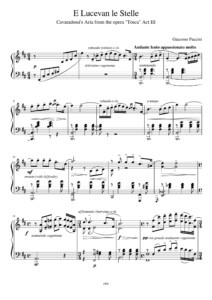
The best sheet music download from our Library.
Please, subscribe to our Sheet Music Library.
The Intermezzo from Giacomo Puccini's opera Manon Lescaut is a famous symphonic masterwork that bridges the emotional gap between Act II and Act III. It serves as a psychological portrait of the heartbroken Chevalier des Grieux as his lover, Manon, faces imprisonment and exile.
Overview of the Intermezzo
- Placement: It plays directly before the curtain rises on Act III (The Harbor of Le Havre).
- Musical Themes: Puccini built this instrumental interlude around the sweeping, passionate love themes from the Act II love duet ("Ah! Manon, mi tradisce").
- Emotional Tone: It opens with a melancholic string melody that builds into a desperate, soaring climax, reflecting the tragic fate of the lovers.
- Significance: Premiering in Turin in 1893, Manon Lescaut was Puccini's first major triumph. The Intermezzo remains one of his most frequently performed orchestral pieces worldwide.
Search your favorite sheet music in the Sheet Music Library Catalog
Giacomo Puccini (1858–1924) was an Italian composer widely regarded as one of the greatest operatic masters of all time. He was the leading figure of the Verismo movement, which brought gritty, realistic storylines and intense human emotion to the opera stage.
Famous Operas
- La Bohème (1896): Follows the tragic love story of poor young artists in Paris.
- Tosca (1900): A tense, political melodrama packed with torture, murder, and suicide.
- Madama Butterfly (1904): The heartbreaking tale of a young Japanese geisha abandoned by an American naval officer.
- Turandot (1926): Puccini’s final, unfinished epic featuring the world-famous aria "Nessun Dorma"
Signature Style
- Lyrical Melodies: Created soaring, highly emotional vocal lines that perfectly match the human voice.
- Orchestral Color: Used rich, innovative orchestration to paint vivid atmospheres and enhance the stage drama.
- Rich Characterization: Focused heavily on complex, tragic heroines who sacrifice everything for love.
Browse in the Sheet Music Library:
Or browse in the categories menus & download the Library Catalog PDF: