
Scores for all instruments: 16,000+ (active and growing), over 236,000 pages.
All genres and levels: Jazz & Blues, Rock & Pop, Classical & Contemporary, Film & Musicals;
books & biographies; methods, études, play-along tracks (MP3) for Jazz & Rock.
Access & benefits: US$15.99 one-time payment, valid for lifetime, full Library access.
Table of Contents
Ray Charles, the "Genius,” pioneered the genre of soul music in the 50s
Ray Charles Robinson, known to the world simply as Ray Charles, was not merely a singer or a pianist; he was a force of nature who dissolved the boundaries between gospel, blues, jazz, R&B, and country music. Born into poverty in the Jim Crow South and blinded by glaucoma before his seventh birthday, Charles constructed a singular musical universe from the sounds that surrounded him—the hymns of the Baptist church, the honky-tonk of roadside juke joints, and the sophisticated harmonies of jazz pianists like Art Tatum and Nat King Cole. Over a career that spanned more than half a century, he became one of the first Black artists to wield complete artistic control in a major recording contract, a feat that reshaped the industry as much as his music reshaped the culture.
"I never wanted to be famous.
I only wanted to be great." Ray Charles
The best sheet music download from our Library.
For the price of a single songbook, get a full Sheet Music Library!




Listen to Ray Charles music on Spotify
Early Life and Biography
Please, subscribe to our Sheet Music Library. Sheet music should be accessible and affordable for all musicians, from professionals to absolute beginners.
Ray Charles Robinson was born on September 23, 1930, in Albany, Georgia, and raised in the small town of Greenville, Florida. His childhood was marked by profound hardship. His family was desperately poor, and tragedy struck early: Charles began to lose his sight at around age five due to glaucoma, and by age seven he was completely blind. His mother, Aretha Robinson, a fiercely independent woman, refused to coddle him, insisting that he learn to navigate the world on his own terms—a lesson that instilled in him a lifelong resilience. At the age of seven, he was sent to the St. Augustine School for the Deaf and Blind in Florida, a state institution where he learned to read Braille, to play the piano and clarinet, and to memorize and compose music entirely in his head. It was there that he also discovered mathematics and its profound correlation to musical structure, a foundation that would later underpin his sophisticated approach to harmony and arrangement.
Orphaned at fourteen by the death of his mother, Charles left school and began working as a musician in earnest, touring the South with “traveling hillbilly bands” and rhythm-and-blues combos as a pianist, clarinetist, and saxophonist. In 1950, he moved to the West Coast, settling in Seattle and later Los Angeles, where he worked as a singer-pianist-arranger and began to absorb the disparate influences that would coalesce into his signature sound. He formed his own band in 1954, and it was at a historic recording session that year that he merged the sacred fervor of gospel with the secular language of the blues, transforming an old gospel tune into “I Got a Woman”. The song became a hit, and it announced the arrival of a new kind of American music—one that would soon be called soul.
Charles’s commercial breakthrough came in 1959 with his iconic rendition of Hoagy Carmichael’s “Georgia on My Mind,” which won him his first Grammy Award. A string of hits followed, including “Hit the Road Jack,” “I Can’t Stop Loving You,” “Busted,” and “Crying Time,” each of which further cemented his reputation as a genre-defying innovator. In 1962, his landmark album Modern Sounds in Country and Western Music became his first to top the Billboard 200, selling more than a million copies and challenging racial barriers at the height of the Civil Rights Movement. Charles’s personal life was complex and often turbulent; he struggled with heroin addiction for many years, was arrested in 1965, and ultimately overcame the dependency. He was married twice and fathered twelve children with ten different women. He died on June 10, 2004, at his home in Beverly Hills, California, from complications related to liver disease. He was 73 years old.
Search your favorite sheet music in the Sheet Music Library Catalog


Musical Style, Harmony, and Technique
Ray Charles’s musical style defies easy categorization, and that is precisely its power. He was, at his core, a synthesizer—not in the electronic sense, but in the sense that he took the raw materials of Black American music and fused them into something entirely new. His genius lay in his ability to hear the common threads running through gospel, blues, jazz, and country and to weave them into a seamless fabric that was unmistakably his own. As the Kennedy Center noted, he “not only defined modern soul music but also helped escape country music and influenced dozens of rock singers”. His performances carried “a gospel fervor that brings to his concerts the atmosphere of a revival meeting,” yet he could pivot effortlessly from the sanctified shout of “I Got a Woman” to the tender, string-laden melancholy of “Georgia on My Mind”.
Vocal Technique
Charles’s voice was his most immediately recognizable instrument. Musicologist Henry Pleasants observed that while Frank Sinatra and Bing Crosby had been “masters of words,” Ray Charles was “a master of sounds”. His records reveal “an extraordinary assortment of slurs, glides, turns, shrieks, wails, breaks, shouts, screams and hollers, all wonderfully controlled, disciplined by inspired musicianship, and harnessed to ingenious subtleties of harmony, dynamics and rhythm”. Though his speaking voice was that of a baritone, under the stress of gospel or blues material his voice underwent “some sort of transfiguration,” allowing him to sing for measures on end in the high tenor range of A, B-flat, B, C, and even C-sharp and D. He could move from full voice to an ecstatic head voice to falsetto, extending his range to at least three octaves.
His phrasing was equally distinctive. Charles regularly accentuated and pushed up syllables just before the beat laid down by the band, a striking offbeat phrasing that gave his performances a drive and urgency that were impossible to imitate. He would attack a song from every angle, changing tempo, harmony, and phrasing, transforming smooth melodic lines into choppy syncopations and wide leaps, his voice cracking or rasping in emotionally devastating places. This was not technical imperfection but deliberate expressive choice—a way of communicating feelings that words alone could not contain.
Piano Style and Harmony
As a pianist, Charles was a formidable technician and a deeply original stylist. His playing combined stride bass patterns with jazz harmonies and blues vocabulary, creating a sound that was unmistakably his own. He drew on country blues, barrelhouse, and stride piano traditions, but filtered them through a sophisticated harmonic sensibility informed by his love of jazz pianists like Art Tatum and Nat King Cole. He was a “pianist of exceptional range,” as the New York Times critic John S. Wilson noted, able to “move skillfully from basic, root blues to a modern linear style”.
Harmonically, Charles was a restless experimenter. He could take a simple twelve-bar blues framework and enrich it with unexpected chord substitutions and voicings drawn from jazz, or he could take a country ballad and infuse it with the blue notes and gospel progressions that were the birthright of his Southern upbringing. His arrangement approach was similarly adventurous: he had an uncanny ability to “bend melody and harmony toward expressive ends,” and his relentless work ethic made him a model for serious musicians across every genre. He was also a master of tempo, knowing exactly when to speed up or slow down because the song demanded it—a skill that made his bands sound both tight and thrillingly alive.
Key Songs and Compositions
Main article on Wikipedia: Ray Charles discography
Ray Charles’s catalog is a testament to his versatility and his relentless pursuit of musical excellence. Several recordings stand as landmarks not only in his career but in the history of American popular music.
“I Got a Woman” (1954) is widely considered the founding document of soul music. By setting secular lyrics to the melody and chord structure of a gospel song, Charles created a template that would be followed by generations of R&B and soul artists. The song’s driving rhythm and call-and-response structure between Charles’s voice and his band were electrifying, and it remains one of his most covered and influential recordings.
“What’d I Say” (1959) was a breakthrough that pushed Charles from R&B stardom into the pop mainstream. Built on a Latin-esque drum beat and a repetitive keyboard riff, the song was largely improvised in the studio, with Charles shouting call-and-response lyrics to his backing singers, the Raelettes. Its gospel and rhumba influences, combined with its unmistakable sexual innuendo, made it both wildly popular and controversial. The song’s twelve-bar blues structure and infectious groove made it a cornerstone of the rock ‘n’ roll canon, and it has been cited as one of the most miraculously contagious rock-soul-pop tunes ever recorded.
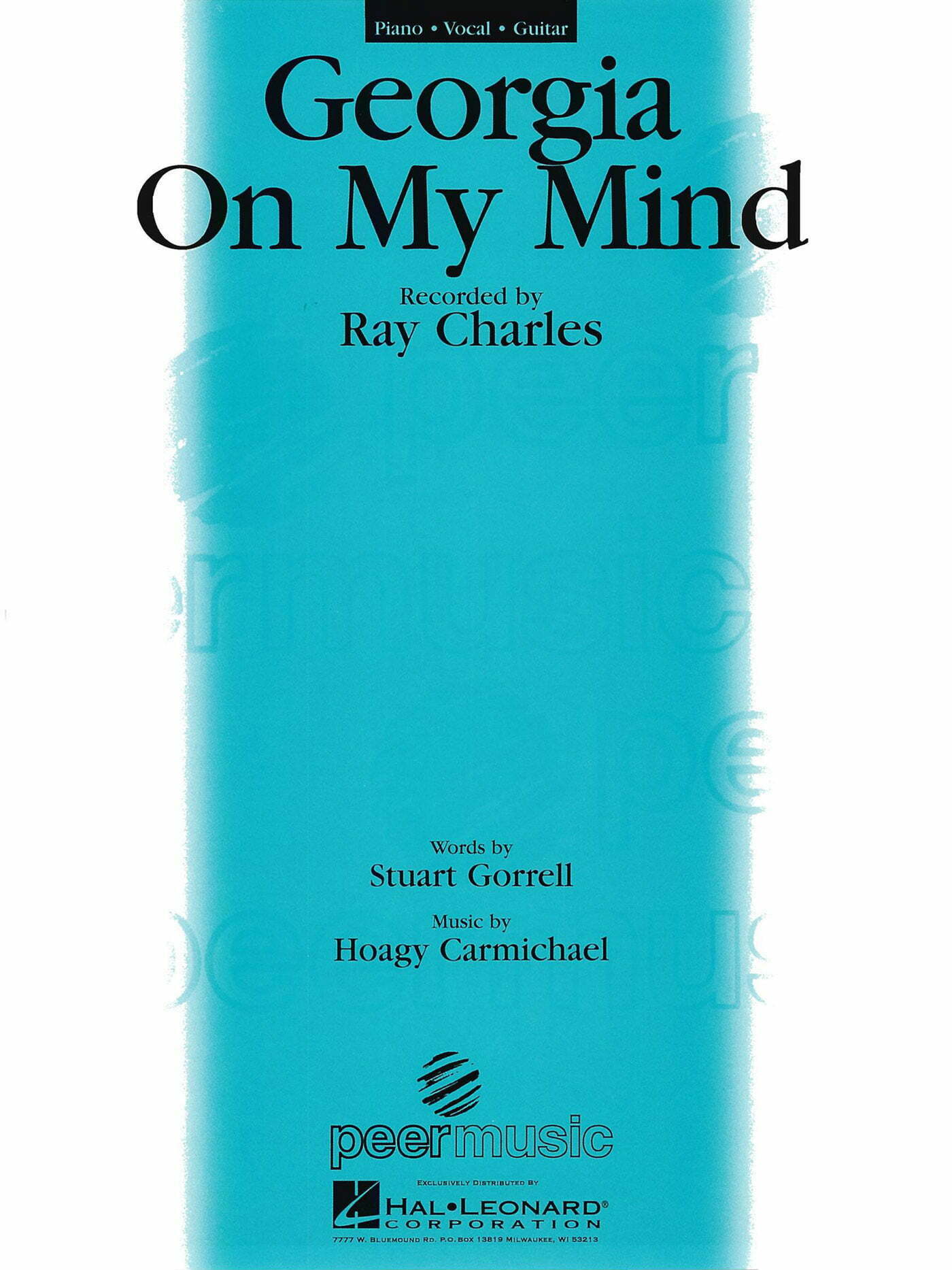
“Georgia on My Mind” (1960) was Charles’s first No. 1 hit and the song most closely associated with him. Written by Hoagy Carmichael and Stuart Gorrell in 1930, the song was transformed by Charles’s soulful, string-laden interpretation into a timeless standard. In 1979, his version was officially designated the state song of Georgia, a remarkable honor for a song that, according to Charles himself, was not consciously about the state at all.
“Hit the Road Jack” (1961) showcased Charles’s playful side and the formidable presence of the Raelettes, particularly Margie Hendrix, whose fiery response vocals made the song unforgettable. “I Can’t Stop Loving You” (1962), from Modern Sounds in Country and Western Music, topped the pop charts for five weeks and demonstrated that Charles could bring the emotional depth of soul to country material without sacrificing either genre’s integrity. Other essential recordings include “Hallelujah I Love Her So,” “A Fool for You,” “Drown in My Own Tears,” “Lonely Avenue,” “Busted,” “Crying Time,” “Let the Good Times Roll,” and his haunting rendition of “America the Beautiful,” which President Barack Obama later praised as deeply patriotic.
Film and Soundtrack Work
Ray Charles’s music and his charismatic presence found a natural home in cinema. He appeared as himself in several films and contributed songs that became inseparable from the movies they accompanied.
In 1965, Charles starred as himself in the British drama Ballad in Blue (also known as Blues for Lovers), directed by Paul Henreid. The film tells the story of a blind boy whom Charles befriends while on tour in London, and it features several of his performances. While the film itself was not a critical triumph, it remains a fascinating document of Charles’s screen presence and his willingness to use his platform to explore themes of disability and resilience.
Charles reached a new generation of fans in 1980 with his memorable cameo in The Blues Brothers. He played Ray, the owner of a music store called Ray’s Music Exchange, and his scene—in which he performs “Shake a Tail Feather” with the Blues Brothers band—is one of the film’s most joyous moments. The role introduced him to a younger audience and cemented his status as a pop-culture icon.
His music also graced the soundtracks of numerous films. In 1967, he performed the title song for In the Heat of the Night, composed by Quincy Jones with lyrics by Alan and Marilyn Bergman. The song’s smoldering intensity perfectly matched the film’s tense racial drama, and it became a standard in Charles’s repertoire. In 2004, the biographical film Ray, starring Jamie Foxx in an Oscar-winning performance, brought Charles’s story to the big screen. The soundtrack combined original recordings with new performances and introduced his music to yet another generation. Charles himself was closely involved in the film’s development before his death, and his music—and his spirit—permeate every frame.
Collaborations
Ray Charles was a generous and sought-after collaborator, and his duets and bandstand partnerships reveal the breadth of his musical curiosity. His most important early collaborator was the saxophonist David “Fathead” Newman, who joined Charles’s band in 1954 and remained for twelve years. Newman’s warm, soulful tenor saxophone was a crucial component of Charles’s classic Atlantic recordings, and Charles helped Newman launch his own solo career with the 1958 album Fathead: Ray Charles Presents David Newman. Other notable sidemen included saxophonists Hank Crawford and Leroy “Hog” Cooper, trumpeter Marcus Belgrave, and drummers like Mickey Baker and Ed Thigpen.
The Raelettes, Charles’s female backing vocal group, were more than mere accompanists; they were essential to his sound. Formed in the late 1950s, the group featured singers such as Darlene McCrea, Pat Lyles, Gwendolyn Berry, and most famously Margie Hendrix, whose powerful, raspy voice and fiery interplay with Charles on songs like “Hit the Road Jack” and “Night Time Is the Right Time” created some of the most electrifying moments in his catalog. Charles’s relationship with Hendrix was also personal—they had a son together—and her departure from the group in 1964 marked the end of an era.
In his later years, Charles embraced the duets format with enthusiasm. His 2004 album Genius Loves Company, completed shortly before his death, paired him with a stunning array of artists: Norah Jones, James Taylor, Diana Krall, Elton John, Natalie Cole, Bonnie Raitt, Willie Nelson, Michael McDonald, B.B. King, Gladys Knight, Johnny Mathis, and Van Morrison. The album became a massive commercial and critical success, winning eight Grammy Awards, including Album of the Year and Record of the Year for “Here We Go Again” with Norah Jones. A follow-up collection, Genius & Friends, released posthumously, featured collaborations with Mary J. Blige, Chris Isaak, Patti LaBelle, George Michael, Alicia Keys, John Legend, and others. Charles had also recorded with jazz luminaries such as Milt Jackson and had a lifelong friendship and occasional partnership with Quincy Jones, who called him “a brother in every sense of the word”.
Awards and Honors
Ray Charles’s contributions to music were recognized with an extraordinary array of honors. He won 17 Grammy Awards from 37 nominations, including his first four at the 3rd Annual Grammy Awards in 1961 for The Genius of Ray Charles and “Let the Good Times Roll”. He received the Grammy Lifetime Achievement Award in 1987, and ten of his recordings have been inducted into the Grammy Hall of Fame. In 2005, the year after his death, he won eight posthumous Grammys for Genius Loves Company, bringing his total to 17 and making him one of the most awarded artists in Grammy history.
Beyond the Grammys, Charles was one of the first inductees into the Rock & Roll Hall of Fame in 1986, the same year he received the Kennedy Center Honors. He was inducted into the Georgia Music Hall of Fame in 1979, and his version of “Georgia on My Mind” became the state’s official song. He received a star on the Hollywood Walk of Fame in 1981, the National Medal of Arts in 1993, and the Polar Music Prize in 1998. In 2022, he was posthumously inducted into the Country Music Hall of Fame, becoming only the third African American to receive that honor, in recognition of his profound impact on country music. He also received honorary doctorates from Morehouse College and Dillard University and was honored with a Google Doodle on what would have been his 74th birthday.
Influences and Legacy
Ray Charles’s influences were as diverse as his output. He cited Nat King Cole as a primary influence, and his music was also shaped by Louis Jordan, Charles Brown, Louis Armstrong, and the jazz pianism of Art Tatum. From the church he inherited the emotional intensity and call-and-response structures of gospel; from the juke joints and roadhouses he absorbed the raw power of the blues; from the big bands he learned arrangement and discipline; and from country music he learned the art of storytelling and direct emotional communication.
His influence on subsequent generations of musicians is incalculable. Jon Pareles has noted his impact on Elvis Presley, Aretha Franklin, Stevie Wonder, Van Morrison, and Billy Joel, while other artists who have acknowledged his influence include James Booker, Steve Winwood, Richard Manuel, and Gregg Allman. The 1960s British R&B scene—Joe Cocker, Eric Burdon, and the Rolling Stones—was built in part on the template Charles created, and his shadow falls across contemporary artists as diverse as Norah Jones and Roger Waters of Pink Floyd, who has spoken of the life-changing impact of hearing “Georgia on My Mind” as a teenager.
Joe Levy of Rolling Stone perhaps put it best: “The hit records he made for Atlantic in the mid-1950s mapped out everything that would happen to rock ‘n’ roll and soul music in the years that followed”. Quincy Jones was even more expansive: “There will never be another musician who did as much to break down the perceived walls of musical genres as much as Ray Charles did”. Charles’s legacy is not just a catalog of great songs—though it is certainly that—but a philosophical stance: that good music is good music, regardless of genre, race, or commercial category. He proved that an artist could be uncompromisingly himself and still achieve massive popular success, and he opened doors for Black artists to control their own creative destinies.
Additional Information
Beyond the music, Ray Charles left a lasting institutional legacy. In 1986, he founded the Ray Charles Foundation (originally the Robinson Foundation for Hearing Disorders), which supports research and education related to hearing loss and provides grants to institutions serving youth and the arts. The foundation has donated to Morehouse College, Benedict College, and other universities, and it established the Ray Charles Performing Arts Center at Morehouse College in 2010, a $20 million facility dedicated to music education. The Ray Charles Memorial Library in Los Angeles, founded on what would have been his 80th birthday, provides arts and music education to underprivileged youth.
Charles was also an accomplished chess player who used a specially designed board with raised squares and holes for the pieces, a testament to his determination to engage fully with the world despite his blindness. His 1978 autobiography, Brother Ray: Ray Charles’ Own Story, co-written with David Ritz, remains one of the most candid and compelling musician memoirs ever published. In 2004, the year of his death, he was honored with a National Black Sports & Entertainment Hall of Fame induction, and the Grammy Awards ceremony that year was dedicated to his memory. His music continues to be celebrated in films, tribute albums, and performances around the world, and his recordings remain essential listening for anyone seeking to understand the roots of American popular music.
What else can we say about Ray Charles?
Ray Charles was a singular American artist whose life story reads like a myth and whose music sounds like the truth. Born blind and poor in the segregated South, he transcended every obstacle placed before him to become one of the most influential musicians of the twentieth century. He did not simply cross genres; he demonstrated that the genres themselves were artificial constructions, and that the deepest human emotions—joy, pain, longing, defiance, and love—could be expressed through any musical vocabulary, as long as the artist was honest. His voice, at once rough and tender, could crack a listener’s heart or lift a room into ecstasy. His piano playing was a model of economy and invention. His arrangements were bold and sophisticated. And his refusal to be limited by other people’s expectations changed the music industry forever.
As Charles himself put it, with characteristic modesty and wisdom: “Good music is good music. I don’t care if it’s Beethoven, Chopin, blues, rock. Music’s been around a long time, and there’s going to be music long after Ray Charles is dead. I just want to make my mark, leave something musically good behind”. He did far more than that. He left a body of work that will endure as long as people have ears to hear, and a legacy that will continue to inspire musicians for generations to come. The Genius may be gone, but the music—and the spirit—remain immortal.
Browse in the Sheet Music Library:
Or browse in the categories menus & download the Library Catalog PDF:
Ray Charles - Georgia On My Mind (Live)
This concert was filmed at the Montreux Jazz Festival on July 19, 1997 and features Ray Charles and his orchestra, led by sax player Al Jackson, and of course The Raelettes.