Scores for all instruments: 16,000+ (active and growing), over 236,000 pages.
All genres and levels: Jazz & Blues, Rock & Pop, Classical & Contemporary, Film & Musicals;
books & biographies; methods, études, play-along tracks (MP3) for Jazz & Rock.
Access & benefits: US$15.99 one-time payment, valid for lifetime, full Library access.
Table of Contents
What is Scat singing?
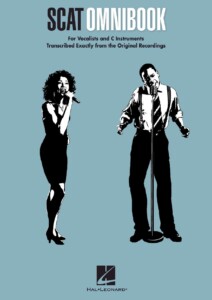
The best Sheet Music download from our Library.
Scat singing is one of the most distinctive and virtuosic vocal traditions in jazz, where the voice is used as a purely instrumental, wordless tool for spontaneous musical expression.
Scat singing, often just called "scat," is the art of vocal improvisation using wordless vocables, nonsense syllables, or no words at all. Instead of singing a song's lyrics, a scat singer improvises melodies and rhythms on the spot, treating their voice as a musical instrument like a trumpet, saxophone, or piano. The singer chooses specific, often percussive, syllables to shape the pitch, articulation, and color of the improvised solo. It's the heart and soul of vocal jazz, a pure, spontaneous form of musical storytelling that bypasses literal meaning to connect directly with feeling and groove. The power of a great scat solo lies in its spontaneity, rhythmic drive, and melodic invention.
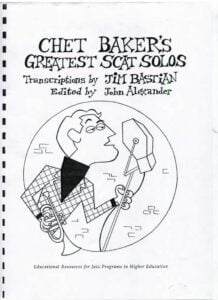
Please, subscribe to our Sheet Music Library.
If you are already a subscriber, please, check our NEW SCORES' page every month for new sheet music. THANK YOU!
History of Scat Singing: From West Africa to Armstrong
The history of scat singing is a fascinating journey through African American musical roots and the evolution of jazz.
- Early Origins (Pre-1920s) : The practice of assigning fixed syllables to rhythms has deep roots in West African musical traditions, which were carried across the Atlantic. In the United States, early forms of scatting appeared in the late 1800s. New Orleans pianist Jelly Roll Morton claimed to have used scatting in live performances as early as 1906. Ragtime singer Gene Greene recorded scat choruses in his song "King of the Bugaloos" (from about 1911 to 1917), and composer Clarence Williams is cited as scatting as early as 1915.
- The Legend of Louis Armstrong (1920s) : The 1920s marked the explosion of scat singing into public awareness. The legend goes that on February 26, 1926, the great trumpeter and singer Louis Armstrong was recording "Heebie Jeebies" with his Hot Five when he dropped his lyric sheet and, in a moment of inspiration, began improvising with nonsense syllables on the spot. While the story's accuracy is debated, and Armstrong himself never claimed to have "invented" scat, his recording of "Heebie Jeebies" was undeniably the first major, commercially successful example of scatting. This moment transformed scat from a folk practice into a central pillar of jazz vocal art.
- The Swing and Bebop Eras (1930s-1950s) : In the 1930s, Cab Calloway became the "Hi-De-Ho" man, known for his exuberant and theatrical scat style. The 1940s bebop movement accelerated scatting's complexity. The new, fast-paced, harmonically daring music demanded equally agile and inventive voices. Sarah Vaughan incorporated bebop harmonic advances into her scatting, Ella Fitzgerald developed a fluid, saxophone-like approach, and Anita O'Day became a master of the cool, intellectual side of the art form.
- Modern Era (1960s-Present) : The tradition has continued to evolve. Betty Carter exploited extremes of vocal range and rhythmic flexibility in the 1960s, while Bobby McFerrin pushed the boundaries of what the voice can do with "Don't Worry, Be Happy". More recently, artists like Kurt Elling and Esperanza Spalding have brought scatting to new audiences, proving its enduring power.
Scat vs. Vocalese: A Crucial Distinction
It's essential not to confuse scat with vocalese.
- Scat is spontaneous and wordless, using improvised syllables to create an original melodic and rhythmic solo.
- Vocalese uses pre-written, often witty, lyrics set note-for-note to an existing instrumental solo. Think of it as creating a "song with words" for a famous jazz solo, like a saxophone or trumpet line.
Vocal Technique: How to Scat Sing
Scat singing is not just making up random sounds; it's a demanding musical discipline.
- Mastering the Fundamentals : Aspiring scat singers must have a solid foundation in music theory. Learning the 12-bar blues form is essential, as is memorizing chord progressions and the root movements of a song. A well-scatted solo needs to follow the song's harmonic structure, just like any instrumentalist's improvisation.
- Voice as an Instrument : The core concept of scat is to think like a horn player, not a singer. The goal is to produce a melodic line with the same phrasing, articulation, and rhythmic drive as a trumpet or saxophone. This means focusing on rhythm, attack, and release, rather than lyrical interpretation.
- Syllable Selection and Articulation : The choice of syllables is a key element that shapes the sound and personal style. Common starting syllables include "doo, " "ba, " "da, " "bop, " "la, " and "sha".
- Hard consonants (like 'b' and 'd') create articulation, similar to a horn player tonguing a note.
- Softer sounds (like 'l' and 'sh') can create smoother, more legato phrasing.
- Great scat singers have signature syllables: Betty Carter often used soft-tongued sounds like "louie-ooie-la-la-la," while Sarah Vaughan preferred fricatives like "shoo-doo-shoo-bee-ooo-bee".
- Building Your Vocabulary : Improvisation relies on a library of melodic and rhythmic patterns. You can build this by transcribing solos from your favorite instrumentalists (not just vocalists), as well as studying well-known jazz licks. Using a metronome to practice on beats 2 and 4 helps internalize the swing feel. Many great books offer structured exercises, including Bob Stoloff's "Scat! Vocal Improvisation Techniques" and Denis DiBlasio's "Guide for Jazz/Scat Vocalists" , to develop this vocabulary.
- Practice with Purpose : A common exercise is to practice four bars of a melody, then four bars of scat improvisation, repeating through the song's form. The key is to record yourself to review your progress and identify areas for improvement. And as vocal educator Judy Niemack advises, "Don't scat in public until you can improvise a solo that stands up to the original melody in quality".
Famous Scat Songs and Notable Singers
Countless scat singers have made indelible marks on the genre. Here is a selection of some of the most prominent artists and their signature songs.
| Artist | Notable Song | Style & Significance |
|---|---|---|
| Louis Armstrong | "Heebie Jeebies" (1926), "Ain't Misbehavin' " | The foundational figure; his gravelly voice and joyful phrasing on "Heebie Jeebies" popularized scat for a mass audience. |
| Cab Calloway | "Minnie the Moocher" | The "Hi-De-Ho" man; his theatrical, energetic scatting was a massive hit and became a cornerstone of the Swing Era. |
| Ella Fitzgerald | "How High the Moon" (from Ella in Berlin) | The "First Lady of Song"; her scatting on this live track is considered the gold standard, featuring the fluidity and range of a virtuoso saxophonist. |
| Sarah Vaughan | "Shulie a Bop," "Sassy's Blues" | "The Divine One"; she brought the harmonic sophistication and speed of bebop into her scatting, creating complex, angular melodic lines. |
| Anita O'Day | "Tea for Two" | A master of cool, rhythmic phrasing; her scatting was less about vocal pyrotechnics and more about inventive, swinging melodic ideas. |
| Lambert, Hendricks & Ross | "Centerpiece," "Everybody's Boppin' " | A groundbreaking trio that perfected vocalese, turning instrumental solos into witty, fully-lyriced songs, while also featuring dazzling group scatting. |
| Betty Carter | Live versions of "My Favorite Things" | A unique, avant-garde voice; she used scatting to explore extremes of rhythm, melody, and emotion, often leaving space and singing behind the beat. |
| Bobby McFerrin | "Don't Worry, Be Happy" | A modern master of extended vocal techniques; his solo scat performance on this massive pop hit is a brilliant blend of melody, harmony, and percussion. |
| Scatman John | "Scatman (Ski-Ba-Bop-Ba-Dop-Bop) " (1994) | A bridge to the pop audience; his stuttering, dance-infused scat became an international pop hit, introducing scat to a new generation in the 90s. |
| Kurt Elling | Variations on standards like "Nature Boy" | A contemporary standard-bearer; Elling has brought scatting into the 21st century, blending poetic lyrics with breathtaking, post-bop scat improvisations. |
| Mel Tormé | Live versions of "Comin' Home Baby" | Known as the "Velvet Fog," Tormé's scatting was noted for its smoothness, clarity, and incredible technical precision. |
Beyond these icons, many other brilliant artists have excelled in scatting, including Chet Baker, Al Jarreau, Leo Watson, Jon Hendricks, and Carmen McRae.
Scat Singing's Legacy: Beyond Jazz into Pop and Hip Hop
Scat singing's DNA can be found in many other genres, proving its enduring influence.
- Doo-Wop and Pop : The rhythmic, nonsense syllables of scat directly influenced the development of doo-wop in the 1950s and 1960s, which often used wordless backing vocals. The Barry Mann and Gerry Goffin song "Who Put the Bomp (in the Bomp, Bomp, Bomp) " (1961) was a playful tribute to this vocal style.
- Hip Hop : The connection between hip hop and scatting is powerful and direct. The rhythmic vocal expression, the importance of flow, and the use of the voice to create percussive, instrumental-like sounds are all shared elements. Early examples include Eazy-E channelling a horn-like scat on his 1990 track "Eazy Street," while the hyperspeed flows of artists like Busta Rhymes and Twista often veer directly into scatting territory.
- R&B and Pop : Contemporary R&B artists like Beyoncé (on "I Care") and Amy Winehouse (on her album Frank) have woven scatting into their vocal styles. Lalah Hathaway has pioneered a remarkable, chordal form of scatting. Even Rihanna's "Umbrella" carries a faint echo of the scat tradition.
Scat singing is far more than a historical jazz curiosity. It is a profound act of musical freedom: the art of spontaneous creation where the voice, stripped of words, becomes a pure instrument of expression. From its legendary origins with Louis Armstrong to its modern reinvention in hip hop and pop, scatting remains a thrilling testament to the power of musical improvisation. It's a joyful, challenging, and deeply human art form that reminds us that sometimes, the most powerful expression is one without words.