Scores for all instruments: 16,000+ (active and growing), over 236,000 pages.
All genres and levels: Jazz & Blues, Rock & Pop, Classical & Contemporary, Film & Musicals;
books & biographies; methods, études, play-along tracks (MP3) for Jazz & Rock.
Access & benefits: US$15.99 one-time payment, valid for lifetime, full Library access.
Table of Contents

The best sheet music download from our Library.
Remembering Serge Reggiani, born on this day in 1922.

Please, subscribe to our Sheet Music Library.
Serge Reggiani: The Eternal Voice of the French Chanson
Today marks the anniversary of the birth of a titan of French culture. Born on May 2, 1922, in the northern Italian city of Reggio Emilia, Serge Reggiani — who died in 2004 — was a man of many faces: a celebrated actor of the screen and stage, a late‑blooming singer with a voice like gravel‑and‑honey, a painter, a poet, and a lifelong political activist. Over the course of more than 60 years, he built an artistic legacy that continues to move millions around the world.
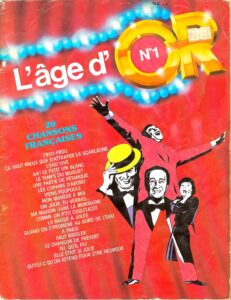
Téléchargement des meilleures partitions dans notre bibliothèque.
Biography: From Apprentice Barber to Artistic Icon
Sergio Reggiani was born into a modest family. His father, Ferruccio Reggiani, was a hairdresser; his mother, Laetizia, a factory worker. The family lived under the shadow of Mussolini’s fascist regime, and Ferruccio was a noted anti‑fascist. In November 1930, when Serge was eight years old, the family fled Italy and settled in France . They first lived in Yvetot, Normandy, where Ferruccio opened a barbershop, before moving to the Faubourg Saint‑Denis in Paris the following year .
Young Serge became a French citizen at heart almost overnight. He threw himself into learning the language, became a top student, and discovered a passion for boxing. At 13, however, he left school to follow in his father’s footsteps — he became an apprentice barber. For a time, he seemed destined to spend his life cutting hair. Then, one day, a dissatisfied client complained loudly about the shampoo he had received and urged him to find another trade . Taking the remark to heart, Serge saw an announcement for a new cinema arts conservatory and entered on a whim. In 1938 he won the first prize in comedy . He went on to study at the National Conservatory of Dramatic Art, from which he graduated in 1941 with prizes in both comedy and tragedy .
The war years were both dangerous and formative. To escape forced labour in Germany and conscription into the Italian army, Reggiani left Paris with other actors . On stage, he was noticed by Jean Cocteau, who gave him a role in Les parents terribles . In 1942 he made his film debut in Louis Daquin’s Le voyageur de la Toussaint . His first major screen success came in 1943 with Le carrefour des enfants perdus, where he met his first wife, actress Janine Darcey, with whom he had two children, Stephan (born 1946) and Carine (born 1951) . In 1948 Reggiani was naturalised as a French citizen .
The post‑war period brought a string of memorable film roles. He appeared in Marcel Carné’s Les portes de la nuit (1946) with a script by Jacques Prévert, and in Max Ophüls’ La ronde (1950). But the part that truly defined him as a screen actor came in 1952, when Jacques Becker cast him opposite Simone Signoret in Casque d’or . Reggiani played Manda, a former gangster‑carpenter with a heart of gold, and he and Signoret became lifelong friends. By the late 1950s he had worked with directors such as Jean‑Pierre Melville (Le doulos, 1962), Luchino Visconti (The Leopard, 1963), and later Claude Sautet (Vincent, François, Paul et les autres, 1974) .
Yet by the early 1960s, Reggiani’s acting career began to falter. Superstitious and burdened by a reputation for bringing bad luck, he saw offers dry up . At a dinner party at the home of Simone Signoret and her husband Yves Montand, he met legendary talent scout Jacques Canetti. Over the course of the evening, Canetti mentioned a project close to his heart: an album of songs by the late writer‑musician Boris Vian . Reggiani, who had always loved to sing, volunteered. In 1964, aged 42, he recorded Serge Reggiani chante Boris Vian. It was a modest success — but it marked the birth of his second career.
What followed was almost an album a year, produced by Canetti and later for Polydor, turning Reggiani into one of the most beloved voices of the French chanson. He performed at the Olympia and Bobino, recorded more than 30 albums, and continued to sing until the end of his life . The 1980 suicide of his son Stephan, a promising singer‑songwriter , plunged him into alcoholism and deep grief, but he found solace in art: in the 1980s he took up painting and held his first exhibition in 1991. He also published two autobiographical books. Serge Reggiani died of a heart attack on the night of 22‑23 July 2004, one day after the death of fellow French singer Sacha Distel, and was buried in the Montparnasse Cemetery .
Musical Style and Harmonic Universe
If “style” can be defined as the way an artist makes technical limitations into expressive weapons, Reggiani is a textbook case. He had no formal musical education; his voice was a dark, slightly hoarse baritone with a narrow range. But he understood that his voice’s very imperfections — its hint of a rasp, its slight Italian accent — were what made it instantly recognisable. As one critic put it, he sang with a “throaty, troubled vibrato” that merged melodrama with dream .
Reggiani was above all an interpreter, not a composer. He wrote not a single note nor a single line of his hundreds of songs . Yet he possessed a rare instinct for choosing texts that resonated with his own life and worldview, and for delivering them with a disarming, conversational intimacy. He once said, “I realised that song was something I needed internally, without realising it” .
Harmonically, his repertoire is rooted in the tonal tradition of French popular song. Analyses of his albums show a predominance of minor keys, especially F minor, which convey melancholy — a signature Reggiani emotion . The accompaniments, however, are far from monotonous. He worked with superb arrangers who knew how to vary the colour palette. A typical Reggiani song might open with a few spare chords on the piano or accordion, then gradually introduce double bass, strings, light percussion, and sometimes a full orchestra. The tempos range from slow ballads (often around 70‑90 BPM) to slightly faster, waltz‑like numbers.
What truly distinguishes his musical style is his phrasing. Coming from the theatre, Reggiani treated each syllable as if it carried dramatic weight. He would stretch a vowel, pause at a caesura, inhale audibly, and let the final word of a line fade into a whisper. This technique — half‑spoken, half‑sung — created an illusion of spontaneity, as if the listener had just walked into a café and overheard someone’s private confession. Yet for all its apparent simplicity, Reggiani’s singing is deeply musical, with a natural sense of rubato and a sharp awareness of how vowel colours shift with every chord.
The Best Songs and Compositions
With more than 30 albums and hundreds of recorded songs, compiling a definitive list is impossible, but a few titles stand out as quintessential Reggiani.
“Le petit garçon” (1967) – Written by Jean‑Loup Dabadie, this slow, devastating ballad tells the story of a father abandoned by his wife who is left alone with his little boy. Reggiani addresses the child with heartbreaking tenderness: “Ce soir, mon petit garçon, mon enfant, mon amour…” These words, delivered with his signature vulnerability, have haunted listeners for decades. The song was an immediate hit and remains one of his most‑played tracks on streaming platforms .
“Ma liberté” (1967) – Lyrics and music by Georges Moustaki. A hymn to freedom in all its forms, set to a gentle, folk‑like melody. Reggiani’s version, with its quiet determination and restrained defiance, became an anthem of the May 1968 protests .
“Les loups sont entrés dans Paris” (1967) – Another Moustaki composition. This allegorical song evokes the Nazi occupation (“the wolves entered Paris”) and the courage of those who resisted. Reggiani’s delivery is both sombre and proud, a memory of history made painfully present.
“Il suffirait de presque rien” (1968) – Written by Jean‑Max Rivière and Gérard Bourgeois, this song was a smash hit on the juke‑boxes of the Latin Quarter. Set to an almost‑pop orchestration, it laments the gap between a young girl and an aging man (“She in spring, he in winter”), yet the melody’s cheerfulness only deepens the bitterness of the lyrics .
“L’Italien” (1972) – A self‑portrait that Reggiani began every concert with. Jean‑Loup Dabadie’s text proudly reclaims the singer’s immigrant origins: “C’est moi, c’est l’Italien…” The song became a sort of artistic manifesto .
“Le barbier de Belleville” (1977) – Written by Claude Lemesle, it tells of a neighbourhood barber who dreams of being an opera tenor. Full of humour and tenderness, the song playfully references Reggiani’s own youthful apprenticeship as a barber .
“Ma solitude” (1967) – Also by Moustaki, a sombre reflection on loneliness that became one of Reggiani’s signature ballads.
“L’homme fossile” (1968) – A humorous number by Pierre Tisserand in which a prehistoric man (a resident of a suburban housing development) complains about how scientists misrepresent him. It showcases Reggiani’s less‑known capacity for irony and fun .
“Votre fille a 20 ans” (1973) – A tender song about a father seeing his daughter reach adulthood, written by Jean‑Loup Dabadie.
“Sarah” (1967) – A setting of a poem by Charles Baudelaire, prefaced by a spoken‑word recitation that highlights Reggiani’s origins in theatre and poetry.
Filmography: A Career in a Hundred Films
Serge Reggiani appeared in more than a hundred films across six decades . His screen presence was marked by a combination of physical intensity and a kind of melancholic restraint — qualities that made him a natural fit for the French cinematic tradition of poetic realism.
After his early war‑time appearances, the post‑war period brought him to public attention. In 1946 he played in Carné’s Les portes de la nuit, opposite Jean Gabin; in 1949 he was in André Cayatte’s Les amants de Vérone, sharing the screen with Pierre Brasseur and Anouk Aimée . The great breakthrough came with Casque d’or (1952), directed by Jacques Becker, where Reggiani, with his brooding good looks and rebellious air, embodied the romantic anti‑hero Manda — a role that made him a star .
Over the years, he worked with virtually every major director of the French cinema. Among his most notable films are:
- Les misérables (1958), directed by Jean‑Paul Le Chanois, with Jean Gabin, Bernard Blier and Bourvil .
- Le doulos (1962), Jean‑Pierre Melville’s classic film noir, in which Reggiani plays a cynical ex‑convict opposite Jean‑Paul Belmondo .
- The Leopard (1963), Luchino Visconti’s sumptuous historical epic, where he appears alongside Burt Lancaster, Alain Delon, and Claudia Cardinale .
- Vincent, François, Paul et les autres (1974), a portrait of middle‑aged friendship by Claude Sautet, with Yves Montand and Michel Piccoli .
- Le bon et les méchants (1975), Claude Lelouch’s revisionist western, with Jacques Dutronc and Marlène Jobert .
- Fantastica (1979), by Gilles Carle, in which Reggiani played a hermit poet .
His last film appearance was in Héroïnes (1997), and his final album, Enfants, soyez meilleurs que nous, was released in 2000 .
Cooperations with Other Musicians and Jazz
Although Reggiani is not primarily remembered as a jazz singer, the influence of jazz runs deep in his music. As a performer, he was attracted to the rhythmic flexibility and emotional directness of the jazz idiom. His first album, entirely devoted to Boris Vian, featured many songs that Vian had originally composed as jazz pieces. Throughout his career, Reggiani worked with some of the finest composers and arrangers of the French popular music scene, many of whom brought a jazz sensibility to their work.
Among his most important collaborators was Michel Legrand, the Oscar‑winning composer and pianist, who provided inventive, jazz‑infused arrangements that allowed Reggiani’s voice to float above sophisticated harmonies . Henri Salvador, a master of Brazilian‑tinged jazz and scat singing, also wrote for Reggiani, giving several songs a light, swinging touch. The composer Pierre Tisserand wrote many of Reggiani’s most beloved melodies, often incorporating bluesy chord progressions and syncopated rhythms .
The song “Raymond joue‑moi du jazz” (1997) is a direct tribute to the jazz spirit: its lyric addresses a pianist named Raymond, asking him to play some jazz to lift the singer’s spirits . Reggiani also recorded “Je bois” (a cover of a song by Boris Vian) with a mellow, nocturnal jazz orchestration reminiscent of a late‑night club .
In live performance, Reggiani was often accompanied by small combos in which the accordion, piano, double bass and guitar worked together in perfect harmony, achieving a sound that one critic described as “tender one moment, funny the next, harmony that grabs you by the heart” . Since his death, many jazz musicians have paid tribute to him. For instance, in 2016 a concert programme titled “Un jazz pour Reggiani” revisited his repertoire with a full jazz ensemble , and several tribute albums have featured jazz re‑arrangements of his greatest hits. The American actor Morgan Freeman was also known to be a fan, and in Germany a jazz pianist discovered Reggiani’s music as a revelation .
Influences and Legacy
Serge Reggiani was an artist shaped by a peculiar kind of “influence by proxy.” Because he wrote none of his own material, his musical world was defined by the poets, lyricists and composers he chose to interpret. Boris Vian was his first great influence — the album that launched his singing career was a full‑length homage to Vian’s darkly humorous, jazz‑inflected songs . Georges Moustaki, a fellow Mediterranean immigrant to France, wrote for Reggiani some of his most enduring songs, including “Ma liberté” and “Les loups sont entrés dans Paris,” and the two men shared a deep bond of friendship and political commitment . Jean‑Loup Dabadie provided some of Reggiani’s most intimate and personal lyrics, such as “Le petit garçon,” “Les mensonges d’un père à son fils” and “L’Italien” . Claude Lemesle gave him the humorous “Barbier de Belleville.” Barbara, the great chanteuse, was a crucial teacher who “taught me to breathe, to articulate” . Reggiani also set to music poems by Charles Baudelaire and Arthur Rimbaud, and he sang works by Jacques Prévert and Serge Gainsbourg (the latter notably wrote “Maxim’s” for him) .
Beyond the French chanson tradition, Reggiani was inspired by classical music. He openly spoke of his admiration for Bach, Paganini, Beethoven and above all Mozart; some of the melodic contours and dramatic shifts in his songs reflect that classical training by osmosis . His immigrant background also shaped his artistic identity: unlike his friend Yves Montand, who changed his name to sound more French, Reggiani kept his Italian given name (Sergio) and proudly emphasised his origins .
Reggiani’s legacy is vast and still growing. He is remembered as one of the great interpreters of the French song — an artist who proved that a performer who does not write can be just as important as the author. His ability to fuse theatrical declamation with intimate singing created a new mode of performance that has influenced countless later artists. Thomas Fersen, Zazie, and even the rapper Orelsan have cited Reggiani as a source of inspiration, particularly for the raw honesty of his lyrics . The Italian‑French singer Quamido released a full album of Reggiani covers in 2018 . In 2022, on the centenary of his birth, a comprehensive box set titled Reggiani a 100 ans was released, containing two CDs of greatest hits, a previously unreleased live recording from Bobino (1966), and a DVD of television appearances .
Politically, Reggiani was a lifelong man of the left — a friend of Simone Signoret, Yves Montand and Michel Piccoli, a militant anti‑fascist who never forgot his exile from Mussolini’s Italy . That political commitment, allied with his empathetic reading of lyrics about loneliness, loss, love and courage, made him the voice of an entire generation.
Additional Information: The Man of Many Arts
Very few artists have successfully managed four distinct careers, but Serge Reggiani did. In addition to his work as an actor and singer, he was a painter of considerable talent. He began painting late, in the 1980s, after the death of his son, and he poured his grief into colourful, expressive canvases. In 1991 he held his first public exhibition of paintings, and thereafter he continued to paint and exhibit until his death .
He was also a writer: in the 1980s he published two autobiographical works that offer a candid, moving account of his journey from Italian barbershop to French cultural icon. His poetry — sometimes included in his shows as spoken‑word interludes — reveals a man deeply in love with language, with the texture of vowels and the rhythm of sentences.
In his private life, Reggiani struggled with alcoholism, especially after his son’s death. He was a heavy smoker, and his chain‑smoking became as much a part of his public image as his black turtleneck sweaters and melancholic gaze. Yet his friends described him as a man of great warmth and generosity: “He had the rare and wonderful ability to provoke emotion, which is perhaps the only true goal of art,” wrote the Nouvel Observateur after his death .
Today, Serge Reggiani’s music finds new listeners with every passing year. His songs are heard in films, on the radio, in concerts of homage. And every time a singer takes the stage to deliver “Ma liberté” or “Le petit garçon,” Reggiani’s voice — that husky, vibrating, unmistakably human voice — can be heard echoing through the decades. It is the voice of an Italian immigrant who became the soul of French song, a man who never learned to compose a single note but who knew, better than almost anyone, how to make a melody weep, laugh and sing of life.
Search your favorite sheet music in the Sheet Music Library Catalog
Listen to Serge Reggiani music on Spotify
Browse in the Sheet Music Library:
Or browse in the categories menus & download the Library Catalog PDF:
Serge Reggiani, le best of | Archive INA
Ina Chansons vous compile les meilleurs titres de Serge Reggiani Serge Reggiani:
"Le Déserteur" Serge Reggiani "Sarah" Serge Reggiani "Votre fille a vingt ans" Serge Reggiani "La java des bombes atomiques" de Boris Vian (live) - Archive INA Serge Reggiani "Et puis" (live) - Archive INA Serge Reggiani "Ma liberté" Serge Reggiani "Gaspard" | Archive INA Serge Reggiani "L'italien" Serge Reggiani "Venise n'est pas en Italie" (live) - Archive INA Serge Reggiani "Les loups sont entrés dans Paris" Serge Reggiani "Le petit garçon" (live extrait deChamps Elysées) - Archive INA Serge Reggiani "Le barbier de Belleville" (live officiel) | Archive INA Serge REGGIANI "Il suffirait de presque rien" Serge Reggiani "Ma fille" | Archive INA