Scores for all instruments: 16,000+ (active and growing), over 236,000 pages.
All genres and levels: Jazz & Blues, Rock & Pop, Classical & Contemporary, Film & Musicals;
books & biographies; methods, études, play-along tracks (MP3) for Jazz & Rock.
Access & benefits: US$15.99 one-time payment, valid for lifetime, full Library access.
Seymour Bernstein On Bach: Invention No. 1 (ft. Ben Laude)
0:00 If Bach had a piano 0:38 Bach's Preface to the Inventions 3:15 Articulation, fingering, phrasing, and charm 6:53 Consistency, ornamentation, and climax 9:28 Slurring 8th-note leaps 11:49 Did Bach apply the Golden Ratio to this Invention?
Join 96-year-old Seymour Bernstein and Ben Laude at Seymour’s cottage on the Atlantic Coast in Maine for three intimate lessons on popular intermediate works from the piano repertoire. In this lesson, Seymour shares his secrets on Bach’s First Invention. Beginning with Bach’s Preface to his Two- and Three-Part Inventions, Seymour cites Bach’s emphasis on cultivating a “cantabile” touch at the keyboard, and shares a schema for articulation and phrasing with Ben, who seeks to integrate them into his own interpretation. Recorded March 2023.
Please, subscribe to our Sheet Music Library.
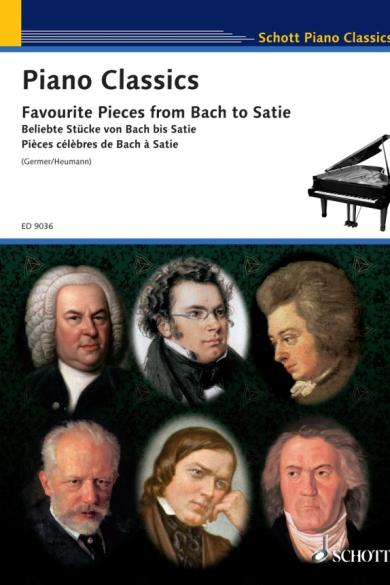
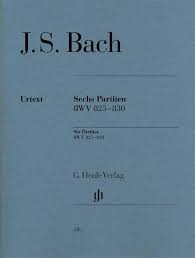
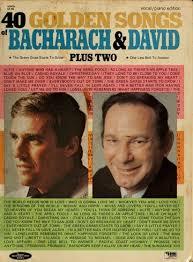
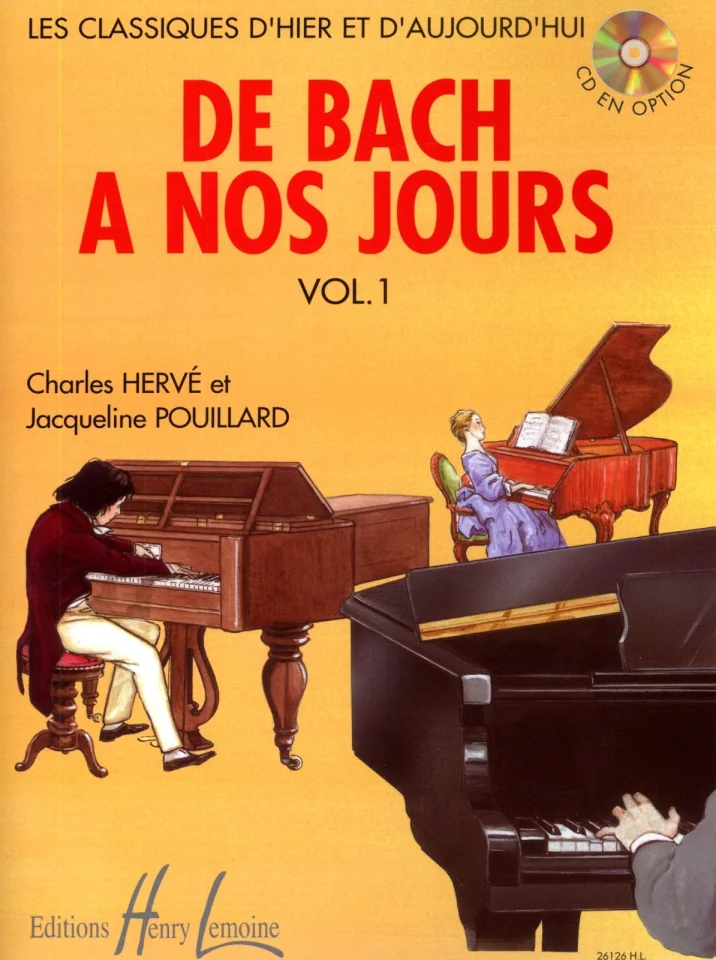
The best sheet music download from our Library.
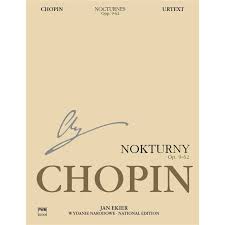
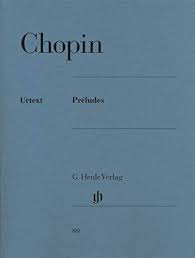
Seymour Bernstein teaches Chopin's Prelude in E minor.
0:00 Seymour has a surprise for you 1:34 Performance of Chopin E minor Prelude 4:16 Finding your own interpretive ideas 5:24 Chopin knew he was dying 6:33 Preliminary swing stroke 8:40 How to play two-note slurs 10:21 “All piano playing is a series of illusions” 12:05 Controlling repeated chords 14:58 ‘Alla breve’ does not mean ‘faster’ 16:25 How not to play the Moonlight Sonata
18:44 Romantic hairpins are not what you think 21:16 How to play hairpins in a Brahms Intermezzo 22:40 More proof from Fanny Mendelssohn 24:36 Irrefutable evidence from Chopin’s G minor Ballade 26:36 “Rob Peter, but don’t pay Paul.” 28:35 Crescendo means ‘get softer’! 31:47 What Chopin learned from Bach 33:44 How to voice chords on the piano 38:08 How does a piano produce dynamics? 39:34 How not to bang out a crescendo 41:58 The most profound chord in the E minor Prelude 43:32 How practicing music translates to life
Join Seymour Bernstein as he re-introduces you to one of Chopin's most popular and tragic works, the E Minor Prelude, Op. 28 No. 4. In this in-depth lesson, Bernstein not only demonstrates the physical mechanics necessary to realize your expressive intentions in this work, he reveals how the Prelude contains information crucial to your general development as a pianist and a person.
Search your favorite sheet music in the Sheet Music Library Catalog


Who was Seymour Bernstein?
Seymour Abraham Bernstein (April 24, 1927 – April 30, 2026) was an American pianist, composer, and teacher. He is the subject of the documentary Seymour: An Introduction directed by the actor Ethan Hawke.
Seymour Bernstein was born in Newark, New Jersey, and grew up there; he graduated from Weequahic High School in Newark in 1945. He began teaching piano at the age of fifteen, when his teacher at the time, Clara Husserl, a pupil of Theodor Leschetizky, arranged for him to supervise the practicing of some of her gifted younger pupils. He soon had a class of pupils of his own.
Seymour Bernstein achieved local fame as a performer, winning the Griffith Artist Award at the age of seventeen. During the Korean War, he gave concerts on the front lines and for military leaders. His concert career took him to Europe, Asia, and many places in the Americas. He wrote With Your Own Two Hands and 20 Lessons in Keyboard Choreography, which have been published in German, Japanese, Korean, and Russian.
He studied with Alexander Brailowsky, Clifford Curzon, Jan Gorbaty, Nadia Boulanger, and George Enescu. In 1969 he made his debut with the Chicago Symphony Orchestra, playing the world premiere of Heitor Villa-Lobos's Concerto No. 2. He won the First Prize and Prix Jacques Durand at Fontainebleau, the National Federation of Music Clubs Award for Furthering American Music Abroad, a Beebe Foundation grant, two Martha Baird Rockefeller grants, and four U.S. State Department grants.
Seymour Bernstein made a point of offering master classes and lecture recitals where his concert tours took him. When grant money allowed, he filled his suitcases with scores to distribute to teachers and students. He ceased performing in 1977 to concentrate on teaching, composing, and working in other creative outlets; he did not tell anyone that his farewell recital would be his last.
Bernstein composed music ranging from teaching material for students of all levels to sophisticated concert pieces. He performed as a guest artist with chamber ensembles and served on the juries of international competitions. He maintained a private studio in New York City and was also an adjunct associate professor of music and music education at New York University. On December 18, 2004, he was awarded an honorary doctorate from Shenandoah University in Winchester, Virginia, northwest of Washington, D.C. In 2015, actor and filmmaker Ethan Hawke made a documentary about Bernstein entitled Seymour: An Introduction.
In 2020, Seymour Bernstein recorded a series of pedagogical lessons for tonebase piano covering works by Bach, Beethoven, Chopin, Mozart, Schumann, and technical exercises like arpeggios.
Browse in the Sheet Music Library:
Or browse in the categories menus & download the Library Catalog PDF: